Is This the New Luxury Shopping in Philly?
It’s not just what you buy. It’s how you’re treated while you buy it.
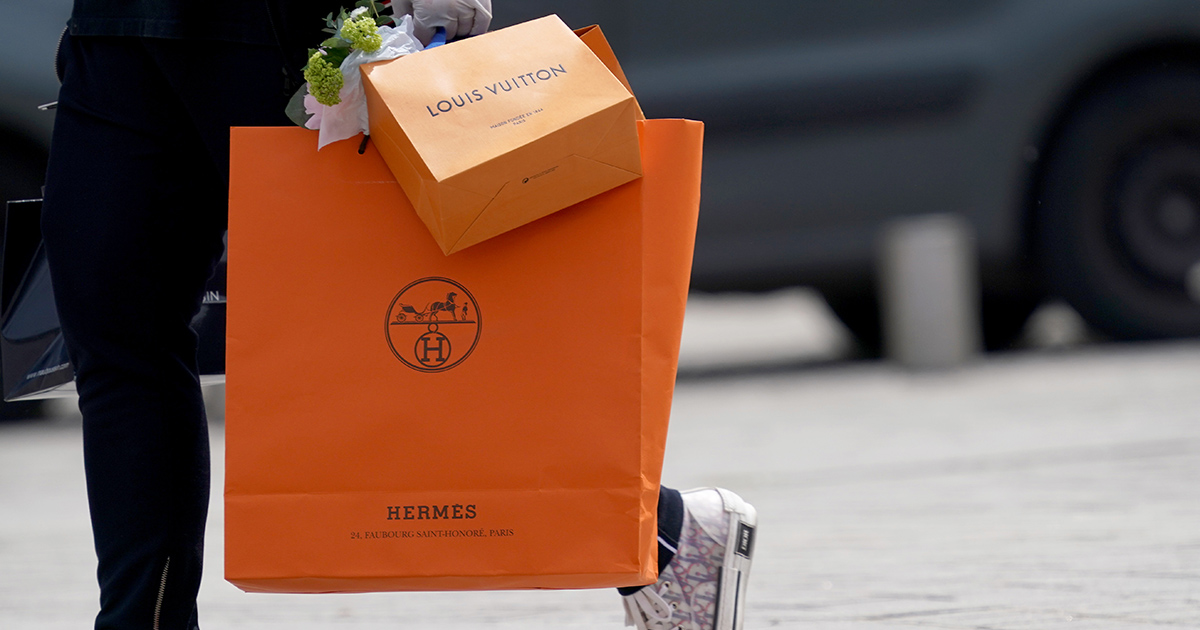
The future of luxury shopping / Photograph by Edward Berthelot/Getty Images
It took me five years — and a trip to Barcelona — before I could bring myself to buy a pair of Dior’s J’Adior pumps, which I finally did in the designer’s gleaming boutique on the city’s luxury shopping avenue. Similarly, I told myself that if I completed five marathons, I could reward myself with the Hermès mini Pop necklace I’d eyed for years. Today, I love these items — because I saved for them, yes, but also because of the memories now attached to them.
I’m not alone, says Ludovica Cesareo, assistant professor of marketing at Lehigh University, who studies consumer behavior with luxury goods. Unlike previous generations (boomers!), most millennials (yours truly) and Gen-Z consumers, she says, love the experience of procuring the thing more than the thing itself, particularly with “luxury” items. “They value the emotional connection,” she says.
This is partly why, she says, independent retailers, direct-to-consumer (DTC), and mono-brand boutiques have become more prominent — and why department stores, designed for mass appeal, are fading. Saks Fifth Avenue announced its bankruptcy in January and its plans to close 18 stores, including the Bala Cynwyd location. (Neiman Marcus, which Saks owns, remains open at King of Prussia.) Macy’s closed 66 stores in 2025 — RIP to its Wanamaker Building space. The department store model, Cesareo notes, doesn’t quite do it for younger shoppers. “For them, it’s about that ‘something extra’ that nowadays a luxury independent boutique or DTC can offer — immersive storytelling and brand-trained staff.”
You can see the trend play out here: On Walnut Street in Rittenhouse, you’ve got recent mono-brand additions like Veronica Beard (known for their dickey jackets) and World of Flight (Nike everything). Then there are independent spots like Philly legend Joan Shepp, whose space caters to clients’ desire for highly specialized, customized-to-them finds. (See the boutique’s Philly-themed scarf designed with Italian label Faliero Sarti.) “It’s more experiential than a multi-brand department store,” says Cesareo.
Like Joan Shepp, Kirna Zabête in Bryn Mawr sells multiple designers — prices start at $6 for a greeting card and hit $5,000 for a Chloé gown — and distinguishes itself with a relationship-based approach. “I spend as much time on the sales floor as possible,” says Beth Buccini, who opened the Main Line shop a decade ago. (Her first boutique, in SoHo, debuted in 1999. She also has stores on Madison Avenue and in East Hampton, Palm Beach, Nashville, and Miami.) “I can hear what people are saying and understand their needs. In many ways, I’m an old-school hands-on merchant.”
For some shoppers, Cesareo says, the experience they seek is the thrill of the hunt — which also explains the rise in the secondhand market, an industry that’s been growing for a decade. Whereas once the newness was the appeal, she says, millennials and Gen-Z consumers are more concerned with the found (rather than just the bought), and also keener to have their purchases reflect their values — including sustainability. In Philly, a great example of this is Bala Cynwyd–based The 1916 Company (formerly Govberg Jewelers), which entered the luxury resale handbag market in November. On their website, you might find a Louis Vuitton card holder for $390 and a Birkin for $165,000. “Luxury goods are intrinsically more sustainable in theory,” says Cesareo. “They’re supposed to last for decades. So the idea that you can give it a second life by selling it on a secondhand platform should be in line with what luxury is.”
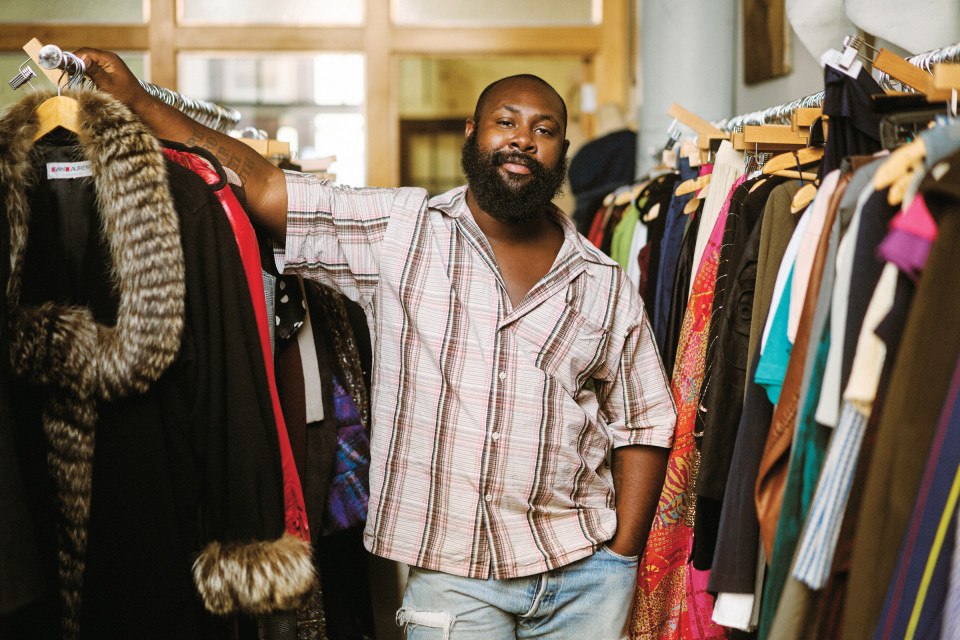
Keesean Moore of Moore Vintage Archive / Photograph by Gene Smirnov
The luxury vintage market has also been on the rise, says Keesean Moore, owner of Moore Vintage Archive, who believes it has to do with a certain IYKYK factor. Meaning, people who care about luxury fashion know quality when they see it. “You’re buying a piece of fashion history, and that can’t necessarily be replicated by ready-made clothes,” he says. Moore started his biz in 2014, moved to Queen Village in 2022, and just opened a flagship in Tribeca. He sources the good stuff — jackets by Yves Saint Laurent, dresses by Givenchy. In his Queen Village store, the prices range from $50 to $1,500, and his clientele runs the gamut from design teams using the pieces for research to folks who are browsing. Everyone is welcome. “I try to be a source of information, so that it doesn’t feel like we’re selling anything to you,” he says.
Creating an experience of belonging also drives Dorit Avganim, who owns popular vintage boutique Manzanita in University City, where prices are more affordable ($20 to the low $200s) but the product quality and the shopping experience offer a sense of that something extra — what she calls revisionist luxury. “People thought that the luxury of Saks Fifth Avenue was leaving with the fancy bag, but that’s the outcome, not the experience itself,” she says. For her shoppers, she says — and seemingly more and more luxury seekers — the joy is in the journey, not the destination. — Kristen Schott
Do It a Little Bit Better: Your Style Game

Three quick tricks to polish your look, from Boyds stylist Gregory Seitter
Invest in great denim.
Pay attention to the fit, fabric, construction, and wash, Seitter says: “Even the most expensive denim won’t work if the proportions aren’t right for the wearer.” Quality and composition also play a role. “Premium denim offers recovery, meaning the jeans hold their shape throughout the day rather than stretching out.” As for wash? “Try a clean dark rinse, a medium blue, or a vintage finish” for classic sophistication. Seitter favors the brand Mother: “Their washes are particularly strong, offering an effortless California aesthetic.”
Find your perfect white shirt (and wear it with everything).
A crisp white button-down is a wardrobe workhorse; Seitter’s current favorite is TWP’s Ex-Boyfriend, for its relaxed yet polished feel. “It’s versatile, and pairs beautifully with denim, trousers, or even over a dress on cooler summer evenings.”
Consider Mary Janes your shoe go-to.
When an outfit feels unfinished, the answer is often on your feet, Seitter says. He likes a Carel Mary Jane slingback or mule for a dose of instant sophistication — without sacrificing your toes. “It’s an easy way to look polished without feeling overdressed,” he says. — Laura Swartz
Published as “The New Luxury” in the August 2026 issue of Philadelphia magazine.