Inside Stephen Starr’s $20 Million Roman Holiday
The famed restaurateur’s Borromini is the most beautiful restaurant in Philly, but the food struggles to match the splendor.
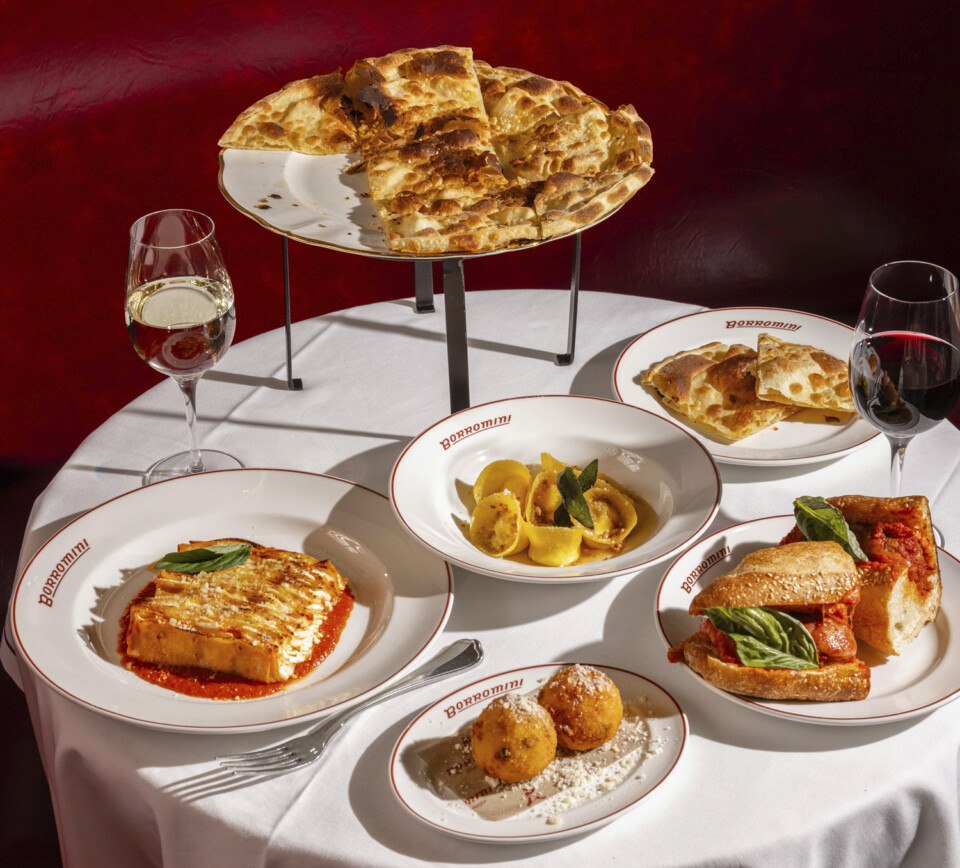
A spread of dishes at Borromini / Photography by Gab Bonghi
Editor’s note: This story went to press before the 100-layer lasagna was removed from Borromini’s menu.
First, we have to talk about the lasagna at Borromini.
They call it a “100-layer lasagna,” which is a bit of hyperbole, but it is a stacked, many-layered lasagna nonetheless, cooked upright in a tall pan, sliced vertically, fired for service, and sent to the table laid out flat, nicely browned and lying in a pool of sweet pomodoro sauce.
Years ago, it was a lasagna like this, served by the venerated chef Mark Ladner at the old Del Posto in New York City, that set Starr on the path to opening his newest Philly restaurant — this $20 million, 330-seat, white-tiled temple to Italian food that sits in the shell of the former Barnes & Noble on Walnut Street, overlooking Rittenhouse Square.
Starr loved this lasagna. He wanted this lasagna on his own menu. He and Ladner — who helped design the Borromini menu, and who is now executive chef of Starr’s revived Babbo in New York — spent a long time and countless tastings figuring out how to re-create the dish for a dining room almost twice the size of Del Posto’s.
Borromini’s version is … okay.
I liked the red sauce — a sweet, rough pomodoro with an excellent texture and some semblance of soul. I’ve visited three times: Early on, I had a version where the lasagna itself was mushy and textureless, with no bite to offset the creamy goopiness of the ricotta and besciamella that lined every layer except the plasticky lace of blistered pasta at the edges. More recently, it was better; the kitchen worked out the texture issues, got control of the ovens, and turned out a lasagna that had more balance, a bit of chew left in the layers, and just a touch of char that (along with the sauce) gave the whole thing a hint of life.
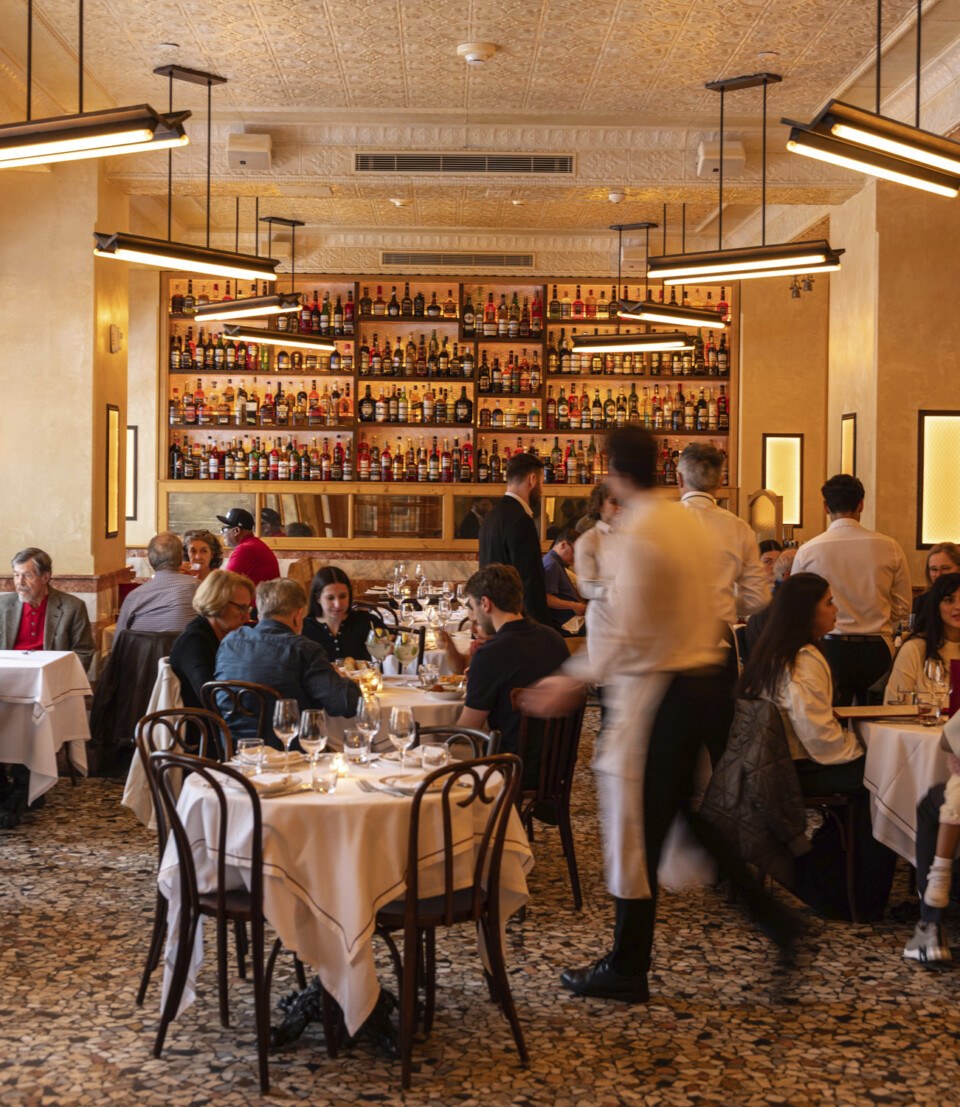
Borromini’s dining room
It was served in a gorgeous, crowded, tiled-and-arched dining room designed, inch by inch, to look like it was lifted whole from the streets of Rome and dropped here without a single bottle or chair out of place. And, really, that has always been Starr’s superpower: He makes glowing rooms people want to be in, to crowd into and be a part of, if only for a night. Here, every effort has been made to create an immersive stage within which diners (with a reservation) can exist inside the universe of Starr’s Italy. Because while Philadelphia has no lack of Italian restaurants, what was missing was Stephen Starr’s version of an Italian restaurant: Elaborate. Glamorous. Festive. And that’s what Borromini is.
The food is only an element of this. Not ignored (far from it), but rather ruthlessly winnowed and designed to fit within the boundaries of this vision. There are crostini served with honeyed ricotta and fennel pollen; forgettable crudos dripping olive oil and spiked with the sting of Meyer lemon; and arancini made with delicate saffron rice, gooey with mozzarella and fontina on the inside, crisp and golden on the outside, but surprisingly affectless.
The focaccia di recco (inspired by Nancy Silverton, another of Starr’s famous partners) is showy, large, given headline billing on the menu; it offered a thin, almost wafer-y version of the bread, pizza-sized and sandwiching a briny, melted stracchino like a jumped-up and dignified version of cheesy bread. There’s an argument to be made that Borromini is worth a visit for this alone (and maybe a drink or two at the artfully distressed copper-topped bar).
The blue crab gnocchetti got the pasta right (tiny little fingers of it, just the right kind of delicate), but the crab and chili flakes and fatty uni were all muddled together in the sauce. But the tortelloni di ricotta was delicious — woody and warm, shot through with that ideal razor of slight ricotta sourness, and served in a nicely nutty brown butter sauce with fried sage leaves on top.
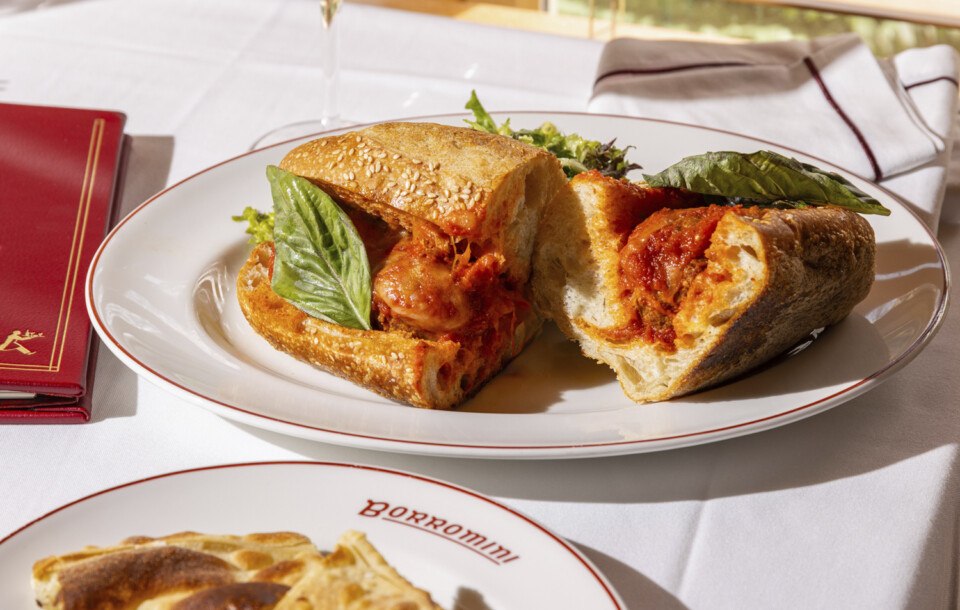
Meatball parmigiana at Borromini
At lunch, the house serves pizzas and a surprisingly good meatball parmigiana on a crusty, seeded roll, painted with red sauce, the cheese melted right into the crumb of it. The meatballs were inarguably overworked — chewy and almost squeaky on the teeth, but that’s exactly the way I like them.
And at dinner, the rabbit cacciatore in its little copper pot pretends at rusticity, with its plump leg, bone-in, sitting atop a stew of tomatoes, rough-chopped bell peppers, and halved Castelvetrano olives, and the smell of it, all rich and meaty and sharp, is deep enough to drown in.
So … it’s a mixed bag. Consistently serviceable with occasional sparks of real excellence. But in a city like Philadelphia, with all its red-sauce history and legions of mad fools who’ve dedicated their lives to the pasta gods, going to Borromini isn’t so much about eating at Borromini as it is about going to Borromini.
2 Stars — Come if you’re in the neighborhood
Rating Key
0 stars: stay away
★: come if you have no other options
★★: come if you’re in the neighborhood
★★★: come from anywhere in Philly
★★★★: come from anywhere in America
Published as “100 Layers of Stephen Starr” in the May 2026 issue of Philadelphia magazine.