Your Suburban Ballot Questions, Explained
Increased library funding, additional public green space, and more are on the general election ballot in the collar counties.
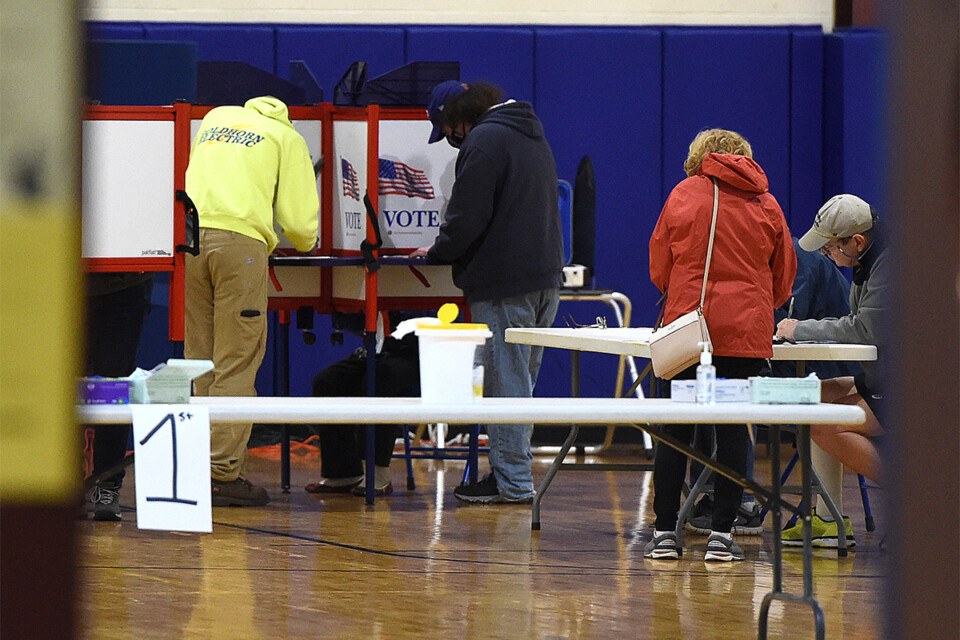
/ Photograph via Getty Images
Listen to the audio edition here:
Ballot questions. Referendums. Initiatives. Whatever a city, township, borough, or county calls ’em, questions on the ballot ask voters to weigh in directly on their local government.
Voting on ballot questions is one the most direct ways voters can engage with democracy, but these initiatives are also one of the most … confusing, written in a form of dense legalese that seems even denser when a voter steps into a voting booth.
Here, we translate referendums on the ballot in Chester County, Delaware County, and Montgomery County into plain, everyday language to help voters make their choice.
Chester County
East Whiteland Township
(emphasis below ours)
Board of Supervisors Referendum
Should two (2) additional supervisors be elected to serve in this Township?
A little deeper: Right now, three people serve on East Whiteland Township’s board of supervisors, a governing body that can appoint members to local boards and commissions, zoning and planning, for example; set the township budget and allocate tax dollars, and appoint staff to manage day-to-day township operations, amongst other duties. People elected to the board serve six-year terms.
Why are residents trying to increase the number of board members? East Whiteland Township community members have been protesting the construction of a 1.5 million-square-foot data center on a Superfund site between East and West Whiteland Townships. In September, the board of supervisors passed an ordinance to regulate data centers … but those new rules won’t apply to the current project.
Residents rallied to get a question on the ballot increasing the number of board members in the hopes of getting better representation on this and other issues. If you vote “yes,” you’ll be supporting doubling the number of board members. A “no” vote will keep the board at three members.
Malvern
(emphasis below ours)
Home Rule Charter Referendum
Shall the Home Rule Charter of the Borough of Malvern be amended to reduce the number of Members of Council from seven (7) to five (5) members, effective January 3, 2028 so that two (2) Members of Council are elected in 2027 and every four (4) years thereafter, and three (3) Members of Council are elected in 2029 and every four (4) years thereafter?
A little deeper: When reached for comment, Sylvie MacKenzie, director of communications and strategic initiatives for Malvern Borough, says the petition to get the referendum was put forward by a group of Malvern Borough residents, not the Borough Council. She said to reach out to the Chester County Board of Elections to see who filed the petition.
When reached for comment, Andrew Kreider, communications director for the Chester County Commissioners’ Office sent the following:
“On July 29, 2026, a group of 7 Malvern Borough residents submitted a Referendum Petition to the Chester County Board of Elections pursuant to Article XIII of the Malvern Charter and Section 2943 of the Home Rule Charter and Optional Plans Law, 53 Pa.C.S. § 2943. The petition was signed by approximately 243 registered voters of Malvern Borough and sought to place a ballot question on the 11/3/26 ballot amending Malvern Borough’s Home Rule Charter to reduce the number of Council members from 7 to 5.
We don’t have information as to why this group of citizens is seeking to reduce the number of Council members from 7 to 5. All that we know is that they submitted a referendum petition as allowed under the law which was facially compliant with the law and which was not challenged by any individuals.”
Malvern’s Home Rule Charter, passed in 2008, outlines the structure of its borough council, with a seven-member council elected to four-year terms. Four council members are elected during even-numbered years; three, in odd-numbered years. All members are elected at-large. In 2008, when the charter passed, Malvern’s population was about 3,113 people. Today, it’s 3,435.
A “yes” vote means two borough councilmember positions would be eliminated. “No” keeps the borough council as is, with seven members. No current councilmember’s term would be cut short by these changes.
Malvern has made changes to its borough council via referendum before. In 2016, borough residents voted to clean up language around term limits in the charter. Borough Councilmembers can serve two consecutive four year terms, before stepping down and can run again after a gap of two years.
Tredyffrin Township
(emphasis below ours)
Home Rule Charter Referendum
Shall the Tredyffrin Township Home Rule Charter be amended to: (1) delete “except for the first Board to serve under this Charter, the members of which will serve for staggered terms as provided in § 1201 of this Charter” from Art. II., § 202; (2) clarify that the office of Supervisor shall be forfeited if the person is convicted of a crime that is comparable to a misdemeanor of the second degree or higher under Pennsylvania law; (3) amend the rate of compensation for Supervisors from $1,500 to $3,000 per annum and remove the reference to the first four years that this Charter is in effect from Art. II., § 208(A); (4) clarify that notice of special meetings shall be prominently posted at the township office, and as otherwise approved by the Board; (5) clarify that a quorum of the Board may be established by in-person presence of Board members and by electronic means; (6) amend Art. II., § 210(C) to be consistent with the Pennsylvania Sunshine Act; (7) clarify that voting on ordinances and resolutions shall be by roll call vote of the Board and that all other votes may be by motion of the Board with each Board member’s vote recorded in the public meeting minutes; (8) provide that copies of the minutes of the meetings of the Board shall be available to the public at no cost; (9) amend that the meeting agenda shall be available at least twenty-four hours prior to the start of the meeting; (10) clarify that it is the duty of the Board to adopt an Administrative Code defining the organization and assignment of duties and responsibilities of township officers and employees; (11) clarify that it is the duty of the Board to initiate by motion, resolution, or ordinance inquiries and investigations in aid of its legislative functions; (12) abolish the elected position of Auditor and replace it with an appointed, independent auditor; (13) delete the following provisions in their entirety: Art. IV. Elected Tax Collector; Art. VI.(F) and (G); Art. VI. § C – 38(D); Art. VI. § C – 39; Art. XII., §§ C – 71and C – 72; Art. XII., §§ C – 73(B)-(C), C – 74, C – 75, and C – 76; (14) remove the Township residency requirement for the Township Manager; (15) require a proposed ordinance be advertised in one newspaper, unless otherwise required by law; (16) remove the requirement to provide notice to neighboring property owners of an amendment to the Zoning Ordinance applying only to a small portion of the township; (17) amend the effective date of an ordinance to immediately, or at any later date specified therein; (18) require copies of standard codes be available at the office of the township for public inspection with deletion of “and for purchase at a reasonable price fixed by the Board”; (19) remove the requirement that the general compilation be published “in loose leaf form”; (20) delete language requiring copies of “The General Laws of the Township of Tredyffrin” be furnished to township officers, placed in township libraries and the township office, and be made available for purchase; (21) remove language from Art. VII. § C – 44 requiring all changes in organization and procedures set forth in the Administrative Code be effected by amendment of the Administrative Code in the same manner as other ordinances; (22) amend Art. VII. § C – 45(C) to align with current practice; (23) require the Township Solicitor to be a member of the Bar of the Supreme Court of Pennsylvania in good standing; (24) amend Art. VII. § C – 46(B)(1) to require Board approval before the Township Solicitor acts as a legal advisor to other township officers, departments, boards, commissions, authorities and agencies and to clarify that a law firm is appointed not an individual attorney; (25) delete language addressing who is responsible for the duties of Finance Manager; (26) remove the requirement to advertise the preliminary budget, but require it be discussed and acted upon at a public meeting and be available on for public inspection on the Township’s website or as otherwise required by law; (27) clarify the process for advertising and adopting the final budget and require that the final budget be advertised in one newspaper; (28) remove the requirement that the final budget be adopted by ordinance; (29) require that the budget be amended by resolution; (30) remove the capitalization policy which will now be in the Administrative Code; (31) require that all contracts of the Township involving sums in excess of an amount specified by the Board be by resolution; (32) require that the procedure for competitive bidding include advertisement in one newspaper; (33) clarify that competitive bidding is not required for, inter alia, contracts for labor, material, supplies or services aggregating less than the amount otherwise specified by the laws of the Commonwealth of Pennsylvania; (34) update the categories in which discrimination is prohibited; (35) clarify that the statement of ownership of real property in the Township to be filed by Supervisors, the Township Manager, and their direct appointees does not include a principal residence; (36) specify which jurisdictions have comparable laws that disqualify a person from holding township office or employment; (37) clarify that any qualified citizen of the township may participate in the governing of the township by serving on boards, commissions, authorities, committees or other agencies of the township when “appointed”; (38) allow a transition period for any elected auditor in place prior to the adoption of the Charter amendment abolishing the elected auditor position; (39) otherwise make various changes to terminology; and (40) to otherwise amend numbering and naming of the provisions of the Charter and make other minor changes to wording.
A little deeper: Heads up Tredyffrin Township residents: If you ever wanted to play Founding Father, now’s your chance. Back-up heads up: If you managed to read and understand the entire above resolution, one day, you may find your name in a history book, just like those Founders.
Tredyffrin Township hasn’t reviewed or amended its Home Rule Charter (basically the township’s constitution) since 1976. This year, the township’s 12-person Charter Review Committee recommended a number of changes. Those proposed changes went to the township’s board of supervisors, who approved it, and now they’re asking voters directly to rubber stamp the changes.
Basically, residents are being asked to approve a whole new constitution.
A summary of the major changes:
- Rather than constituents electing an auditor, should the township appoint an independent auditor? (The elected auditor oversees the annual audit process, which is conducted by an independent public accounting firm the township hires.)
- Should the township cease to have an elected tax collector? (Tax collecting is currently managed by township staff.)
- Should the township remove the residency requirement for its manager (who manages day-to-day operations for the township) and chief of police?
- Should public meeting agendas be posted 24 hours in advance, rather than eight hours?
- Should electronic participation be allowed in public meetings?
- Should the requirement that the township advertise its budget in two newspapers be revised so that it can advertise in one newspaper and online?
- Should the township update its timeline for budget adoption?
There are also a number of changes that modernize language or add clarity about how processes work, but don’t fundamentally change them. Other proposed changes — like the one to get rid of the tax collector — reflect how the township currently operates. You can read a plain language version of all the changes here. A “yes” vote approves all of the above. A “no” keeps the same charter the township has had since 1976, newspaper mentions and all.
Delaware County
(emphasis below ours)
Referendum: Delaware County Water Quality, Natural Areas, and Wildlife Habitat Protection
Shall debt in the maximum principal amount of up to $120 million be authorized for purposes of financing land conservation, including protecting drinking water sources, water quality in rivers and creeks, wildlife habitat, conserving trees to protect air quality, conserving wetlands to prevent flooding, providing greenways and parks, protecting natural areas from development, and related costs, to be incurred by the County as debt approved by the voters, requiring public disclosure and annual independent audits?
A little deeper: Known as the “open space referendum” this ballot question asks voters across Delco whether they want the county government to spend $120 million to improve open space and natural environments in the county. This could mean buying land for new parks, improving existing parks, upgrading stormwater infrastructure or cleaning up brownfields and other polluted sites.
Seems great, right? It’s not so simple. Housing advocates worry that the referendum, should it pass, will limit the land available in the county to build new houses, something Delco residents need 10,000 of in the next five years, according to Housing Forecast, an open source online tool that uses American Community Survey, Bureau of Labor Statistics, Zillow, and other data sources to determine housing need. Delco’s Republican party also opposes the referendum — because they don’t want to increase taxes.
Advocates see this measure as further investment in preserving natural environments — something Delaware County has been working toward in recent years. In 2021, the county purchased a 213-acre wooded property at the former Don Guanella School in Marple Township to create the Delco Woods, a preserved forest.
Vote “yes” if you want to increase green space. Vote “no” if you don’t.
Bethel Township
(emphasis below ours)
Referendum Bethel Township to Aid in Maintaining the Rachel Kohl Library
Do you favor increasing the annual tax on the assessed value of all taxable real property situated in Bethel Township from .027 mills to .037 mills to aid in maintaining the Rachel Kohl Community Library?
A little deeper: Right now Bethel Township residents pay a property tax of .027 mills to support the Rachel Kohl Community Library. This referendum is asking to increase that funding to .037 mills, generating roughly an additional $13,000 per year for the library. (One mill is typically equal to $1 in property tax.)
Like many older buildings, the library, built in 1989, needs repairs, including HVAC system improvements, roof repairs, and restroom upgrades. The tax would help cover those costs and support the library’s operations and programming, which has increased 58 percent since 2017.
Vote “yes” to approve a tax to give a little bit of additional funding to the library. Vote “no” to keep funding at the current level.
Montgomery County
Conshohocken
(emphasis below ours)
Conshohocken Borough Government Study Commission Question
Shall a government study commission of seven members be elected to study the existing form of government of Conshohocken Borough, to consider the advisability of the adoption of a home rule charter, and if advisable, to draft and to recommend a home rule charter?
And:
If the question of forming a government study commission is approved by the voters, seven people are required to be elected to serve on the commission. Regardless of how you voted on the question of appointing a government study commission, you can vote to elect candidates to the commission. You may vote for no more than seven candidates to serve on the study commission.
A little deeper: We’ve said it before and we’ll say it again: A home rule charter is like a city’s constitution. It can create stipulations unique to that municipality about how governing works. It lets cities do things like institute a city wage tax or structure their government within limits — like whether residents want the mayor or city council to have more power. To point out the obvious, home rule charters still have to abide by state and federal law.
If cities don’t have a home rule charter, they follow state guidelines for what local governments can and can’t do. Eighty out of 2,560 PA municipalities have home rule charters.
To transition to a home rule city, local governments need to form a commission to study whether or not to create a home rule charter. That’s what Conshohocken voters will be deciding on. The reason they’re considering it: sewage.
In 2021, officials proposed selling Conshohocken’s Sewer Authority for $52 million. Residents opposed these efforts and the sale didn’t go through. Now, the folks behind the referendum hope a home rule charter will give residents more say over what happens with public utilities.
Importantly and somewhat unusually, the measure doesn’t just establish for the creation of this city-governing document, it also leaves the question as to who creates it very open-ended. Voters — even “no” voters — just write in names, which kind of assumes voters know who’d be up for this task. (The folks behind the petition to get this on the ballot have some suggestions for who those seven people should be.)
Vote “yes” for the possibility of home rule in Conshy. Vote “no” to keep things as is. Again, even if you vote “no,” you still should write in the names of seven people you’d like to serve on the commission, in case the ballot measure passes.
Hatfield Township
(emphasis below ours)
Hatfield Township Referendum Ballot Question
Do you favor the imposition of an increase in the earned income tax at the rate of twenty-five one hundredths of one percent (0.25%) to be used by the Township of Hatfield for the purposes of preserving undeveloped land and expanding opportunities for outdoor recreation; retiring indebtedness incurred in purchasing interests in real property and making additional acquisitions of real property for those purposes; and for expending funds for any purpose relating to the acquisition, planning for acquisition, preservation, improvement and maintenance of open space for an open space benefit?
A little deeper: Like Delco, Hatfield Township is asking residents to increase funding for green space preservation. Instead of asking them to approve a bond, however, they’re proposing a 0.25 percent increase to the township’s income tax. Officials say the tax could lead to a $2 million per year increase in funding that they’d use to acquire or develop open space.
Several neighboring townships, including Franconia, Lower Salford, Towamencin, Skippack, Hilltown and New Britain have dedicated funding for open space and advocates for the measure say that many grant programs, including Montco Forever Green, require townships to match funds.
Vote “yes” for more parks and “no” to keep your taxes the same.