

Philly Homeowners Have More Equity Than They Did Five Years Ago. Now What?
What growing home values could mean for your finances—and when it may make sense to tap them.

Listen to the audio edition here:
A lot has happened in the last five or six years. Mortgage rates fell, then climbed. Home prices surged. And if you bought a house in the Philadelphia area during that stretch, there’s a good chance your home’s estimated value has moved in one direction while your mortgage balance has moved in the other.
Put those two things together, and you may have considerably more home equity than when you first got the keys.
In fact, home prices across the greater Philadelphia area have risen 53.5 percent since 2020, after accounting for factors like a home’s size, age, and condition, according to Kevin Gillen, principal fellow at Drexel University’s Henderson Real Estate Institute.
That works out to an average annual appreciation of about 7.4 percent, compared with a historical average closer to 4.5 percent.
So, what can that growing equity actually do for you?
For some homeowners, it may simply remain part of their long-term wealth. For others, it could help fund a renovation, cover a major expense, or provide a way to tackle debt carrying a much higher interest rate.
But turning home equity into usable money is more complicated than simply cashing in on a higher home value.
“Your house may have appreciated by $100,000, but that doesn’t mean you suddenly have an additional $100,000 available to spend,” Gillen says.
Here’s what to know before deciding whether, and how, to put that equity to work.
Understand what you have.
Home equity is the difference between your home’s current value and what you still owe on it.
“Your equity is the current fair market value of the home minus the remaining mortgage debt,” says Jeffrey M. Ruben, president of WSFS Home Lending. “If you live in a $1 million home, borrowed $500,000 to buy it, and then paid your mortgage down to $400,000, you’d have $600,000 in equity.”
But don’t assume the Greater Philadelphia area’s 53.5 percent increase applies equally to every home.
Gillen’s research found substantial differences across the market. Lower-priced counties including Burlington, Camden, Gloucester, and Salem, for example, saw average annual price growth of nearly 10.5 percent, compared with about 7.5 percent in higher-priced Bucks, Chester, and Montgomery counties.
So you can continue building equity by paying down your mortgage or hope your home continues to appreciate. But what if you want to tap into it now?
Consider why you want to use it.
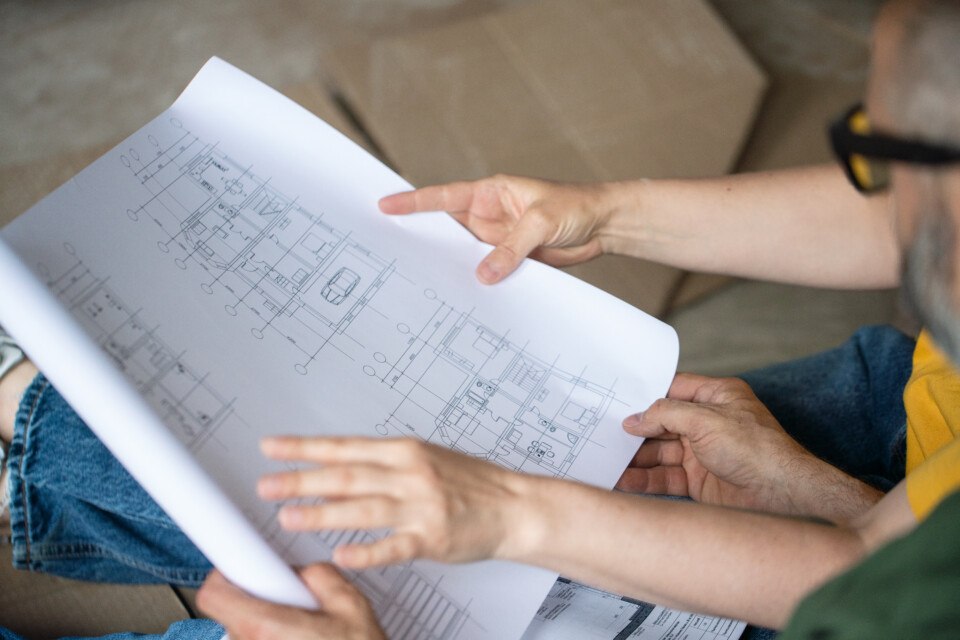
Home improvements are one common reason homeowners tap their equity, particularly when the project may add value to the property. But equity can also help cover other major expenses or consolidate higher-interest debt.
And that latter scenario is particularly relevant right now. U.S. credit-card balances reached $1.26 trillion in the second quarter of 2026, according to a report from the Federal Reserve Bank of New York.
For homeowners carrying high-interest credit-card debt while also sitting on substantial home equity, borrowing against that equity can offer a lower-cost way to repay what they already owe.
Ruben describes it as reducing the “cost to carry” the debt, but cautions against treating home equity like another source of everyday spending.
“I don’t advise people to get rid of your credit cards and use your house like a credit card,” he says. “That’s not prudent or smart or sustainable in my opinion.”
There’s also an important trade-off. While credit-card debt is generally unsecured, a home equity loan or line of credit is secured by your house.
So, while the lower rate may be appealing, the consequences of not repaying the debt are different.
Make a plan.

Ruben recommends deciding before borrowing how long you expect to need to repay the debt and what kind of monthly payment you can comfortably manage.
If you’re not sure how to make that calculation, talking it through with a lending professional can help clarify what you can realistically afford and whether borrowing against your home makes sense in the first place.
“We feel that we’re in an advisory role,” Ruben says. “We’re going to show you how to use this, how it works, and hopefully help you make a good financial decision.”
Understanding the structure of your loan matters, too. A home equity loan typically has a fixed rate and fixed repayment term. In contrast, a home equity line of credit, or HELOC, lets homeowners borrow as needed up to an approved limit during a set draw period.
What type of product you want largely depends on how much money you need, how quickly you expect to repay it, and how much flexibility you want in accessing the funds.
Look beyond the interest rate.
Before choosing a home equity loan or line of credit, Ruben recommends asking about fees, closing costs, and other charges, including costs added to the loan afterward rather than paid upfront.
“I want to know not just what I’m going to pay out of pocket, but what are the real costs?” Ruben says.
And keep the bigger picture in mind. As Gillen puts it, homeowners shouldn’t “treat your Zillow estimate like a windfall increase in your ATM balance.”
Your home may be worth considerably more than it was five years ago. That can give you options. But the goal isn’t simply to access as much of that value as possible. It’s to decide whether putting your equity to work leaves your finances—and the asset that helped build that wealth in the first place—in a stronger position.
This piece is part of a multi-year editorial series sponsored by WSFS Bank and Bryn Mawr Trust.

Have a financial topic you’d like to know more about? Submit your question here, and we’ll do our best to answer it.