This Philly Organization Is Helping Close the Reading Gap–and Give More Teachers The Tools They Need

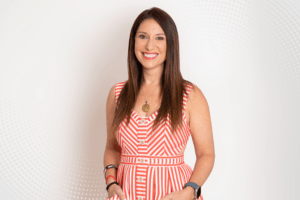
Success stories make Tamara Smith proud, but the waiting list is what keeps her awake.
As executive director of Reading Allowed, a Philadelphia nonprofit providing evidence-based literacy instruction to children, Smith sees both what targeted support can accomplish and how many families are still waiting to access it.
“There are lots of stories of success I could share,” Smith says. “But if I’m being honest, the stories that really stick with me, that fuel me every single day to go as fast as I can and do all I can, are the families that we don’t quite have the money yet” to serve.
For Smith, Reading Allowed’s executive director, each name on that list represents a child losing valuable time.
She thinks about the mother whose daughter receives literacy instruction through Reading Allowed while her son, who needs the same support, waits for an opening. She thinks about the students she meets who are navigating a learning disability and the parents who advocate tirelessly for them, even as funding limits how quickly the organization can bring them into the program.
“Being on that waiting list for an extra three months can have an impact,” Smith says. “I want to move faster to do all I can to help support their children.”
A Gateway to Opportunity
The need for programs like Reading Allowed is urgent across Philadelphia. In 2023, only 34 percent of School District of Philadelphia students in grades three through eight scored proficient on the state English language arts assessment. And, among third graders, that figure was just 31 percent.
While PSD has since reported a 6.2-percentage-point increase in third graders over the last two years, its long-term goal of reaching 62 percent by 2030 underscores how much work remains.
Smith knows those numbers all too well as both an educator and director. She spent more than 20 years helping children learn how to read. After college, she ditched her plans for law school and instead became a high school English teacher in the Philly School District.
“I had a change of heart, and the rest is history,” she notes.
Smith was born in Philadelphia and raised in South Jersey as the oldest daughter of two first-generation college graduates. Her parents encouraged her love of books and helped her understand what education could make possible.
“I have always had a love for reading and recognized the power of it,” she says. Reading “helped to shape a lot of how I saw the world.”
That experience informs her belief that literacy is about far more than performing well in English class.
“Literacy is quite literally the gateway to success,” Smith says. “It is the foundation of so much when we talk about job preparedness.”
Meeting Each Child Where They Are
Founded in 2019, Reading Allowed provides evidence-based literacy instruction from experienced educators, many of whom are certified reading specialists or trained in programs designed to support students with significant reading challenges.
“We recognize that in order to move the needle and make significant progress, we have to have that really targeted, structured curriculum,” Smith says.
The organization works with individual families, underserved schools, and community partners. Fees are based on a family’s income, and some students receive instruction at no cost.
“Whether you can pay or not, we serve kids,” Smith says. “Our focus, unapologetically, is our low- to moderate-income families.”
Although Reading Allowed’s methods are rooted in cognitive science, Smith does not begin conversations with families by reciting technical terminology. She begins by listening.
“What do you see at home?” she asks parents. “What do they feel when they’re reading? What do they feel the biggest challenges are?”
There is no single program that works for every student, Smith says. The team studies each child’s needs and selects the combination of instruction most likely to help.
“What parents really want to know is that we’re there to care,” she says, “that we also have the evidence that the work we have done works.”
Protecting Confidence Along With Progress
On average, Smith says, participating students achieve close to 80 percent of their projected growth. But she is careful not to reduce a child’s progress to numbers alone.
“I don’t believe in moving 1,000 miles per hour at the sake of a child’s mental and physical health and well-being,” she says.
Some children progress quickly. Others take smaller steps. What matters is that they keep moving forward without losing their confidence or the chance to enjoy childhood.
“Slow progress is progress,” she notes. “I want to maintain that children can still be children.”
Reading Allowed’s school partnerships help make that support part of a child’s regular day rather than another obligation after school. Instructors become part of the school community and work alongside teachers, administrators, social workers and families.
“It does take a village to raise a child,” Smith says. Reading Allowed’s role is to support “our most challenged, but also equally brilliant, readers.”
Smith hopes to expand the program into more schools, reach as many as 350 children and train additional instructors, including more reading specialists of color who reflect the communities they serve.
But before those plans can become reality, there are children waiting.
“That is what fuels me,” Smith says. “That is what gets me up every day.”
This article is part of The Caring Collective, presented by Independence Blue Cross, spotlighting the people, organizations, and everyday acts of kindness that help strengthen communities throughout Greater Philadelphia.
This is a paid partnership between Independence Blue Cross and Philadelphia Magazine