It’s Time to Look at the Financial Impact of Preterm Birth

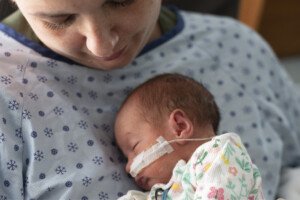
This is particularly true when a baby arrives early and requires care in the neonatal intensive care unit (NICU), sometimes for weeks or months. The impact of that experience extends far beyond the hospital walls by affecting a family’s finances, mental health and ability to work.
One in 10 babies in the United States is born preterm, before 37 weeks gestation, according to March of Dimes. Most of those babies require care in the NICU.
For parents, the baby’s health is their foremost concern. But alongside that medical uncertainty come a range of practical and financial challenges, such as transportation to and from the hospital, childcare for older siblings, expensive meals in hospital cafeterias, and often, time away from work.
An analysis of U.S. NICU stays from 2017 to 2022, published earlier this year, found that NICU admission rates increased by 37%, while the medical complexity of cases also increased, resulting in longer hospital stays and higher costs. Costs ranged from $15,449 to $275,208, depending on gestational age, an expense many families have difficulty shouldering.
A NICU stay is not just a healthcare issue—it’s also a workforce one. “If an employer has plans in place to cover leave, and the parents can focus on the baby’s care, that would really empower parents who are often overwhelmed emotionally and also worried about money and their jobs,” says Dr. Jay Greenspan, medical director of neonatology at CHOP Newborn Care at Virtua Health. “When you have an employer who doesn’t have these benefits, it makes it an additional area of stress and worry.”
Employers have an opportunity to reduce some of that burden by creating a workplace culture that supports working parents with meaningful parental leave for families facing unexpected medical challenges and by helping employees navigate pregnancy and postpartum care.
“If we want to do right by women, we need to agree that having a baby is an incredibly stressful time, and having a baby in the NICU is even more so,” Dr. Greenspan says. “They need services and support.”
Rethinking Parental Leave
One of the most important steps employers can take is offering longer, more flexible leave that accounts for the realities of a preterm birth.
Dr. Greenspan looks to European countries as a model, where preemies are given universal medical coverage and parents receive additional parental leave if their newborn is hospitalized.
“In Europe, maternity leave doesn’t start until the baby comes home from the NICU—it’s additional time, so they don’t have to make hard choices,” Dr. Greenspan says. “I see moms struggling all the time with whether to take their six-week maternity leave when the baby is sick in the NICU, or when the baby is able to come home.”
This can force parents to use precious leave when they are spending their days in a hospital, only to return to work just as their baby is finally discharged.
Dr. Greenspan says the co-parent should also receive six weeks of leave when a baby is in the NICU, in addition to parental leave. The birthing parent may not yet be able to drive and may need help caring for the baby while recovering from childbirth. And the non-birthing parent also needs time to bond with their baby.
The Family and Medical Leave Act provides eligible employees with job-protected leave for qualifying family and medical reasons, including caring for a newborn with a serious health condition. Paid leave remains limited in the United States, though some states are changing that. New Jersey, for example, expanded eligibility and benefits this year so eligible parents would receive wage replacement of up to 85% of their weekly wage for 10 to 12 weeks after delivering a preterm baby, up to 12 weeks of paid bonding time and 12 weeks of unpaid, job-protected leave. Policies such as these can help address the financial pressures of a NICU stay.
Supporting Parents Beyond the Hospital
Leave is only one part of the equation. Parents also need support for their own physical and mental health. Dr. Greenspan advocates for better mental health services for parents of premature or sick infants, a need that can be overlooked while the baby is receiving intensive medical care.
Many women skip their postpartum appointments because they don’t want to leave the baby. Insurers should be more proactive and reach out to mothers who miss those appointments, as they provide an opportunity to check blood pressure and glucose levels and conduct a mental health assessment, Dr. Greenspan says. “This would save mom’s lives, and costs as well.”
An Investment in the Workforce
Providing several months of leave may come with a short-term cost to employers with reduced productivity, staffing challenges or extended absences. But a NICU stay is a temporary crisis in a long career. A benefits system that is established before a family needs it allows parents to focus on their baby and their own recovery rather than scrambling to figure out how to balance a medical emergency with their job.
Supporting maternal and infant health is not simply an act of goodwill. It can help create a workplace where employees can step away when their families need them most and return with greater stability once the crisis has passed. The return on that investment is measured not only in dollars saved, but in parents who can be present for their babies, employees who can return to work with greater stability, and families who have the opportunity to thrive.
This is a paid partnership between March Strong and Philadelphia Magazine