
Delco Getting Wild North Philly All-Day Breakfast Joint in Wilson’s Secret Sauce Space

Philly performers Tizz 215 and Cartier 215 in a promotional rap video for the Wiz, the North Philadelphia all-day breakfast spot set to take over the Wilson’s Secret Sauce space in Delco / image courtesy of The Wiz
The talk of the town in Delco of late has not been the geopolitical mess we find ourselves in or AI taking over the world or the upcoming midterm elections. No, everybody in Delco is talking about Wilson’s Secret Sauce, the Upper Darby barbecue restaurant that is soon closing its doors on Township Line Road, one year after Gordon Ramsay showed up to “save” it in what turned out to be a very poorly done restaurant “reality” show, Gordon Ramsay’s Secret Service. And now comes word of what will replace Wilson’s Secret Sauce: all-day North Philadelphia breakfast and brunch joint The Wiz Cafe.
Thomas Montgomery Jr., who opened The Wiz Cafe at 3622 North 17th Street in July 2020, and Wilson’s Secret Sauce owner Steve Wilson both confirm that the two parties have reached an agreement and expect to settle in mid-April, with Montgomery telling Foobooz he hopes to open the Upper Darby edition of The Wiz Cafe in time for Mother’s Day in May.
The Wiz is known for its shrimp and grits, chicken and waffles, and somewhat ridiculous sandwiches that stuff fried chicken and other meats like beef bacon and jerk chicken sausage in between Fruity Pebbles-covered slices of French toast as much as it is for its very savvy social media presence, which includes promotional rap videos such as this one:
(My entire household was singing along to this for the better part of Sunday morning. Well done.)
Other than washing dishes and making pancakes at a breakfast spot his grandmother opened near 24th and Sedgley in the late 1990s, Montgomery had no experience in the restaurant business before opening the Wiz. He graduated from Indiana University of Pennsylvania with degrees in sales and marketing and eventually became a licensed contractor and real estate broker. Before opening the Wiz, Montgomery was flipping houses left and right.

Thomas Montgomery Jr. in a promotional rap video for the Wiz, which is soon to open in Upper Darby where Wilson’s Secret Sauce is today (Image courtesy The Wiz)
He intends to leave the day-to-day of the original Wiz in the hands of employees who have been with him for a while so that he can concentrate on the Upper Darby location, for which he is currently hiring. The Wiz in North Philly is primarily a takeout location. He expects to have more extended hours in Upper Darby and wants to do as much sit-down business as possible.
“You have a ton of vehicles coming down Township Line Road,” he rightly points out. “You have all the doctors and nurses at Lankenau Hospital, which is seven minutes away. And college kids love the Wiz. You have St. Joe’s, you have Villanova and the other schools nearby. Plus, I’m going to have a barista. It’s really hard to get proper coffee in this area.”
He’s not wrong about that.
Montgomery says that he had one kid when he opened the original Wiz. He’s now up to three.
“There’s a lot to juggle between being a dad an a business owner,” he admits. “But I’m here for it.”
Japanese Breakfast’s Michelle Zauner Just Released a Jewelry Collab With Catbird, and We’re Obsessed

Michelle Zauner of Japanese Breakfast models her new Catbird jewelry collab / Photography by Pak Bae courtesy of Catbird
Michelle Zauner — the Best of Philly-winning lead singer of Japanese Breakfast and author of Crying in H Mart — has added another creative outlet: jewelry. Catbird just released their collaboration with Zauner, an eight-piece collection of delicate pieces inspired by her music and personal life. The line includes charms, rings, bracelets, and even a brooch, with versions in both solid 10-karat gold and sterling silver. The collection is available now, online and in stores. (Psst … There’s one in Rittenhouse!)
The collection draws inspiration from the themes of Japanese Breakfast’s fourth album, For Melancholy Brunettes (& Sad Women), and lean into the dreamy, romantic imagery that runs through much of Zauner’s work.
The “Honey Water” bracelet, for example, is named for the album’s third track and depicts crawling ants, as a callback to the lyrics “The lure of honey water draws you … You follow in colonies.” (There’s also a matching charm.)

And in reference to the mythic and oceanic themes of “Orlando in Love,” much of the jewelry collection features shells. There’s the ring named after the song, and one of the collection’s standout pieces, the “Venus from a Shell” charm, which can also be converted to a brooch.
Another favorite piece is the “Sing Me to Sleep” ring — a reference to her second album’s song “Till Death” — which features a gorgeous cabochon seafoam aquamarine stone.

Other pieces, for particularly keen-eyed fans, draw more on Japanese Breakfast’s live performances. As Zauner told Elle, the lantern charm recalls the set design from her last tour; and the adorable paper crown rings are an homage to the crowns fans wear to their concerts — themselves a callback to one Zauner wore at Coachella last year.

The launch also includes a philanthropic component: In celebration of the launch, Catbird is donating $10,000 to the Immigrant Defense Network.
Where Is the Constitution Center When We Need It?
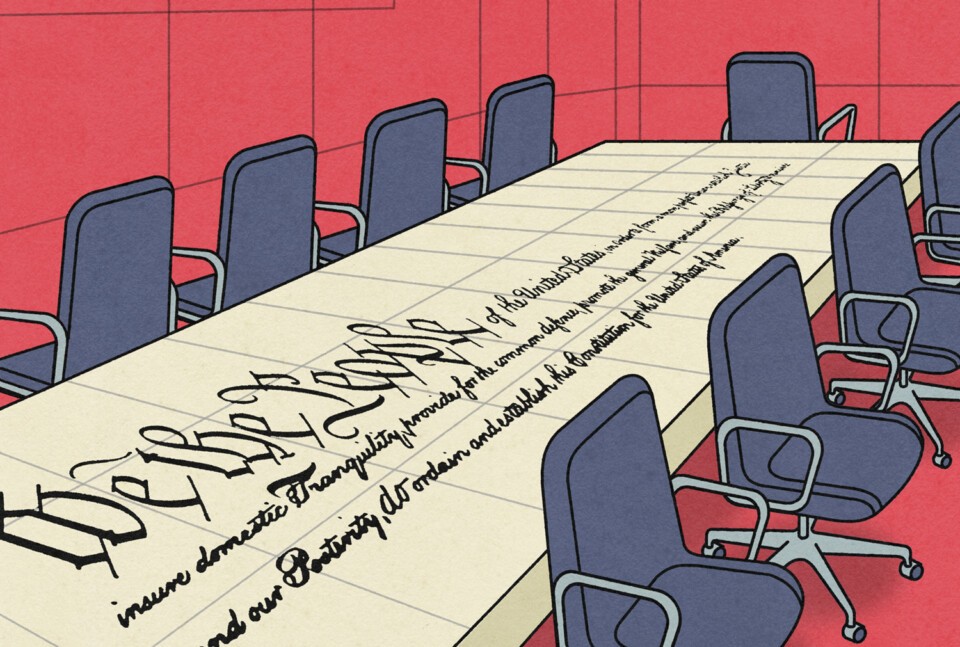
Where have you gone, National Constitution Center? / Illustration by Dan Page
Listen to the audio edition here:
In January, as 10 masked federal ICE agents maced and then fatally shot protester Alex Pretti on a frigid Minnesota street, here’s what the National Constitution Center, Philadelphia’s shrine to the values of freedom and liberty, posted on X:
Matthew Continetti of @AEI explains the emergence of conservatism in American [sic] following President Franklin Roosevelt’s New Deal.
Accompanying the post was a short video clip of the baby-faced conservative thinker.
Within a few hours, Stephen Miller was calling Pretti — an ICU nurse with no criminal record — a “domestic terrorist” who “tried to assassinate law enforcement,” while Kristi Noem was characterizing Pretti’s actions as “the definition of domestic terrorism.” In a matter of days, video proof would expose these lies. But at the time, here’s what the National Constitution Center posted:
#OnThisDay in 1979, Vice President Nelson Rockefeller dies. Hear historian Richard Norton Smith discuss the legacy of this politician’s unique position as a liberal Republican in mid-century America.
For many of us who love the Constitution and have long been inspired by the National Constitution Center, reading those posts was a gut punch. It is not partisan to speak that which is plainly obvious: When citizens of color on our streets must routinely produce their papers for masked lawmen, as in Minnesota of late, we have become Soweto in the ’60s.
The Constitution is under assault. That the National Constitution Center has not been shouting so — that it has not only declined to lead on the essential questions of our day but has essentially absented itself from the debate — is to fail at meeting this moment.
But that could change. As you might have read back in January in the New York Times, the Center has just undergone a contentious change in leadership. After 12 years, CEO and president Jeffrey Rosen is out. Trustee Judge Michael Luttig — a prominent conservative Trump critic and Rosen supporter — has stepped down from the board in protest over the change, even threatening to sue the institution.
Yes, it is another board seeming to have a nervous breakdown, as we’ve seen at the Philadelphia Art Museum, the University of the Arts, the Pennsylvania Academy of the Fine Arts, and Community College of Philadelphia. But put that aside; there is something unique about the context the NCC finds itself in. Here lies opportunity, if the boldface names on the NCC board recognize that the story isn’t about who runs the place, but about what the institution stands for.
This is not a new question for the NCC; current events just give it added urgency. Way back in 2011 — two years after the Center had featured a Lady Di exhibition and a year before one on Bruce Springsteen — the Center’s founding chairman, Ted Wolf, worried that the institution was slipping into irrelevance. He told Philly Mag it was “getting, not too conservative politically, but conservative risk-wise. There should be more involvement in some of the more dangerous, controversial matters. The Constitution Center should become involved and get its hands dirty a little bit and take some risks.”
Rosen is an intellectual giant whose books and reverence for Madisonian reasonableness make eggheads like yours truly swoon. But we’re the already converted. In the last year, as the Trump administration has sought retaliation against its critics, defied court orders, bypassed Senate confirmations, impounded congressionally appropriated funds, trampled due process in immigration, and more than chipped away at long-established free speech rights, the NCC has seemed thoughtfully bemused — willing, perhaps, to write a strongly worded letter if the mood struck.
It has become driven more by the head than the heart, not, in the words of founding CEO Joe Torsella at its 2003 opening, a place where you “enter as a visitor and leave as a citizen.”
Case in point: Gone from the NCC’s wall is this quote from federal Judge Learned Hand, which speaks to the spirit of our experiment better than any white paper ever could:
I often wonder whether we do not rest our hopes too much upon constitutions, upon laws and upon courts. These are false hopes; believe me, these are false hopes. Liberty lies in the hearts of men and women; when it dies there, no constitution, no law, no court can even do much to help it. While it lies there it needs no constitution, no law, no court to save it.
This is what Torsella meant when he suggested that, as originally proposed by then-Mayor Ed Rendell, the Center’s mission was to create citizens. The museum was designed to tell us a story, yes, but then shift the onus back onto us. Sure, having folks affix their signatures to the Constitution — or not — at the end of the Signers’ Hall tour could be seen as gimmicky. But it also asked of us: What would you do? If the vast majority of your neighbors were loyal to the crown, would you be a revolutionary? Would you face death for an idea? Perhaps confronting us with those questions might steel us for this moment, no?
If you’re not built for this moment, please tear the building down and put up a Wendy’s.” — Constitution Center founding CEO Joe Torsella
In February, the Center unveiled its new permanent exhibition, “America’s Founding,” which it describes as “a dynamic, interactive exploration of the American Revolution and the creation of the Constitution and Bill of Rights.” Sounds a little like Ken Burns for museum lovers, doesn’t it? Irony of ironies: It’s a Rosen and Luttig joint, and they’re both now outta there.
I am hopeful that it will be more than a scholarly recitation of facts, that it will be, instead, something that awakens the civic soul resting in each of us. That’s what my frequent jaunts to 6th and Arch in the mid-aughts used to do; I’d go just to watch Freedom Rising, the 17-minute, 360-degree theatrical experience that never fails to make me tear up.
It makes you realize there really is this thing called American exceptionalism, but it is by no means inevitable; it is built on the blood of patriots, a birthright we must actively claim.
That’s why the National Constitution Center ought to embrace being the antidote to what ails democracy right now. That might require some reputational risk from some on its board — a fraction of what the actual Founders put on the line.
I reached out to Torsella, the former Rhodes Scholar and state treasurer turned aspiring thespian. He’s had two stints as CEO, and he laughed when I asked if he was contemplating putting the band back together again. “No U.S. president [since FDR] has served three terms,” he said, before pausing. “Uh, yet.” He expressed his admiration for Rosen’s 12-year run but indulged my hypothetical: If he were CEO, what’s the first thing he’d do?
“I’d hold a press conference and say publicly to the slavery exhibit at Washington’s President’s House that you are homeless no more,” Torsella said. “You now have a home at the National Constitution Center.”
The purpose, he was quick to add, would not be to tussle with Trump. “But if you’re not built for this moment, please tear the building down and put up a Wendy’s,” he said.
I originally called Torsella because I thought I’d come up with a list of CEO candidates. In the scholar realm, for example, there’s Judge Michael McConnell, director of the Stanford Constitutional Law Center at Stanford Law School. He’s an impeccable jurist — impossible to pigeonhole. He once signed a petition for a constitutional amendment to ban abortion, but he’s also argued that the Supreme Court’s Brown v. Board of Ed ruling was decided in accordance with “originalism” — the Framers’ explicit intent. He lambasted the Supremes over Bush v. Gore and last year authored an influential amicus brief challenging Trump’s constitutional power to tariff.
Then there’s NYU law professor Melissa Murray, a frequent commentator on MS NOW, who, along with the more conservative but no less qualified Ilya Shapiro, was part of the NCC’s really cool Constitution Drafting Project, which featured three groups of scholars — conservative, progressive, and libertarian — tasked with drafting their ideal constitutions. (The kicker? It was funded by none other than the Keystone State’s own Darth Vader, the ever-surprising Jeff Yass.) Other names come to mind too. How cool would it be for Liz Cheney to be named CEO or at least given a board seat? That would certainly send a message that the constitutional game knows no team color.
But Torsella persuaded me that it doesn’t matter who is in charge, so long as the institution rises to the occasion, takes some risks, and dedicates itself to defending the document. It is not partisan, after all, to merely call out the fact that the Reichstag is burning.
What would that look like? Maybe, rather than the Liberty Medal being bestowed upon Hamilton biographer Ron Chernow and the cast of the Broadway play — as if long-held constitutional norms are not imperiled — it should go to those in the trenches. Imagine honoring, say, Lisa Cook, the Federal Reserve governor who has refused to succumb to bullying; or CHOP’s Paul Offit, who won’t stop speaking truth to Kennedy; or Rachel Cohen, the young associate pulling in $300,000 per year at the prestigious Skadden, Arps law firm who resigned in protest when her bosses succumbed to administration shakedowns and went on to work with a boutique firm fighting governmental overreach; or Jamie Green, the queer, progressive caseworker at a St. Louis transgender care center who blew the whistle on her employer’s treatment of kids suffering from gender dysphoria. All of these awardees would have their naysayers, which would kind of be the point. The only speech worth having is that which others are moved to answer.
Most of all, rethinking the Constitution Center’s mission would mean appealing not just to reason, but to our shared sense of emotion. You know who gets that distinction? Musicians. When I want to feel better? I stop thinking and flip on a little Al Green or Sly Stone. Which brings us to the 2007 Liberty Medal ceremony on the lawn outside the Constitution Center. That year’s recipient, rocker and activist Bono, delivered a speech that was, by turns, bawdy, mischievous, and as patriotic as anything an international rock icon from Dublin has ever conveyed. The 2,500 people in attendance that night walked away marveling at this miracle called democracy because Paul David Hewson had just recited a tone poem that went straight to their gut.
“Let me set my foot here, and say to you tonight this is my country,” he said. “Let me say, with humility and pride in my own country, that anyone who has a stake in liberty has a stake in the United States of America. For all that you’ve been through — good and bad — this is my country, too.”
And then he did something the board of the National Constitution Center and its next CEO ought to think about emulating. He wasn’t afraid of pissing anyone off, and he challenged a diverse group to rally around a common purpose. He referenced the last paragraph of the Declaration of Independence: “And for the support of this Declaration, with a firm reliance on the protection of divine Providence, we mutually pledge to each other our Lives, our Fortunes and our sacred Honor.”
You don’t hear phrases like “sacred honor” much anymore, do you? Nor do we often face the stakes the Founders confronted; they knew they were committing treason. Yet they pledged their loyalty to one another and the cause of freedom. That night, with two former presidents — Clinton and Bush the elder — seated behind him, the rock star offered an object lesson for the very institution honoring him.
“What, then, about you and me?” Bono said. “What are we ready to pledge?”
Published as “Uh … Hello? Constitution Center?” in the March 2026 issue of Philadelphia magazine.
9 New and Upcoming Books With Philly Connections
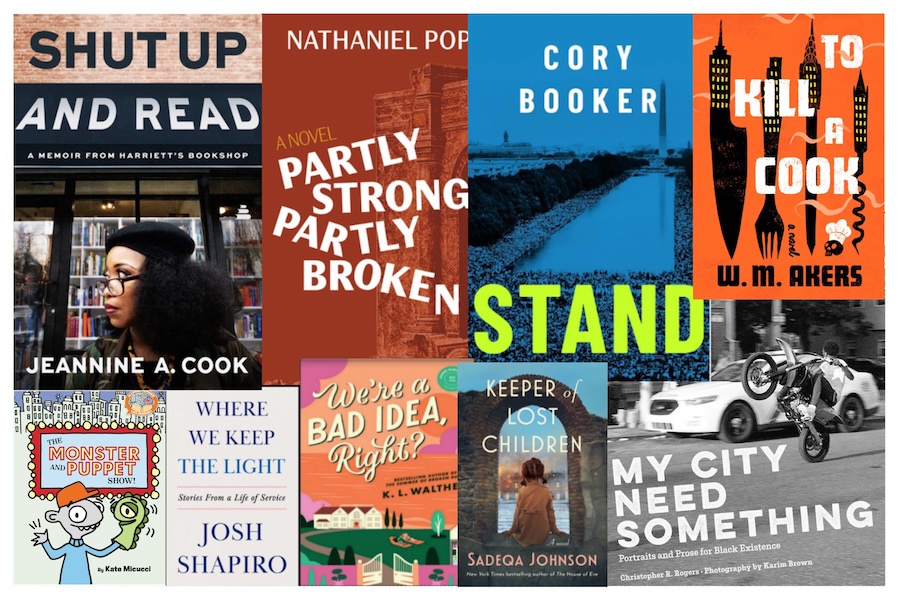
Where We Keep the Light: Stories From a Life of Service
by Governor Josh Shapiro
Pennsylvanians (and everybody else) should probably get to know our governor a little better, as he is likely to stay in the “presidential possible” conversation for a while. In this mid-career memoir, Shapiro opens up about faith, family, and politics, including the firebombing of the governor’s residence in Harrisburg last April and his stint on Kamala Harris’s VP shortlist in 2024. The New York Times recently gave the book a shout-out, highlighting some of the tea Shapiro spills: “Ultimately, he said, he decided to withdraw from the process himself. He asked to be connected with Harris to share the decision, he wrote, but said he was told ‘the VP would not handle bad news well and that I shouldn’t push.’” Harper Collins, out now.
To Kill A Cook
by W.M. Akers
The Philly-based author of Critical Hit and Westside returns with another engrossing mystery novel, this time about a food critic trying solve the murder of her chef friend in ’70s New York. To Kill A Cook is billed as a both a gritty crime story and a “feminist screwball comedy,” and Publishers’ Weekly calls it “pure fun.” Putnam, out now.
My City Need Something: Portraits and Prose for Black Existence
by Christopher R. Rogers
Packed with vivid text and black-and-white images by photographer Karim Brown, this slim, stylish tome is an open letter to PnB Rock, the rising Philly rapper who was robbed and killed in Los Angeles in 2022. In the 2014 song for which this book was named, Rock offered a laundry list of issues plaguing his North Philly neighborhood (senseless gun violence, unresponsive police, “missing babies”). Here organizer/educator Christopher R. Rogers picks up the torch; whereas the song left the listener unsure about the Something this city needs, Rogers’s book arrives, tentatively, at a few suggestions — love, community, hope, clear eyes — all the while referencing June Jordan, Jalen Hurts, Toni Morrison, and more. Deeply personal and unapologetically digressive, My City Need Something offers a peephole into the lives of beautiful people on troubled streets in a Philadelphia most of us only half know. Common Notions, out now.
Keeper of Lost Children
by Sadeqa Johnson
The Philly-born Johnson — whose trophy case includes accolades from Goodreads, the NAACP, and Reese Witherspoon — explores the lives of mixed-race children orphaned by WWII in her much anticipated new historical novel. When All Things Considered talked to Johnson about using fiction to bring difficult historical truths to light, Johnson explained her craft thusly: “I think that what I’m doing is sort of leaving a road map for the younger generations. I always tell my kids, if we don’t know where we came from, we have no idea of how to make sense of the times that we’re in now. I see historical fiction as a way to make our American history a little bit more palpable. You know, it’s easier to swallow than a textbook.” Simon and Schuster, out now.
The Monster and Puppet Show
by Kate Micucci
The forever-adorbs multi-hyphenate — you may know her from Scrubs, Garfunkel and Oates, lots of cartoons, and Instagram, where she turns curbside trash into whimsical works of art — recently released her first children’s book, about a monster and puppet who put on a show. The New York-based Micucci returns to her hometown of Nazareth on March 21st for a live reading. Hachette, out now.
Shut up and Read: A Memoir from Harriett’s Bookshop
by Jeannine A. Cook
In 2025, Jeannine A. Cook turned heads with her kinda dreamy, loosely autobiographical debut novel It’s Me They Follow, about an aspiring writer and Black entrepreneur opening an independent bookshop — the excellent Harriett’s Bookshop — in Fishtown. Less than a year later, here’s the gritty and direct Shut up and Read — a de-mythologized memoir about opening that same Fishtown bookshop, surviving the pandemic and becoming a phenomenon well outside of her hometown. Harper Collins, March 10th.
Stand
by Senator Cory Booker
The second presidential hopeful in our list (or third? Rooting for you, Ms. Micucci), New Jersey Senator Cory Booker delivers a message of unity and talks principles in his second book (following his 2016 memoir, United). Stand is said to expand upon his record-setting 25-hour speech delivered on the Senate floor just about a year ago in which he spoke passionately against Donald Trump’s anti-Constitutional rhetoric and executive orders. Booker’s March 26th appearance at the Parkway Central Library is already sold out. St. Martin’s Press, March 24th.
We’re A Bad Idea, Right?
by K.L. Walther
Prolific Bucks County-born author K.L. Walther specializes in beachy, YA romance novels (including The Summer of Broken Rules, What Happens After Midnight, and While We’re Young). In We’re A Bad Idea, Right?, two best friends fake a relationship for rom-com reasons and end up flirting with the real deal. Walther will discuss and sign We’re A Bad Idea, Right? with fellow novelist Betty Corello at the Center City Barnes and Noble on April 3rd. Penguin Random House, March 31st.
Partly Strong, Partly Broken
by Nathaniel Popkin
The always-busy Philly author — known for both his fiction and non, including Song of the City: An Intimate History of the American Urban Landscape and Philadelphia: Finding the Hidden City — returns with a new novel about a rabbi struggling to keep her interfaith community from unraveling just before the start of the horrific 2023 attack on Israel and subsequent devastation of Palestine. Sounds heavy, but Popkin’s compassionate storytelling will likely make this a rewarding read. He will discuss his work with journalist Karen Heller at the Athenaeum in Philadelphia on May 5th. New Door, May 5th.
Ideas We Should Steal: Make Restaurant Reuse Easy
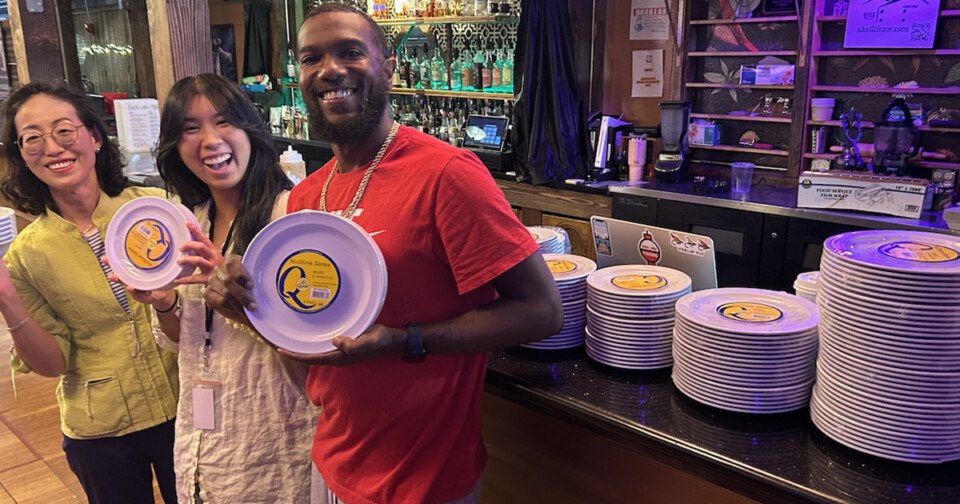
A Seattle program has encouraged both mom-and-pop eateries and behemoths like Starbucks to pare down their customer-facing waste. Could litter-burdened Philly do the same?
Popular Delco Restaurant Closing One Year After Gordon Ramsay Came to “Help”

A sign at Wilson’s Secret Sauce barbecue restaurant in Upper Darby, which appeared on the Fox series Gordon Ramsay’s Secret Service. / Wilson’s Secret Sauce photograph, provided; Gordon Ramsay photograph via Getty
UPDATE: March 8, 2026. We now know what restaurant is set to replace Wilson’s Secret Sauce in Delco. Is Delco ready for The Wiz?
ORIGINAL:
This time last year, Delco was all a-twitter after a resident spotted celebrity chef Gordon Ramsay walking down the street in Upper Darby. It turned out he was here to “save” popular Best of Philly-winning barbecue joint Wilson’s Secret Sauce via a new Fox show, Gordon Ramsay’s Secret Service, which was all about “America’s filthiest restaurants.” (Wilson’s turned out to be not the least bit filthy.)
One year later, after Ramsay exited the premises, Wilson’s Secret Sauce is closing its sit-down restaurant – just like Philly restaurants Zocalo and the Hot Potato Cafe closed not long after getting the Gordon Ramsay treatment years ago — and selling their building. Here, husband-and-wife team Steve and Kelly Wilson talk about their experience living through a restaurant “reality” show and what’s next for them.
Steve Wilson: I was a mechanic for many years and started smoking ribs and brisket on the side as a hobby. Garry Maddox used to have a big barbecue competition down at the ballpark, and we entered and took first in chicken and second in ribs a couple of times. This evolved into doing a bit of catering, which grew quickly to the point where we couldn’t do it out of our house.
The location you chose on Township Line Road has always seemed like a doomed address to me. Before you, nothing really took off there.
SW: Yes, it was an Indian place, it was a crab cake place, it was something else — I think a pizza place? This guy I bowled with owned the building, and he convinced me to sign a lease. Then COVID hit, and banks were like, “You really want to buy real estate right now? Sure, here’s a mortgage.” So we bought the building.
Do you regret buying it?
SW: Not at all. We’re going to set up a ghost kitchen in Delco – we have a friend who wants to open a bakery but doesn’t want to commit to her own space yet — so we can share that and just concentrate on the catering.
Why sell the sit-down spot in the first place, though?
SW: Our son is 13. He’s wrestling and playing football, and if we keep the restaurant, we’re going to miss out on so many things. Plus, it’s hard to keep staff there. It’s hard to bring in tables if I don’t have waitresses, and it’s hard to bring in waitresses without tables. And our dynamic is really about catering and events. We’re also selling it for more than we bought it for.
That’s always a good thing. So … Gordon Ramsay.
Kelly Wilson [joining the call as she’s getting her kids off to school]: Hi, Victor. It’s Kelly. Do you want my opinion or Steve’s?
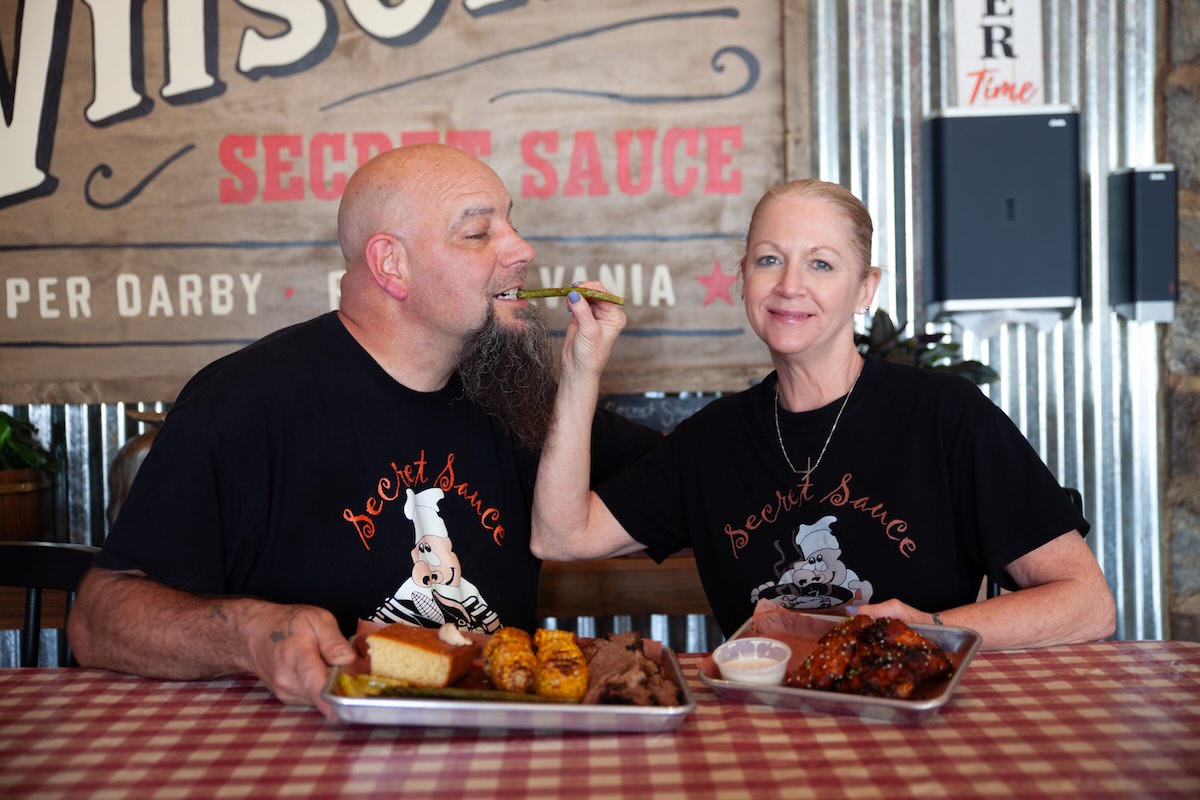
Steve and Kelly Wilson inside Wilson’s Secret Sauce in Upper Darby the week before the Gordon Ramsay’s Secret Service about them aired / Photograph by Kae Lani Palmisano
Go for it, Kelly!
SW: Just remember … It’s going down on paper!
KW: I mean, it’s not that I don’t appreciate some of the advice that he gave us. I’m sure it helped with some things. But business actually slowed down a bit since he came in.
Wow. I didn’t expect you to say that. I know the dining room isn’t often crowded when I come in, but you seem to do a heck of a lot of catering and takeout.
SW: When I look back at it and look at, “Are you still climbing, are you staying the same, or are you going backwards?” I have to say that last year was the first year that we went down year-to-year.
KW: Gordon Ramsay changed the menu. I didn’t feel like his menu … We had a lot of customers coming in from day one of the new menu begging us to bring the old menu back. We were getting lost with his menu, and our menu really worked a lot better.
SW: We had a lot of things on our menu, yes, and that drove Gordon crazy. But the thing is, our menu was just a combination of things we had in-house. We weren’t bringing in one thing to create some new dish. We are looking at a case of chickens and figuring out what new and different thing we could do with those chickens. But I think that overall, working with Gordon Ramsay was a great reality check, more than anything else. Some of the show was a little humiliating and I could have used more of a hand in the back office and less in the kitchen, but …
One of the things that came out in the show was that you are in debt for more than $600,000.
SW: Yeah, that sounds like a lot. But really, almost all of that is just two mortgages: one on our house in Havertown, and one on the restaurant. And the house and the restaurant are both worth the same amount of money or more than what we paid for them, and now we are getting out from under the restaurant. So it’s okay.
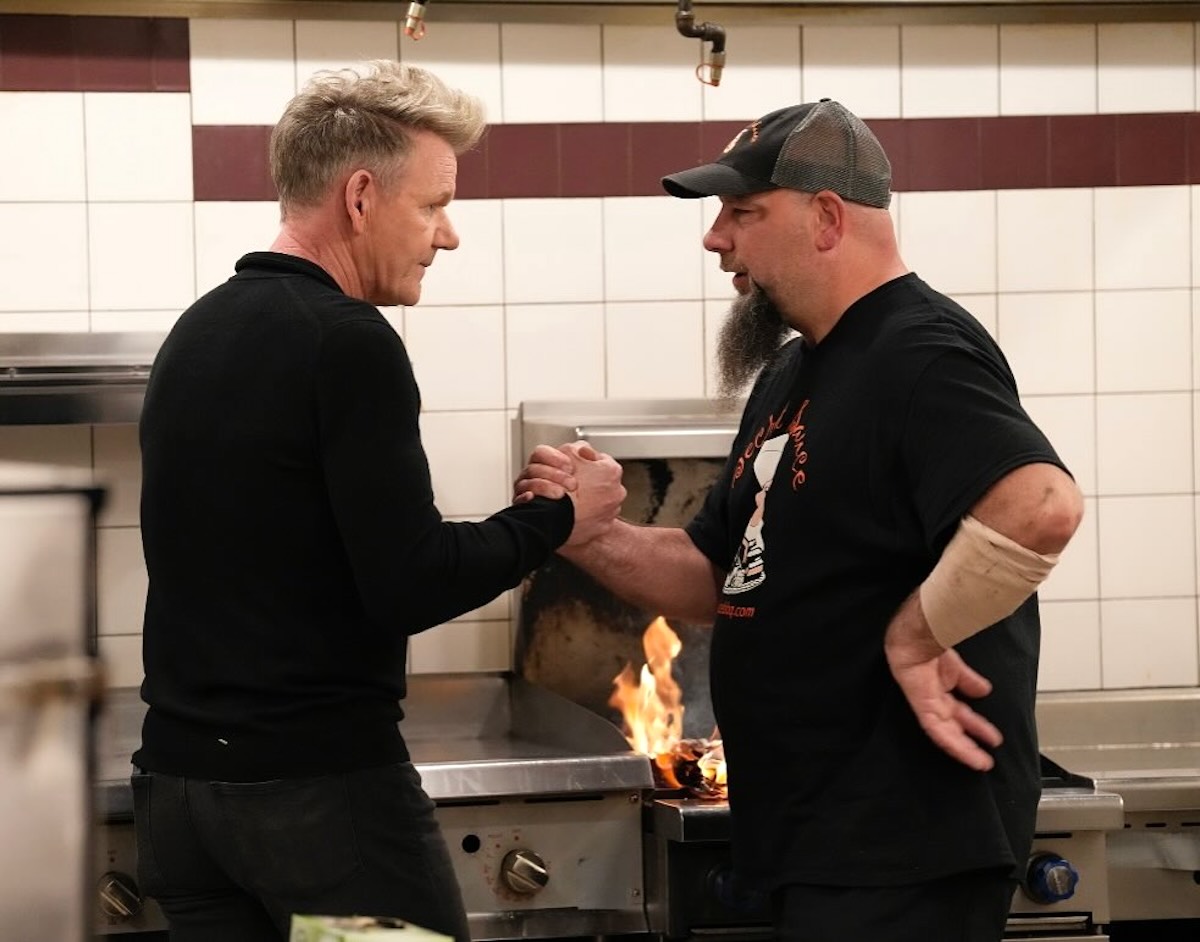
Gordon Ramsay with Wilson’s Secret Sauce owner and chef Steve Wilson in Upper Darby during the shooting of Gordon Ramsay’s Secret Service / Photograph via Fox
You mentioned being humiliated on the show.
SW: So, they basically kick you out of your restaurant. They showed up on a Friday and we had to hand over our keys and leave, and then they go in with Gordon and their cameras. So they show brisket in our walk-in, and they say, “Oh my God, they are going to reheat that brisket.” But that brisket was actually from that day and it was supposed to go to Barnaby’s in Havertown and the Greeks in Narberth. I wholesale my brisket out to them and they turn it into cheesesteak specials or quesadillas or tacos. And then, if you watch the episode, they’re watching us cook and saying, “Oh my God, he’s going to throw those burnt ends into the fryer.” They weren’t burnt ends at all. They were chicken wings.
My impression is that, at first, you didn’t realize any of this had anything to do with Gordon Ramsay.
SW: We weren’t approached by Gordon Ramsay or his people. We were approached by a network that said, “Hey, you want a makeover?”
Right, I saw that a restaurant in Rhode Island had complained that they were sold on this idea of getting a fresh new look for their restaurant, and nothing about Gordon Ramsay going undercover with infrared cameras in the middle of the night.
KW: No, they kind of tricked you about that!
SW: Well, they didn’t tell you exactly what the premise was. I wouldn’t say we were “tricked.”
But then the trailer comes out for the new series and they say it’s all about “America’s filthiest restaurants.” I can’t imagine how nervous that must have made you.
KW: I got really upset because, first of all, I take pride in keeping this restaurant clean and immaculate. I don’t want people to be skeeved touching things, to be grossed out because things are dirty and sticky. So it’s actually extremely clean.
SW: I think the production team was actually shocked they were here for the show, based on how clean the restaurant was.
KW: They really didn’t do much. The show was originally supposed to be a makeover show. They put some fresh paint up and changed the curtains and put plastic tablecloths down. We didn’t get a whole lot of new stuff like the restaurants in the other episodes.
Steve, you and I recently had a conversation about the cost of goods, where you were complaining that the price of a case of corn just went from $18 to $58. And I get that. But I also feel like there are some restaurants out there charging COVID pricing just because people are used to paying for it. I’m not going to name the spot, but I recently got a barely mediocre cheese pizza from a place in Delco, and it was more than $30 for a large pepperoni. So you’ve got some flour, some water, some low-quality cheese, and some low-quality pepperoni.
SW: Well, but you also have to keep in mind that a lot of places are paying people a much better hourly wage, because people won’t work for minimum wage anymore, in many cases. So, sure, that pizza might only cost them however much to make — but what about payroll and other overhead like rising utility costs, what about insurance that goes up and up every year? The cost of those pizza boxes went up.
KW: Well, hold on now. I do feel like there are businesses out there definitely taking advantage, like they just know people are going to pay, so they might as well just keep it that way. But Steve and I, we adjust our menu regularly. Our rib costs go up and down, so they go up and down on the menu. We were at $32 a rack, and now we’re at $28.
So you’ve opened a restaurant and now you are closing one. What advice do you have to people out there who say they want to open their own restaurant?
SW: I tell people all the time, if you are going to own your own business, whether it’s a restaurant or not, you have to own the real estate. If you don’t own, you’re just paying rent with nothing to show for it. If you buy and have a mortgage, you have that property to fall back on. You don’t want a landlord. You’re at the mercy of whatever the rent’s gonna be. Sure, you might have the benefit of more foot traffic in a mall or at a strip mall, but you’re going to get clobbered in every other way.
Kelly?
KW: [pauses] I would definitely find a mentor. Follow somebody around. Really look into it because there’s a lot more involved than you would think. Steve and I literally had to learn everything along the way. Be prepared to, if you have kids, you’re not going to see them a lot. It’s hard. [pauses]
SW: Hon, don’t cry,
KW: You miss a lot along the way. You miss weddings. And funerals. You miss your kids’ games. You miss your kids’ concerts.
I wish you a lot of luck.
SW and KW: Thank you.
How This Philly Chef Is Proving Snails Are a Real Greek Classic

Braised snails at Stina / Photography by Neal Santos
Welcome to Just One Dish, a Foobooz series that looks at an outstanding item on a Philly restaurant’s menu — the story behind the dish, how it’s made, and why you should be going out of your way to try it.
As the children of immigrants, Bobby Saritsoglou and his siblings would often sit around their dining room table in Upper Darby and listen to their mother Irini’s stories of foraging for food in post-World War II Greece. “They grew up very poor, and so did we,” the chef-owner of South Philly’s Stina tells me. Saritsoglou’s family arrived in the U.S., in 1975, along with a wave of Greek immigrants who fled their home country amid civil unrest after the military junta’s collapse. “She was always kind of like, ‘Oh, you think this is bad? Let me tell you about the village,’” he remembers. “But she would always tell the story about the snails.”
One of eight children in a family of tobacco farmers in Stefanovouno, a remote village in the central-northern region of Thessaly, Irini and her sisters were regularly tasked with gathering mushrooms, berries, and snails for dinner. After a rainy day, they’d return home with buckets full of the gastropods, and Saritsoglou’s grandmother would get an outdoor fire going. She’d bring together butter, garlic, parsley, and onions in a metal pot over the flames, then throw in the snails, cooking them low and slow. Once the snails were ready (and cool enough to handle), the family plucked them from the shells and ate them right out of the pan, always with homemade bread that they’d dunk into the buttery, herby sauce.
The story stuck, and decades later Saritsoglou is serving plates of snails at Stina, the Mediterranean restaurant he co-owns with his wife, Christina Kallas-Saritsoglou, and which is known for its wood-fired fare like pide (Turkish flatbread) and its emphasis on Greek flavors. There, the braised snails are smothered in a zingy, parsley-tinged beurre monté and arranged on a bed of fluffy miso skordalia (a garlicky potato dip), then topped with a sprinkling of sesame-almond crunch that enhances the nuttiness of the gastropods, and more parsley butter in the form of a bright green swirl. On the side there’s house-made sourdough bread, lightly toasted so it’s supple enough to tear up and hefty enough to bear a generous swipe of skordalia and a snail or two. Texturally, everything feels balanced, with the pillowy potato and garlic purée and tender snail meat interposed with crisp nuts and seeds. The result is a dish that feels both simple and luxurious, landing somewhere between rustic and refined without skewing too far in either direction.
Saritsoglou liked the idea of “translating” his mother’s snail dinner onto the plate, but his version isn’t a word-for-word translation of the dish she grew up eating. Instead, it’s more of an interpretation, an ode to his family’s foraging past — anchored by the same leading notes of parsley, garlic, and earthy snail — that he has elevated to serve in his restaurant.
While he isn’t foraging for the mollusks himself, Saritsoglou is thoughtful about sourcing; he gets snails from Peconic Escargot in Cutchogue, New York, in small batches to keep them fresh. (Because of this, snails aren’t always available at Stina, though they usually have them.) And unlike his grandmother who cooked the snails in parsley butter, he braises them with celery, onion, carrot, garlic, bay leaf, and a little vegetable stock in the kitchen’s wood-fired oven. He then folds them into the beurre monté, which is infused with lemon and parsley that’s been blanched, shocked, and puréed to a concentrated paste. As for the skordalia, his family didn’t eat snails with the Greek dip, but Saritsoglou thought it would be a fitting pairing, both in flavor — bringing forward the garlicky tone that was central to his grandmother’s snail dish — and as a cue to diners that snails can be, and are, Greek food.

“I really love to highlight dishes that are not thought of as Greek food,” he says, pointing out that snails are usually considered a staple of French fine dining, but they’ve been foraged and eaten by Greeks for centuries. In fact, in 2 C.E., the Greek physician Galen said, “All the Greeks eat snails every day.” These days, they’re still popular in some parts of the country. The mollusks are sometimes used as the meat in stifado (a Greek stew), and in Crete people eat kohli bourbouristi (also known as saliggaria) — snails cooked in olive oil, rosemary, and red wine vinegar — as a bar snack.
Saritsoglou tells me he didn’t grow up eating snails; after having them out of necessity in Greece, his mom wasn’t exactly seeking them out as a delicacy when she came to the U.S., where other kinds of meat (and yes, lamb) became more readily available to her. But he has had escargot in “the French style,” including at a restaurant in Athens, and recalls a snail dish he enjoyed at Thessaloniki’s Mourga a few years ago that felt much more Greek to him. He remembers that restaurant serving the gastropods over a hummus-like lentil purée, and though the dish wasn’t a direct influence on Saritsoglou’s braised snails, it certainly left an impression.
At Stina, the braised snails have a similar effect on diners — including Saritsoglou’s mother, who “loved” the dish when she tried it, he tells me. “It’s always delightfully surprising to see people embrace snails on a menu,” Saritsoglou says. Even if they’re not the number-one seller, he adds, “they go pretty fast.” (He’s found the same to be true with other snail-centric menu items he’s served in the past.) Now, he’s working on a spring iteration of the dish: likely parsley butter-coated snails sitting atop a phyllo pie shaped like the creature’s shell and filled with parsley, roasted shallots, garlic, and butter. Sure, it’s a departure from the braised snails (and I’ll miss that heavenly skordalia), but it’ll still pay homage to Saritsoglou’s family’s foraging history.
As he continues to experiment with snails in the kitchen, Saritsoglou isn’t just showing diners how versatile this oft-forgotten protein can be, but also that there’s so much more to Greek food than lamb or gyros.
A Fabric of Peacocks Eating Strawberries Inspired This Grad Hospital Home’s Design

Pattern play in a Grad Hospital living room / Photography by Brian Wetzel
It all started with the fabric: a rich William Morris velvet swirling with jewel tones and depicting peacocks eating strawberries. Chestnut Hill–based interior designer Michelle Gage knew she wanted the material to play a starring role in the decor scheme of her client’s all-white Grad Hospital new build, and a custom living room sofa was the ideal place for it. The homeowner fell in love with the vibrancy (and the peacocks), and the project took off from there.
“She wanted to infuse the home with color, character, and personality,” says Gage. “She didn’t want to see pastels, so that informed the palette.” Velvet fabrics are also more durable, another priority for the client, who regularly hosts parties — and lives with Frieda, her French bulldog.
And for an economical design fix? Rather than spend money to repaint the walls, Gage curated a collection of artwork, best reflected in the dozen prints that hang in the living room as a gallery wall. The art reflects the colors she wove throughout the space, tying the punchy patterns together.
Dining Room

Gage sourced both the Carrara marble dining table and the cane chairs from Four Hands, while the faux horn credenza is by Made Goods. The John-Richard stone and quartz chandelier mimics floral motifs found throughout the home. The astronaut print is by Wendover Art Group.
Bedroom

The mural-inspired wallcovering was the only selection Gage presented to the client. It’s complemented by the CR Laine headboard and ceramic glazed Visual Comfort lamps. Burl wood nightstands from Made Goods lend a natural accent. The bedding is by Anthropologie.
Work Space

After settling on Voutsa’s Maria on metallic white wallpaper, Gage slicked the ceiling with Benjamin Moore’s Dark Walnut paint. A Visual Comfort glass chandelier hangs above a walnut Made Goods desk. The homeowner brought the credenza from her former address.
Living Room

With the sofa and gallery wall as anchors, Gage softened the space by using subdued patterns, found in the drapes by Brook Perdigon Textiles and a Jaipur Living rug.
Published as “In Print” in the March 2026 issue of Philadelphia magazine.
10 Tips to Stress Less and Save More This Tax Season (and Beyond)

Are you ready for tax season? / Photography by Steve Buissinne
It’s the most annoying time of the year: tax prep season. But it doesn’t have to be. We spoke to in-the-know Philly pros about, well, what you don’t know you don’t know — and how they advise their own friends and family as the countdown begins to April 15th. Here, their wisdom and survival techniques.
Taxes are not a one-season sport …
First, the news you don’t want to hear — but that will save you headaches down the road. Tending to your tax situation shouldn’t be something you do only in the weeks leading up to April 15th. “Tax planning is a year-round sport,” says Michael W. Valenti, SVP, tax director at Bryn Mawr Trust Advisors. If you haven’t been doing it already, Valenti advises that you work with a tax professional to be thinking about your taxes year-round — paying quarterly taxes if appropriate, planning to put aside funds for any money you may end up owing, and keeping track of your relevant expenditures and life milestones (having kids! taking out a mortgage!) all year long.
… they are a team sport.
To really make the most of your money, you should enlist the help of a team if you can — a tax professional and a financial planner. And they should be talking to each other. “You want all of your people talking,” says Valenti. That’s the benefit, he says, of working with an in-house CPA within your financial advisory. “We talk because we sit next to each other, physically or virtually. And everyone around the table needs to be talking.” If this hasn’t been your M.O., let this tax season be your motivation to start: “Don’t try to get on your CPA’s calendar on April 5th to plan for next year, and give them a few weeks to recover after April 15th,” Valenti says. But once things have calmed down, get on their calendar to talk about enlisting a financial advisor, and how to get more financially fit throughout 2026.
Know your “teammates’” credentials.
“Anybody can do a tax return — or claim to do a tax return and charge you for it: your barber, your hygienist,” says Steven Balsam, PhD., chair of the department of accounting at the Fox School of Business at Temple University. He advises checking the IRS’s list of certified tax preparers to check credentials. “Personally, it would give me more comfort to use someone who’s been verified than a person who becomes a tax preparer in January just to make a few bucks.” Balsam oversees the free Volunteer Income Tax Assistance (VITA) program at Temple, where everybody has to pass an IRS exam. (You can reach VITA at 215.792.2345 or VITA@temple.edu to find out if you qualify for their free services.)
And know the lingo.
Wayne W. Williams, EdD, an associate professor also in the department of accounting at Fox School of Business at Temple University, says that one fundamental tax literacy question he gets a lot is understanding the difference between a tax deduction, a tax credit, and a tax rebate. “A deduction reduces your taxable income. A credit applies to your tax liability [what you owe] — a credit doesn’t lower your income; it lowers your taxes owed. One is topline, the other is bottomline. So they’re both valuable. but obviously a credit that is applied to the tax can be a lot more beneficial.” And a rebate? That’s money that comes back from the government but isn’t included in your taxable income.
BIRT is back.
Philly gig workers: You know how, in previous years, you were exempt from the Business Income and Receipts Tax (BIRT) if your gross receipts were under $100,000? Well, a court case last summer concluded that that exclusion violated the state constitution — so, Williams says, the BIRT is back, regardless of how much you made. And the BIRT form, experts agree, is complicated. You can consult a tax professional or free city resources like the Philadelphia Tax Center for help filing it. (Williams points to former Integrity Icon Rebecca Lopez Kriss, who has been sharing free videos to help remote, hybrid, and gig workers navigate their tax paperwork; watch them here.)
Older U.S. citizens have some new benefits:
If your annual income was less than approximately $50,000, and you’re over 65, or a widow or widower age 50 or above, or if you are permanently disabled, you are eligible for a tax credit called the property tax rental rebate. But: It’s one of the things you have to know to ask for. “The state won’t come back to you and say hey, you missed this rebate,” Balsam cautions. If you’re able, you can visit your state rep’s or state senator’s office (find yours here), and they’ll fill it out for you.
It pays to e-file.
If you’re not already filing electronically — or if you have older family members who insist on mailing their paper returns — this is the year to encourage them to make the switch. For one thing, says Balsam, e-filing cuts down on human errors in transposing or scanning in handwritten filings; for another, you get a reassuring, instantaneous electronic receipt once you submit online. But perhaps most meaningfully, you’re going to get your refund sooner if you file online. “If you don’t elect to get direct deposit, the IRS is going to send you a letter essentially asking are you sure? And it will – highly likely – take months to get that return. That’s a new IRS initiative this year,” Balsam says.

OB3 is in effect.
Back in July, when the colloquially-termed One Big Beautiful Bill, or OB3, kicked in, it brought with it various changes to tax law. One particularly notable change: No tax on tips, up to a point. “So if you are a server in a restaurant — or an Uber driver or any number of workers the IRS has singled out — you can now subtract up to $25,000 (if that’s the tip amount you’ve earned) from your federal income tax return,” Balsam says. “You’re still taxed for the state and the city, and you’re still paying Social Security and Medicare taxes on it. But the federal income tax on that will be waived.”
There’s also no tax on overtime wages. “Again, the rules are very strict, and many employers are now mindful of avoiding overtime. But if your company pays you time-and-a-half for working over 35 hours, that ‘half’ is not taxable. It’s capped to $12,500 per individual and $25,000 for a married couple, for your federal return.”
There’s also a car loan interest deduction starting this year (through 2028). “Our federal tax code is filled with [veritable rewards and penalties implying] this is good, this is not good. It’s almost like social engineering,” Balsam says. “So we’ve always had a deduction for mortgage interest, because every politician’s goal is to increase homeownership. We’ve got an education loan interest deduction. And this year, car loan interest is deductible – under certain conditions.” It had to be a new car, purchased in 2025, and the final assembly of the car had to be in the United States. (You’ll have to enter your VIN number to see if your car purchase qualifies.)
OB3 also provides for an extra standard deduction for seniors. “Seniors normally get an enhanced standard deduction — the standard deduction for a senior, married couple is normally $34,700. But for these four years, there is an enhanced senior deduction of $6,000 per person. So a senior, married couple won’t pay any federal income tax unless their taxable income is greater than $46,700.”
It pays to be a good citizen.
“When I think of living in a world-class city like Philadelphia, I think about our vibrant arts and culture. I’m really proud of that part of our city,” says Williams. “And one of my concerns has been that there has been a significant amount of federal funding cuts. NPR says those federal funding cuts were up to 35 percent towards the National Endowment for the Arts, the National Endowment for the Humanities, the Institute of Museum and Library Services. So those institutions are struggling.” Williams says the silver lining is that we, as patrons, can use some of the new tax rules to support our favorite charities. “It’s a great opportunity, whether you itemize or you use the standard deduction, to support your charity and make charitable contributions.”
Williams also points out that some costs related to volunteering can be deducted: That said, the IRS requires you to overcome a few hurdles. “You need to do it out-of-pocket, it has to be directly related to the charitable work, and it needs to be reasonable and necessary.” The guidelines don’t support overnight travel, for example — but they do support mileage for your car. So, let’s say you drove to participate in a walk for cancer research — that mileage for supporting that charitable organization is deductible at 14 cents per mile.
See the big picture.
Valenti, who’s been working with high net-worth individuals for more than a decade — corporate execs, business owners, doctors, lawyers — cautions against what he calls “letting the tax tail wag the dog.”
“As I look at tax planning, I really am looking at it from a holistic point of view, from a big picture.” He cautions against the kind of TikTok advice that encourages, say, buying a G-Wagon for some small tax benefit. “That’s a pretty egregious example, but the point is, don’t spend a whole lot of money just to save a few bucks in taxes. You’re still paying all that money out.” Think big picture, assemble a team who will do the same, and remember that organizing your taxes is like any other skill: You can get better at it with practice.
This piece is part of a multi-year editorial series sponsored by WSFS Bank and Bryn Mawr Trust.

Have a financial topic you’d like to know more about? Submit your question here and we’ll do our best to answer it.
Ask Dr. Mike: Why Is It So Hard to Get Men to Go to the Doctor?

Mike Cirigliano, aka Penn’s Dr. Mike, explains why men are so reluctant to go to the doctor.
Meet internal medicine physician Michael Cirigliano, affectionately known as “Dr. Mike” to not only his 2,000 patients, who love his unfussy brilliance, tenacity, humor, and warmth (he’s a hugger!), but also to viewers of FOX 29’s Good Day Philadelphia, where he’s been a long-time contributor. For 32 years, he’s been on the faculty at Penn, where he trained. And he’s been named a Philadelphia magazine Top Doc every year since 2008. Now, he’s our in-house doc for the questions you’ve been itching (perhaps literally) to ask a medical expert who’ll answer in words you actually understand. Got a doozy for him? Ask Dr. Mike at lbrzyski@phillymag.com.
Listen to the audio edition here:
When I saw the topic for this week’s Ask Dr. Mike, I knew I had to be the one to do the interview. You’ve been my primary care doc for the better part of two decades, so you know just how reluctant I am to come in for my annual. As a man, I’m not unusual in that sense, right?
Not at all. Women see a doctor about two times more than men do, and this is especially the case with younger men. You know – they feel healthy. They’re invincible! They’re tough! They can handle it! Plus, there’s historically been so much cultural stuff that men absorb from society like — well, you’re a guy, you know it — “There’s no crying in baseball. Suck it up.”
Why else might men avoid the doctor?
Sometimes, they feel uncomfortable with an opposite-sex physician. Like, “Boy, do I really need to tell her that my junk is not working?” Plus, people are busy, they’re working hard, so they’re like, “I have no time to see a doctor.”
If I psychoanalyze myself, I’d have to say I avoid doctor visits because I don’t want to hear bad news. This makes no sense, of course, because it’s better to find something bad today than two years from now.
Early is better! But, yes, a lot of studies show that guys are very, very afraid of the unknown. They’re afraid of what they might hear and just don’t want to hear it. That’s a problem, especially when it comes to something like colon cancer, which is now impacting more younger people than ever. The phenomenon is frightening. We now recommend that colon-cancer screening beginning at age 45 (it used to be 50). So you’ve got to get to the doctor for regular checkups, and you also have to tell us immediately if you’re having blood in the stools, for instance.
I would hope that somebody finding blood in their poop would call their doctor right away.
Well, you might think it’s just hemorrhoids — you know, that it’s nothing.
Many men are averse to the idea of a colonoscopy, as am I. For me, though, it’s not so much about “don’t touch my butt” as it is about the fear of being put under. So your office sent me a little kit where I could collect a stool sample at home and mail it to the lab. But is this test just as good as a colonoscopy?
It’s a very effective test. But it’s not for people at high risk for colon cancer — say, someone who has had adenomatous polyps, or a strong family history of the disease, or a genetic condition known as Lynch syndrome. This is not the test for them — they need a colonoscopy, which is the gold standard. And, to be honest with you, a little touch of propofol now and then will give you a nice sleep. [Laughs].
While on the subject of the butt, do a lot of men refuse the digital rectal exam?
Oh, yeah, absolutely. While there’s now some debate about whether it’s necessary, there’s no doubt in my mind that it’s important. I do the exam for two reasons: to look for blood in the stool and, to feel for masses on the prostate.
And to all the guys out there, I can personally tell you that Dr. Mike uses more lube than anybody in the contiguous United States of America.
Surveys show I use more K.Y. than four out of five doctors.
I know we’re mainly talking to the guys here, but any words for their partners?
Nag your men — nagging is very important! (There’s a reason why, if you’re in a long-term relationship, you live longer — the nagging can save your life.). So tell him, “You’re snoring, and I can’t stand it! You might have sleep apnea!” Nag him until he goes to the doctor. Me, I try to take care of myself. I don’t want my wife spending my money with some young buck named Rico Suave. What, I keel over and they’re toasting me in Acapulco ? That pisses me the fuck off!