Ask Dr. Mike: How Do I Prevent Dementia?
Are GLP-1s the answer? Should I be taking Prevagen? What's with these super-agers? The beloved Penn doc answers these questions and more.
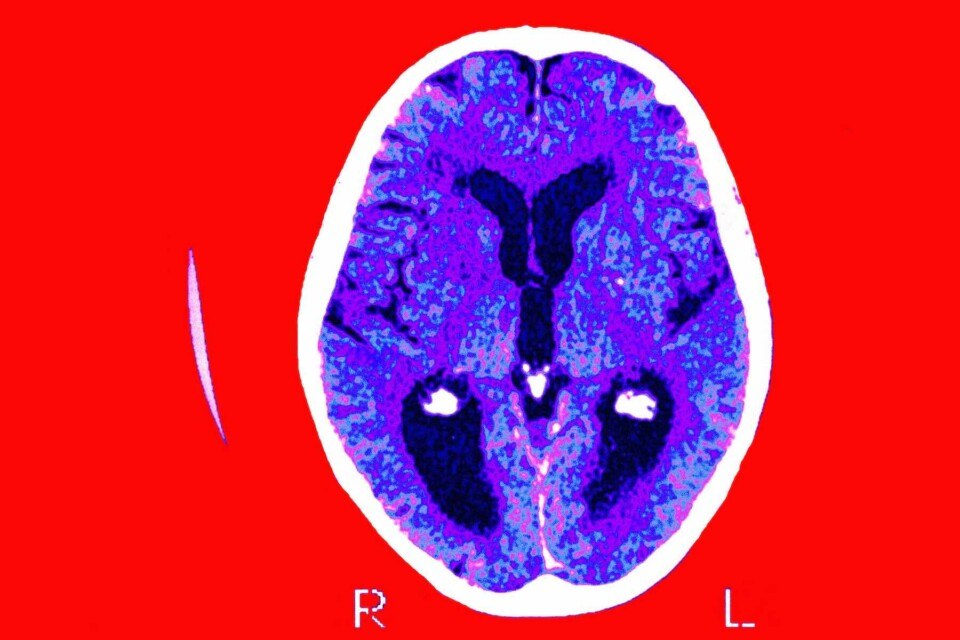
Brain scan of a person with dementia caused by Alzheimer’s disease / Photograph via Getty Images
Listen to the audio edition here:
Meet internal medicine physician Michael Cirigliano, affectionately known as “Dr. Mike” to not only his 2,000 patients, who love his unfussy brilliance, tenacity, humor, and warmth (he’s a hugger!), but also to viewers of FOX 29’s Good Day Philadelphia, where he’s been a long-time contributor. For 32 years, he’s been on the faculty at Penn, where he trained. And he’s been named a Philadelphia magazine Top Doc every year since 2008. Now, he’s our in-house doc for the questions you’ve been itching (perhaps literally) to ask a medical expert who’ll answer in words you actually understand. Got a doozy for him? Ask Dr. Mike at victor@phillymag.com. Here, Dr. Mike explains how to prevent dementia.
Let’s start with a definition. What exactly are we talking about when we talk about dementia?
It’s a number of conditions. Everybody thinks of it as just memory loss, but it’s also problems with language. And people who truly have dementia can’t do their activities of daily living. They may not be able to take a bath or shower. When that happens, Houston, we have a problem.
Have you had any personal experience with dementia in your family?
Yes, my mother. She had Alzheimer’s, and so this is very near and dear to my heart. As Nancy Reagan once said of Ronald Reagan’s Alzheimer’s: “It’s a long goodbye.” It’s very, very insidious and just kind of creeps up over time. There’s this Italian slang term stunad that basically means you’re not firing on all cylinders. And my mom said, “I feel stunad and it scares me.”
Are dementia and Alzheimer’s the same thing?
No, they are not. Alzheimer’s is a brain disease that is the leading cause of dementia. But plaque in your heart and arteries, vascular disease, and mini strokes called lacunar infarcts — all of those account for about 20 to 30 percent of people with dementia. But Alzheimer’s is the big player.
What is Alzheimer’s disease, precisely?
Well, if you break it down, Alzheimer’s is an accumulation of protein in the brain. That’s the best way to describe it.
How early is early-onset dementia?
These are people who in their 40s and 50s develop profound dementia symptoms. It’s very frightening and devastating.
Is any of this genetic?
Yes. Genetics are at play here, but there are modifiable things that can lead to dementia. You can’t change your genetics, but you can change your blood pressure, you can not smoke, you can avoid overdoing it with alcohol, you can avoid obesity. All those are associated with dementia. Trauma to the brain can also lead to dementia. You’ve got to protect your brain. That’s why I never let my son play football. He played baseball, because nobody is tackling you. I’ve never seen a baseball player get hit in the head with a 90 mile-per-hour ball, though I’m sure it has happened.
I heard that the higher the education you have, the lower the risk of dementia. How can that be true?
Well, the thought is that you develop your brain and that people with more education might tend to have healthier habits, they might eat less highly processed foods, they might have gym memberships.
How important is being social or having friends in preventing dementia?
Very important. Isolation is a huge problem. When my father died, my mother was alone, and I decided to move her to a place called Maris Grove, which was fabulous. She had friends there, and the staff knew how to help her and get her moving. If you look in the natural world, take an antelope and isolate them from the herd — they are not going to last long.
How do you make a dementia diagnosis?
Usually people like me, in primary care, will see something that grabs our attention. If the person or a family member tells me they keep getting lost or that they don’t remember what they did yesterday, I take it very, very seriously. There is a blood test that I may do in select cases, but I always send a patient I’m concerned about to one of our neurocognitive specialists, for formal testing. They can do imaging, PETs, CTs, or MRIs [that can show brain changes associated with the condition].
How do you treat dementia?
Sadly, there is no cure. Some medications will slow some of the symptoms, but not by much. Then there are also some infusions that slow the decline in a much more effective way, but it has to be done early in the process. Only people with mild cognitive impairment are candidates for those. So, right now, no treatment reverses the disease.
I’m 52, which the algorithm certainly knows, because I’m seeing a lot of ads for Prevagen. The ads certainly make it seem like Prevagen will improve my memory and keep me from forgetting things, though they go short of saying the medication will prevent dementia. Should I be taking Prevagen?
The clinical evidence on Prevagen is weak, my friend. There is one single study that was manufacturer-affiliated, and that showed that Prevagen might improve memory. But there’s no compelling evidence that Prevagen actually does so.
I imagine that early diagnosis might be a problem because people might realize that they aren’t quite right but are scared to admit it to themselves, let alone their family or doctors.
Oh, believe me, people get very skilled at hiding this. But, listen, if your mom leaves her keys in the refrigerator one day and then gets lost coming home the next day and you find out, you call me, because that is a major problem.
I’ve always encouraged my older relatives to do crossword puzzles, read a lot, play Scrabble. Is all that actually helpful?
I’m a strong believer in “If you use it, you’re not going to lose it.” All of those things certainly cannot hurt and they may help. I’m hugely concerned about AI. You need to use your brain to figure things out, not just plug in and get an answer. People are forgetting basic division and multiplication. Who does math anymore? This really worries me.
I’ve seen reports that shingles shots might prevent dementia, GLP-1 might prevent dementia, all kinds of diets might prevent dementia. Is any of this credible?
GLP-1s reduce inflammation in the brain — inflammation is bad for the brain — which is why we see a dramatic reduction in dementia risk in those who use GLP-1s. The shingles shot is important for a similar reason. Shingles causes a storm of inflammation. In terms of diets, you need to reduce obesity and avoid diabetes, because diet plays a huge role in dementia risk. You don’t need to go vegan, but avoid highly processed foods and try to eat plant-based foods as much as you can, as they are generally anti-inflammatory.
What’s with these super sharp people in their 90s?
Super-agers! I have a couple of them [as patients], like a woman who is 93, but comes across as 25. I think there’s genetics involved here and also just taking care of yourself. I had a woman in her 90s who smoked two packs of cigarettes a day, and she was still intact. But I call that my “Uncle Joey” story.
Do tell.
Someone will come in and say, “Well, my Uncle Joey drank two martinis a day and smoked unfiltered Lucky Strikes and lived until he was 100.” And I explain that Uncle Joey was very lucky and that for every Uncle Joey, there are 90 people who died at 60 from lung cancer.
So don’t try to be Uncle Joey.
I would highly recommend against it.