Can You Actually Cook Your Way Off Medication?
How Philadelphia’s top medical schools are turning future physicians into culinary experts to chip away at chronic disease
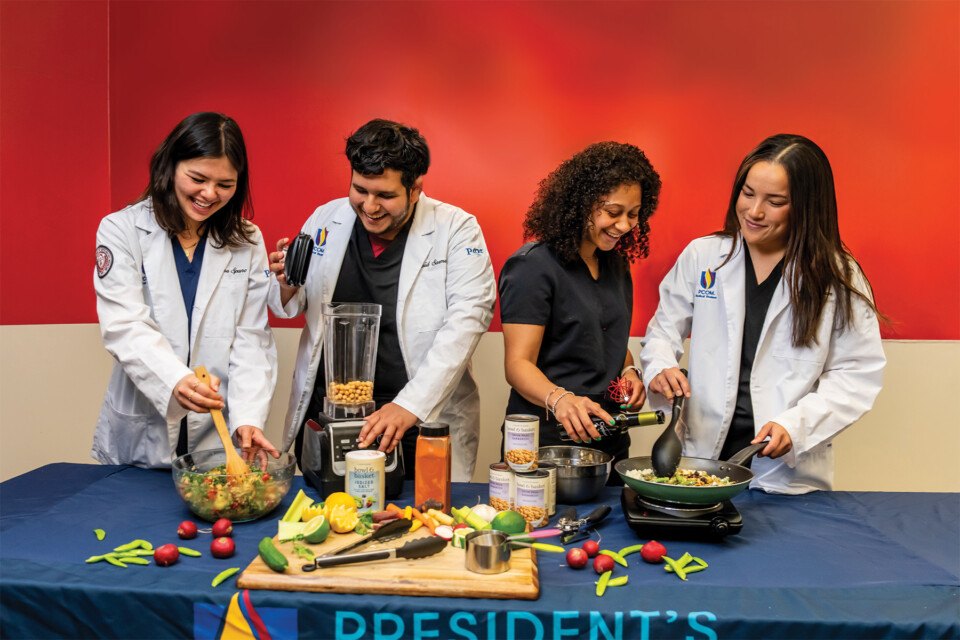
PCOM’s culinary medicine course / Photography courtesy of PCOM
Listen to the audio edition here:
Grapefruit with every meal. Seven days of cabbage soup. Milk — just milk. Fad diets like these have been around forever, and now fake, AI-generated “doctors” and chatbots are jumping in, too, with terrible advice in all our social media feeds (including this whopper, found on Reddit: “rectal garlic boosts the immune system”).
But the public has caught on: According to a recent Pew Research survey, most Americans are now skeptical of health guidance from anonymous online sources. Instead, the majority of them turn to an actual doctor for advice about nutrition.
The dilemma, though, is that not all primary care physicians are sufficiently prepared to answer their patients’ food-related questions — a problem that has been discussed for decades. Back in 1985, the National Academy of Sciences urged medical schools to require 25 hours of nutrition education for their students, a prompt that went unheeded by many. Over the last several years, Congress and the U.S. Department of Health and Human Services have made similar pushes, including a call by Health and Human Services last year for a 40-hour nutrition-education requirement and an announcement of a $2.1 million reward to schools for successful training programs.
Academic institutions chasing that prize can find inspiration in the Philadelphia region, where medical schools like Philadelphia College of Osteopathic Medicine (PCOM), Penn, Cooper Medical School of Rowan University, and Drexel have long taught the science of nutrition to future physicians. They aren’t alone in their mission: one of Philly’s most acclaimed chefs, Marc Vetri, started the nonprofit Vetri Community Partnership, which promotes culinary medicine (a growing field that merges cooking instruction and nutrition science to prevent and manage chronic disease)
Biochemistry professor Farzaneh Daghigh wants to build on all that. She co-directs PCOM’s culinary medicine course, in which students prepare and eat meals created in sessions led by a professor and a chef, in pursuit of becoming family physicians fluent in all things diet and nutrition. They learn about the evidence linking healthy eating with the prevention of chronic illnesses like type two diabetes and hypertension, along with cancer, obesity and healthy post-operative nutrition. Daghigh’s research has found that a mere two-hour cooking demo can lead to a “significant improvement” in a medical student’s nutritional knowledge.
“Patients generally look to their primary care physicians for advice. So it’s very important for physicians to learn the science of nutrition, how to guide their patients and how to communicate about nutrition with them,” Daghigh says. “Changing habits is very difficult. Physicians have to pay attention to cultural nutritional habits. You can’t tell patients ‘you just have to switch’ to a heart-healthy diet. You have to do it gradually. You have to have buy-in.”
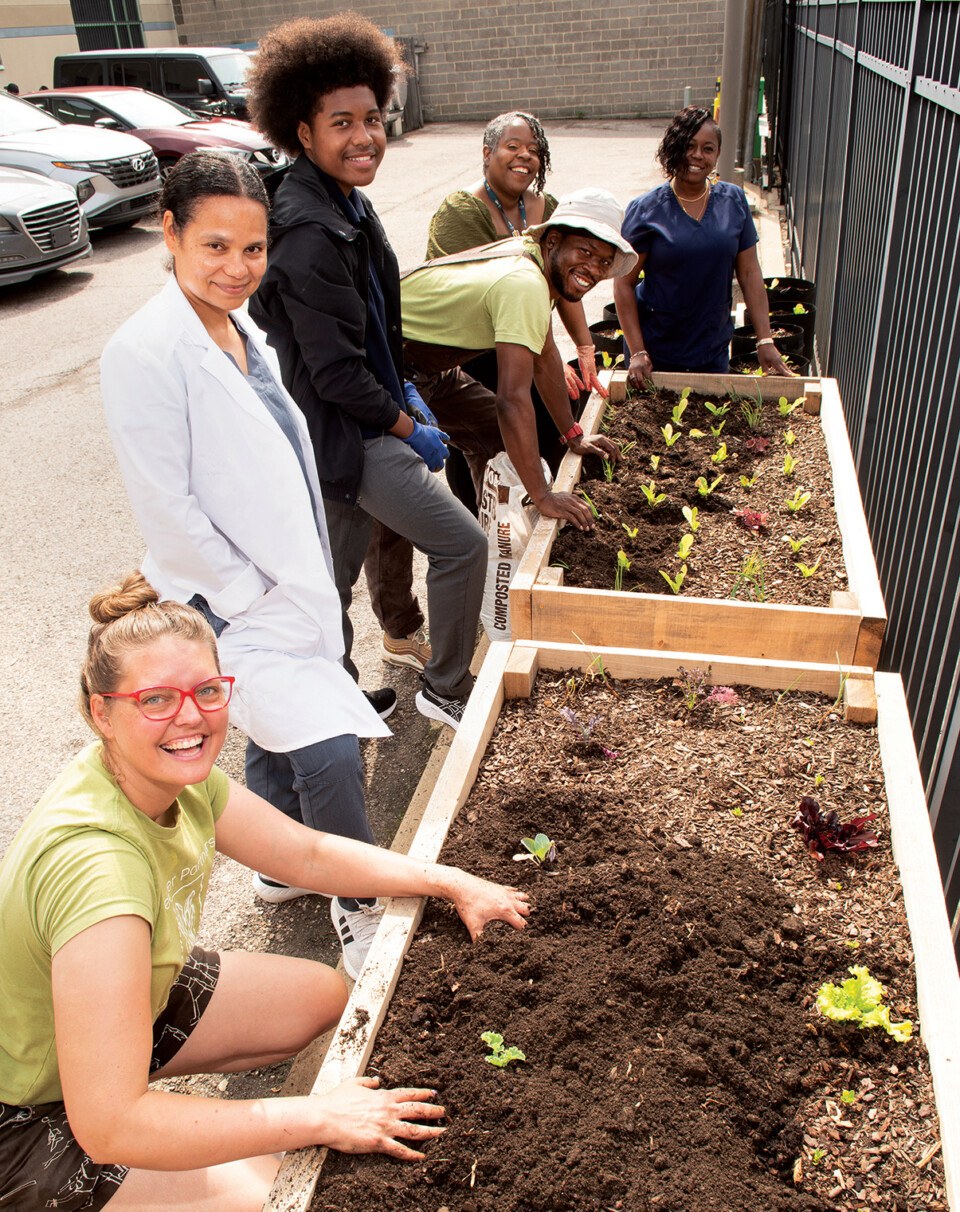
Dr. Berry and the community garden
Kristen Berry is a family medicine physician at the Lancaster Avenue PCOM Healthcare Center in West Philadelphia, where she helps train future doctors. She says it’s critical for them to be able to talk easily with patients about healthy eating and supplements.
“A lot of patients ask for opinions on things that may not necessarily be healthy for them,” like human growth hormone, for example, and some of the longevity peptides available to buy online, she says. “People shouldn’t be taking them, because they’re not researched enough or regulated enough.” On the other hand, if a patient asks Berry about, say, taking cinnamon supplements to lower blood sugar, she gives that a green light. More generally, she and Daghigh both advocate for the plant-heavy Mediterranean diet.
Because Berry works in an area of the city considered to be a food desert — i.e., a geographic area where people have limited access to fresh, affordable, and nutritious food — she, Daghigh, and their colleagues launched a teaching kitchen and vegetable and herb garden in 2024. Using a simple set-up in the clinic’s waiting room, medical students working a juicer and hot plate lead healthy cooking demonstrations for patients (the hummus is popular) before appointments. The harvest from the parking lot garden stocks a free food pantry that’s open to patients and the neighborhood.
Berry thinks these efforts have the power, little by little, to make people rethink how they eat, especially when paired with consistent advice from a primary care doctor. As a counterpoint to the latest diet fads (and supplements that claim to reverse aging), physicians like Berry offer science-backed, practical guidance.
“Sometimes I say, ‘What is one thing that we can change?’” Berry says of her approach to improving a patient’s diet. “They may say, ‘I think I can get rid of my Pepsi.’ Then the next time they come, if they’ve gotten rid of the Pepsi, I ask what else can we do? It’s chipping away. It’s motivating them. We’re here together to make this work. It’s not just me throwing medicine at you. I say to them, ‘If you really do make a change, you could probably get off the medicine. Wouldn’t you love that?’”
This primary-care health series is made possible by a generous donation from PCOM.