

13 Quirky Ways to Explore Phoenixville This Fall
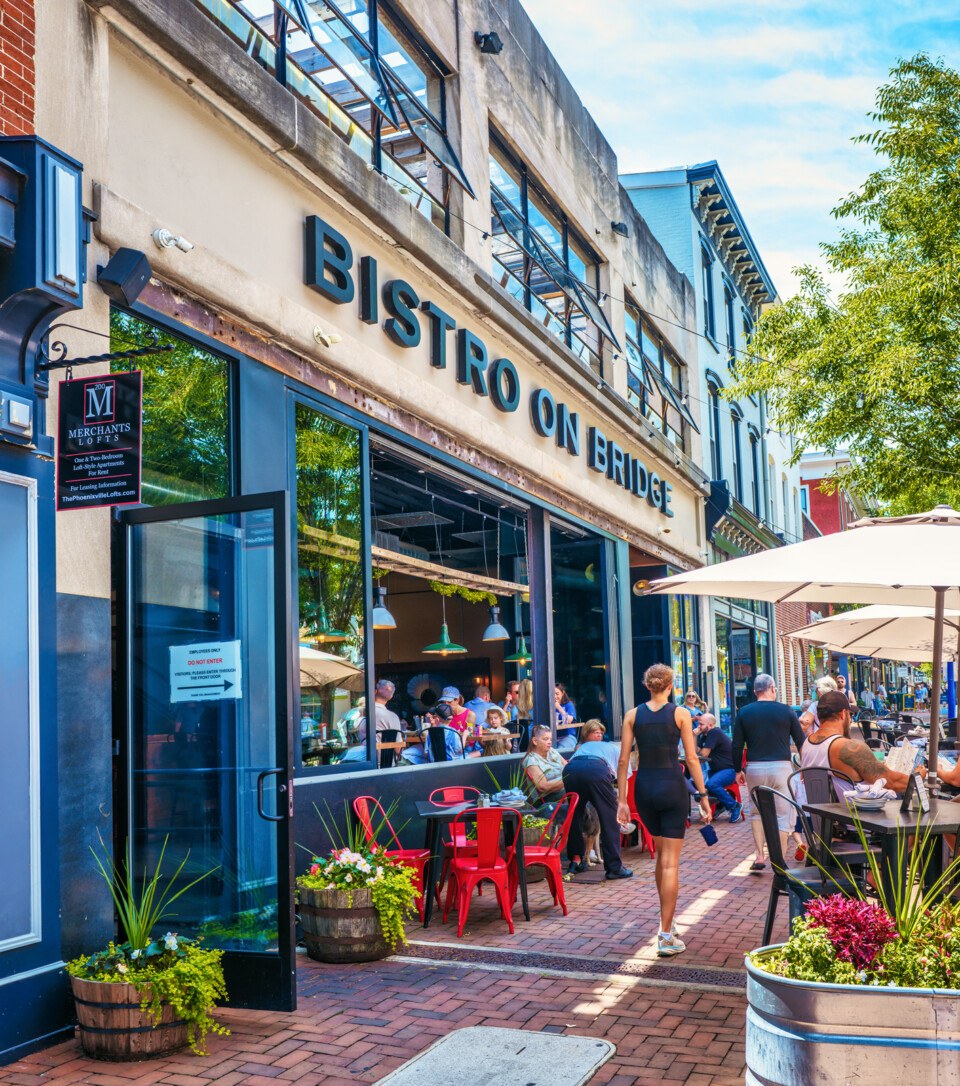
Bistro on Bridge in Phoenixville / Photograph by Jeff Fusco
As the cooler air returns, spending the day in a walk-around Main Street town begins to sound pleasant again. Luckily, this region has no shortage. Phoenixville is your best bet right now, with everything from festivals and markets to a buzzy distillery — and just the right amount of quirk.
Movie Moments
The centerpiece of this post-industrial Chester County borough just down the road from Valley Forge National Park is undoubtedly The Colonial Theatre, a turn-of-the-20th-century movie palace that screens repertory cinema (this month: the original version of West Side Story) and hosts events like July’s annual BlobFest and the Phoenixville Film Festival, which runs from September 17th through the 20th. All-access passes are just $50.
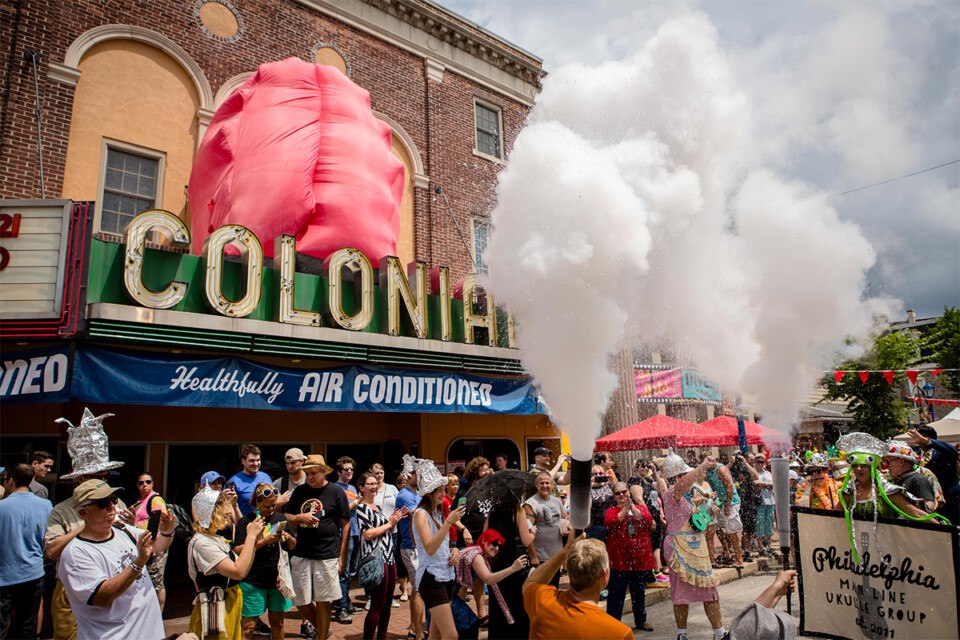
Blobfest / Photograph courtesy of Colonial Theatre
Shop Small
What you won’t find in Phoenixville are chain stores. What you will find is a host of independent shops and boutiques. The best among them: Reads & Company bookstore, with its expertly curated staff’s-picks section, good for both bestsellers and more esoteric selections; record shop Forever Changes, where owner Shawn Cephas follows in the footsteps of his father, who founded West Philly’s legendary King James Records (you can expect lots of jazz, soul, and funk); and Perch Plants, which, in addition to having a feast of flora for you to take home (we love our Tillandsia ionantha!), also hosts terrarium workshops and sound baths during which you can chill with tunes among the greenery.
The Brunch Bunch
Like many Main Street–type towns, this borough is big on brunch, with Black Lab Bistro (you’ve got to share a grilled cinnamon bun as a starter) being one of the more difficult tables to get at noonish on a Sunday. But the Black Lab is BYOB, so if brunch just isn’t brunch without a mimosa, Bellini, or Bloody Mary, it’s Bistro on Bridge for you. Get the Nutella-strawberry French toast or chicken and waffles to soak up the afternoon booze.
Brews, Bottles, and Pizza
Phoenixville has no shortage of breweries, with four within a half mile of each other and several more just outside of town. Among them, Sly Fox is by far the biggest and most popular. Meanwhile, in July, decade-old Bluebird Distilling unveiled its $2.2 million expansion; now they’re making not just 34 (!) different varieties of spirits (we’re partial to the Juniperus Gin and Sportsman’s Delight Rye Whiskey) but also bread dough for their bakery and pizza dough for their new restaurant.

Bluebird Distilling / Photograph by Jeff Fusco
Farm to (Your) Table
With its location in farmland-heavy Chester County and proximity to Lancaster County, it’s not surprising that the Saturday farmers market (which runs through November) has one of the more palate-pleasing lineups in the region, with 20 local farms, vineyards, and gardens represented, plus another dozen or so food crafters, all in an idyllic setting under the Gay Street Bridge. This month, you can still find tomatoes and corn bursting with flavor and snag an early sampling of fall apples.
Stay the Night
Make a weekend of it at the newly renovated, family-run Mainstay Inn, right in the center of it all. Bonus: Your stay includes a delightful afternoon tea service.

Port Providence Paddle / Photograph by Jeff Fusco
A River Runs Through It
With the blazingest, buggiest days of summer behind us but still plenty of warmth in the air, this is the ideal time to paddle around in French Creek, the Schuylkill Canal, and the Schuylkill River, which marks the eastern border of Phoenixville. If you don’t have your own kayak, Port Providence Paddle will rent you one and get you on the water, whether you want an easy 2.5-mile loop or something more ambitious.
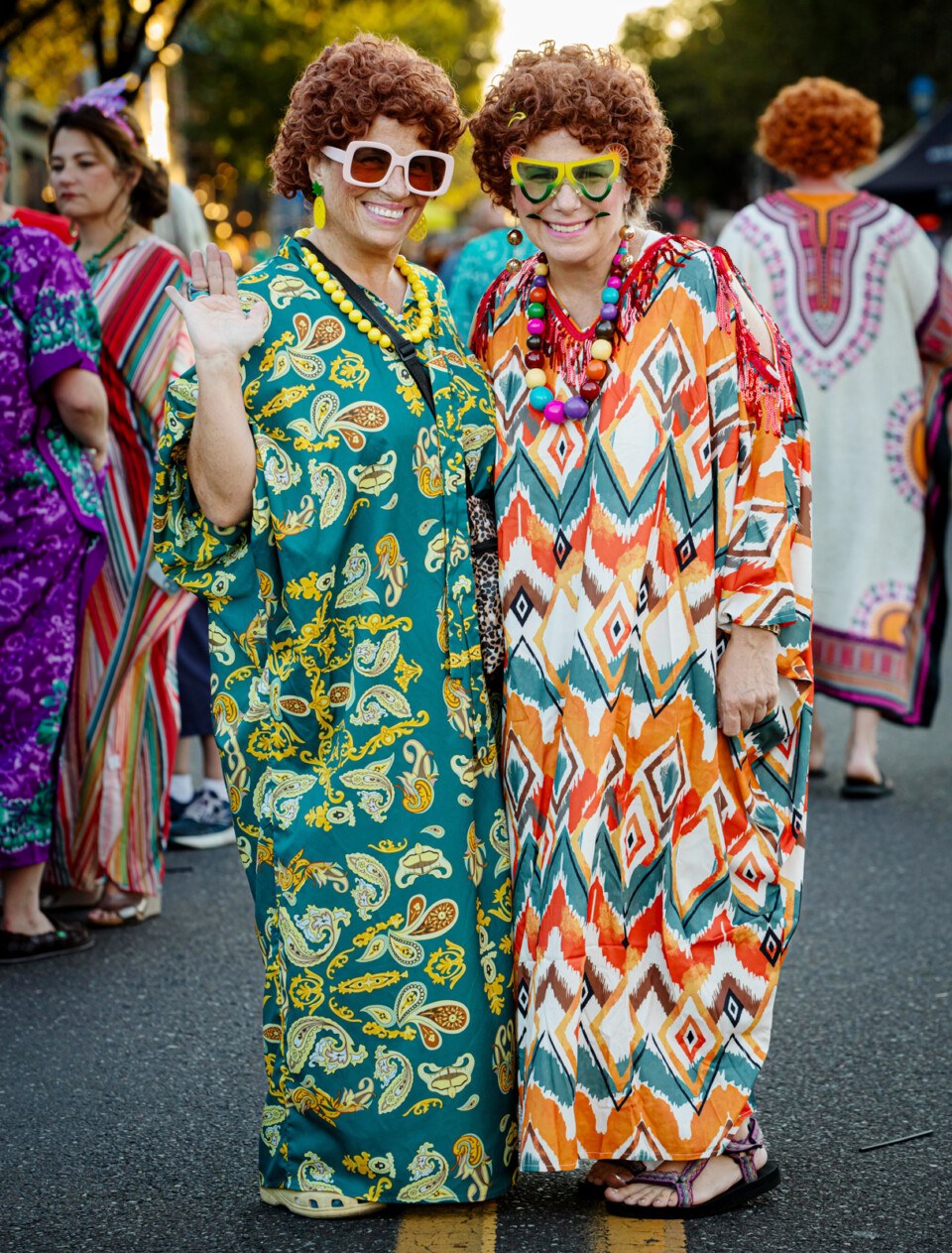
Mrs. Roper Romp in Phoenixville / Photograph by BP Miller/Chorus Photography
One Last Thing
If you’re in town on September 19th and wondering why lots of folks in bars are wearing 1970s caftans and giant red wigs, it’s because you’ve encountered the annual Mrs. Roper Romp, in which people dress up like the unforgettable character from ’70s TV sitcom Three’s Company. When in Rome …
Published as “One Fine Day” in the September 2026 issue of Philadelphia magazine.
Cecily Tynan Gets the David Muir Treatment
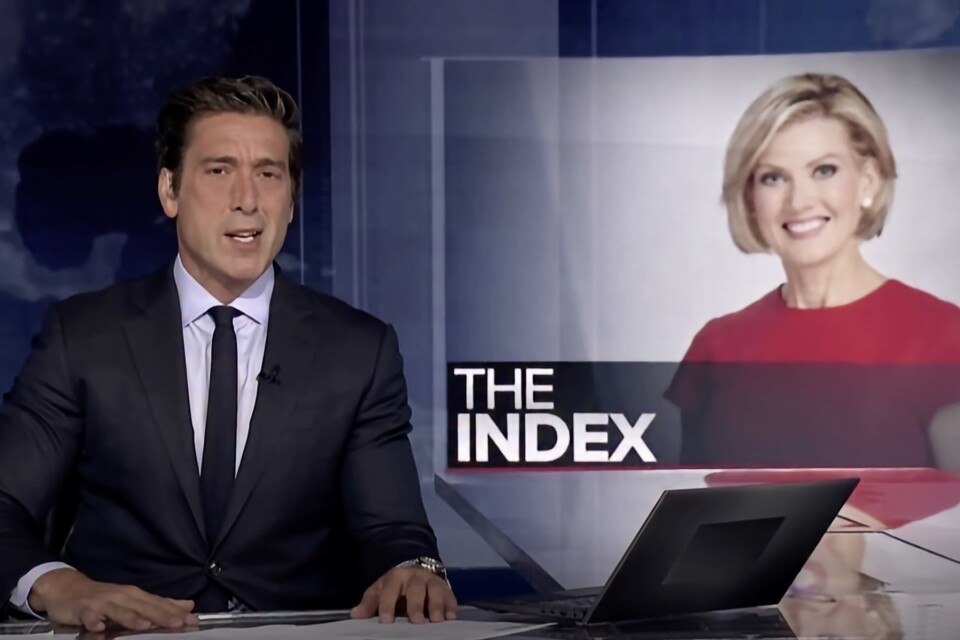
David Muir gives Cecily Tynan a happy retirement message on World News Tonight / Courtesy of ABC)
Listen to the audio edition here:
Local news personalities come. And local news personalities go. But when you’re Cecily Tynan, things are a little bit different: you wind up being feted on World News Tonight by none other than David Muir, one of the best-known and most-respected news anchors in the world.
That’s exactly what happened on Tuesday, on the first day of Tynan’s retirement after nearly 31 years at 6ABC. As World News Tonight was about to make way for Jeopardy!, Muir called Tynan “a beloved member of the ABC family” and launched a nostalgic series of clips of Tynan forecasting the weather over the years. He touted her “true connection with viewers” and added, “Everybody knows Cecily” before telling her with handsome smirk, “I’ll be looking for you waterskiing, Cecily.” (Tynan is an avid waterskier.) Tynan said that the segment caught her completely by surprise.
Muir really got it right when he referred to Tynan’s connection with those on the other side of the screen. Viewers became obsessed with Tynan not long after her arrival here in 1995. Her name turned up not infrequently in gossip columns by Dan Gross and Stu Bykofsky, back when Philly had gossip columns. And once the age of social media dawned, she became a true celebrity.
Tynan would share her adventures like waterskiing in the Poconos and racing in the Broad Street Run on social media, much to the delight of her throngs of followers. For better or worse, her appearance was the subject of much attention, like when she debuted a dramatically different hairdo in January 2025. Naturally, everybody wanted to know who styled her hair. (Chuck at Nirvana Hair Gallery in Delco. You’re welcome.)
Her fans delighted when she responded online to negative comments about her looks, and when she took on Marjorie Taylor Greene for claiming that an unspecified “they” control the weather in the wake of a hurricane. “Just to clarify, no, the government did not produce Hurricane Milton, or any other hurricane, for that matter,” Tynan wrote online. “I really can’t believe I have to post this.”
She was even more relatable when she admitted that her Wawa order was a Turkey Shorti, that she has terrible feet due to ballet dancing and all that running (she referred to her own toes as “E.T. toes”), and that she’s addicted to I Can’t Believe It’s Not Butter – in spray form, no less. “I consider it liquid gold,” she said.
On Monday night, during her final broadcast, she held back tears as she said goodbye to her colleagues and to generations of viewers and remembered key moments, like when she had to learn to pronounce “Conshohocken” and “Schuylkill” when she moved to Philly. She talked about her live segments from the Philadelphia Zoo, when viewers wondered how long it would be before another animal peed on her. She remembered the Blizzard of ’96 and Super Storm Sandy. And then, the clock changed from 6:59 p.m. to 7 p.m., and “THIS. IS. JEOPARDY” blared from the speakers. End of an era.
Angela Duckworth on Her New Book, Grit Controversy, and Parenting in a Digital Age
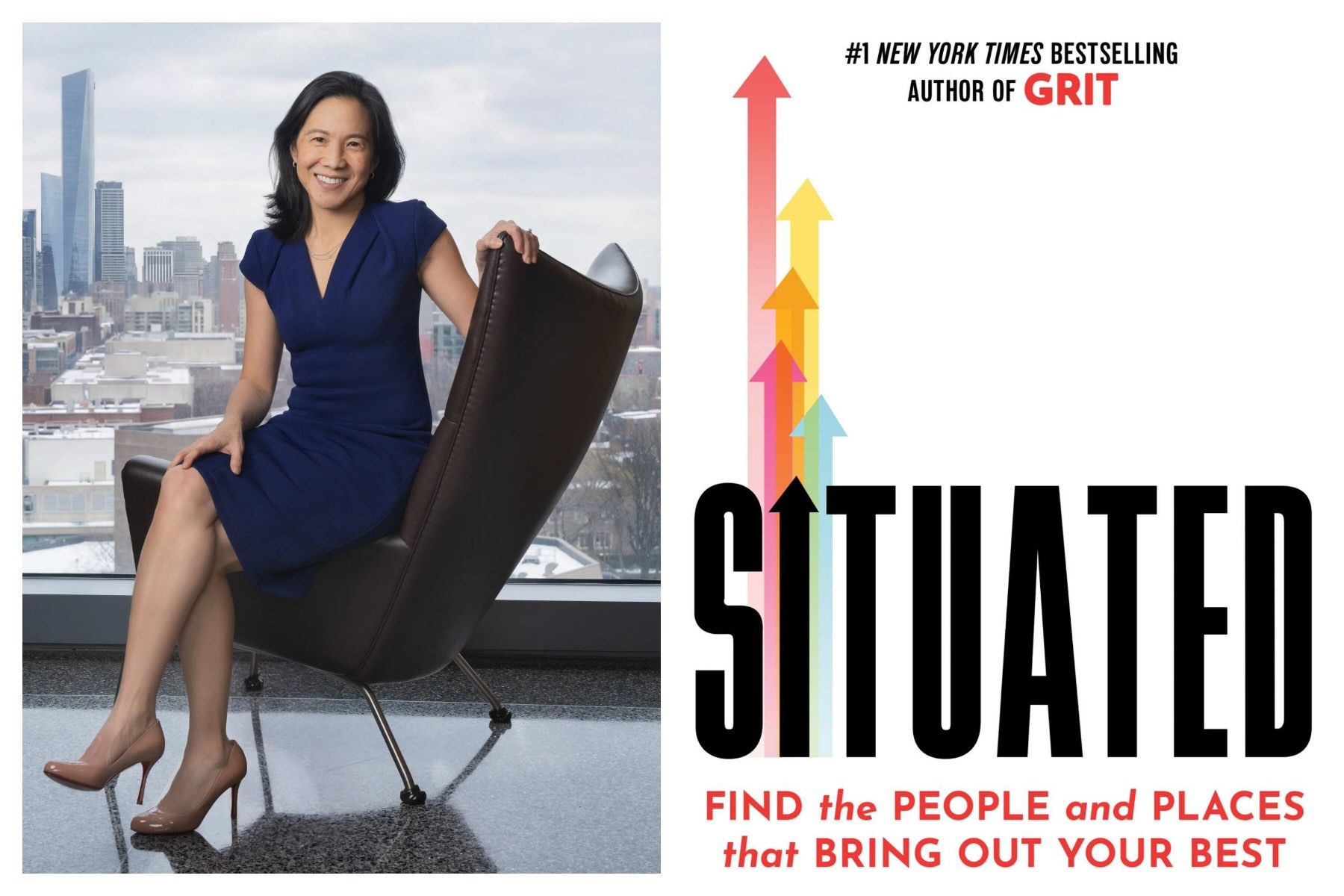
Left: Grit author Angela Duckworth | Right: Angela Duckworth’s new book, Situated
Listen to the interview edition here:
Ten years ago, psychologist and Penn professor Angela Duckworth, a 2013 recipient of the MacArthur “Genius Grant,” released her bestselling book Grit, which argued that success was not about innate talent or genius but the combination of passion and perseverance, or grit. That book was variously lauded and criticized, with one of the main complaints being that Duckworth was suggesting that all a person had to do was work harder, ignoring the fact that some people don’t have the same opportunities to thrive, no matter how hard they work. On Tuesday, Duckworth released her followup, Situated: Find the People and Places That Bring Out Your Best. We caught up with her while she was in Cambridge to launch her book tour, which stops in Philadelphia on September 24th.
Angela, I’m a little frustrated. For the last 10 years, I thought all I needed to succeed in life was grit, which I have plenty of. And now I learn that’s only part of it. Can you explain what you mean by being “situated”?
Happy to, and I hope this comes across as a both/and not an either/or. To be situated is to be in circumstances where all that individual effort that I wrote about in Grit pays off, and that’s not a given. When you have mentors, for example, or when you are part of a group as opposed to doing everything on your own. There are also your physical circumstances. All of these elements of your situation matter, and I think the first place I look as a psychologist and as a striver myself is within, to your mindset, your attitude, and your ability to control your individual effort. But much of human behavior and motivation is actually rooted in our immediate circumstances, and so to ignore the situation because we think it’s all will is a profound mistake.
You got plenty of criticism for Grit. Did you write an incomplete book or make a mistake by ignoring situation?
I got criticized by some that Grit was a “pull yourself up by your bootstraps” book. And I think an easy narrative would be that the critics were right and that I was now having my come-to-Jesus moment, my redemption moment. But that’s not quite accurate. But I knew when I wrote Grit that I wanted to focus on the thoughts running through the minds of people who work incredibly hard. And I wanted to talk about the difference between, say, high-quality practice and how that’s different from the mindless practice that kids put in at pianos and violins everywhere. But for Situated, I looked at successful strivers and high performers and found that all of those I interviewed have a suite of mentors who are guiding them in their decision-making and encouraging them when they’re discouraged.
So Situated is not a direct response to the Grit critics?
I guess that would sound good, but it’s not quite true. I spent the first half of my career and a lot of money looking at the common denominators inside the head. That’s where I went first. And the common denominators of situations is where we look second. This is where my attention turned. I will say that I had my eyes opened to the power of the situation. So instead of just forcing yourself to wake up earlier, stay up later, and work harder in between, you can put yourself in situations where passion and perseverance make sense and where there’s a return on your passion and perseverance, where passion and perseverance pay off.
You talk a lot in your book about mentors and asking for help and collaborating. But we’ve become such a DIY culture.
It is such a DIY culture, Victor. Let’s look at the 20-year trends on how Americans spend their time. We are spending less time with other people and more time alone. We are spending less time outside of the house and more time in it. We’re not going out to eat. We’re not going out to exercise. We’re not going out to work. We’re not going out to socialize or worship as much as we used to. People are alone in their homes. This book isn’t just about social connection, but it is about taking stock of our situations and not just as a society but individually; drawing attention to your current situation is something people don’t do enough of. “You can’t change your situation but you can change how you respond to it” is the received wisdom, and I want to challenge that. It’s a heroic thing to take stock of your situation and ask how it can be better. In American culture, it’s considered cowardly, like almost cheating, to try to create a situation where things are easier and not harder. If you’re trying to do something new like start a company, become a writer, get more exercise, run a marathon, we ask, How do we do this? And the tendency in our culture is to think, What YouTube video can I watch? But I think it’s better to find a group of people that are not necessarily your best friends but a group of fellow strivers who are like-minded and start there.
Are there exceptions to this — successful people who just do it all on their own? I think about a person like Elon Musk. Did he have mentors?
I don’t know a lot about Elon Musk and his mentors or lack thereof or his peers or lack thereof, but I see why you would bring him up. It’s not abundantly clear that he’s got an Obi-Wan Kenobi lurking in the background giving him wise advice, but he might be better off if that were the case. I do think it’s part of human nature, though, that we are social animals and that we tend to think better together than alone.
In Situated, you talk about three different “boxes”: Situation, thoughts and response. Most self-help books focus on the second two. Is that a mistake?
The first self-help book and so many since tell us to look within for strength and not without. There’s so much about will. There are so many poems about will. Modern self-help is all about the second box, changing your thinking. That has been the focus of advice that has been historically given. But my advice is to trace those thoughts to the situation. And that is an unheard message. I wrote this book because I thought it had to be written. I wrote this book because I felt like people needed to know that if you feel like your thoughts are the problem, you should ask yourself, When do I have these thoughts? What situation am I in? Someone might ask, Why can’t my boy concentrate? What I would say is, When can your boy concentrate? What is that situation? And who can help you change it? People I studied who work really hard want the best coach possible to make them better. Every CEO I interviewed has some kind of executive coach or advisor. Every athlete is asking, “Is this the right coaching team?”
What does the research say about willpower?
In surveys, Americans will trot out willpower as why they didn’t follow through on their New Year’s resolutions. When I was a PhD student, a lot of the research energy around behavior change was on willpower and whether you could build it like a muscle, and if you did really hard things and you suffered, then your muscle would be stronger and the rest of your life would go better because of course you need willpower. But it has become abundantly clear that willpower is the absolute worst way to change your behavior. When people exercise willpower, they feel exhausted and depleted, so that’s one reason why willpower isn’t great. It’s a terrible feeling when you have to force yourself to go to the gym. I don’t want to go to the gym. But I’m going to make myself go to the gym. And the other fly in the ointment for willpower is that it’s fallible. Eventually, people cave into temptation. Sure, you can force yourself to go to bed at 10 p.m. and stay off your phone just through the act of will. But eventually, you are going to stay up past 10 p.m. and it’s really smarter to just physically put your phone in a place that is inconvenient to get around the time that you go to bed. Keep it in the kitchen instead of on the nightstand. Change that situation.
If someone reads your book and wants to make one change immediately, what’s the highest-leverage thing they can do to engineer a better situation for themselves?
The most immediate thing anybody could do is audit and edit their person space, whatever is within three feet of you. Whatever is in sight and within reach is going to disproportionately influence what you think about and then what you do. So this would mean frictioning up temptation, like move things that you don’t want to eat or drink. Move them farther away from you. Out of sight. When students are asked a simple question about their studying habits — where do you keep your phone when you’re studying? — they are given five multiple-choice options, from “right next to me with the screen and notifications on” to the phone being in another room all together. When we match their responses to their academic performance, it is a clear monotonic trend that the farther the phone, the higher the GPA.
How does this book relate to parenting?
There’s a part of the book that is all about situational responsibility, and that’s about changing situations for other people, including and most importantly, the people who cannot change their situations for themselves. That’s where children come in, because when you are two years old, you cannot decide what food is served or how often you are on your screen or whether there are books in the home or whether you are taken to a library. I write about Debbie Phelps, mom of Michael Phelps. Michael has ADHD, and he did as a young boy. He had a situationally wise mom who knew that in the right situation, Michael wouldn’t be a pain in the butt, as many teachers were writing notes home to tell her about. So she decided to take Michael to the pool seven days a week. Good parenting isn’t just asking your kids to be a certain way but to put them in situations that encourage them to be that way.
You’re a mom. I’ve met your daughters, and they are both incredibly impressive. What is it like being the daughter of Angela Duckworth?
I don’t think I ever asked about a report card. We also weren’t the kind of family that gave out $5 bills for As, and we also weren’t the family that meted out punishments for A-minuses. But I was a big part of their situation. Children model the values and behaviors that their parents are embodying, and when you grow up in the Duckworth home, a lot of work is getting done. It’s in the air that if you’re going to do anything, you’re going to do it well. Some of this can be explicit like values you put on a wall and some of it is implicit. So my daughters were raised not explicitly but implicitly to be strivers. I hope we haven’t taught them that you can get everything you want in life by just trying harder. If I’ve raised my girls to think that grit was everything, then I would not be setting them up for a life of success and happiness. I want them to believe in hard work and I want them to find situations that make their hard work easier.
Q&A: The Creative CEO Behind This Year’s Massive Fringe Festival
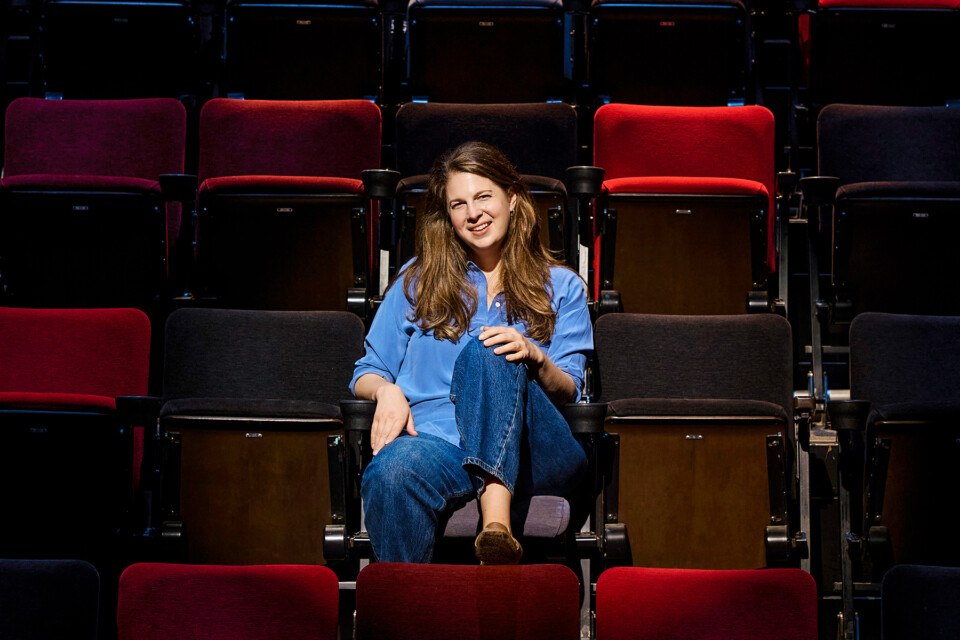
CEO and director of FringeArts, the producer of the Philadelphia Fringe Festival, Nell Bang-Jensen / Photograph by Gene Smirnov
Listen to the interview edition here:
Nearly two years into her job as CEO and director of FringeArts, the nonprofit organization behind Philadelphia’s 30-year-old Fringe Festival (September 8th-27th this year), Nell Bang-Jensen has revitalized the event and made it easier for artists of all stripes to participate. Here, she chats about the challenge of making the festival work in the current economic and political climate, offers some glimpses of what’s on stage, and reveals the one and only thing that’s banned at the Fringe. (Hint: It’s definitely not full frontal nudity.)
Hi, Nell. Thirty years after its founding, why do you think the Fringe is still vital?
The Fringe was founded because there was a need for a platform for live, experimental, contemporary performance in Philadelphia — and this is a platform that we still need very much today. We have artists coming to town from all over the world and other parts of the U.S., and we also amplify the work of Philadelphians.
There are Fringe Fests all over the country. How does Philly’s stack up?
We’ve actually grown to be the largest Fringe Festival in the United States in terms of the number of venues being used. This year, we have more than 350 shows at over 100 venues. We’re taking over the whole city, with performances at traditional venues and theaters but also in places you might not expect. You might see a Fringe show in a car. You might find a Fringe show in an elevator. We have such a variety of genre and scale. We have internationally renowned performers and then someone’s grandma in South Philly who’s made an autobiographical show of her own life that she performs in her basement. We’re expanding the definition of who gets to be an artist and what art looks like.
So literally anybody can be a part of the festival?
Yes, so long as they sign an agreement saying they won’t use hate speech. A portion of the Fringe Festival is “presented” work that we curate and choose — there are 11 of these shows this year — and then there’s the open-access portion where anyone can register a show and create their own performance.
No bans other than hate speech?
Beyond that, we really believe in not censoring artists in any way1.
How many of the presented shows are Philly artists?
Three. Dancer and choreographer Nichole Canuso has the world premiere of her Lunar Retreat. The Bearded Ladies are presenting their new show, Priority Hoarding: A Retrospectacle. And then the group Ninth Planet, which has been in the open-access Fringe before, is making their presented debut with their dance-theater piece The Holy Fool.
What’s one of the non-Philly presented shows you’re most interested in seeing?
Truly, all of them. But there’s this Belgian company whose name I won’t botch the pronunciation of,2 and they are doing a show in a box.
Are you like the Mummers where you start thinking about next year’s festival the day after this one is over? Or do you think about it years in advance?
It is very case by case. We have to remain pretty nimble and flexible. Yesterday, I was spending a lot of the day on site visits with two artists from France who want to make an acrobatic performance on a Philly roof in 2028. But then, sometimes, things happen more last-minute. These things can all really vary depending on scope, scale, resources, responsiveness to the moment, and what we’re hearing from audiences.
I have seen you perform in the festival several times, and now you’re running the FringeArts organization. How did that happen? And, actually, now that I think about it, I saw you in a show in a car. It was called, well, Car.
[Laughs] That was actually another show in a car, if you can believe it, and it was part of a competing festival.
Oh, I’ve been to enough Fringes and Fringe-adjacent fests that if you told me there were three shows in cars, one on a motorcycle, and another in a Radio Flyer red wagon, I’d believe it.
[Laughs] So let me go back. I was a student at Swarthmore College and had Quinn Bauriedel, the co-founder of Pig Iron Theatre Company3, as my professor. Companies like Pig Iron got started around the same time and formed a creative ecosystem. Well, when Quinn’s child was born, he had to miss a couple of weeks of class, and Pig Iron co-founder Dito van Reigersberg4 was our substitute. After meeting Dito and Quinn, I realized that there’s this whole world of people who are making art without scripts. They’re just starting with the people in the room and saying, What is the story we want to tell? How can we translate the ideas in our mind to something that exists for an audience and lives and breathes? I was really inspired by that, and in between my junior and senior years at Swarthmore, in 2010, I got together with other students, we found a venue, and we produced a Fringe show about two teenagers entering the world of dating, an amnesiac, a small child, a 19th-century explorer, and a lost homemaker. Since then, I’ve participated in many Fringe Festivals as a performer, producer, and director. So I was heavily involved in many aspects before being at the helm of the organization, and I’m really using that as my North Star in this job — trying to figure out how I can be in service to other Philly artists and especially young Philly artists trying to make their path here. Before FringeArts, I was the artistic director of Theatre Horizon in Norristown, and before that, I worked with Pig Iron.
Norristown! My birthplace! Did you eat so many Zeps5 while you were working in Norristown?
I did, but when I was pregnant, that was hard to navigate, because you’re not supposed to eat cold cuts.
My wife ate all the Zeps when she was pregnant with our two.
Right, and your kids are fine. I feel like this is true with 90 percent of the things they tell you not to do during pregnancy. It’s a wild balance of figuring out what is actually scientifically relevant versus what is just society trying to control women’s bodies.
Just lay off the martinis and Lucky Strikes.
Yes! [Laughs]
So if I’m that grandma in South Philly, how do I get into the festival?
Go online, fill out a form, and pay a $30 registration fee6. Then we do all your ticketing and we market your show.
There’s always a big, bold piece for opening night. What’s that this year?
Kramer/Fauci. Daniel Fish, the Broadway director who did a controversial and brilliant take on Oklahoma! several years back, has taken the verbatim text of a C-SPAN transcript — a fascinating conversation between Anthony Fauci and the playwright and public health and gay rights activist Larry Kramer. He has changed not a single word, but he’s staged it and added some surreal elements: bubbles, a chicken suit. He’s Fringe-ified the conversation. It’s such an interesting piece to look at in terms of civic dialogue right now. It’s very rare to see two people who vehemently disagree and yet they stay in conversation, which I think is actually a radical act in 2026. At times, they say I hate you; at times, they say I love you; Kramer calls Fauci a murderer. This all happened on C-SPAN in the early ’90s at the height of the HIV/AIDS crisis.
Earlier, you mentioned that this is a challenging time for arts funding. How bad is it?
It is very much not good. Some funders are seeing the need to fund social services more directly but don’t realize that arts are part of civic infrastructure, well-being, and community gathering. Some politicians and funders might view them as a luxury. And with us, we do work that is off the beaten path that hasn’t been approved or vetted, in terms of the open-access portion of the festival, and some corporate sponsors are reticent to get behind that because they’re worried about political and financial ramifications. State funding in Pennsylvania has shifted — they’re not giving operating support anymore as of this year. In the city’s new budget, Fringe is one of 100 organizations that no longer get funding. We never got much to begin with, but even the little we did get showed us that this mattered to the city and that the city wanted to keep these artists here, keep them performing.
One of the things I love about Fringe is that it’s like seeing a movie and thinking, I’ve never seen anything like that before, movies like Weapons or Being John Malkovich. Thoroughly unique, a new thing unto itself. And that’s what I hope to come away with from a Fringe show, whether I love it or not.
I love that you have that perspective. I have to remind myself of that all the time because sometimes I can fall into the trap of trying to be a people pleaser, but if everyone liked everything you did, you would not be Fringe. We need to push boundaries and try new things and take risks and put ourselves out there. Can I go on a tangent?
I love tangents. My editor on the other hand …
[Laughs] I’ve really started nerding out about this. We have a new board member named Anjan Chatterjee who runs the Penn Center for Neuroaesthetics, and his life’s work is about how the brain responds to art. And so he’s a great person to have in the Fringe orbit, and he helped develop this rubric of understanding and talking about art. He says many people don’t know how to talk about art, so it stops at “I liked it” or “I didn’t like it.” But he talks about how there are four distinct qualities. One is: Did you respond to it positively? Another is: Did you respond to it negatively? But two other elements are equal in the brain: One is transformation and one is immersion. So, for example, you could see something that ranks high for you on the positive side. Oh, I really liked this. But it didn’t really transform you. And you weren’t really immersed. Or you had a negative reaction to it, but you’re still thinking about it two months later. That was a helpful framework for me to learn about in terms of our brain’s response. So we need to get beyond this I-liked-it-or-didn’t-like-it thing and really start thinking about what art is doing to us in the moment and then months and years beyond.
You have two kids. Do they show any signs of being budding performers?
They are five and two and a half, and, unfortunately, yes. The arts are great for kids. We just need, you know, someone in the family to make money. We might be doomed.
How to Do the Fringe

Thomas Jay Ryan in Kramer/Fauci / Photograph by Maria Baranova-Suzuki
A guide for the uninitiated, from our arts and entertainment editor and Fringe aficionado Victor Fiorillo
1. Grab a copy of the festival guide.
Every year, FringeArts prints a catalog of all the shows in the fest, both the curated and open-access portions. You need to study this. The guide includes descriptions of each show with accompanying artwork that will either catch your eye or it won’t. Maybe you think Philly power broker-turned-actor Joe Torsella starring in a one-man show about his life sounds like the most interesting thing ever, or maybe you’re more in the mood for a Peter Pan drag cabaret or a rap musical version of A Christmas Carol. The guide exists online, of course, but there’s something about paging through, highlighting, and dog-earing a physical copy that’s very satisfying. Treat it like your old Lonely Planet guidebook.
2. See two (or three) shows in a day.
This is one of the best things about the Fringe: The way shows are scheduled, you can absolutely immerse yourself from morning to night. Some venues host multiple shows, which makes it easier — sort of like hanging out at a multiplex for three movies in a day. It might seem like a lot to absorb, but be honest: How many hours have you spent on a Love Island binge day? Guaranteed the Fringe is much more edifying.
3. Mix it up.
While you’ll certainly want to check out a few of the 11 shows that are curated by FringeArts, many people feel the real unexpected magic of the festival is in the open-access portion, where up-and-coming (and sometimes well-established) artists experiment and innovate. If something jumps out at you, you can search for reviews of previous shows from the performers involved to see what you might be getting yourself into. Or just roll the dice.
4. Take some risks.
The artists in the Fringe are taking plenty of risks, and you should too. You can see conventional theater anytime — this is an opportunity to challenge yourself and experience things you might otherwise deem too “out there” or “avant-garde,” as Bang-Jensen, who has seen several hundred Fringe shows over the past 25 years, says. At the end of the day, whatever you choose, you’ll have conversation starters and the pleasure of knowing you’re supporting Philadelphia’s arts community.
Footnotes:
- She’s not kidding. Past Fringes have had everything from full frontal nudity to various bodily functions we don’t feel the need to witness again. ↩
- The company is Ontroerend Goed, which is pronounced own-TROO-rent KHOOT. ↩
- Founded in 1995, Pig Iron went on to become one of the most revered experimental theater companies in the world and has operated its own graduate school program since.↩
- Van Reigersberg, who died in June, was best known for his performances as drag queen Martha Graham Cracker. ↩
- The Zep is a hyperlocal Norristown sandwich that consists of salami, provolone cheese, thinly sliced onion and tomato, oil, vinegar — and never, ever lettuce. Get one at Lou’s, where they’ve been serving them since 1941. ↩
- The fee is down from $350, an amount that many artists revolted against in 2019, since most also have to rent venues, pay staff, build sets, etc.↩
This interview has been edited for length and clarity.
Published as “Down With Censorship, Up With Experimental Belgians” in the September 2026 issue of Philadelphia magazine.
Ask Dr. Mike: How Much Coffee Can I Actually Drink Daily?

Dr. Mike talks about the study that says that drinking five cups of coffee a day can be good for you
Listen to the audio edition here:
Meet internal medicine physician Michael Cirigliano, affectionately known as “Dr. Mike” to not only his 2,000 patients, who love his unfussy brilliance, tenacity, humor, and warmth (he’s a hugger!), but also to viewers of FOX 29’s Good Day Philadelphia, where he’s been a long-time contributor. For 32 years, he’s been on the faculty at Penn, where he trained. And he’s been named a Philadelphia magazine Top Doc every year since 2008. Now, he’s our in-house doc for the questions you’ve been itching (perhaps literally) to ask a medical expert who’ll answer in words you actually understand. Here, we talk about a recent study that drinking five cups of cofffee each day can be good for you. Got a doozy for him? Ask Dr. Mike at victor@phillymag.com.
I think a lot of people were surprised by the American Heart Association’s recent statement noting that not only can most people drink five cups of coffee each day, but that doing so can have health benefits. True?
Absolutely! I’ve got to tell you, my friend: Coffee is one of the elixirs of life. It is full of antioxidants and polyphenols, and has anti-inflammatory properties.
I’ve never thought of a caffeinated beverage as being something that is good for me.
Not only does caffeine reduce the risk of dementia, but it has been shown to be associated with a reduction in cardiovascular disease and many other health benefits.
But when we are talking about drinking five cups of coffee each day, I’m assuming we’re not talking about whatever concoction my daughter orders at Wawa with vanilla this and triple something that.
Coffee is great — except when you turn it into a toxic swill and add cream and tons of sugar. That’s when you turn it from an elixir of life into a toxic waste site!
At what age can somebody safely start drinking coffee? I feel like it’s something most parents have their kids steer clear of until they are 16 or so.
Well, I think given that high school kids now require an assistant to handle their schedules, I would much rather see them drink a cup of coffee that has all these wonderful things in it than drink these sugary energy drinks filled with chemicals.
Is there anybody who shouldn’t drink coffee?
Those who are pregnant or breastfeeding should limit their coffee consumption. The use of excessive amounts of coffee during pregnancy can be associated with preterm birth, low birth weight, and pregnancy loss. For others, coffee isn’t really associated with high blood pressure or atrial fibrillation, but I was always taught that if you are a coffee virgin, it may actually cause a temporary bump in your blood pressure. And if you have a history of palpitations, arrhythmias, or any issue involving your heart and rhythm, you might want to check with your electrophysiologist or your cardiologist regarding your coffee consumption. But that’s only with caffeinated coffee. You can definitely drink decaf. I, for one, favor the whole enchilada. I like my caffeine.
One of my colleagues pointed out that too much coffee gives her stomach acid issues. I told her maybe just drink less coffee.
People with acid reflux may have some worsening symptoms of reflux but, in general, your weight and the time between when you eat dinner and when you go to bed are bigger factors. There’s a condition known as Barrett’s esophagus in which the lining of your esophagus gets damaged by stomach acid and changes into a different type of tissue, but there is no association between drinking coffee and an increased risk of developing Barrett’s esophagus.
Does it matter how people prepare their coffee?
There’s some data that if you drink unfiltered coffee like Turkish coffee or boiled coffee or French press coffee, this may raise your LDL or so-called “bad” cholesterol, whereas filtered, drip coffee has negligible effects on the LDL.
Tell the truth: Do you get a triple Venti pumpkin spice latte with vanilla at Starbucks?
No. It’s probably got 1,000 calories in it. Beverages are the quickest way to get calories into your body. I drink my coffee black, but do add Stevia, which is a non-nutritive plant-based sweetener. If you want it a little sweet, I always say to use Stevia or, if you want sugar, use the raw stuff.
I have a few cups of coffee in the morning. Am I doing it right?
I like to have a sip or two all day long. There are some studies that if you do that, you’ll have more alertness, because you are getting a little bit of caffeine throughout the day rather than in one big slug. Now, I watch these people go to Wawa and get a 24-ounce coffee filled with all sorts of cream and sugary things and they get a pack of cigarettes and a doughnut. If you get on the Schuylkill Expressway with them and cut them off, they are all nicotine’d and caffeine’d and sugar-rushed up. They might come after you!
Here’s What Being an Eagles Fan Will Cost You This Season
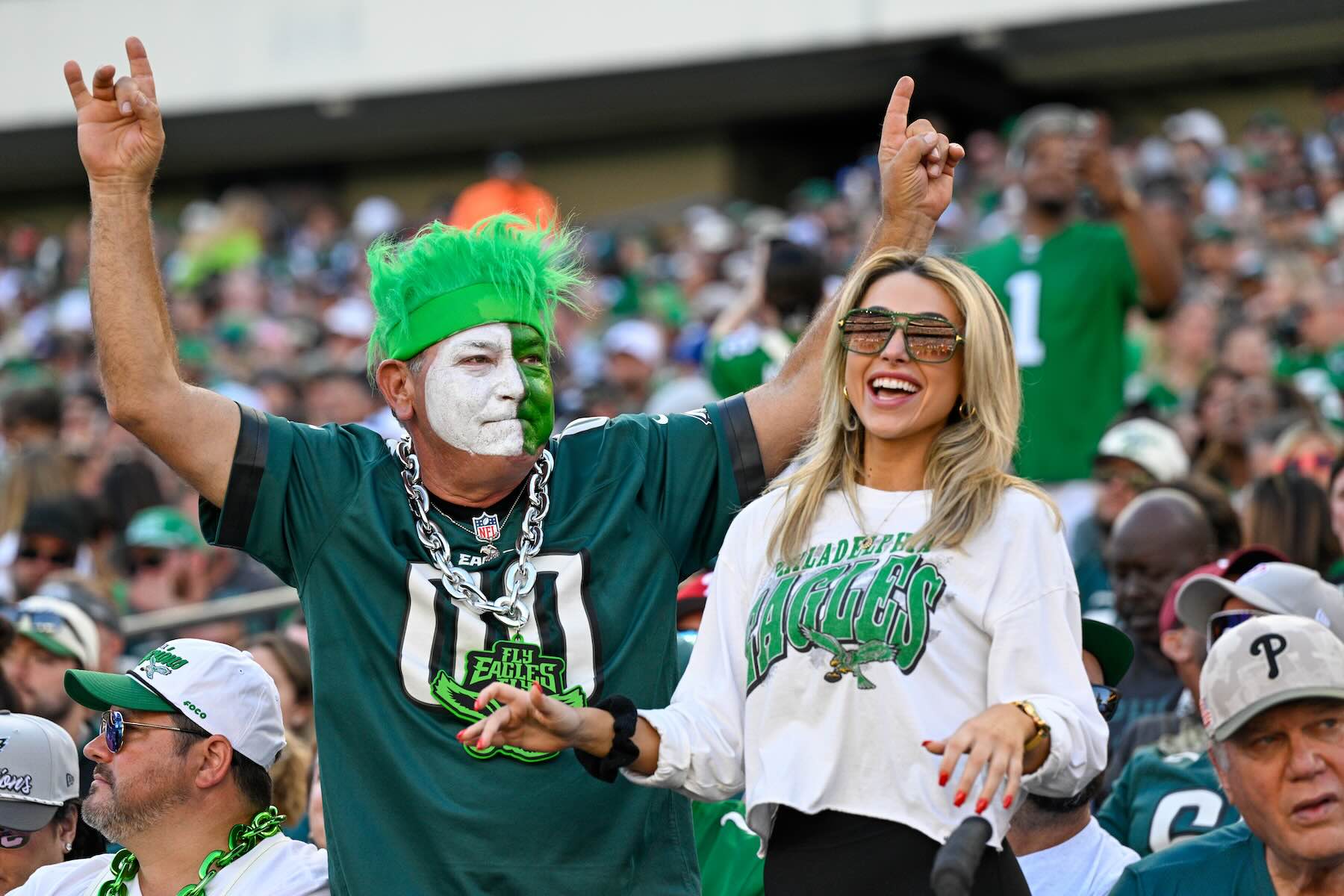
PHILADELPHIA, PA – OCTOBER 05: Philadelphia fans are shown having fun during the game between the Philadelphia Eagles and the Denver Broncos on October 5th, 2025 at Lincoln Financial Field in Philadelphia, PA. (Photo by Terence Lewis/Icon Sportswire via Getty Images)
Listen to the audio edition here:
The average cost for a gallon of gas in Pennsylvania is $4.16, seven cents more than the national average. Folks are constantly complaining about the cost of groceries like ground beef, which is more than $7 per pound at my local Giant. The housing market is completely out of control. But let’s talk about a true necessity: Eagles games.
With the home opener three weeks away, when the Eagles will take on those loathsome Washington Commanders, who we actually lost to the last time we faced them, all of our nine regular-season home games are completely sold out as far as face-value tickets are concerned. Naturally, the ticket resale market is on fire.
According to an analysis by ticket resale company SeatPick, Eagles tickets in the month of September are averaging $523 each, 35 percent above the NFL average of $386 that month and fifth-highest in the league among the 48 NFL games happening that month. Our average for September is outranked by the Buffalo Bills ($726), Detroit Lions ($680), Chicago Bears ($626), and New England Patriots ($605).
If you want the cheap seats – meaning standing room only – for the season opener, you can pick up verified resale tickets through official Eagles ticketing partner Ticketmaster for $240. Sellers are looking for more than $1,000 per ticket for seats towards the front of the first level on the 50 yard line for that game.
The entry price for Eagles games in September actually goes up once you leave Philadelphia for our remaining two games that month, with nosebleeds starting at just under $300 for the Eagles vs. Titans game in Nashville on September 20th and – yikes! – $350 for the Eagles vs. Bears Monday Night Football game on September 28th at Soldier Field in Chicago. Outside of the worst seats in the house, SeatPick’s analysis shows that Eagles vs. Bears tickets are averaging $696 each. Fuhgeddaboudit!
But back to Philadelphia. The game with the highest price for entry-level tickets is, no, not the October 26th game against the Dallas Cowboys but the November 22nd matchup with the Pittsburgh Steelers, where you’ll have to put up at least $255 for the privilege of standing up for three hours and hoping that we don’t tank after all that. If you’re looking for the cheapest option to see our Super Bowl champs play, that would be the Eagles vs. Colts game at the Linc on December 13th. Those tickets start at $116. Or, here’s a thought. If you just want to enjoy our pretty awesome football stadium and see the team play a thoroughly inconsequential game, $28 will get you an actual seat to our preseason game against the Bengals this Friday.
These resale prices can fluctuate wildly, up or down. Right about this time last year, standing-room-only tickets for the Eagles season opener, in which we beat Dallas 24-20, were going for $600 each. Two days before the game, on September 2nd, those same tickets had dropped in price to $385.
Whatever the prices wind up being, they will certainly be expensive. But longtime South Philly ticket reseller Shawn Wells, who has ten Eagles season tickets in his name and also buys tickets from other fans who might not want to deal with StubHub or Facebook Marketplace, says he’s had to drop prices over the last month. Why?
“It’s the LeBron effect,” Wells explains. “LeBron James is arguably the best player in the history of the sport, and everybody wants to see him play. There’s only so much money in a person’s pocket, and how much money are you going to spend on sports tickets in a single year? The Sixers tickets are sky high, and the Eagles tickets are dropping. That said, there was no better investment a person could make 30 years ago than buying Eagles season tickets.”
So that’s ticket prices. As for the rest of it…
If you’re driving to the Linc for an Eagles game, you can expect to pay $50 to park in a lot that it will take you way too long to get out of, which is precisely why you should take SEPTA or grab an Uber, Lyft, or taxi. (But seriously, take SEPTA.)
PHILADELPHIA, PENNSYLVANIA – DECEMBER 03: A fan holds up a can of Bud Light beer in the stands during an NFL football game between the Philadelphia Eagles and the San Francisco 49ers at Lincoln Financial Field on December 3, 2023 in Philadelphia, Pennsylvania. (Photo by Ryan Kang/Getty Images)
Then there are concessions. We’ve yet to hear from Aramark, which runs the food and drink program at the Linc, about any updates to the menu and pricing for this year. But suffice to say, you can spend a lot of money eating and drinking your way through the game, with some beers topping $20 and the price of a bucket of Chickie’s & Pete’s Crabfries setting you back close to $18. For fries. With some seasoning on them.
This would be a good time to remind you about the Linc’s policy on outside food and beverages for all Eagles games, which the venue understandably doesn’t go out of its way to publicize. Like the Phillies do at Citizens Bank Park, the Eagles allow fans to bring in their own food to the Linc, provided that it’s wrapped in clear plastic. As for drinks, you cannot bring in any beverages of any kind, but what you can bring in is a smaller, clear and empty plastic water bottle (the Linc mentions an Aquafina bottle as an example) that you can fill with water inside the stadium as opposed to spending $7 on a bottle of water that’s not even spring water.
Is there a way to make Eagles games any more affordable, other than through Saran Wrap’d Wawa Shortis and the LeBron James effect? Listen, the Eagles are the Eagles and Eagles fans are fiercely devoted. Demand is what it is. And we’d rather have the Eagles be the Eagles than, say, the Cleveland Browns, just so we could have cheaper tickets.
But that doesn’t mean that the entire fan experience at the Linc needs to feel like a gouge. It’s not like this at every sporting venue in the country. The Mercedes-Benz Stadium in Atlanta, home to the Falcons, is famous for its “fans first” approach to pricing. The most expensive beer is only $11 and there’s a $2 menu that includes a hot dog, popcorn, and Super Pretzel as options. Those cheap eats are thanks to team owner Arthur Blank, who introduced the menu in 2017. The owner of the Phoenix Suns recently launched a similar fan-friendly program at his basketball arena in Arizona. So it clearly takes an owner to do this.
If anybody has Jeffrey Lurie’s ear, please put in a good word and point out that the Linc hot dogs are more than triple the price of those in Atlanta. We’re not asking for Dollar Dog Night. But give us something. We’re the best fans in the country. And we deserve it.
Finally, Philly’s Bad Behavior Gets the Museum Treatment
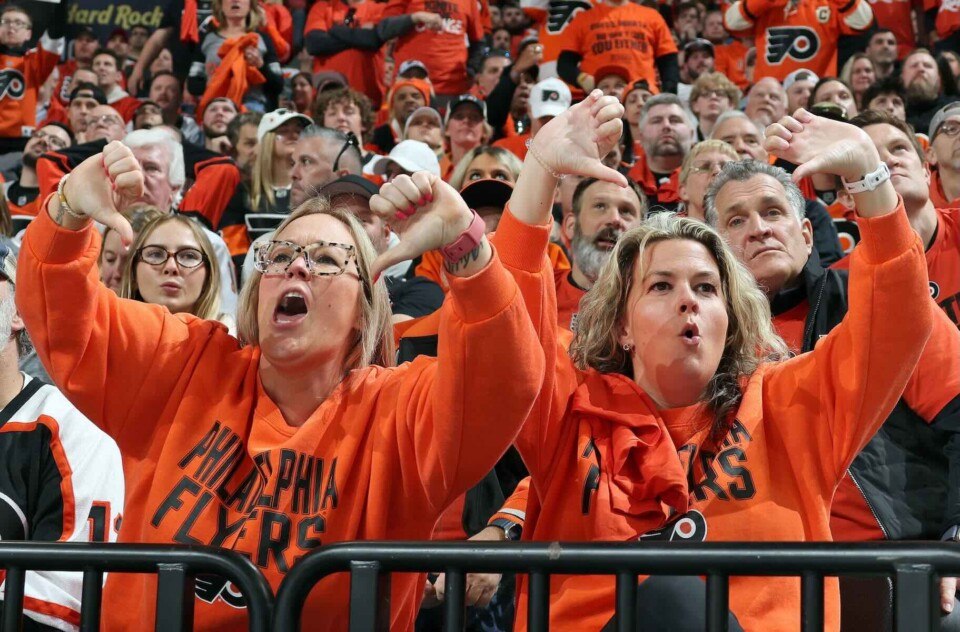
The booing of Philadelphia fans will be featured at a new micromuseum in Philadelphia / Photograph via Getty Images
Listen to the audio edition here:
Philadelphia is a beautiful place filled with world-class art, vibrant dining and nightlife, and as much U.S. history as you can possibly handle. We celebrate these things, as we should. But what we’re also known for is our orneriness, our crankiness, and our bad behavior. And now, a new museum is opening to showcase the side of the city that Visit Philly doesn’t put on billboards.
The Museum of the Philadelphian will open at 454 East Girard Avenue in Fishtown on September 25th. It’s the brainchild of self-described “cultural convener” Brian Adoff, who’s also behind such projects as Fishtown Choir and Join Philly. Basically, Adoff is a guy who makes cool things happen in Philadelphia.
“This is a serious institution about the conduct and the character of a Philadelphian, what makes a Philadelphian a Philadelphian,” says Adoff. “It’s about the personality and the attitude. But really, at its heart, it’s a love letter to the city and the people of the city. It’s taking the things like the booing, the throwing of objects and projectiles, the death of HitchBOT, and it gives it the institutional seriousness it deserves. So, it’s like real museum cases and real museum exhibits, but definitely a little absurd.”
One piece on display will be a drawing from an 1866 baseball game between the Philadelphia Athletics and the Brooklyn Atlantics at the Athletic Grounds at 15th Street and Columbia Avenue, later renamed Cecil B. Moore Avenue. “It’s an amazing illustration,” Adoff tells us. “It doesn’t look like there’s that many people there, but then your eyes zoom in on the lower part, and there’s a guy pickpocketing, a guy choking that guy out. There’s a drunk guy, there’s people fighting, there’s people gambling.” Adoff and his team have transformed that illustration into a lightbox that will hang on the wall and feature interactive components.
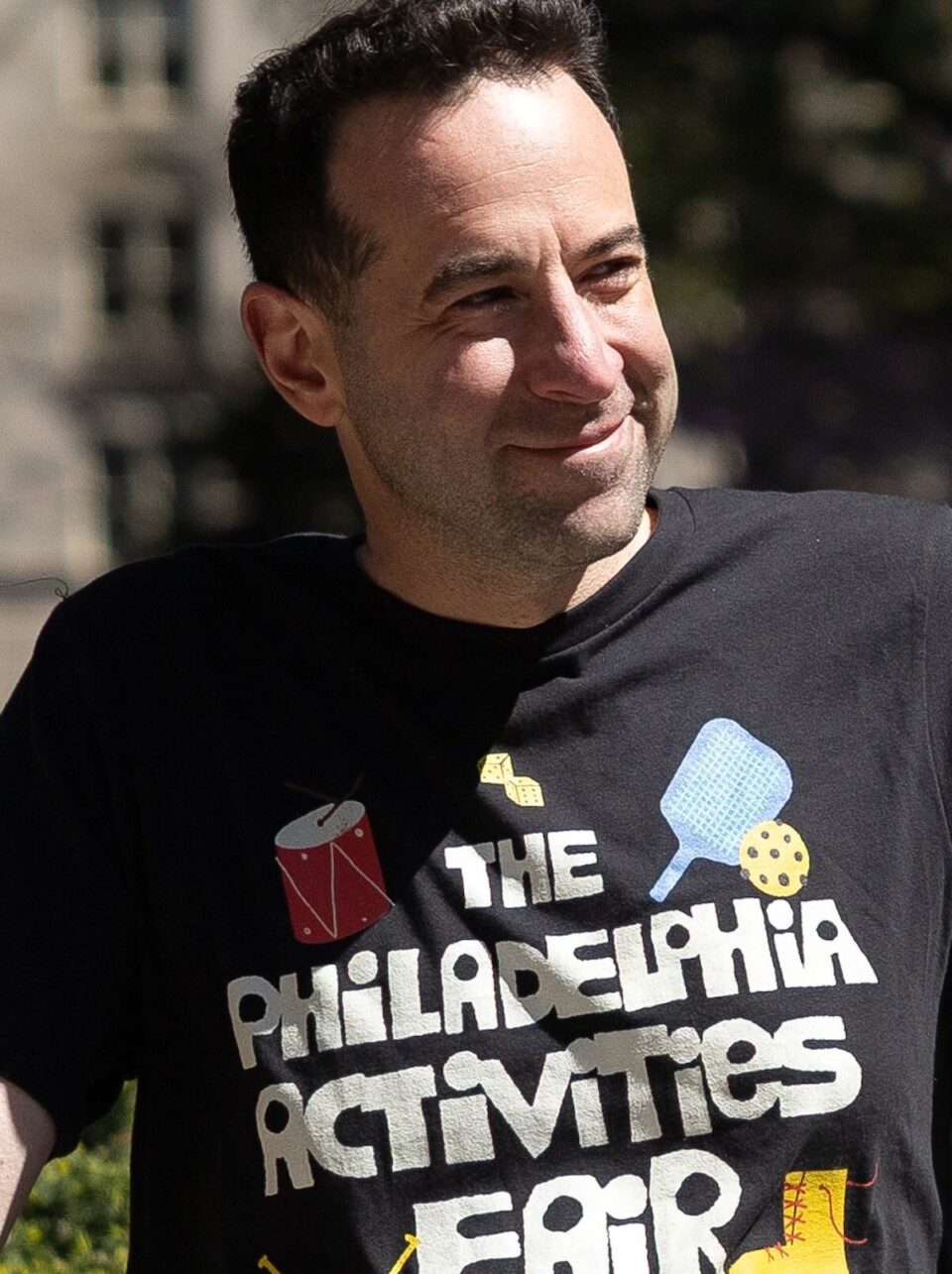
Brian Adoff, founder of the Museum of the Philadelphian / Photograph by Steve Weinik
Naturally, you can’t have a museum about bad behavior without addressing booing, and Adoff has found plenty on that subject. For instance, there was the time that Philadelphia Athletics baseball manager Connie Mack, whose name would later appear on the Phillies’ former stadium, had a fan arrested for tormenting one of his players from the stands. “This man’s rooting has damaged the morale of my team,” Mack told a judge. “He has been razzing us all year with a voice that carries like a three-mile loudspeaker. … He has done more to ruin the morale of the Athletics than any other factor, including the bats of Ruth and Gehrig.”
Adoff says that while most of the bad behavior attributed to Philadelphians has been thanks to men, he’s also found examples of women not at their best. For instance, he cites an afternoon performance of the Philadelphia Orchestra from 1926. On the program was the U.S. premiere of Amériques, by French-American avant-garde composer Edgard Varèse. The high-society women in the audience were beside themselves. They hissed and gesticulated relentlessly, as documented in the New York Times.
As for HitchBOT, the Canadian hitchhiking robot that wound up dismembered and decapitated in Philadelphia in 2015 after it traversed its home country without incident, its fate is also documented at the museum. But Adoff makes sure to point out that some Philadelphians offered to fix HitchBOT or fundraise towards its repair.
The museum will also showcase the bad behavior of Phillies fans after our 2008 World Series win — which led to film director Ted Passon’s car being flipped on Broad Street. But then, the exhibit notes, people donated $4,000 to Passon for his loss. “He bought a new car for $1,000 and gave $3,000 to a woman whose car got flipped that same night,” Adoff recalls. “So underneath all the conduct, there’s still the heart of that.”
While the museum presents the history in a serious way, there’s also an underlying sense of humor. “There is a snowball that you’ll see behind glass from 1968,” says Adoff, referring to the infamous “throwing snowballs at Santa” incident. “Believe it or not, still in pristine condition.” What about other things people like to throw at Philly sports games that will be on display? “You might see a battery,” he notes. “You might also see a hot dog.”
“I think it’s funny as hell,” says Adoff. “But the museum takes it very seriously. This isn’t funny at all to the museum. This is the museum doing its job.”
In addition to the exhibits, the museum will have a book called The Register of Philadelphians, which the curators started and which visitors are encouraged to add to. But what makes someone a true Philadelphian?
Adoff points to five qualities:
- “They don’t wait for permission.”
- “They decide for themselves what’s worth doing.”
- “They keep going whether encouraged or not.”
- “They don’t care what anyone thinks.”
- “They believe in their heart that the work is needed.”
“It could be someone who threw a battery at a rival,” Adoff suggests. “Or somebody who did something great.”
The Museum of the Philadelphian is a “micromuseum,” Adoff says — just 300 square feet in his Fishtown studio. It will be open Fridays, Saturdays, and Sundays with free admission.
As of now, the museum is scheduled to have a limited run, closing on November 1st. But Adoff says that he could see a world where it finds a home. One thing’s for sure: Philly will continue to deliver plenty of material.
Meet New Mural Arts Leader Emily Mello

New Philadelphia Mural Arts head Emily Mello, who is taking over for Jane Golden / Photograph by Ray Bailey
On Wednesday, Mural Arts Philadelphia named the person who is taking over as executive director from Jane Golden, who turned Philadelphia into one of the world’s top mural destinations during her 40-plus years painting walls and beautifying the city. That person is Emily Mello, who has a decades-long career of arts leadership at organizations such as the Museum of Contemporary Art Chicago, the New Museum of Contemporary Art in New York, and the Pérez Art Museum Miami. Does the Rhode Island resident know what she’s getting into by becoming a Philadelphian? We sat down with her on Wednesday morning to find out.
Hi, Emily. How are you?
I’m good! It’s an exciting day. I can finally talk about my new role, which I’ve been keeping under wraps. This has been in the works for a few months, and some weeks since I’ve known I was joining.
Have you been to Philadelphia prior to all this?
Yes. Philly is such an amazing art city, the institutions, the organizations, the artist-run initiatives. So I’ve been to Philly for conferences, to visit colleagues, to go to art events. Much of my life and particularly when I lived in New York for 10 years, it was such a bonus to be able to go to Philly and see the art there so easily.
After reading your C.V., you clearly have plenty of experience in the art world. But what do you know about murals?
The way that I feel such a connection to Mural Arts is in community-engaged art, and murals are such a potent way to engage communities. It’s literally out in the public. My role has largely been in institutions and museums, but working in many of the same ways — collaboratively, being responsive to the community and to making art and arts education more accessible. In terms of the murals themselves, every city I’ve been in has had an organization that has been inspired by Mural Arts, and I’ve collaborated with those organizations. I’ve also been involved in that I’ve worked with contemporary art museums, and there’s a direct connection between contemporary art and street art. I’ve worked with street artists who come from graffiti and mural backgrounds.
Have you found your favorite mural in Philadelphia yet?
That’s such a hard one, and no one wants me to say “all of them.” [Laughs] I will say that my favorite mural is always the last one I heard someone talking about, because their face lights up and gets a warmth over it. One such occasion was when I was in the Gayborhood recently for a photo shoot in front of a mural by Santiago Galeas, and someone came by while we were there who knew one of the figures on the mural, a trans activist. And he began speaking about her importance and his friendship with her. And that kind of story comes about always when you’re meeting people in public space around public art.

Philadelphia Pride mural “In Pride, In Power, In Memory” by Santiago Galeas / Image courtesy of Mural Arts Philadelphia
Do you have big changes in store for Mural Arts Philadelphia?
The way I work isn’t to come in with a predetermined idea and have an organization in the city fit into it. So I’m really at the start, connecting with artists, community leaders, civic leaders, and supporters. I want to hear what’s been working, what needs some more support for changes. I’m hesitant to make any large claims at this point, because I really enjoy working collectively.
I know you’re moving here by September 1st. What neighborhood?
I actually just came back from Philly looking for a place. I’m trying to make a decision between the Fairmount/Spring Garden area and Center City. I’m really torn. Two very different kind of vibes. But both are really delightful. So it’s a hard one.
Philadelphia has its share of reputations. As an outsider what are your impressions?
People have such a deep love of this city. The people who are here have a lot of pride, and they want to know how much you appreciate their city as well. And that is a great starting point for me for public art, because it really is all about civic engagement. There’s also a real commitment to social change in Philly. And, you know, Philly just has a great sense of humor. I’m not a sports person, but I love the Philly mascots. I’ve really enjoyed Gritty. I just might become a sports fan in Philadelphia. Finally.
Yeah, you better prepare yourself, because you’re entering the city as the Phillies are trying their best to get to the playoffs, the Eagles have their first pre-season game this weekend, and then in October, we have the biggest sports news of all: LeBron James is going to start playing for the Sixers.
I really gotta start getting into this. I love the murals that commemorate sports figures. And the LeBron thing is funny because I worked in Miami for five years at the same time LeBron was there. So I think it’s a good sign. I really loved my time and work there. I think LeBron and I can share a city once again. One thing I did hear, though, is that LeBron is commuting from New York [Ed. Note: That is a widely circulated but unsubstantiated rumor], and I don’t know what I think about that. One of my New York friends heard that LeBron would be commuting and asked me if I’d be doing the same thing.
You should have said, “How much do you think I’m making at this job?!”
I know, right! I work at a nonprofit. But honestly, I’m drawn to Philly. I love New York and that’s a city that has given me a lot and taken a lot, but I really want to deepen my relationship with Philly, with its history, with the community there. And you can’t really do that if you have one foot in.
Will anybody be moving to Philly with you?
My tiny dog named Flo.
And what kind of dog is Flo?
Oh gosh. He was a very weird pandemic choice. He is an Italian greyhound. I had mutts my whole life, and then it was impossible to get a mutt during quarantine because everybody wanted a dog. And so I gave in and said I’m gonna get this little dog that needs a sweater in the winter. It’s very unlike me, but he’s brought some joy into my life for sure.
Oh, Flo is a he?
He actually has a very long fancy name: Florizel. But he goes by Flo.
I’m not sure how Philly is going to react to an Italian greyhound with a sweater named Florizel.
[Laughs] Okay, maybe keep that out. [Laughs]
I Tried It: A Virtual Eye Exam
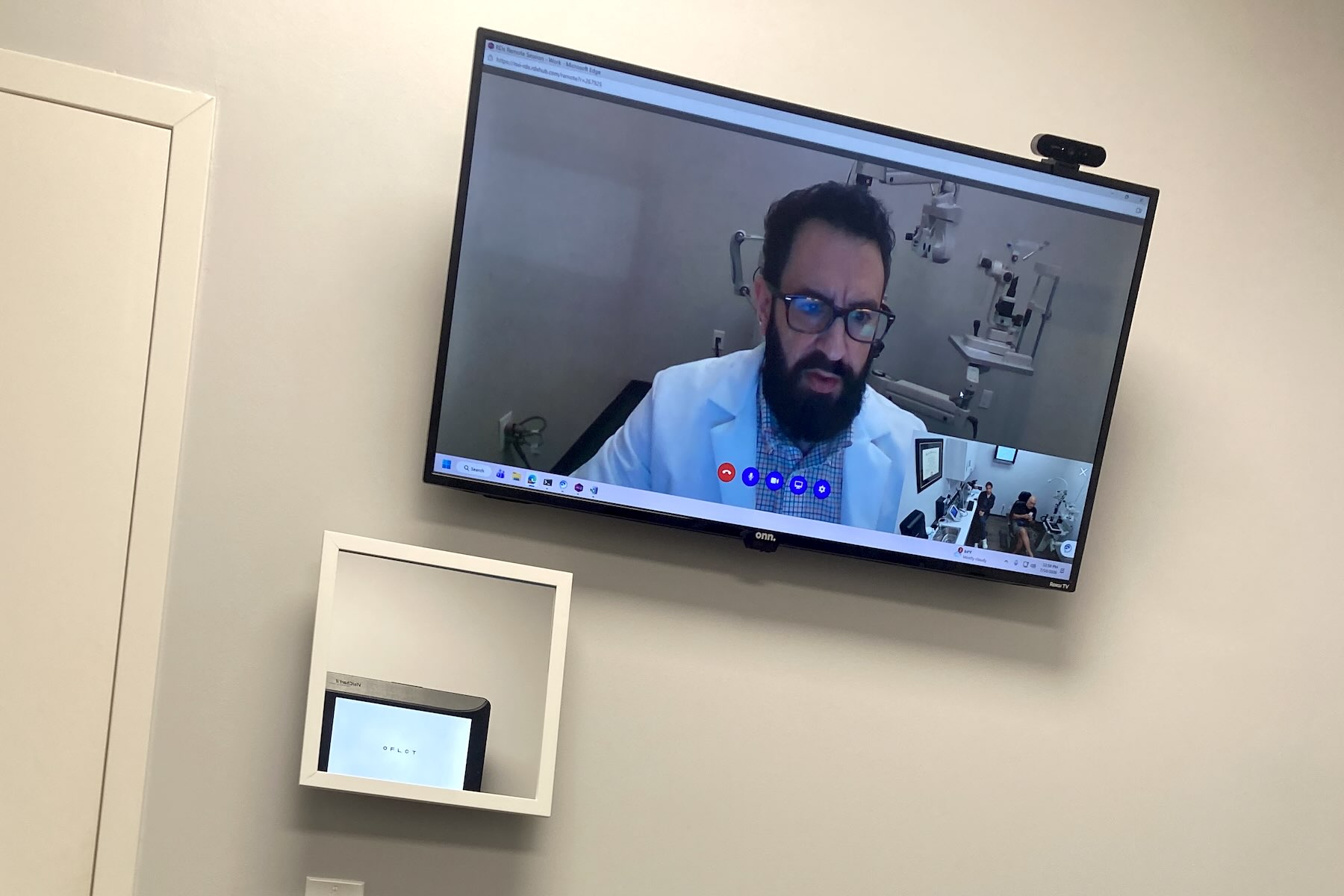
A doctor performing a remote eye exam in Delco. / Photo by Victor Fiorillo
Listen to the audio edition here:
I really needed new glasses. This wasn’t so much because my prescription seemed to have changed. But the glasses I bought at America’s Best a couple of years ago were mercilessly worn. I found myself constantly wiping my glasses, which was a completely futile proposition, because the lenses were scratched and somehow smudged with smudges that wouldn’t come off. And I realized that people looking at me weren’t really seeing my eyes. They were seeing a bunch of scratches and smudges and probably thinking to themselves, Why doesn’t Victor get new glasses?! I had become quite self-conscious. So, last month, I finally decided to do something about it.
I paid a visit to the America’s Best near my house in West Philly, with the idea that I would pick up a copy of my prescription and then use the website Zenni — as so many of my friends and family members have been doing — to order glasses online with that prescription. People have, of course, been doing this ever since Warby Parker made it a hugely popular thing in the 2010s, but it took a while for the set-in-my-ways Gen X’er and semi-Luddite in me to cross this modern threshold.
The staff at America’s Best was kind enough to provide me with that prescription, after I waited about 20 minutes for them to do so, and then they promptly pointed out to me that it had expired, rendering moot my plan to order glasses on Zenni that same day. But I was determined. I asked them if they could give me a quick eye exam (the place was empty), but they said they didn’t have any appointments there for a few days. They suggested I check their website to see what might be available at other locations. Lo and behold, the America’s Best in Broomall had an opening in just two hours. Off I went.
When I arrived at that America’s Best, they informed me that this would be a remote eye exam. (Apparently, this fact was disclosed online when I made the appointment, but who ever reads the fine print?) I had no idea that a remote eye exam was a “thing” but after they confirmed for me that I would be walking out the door with a new prescription, I decided to go for it. There was also the major curiosity — and convenience, or rather, inconvenience (for me) — factor: If it’s a remote eye exam, why was I in a doctor’s office at all?
An optometric technician soon escorted me into a room where some familiar devices were on display.
There was an OCULUS EasyField, which tests your visual field — you know, the thing you stare at and lights flash at varying distances and locations from the center and you click a button each time you see a flash.
Then I moved on to the next device, which takes high-resolution photos of the front and back of your eye, with a jarring bright flash of light.
After that, I slid over to the non-contact tonometer, which checks your eye pressure with a puff of air. For some irrational reason, this test evokes the eye-torture scene from Clockwork Orange whenever it’s performed on me.
So, again, how is this remote? Not for me, surely. The technician brought me into a room that held the classic ophthalmic exam chair. You know the one — there’s an attached eye-exam device (“Which is clearer, A or B? A or B?”) that looks like it probably hasn’t changed much since Truman was in the Oval Office.
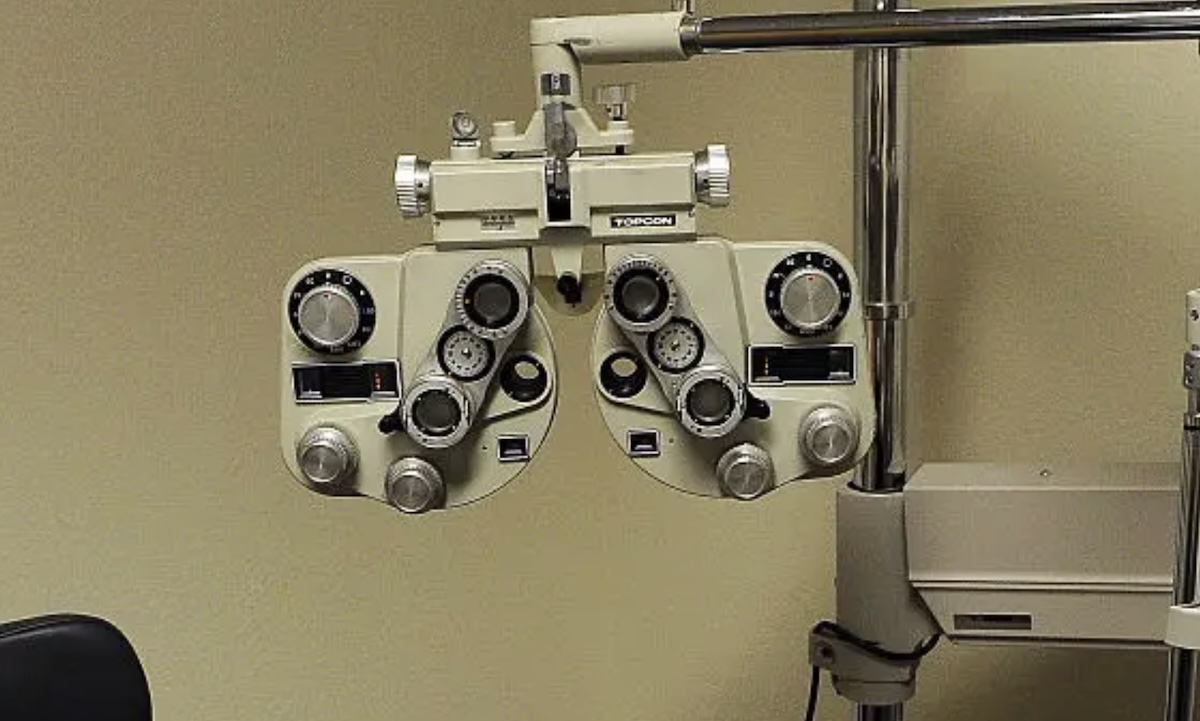
Screenshot
But the one at America’s Best had some video cameras and other wires and devices attached to it. Also in the room was a Snellen chart, the board with displayed letters and numbers that you’re asked to read — or make your best effort.
The technician explained that he had emailed the results of the tests to an eye doctor, and that we had to wait for the doc to review the results before setting up a virtual meeting — from the room I was physically in. And so we waited. And we waited some more. Still some more.
At least 20 minutes went by, and I mentioned to the tech that this all seemed to be taking a long time. “Tell me about it,” he replied, sounding positively exasperated. Eventually, he received a message from the remote eye doctor, explaining that the tech had to retake those high-res photos of the front and back of my eyes and email the new versions. So, back to the original room we went for the do-over. Then he sent the new results. We waited another 10 minutes or so for the doctor to appear on a screen in the room.
This is where the remote eye exam actually starts. The doctor reviewed the test results with me, saying that things generally looked good. Then the tech moved the device with the lenses in front of my face and the doctor controlled the lenses and other elements of that device remotely, running me through the whole “A” or “B” series of tests using the different lenses. He also peered deep into my eyes using a camera he was controlling remotely. At that point, the tech was there just to fulfill requests by the doctor to move things around a bit.
As we finished the “visit”, I wondered where the doctor was located, because, theoretically, he could have been anywhere in the world. “I’m in Glen Mills,” he told me — just 20 minutes away. Then he transmitted my new prescription to the front desk, and I went home to place an order with Zenni.
In one sense, I can’t complain. I was impatient and insisted on getting my prescription that exact day, and the remote eye exam allowed me to do that. On the other hand, I’ve never spent so long inside an eyeglass store, and — busy guy that I am — I would never do one again.
It turns out that remote eye exams first emerged during COVID to limit person-to-person contact, and, in some cases, they’ve stuck around. These days, a remote eye exam doesn’t make a whole lot of sense in a region so replete with eye doctors. But that brings up a good point about these remote eye exams: What about regions of the country — or other countries — where an eye doctor can be hard to come by? All they would need is the equipment, a tech, and an internet connection, and patients could connect with eye doctors all over the world.
They just may need to prepare for a long wait.
Philly’s Favorite Bar Owner Talks the Perfect Pour and Hating Bar TVs
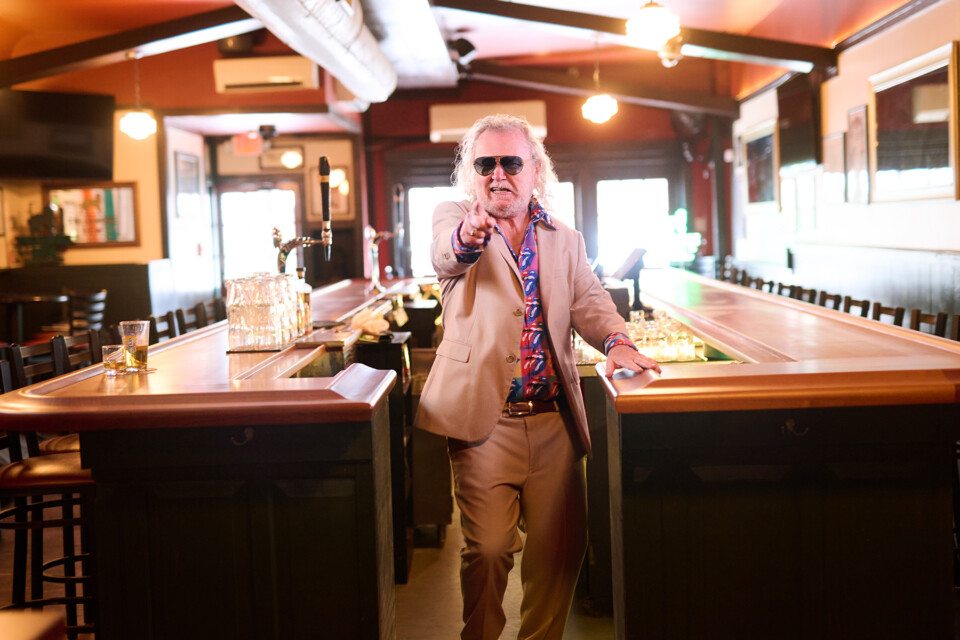
Fergus “Fergie” Carey at his new Old City bar, The Monto/ Photograph by Dave Moser
Fergus “Fergie” Carey moved to Philadelphia from Dublin way back when Wilson Goode was in office in the ’80s; he opened Fergie’s Pub on the then-deserted and dingy 1200 block of Sansom Street when Ed Rendell was running the city. In the years since, he’s become such a familiar figure that he’s often referred to as Philly’s unofficial mayor — and is certainly more beloved than any of our current city politicians. Now, after opening a string of other bars — some hits, some misses — he recently debuted The Monto in Old City in the former Mac’s Tavern, better known as the It’s Always Sunny in Philadelphia bar.
Congratulations on The Monto1, the 11th bar you’ve owned, which replaces Mac’s Tavern. What did you think of Mac’s?
I never went there. It seemed so stupid to me to open this Always Sunny in Philadelphia bar. It’s not like you were going to bump into Danny DeVito or Rob McElhenney there.
Are you a big fan of the show?
Saw the first episode. Not my thing. Long before Mac’s was there, the bar was known as Anthony’s, and I was there many times. Anthony’s was the kind of place where you could always get an ice-cold $2 draft.
So what’s the concept behind The Monto?
What do you mean “concept”? It’s just a bar, a pub. It’s not a dive bar. It’s not a fancy bar. It is a beautiful bar, with all the woodwork and such. You can get a $4 pint of Coors Banquet beer, you can get the most perfect pint of Guinness every time. I like to say that Guinness is our signature dish.
What kind of actual dishes can I expect to eat at The Monto?
You can expect modern Irish food, so items like shepherd’s-pie potato skins or a type of chicken sandwich that you get at every gas station in Ireland.
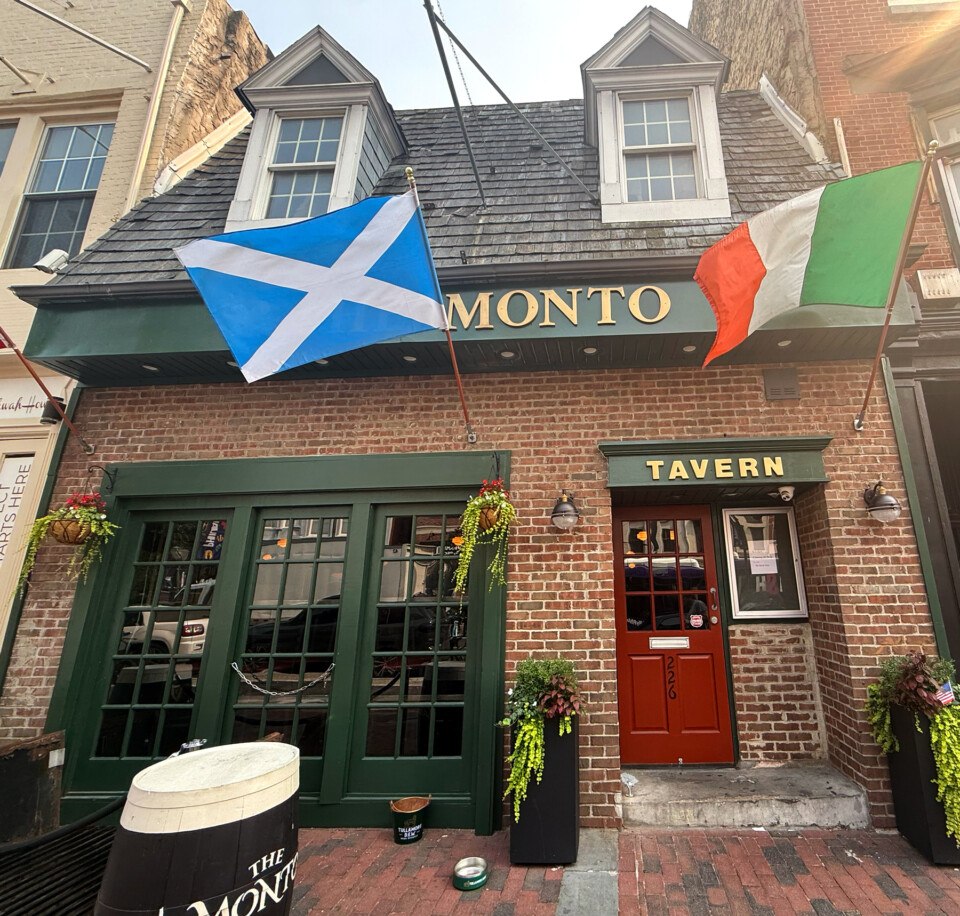
The Monto in Old City / Photograph by Laura Swartz
You famously have never had TVs at Fergie’s. Can I catch a game at The Monto?
Yes, my business partners are all into sports, so I’ll let them have their fun. Plus, I don’t mind making money. [Laughs] But I will, never, ever allow TVs at Fergie’s. All of a sudden Jeopardy! comes on and I’m supposed to turn the sound up? Fuck off.
When you were growing up in Dublin, did you aspire to open an Irish pub?
God, I had no aspirations at all to do anything. [Loud background noises begin, interrupting the interview.]
What is that? Are you on your bike again? I’ll never forget the time I interviewed you and you were on your frigging bike in Center City.
I melted some candle grease onto the ground, and now I’m trying to get rid of that while we’re talking, and then you heard the door slam as well.
Oh.
Is that okay? [More background noise — it sounds like a shower.]
Please tell me you’re not taking a shower during this interview.
No. I’m watering my plants outside. Is that okay?
Are you at your house? I remember that you moved out of Bella Vista some time ago.
I’m smack-dab in the middle of Fishtown, right behind Murph’s and across the road from Johnny Brenda’s. And one of my favorite new places: Secondhand Ranch, a country-western store and bar that has a lot of live music. It’s like Nashville. Not that I’ve ever been to Nashville, but I recently went to New Orleans and enjoyed the music. The food, though? It’s like, oh yeah, let’s have a piece of fried shrimp on bread2. Fuck’s sake, get over yourselves.
What do you remember about your childhood in Dublin?
We never had anything extra, but there was never anything lacking. We never went on a holiday to Spain or anything like that. It was more like, oh, we’re going to see Uncle Larry in Galway. We never went out for a meal unless we were traveling to see Uncle Larry in Galway and stopping for a sandwich and a cup of tea along the way.
Why did you come to the States?
I was 24 and just in a fucking stupid job at some place called Burgerland in Dublin. I had a pen pal in Fox Chase whose family had work for me here. I arrived in Philly on a Saturday night — by Sunday morning, I was at work at El Taco Grande in the food court at the Cherry Hill Mall. Then I wound up working at a bunch of Philly bars, eventually getting a job at McGlinchey’s3 in 1987, which was my last bartending job before opening Fergie’s.
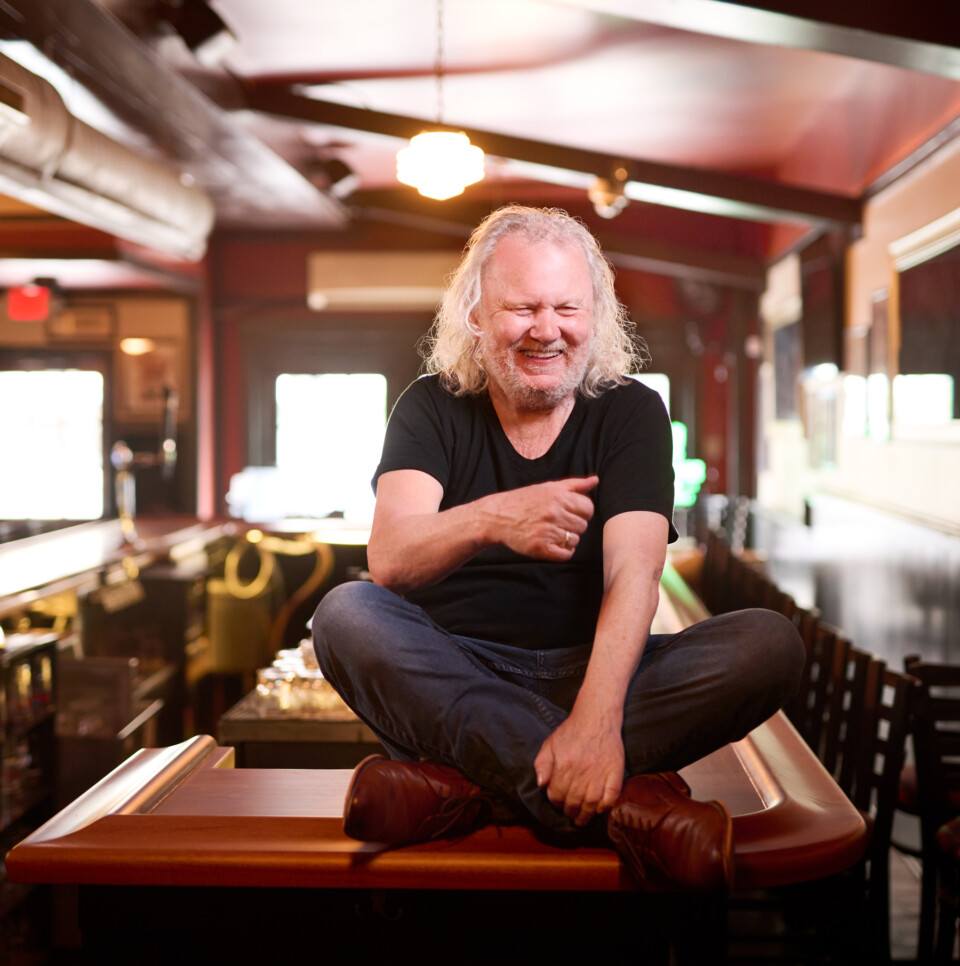
Photograph by Dave Moser
Fergie’s is pretty much an institution now. But tell me the origin story.
I really wanted to open a bar of my own, and the cheapest way to get into it at the time seemed to be this spot that was the Hoffman House4 for 70 years on the 1200 block of Sansom, which was absolutely the crappiest block in all of Center City. All kinds of drugs and prostitution and thefts right there. But it was cheap! There was crime and dirt and destruction, but I saw a rainbow, Victor! We opened in November 1994, and we had a line around the block from the beginning. People were excited to have a new bar, in part because we hadn’t had a good bar opening in a while, and I knew a lot of people, as did my original business partner, Wajih Abed, who was a bartender at Bookbinder’s. When Wajih died in 2017, I spoke at the funeral and said, “We did it, Wajih!”
You certainly did.
And Fergie’s spawned so much talent, including my partner now, Jim, who was working in the kitchen at Fergie’s on opening night. Thirty-two years later, we own a few bars together, including The Jim in South Philly, which is named after him. And Casey Parker and Joe Gunn, who bartended at Fergie’s, now own all the Pistola’s restaurants in Philly as well as Trouble’s End Brewing in the suburbs.
Fergie’s Pub has endured five different mayoral administrations. Have things gotten better or worse for small business owners?
It has gone back and forth, but I am a little annoyed with the city at the moment, and with America’s 250th. It’s like, you know, we’re all about the visitors, we’re all about the tourists. What about the bloody people here? Look at Market Street — it’s all cleaned up and tidied up right now because we’re getting tourists. What will become of it later? Am I too grumpy?
It’s fine. Grumpy makes for good interviews. The Monto is your first bar in Old City. What do you think of the neighborhood?
There are cobblestones everywhere! The one good thing I will say about cobblestones is that they are honest, right? You’re fucking driving around a normal street, you hit a pothole, you’re fucked. But at least you know that if you’re entering a cobblestoned street, be prepared to shake.
What are the three best-selling beers at Fergie’s?
Oh my God. There’s Guinness — and then everything else. My bar sales chart looks like a handgun: Guinness is the barrel; literally everything else is the grip. And Guinness is on fire at the moment, worldwide. We’ve tripled our Guinness sales in the last three years.
Why?
Kim Kardashian.
You’re kidding.
I’m not. Kim and other young women like her have been drinking Guinness and then talking about it. And there’s this TikTok trend called “Split the G” — the G in Guinness5. And all of this is making people realize that Guinness is actually really good, plus it’s lower in alcohol and medium in carbs and calories. It’s practically a health drink, Victor. [Laughs]
My son, a fledgling bartender, wants to know the trick to pouring the perfect Guinness.
Here’s the answer: It’s intention. It’s the effort to do so. You know, I’m out here watering my plants, and people say if you talk to your plants, they’ll do better. A lot of people would say that’s fucking stupid. But if you think of it as intention — I’m talking to my plants because I fucking love them. I want them to be healthy.
I love how you just connected pouring Guinness to the fact that you’ve spent this interview watering plants.
Cheers. I’ll see you for a pint at The Monto. Bring your son!
Footnotes:
- The Monto was a notorious red-light district in Dublin popularized by a 1960s song by the Dubliners. ↩
- He is referring to a po’boy, one of the town’s iconic sandwiches. ↩
- Carey and his Fergie’s and Monto partner, Jim McNamara, tried to buy this smoky Philly dive bar when it was for sale last year but were shocked to learn the price tag: $2.8 million. ↩
- The Hoffman House was a German restaurant whose vibe the Inquirer described in 1982 as “a Bavarian men’s club.” ↩
- The idea is that your first gulp of the pint should be large enough that the line between the head and the dark beer is in the middle of the G on the glass. ↩
This interview has been edited for length and clarity.
Published as “Philly’s Favorite Bar Owner Will Serve You Now” in the August 2026 issue of Philadelphia magazine.
This Just In: All the Details You Need About Philly’s Parallel Parking Championship
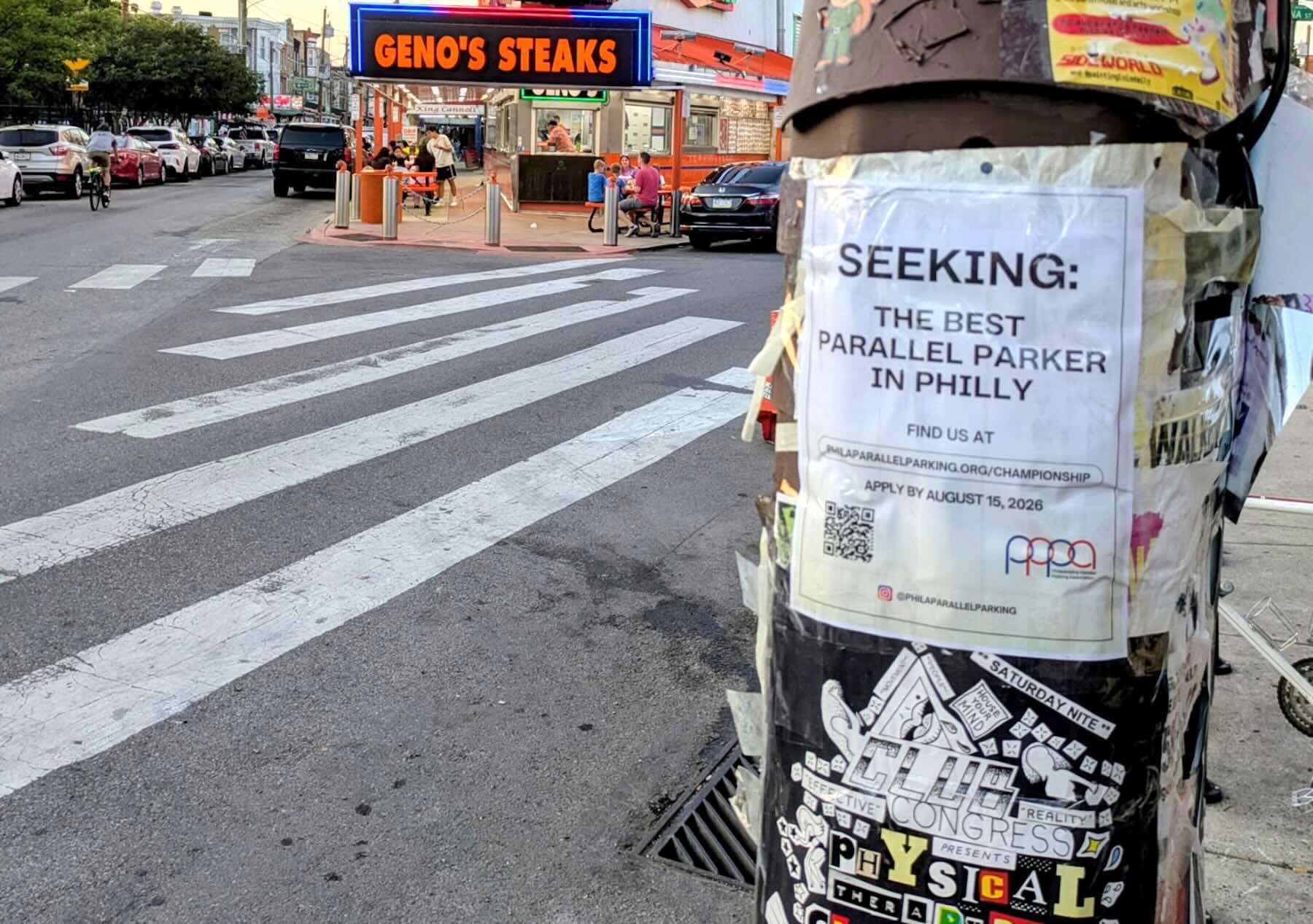
An advertisement for Philadelphia’s first-ever Parallel Parking Championship (photo courtesy the Philadelphia Parallel Parking Association)
We now have all the details about the first-ever Philadelphia Parallel Parking Championship, organized by the Philadelphia Parallel Parking Association. Yes, the PPPA. (We had a good laugh, too.)
PPA executive director Adam Wodka told us on Sunday that the competition has thus far received 800 applications, and there’s still time to submit. Eventually, the PPPA will whittle this pool down to just 20 drivers who want to be named the best parallel parker in Philadelphia.
“Honestly, it’s going to be a challenge to limit it to 20,” says Wodka. “The PPPA executive board has divided up the applications, and we’ve been going through one by one. We’re rating people based on their experience, their confidence, and we’re also looking for diversity across the neighborhoods of the city.”
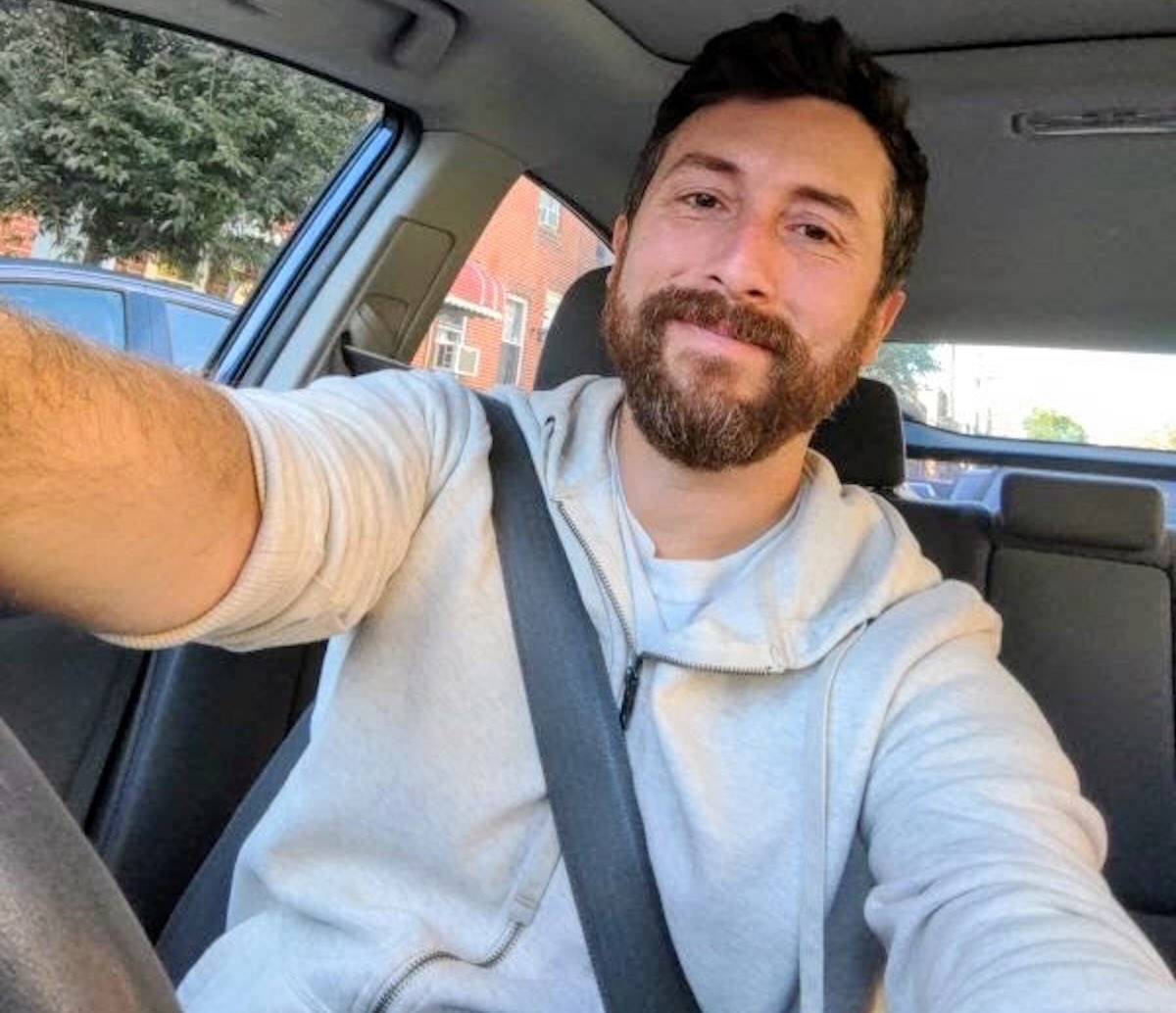
Philadelphia Parallel Parking Association executive director and Philadelphia Parallel Parking Championship founder Adam Wadka trying his best to parallel park his Prius in South Philadelphia (photo provided)
Wodka explains that the board is going to find five to 10 people who have guaranteed slots and then, in the coming weeks, let the public decide who the other applicants will be by releasing videos of the applicants on the PPPA Instagram.
Competitors will be judged in three categories: “one shot,” “tight squeeze,” and “under duress.”
For one shot, you pull back, pull into the spot, move forward, and then officials will measure how close to the curb you are.
For tight squeeze, organizers will move the cars on either side of you, based on the size of your car, to see how well you do getting into a small spot while remaining within 6 inches from the curb.
But “under duress” has to be our favorite. Imagine a car behind you honking incessantly, someone screaming from the curb that they were saving that spot for their wife, maybe a person on an e-bike damaging your calm… you get the idea.
Once the judges pick the top three from those rounds, those competitors will head to the final. They’ll be judged on form, flair, and style. And the winner will be the 2026 Philadelphia Parallel Parking Champion. No cash prize. It’s all about bragging rights. There may be some trophies.
A few details are still up in the air.
All proceeds of the contest will go to a local nonprofit; the PPPA is meeting with the Bicycle Coalition of Philadelphia later this week to try to align with that organization. They are also trying to line up sponsorships once they lock down the recipient organization.
Another issue to be addressed is how to level the playing field based on what cars the competitors are driving. If responses on social media are anything to go by, this is something people are worried about. They want to know if back-up cameras will be allowed. The answer is yes, for now. But Wodka says he doesn’t think back-up cameras will help that much. As for newer technology in some cars — where sounds and haptics let you know how close you are to objects — that’s not really on Wodka’s radar: He drives a 2011 Toyota Prius. Such questions will be resolved by the PPPA executive board, but for now he’s enjoy the fact that people on social are debating such points.
“I like the controversy of it all,” he says.
After all, a Philadelphia parallel parking contest wouldn’t be a Philadelphia parallel parking contest without a little attitude.
FBI Agents Swarm Prestigious Main Line Art Gallery
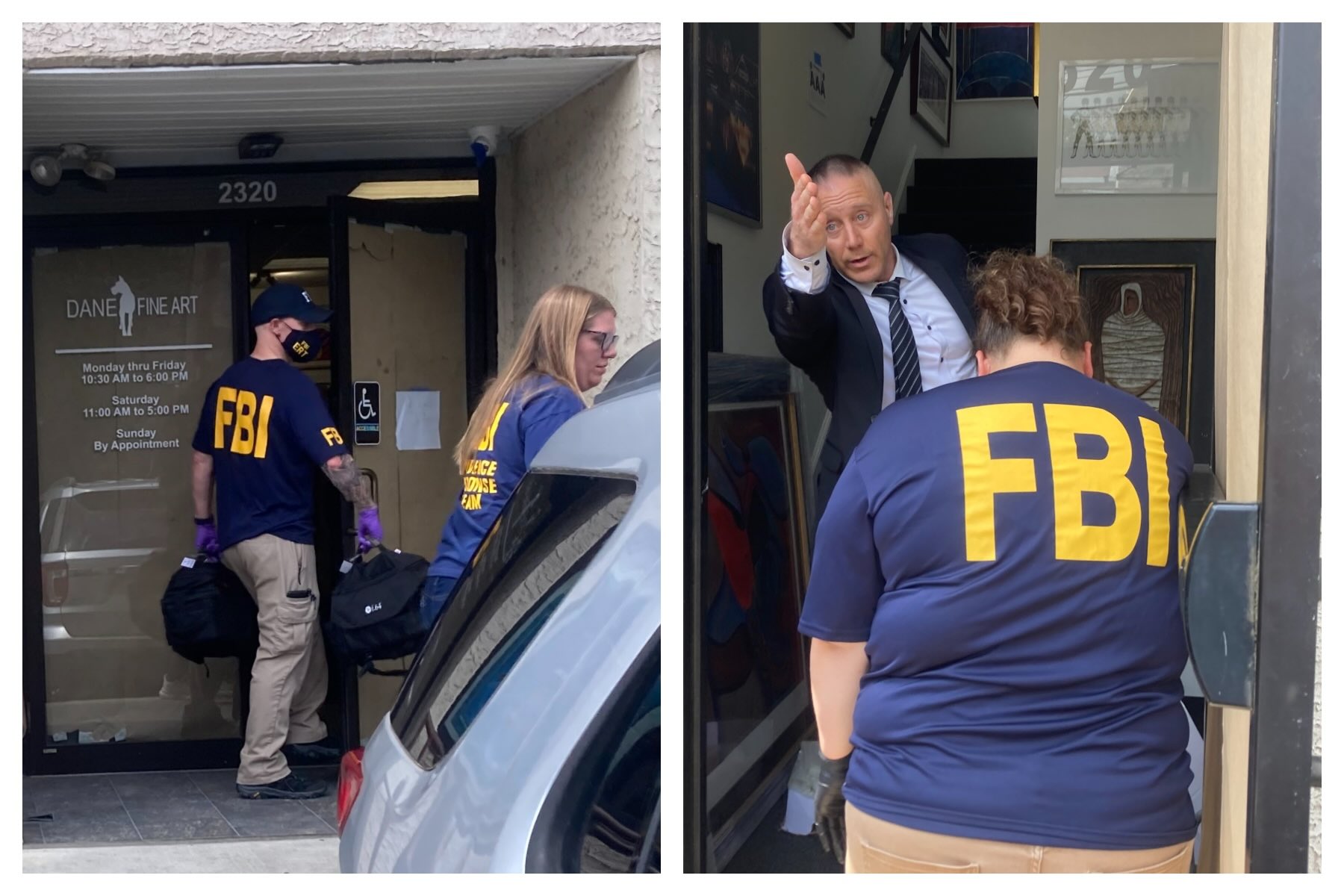
The FBI at Dane Fine Art in Ardmore on Wednesday morning (photos by Victor Fiorillo)
Listen to the audio edition here:
The suburban town of Ardmore is a relatively quiet place, not the kind of town that normally attracts the attention of the Federal Bureau of Investigations. But that’s exactly what happened early Wednesday, when FBI agents showed up to Dane Fine Art, a gallery wedged between a nail salon and the watering hole McSorley’s on Haverford Avenue.
I happened to be near the shopping center when I witnessed several FBI agents going in and out of the two-story building; the parking lot was filled with federal vehicles, some of which had FBI placards on their dashboards. “We’re executing a search warrant,” one agent told me. Soon, other agents in tailored suits pulled up in a black SUV. I asked one repeatedly if the group was with the FBI’s art crime team, once presided over by this legend. He nodded, saying “We’re with the FBI.”
I encountered another FBI agent offsite, and asked him what was going on. “You know I can’t tell you,” he said, before conceding that they were executing a search warrant related to an investigation involving the gallery. He declined to provide his name. I was able to peek through the showroom door as agents were entering and exiting and saw agents handling artwork.
Dane Fine Art has been around for decades, selling works by some of the most sought-after names in the art world: Andy Warhol, Keith Haring, Roy Lichtenstein, and Pablo Picasso. You can browse their impressive Ardmore showroom, or put a piece from your own collection on consignment with them; the gallery also acts as an auction house, with the Dane Fine Art website describing the company as “the world’s largest auction house” and promising that “each work of art comes with a certificate of authenticity and is guaranteed genuine and authentic in perpetuity.”
On Wednesday the gallery was most decidedly closed, with brown paper covering the windows and doors and a handwritten note on the front door reading, “Call [phone number redacted] if locked.” The person answering that number on Wednesday morning declined to identify himself but said he was just an employee. “The owners texted me this morning and said we were closed, but I’m not quite sure why,” he said.
I told him about the FBI’s presence. “I didn’t know anything about that,” he replied before hanging up. He also declined to name or connect me with the owners; my messages to various social media accounts and phone numbers connected with the gallery also went unreturned.
I reached out to FBI-Philadelphia spokesperson Sofia Kettler on Wednesday afternoon, and asked her about the FBI’s presence on the scene. She replied: “The FBI is conducting court-authorized law enforcement activity but has no additional information to provide.”
Ownership of Dane Art Gallery, at least publicly, is murky. The “About Us” section of the gallery’s website has no ownership information. A search of corporation and other business records filed with the Pennsylvania Department of State do not yield an individual name. But an incorporation document filed with the state in 2013 for Dane Fine Art LLC lists a mailing address in Villanova of a property once owned by Leslie Isen, wife of Philadelphia art collector Nathan “Nicky” Isen. A background check on the couple lists that Villanova property as their residential address. Meanwhile, the website for longtime Philadelphia art gallery I. Brewster & Company, which lists Nathan Isen as the owner, states: “You’ve reached our old website. Please visit our new website at DaneFineArt.com.” The I. Brewster & Company website also states: “Please come visit us at our new location: 2320 Haverford Rd” – the very same address that the FBI was searching on Wednesday.
Does the Nicky Isen name sound familiar to you? Isen has led a storied life and has been a major player in the Philadelphia art-collecting world for nearly 50 years. In 2015, Isen pleaded guilty to using art to launder money he believed to be proceeds from drug sales. By entering a guilty plea, he avoided jail time and served probation. (Longtime Philly Mag scribe Steve Volk detailed the life and times of Isen in the 2015 feature “The Curious Case of Nicky Isen.”) Isen could not be reached for comment.
Hate Philly’s Red-Light Cameras? Michael Coard Is Here for the Fight
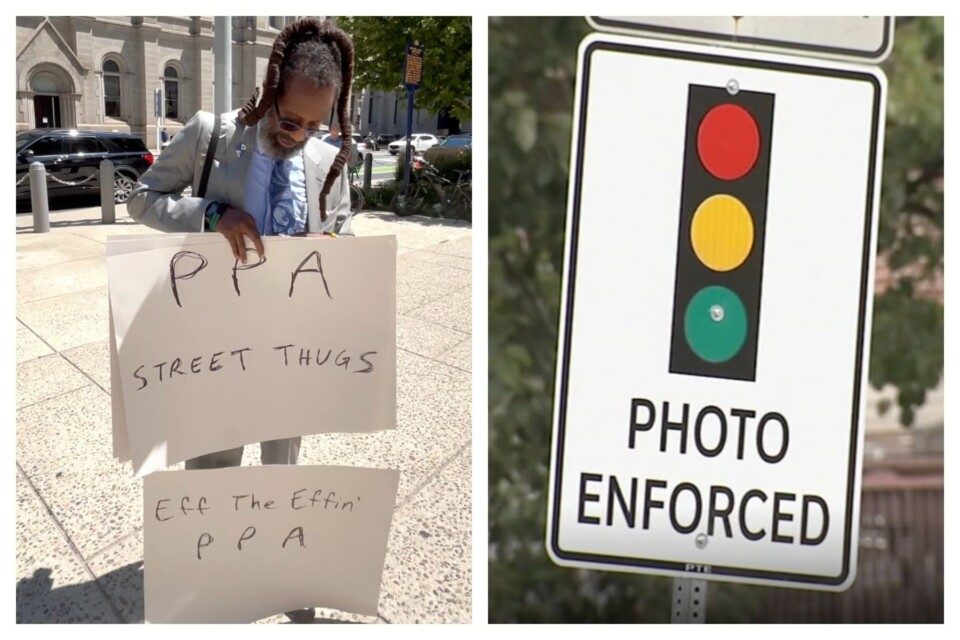
Philadelphia lawyer and activist Michael Coard is an opponent of the Philadelphia Parking Authority and its red-light camera program. He explains how to dispute a red-light camera ticket in Philadelphia. / Photograph by Diemmy Dang (left); Image courtesy 6ABC screenshot (right)
On Thursday, Michael Coard held a small rally outside of City Hall. No, not against the Trump administration for its controversial replacement of the slavery memorial outside of the President’s House on Independence Mall, something Coard has been making local and national headlines for since earlier this year. This time, Coard’s target was the much-loathed Philadelphia Parking Authority (PPA) over its red-light camera and speed camera programs.
“He came out with a megaphone and explained that he wanted to bankrupt and destroy the Philadelphia Parking Authority,” says Philly Mag’s Diemmy Dang, who was on the scene. “And then he offered his help to anybody, on a pro bono basis, who wanted to beat the camera system, who wanted to get the money back that the Parking Authority had ‘robbed’ from them.”
Earlier that day, we caught up with Coard, who, in addition to being a civil rights activist, is a criminal defense attorney who self-describes as “the angriest Black man in America.” We discussed the PPA’s red light and speed camera programs, which generate tens of millions of dollars in revenue annually.
Michael, you’re certainly a busy guy. You’re taking on racism in the Trump administration, erasers of history, and history revisionists. You’re a civil rights activist as well as a busy criminal defense attorney. And now … red-light cameras?
What is this capital-murder defense attorney, what is this civil rights activist doing slumming and battling with the Philadelphia Parking Authority? It’s all consistent.
How so?
The bottom line is, I hate the violation of civil rights, especially when done by bullies. And there’s no greater bully than a government, whether it’s the city government, the state government, the federal government. It’s interesting that you referenced my criminal law practice, because I’ve represented some bad guys: murders, rapists and robbers. But without any hyperbole whatsoever, I gotta say that the Philadelphia Parking Authority is the biggest street thug I’ve ever encountered. So in the same way that I battle the police, the same way I battle the federal government, is the same way I battle the bully known as the Philadelphia Parking Authority.
There’s a lot that people can’t seem to agree on these days. But I’d imagine that if you polled 100 Philadelphians, you’d have more than a few who agreed that the Philadelphia Parking Authority sucks.
Normally, I’m advocating for a very specific demographic. But everybody hates the fucking Parking Authority: Black, white, Jew, Gentile, Muslim, gay, straight, rich, poor, suburban, urban. Everybody. One of the things that Frank Rizzo said was that if he got elected, he’s gonna break [the PPA ticket writers’] fucking pencils. And I’m feeling that. Can you believe that Michael Coard and Frank Rizzo are allies on something? Yep. We’re allies on this.
Okay, yeah, I hear PPA complaints from people all the time. Somebody will email me and say, “I overstayed my parking time by three minutes and got a ticket! This is bullshit! This should be against the law!” But … they overstayed their parking time by three minutes. Don’t do that. Yes, we’ve seen plenty of corruption in the PPA over the years, but, people need to move their cars or we won’t have anywhere to park. If you got a red-light ticket, I’m guessing you went through a red light.
Victor, you are a man of good faith, and what you are saying is, Hey, the rules are there for a reason. You’ve got to keep traffic moving. You gotta make parking spaces available for people. If that was the intent of the Parking Authority, I’d say, Bravo. Do what you gotta do. But that’s not their intent.
You don’t buy that they’re doing it for good reason?
They say, we got these red-light cameras and speed cameras because we want to stop speeding and stop traffic accidents. No, you don’t. Because there are other ways you could do that if you wanted to do that. It’s a money grab. For example, on Broad Street, you have speed cameras with a 25 mph speed limit. What’s the difference between 25 miles per hour and 30? The whole point is to trap people and to rob them. In terms of the parking meter situation, yeah, you shouldn’t stay beyond your time, but the idea of the Parking Authority meter readers hovering over meters like fucking vultures and waiting for that second to pass and then jumping all over you is absolutely outrageous.
Right, but you’re making what is really a moral and ethical argument here. Where does the law come into it? Because I don’t think that morals or ethics will work in trying to dispute a parking or red-light ticket or speed-camera ticket from the PPA.
But then there’s the whole notion of due process, and what I mean by that is: Were the meters operating properly? Were the computer devices used by the stormtroopers operating properly? In my opinion, the Parking Authority is operating in bad faith. So if you say, Hey, I’m enforcing this in order to keep spots available and keep traffic moving, that sounds good, but I think that’s a goddamn lie. You’re doing it to line your pockets and pay your officials exorbitant sums in salaries.
But, again, from a legal point of view, is there much of a point of trying to fight a red-light camera ticket, for example?
Here’s the thing in regards to the camera. I’ll give you the example of my client, John Lewis, who is on videotape shooting and killing a great and heroic police officer Chuck Cassidy at Dunkin’ Donuts. My client’s on videotape doing that. So, and this is a true story, Victor, I’m walking into the courthouse and a news reporter sticks a camera in my face and says, “Mr. Coard, what are you doing? Your client is on camera shooting and killing the cop.” I turn around slowly and I said, “You’re absolutely right. So now we got two options. Based on what you saw in that video, we can take my client out back for a lynching, or we can take him upstairs for a trial.”
Wow, so you’re using the example of a cop killer to further your argument about red-light cameras?
That’s the essence of all of this. In America, we have due process, and due process means a trial by an impartial body. So, if just the camera convicts you, why do we have any trials for bank robbers who walk into the bank with no mask on and rob the place? Why do we have trials in a case like John Lewis where he’s clearly on video shooting a cop? Because it’s about due process. The greatest threat to a civilized society is not the one bad guy. The greatest threat to a civilized society is an unchecked governmental entity.
And from my understanding, you personally are battling the PPA on a red-light camera ticket.
They claim they had me on video, on camera, running a red light, and I had essentially seven arguments against them, and this also applies to the speed cameras. The first argument is the whole due process concept. The United States Constitution makes it clear that you can’t take anybody’s life, liberty, or property without due process. The Pennsylvania State Constitution also talks about the concept of due process. That camera you alluded to doesn’t mean shit. You gotta have a trial by an impartial and, I must say, knowledgeable entity. When I go in there, I get the deer-in-the-headlights look.
Knowing you, Michael, I can only imagine they are not happy to see you.
After I argue the Federal Constitution and the State Constitution, I don’t stop there. I go to the Motor Vehicle Code, Volume 75, Section 3116, subsection H as in Harry 1, which makes it clear that there must be legally sufficient signage prior to the red light camera. But I don’t stop there. Same Pennsylvania Motor Vehicle Code, but this is section 3117 I as in Isaac 1, which says that the city may not use speed or red light cameras unless the signage is in a conspicuous place. That didn’t happen in my case.
Right, and so if I am following you, thanks to due process, they have to prove that those things are true, and then you are also going to dispute with them what is and what is not conspicuous.
Right and then, they need to present a certificate at the hearing about the yellow light. Obviously, a traffic light goes from green to yellow to red. But what if the yellow light has a malfunction and only gave you a split section and now you’re caught going through the red light? It’s got to be properly calibrated to make sure that the yellow light is on for a sufficient duration. They have to show that it was.
I’m definitely making note of all of this and trying it if and when I get one of these tickets.
But don’t forget that they have to produce a certificate from the state indicating that the light system was calibrated in a timely manner, which is usually every 60 days. And then there’s also the Philadelphia code, which has its own requirements about the yellow light change intervals, and this information must appear on the traffic signal permit.
Has your red-light ticket case been resolved?
Well, Traffic Court ruled against me. Then I paid over $200 to appeal the matter to Common Pleas Court, and I won the appeal. The Parking Authority asked the judge for a reconsideration, which was initially set, but then the judge basically said there’s no need for a reconsideration, and the reconsideration hearing was canceled. So now, the Parking Authority has appealed the matter to Commonwealth Court, and I’m waiting for them to send me a briefing schedule.
Are you prepared to take this all the way to the Pennsylvania Supreme Court?
You bet I am.
Keep us posted.
Thank you. I will.
If you’ve received a ticket from the PPA, Michael Coard may be willing to help you on a pro bono basis. You can email him at MichaelCoardX@gmail.com.
I Tried Arby’s New Cheesesteak So You Don’t Have To
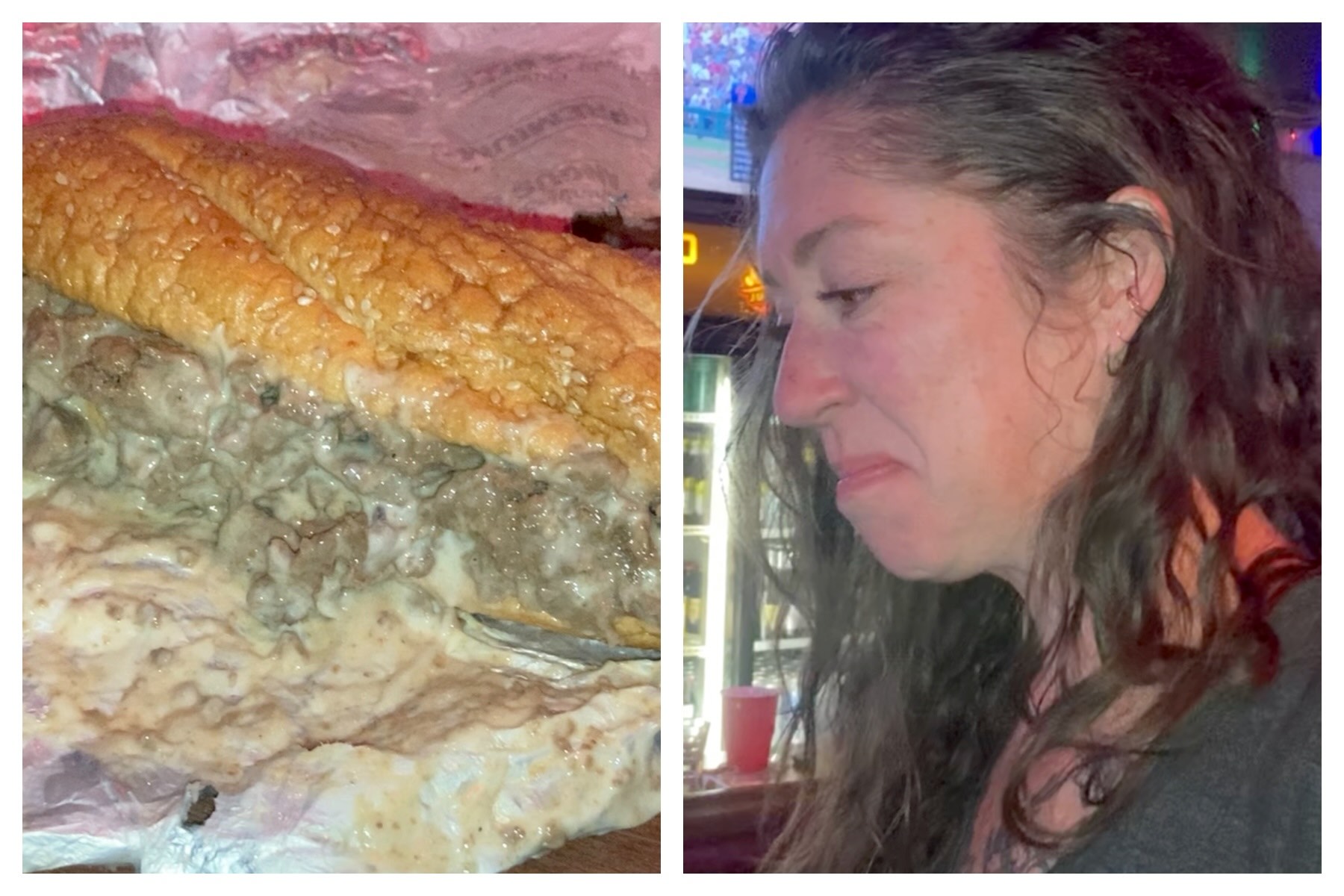
An Arby’s cheesesteak and a disgusted taste-tester (photos by Victor Fiorillo)
Listen to the audio edition here:
We here at Philadelphia magazine tend not to pay much attention to whatever chain restaurants are doing, much to the dismay of the countless publicists who try to get us to write about them on near-daily basis. We’re here to support the locally-owned and operated establishments that make up our fab dining scene with features like the just-released Best of Philly Food & Drink package and 50 Best Restaurants – and, when warranted, we’ll call out local spots that are woefully overhyped or detracting from that scene. But sometimes, a restaurant chain will do something that makes us take notice, as Arby’s has done with the Arby’s cheesesteak.
Arby’s has toyed with the cheesesteak before and did a pilot program in select markets in 2025. But last month, the Georgia-based company that is estimated to take in more than $4 billion annually went all-in on the Arby’s cheesesteak. They’ve permanently added it to all 3,400-plus Arby’s locations nationwide (fun fact: Pennsylvania has the eighth-highest number of Arby’s locations in the country, with 140) and rolled out a veritable bombardment of advertising for the sandwich. Those ads encourage all fast food-guzzling Americans to “put down those burgers” in favor of the Arby’s cheesesteak and promise “the best cheese” and “the best meat.” The commercials end with the one and only Ving Rhames, in his unmistakeable voice, proclaiming, “Arby’s: We have the meats!”
As for that cheese, Arby’s uses the cheesesteak fromage du jour, Cooper Sharp, which no one talked about five years ago. But now, trying to find a cheesesteak purveyor in the birthplace of the cheesesteak that does not offer Cooper Sharp is no easy task. The public has spoken.
When it comes to the meat, Arby’s proudly declares that they are using “100-percent Angus steak.” That might sound impressive, but any beef expert will tell you that the term Angus merely refers to a breed of cattle and is by no means a guarantee of quality. The American Angus Association does allow some products that meet certain established guidelines to use the phrase “Certified Angus Beef” in advertisements and marketing; Arby’s notably does not make that claim.
So how is the Arby’s cheesesteak? Naturally, I had to find out, so I ordered two sandwiches online from the Arby’s location closest to me, which is in Delco. The ordering process gives us some foreshadowing about how seriously we should take this cheesesteak.
While you can decline the “caramelized onions” that come on the sandwich, you’ll immediately notice that the Cooper Sharp is not an option – it is a requirement. For people, like my son, who insist on a steak and not a cheesesteak, you’re out of luck. You cannot substitute another cheese, but you can add an additional cheese, which, honestly, I’ve never thought or heard of anyone doing before. (Is a provolone-Whiz wit’ a thing somewhere in South Philly?)
Alas, provolone is not an add-on choice at Arby’s. You can get “natural cheddar” added to your Arby’s cheesesteak. And what is your other cheese option? Drum roll, if you would be so kind… the cheese that made presidential candidate John Kerry a laughing stock in our city: Swiss. And not just one type of Swiss cheese, but two. Arby’s has you covered whether you want Swiss cheese or big-eye Swiss cheese — or, what the hell, both. Back in the Aughts, Arby’s tried a different version of a cheesesteak, one they regrettably called The Philly and that was topped with Swiss cheese. Did they consult no one in Philly?
To this modern-day version, you can also add raw red onion, which just seems wrong. And for the cheesesteak hoagie folks out there, you can tack on lettuce and tomato for an additional fee. The sandwich is served on a “sesame seed sub roll.”
I ordered mine without any add-ons or substitutions — one large, which they refer to as the “half-pound cheesesteak”, and their less-big option. (The standard starts at $8.49 and the half-pound at $15.48.) And then I proceeded directly to Mickey’s Tavern, a friendly Delco dive bar that seems to have a large concentration of people who work in the food industry and folks who love to eat and cook serious, slow food.
Just before we unwrapped the cheesesteaks, one of those Arby’s commercials actually came on TV during the Phillies game (it would later come on a second time), and one of my dinner invitees remarked that the commercial makes it look like “cat food.” A bit cliché of a critique, but not without sound reasoning in this case. It doesn’t not look like cat food. Another remarked upon seeing the commercial: “Um, maybe this whole Arby’s cheesesteak thing isn’t such a good idea.”
We unwrapped the big boy and were presented with an impossibly wet, gooey mess in a pool of grease. Now, any true Philadelphian knows that grease is an essential component in any good cheesesteak, but, as with so many things, moderation, balance, and ratio are key. They say we eat with our eyes, and, well, does the following unwrapping tempt your eyes and, by extension, stomach?
You may notice that at the end of that video, a woman, whose name is Nina, took a bit of meat and cheese that had fallen onto the wrapper. What’s not on screen is that she stuck it in her mouth, the way you might when you snag a delightful burnt-end morsel of a roast from the pan before presenting dinner to your guest. Chef’s treat. But a treat this was not, and she immediately proceeded to walk to the back of the bar and spit the bite out into a trash can:
This did not bode well for the rest of the tasting, but we had a job to do, dammit. Despite her revulsion to that tiny bite, Nina, badass that she is, insisted on being the first one to take a full bite:
Gristly.
Next came Nina’s friend, Meg, who, I learned earlier in the evening is actually a fan of Arby’s for their roast beef sandwiches. I’ve tried to consume those things on a couple of occasions, and while Arby’s swears that their roast beef sandwiches are literally just roasted beef that has been sliced, the meat has always seemed a bit suspect to me, much in the same way that when you order a Chicken McNugget you feel like you are getting something very, very far removed from anything that once clucked.
Here’s Meg digging into the Arby’s cheesesteak:
Once again, gristly. She said there’s not much flavor. Of the flavor, Nina chimed in in the background: “No, just no.”
Next came my turn. Professional that I am, I went in for three bites. Oddly, I didn’t taste anything that was reminiscent of beef. What I did taste was grease, lots of salt, and that melted Cooper Sharp. Like Nina and Meg, I found the Arby’s cheesesteak to be mercilessly gristly, which would have to be my biggest complaint. Second? The strange metallic aftertaste, because it makes me wonder what’s in the food that caused it. The roll? We all know that so much of a sandwich comes down to the roll that is used and I would equate this roll to what you get at Subway—i.e. it’s trash, and certainly cannot hold up to the mess it contains.
But we needed another opinion, one from someone who regularly partakes in American fast-food culture. That was Sarah. And I’ll just let her speak for herself. I could be wrong, but she seemed to be suppressing a gag reflex at one point:
The bartender, Dan, turned down my offer of some of the Arby’s cheesesteak, but, then, Dan is a vegan, and I can’t think of many things more revolting to a vegan than the idea of an Arby’s cheesesteak. Obviously, there was a question that needed to be asked, and ask I did in this video:
Who has a grand to make this happen?
While all of this was going on, two gentleman down the other end of the bar who looked like they knew a thing or two about cheesesteaks expressed interest in our little experiment, and one said he was a huge Arby’s fan. So I took that regular-sized Arby’s cheesesteak and bestowed it upon them:
Appalling!
So there you have it. One food writer and five unbiased tasters at a Delco dive bar presided over by a vegan all agree: the new Arby’s cheesesteak is one sandwich you can most definitely skip, America.
Behold: Philadelphia’s LeBron James Era Has Begun
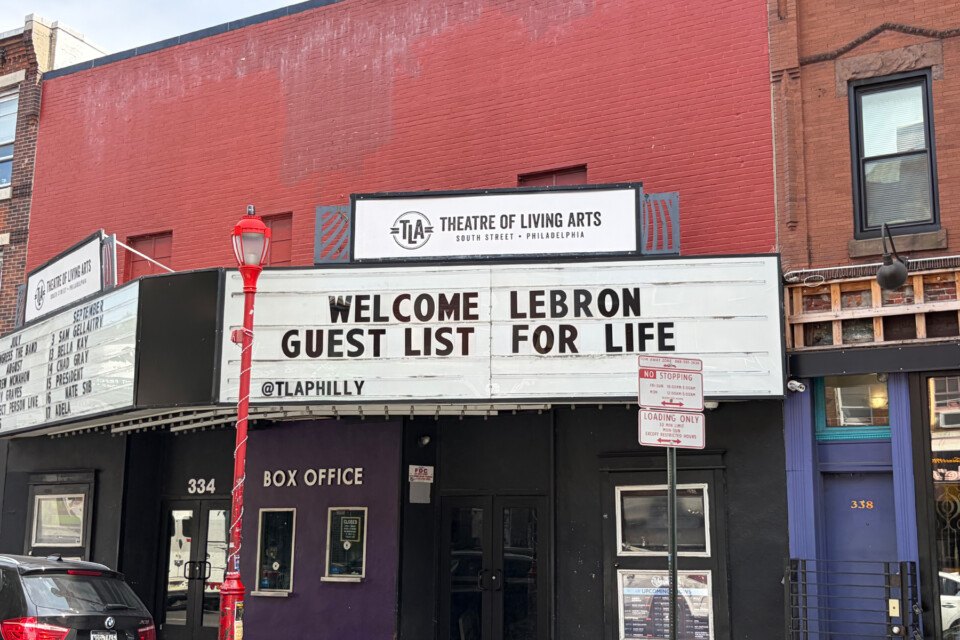
The TLA on South Street welcomes LeBron James to Philadelphia. / Photograph by Bradford Pearson
Here we were expecting a slow summer Friday. Maybe get an early start to the Jersey Shore. Alas, this was not to be, because basketball legend LeBron James decided he just couldn’t wait until Monday to announce that he is joining the Philadelphia 76ers.
“I thought I was done when the season ended. I wasn’t ready to announce it, and I knew I needed some time to really decide, but I was pretty sure I played my last game. I was honest at that last press conference when I said I needed to look at myself and decide if I still love this game.
“I still truly love this game, and I have more to give. The last few weeks have really been special. I’ve never been able to have no clue what to do and take real time to just think. I’ve had an incredible few months with all the people I love trying to figure it all out. This is my last decision. I’m not going for money. I’m not going for family. What am I really playing for at this point?
“I still want to sacrifice. I still want to work. I still want to grind. I still want to compete, to win and to have a chance at the feeling of winning another championship. I believe I can help make the Philadelphia 76ers a championship team and I am so excited to energize a new fan base and start this incredible journey one last time. Thank you LA. Miami I’ll forever love and Northeast Ohio will always home!”
Naturally, the sports world in Philadelphia and across the country erupted. Within two hours, his announcement on X alone was viewed more than 14 million times. Celebrities both in and outside of the sports world weighed in with their reactions to his decision to sign a two-year, $8 million contract to come to Philly.
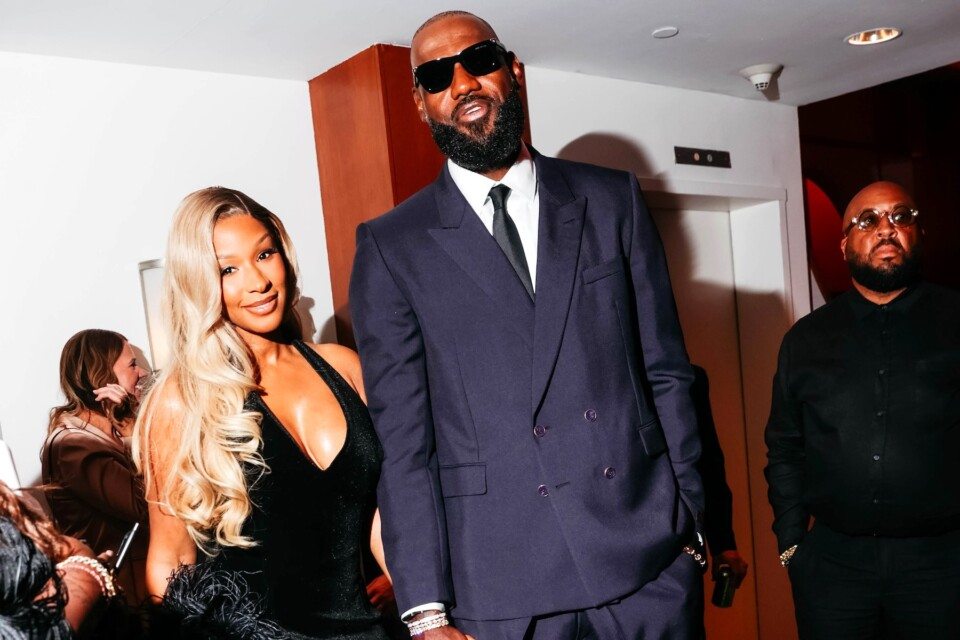
LeBron James, who just reached a deal to play for the Sixers in Philadelphia, with wife Savannah James in New York earlier this month / Photograph via Getty Images
Basketball sensation Caitlin Clark jested, “No way! I just pitched him for the Pacers. It didn’t get to him fast enough. The 76ers. Wow. Wow.” In the middle of a workout, Sixers star Tyrese Maxey, who was heavily involved in courting James for the Sixers, posted a rather joyous reaction to the news. Philly native and revered basketball coach Dawn Staley seemed similarly joyful, telling James and his wife, Savannah James, that she knows the Philly-area school districts in and out, in case they need advice on where to send their school-aged daughter, Zhuri. People from coast to coast are excited.
As for those of us in Philadelphia, excitement is an understatement. One of my colleagues saw a church funeral letting out this morning, just after the news broke, and waves of attendees were yelling, “We got LeBron!” and “LeBron’s a Sixer!” and “Oh My God!” “This man doesn’t know what he’s already done to this town,” my colleague told me.
And, as you can see above, Live Nation changed their TLA marquee within hours of the announcement.
But we’re left with more questions than answers. Just how much money will we have to pay to see LeBron James in his pre-season Sixers debut game on October 16th against the Celtics? Well, a quick look at resale site StubHub shows those prices heading in a meteoric rise. (There’s not a single seat in the first level going for less than $1,000, and that’s about double what it was at noon on Friday.) How long before Quinta Brunson writes LeBron James into an episode of Abbott Elementary? What Stephen Starr restaurant will LeBron James and Savannah be seen dining at first? And, perhaps most importantly, will LeBron James be a true game changer for the Sixers or will he be a disappointment similar to the thoroughly overhyped Ben Simmons, who was actually called “the next LeBron” before massively letting down his team and the city? We’re trusting in the process and believing in the former. See you at tip-off.