A Guide to Italy’s Traditional Pasta Shapes and Where to Find Them in Philly
These hand-formed pastas hold centuries of history — and some of the city's best sauces.
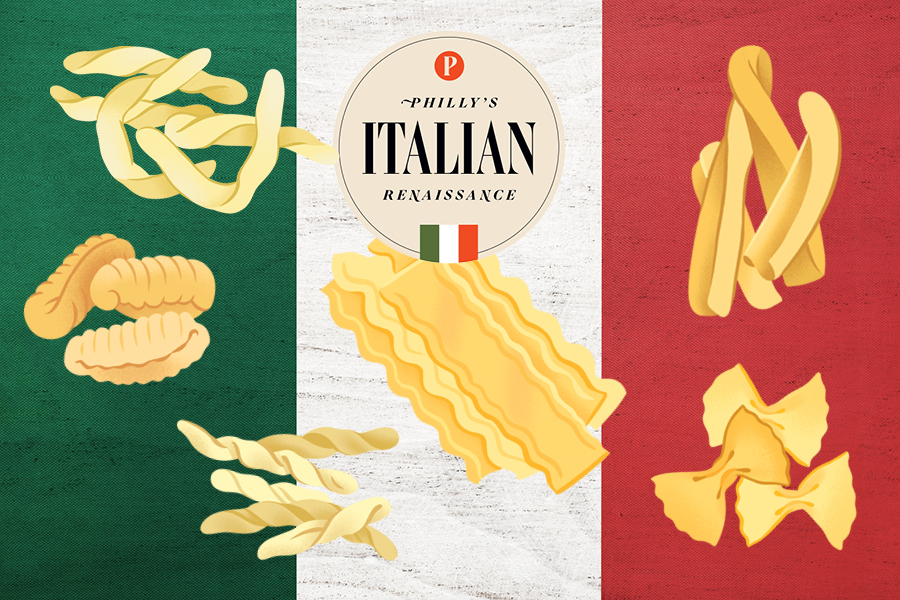
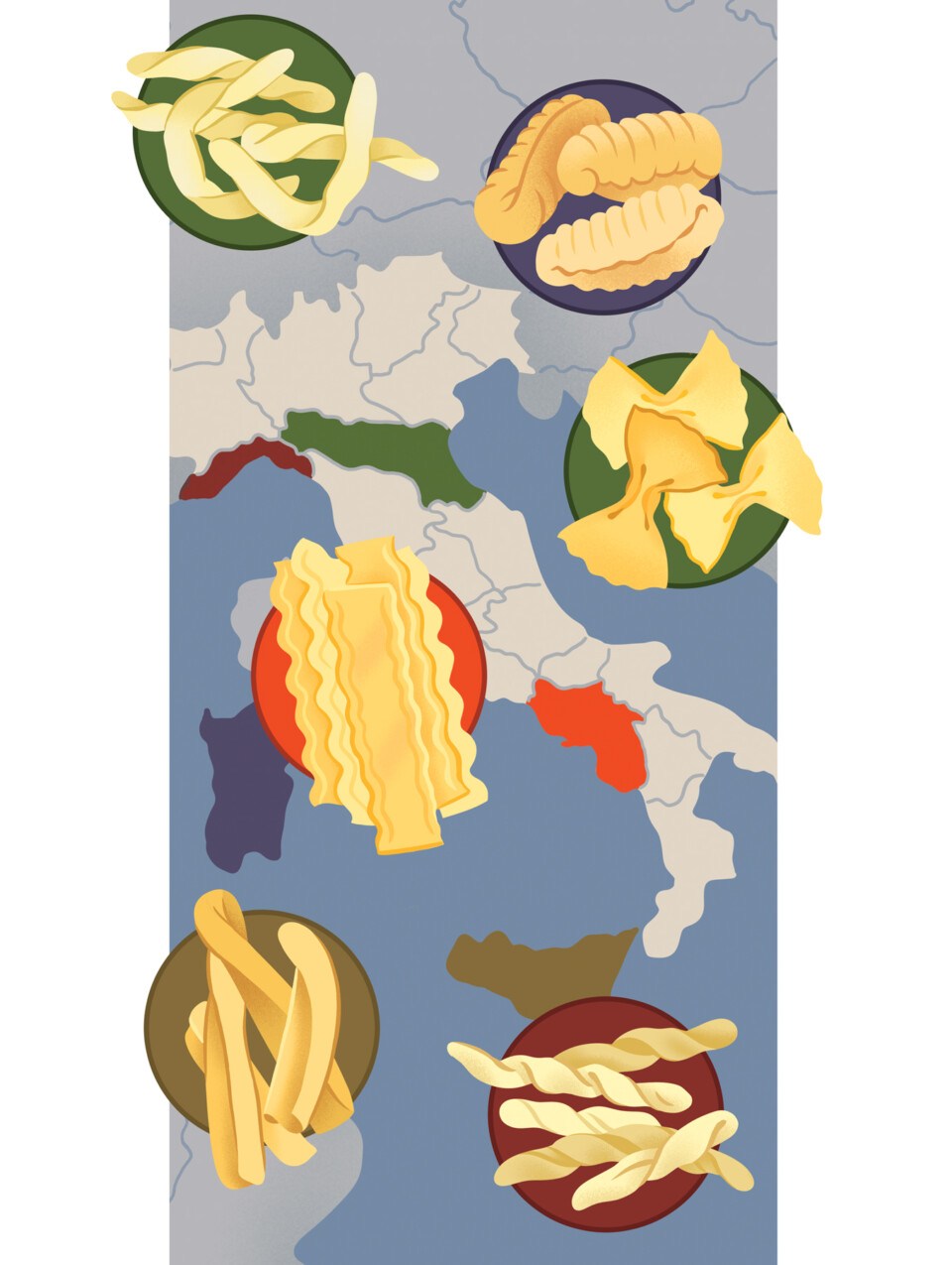
Traditional Italian pasta shapes / Illustrations by Alyssa Nassner
Welcome to Philly’s Italian Renaissance. This week, we are diving deep into the evolution of our city’s Italian American food scene — from Marc Vetri, the godfather of this movement, to the chefs blending old-world traditions with their personal whims to create an entirely new cuisine. Check back daily for stories from Philly Mag’s November cover story.
Strozzapreti
Emilia-Romagna
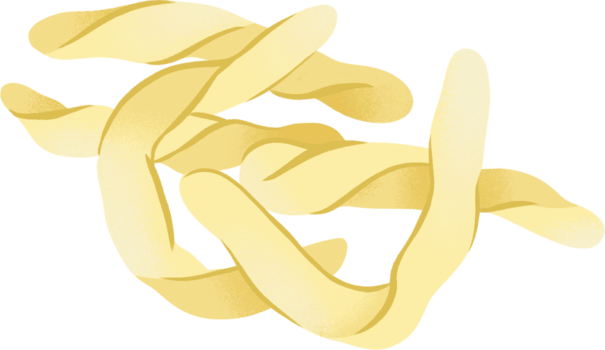
“Priest strangler,” as legend has it, was supposedly named after clergymen who choked from eating too much of the hand-rolled pasta. It began as working-class Sunday fare in Emilia-Romagna, its eggless dough suited to lean winter months when chickens laid fewer eggs. Chef David Feola takes a lighter approach at University City’s Corio — swapping the classic Bolognese that usually accompanies it for a vegetarian kale-pistachio pesto, folding in broccoli rabe and finishing the dish with smooth pistachio butter underneath.
Mafaldine
Campania

Mafaldine takes its ruffled edges, as well as its name, from Princess Mafalda of Savoy, whose gowns inspired the shape in the early 1900s. Chef Ryan LaFrance at Rittenhouse’s Wilder tosses his version in a crab-infused vodka sauce, the wavy edges built to catch every bit of it. The dish has been on the menu since the restaurant first opened — a nod, he says, to owner Brett Naylor’s seafood-focused past as a chef.
Casarecce
Sicily

Casarecce comes from the Italian word for “homemade,” underscoring its humble roots. The hand-rolled “S” curl holds sauce well, which Southwark chef Chris D’Ambro pairs with a light, Genovese-style pork ragù, heavy on the braised onions. The dish began, he says, when broccoli rabe came in from Lancaster County–based Green Meadow Farm — “a little nod to the classic South Philly pork and broccoli rabe.”
Malloreddus
Sardinia
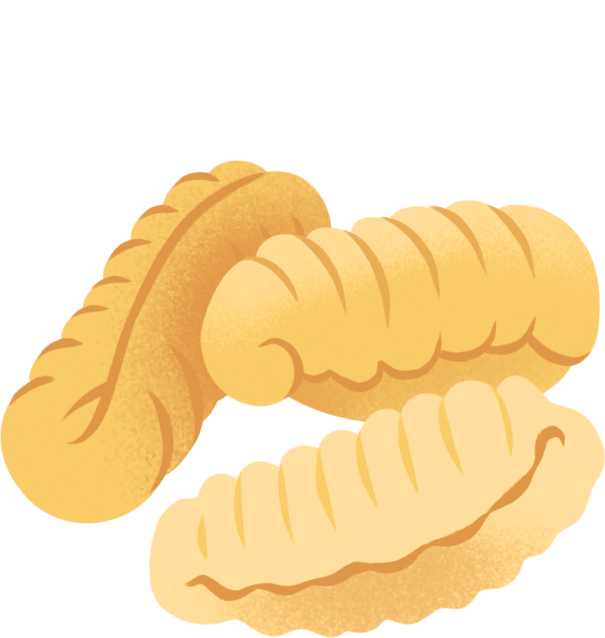
Malloreddus’s ridged, cupped shells are a staple of Sardinian home cooking, built to trap heartier sauces — traditionally a sausage ragù. Fishtown’s Bastia, where the menu draws on Corsican and Sardinian coastal cuisine, changes the sauce with the season. Over the summer, for example, chef Michael McDonough paired it with lamb, pistachio, preserved lemon, and mint. “It introduces people to Sardinian cooking while being genuinely delicious,” he says.
Farfalle
Emilia-Romagna
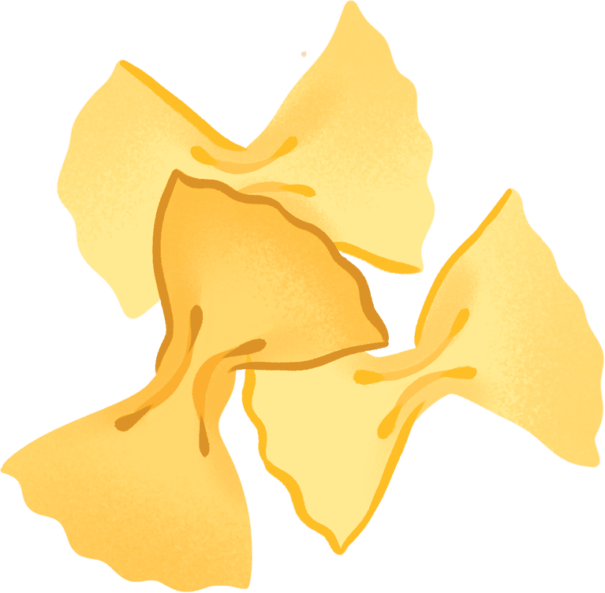
Farfalle, Italian for “butterflies,” dates to 16th-century Lombardy and Emilia-Romagna, originally pinched from leftover cappelletti dough scraps. At Illata in Grad Hospital, chef Ben Ynocencio hand-forms them fresh every morning and stirs them with macerated Sungold tomatoes and a fried eggplant cream, finished with torn basil. “It’s essentially eggplant parm turned into a glossy summer sauce,” he says — the playful dish inspired by the kasha and bow ties his grandmother made him growing up.
Trofie
Liguria
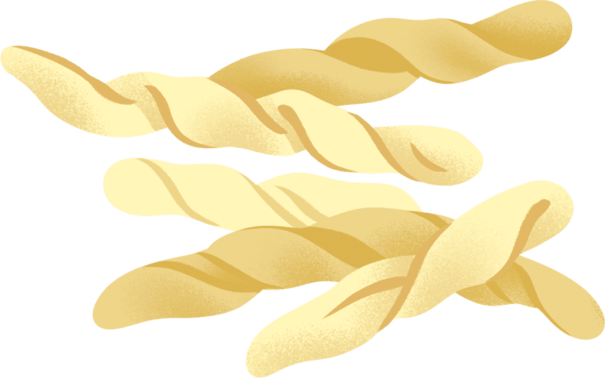
Trofie hails from Liguria, where the hand-twisted shape is classically served with pesto. Queen Village’s Scampi sticks to tradition — chef and owner Liz Grothe serves it exclusively that way, allowing the chewy spirals to carry the “natural beauty and complexity” of pestle-ground basil and pine nuts. “It’s delicate but has a really great chew,” the chef says about the first hand-formed shape she ever learned to make.
Philly’s Pasta Atlas
Published as “Philly’s Pasta Atlas” in the November 2026 issue of Philadelphia magazine.