Crack Down on Flock Cameras. Expand Speed Cameras
Flock cameras raise serious civil liberties concerns. Speed cameras can save lives. Pennsylvania should know the difference.
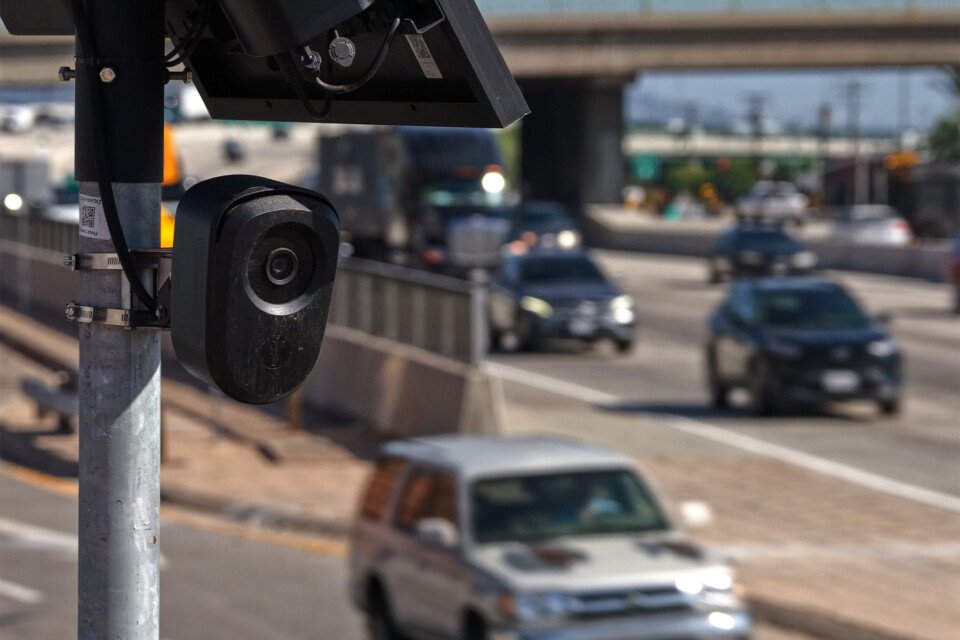
A Flock camera / Photograph by Justin Sullivan/Getty Images
Listen to the audio edition here:
Data centers may think they’ve been taking a lot of heat lately. If that’s true, Flock cameras would like them to hold their beer.
You’ve probably seen Flock cameras on social media. The license plate readers that have sparked concerns about mass surveillance, stalking, and other civil liberties abuses. Someone even dressed up as Darth Vader to give them a full throated endorsement from the Dark Side at one public meeting in California.
Like most people, we believe Pennsylvania needs tough rules for Flock and other automated license plate readers. Like limits on how long information is kept, who can search it, who it can be shared with, and real consequences when someone abuses that power.
So it may surprise some people that Tarik Sharif Khan, a legislator leading the bipartisan effort in Harrisburg to put tough guardrails on Flock cameras, also believes Pennsylvania should expand speed cameras.
Here’s why.
Flock cameras can collect information about every car that passes, including people suspected of doing nothing wrong. Speed cameras have a narrow job: Catch dangerous speeding.
One can increase the risk that our civil liberties are abused. The other can reduce the need for risky roadside stops between police and the public.
One can be used to track innocent people. The other is designed to change dangerous behavior on our roads.
Even the ACLU, while pushing for strong limits on mass surveillance, supports well-designed speed-camera programs. Its road-safety recommendations point to automated enforcement as one way to reduce dangerous driving while relying less on high-volume traffic stops.
For us, this is personal in different ways.
Angela McDonald is a mother who lost her son Mark after a speeding driver struck him and fled while he was walking home after visiting a friend after work. The impact was so violent that it knocked him out of his shoes and threw him half a block. He was taken to the hospital and later declared braindead.
Just hours earlier, Angela had seen him. They talked, laughed, said “I love you,” and said goodbye like they had so many times before. She never imagined it would be the last time.
Mark was building a future for himself. Angela later learned that he had applied to both the police department and the sheriff’s department, and had even received an acceptance letter to begin physical-agility testing. He was preparing for a life of service, discipline, and purpose. A speeding hit-and-run driver took away that future in one instant.
Tarik has seen the toll of dangerous driving from a different perspective. As a nurse practitioner, he has cared for patients living with chronic pain and lasting injuries after serious crashes. As a state representative, he has seen that same devastation in the community he represents. On Henry Avenue, where some drivers treat the road like an F1 track, neighbors continue to mourn people like 17-year-old Sam Ozer and teacher Kevin St. Clare, both killed by speeding drivers while riding their bikes.
For Tarik, traffic violence does not end at the scene of a crash. It can mean years of pain and disability for his patients, and a lifetime of grief for constituents whose loved ones never made it home.
That’s why we’re joining forces: a mother who knows the unimaginable cost of losing a child, and a nurse and legislator who has seen the consequences of unsafe driving and has the opportunity to help change the law.
And we know speed cameras work in Philadelphia. Since they were installed on Roosevelt Boulevard, speeding violations have fallen 95 percent, fatal and serious-injury crashes have fallen 21 percent, and crashes involving pedestrians have fallen 50 percent.
Pennsylvania should give more neighborhoods the ability to use speed cameras where speeding and crashes are a serious problem.
The purpose of enforcement should be to change behavior before someone is killed. A ticket or an arrest afterward cannot bring someone home. Getting a driver to slow down before the crash can prevent it altogether.
Speed cameras can do that without an officer standing along a busy roadway, without another roadside stop, and without building a record of where innocent drivers travel.
They need common-sense rules too. Put them where speeding and crashes show they are needed. Keep fines reasonable. Protect the information they collect. The goal should be safer streets, not raising money. Tarik’s bipartisan bill in the Pennsylvania House will do just that
In Pennsylvania, we should absolutely crack down on technology that tracks innocent people. But we need to expand technology that catches dangerous driving and helps stop it before someone is killed. And we should make sure any technology we deploy comes with strong safeguards to protect the public.
On Sunday, September 27th, at 10 a.m., we will join the Bicycle Coalition of Greater Philadelphia for the Slow Down, Save Lives Advocacy Walk along Roosevelt Boulevard. The 9.4-mile walk will begin at 4153 North Broad Street in Philadelphia, and will bring together families, survivors, and advocates to raise awareness about traffic violence and build support for speed cameras and other safety measures. RSVP at bicyclecoalition.org.
Angela McDonald is a mother carrying the unimaginable loss of her son and works with Families for Safe Streets Greater Philadelphia. Tarik Sharif Khan, PhD, CRNP, is a Pennsylvania State Representative serving parts of Northwest Philadelphia.