
Germantown Is Showing Philly How to Celebrate 2026 Way Beyond July 4th
Historic Germantown’s Tuomi Forrest is using America’s milestone birthday to introduce visitors to one of the city’s richest — and often overlooked — historic neighborhoods.
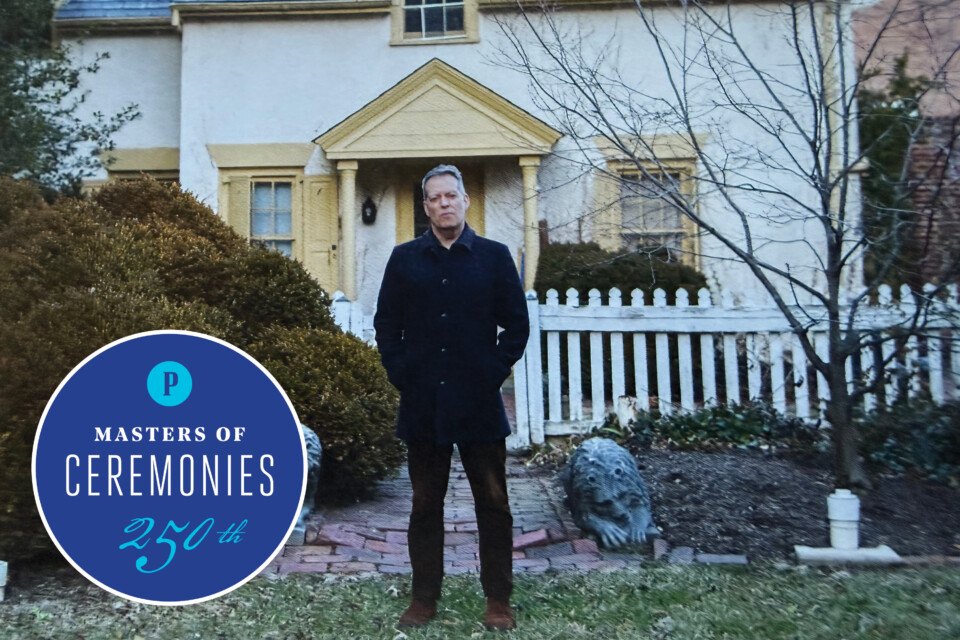
Tuomi Forrest, executive director of Historic Germantown, outside the Fromberger-Harkness House on the grounds of the Germantown Historical Society / Photograph by Holden Blanco
Welcome back to Masters of Ceremonies, where, in the lead-up to Philly’s biggest summer ever, I’ll be talking to some of the people behind the scenes making it all happen. From America’s 250th to the World Cup and beyond, you’ll get to know a little bit more about the folks working to bring Philly to the world — and bring the world to Philly.
Today: Tuomi Forrest, executive director of Historic Germantown.
Historic Germantown is a consortium of 20 individual cultural and historic organizations in Northwest Philadelphia — their informal footprint stretches from Fairhill to Chestnut Hill — including museums, gardens, historic sites and houses that collaborate on marketing, programming, community engagement, and other initiatives.
This year, “the sheer volume of what we’re doing is unprecedented for us,” Forrest says. “We have a lot of programs and initiatives that encourage the public to visit multiple member organizations.” For example, they’re running two Stamp Rally initiatives: Pick up a free passport, find clues at various sites, get stamps, and win prizes. “It’s just a really fun way to get families out to visit places that they haven’t visited before.” (This spring, the focus was on trees, green space, and landscapes at various sites; this fall, it will be historic people associated with Germantown.) They’re also doing a series of 26 walking tours with different themes for 2026. Then there’s this summer’s Firefly Hours, where a different Germantown site stays open each week for evening hours and offers free community programs and activities. Today, they’ll be opening the Germantown Visitor Center. (More on that below.)
Here’s how Forrest is leveraging this moment to highlight Germantown well beyond 2026.
What does a typical day look like for you this summer? It sounds like there are so many projects in Germantown.
There are, yeah, there’s stuff happening pretty much every day. The Firefly Hours are every week; we have major festivals going on through the summer; we have walking tours happening weekly. It’s about keeping a lot of balls in the air at the same time.
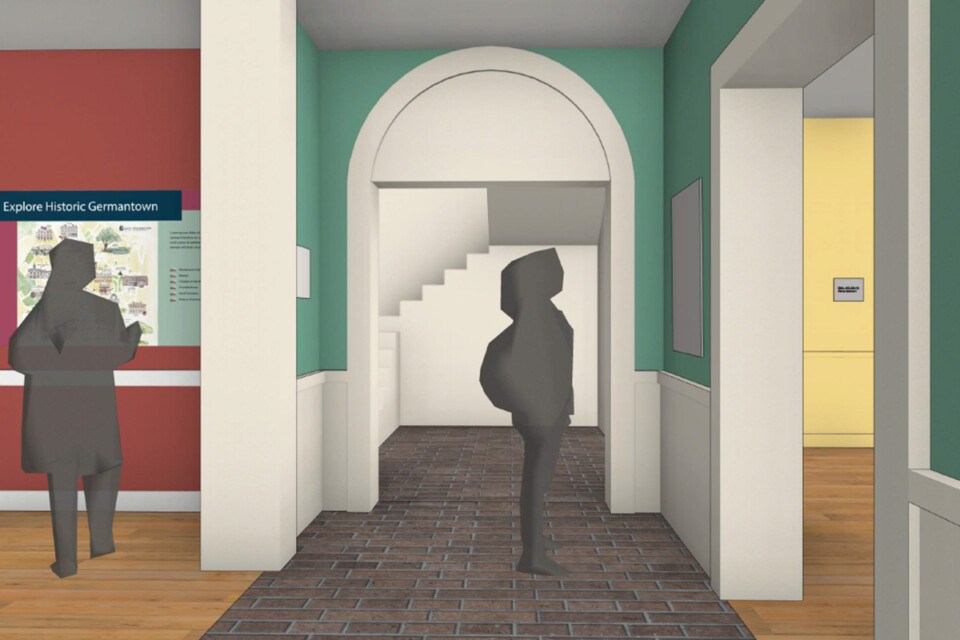
Rendering of Historic Germantown’s new visitor center, opening July 9th. / Rendering courtesy of Historic Germantown
Right now, we’re really focused on the visitor center, which opens to the public on July 9th. It’s really fun to see the exhibits and the panels go in because it’s been months and months of planning and input from all our sites going into these exhibits, which feature a thematic history of the region — including its founding in the 1680s, and its history of activism and abolitionism (in 1688 it was the site of the first anti-slavery protest) right up through the Civil Rights movement. And then we have a rotating exhibit this year, themed to the Germantown area during the Revolutionary period: What was happening leading up to the American Revolution? What was their experience during the Revolution, especially during the Battle of Germantown, which was the only battle fought in the city? How did people that were enslaved experience the Revolution and seek to self-emancipate? Plus, it will help visitors understand what’s available across the entire consortium, and help plan customized itineraries. And there’s a small gift shop, as well. So, we see this as a jumping-off point for anyone that wants to spend a few hours or a whole day in the neighborhood visiting cultural and historic sites and getting to know the area a little bit better.
A lot of my work, in the day-to-day sense, is thinking about what’s happening the next six months, what’s happening next year. We’re already planning a lot of things that will be happening in 2027 and ’28: So, this year’s the 250th anniversary for the country, but next year is the 250th anniversary of the Battle of Germantown. A lot of our sites are directly connected with that history, so we’re already starting to think about what tours and exhibits and other programs can really tie into that 250th anniversary.
We’re also doing a lot with contemporary art — almost all of our sites are hosting exhibits, or performances — so really having folks understand that, yes, you can get several hundred years of American history here, but it’s also a great place to experience art and gardens and green spaces. So we’re continuing to improve those spaces and focus on outdoor activities to take advantage of this time of year when everything’s in bloom.
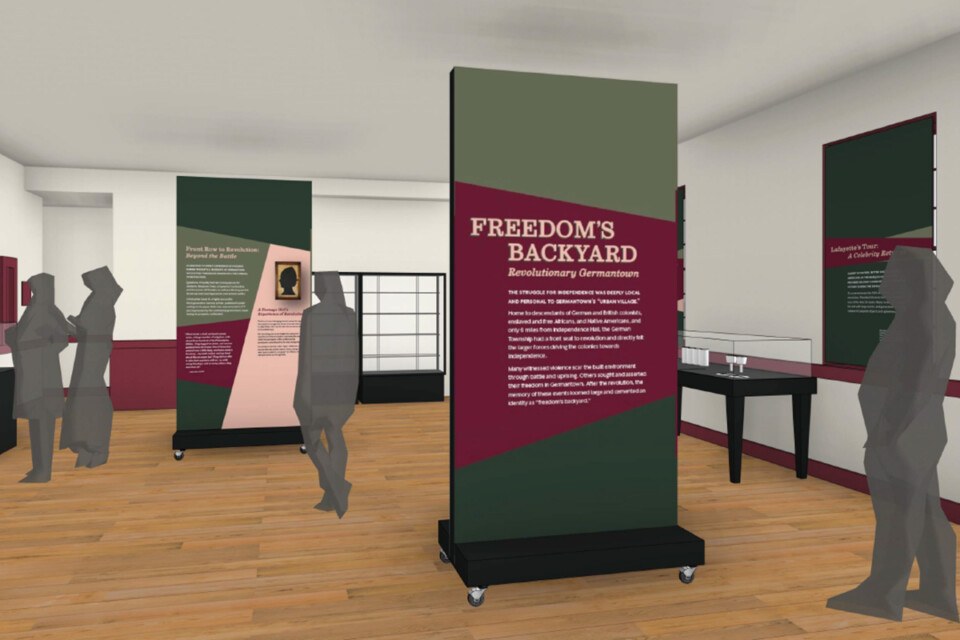
Rendering courtesy of Historic Germantown
There’s been so much focus on July 4th, but this whole year is the 250th. It seems that Germantown is doing a good job of carrying it forward.
Exactly. Like the Stamp Rally focused on historic people? That’s September, October, November. We’ve really tried to space it out throughout the year, you know, just also recognizing that, with the World Cup, with the All-Star Game, with Wawa Welcome America, there’s a lot going on, so we want to make sure we participate in that, but also fill in the gaps and keep it going.
What else are you excited for in Philly this summer?
I’m really excited, broadly, to see our peers and peer organizations rise to the occasion. I don’t know a single history or cultural group that we work with that isn’t doing something [for the 250th]. There’s a sphere of collaboration and camaraderie, and an investment in Philadelphia, in telling the breadth and depth of our histories and stories. Not editing out — being really honest about our history, even as we celebrate the semiquincentennial. It’s not just people doing stuff but doing it in the right way that lets our residents and our visitors know that this is who we are as a country, and how we got here. And there are a lot of perspectives that need to be accounted for in telling that story; there’s not a single narrative.
I love to see the World Cup here too. There’s no event on the globe quite like it, and seeing people from around the world, as well as Philadelphians, so excited — it brings people together and I’m proud that Philadelphia could be one of the host cities. It’s just great to see people from other parts of the world find out what a great place this is.

Stamp Rally passport / Photograph courtesy of Historic Germantown
So imagine it’s 2076, and Philly’s getting ready to celebrate the tricentennial and future planners are looking back at what we did in 2026 and saying, “Let’s do let’s try and do something like that again!” What do you think they’re referring to?
I think one of the great things that’s happening this year — something that was really distinct from what happened in 1976 — is people saying, Look, this is an event that should be felt and celebrated in every neighborhood, in every community, in and around Philadelphia. It’s not something that should be confined to Independence National Park, right? So really having a neighborhood-based approach, helping all the communities and towns outside of Philadelphia really see themselves as part of the story.
One example is this Neighborhood Jawnts program that’s happening; we’re participating and hosting some of those tours in Germantown. Again, why not? Why keep that for just a few weeks this year? That should be the type of thing we look at doing all the time. Everyone can participate; you don’t need to be a site that was around in 1776, you don’t need to be promoting only Colonial history. Chinatown should be participating. Centro de Oro. Africatown. Because the themes and promises from the Revolution should be resonating, even if they’re not completely fulfilled; it applies to everyone.
What’s something else you might tell a tourist they have to do while they’re here?
Well, other than “Come and visit Germantown,” I would say broadly just trying to get out to neighborhoods that are outside of the core Center City tourist area. As every Philadelphian knows, we are a city of neighborhoods, and you get such a different feeling in meeting everyday Philadelphians.
And then, on a personal level, I love the combined exhibit “Nation of Artists” between PAFA and PMA. You’re not going to see that breadth of American art anywhere else, and to have two pre-eminent museums collaborating on that type of exhibit is, again, something that we should be doing more of. And then you have the Middletons offering up their private holdings — major art that had not been seen by the public or even by professionals in the field. It’s just fabulous.
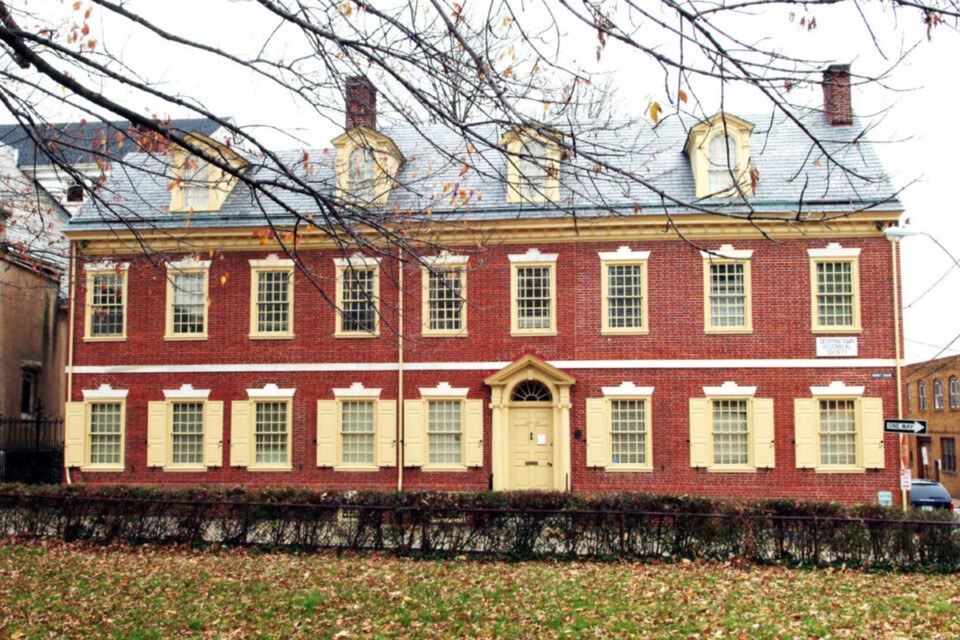
Germantown Historical Society / Historic Germantown
What’s your favorite Philly restaurant or Philly food that you think visitors should eat while they’re here?
I’m gonna pick a roast pork sandwich over a cheesesteak almost any day — the broccoli rabe, the provolone. It’s the same family, but just a better version of it. Go to Reading Terminal and get one there. If you have to make the pilgrimage to Pat and Geno’s, do it, check it off the list. But also go to the Italian Market — real Philadelphians are there.
If you think back to your own travels, once you’ve done big ticket items, what you tend to remember most are the smaller things, like going to little neighborhood restaurants or stumbling across a cute little park that you didn’t know about. And Philadelphians are friendly people — the reputation is way overblown. I guarantee you almost any Philadelphian will be more than happy to suggest where to go, what to see, their favorite neighborhood joint, that type of thing.
What is a less cliché Philly souvenir you’d recommend for someone to take a little piece of the city home with them?
This is something I try to do when I travel: Buy something that is original art. You do not have to spend thousands of dollars to get great art. Find a little gallery or shop that features local artists or artisans.
It’s not a T-shirt, not a snow globe. It’s not a miniature Rocky statue. All of those are fine, and get those as well. But get something that you literally can’t get somewhere else. And you’re directly supporting the livelihood of someone that’s probably working really hard to make a living.
Do you have some favorite galleries that you would recommend?
There’s a great little gallery in Germantown, just down the block from us: Imperfect Gallery. And City Arts Salon. I also love Bridgette Mayer in Washington Square for something a little more elevated.
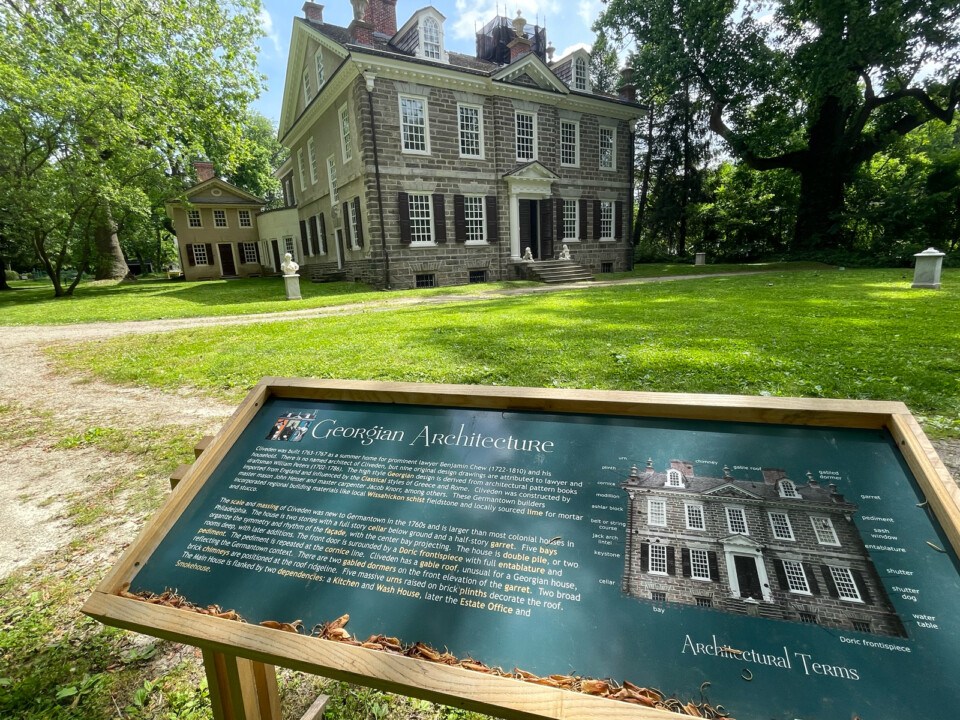
Cliveden, a historic house in Germantown / Photograph courtesy of Historic Germantown
What’s your favorite Philly memory?
I would say when the Phillies won the World Series.
Which time?
In 2008. And, of course, the Eagles won a few years later, but it had been a long time at that point since there was a championship in the city, and just seeing the enthusiasm and the people come out for that. It’s just one of those things that brings the city together.
You know, on a more personal level, I came to the region initially to go to school at Haverford College. I was on the track and cross-country team, and we would go running in Wissahickon [Valley] Park, and I just thought, What a magical place this is. Visit the Wissahickon if you want a place that’s in Philadelphia but doesn’t quite feel like Philadelphia. It’s one of the most magical places in any city in the country. So, to me, being exposed to a major city through this wild park was such an interesting kind of juxtaposition. And I live right near the park now.
If you’re making a Philly playlist, what song is kicking it off?
This just speaks to my era and age, but Boyz II Men’s “Motownphilly.” You know, I’m a little, a little too young for the Gamble and Huff era, but I know there’s tons of great songs …
Perfect choice, don’t worry. And finally, with so much talk about 2026 for tourism and visitors, what do you hope that this all means for Philadelphians? Is there a lasting mark you hope we’ll carry with us?
Yeah, and this is our focus at Historic Germantown. It’s just, you know, really having our residents and folks in the area appreciate the incredible richness that’s here. It’s beyond the Bell; we have amazing stuff right in our own backyard and let’s see it. Let’s celebrate it. Let’s appreciate it. And, in a lot of ways, that’s happening. We’re seeing that. And, you know, I love sharing it with a wider world, but I really want our folks that live and work here day in and day out to have this good feeling.