I Tried It: Navigating My ADHD With a New Philly-Made App
The payoffs and challenges of using NoPlex, a new ADHD app, for 30 days.
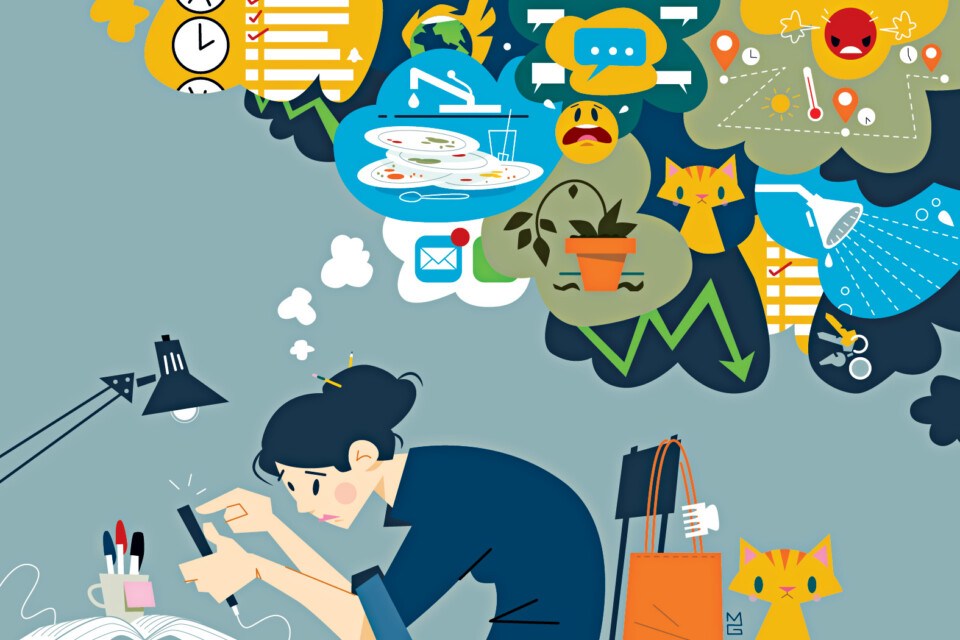
Illustration by Martin Gee
Listen to the audio edition here:
They mean well. The world wasn’t designed for the neurodiverse, so you can’t blame them for not getting it. Because when people can’t see a struggle, they may assume it isn’t there. Or worse, that it’s simply a lack of discipline, effort, or planning.
Having ADHD isn’t the same as being unaware of how to be productive — in fact, most of us are hyper-aware, since we’ve been masking and overcompensating our entire lives. That’s what makes this a disability, not a personality quirk.
You get really used to hearing “Why don’t you just … ?” and you try harder. Yes, I make lists. Yes, I set reminders. No, that doesn’t magically “solve” my ADHD.
That’s why I was curious about NoPlex, a start-up based in Market East and founded by developer Matt Canning, inspired by his daughter’s ADHD diagnosis. At its core, NoPlex is a productivity app — this sector has become a booming industry, but with so many apps to choose from, the process of finding what works for you can be overwhelming. NoPlex stood out because it claimed to be designed for brains like mine, with a Horizon view meant to cut through clutter by showing only what you are choosing to focus on that day. So I decided to use it consistently for 30 days.
Let me start with what I did find useful. Many people with ADHD have rejection sensitive dysphoria, an intense emotional punch that comes with feeling rejected, criticized, or like you’ve let someone down. It’s not an official medical diagnosis, but it’s a term that captures how those moments can feel bigger than they “should” and quickly spiral into guilt and shame. NoPlex diminishes RSD. When you miss a deadline, for example, it notifies you by simply telling you it’s carrying the task over. The world didn’t end; the day just did.
What I found challenging with the app, though, was how the system’s multiple layers — Tasks, Horizon, and Plexies, or general duties that most people need to remember — added extra decision points. The distinctions between these terms aren’t intuitive, and I often felt like I needed to stop and figure out the system instead of just using it.
I also didn’t need gamification of my to-do list, but the app seemed to think that a dopamine hit for a “quick win” like showering or flossing my teeth — yes, those actually were suggested Plexies — was somehow going to make me more productive instead of more distracted from my real to-dos. Maybe this feature is better for kids and teens, but it’s not something most adults would find helpful.
Once Tasks were created, managing them felt like work in itself. Constantly deciding what went into Horizon became its own chore, and the “task dump” outside of it quickly turned into a cluttered backlog of old or irrelevant items I didn’t have the time to clean up.
I admire the heart behind NoPlex, and I hope it keeps evolving. But as it stands right now, it adds more cognitive load than it lifts. Instead of supporting my ADHD brain, it made managing tasks feel like another task.
On the bright side, it did inspire me to order a colorful planner. One made of paper, that I have to write in. A tactile act to force mindfulness instead of more pop-ups to get lost in my sea of notifications. My job requires me to be chronically online, but the key to managing it better might just be analog.
Published as “Brain Game” in the 2026 issue of Be Well Philly.