How to Save Your Skin This Winter
Four local experts decode the science behind our winter skin woes, and recommend the products and practices worth trying now.

Here’s our guide to supporting your skin during the winter. / Photograph courtesy of Getty Images
Freezing temps, blustery winds, and the dry air from indoor heat can wreak havoc on your skin. So, how can you deal with stubborn dry patches, too-red cheeks, and chapped lips in the winter? Here’s how to keep your skin healthy, hydrated, and happy until spring gets here.
Why our skin goes rogue in the winter
Our skin’s microbiome — much like our gut’s microbiome — is a complex ecosystem of bacteria, fungi, and the like that keeps the skin protected. In the wintertime, though, a whole host of elements — wind, weather, extreme temperatures — chips away at that defense, explains Monique Olmo, Best of Philly-winning esthetician and owner of Zemi Skin Society. “When compromised, our skin barrier shifts its pH and takes sides with the ‘bad’ bacteria, causing inflammation,” she says. In its weakened state, “it becomes a pathway for irritants. Cue the redness and itchiness.”
Cold air compounds the problem. Because it retains way less moisture than warm air, it causes our skin to retain less water, which dehydrates the skin barrier. The result is something called “trans-epidermal water loss,” which makes the skin more susceptible to roughness, itching, flaking, and inflammation, says Justin Green, a dermatologist at HMGS Dermatology in South Jersey and assistant professor of medicine at Cooper Medical School of Rowan University.
Low temperatures also slow down cellular repair and weaken our moisture barrier, adds Michelle Martin-Thomas, a licensed esthetician and registered nurse at Bucky Plastic Surgery. “Our lips are especially vulnerable: They lack oil glands entirely, making them easily prone to rapid dehydration.”
Things don’t get much better once we head indoors. Either we crank up the heat, which dramatically lowers the humidity in our homes (pulling moisture even farther from our skin), or we take hot showers for comfort, “but they actually strip our skin of hydration,” says Martin-Thomas.” (Try a tepid shower instead.) Also, since you’re probably washing your hands more than usual (thank you, cold-and-flu season), be sure to moisturize afterward.
Lastly, the wool sweaters and scarves we wear to stay warm can irritate our already irritated skin. Olmo recommends layering cotton beneath heavier fabrics, and swapping wool with cashmere, which is gentler in texture. “Oh, and wash those beanies and scarves,” she says. “They breed more bacteria than we think.”
The products and practices that help
A general rule of thumb when it comes to hydration: Ointments and creams work better than lotions, as lotions contain more water and are less occlusive, Green says. (Occlusives form a physical barrier on the skin’s surface to prevent water loss.) The same goes for your cleanser, adds double-board certified dermatologist Nazanin Saedi of Dermatology Associates of Plymouth Meeting. “A cream or oil-based cleanser is more hydrating than a foaming cleanser. You should also skip alcohol-based toners and exfoliants when you are struggling with dry, flakey, or irritated skin.”
To help pull moisture into the skin, she says, turn to humectants, like hyaluronic acid and glycerin. To strengthen the skin barrier, opt for moisturizers with ingredients such as ceramides, niacinamide, oleic acid, and urea. And to seal everything in — like a cozy sweater for your skin — an occlusive like Vaseline or shea butter will do the trick. Colloidal oatmeal — which can be found in moisturizers — is also great at calming irritation, she says.
Don’t forget to exfoliate, but don’t overdo it. Olmo recommends says that gently exfoliating with a lactic acid or enzyme exfoliant once or twice per week can support cell turnover.
And finally, remember that SPF isn’t solely for summertime use. Saedi reminds us that UV damage weakens the skin barrier, and a healthy skin barrier helps your skin hold onto moisture. So wear your sunscreen!
The products and practices to avoid
For now, set aside your foam-based, alcohol-based, and fragranced products, as they can exacerbate the symptoms of irritated skin. Saedi also suggests temporarily suspending use of common — but drying — ingredients like salicylic acid, glycolic acid, and retinoids. “Instead of using salicylic acid, which helps unclog pores for acne-prone skin, you can try azelaic acid, which also unclogs pores but tends to be gentler; or niacinamide, which can help regulate oil without stripping the skin,” she says. “If retinoids are too irritating, try bakuchiol, which gives retinol-like benefits with less irritation.”
As for masks, Olmo advises avoiding clay ones for deep cleansing, as they can worsen dehydration, Olmo advises.
In the shower, avoid soaps with high pH, which strip away natural oils and dry out the skin. Green recommends using soaps or cleansers with a more neutral pH — somewhere between 4.5 to 7. His go-to? Dove Sensitive Skin Beauty Bar or CeraVe Hydrating Cleansing Bar.
Protecting your lips
Can regular ol’ ChapStick handle the harshness of winter? Our experts say nope! “Many people don’t realize that lip balms that are flavored, fragranced, or tingle are often more irritating than healing,” Saedi says — and skip anything that contains menthol.
For something more heavy-duty to repair and replenish, Martin-Thomas recommends Augustinus Bader’s The Lip Balm, while Olmo suggests a combo of lip oil and an occlusive (think: a little jojoba oil before Aquaphor or Vaseline). And, as tempting as it might be to lick your lips to replenish moisture, don’t — it can result in the opposite effect. “If you don’t believe me,” says Green, “Google ‘lip licker’s dermatitis’!”
Some final thoughts
As we trudge through what is turning out to be a pretty rough Philly winter, our experts leave you with their best piece of personal advice for supporting your skin these next few months:
“Preventing dry skin is much easier than fixing it! Once the skin barrier is compromised or damaged, your skin will be more reactive, become more irritated and lose more moisture throughout the day. If you have struggled with dry skin in the past, the best thing to do is to switch to barrier-supporting ingredients just before the winter season begins. Preparing your skin before it’s dry will go a long way to preventing dryness.” — Saedi
“Winter strips us down just like the trees. Take it back to basics and focus on a strong healthy barrier. Fight the urge to over-treat. Implement one new product at a time to determine what’s working and what’s not.” — Olmo
“The three most important words in preventing and treating dry skin are: Moisturize, moisturize, moisturize. If we do this several times a day, especially right after bathing, our skin will be all the merrier this season.” — Green
“Winter skin improves fastest when inflammation is reduced, lipids are restored, and moisture is sealed in consistently. Some of my favorite tips to nourish skin during the winter is to apply moisturizer to damp skin, use a humidifier at night, keep showers lukewarm, switch to cream or oil cleansers, and remember that flaking doesn’t always mean exfoliation — it often means your skin needs more barrier support.” — Martin-Thomas
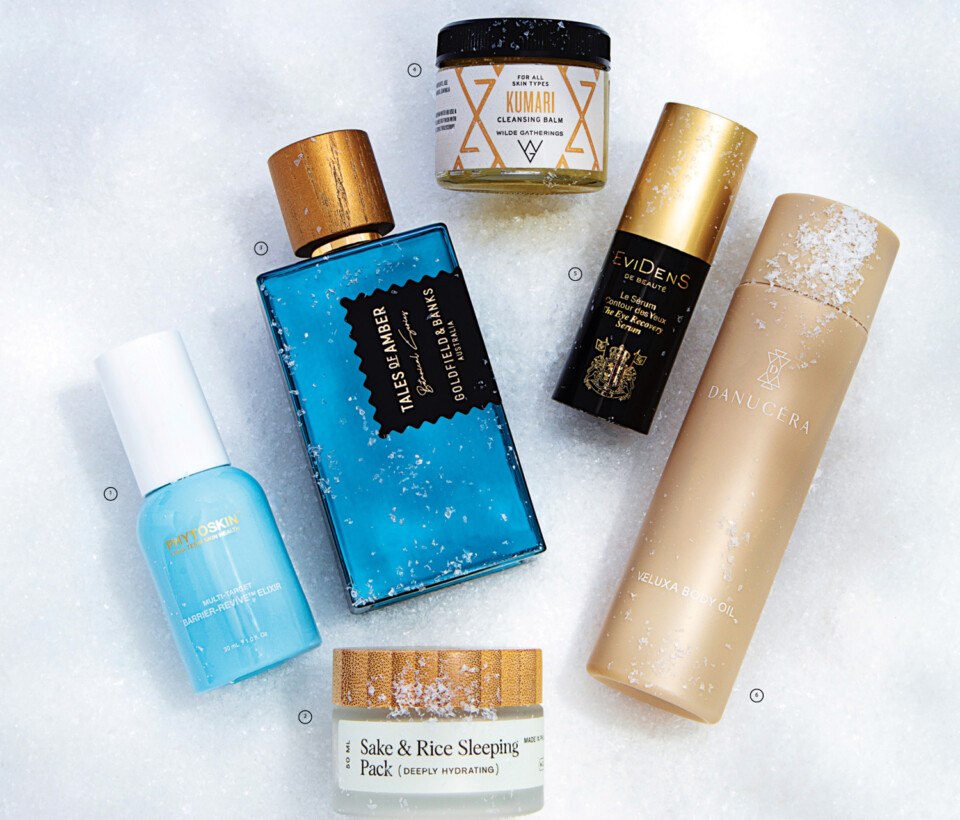
Winter skincare picks / Photograph by Nell Hoving
Bonus: These Philly-area boutiques and spas are here to help with balms, oils, and serums that hydrate and brighten, plus a rich, indulgent perfume for when you emerge from your winter cocoon.
➀ PHYTOSKIN Barrier-Revive Elixir, $61 at the Indie Shelf (Malvern and Grad Hospital).
➁ Sake & Fermented Rice Sleeping Pack, $95 at Sabbatical Beauty (East Passyunk).
➂ Goldfield & Banks Tales of Amber perfume, $319 at Perfumology (Old City).
➃ Wilde Gatherings Kumari Cleansing Balm, $34 at NoteToSelf Wellness (Kensington).
➄ EviDenS de Beauté the Eye Recovery Serum, $270 at Victoria Roggio Beauty (Old City).
➅ Danucera Veluxa Body Oil, $115 at Rescue Spa (Rittenhouse). — Kristen Schott