
Jennifer Weiner on 25 Years of Good in Bed
Twenty-five years after publishing her very personal debut novel, best-selling Philly author Jennifer Weiner looks back at the book that quietly shifted what women’s stories could look like — and why it still feels so real now.
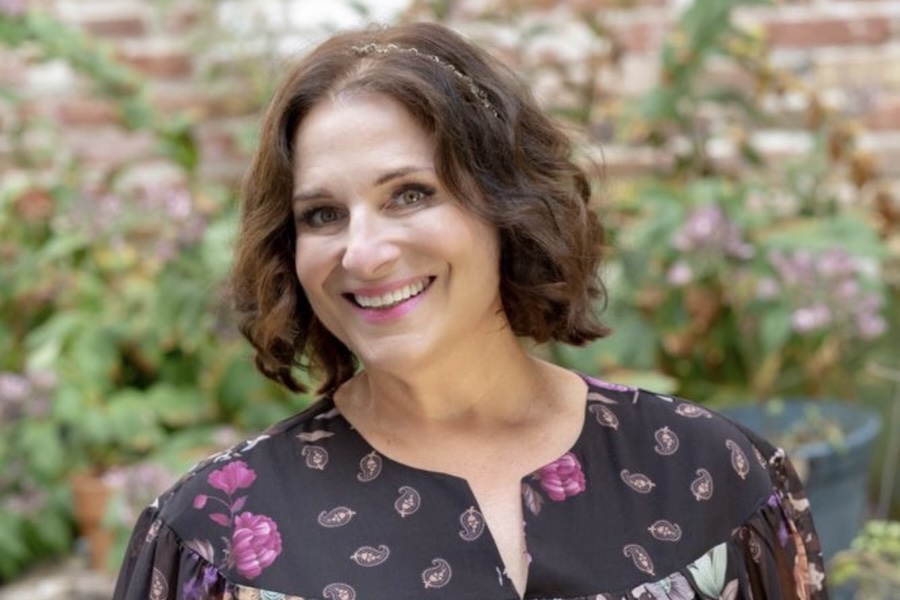
Jennifer Weiner will celebrate the 25th anniversary of her breakout novel May 3rd at Silk City. / Photograph by Andrea Cipriani Mecchi
There may never be a statue of Cannie Shapiro on the Parkway, but she’s a landmark Philly character nonetheless. Twenty-five years after Jennifer Weiner’s debut novel Good in Bed became a runaway best-seller that helped rewrite the rules for women in the publishing industry, her protagonist remains the sarcastic, curvy, tenacious underdog this city can relate to.
Of course, Good in Bed isn’t Rocky, and Cannie can’t just go around punching her biggest opponents (dipshit ex-boyfriend, absent dad, her own sense of self-worth in a society with toxic body-image culture, etc.) much as she’d like to. While Good in Bed often gets tucked into the rom-com section — and certainly there are elements of screwball comedy and adventurous wish fulfillment to keep things fun — Cannie’s journey is, at its core, one of hard-won self-discovery. By the end, she really gets raked over the coals by the everyday awfulness of life, and romance ends up being the side quest.
Toni Morrison once said “If there’s a book that you want to read, but it hasn’t been written yet, then you must write it,” and Weiner cites this line when recalling the origins of Good in Bed: “I thought about, like, what was the book I would have needed when I was a teenager, or I was in my early 20s, when every message I got was ‘If you want to be happy and you want to be fulfilled, and you want a man to love you, you have to lose weight.’ And what if there was something that had a different message? That’s where Good in Bed came from.”
A quarter-century ago, you couldn’t find many books like this one, or main characters in Cannie’s weight (and wit) class. These days, things aren’t quite so dire, and Weiner’s got close to 20 books to her name, including 2002’s In Her Shoes which became a hit movie starring Toni Collette, Cameron Diaz, and Shirley MacLaine. Last year’s The Griffin Sisters’ Greatest Hits, about pop-star siblings, is currently being adapted for the big screen Amy Sherman-Palladino of Gilmore Girls fame.
Efforts to turn Good in Bed into a show or movie have stalled, but the novel remains remarkable for is enduring appeal. Reading it now, we see how much Philly has changed — au revoir, The Latest Dish, XandO, bus transfers — and how much it hasn’t, including Silk City, which will host a 25th anniversary party for the novel May 3rd. Weiner and I talked on the phone earlier this week.
Do you regret drawing so much from your personal life right out of the gate?
You don’t know if you’re going to have a chance to ever write another book, so you basically cram everything you can — every plot point, every character, every funny thing you ever thought, you just try to stuff it all in there, like you’re packing a suitcase and you have to sit on it to get it zipped. I can look back and sort of see this is the work of a young woman … But no, I don’t regret anything.
Do you still see yourself in that character as much as you did when you wrote it? Do you ever go back and read your own book?
I don’t reread my own stuff, because I just know there’d be things I would want to change, and you can’t. It would make me crazy. So I had to learn not to do that. But my daughters are getting close to the age that I was when I wrote Good in Bed, which is bananas to think of. I mean — what was the question? Ask the question.
I was just wondering how much you see yourself in Cannie?
I see myself much more in, probably, Cannie’s mom.
What do your daughters think of your books? Do they see themselves in it? Or are they like, “I’m not gonna read about my mom and her sex life.”
I think that both of them have chosen, wisely, to stay away from that one. My younger daughter is 18, and my last book [The Griffin Sisters’ Greatest Hits] had a lot of music in it; and [my daughter] Phoebe’s a musician, she plays the bass, so I asked her to read it and tell me if I was getting those parts of it right. I think that was the first book of mine that she ever read. And, you know, she kind of changed me. She’s like, “You know, this was really good. “I read it because I had to, but I would have kept going even if I didn’t have to. You’re kind of good at this.”
Do they have a handle on you and your career?
I don’t think any kid has a real handle. I mean, I don’t think I had much of a clue about my parents’ work life. They know I write, and when they were little, they knew I would go on book tour, and they didn’t like it when I was gone. But no, I don’t know. I mean, I think that young people tend to be their own main characters. That’s as it should be.
I read Good in Bed years ago, and now rereading it, I also sympathize more with Cannie’s mom than I remember doing the first time around. And even her dad. He wasn’t a great guy, but he was also in what was clearly a doomed, loveless marriage. That’s just how time works, I guess.
There’s this poem by Sharon Olds that I would think about a lot when I was writing Good in Bed, and when I was writing Certain Girls, which was the sequel. The poet talks about her parents meeting each other in college, and she’s looking at them, and they’re young and they’re beautiful, and their bodies are strong and perfect. And she has this impulse to go to them and say “Don’t do it. Don’t get married. You will do horrible things. You will hurt each other. You will hurt your children.” It’s not going to be good. And then she realizes if she does this, she’s not going to exist. And so in the last lines of the poem, she tells them, like, “Just go ahead, do what you’re going to do, and I will tell the stories.”
And I think about that a lot with my parents, because, yeah, I very much used their story in my fiction, in different books and different iterations. And I mean, when I was a teenager and in my 20s, you know, all I could see was that I did not have parents who were showing up for me the way I wanted them to, and it wasn’t fair. And, you know, why even have kids if you can’t be a good mom and be a good dad. And now I can understand, there were, things going on with them. I don’t think my mom could have lived openly with another woman in the ’60s and ’70s. And I don’t know what my dad knew, what he thought was going on, what he believed. I think the older I’ve gotten, the more I can sort of sympathize with everyone in that story, not just the me character.
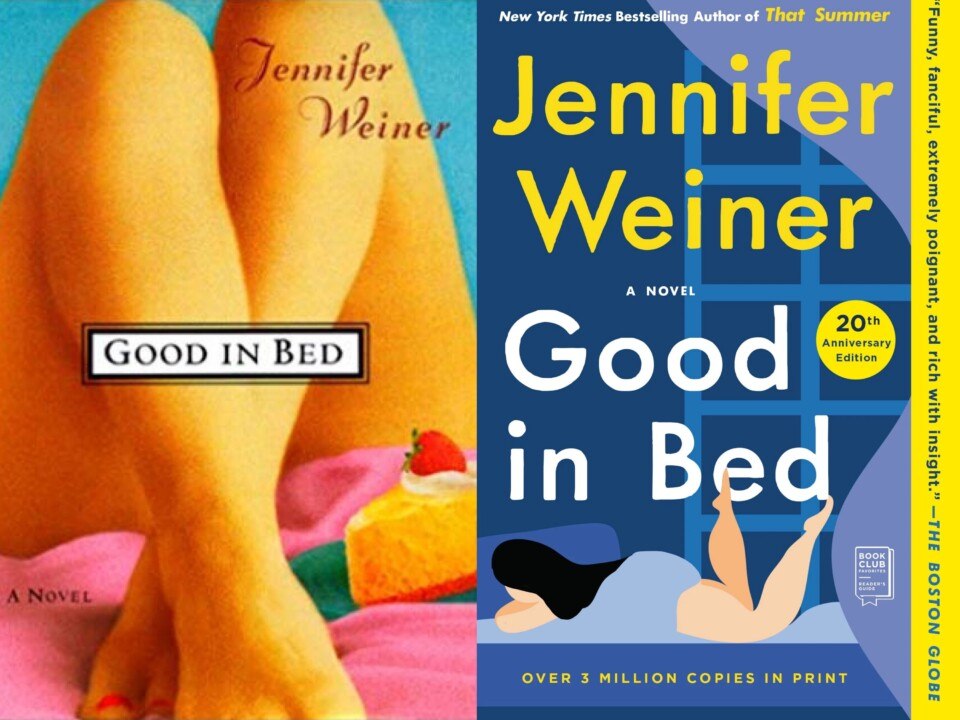
Good in Bed covers over the years
Do you find that you write differently now, as you’ve gotten older?
Yeah. I mean, I hope so. I hope that as I’ve gotten older, as I’ve had different experiences, I hope that I’m able to look at things with a little more nuance and a little more sympathy and write where everybody’s got a story and everyone is coming from someplace. And it’s not just this blameless protagonist and a world full of villains just keeping her down and abusing her.
I’d remembered Good in Bed as a rom-com, which feels crazy now. On this reread I’m better able to see the emotional depth to the story.
I think a lot of readers [think of it that way] between the cover and the title and just the Bridget Jones’ Diary of it all. There were a lot of lighter sort of “dating and single girl” heartache books being published around that time. I think Good in Bed went to some pretty dark places, and I don’t think every reader was expecting that. A lot of people ended up seeing themselves in that book, and seeing themselves sometimes, for the first time in any book ever, which I think was not something I expected.
I guess you never know if you’ve got a hit on your hands.
I actually [thought] maybe 12 people are going to buy this, and I’m going to be related to six of them, and know the other six from Weight Watchers. But I think there were, and there are, a lot of women who have insecurities around their bodies. They have fathers who didn’t make them feel great about themselves. You know, they’re living in a world that treats them like their “before” is just waiting to turn into the “after.” And I think having a story where the before stayed a before, that was that was kind of revolutionary at the time. It shouldn’t have been, but it was.
Has the publishing industry changed in that regard?
If you read genre romance, there’s a lot more sort of curvy, plus-size, fat characters like that. I do think that’s changed. And in more mainstream fiction, you are seeing more plus-size characters who aren’t like the funny best friend, and on a weight loss journey. So yes, I do think that publishing has changed. I would have told you five years ago that the world was changing too. But, you know, enter Ozempic.
Oh, yeah. I wonder what Cannie would do. She always working on it going to the gym, going to the weight-loss clinic.
By the end she had sort of gotten to a place where she’s just like “I can’t hate my body into happiness. I can’t hate my body into smallness. I’ve got to make peace. I’ve got to live, live in this body. And just treat it more like a vessel than like a report card, where everyone can look at me and see that I failed,” you know? I think that there are a lot of women who never get there. I mean, I know a lot of people on these medications, you know, and some of them have very legitimate health reasons to be doing it. And some of them, it’s just like, you know, they want to lose 10 pounds. Because, why wouldn’t you lose 10 pounds if you could do that?
You have a reputation among writers for fighting the good fight, and for helping young writers with blurbs and advice. And more recently, you started this fellowship program with Blue Stoop.
I’ve always talked about sexism and gender and the way that women’s books get talked about versus the way men’s books get talked about. But right around 2020, there was COVID, there was George Floyd, there was that Oprah book that was written by a white woman about cartels in Mexico, and there was this whole conversation about representation — who gets to be in publishing, who gets to have their books published? And I thought about how lucky I was, and how much privilege I had, which is not necessarily something I could have seen as clearly when I was starting out. When I was finishing Good in Bed, I was working at the Inquirer, and I had vacation time, so I booked this little cottage in Cape Cod for seven days. My parents had bought me a [laptop] when I started college, no internet, no nothing. I had an extension cord so I could plug it in inside and sit at the picnic table.
And I was thinking about all of the women who have stories to tell, but they don’t have vacation days, they don’t have jobs that pay them well enough to go take a week in Cape Cod. Or maybe they have families. Maybe they have kids and they don’t have money for childcare or summer camp or whatever it is. And I thought about, what can I do to leave the door open for the next generation of women writers to come through it? I can give them some money. I can give them some advice .… And, you know I’m 56, I’m mid-career, for sure. It felt like a good moment to look around and think, okay, how can I help?
So, you’re having your 25th anniversary celebration at Silk City?
It’s kind of a classic Philly institution, a signpost of that era. It’s a place I went a lot when I was working at the Inquirer. And I’m a giant fan of their bread pudding.
You’ve written so many books at this point. Is Good in Bed still special to you?
There’s always something special about the first book you write. I think any writer will tell you that. Because you’re writing all by yourself, and you’re powered by your own hope and your own ambition. You don’t have an agent, you don’t have a publisher, you don’t have an audience that’s waiting for your next thing. It’s really just you and the story and the characters, and you never, ever get to do that again. You never get to write that way again. I think a lot of writers miss it, because there’s a freedom that you have. You can just swing for the fences because no one’s watching.
Good in Bed Anniversary Party, May 3rd, at Silk City, 435 Spring Garden Street.