Here’s Our Official Review of Philly’s Brand-New Ministry of Awe
The wild six-story Old City arts venue just opened. Here's what you need to know.
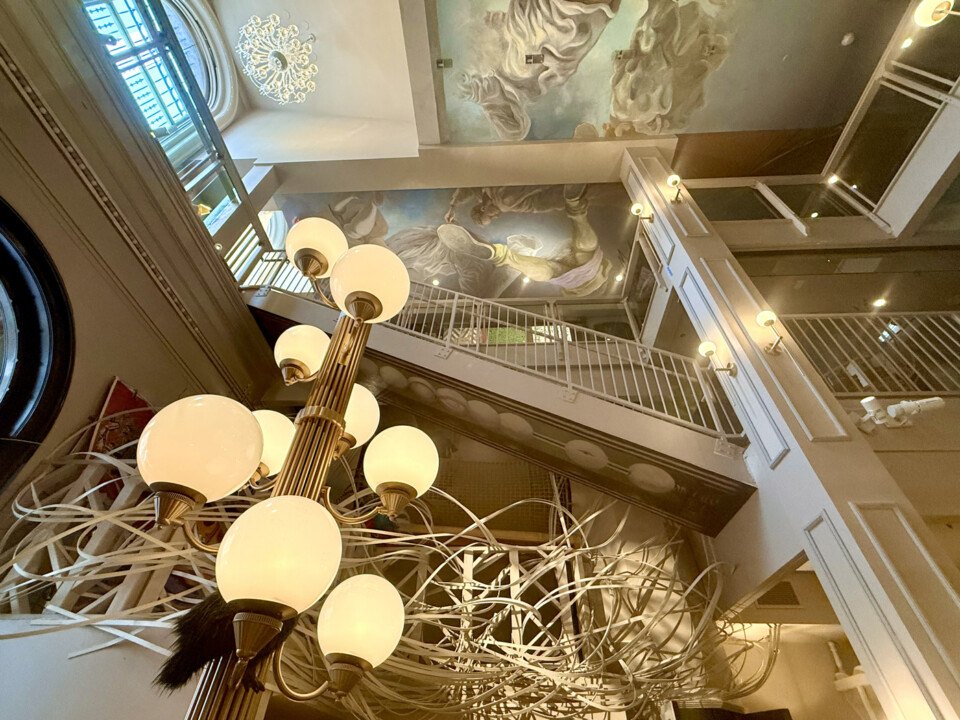
Inside the lobby of the Ministry of Awe / Photograph by Laura Swartz
“Located in an abandoned historical bank, this place has everything: murals, forgery, a disassociating ballerina, secret passages, your own funeral … And don’t look now, but there’s the Chicken Lady!” As I wandered through the Ministry of Awe, SNL’s Stefon was my internal narrator — and I’m pretty sure he would absolutely love this place.
As you’ve maybe heard by now, the well-known Philly muralist Meg Saligman has transformed the 19th-century Old City building once known as Manufacturer’s National Bank into a six-story immersive art experience — 8,500 square feet of installations, performance, sound, and interactive environments.
Saligman developed the project with more than 100 Philadelphia-based artists, performers, engineers, makers, and designers — many collaborating across disciplines for the first time. The result blends sculpture, murals, robotics, AI, embroidery, mosaics, and performance art. Installations can shift, Pig Iron Theatre Company actors may appear unexpectedly, and visitors themselves become part of the artwork. In some rooms, for example, technology-enhanced elements react to visitors.
The Premise
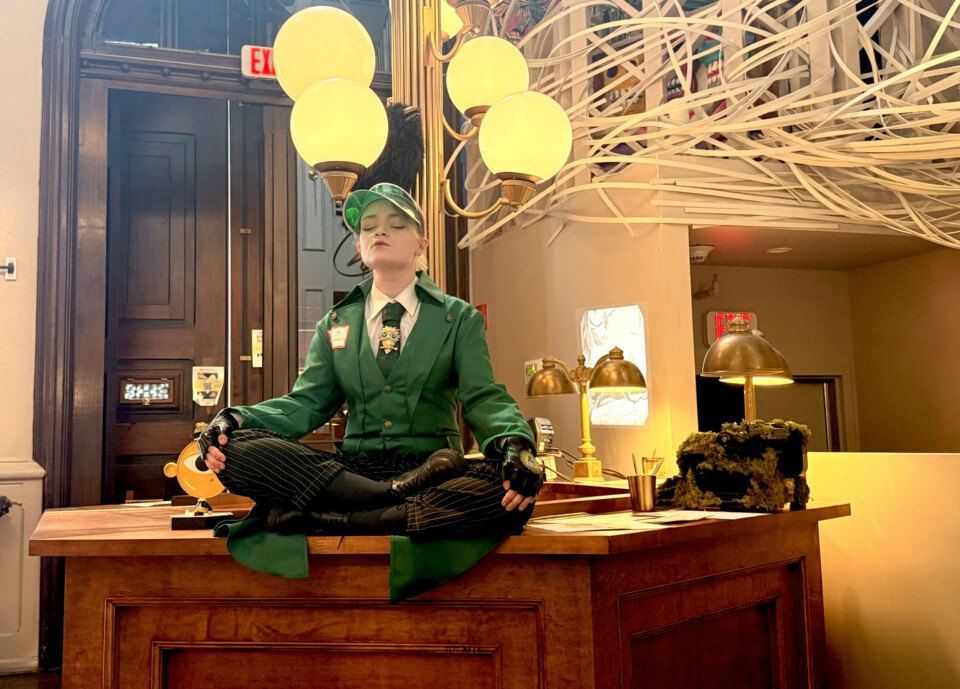
Performer Sullivan Vaughan at the front desk of the Ministry of Awe / Photograph by Laura Swartz
“If you’ve been to a museum, a theater, a haunted house, a dream maybe — we are not quite any of those things,” Saligman explained at the Ministry of Awe media preview.
So, what are they, then? I’ve heard some call it reminiscent of the Philly-set show Dispatches from Elsewhere. But the closest thing in Philly I could compare it to is Otherworld, the trippy immersive art experience inhabiting the old Forman Mills in Northeast Philly. But where Otherworld is neon and futuristic — and yes, otherworldly — MoA’s aesthetic feels more retro and grounded in its architectural context. You’ll still feel like you’re in another world, but it’s one that is parallel to ours, not divorced from it. Within its escapism, you still can’t escape issues of capitalism, scarcity, mortality. But you may see them in a new way.
Saligman and team describe it as “a bank with no money, where the only currency is the human spirit.” The building itself is part of the concept. Designed by architect Frank Furness in 1870 and vacant since 1985, the former bank has been reimagined as a place not for financial transactions but for something more abstract. “Banks are where we’re taught to store what we value,” says Saligman. “This one asks a different question. At this bank, we trade in curiosity, imagination, and awe.”
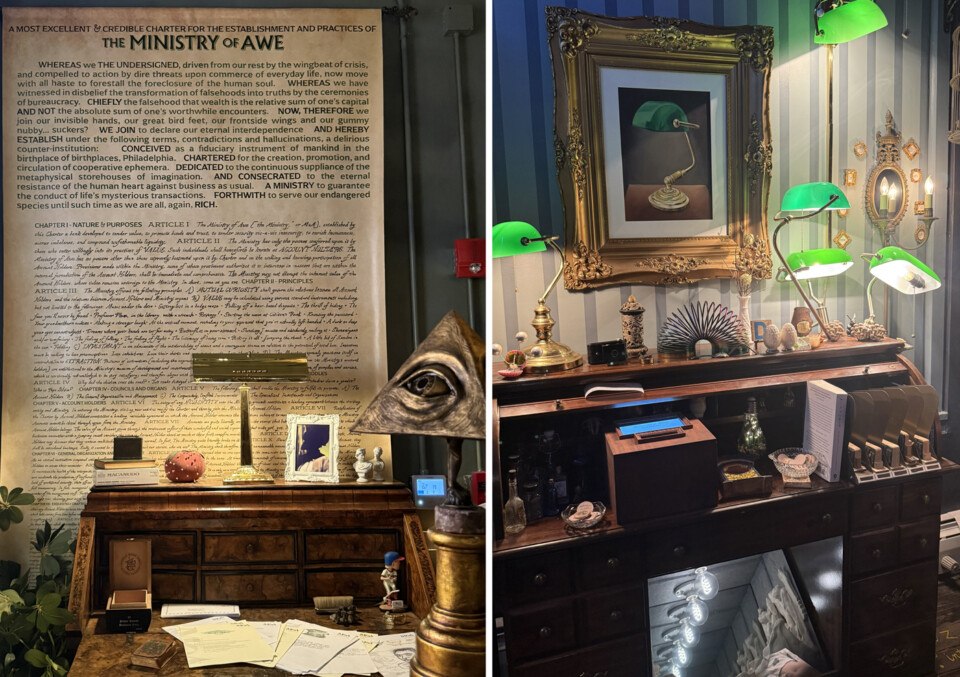
Offices in the Ministry of Awe / Photographs by Laura Swartz
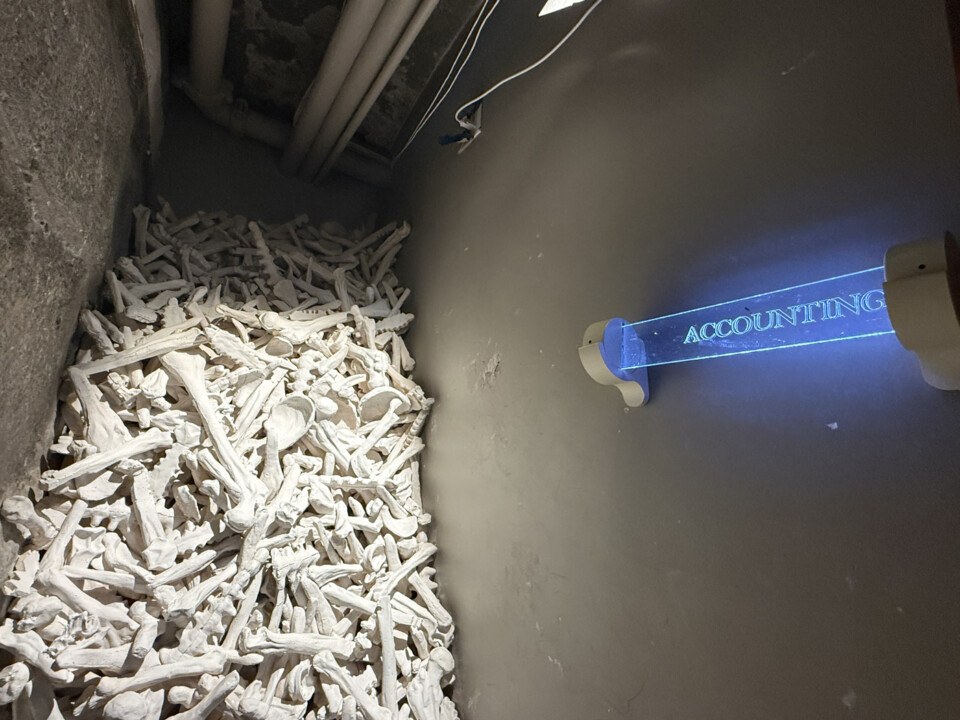
Visitors are called “account holders,” and the concept of leaving your “deposit” is toyed with in several ways that range from playful to existential. In the basement, a pile of bones suggests a more sinister form of accounting, and you’ll encounter a reference to it upstairs in an office that focuses on mortality, where a chute under the desk demands bones. In that same room, you are invited to leave behind last words, sign a birth certificate that prints as your death certificate, and look in a mirror to “reflect on your life.” Spoiler alert: In the adjoining room, your image from that mirror is now in an “In Memoriam” frame — you’ve arrived at your funeral. Last confessions are told to a giant ear and deposited via hand-crank. A candy dish full of teeth sits nonchalantly next to the flowers.
Photograph by Laura Swartz
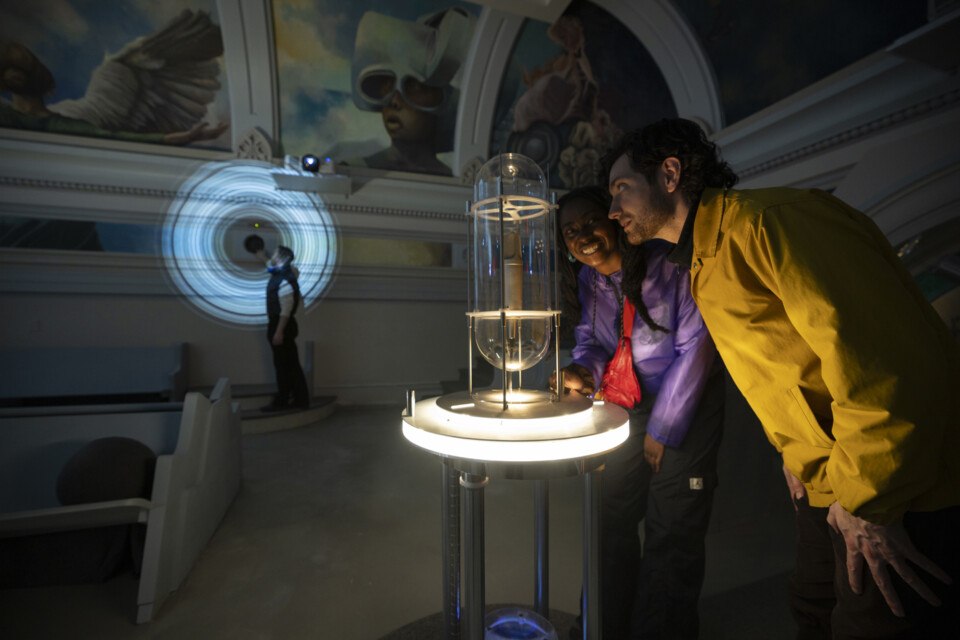
For a less morbid take on the great beyond, “The Heavens,” invites visitors to contribute words, voices, or gestures that are transformed into light, sound, and stars inside a celestial chamber. Over time, those contributions accumulate into a growing mural shaped by everyone who passes through.
Visitors engage with interactive hardware elements and projections in “The Heavens.” / Photograph by Kate Russell
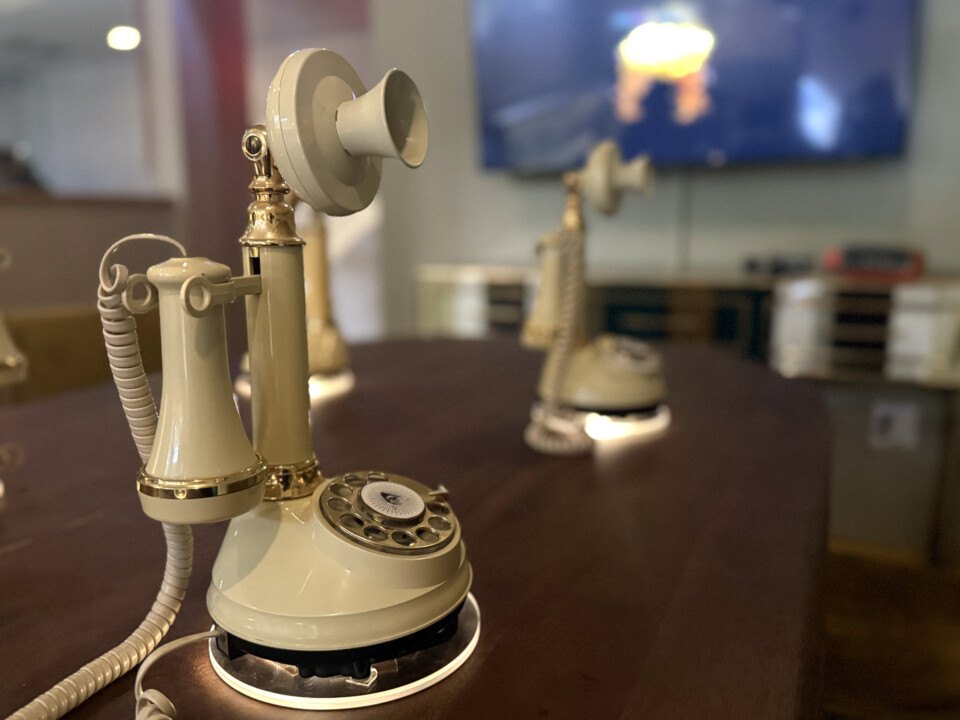
Speaking of the afterlife, one of my favorite moments was Taj Rauch’s After Worlds installation, which has you select objects that belonged to various characters, then sit at a conference table, pick up an old-timey phone, and hear stories of their incarnations (and reincarnations as you discover more artifacts). In dialogue with the other installations on mortality, this confronts it another way: What do we leave behind? What gives life value? Also, why do all the characters seem to have worked at a sinister-sounding corporation called Obsidian in one of their lives? I still haven’t figured that mystery out.
Photograph by Laura Swartz
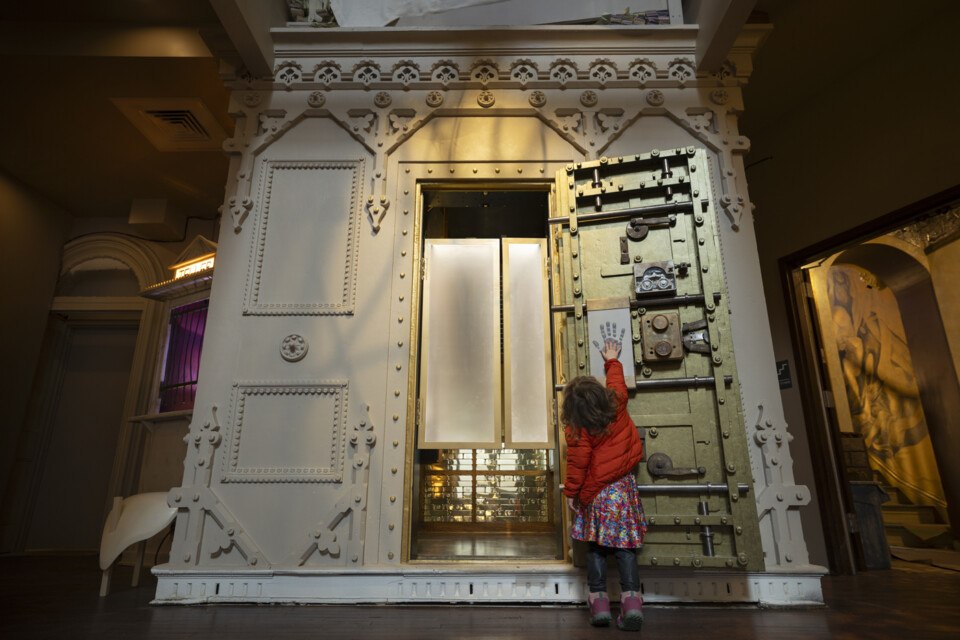
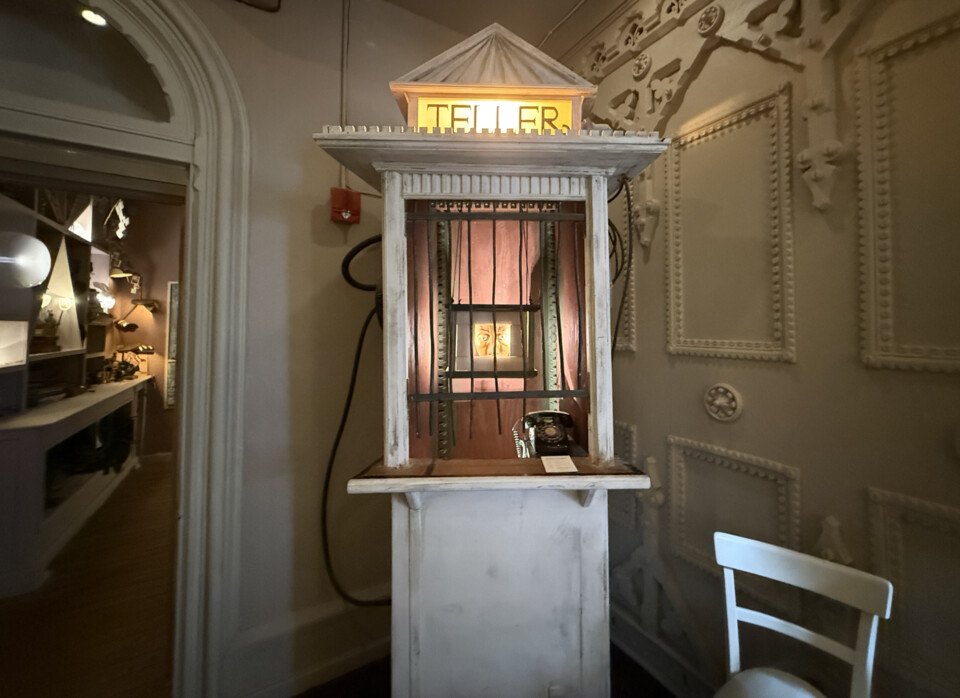
Speaking of sinister-sounding corporations, the iconography and language of banking and finance is a throughline here, from mid-century adding machines to Teller stations to room placards like “Securities” (and “Insecurities”). I asked if these devices were left behind, since they could believably have existed in a bank abandoned in the 1980s. And for the most part, no, they were all sourced or hand-crafted perfectly to fit in with the building’s past life. One exception: The vault you encounter in the lobby is from the mid-19th century, including the mechanics, which remain in perfect working order.
A little visitor activates the doors to The Vault in the Ministry of Awe lobby. / Photograph by Kate Russell
Even the bathrooms are part of the conversation. The three bathrooms on the basement level have unique dioramas contemplating a “deposit” (mine was a ‘90s-style video store), as you … well, leave yours behind. The toilets thank you when you flush.
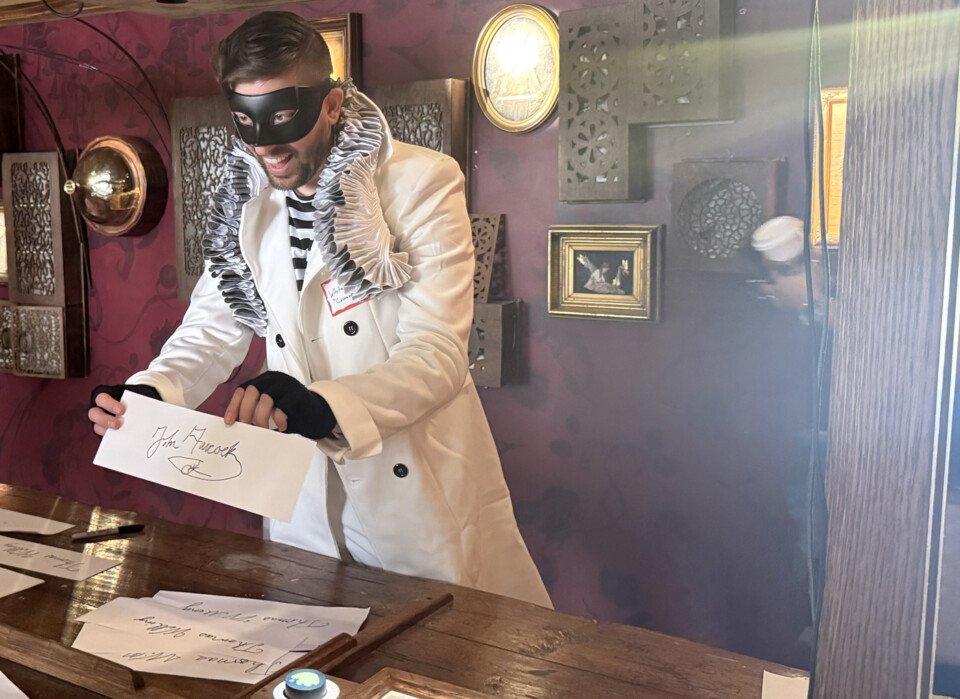
Performer Joshua Kachnycz demonstrates forgery at the Ministry of Awe / Photograph by Laura Swartz
This take on a financial institution, as you may suspect, is not totally on the up-and-up. A fraud department invites you to try your hand at forging signatures, then placing them on a scanner that evaluates how skilled a fraudster you are. The giant jewelry box — another immersive standout, by — envelops you in sparkling luxury and plush, velvet cushioning … but the ballerina (in a film from BalletX) is struggling in her plastic perfection. There are moments of transcendence, and moments that are deeply unsettling.
The Experience
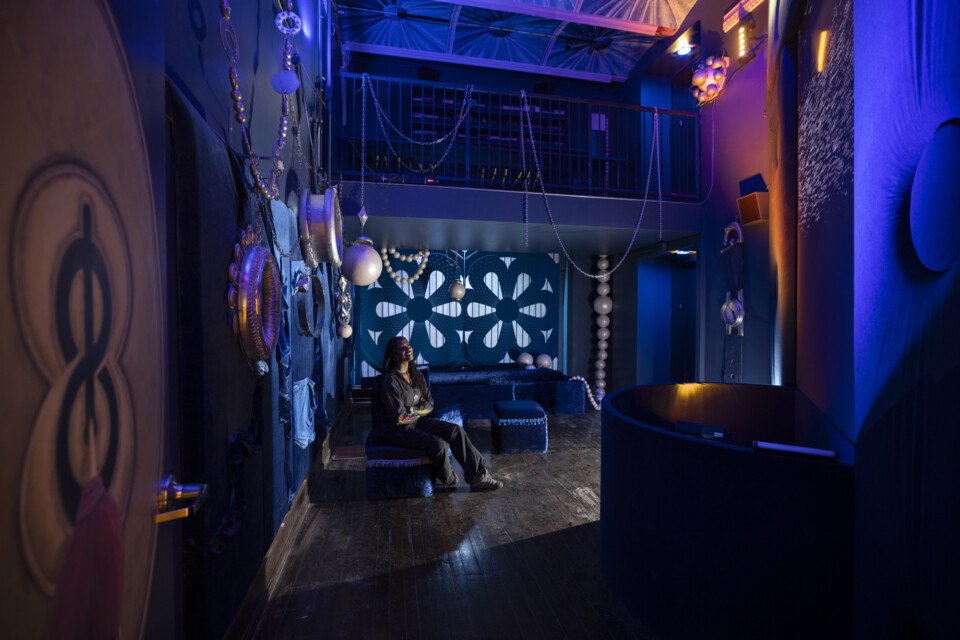
Inside the Jewelry Box at the Ministry of Awe / Photograph by Kate Russell
“If you’re wondering what is a proper way to experience the Ministry of Awe there’s good news: There isn’t one,” says Saligman. There’s no map or fixed narrative. Guests explore their own paths at their own pace, deciding how deeply they want to engage.
If you don’t want any performers to interact with you, cross your arms when you see them. Or you can have a conversation with them. Still feeling chatty? Pick up a phone and dial another floor. A visitor there may just answer and engage with you. (And you can do the same if you hear one ringing!)
The more you engage, the more there is to discover. Many of the objects are there to explore. (Not sure? Look for a green sticker to let you know you’re allowed to touch. Red eye stickers mean you can only look.) Open desk drawers to find letters and documents! Peer into subtle oculi on the walls to see artist Daniel Cutrone’s portals. Crawl through a tunnel and down a ladder to a secret Mesoamerican calendar nook by Cesar Viveros. Go up a hidden staircase! (Ps. You’ll want to wear pants and comfortable shoes, or some of this will be awkward.)
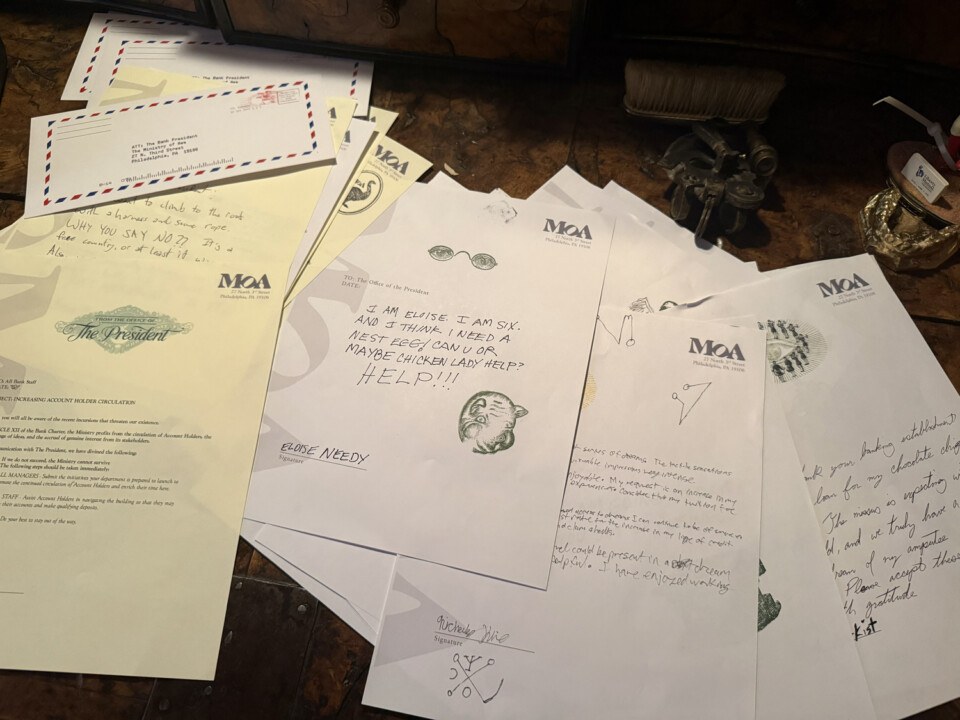
Letters on a desk at the Ministry of Awe / Photograph by Laura Swartz
Unlike a lot of “immersive” attractions that seem to favor the Instagrammable moment over the overall experience, the Ministry of Awe is tactile, surprising, and — more importantly — seems to invite repeat visits. Not only is there a feeling that there’s more to discover, but Saligman says the exhibition will evolve over time. “It changes; it grows new rooms in the night. It occasionally misbehaves. We consider that a feature, not a bug,” she says. “Misbehavior is something we value here.”
Know Before You Go
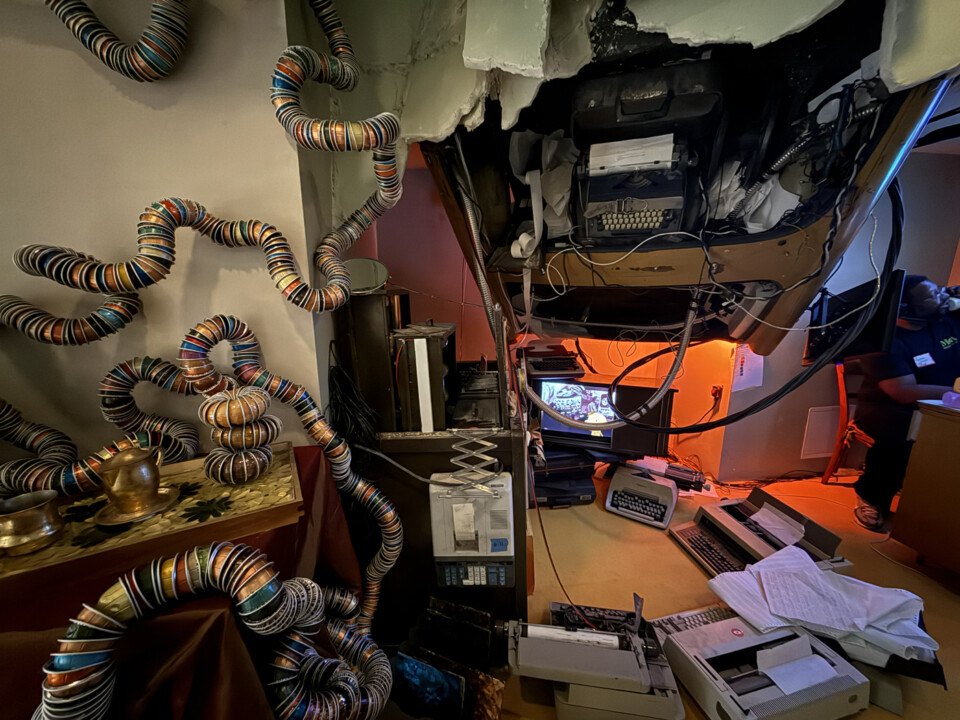
Photograph by Laura Swartz
The experience is described as all-ages, but some parts may be unsettling for especially young kids. (My daughter loves weird, creepy things, but maybe yours doesn’t want to see a basement housing a “skin horse” and a pile of bones?) Also, know that strollers are not allowed.
Which brings me to MoA’s accessibility: There’s an elevator on most floors, but you’d be missing a lot if you had to just rely on them. You’d miss secret stairwells, tunnels, ladders, nooks and crannies. (Their FAQs say most of the building is ADA-compliant, for what it’s worth.)
Photograph by Laura Swartz
The Ministry of Awe opens to the public on Saturday, March 14th. It is located at 27 North 3rd Street in Old City. It’s open every day but Monday. Tickets are sold online in timeslots, and will run you $30 for adults, $20 for kids ages three to 13 (younger kids are free). Once you enter, you can stay as long as you want till closing. Prepare to spend at least 90 minutes there, though you could easily spend hours.