How a Philly Surgeon Is Transforming Kidney Care for the Most Complex Cases
A diagnosis involving a complex kidney tumor or rapidly declining kidney function can turn life upside down. Suddenly, conversations shift toward what can be saved, what can be treated, and what the future might look like if kidney function continues to drop. And for some patients, prior abdominal surgeries, medical conditions, or simply their anatomy can mean increased surgical risk and more limited options. Not every surgeon—or every hospital—has the experience or tools to preserve kidney function while safely removing a tumor.
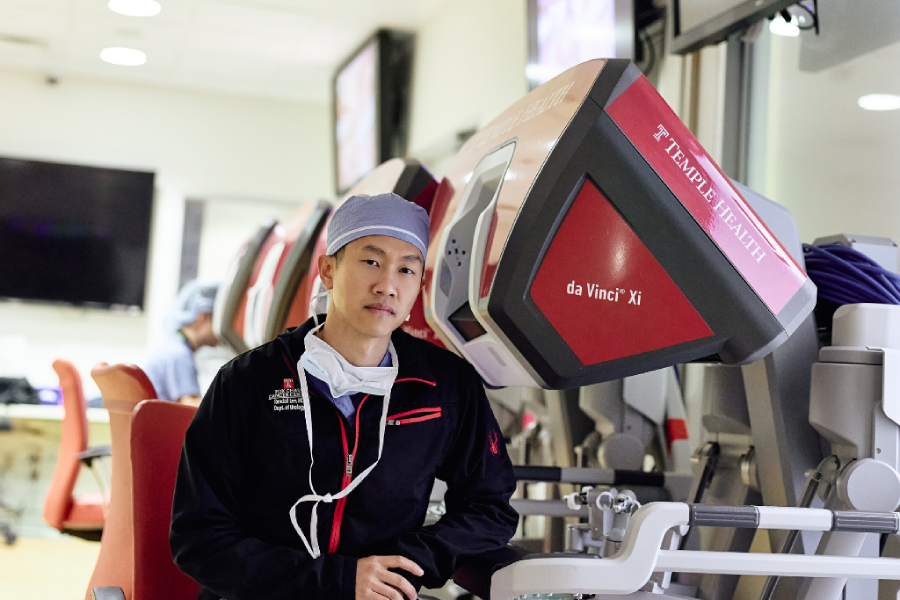
At the Fox Chase–Temple Urologic Institute, that specialist is often Dr. Randall Lee, a nationally recognized urologic surgeon whose advanced minimally invasive and robotic techniques are reshaping what’s possible for patients across the region and beyond.
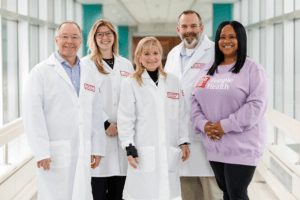
Supported by the Institute’s leaders, Dr. Alexander Kutikov and Dr. Jay Simhan, Dr. Lee represents the next generation of urologic care at Temple Health: care that expands options, preserves kidney function, and restores quality of life for patients who may have been told that no safe option existed.
A Destination for the Most Complex Cases
For some patients, the journey to treatment begins with a devastating disclaimer: Your case is complex.
Being told that a tumor is in a difficult location, that prior surgeries make treatment unsafe, or that preserving the kidney isn’t possible can be overwhelming news. Add in the possibility of long-term kidney function being at risk, and it’s easy to feel as though the odds are stacked against you before treatment even begins.
That place of uncertainty is often where Dr. Lee’s patients find themselves when they arrive at Fox Chase–Temple Urologic Institute. Some have already been told elsewhere that surgery isn’t a safe option. In these cases, the challenge isn’t just removing the tumor—whether benign or cancerous—but doing so in a way that protects their kidney function, minimizes recovery time, and preserves their overall health.
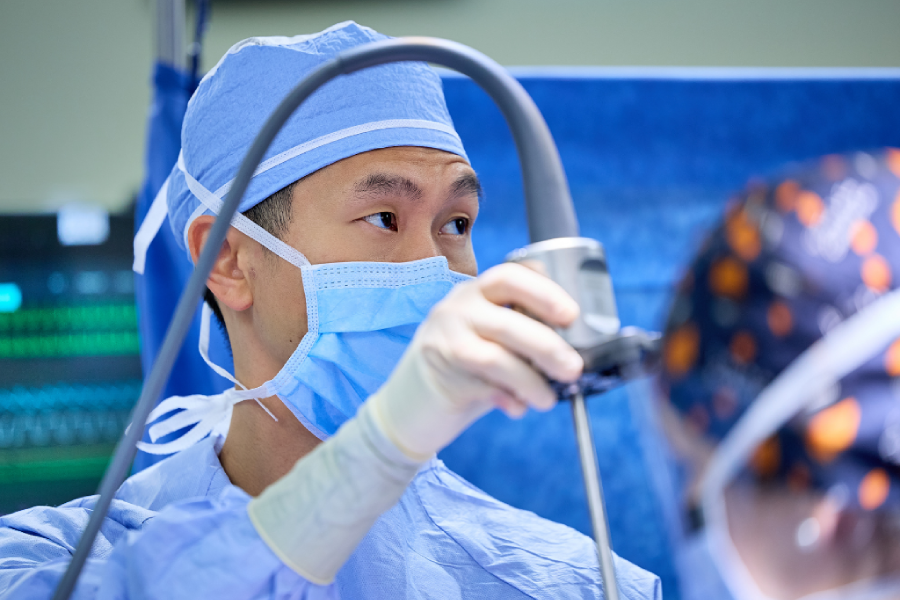
At other hospitals, the standard approach may involve more invasive surgeries that require longer hospital stays and can leave patients with limited kidney function afterward. By contrast, the team at the Urologic Institute is highly skilled in minimally invasive and retroperitoneal robotic techniques—targeted approaches that allow surgeons to spare as much healthy kidney tissue as possible and often get patients home within 24 hours.
“The smaller incisions through our minimally invasive approach allow for a quicker recovery, quicker return of bowel function, and mobilization for patients,” notes Dr. Lee.
Their ability to perform partial nephrectomy—removing only the tumor and preserving as much healthy kidney tissue as possible—is central to the Institute’s approach. It’s a technically demanding procedure that Dr. Lee and his team perform routinely.
“Here at the Urologic Institute, many patients benefit from a robotic approach,” says Dr. Lee.
Still, each patient’s journey is tailored to what procedure is safest and most appropriate for their individual needs.
“Some procedures are more technically complicated, and in a patient who may have other medical issues, they may not be able to tolerate a long procedure,” Dr. Lee explains. “At the Urologic Institute, we evaluate the best approach for each patient’s unique needs. People who may need a quicker operation to get them safely through surgery have options here.”
Innovative Techniques That Preserve Kidney Function
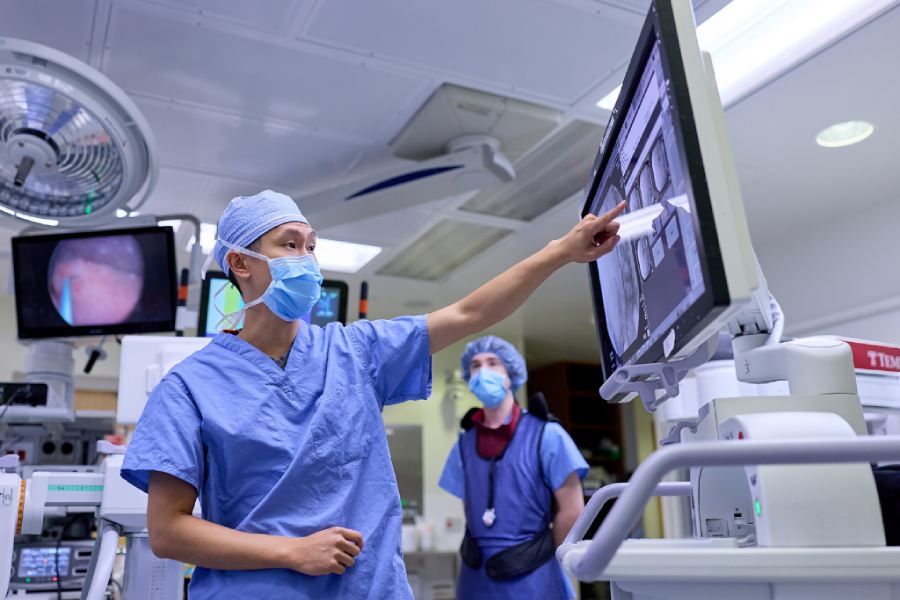
One of Dr. Lee’s most innovative capabilities is performing complex kidney surgeries robotically by approaching the kidney from behind—through the natural space where it sits—rather than going through the abdomen. By avoiding the belly altogether, he can bypass scar tissue, prior surgical sites, and the organs that typically make these operations more complicated. This approach significantly lowers the risk of complications for patients with previous abdominal surgeries and opens the door to advanced treatment for people who may have been told elsewhere that they had no viable options.
“The advantages are immediate and meaningful—patients typically experience less pain, spend fewer days in the hospital, face a lower risk of complications, and see better preservation of kidney function—an outcome that can have a profound impact on long-term health and quality of life,” notes Dr. Lee.
And because the team tailors every procedure to a patient’s unique anatomy and medical history, they are able to achieve results that often exceed what would have been possible through traditional surgical approaches.
“The kidneys do a lot for us, and when they can no longer handle essential functions like filtration or fluid balance, that’s when dialysis becomes necessary,” notes Dr. Lee. “For many patients, the possibility of dialysis is one of their biggest fears before they come to us.”
Comprehensive Care for Long-Term Health

Advanced surgery is only one piece of the care model at the Fox Chase–Temple Urologic Institute. The team also focuses heavily on restoring quality of life, whether a patient is recovering from cancer, navigating a benign condition, or managing complications from previous treatments.
“We have close follow-up with the patients immediately after surgery,” notes Dr. Lee. “The beauty of a center like the Urologic Institute is our close relationship with the other doctors and services for patients.”
Patients receive support from a multidisciplinary team that includes urologic surgeons, radiologists, pathologists, specialists in reconstructive and functional urology, and, when necessary, medical oncologists. Together, they coordinate follow-up care, monitor long-term function, and address any concerns that affect daily life.
“We’re in routine contact with other team members. We talk to them daily, we have bi-weekly tumor boards to discuss cases and make sure we’re doing the right thing for our patients—it’s a special thing to have that level of communication between different providers—that’s not necessarily true for other places,” says Dr. Lee.
This holistic model ensures patients aren’t just getting leading surgical care—they’re gaining a partner in their long-term wellbeing.
Setting The Standard Globally
Dr. Lee is committed to pushing kidney care forward, both through surgical innovation and through expanding access to advanced treatment for communities that need it most. His work reflects the Urologic Institute’s mission to serve all patients—especially those with complex cases—with expertise, compassion, and clarity.
“The Urologic Institute has one of the largest kidney cancer databases,” notes Dr. Lee. “We’ve published dozens of papers talking about kidney cancer and safe approaches in managing kidney cancer.”
Led by internationally recognized experts, the Urologic Institute is a global thought leader in kidney cancer, shaping how physicians worldwide approach diagnosis, treatment, and long-term management.<
“From a technical aspect, we’re all very experienced, but also, our team is made of thought leaders changing how doctors approach kidney cancer—I think that’s a unique perspective we offer here,” says Dr. Lee.
As the Fox Chase–Temple Urologic Institute continues to grow under the leadership of Dr. Kutikov, Dr. Simhan, and surgeons like Dr. Lee, patients across the Philadelphia region and beyond are finding renewed hope and options they never knew existed.
To learn more about advanced kidney care and minimally invasive options at the Fox Chase–Temple Urologic Institute, visit Temple Health.
This is a paid partnership between Temple Health and Philadelphia Magazine