The Fight for Reservations Is Becoming a Competitive Sport
In the high-stakes battle to get a table in this town, is the magic of the spontaneous walk-in losing out to the refresh button?
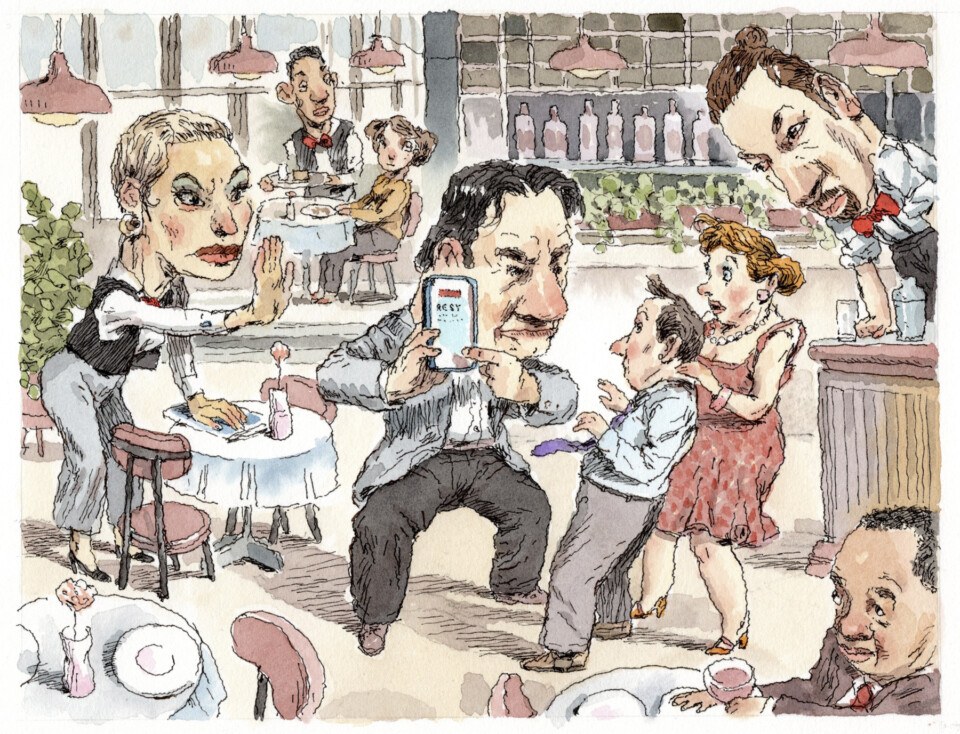
Illustration by John Cuneo
Listen to the audio edition here:
The best meals I’ve ever had were not the ones I planned for.
Friday night roti at a restaurant so crowded I had to sit on a folding chair. Stuffed rabbit with chestnuts and a bottle of Chimay with my wife, our two-month-old daughter tucked under the table, asleep in her car seat between my feet. Drinks at the bar that turned into dinner, that turned into dessert, that turned into a friendship with a stranger that lasted 20 years across three different states.
I’ve spent years eating out for a living. And for most of that time, getting a table in Philly was an adventure. You just rolled up and took your chances. You met people, stood in doorways or on the sidewalk, waited or moved on, pushed tables together, split tabs, found and shed new friends. It didn’t always work out, but sometimes it did — and when it did, it felt serendipitous.
The reservation economy has changed all that. A relatively new development in the Philly restaurant scene, it has taken what was once a very personal, very social act and turned it into a rigged system, vacuum-sealed by apps and algorithms, where the flow of the floor is determined weeks in advance. Timed drops, digital wait lists, and the rumble of availability notifications in your pocket have turned going out to eat into a competitive sport where bragging rights and social media views drive the culture.
Of course, reservations have always been a part of dining out, but the operative word here is part. Even before this age of dining room gamification, if you wanted a Saturday night table at Zahav or dinner at Vetri, it would require a phone call and some strategy, some sense of advance planning. But those reservations were still relatively attainable, compared to, say, getting a seat at Mawn today. Phila and Rachel Lorn’s now legitimately famous Cambodian BYO started as a modest neighborhood restaurant — exactly the sort of place built for people to just wander into — but seats have become so sought-after and valuable that it was recently the subject of a reservation scalping scandal.
We’re at this place with a level of demand where, with social media and everything else, the number of people who want to eat here just outnumbers the seats.” — Rachel Lorn, Mawn
And it’s not just Mawn. It’s dozens of Philly restaurants. Places that feel like the kind of spot where you should be able to just drop in on a weeknight for a roast chicken or a bowl of noodles. But runaway demand has made it so that no one who doesn’t make reservation hunting a core facet of their daily routine is getting a table. Certainly not at prime time on a weekend night. And probably not Wednesday at 5 p.m. either.
So what happened? Part of it is habit. We live on our phones. They command and schedule every moment of our lives — dinner included. And part of it is a kind of insatiable social atavism because everyone wants to sit at the cool kids’ table, right? But mostly it’s simple economics. Supply and demand. Our restaurant scene has never been hotter than it is right now. And at this moment, the only thing Philly has more of than great restaurants is people who want to eat at those restaurants. And for owners, with profit margins thinned to transparency by rising costs, every inch of floor space needs to be making money, so reservation systems like OpenTable and Resy give them some semblance of control over their dining rooms.
“With a small place like [Mawn], we need three turns on the floor every night to make it work,” Rachel Lorn tells me. “We’re at this place with a level of demand where, with social media and everything else, the number of people who want to eat here just outnumbers the seats.”
For dinner service at Mawn, reservations are made available 30 days out, and they book up in minutes. (To balance this, lunch is 100 percent walk-ins — though, of course, the line often wraps around the block before service even starts.) For Rachel and Phila, the reservation system is simply about maximizing the number of covers they can do in a night. They can’t afford to have empty tables on the floor. And knowing in advance that they’re booked solid?
“That’s the only way we can feel comfortable.”
And I get it. Who wouldn’t? I hate that we’ve lost a measure of the spontaneity and chaos that used to define dining out in Philly, but I understand the need for restaurant owners to be able to plan and budget. At Royal Sushi & Izakaya, Jesse Ito has a thousand names on the waiting list for his omakase, but until recently, the izakaya half of his restaurant was all for walk-ins, who would often line up an hour ahead of dinner. That changed in April, when he moved the bulk of his izakaya seating to Resy because he felt like the line (or the threat of one) was keeping people away.
Amanda Shulman says that at both My Loup (which she runs with her husband, Alex Kemp) and Her Place Supper Club, she absolutely relies on reservations “to get butts in seats.” But, she adds, their new Pine Street Grill is built to be a neighborhood restaurant, so they’ve made a conscious choice to hold 50 percent of all seats for walk-ins. Because that’s what Pine Street is supposed to be, she says: a place where you can just … walk in. Maybe you have to wait a little. Have a drink. Take a stroll around the park. But you should be able to just show up and try.
“As someone who never makes reservations, it’s a beautiful thing, to rely on walk-in traffic,” she tells me. But it costs her. “The margins are hard enough. And as an operator, if I can lock that in, that’s great. I understand all sides.”
But, like me, she remembers a time when reservations were an exception in Philly, not the rule. When finding somewhere to eat on a Saturday night didn’t require spreadsheets or two-factor authentication or social media know-how or four weeks of advance planning.
“It can ruin the spontaneity and the magic,” Amanda says.
The question then becomes, are you willing to trade that magic tonight for a guaranteed seat a month from now at Sao or Ambra or Friday Saturday Sunday?
Or are you willing to just embrace the chaos, grab your wallet, walk out the door, and see what happens? To go out into the city with no plans and no reservations, trusting in nothing but happenstance, and take a risk for the (increasingly rare) chance at stumbling across something amazing? Because there’s always a table open somewhere.
There’s just no telling where you might end up.
Published as “No Reservations” in the June 2026 issue of Philadelphia magazine.