Should Philly Restaurants Add Auto-Gratuity During the World Cup?
With many visitors from non-tipping cultures traveling to the city, that is the proposal on the table from the Pennsylvania Restaurant & Lodging Association.
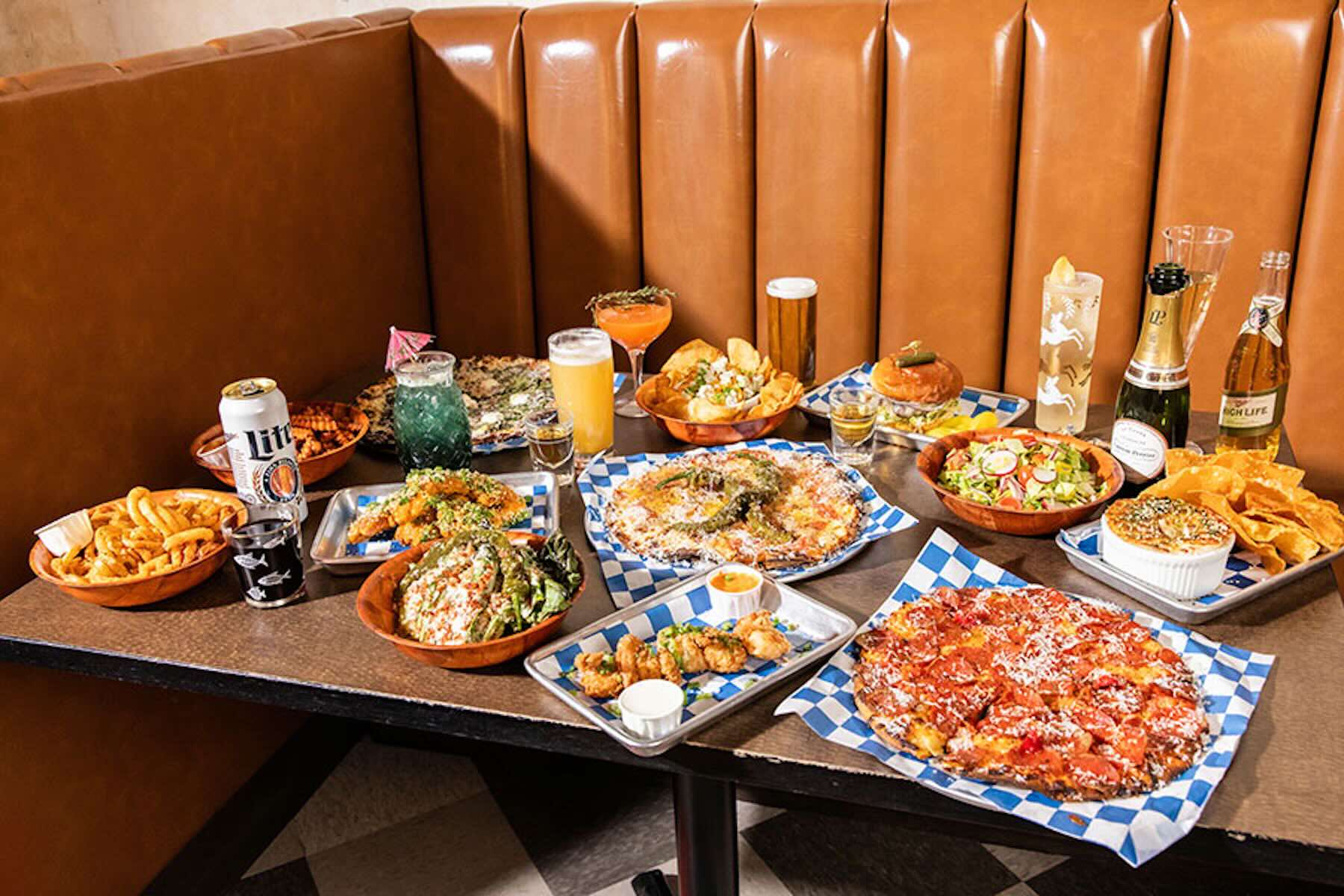
Food and drink at Sonny’s Cocktail Joint in Philadelphia, which already has an auto-gratuity policy. Will more Philadelphia restaurants add an auto-gratuity to all checks during the World Cup in Philadelphia? (photo by Eddy Marenco)
Listen to the audio edition here:
Over the course of 39 days in June and July, amid all of our semiquincentennial festivities, more than 500,000 tourists are expected to descend upon Philadelphia for the six FIFA World Cup matches we are hosting at Lincoln Financial Field and the free FIFA Fan Festival in Fairmount Park. Given the fact that the rest of the world cares about soccer exponentially more than do we in this fragile republic, a large number of those tourists will likely be from countries where tipping is not customary. And so the Pennsylvania Restaurant & Lodging Association (PRLA), the trade association representing the tourism and hospitality industry in the state, is proposing that Philadelphia restaurants add a 20 percent auto-gratuity to all checks.
“Our first goal is to protect the employees,” says Ben Fileccia, the longtime Philadelphia restaurant veteran turned senior vice president of strategy and engagement at PRLA. “We have tens of thousands of tipped employees in Philadelphia, and they will be showing off this city and providing incredible hospitality while serving all of these international guests.”
Tipping protocols vary from country to country. In some countries, there is no tipping at all, while in others, tipping is minimal and far from the 15 to 20 percent level that your average diner in Philadelphia leaves. Some Philadelphia restaurants, like Provenance, Juana Tamale, Sonny’s Cocktail Joint, and WineDive Rittenhouse, already have an auto-gratuity policy, but the vast majority do not.
“We don’t want our wonderful servers to have to explain anything about our tipping norms to each guest,” Fileccia explains. “It will get complicated and uncomfortable. This way, it will be very fair, and, again, we’re only talking about 39 days. When you have an international guest here or there, it washes out at the end of the night as far as the servers’ tips are concerned. But when you suddenly have a bunch and many may congregate at the same restaurants, that can really change the outcome.”
Restaurants markets elsewhere in the country have also been considering the idea. But the New Jersey Restaurant and Hospitality Association has not gone so far as to tell its members to add an automatic gratuity. They are, instead, focused on educating the diners about cultural differences here.
“I definitely would be pro-mandatory tips if it eliminates awkwardness and confusion with foreign guests and ensures everyone is making the money they deserve,” offers Justin Bacharach, executive chef and co-owner at Rittenhouse hotspot dancerobot.
Bacharach says he spoke with servers at the bar and restaurant to get their take. One server said they’d be fine without mandatory gratuity and that they’ve had guests from a non-tipping culture who still tip, just maybe not 20 percent. Another told him they were all for the automatic tip, because they felt that they would be working even harder than normal, and so their compensation should match their increased efforts.
One person who is definitely not a fan of the idea is Fergus “Fergie” Carey, owner of Fergie’s Pub, the Jim, and the soon-to-debut The Monto in Old City. He’s originally from the soccer-worshipping country of Ireland, which also happens to be a place where you simply don’t tip. When he runs his annual tours to his homeland, he instructs his guests not to tip. And when foreign visitors come to Philadelphia for the World Cup, he imagines many will come and respect our culture and tip, though perhaps to less of a degree than a Philadelphian would.
“I don’t think we should make a big change just because we have some new people coming,” Carey insists. “If somebody is coming over to my house, I don’t change the way I do things just because I have a visitor.”
Carey says he really doesn’t believe that his employees will be compensated less during the World Cup, overall.
“But I think we can play it by ear,” he suggests, adding that if there’s suddenly an epidemic of no-tipping at his spots, he could make a change a couple of weeks in and add an auto-gratuity.
Not so fast, says Fileccia.
“This is exactly what we don’t want,” he insists. “We want it to be implemented fairly and just have restaurants plan on doing it ahead of time. Otherwise, they are going to have a customer come in during the first two weeks, and there is no automatic gratuity, and they come back, and all of a sudden there is one.”
Plus, Fileccia explains, if you want to start an automatic gratuity program, you really need to talk to your payroll company and accountant.
“It’s not as easy as just flipping a switch,” he says. “Plus, once a tip becomes automatic, it is a ‘service charge’, and the legal implications of that are different as far as the IRS is concerned. It changes the tax responsibility.”
Marc Vetri, the mastermind behind Vetri Cucina (where Fileccia once worked as general manager) and Fiorella says that he doesn’t have auto-gratuity at his restaurants, nor will he for the World Cup. “And I definitely would not advocate for it,” he states. “I mean, I just don’t understand the point. We have international customers all the time.”
Of course, all of this chatter about hundreds of thousands of people visiting from other countries — roughly half of those aforementioned 500,000 are projected to be traveling internationally to get here — highlights the glaring fact that tipping doesn’t exist in those countries in part because the compensation system is completely different in some of those places; a server in a French restaurant doesn’t need tips to make a living wage, because they are paid well by their employer. If you were to yank tipping entirely from Philadelphia, the whole system would fall apart. So isn’t this a good time to think about how our system could be better?
“We talk to servers and bartenders constantly, and the way we do things actually works for them,” Fileccia counters. “The vast majority do not want us to change the way that restaurants here operate.”
What do you think? Tell us!