
Philly’s Neighborhood Pharmacies Might Just Save Us. Can We Save Them?
Independent drugstores are filling the gaps left by struggling chains, even as financial pressures put their own futures in jeopardy.
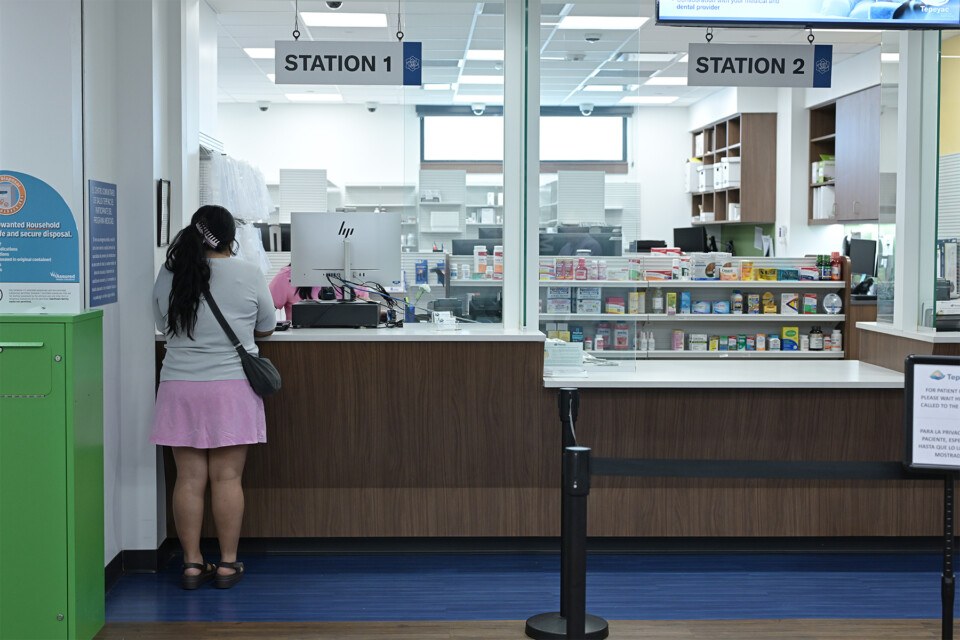
Can local pharmacies save us? / Photograph by Hyoung Chang via Getty Images
When Brenda Dixon-Gottschild and her husband moved last year from a Chestnut Hill house to a condo in The Philadelphian near the Art Museum, she fell in love with the high-rise’s amenities. The on-site grocery store and restaurant are “delightful,” she says, but the building’s Parkway Pharmacy has made a particular difference.
In Chestnut Hill, she picked up prescriptions at a “chaotic” CVS. At the independently owned Parkway, she greets the staff by their names, and they know her. “They’re looking at their customers as people, and it’s just an incredible, new experience for us; I’m so grateful,” she says. “It’s a different vibe, and it is worth a million.”
Here’s what she means: You won’t find harried staff and long lines at Parkway Pharmacy. No disembodied voice is persistently announcing “one pharmacy call, two pharmacy calls, three pharmacy calls,” reminding everyone in earshot that HELLO, MANY PEOPLE ARE ON HOLD. There is, however, a small stock of personal care and household items neatly lining a wall of wood shelves. Refreshingly, aspirin, shampoo, and sundries are not locked behind plexiglass — a luxury by city standards.
The pharmacists, too, are a draw: “They are so patient. When my husband’s medications have to be changed, they are right on top of it,” Dixon-Gottschild says.
She finds the lack of staff turnover reassuring. And “it’s the same [pharmacist] who knows you and your history with the medications you’re taking.” Each month, the pharmacy prepares a blister pack with an easy, punch-through backing to organize her husband’s daily dose of medication.
“I joke all the time that CVS is our best advertiser,” says Parkway’s owner, Dennis Czerw. “People walk in and say, ‘I’m tired of the CVS. How do I transfer my prescriptions?’”
Dixon-Gottschild’s revelation isn’t an anomaly: Independent pharmacies across the region have many longtime fans, and in recent years, they’ve seen an influx of newcomers. Many found their way to these neighborhood anchors during the mad scramble to get a COVID-19 vaccine. Some were forced to seek out an alternative amid closures of Rite-Aid, CVS, and Walgreens stores. (Dozens have shuttered in the region in the past few years, while more than 1,000 pharmacies of all types have gone out of business across Pennsylvania since 2020. That’s about one-quarter of the state’s pharmacies just gone.)
But even as customers rediscover the comfort of neighborhood pharmacies, many independent owners fear their places may not survive. Running any kind of small business is tough, but community pharmacies operate inside a health care system where they don’t control what medications cost, what insurance will reimburse them, or whether filling a prescription will actually lose them money.
Rob Frankil, executive director of the Philadelphia Association of Retail Druggists, estimates that 80 percent of his 200 members are “struggling to pay the bills, themselves, and their staff.”
Which is worrying. Part of life in any city is, of course, losing the occasional beloved neighborhood business — the bakery that knew your order, the hardware place that somehow had exactly the weird screw you needed, the corner store owner who kept tabs on the block. But indie pharmacies are different, a human voice in a health care system that often feels anything but human. They’re part clinic, part corner store. And, oh yeah, they also help keep us alive.
And so you’d think that, given their attributes and the withdrawal of chain pharmacies from the city, these places would be killing it these days, but no. Like everything else in the American medical system, they’re on shaky ground — leaving the question looming: What happens if we lose them? If they can’t keep going, can we?
Once upon a time, most pharmacies were independently owned. But then Rite-Aid came to town in the 1970s, followed by CVS and Walgreens in the 1990s, and for a while all coexisted fairly comfortably. As PARD’s Frankil says, “There’s plenty of sick people out there that need medicine,” and some customers actually prefer bigger, shinier chains over small indie shops. But as chains undergo drastic restructuring and cost cutting nationwide, the impact has been felt at the customer level, where filling and picking up a prescription feels more transactional and less personal — like a lot of health care in general. CVS customers especially, like Sean Preston of Fairmount, noticed and started seeking alternative pharmacies.
Preston, who says his prescriptions are expensive for him, tried Cost Plus Drugs mail order for a while, and they were cheaper. “But I also had anxiety about getting my prescriptions delivered to my door because packages get stolen all the time,” he says. “I couldn’t afford to have someone take the pills that I need when I need them.”
He ended up at Sōlace Pharmacy in Francisville, after spotting the business on a neighborhood stroll. He recalls thinking at the time, “Wow, this is so close to me, way closer than the CVS that I dread going to.”
“It was a pleasant surprise,” he says. “I just had a good experience, and there were good vibes.”
Now Preston and his fiancée get all their prescriptions filled at Sōlace. There, pharmacist owner Marcus Patterson regularly handles transfers of patients’ medicines from the chains. In fact, says Patterson, he calls CVS so often with change requests, “I know the phone number off the top of my head.”
And over on Allegheny Avenue, customers go out of their way to pick up prescriptions from pharmacist Brad Tabaac at the Port Richmond Pharmacy. Many know him from his two decades running Friendly Pharmacy in Kensington. When finances forced him to close in 2024, Tabaac moved over to Port Richmond Pharmacy — and his customers followed him. “They pass five different drugstores on their way,” he says. “They’re loyal.” Their allegiance was earned: Tabaac makes an effort to be on a first-name basis with prescribing doctors and to obtain their cell numbers, so he can text them directly about prescription problems.
This is how health care should be, offers Alexis Lieberman, a pediatrician who practices in city and suburban offices and is an unabashed fan of independent pharmacists, whom she often calls with prescribing questions. (Patients of hers will tell you she often happily suggests local pharmacies to them during visits.)
“Insurance is difficult, especially when it comes to inhalers,” she says. “You never know which inhaler is covered. The best way to find out, frankly, is if you have a very patient pharmacist who will put each one through. I have total respect for the pharmacists at CVS, but the CVS company does not give them the time to do that kind of thing.” (Nearly everyone interviewed for this story emphasized their respect for the individuals who staff chain drugstores.)
She rattles off the names of the pharmacies she relies on for such help: Parkway, Sōlace, Fairmount, Ellis, Brewerytown RX, Morrison’s in Roxborough, Pelham in Mount Airy, East Norriton Pharmacy, Small Town Pharmacy in Norristown, and Gladwyne Pharmacy.
“They rehumanize medicine,” she says. Fairmount Pharmacy once rushed medicine a few blocks to Lieberman’s office for a patient having an asthma attack. “And Fishtown Pharmacy, can I tell you about him? I had a patient with a really bad ear infection,” she says. “I called in the prescription, and he said, ‘I’m closing in three minutes.’ I said, ‘I think they’re 10 minutes away.’ And he said, ‘I’ll wait for them.’ And he did.”
The personal touch just makes good business sense to Fairmount Pharmacy owner Jerry Volgraf. If an antibiotic prescription arrives after closing on a Saturday, he’ll call the customer and tell them to have their provider send it to a pharmacy that’s still open, rather than wait for Fairmount to get to it. “By not filling that prescription, I garner more respect,” he says. “At the end of the day, I’m a pharmacist. I’m here to serve the neighborhood.”
Across Philadelphia’s independent pharmacies, the human touches show up every day, in ways big and small. Pharmacists calm patients when medications are confusing or intimidating. They explain tricky dosing schedules, walk people through self-injections, flag side effects, and follow up afterward. They spend hours untangling insurance problems, calling doctors, and answering questions a rushed health care system often leaves behind. And because they know their customers so well, the care becomes personal: remembering who is grieving, who is anxious, who needs extra help managing medications — even sending sympathy cards when someone loses a loved one.
Research shows that those relationships matter, especially when it comes to older, low-income patients who take multiple medications. A recent study found that these patients actually kept up better with their prescriptions when they were using an independent pharmacy to obtain them. Compliance is crucial: When people stop taking medications properly, health worsens and hospitalizations rise.
These relationships are the bedrock of the independent pharmacist’s trade. But they’re becoming harder for pharmacy owners to sustain financially — even though the customer base is growing.
The crux of the crisis is that pharmacies don’t control the price of medications or what they get reimbursed to dispense them. If they want to be able to accept insurance — whether that’s government-run Medicare and Medicaid or commercial plans people get through employers or buy for themselves — they need to accept the terms of pharmacy benefit managers, or PBMs. The PBMs are middlemen that negotiate pricing with drug manufacturers on behalf of health insurers and set each pharmacy’s reimbursement rate.
Independent pharmacy owners say PBMs have steadily shrunk their margins, and point out that for many medications, they get reimbursed less than what it costs them to actually fill the prescription. That’s a big reason why Czerw at Parkway Pharmacy, which in 2025 averaged about 200 new customers a month, says he hasn’t seen the growth equate to higher profits.
Three PBMs control nearly 80 percent of the market: CVS Caremark, Express Scripts, and Optum Rx. Also frustrating, says Czerw, is the fact that each is “vertically integrated.” For example, CVS owns health insurer Aetna, and the PBM called CVS Caremark, and the CVS retail pharmacies. So in other words, CVS Caremark handles contracts for both CVS drugstores and Parkway Pharmacy. You can see the issue here.
“What if McDonald’s could set the prices for Burger King and say every burger at Burger King is 40 bucks?” Czerw says.
Tabaac, the former owner of now-closed Friendly Pharmacy, offers an even more pointed example. Even though he’s now an employee at Port Richmond Pharmacy, not an owner, he can’t help but think like the entrepreneur he once was. He’s 70 years old, is on Medicare, and gets his one prescription filled … down the street at CVS. “I get it there because Port Richmond Pharmacy would lose $100 if I filled it where I work,” he says.
PBMs have been sued for “steering” patients to their pharmacies. They also face lawsuits that allege they reimbursed pharmacies lower prices for drugs, then turned around and charged the insurance plans higher prices and kept the difference. The city of Philadelphia and the University of Pennsylvania are among hundreds of plaintiffs that recently sued PBMs, alleging a scheme to inflate insulin prices for profit.
Lately, PBMs say they’re changing, becoming more transparent. They also say they just want to get the best prices for consumers and that the drugmakers are at fault for the high cost of medicine. The drugmakers say it’s the PBMs that drive up the price. (Google “PBMs drugmakers blame” if you’re in the mood for an eyeball-numbing deep dive.) The reality is messier: Drugmakers largely set list prices, while PBMs, insurers, rebate systems, formularies, opaque contracts, and who knows what else influence what medicines ultimately cost, what patients pay, and which drugs they can actually use. Everyone in the supply chain touches the price tag.
Adding insult to the mess is that, when an independent pharmacy closes in Philadelphia, the impact isn’t evenly distributed across neighborhoods.
A recent national study found that more pharmacies are closing than opening in the United States, and that independents as well as chain drugstores in Black and Latino communities are having the toughest time. Also, Medicare and Medicaid reimbursements to pharmacies are particularly low, meaning pharmacies that serve a high percentage of elderly and low-income patients are most in danger of going out of business.
But does anyone in the endless blame game stop to consider what all of this is doing to the lives of the only people who actually matter here — the patients? And, by extension, to pharmacists, the frontline health warriors patients need to keep them healthy?
“Over the next five years, if laws aren’t passed to protect pharmacies from their margins being eroded, you’re going to have a hard time finding a pharmacy,” says PARD’s Frankil.
When State Senator Christine Tartaglione, who represents the Lower Northeast, looks around her district, she says, “I have CVSs leaving. Rite-Aid left. The poor independent pharmacies are the last man standing. I have 141,000 Medicaid patients in my district, the largest number in the state, and they’re not going to have a pharmacy to go to.”
Philadelphia City Councilmember Katherine Gilmore Richardson says her office regularly fields phone calls from constituents affected by both independent and chain-store pharmacy closures.
“We heard them say it’s just difficult to get to the next closest pharmacy, that it’s causing them to have delays in access to their medication,” says Gilmore Richardson, who remembers walking just a few blocks when she was a young girl to pick up her grandmother’s blood pressure medication at a neighborhood pharmacy on the corner of 27th and Girard. “I can tell you with certainty that that pharmacy is gone. So it also impacts our local commercial corridors.”
In the fall, she says, City Council plans to hold a hearing about the issue, to document “the impact that the closures [are] having on our constituents, particularly our seniors, our non-English-speaking residents, disabled folks, folks who are underserved.”
Awareness about so-called “pharmacy deserts” is increasing among elected officials outside of Philly too, who frame the issue as a health-access problem. According to a late 2025 estimate from health care company GoodRx, about 250,000 people in the Philadelphia area live in a pharmacy desert. Congress and the legislature in Harrisburg have passed a patchwork of laws, and still more are pending, to rein in PBMs and help pharmacies. In May, Congress relaunched a bipartisan effort to prohibit companies from owning both a PBM and retail pharmacies. In Pennsylvania, Tartaglione is hopeful about Senate Bill 1186, which she has co-sponsored. It’s intended to increase how much pharmacies receive when they fill Medicaid prescriptions and is modeled on an Ohio approach that’s already showing positive results for that state’s independents.
Independent pharmacists welcome legislative relief, but they’re not waiting around for it. They’re hustling in true Philly fashion to make ends meet.
Czerw has doubled down on vaccines: Flu and COVID shots are processed as medical claims and therefore avoid the PBM control over prescription drugs. His pharmacy administered 8,000 vaccines last year through walk-ins — his place has a special little room for them, comfortable and well-appointed like the rest of his shop — and pop-up clinics at dozens of city apartment buildings. “We bend over backwards to do as many vaccines as we possibly can. That makes or breaks our year,” he says.
Others rent out medical equipment like crutches and hospital beds, or sell household items, snacks, flowers, candles, and such. But, Tartaglione says, “not all pharmacies can rely on extra income from sources like a gift shop. In areas like mine where there’s not a lot of disposable income, customers are just going to go to the pharmacy to pick up a prescription and not do shopping.”
Still, community pharmacies are, for now, hanging in there, serving one thankful patient at a time. Customers invite Patterson over for dinner. Volgraf received baby gifts when his daughter and son were born. Czerw gets cookies and cakes. Each gesture is a reminder of the human connection that will be lost should yet another independent pharmacy go under.
At the moment, says Czerw, “I’m doing okay. But we don’t know where pharmacy is going in the next handful of years. Is Amazon going to have drones everywhere dropping prescriptions on people’s doorsteps?”
Still, uncertainty didn’t stop him from buying a second pharmacy, an independent in Roxborough, a little over a year ago. Customers there are still thanking him for “saving this pharmacy.”
“You can have a big effect,” says Czerw. “I cross my fingers every day that this business can survive.”
Published as “Can Local Pharmacies Save Us?” in the July 2026 issue of Philadelphia magazine.