My Son Died of Sickle Cell Disease. The World Still Doesn’t Understand It
Hannibal Collins lived with sickle cell anemia for 37 years. It was only after his death that I discovered how little the world knows about the disease.
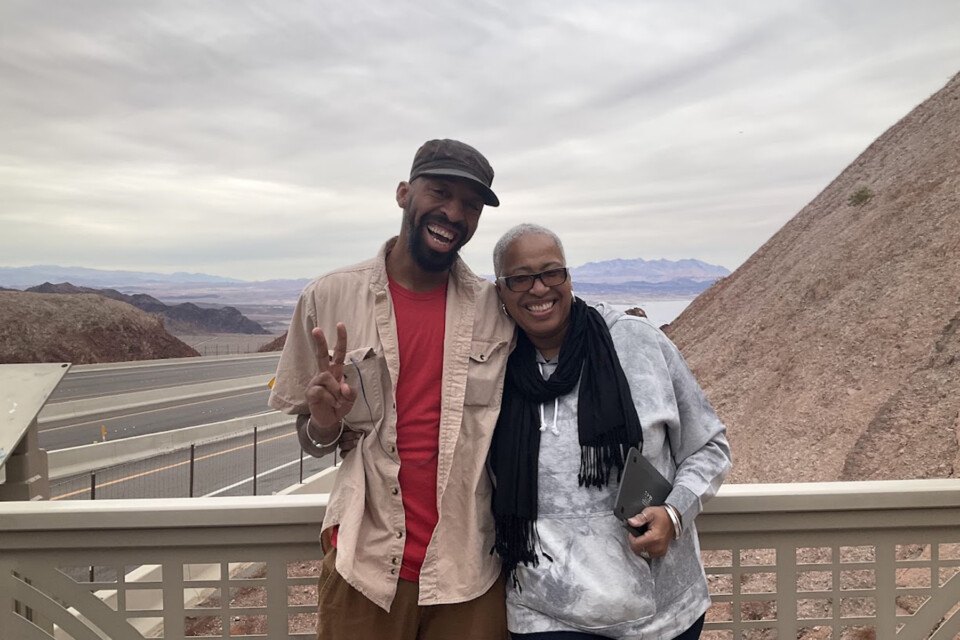
Hannibal Collins and his mother, Bobbi I. Booker, share a laugh while exploring Nevada in 2024, one of the many adventures they enjoyed together. / Photographs courtesy of Bobbi Booker
Listen to the audio edition here:
My son Hannibal lived with sickle cell disease for 37 years, until his death on September 7, 2025.
It wasn’t something he announced. Unless you saw him during a pain crisis, or he chose to tell you he was a “sickler,” you might never know what his body was going through. It’s not that he hid his condition; he just chose not to dwell on it. Because Hannibal was so much more than his disease.
He was a game designer. A podcaster. A corner store manager. A son. A cousin. A friend. A cat parent. He was a funny, complex, and creative person. I was proud of the independent man he became — and I miss my only child in ways that still catch me by surprise.
He projected well-being to the world, so it’s no wonder that when Benjamen-Hannibal Collins died from complications of sickle cell, a number of people, many of whom had known him for years, were shocked. They had no idea he had battled the disease his whole life.
As they read his obituary, the questions began.
Some of them were basic: “What exactly is sickle cell? How come I never heard of it? How come he never looked sick?” Others knew a little bit about the disease, but their information was just all wrong: “How could he die of sickle cell? Isn’t that a disease that kids get, and then grow out of?” Others were familiar with sickle cell, because they had long known they carried the genetic trait for it, and presumed (wrongly) that it might manifest in them too because they didn’t know the difference between carrying the trait and actually having the condition.
Their questions made me realize that many people simply don’t know the deadly enormity of a sickle-cell diagnosis. But those who are living with the disease need others to understand what they and their families are up against. They need allies in the fight for better care, more research and family support. Because sickle cell is absolutely vicious.
For the record, then: sickle cell disease is an inherited blood disorder that causes the body’s red blood cells to become hard, sticky and sickle-shaped, which can block the normal flow of blood and oxygen, sometimes causing excruciating pain, organ damage, and other serious complications. In the United States, sickle cell primarily affects Black people, though anyone can have the condition, which can occur when a person inherits a sickle hemoglobin gene both from one parent and a second one from the other parent. The odds of developing sickle cell disease are then 25 percent. Unfortunately for Hannibal, the odds were not in his favor.
And, no, you do not outgrow sickle cell disease.
So why don’t people know more about it?
First, it’s hard to know the precise number of those affected. Researchers estimated that about 34,000 deaths worldwide in 2021 were attributed directly to sickle cell disease. But their estimate of its total mortality burden was much higher, about 376,000 deaths, when they accounted for the disease’s contribution to deaths from other causes.
“Our research reveals the stark reality that sickle cell disease is far deadlier than its textbook description,” said Dr. Nicholas Kassebaum, a University of Washington School of Medicine professor who was part of a team that researched the gap, using 2021 data.
No wonder awareness of sickle cell is so poor. Someone with the disease might die of a stroke, for example, but if the connection never makes it onto the death record, how would word spread among the public?
The second reason is that people with sickle cell don’t always look sick. For everything the disease can do inside the body, there may be little to see on the outside. A person can look just fine while their body is in terrible pain.
As Hannibal’s mother, I learned this the hard way.
Hannibal’s diagnosis was confirmed after he was born. It took a while for him to develop symptoms, which started when he was about two years old. He would rub his elbows and cry inconsolably. These unpredictable, terrifying pain crises would continue throughout his life, sometimes coming with little warning.
When he was four, a wave hit him while we were in the water in Cape May. Within 10 minutes, he was screaming in pain. I didn’t know then that cold water could trigger a sickle cell crisis. What seemed like an ordinary moment at the beach had become something terrifying. We drove nearly two hours back to Philadelphia, trying to comfort a little boy who could not be comforted.
He was hospitalized as soon as we got back. I began learning the routine: IV fluids, pain medication, and monitoring until he could go home. Morphine eased the worst pain. Over the years, he also needed oxygen and several blood transfusions. While he was in middle school, he nearly died twice in the Children’s Hospital of Philadelphia’s intensive care unit.
Medication was part of his life. He took penicillin as a young child to protect against infection and later hydroxyurea to help reduce sickle cell complications. For pain, there were Motrin and Tylenol, and stronger medications such as oxycodone and hydrocodone when he needed them.
There would be more hospitalizations than I could count.
As a child, Hannibal received treatment primarily at St. Christopher’s Hospital for Children, where specialists knew him and his history. But even then, his symptoms were sometimes misunderstood or misinterpreted by a new clinician who had not yet been exposed to enough children with the disease.
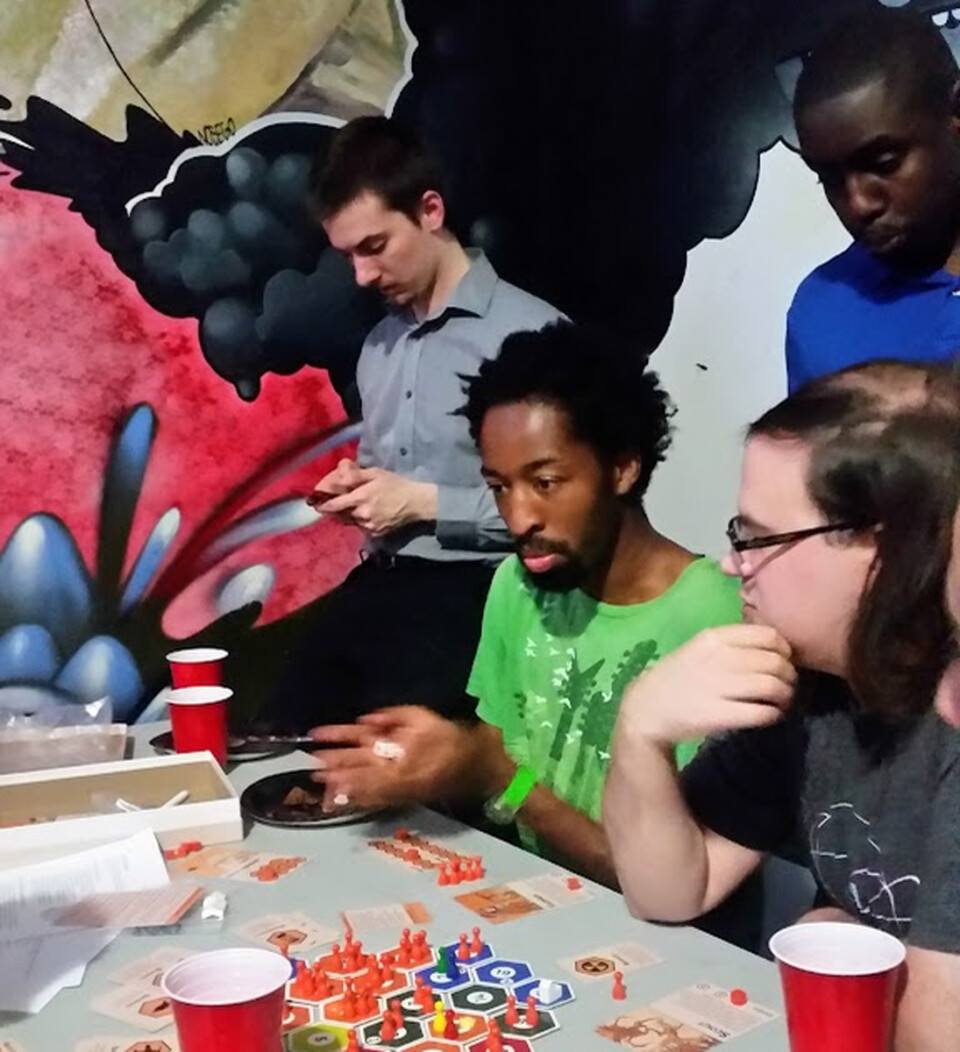
Hannibal Collins, center, known as the “King of Games,” at a game hackathon-style event in Philadelphia’s Old City. Collins was a game developer and frequent game master, leading games ranging from Dungeons & Dragons to original game-development projects. The photo is undated.
During one ER visit, for example, when Hannibal was about 9, a nurse asked him to rate his pain from one to 10. He said 8 or 9. Later, she switched to a one-to-five scale and he answered 4 or 5. When she returned to one to 10 and he again said 8, she questioned the apparent change (from 5 to 8).
I pointed out that she had changed the scale. Hannibal had been describing severe pain all along.
Interactions like that made me worry about what might happen when Hannibal would age out of pediatric care into adult treatment and have to navigate new emergency rooms and see clinicians who didn’t know him at all.
“When you leave a pediatric facility, it’s a whole different world,” says Rev. Zemoria Brandon, an administrator and social worker with the Philadelphia/Delaware Valley Chapter of the Sickle Cell Disease Association of America. Widowed by the disease, she has spent more than 40 years advocating for patients and families. The transition to adult care, she says, “can be brutal.”
So early on, I started schooling Hannibal: Pay attention. Know your medications and allergies. Ask what you’re being given and why. Know how to describe your pain. Speak up when something doesn’t make sense.
As he got older, Hannibal’s symptoms were sometimes questioned in emergency rooms, where his healthy appearance made him suspect to some people, as though he was an addict looking for narcotics. These visits were awful. There he was, having a crisis where the slightest movement could send pain shooting through his body. When he’d finally get medication, and the pain was lessening, someone might bump into his hospital bed and the pain would return, as would the need for more medicine — and the suspicion would begin again, especially when he was specific about the medications he knew worked for him, from years of living with his disease.
“There’s this perception that they’re drug-seeking,” says Brandon of sickle cell patients. “I always say it’s not drug-seeking; it’s seeking pain relief. There’s just not a lot of education about sickle cell disease and the psychosocial impact it has on patients.”
Like the missed days of school and work, repeated hospitalizations, disrupted family life and the exhaustion of having to explain, yet again, the pain that others cannot see.
Eventually, Hannibal had had enough of explaining himself. As an adult, he visited ERs only a handful of times. He turned toward what he felt he could do to care for himself: exercise, eat well and stay hydrated. But he knew those efforts would not cure his disease or guarantee that another crisis wouldn’t come. So he thought ahead.
Ten years ago, after his last severe hospitalization, he was prescribed 15 morphine tablets, on discharge, to ease pain as he recovered. He instead squirreled them away for future pain episodes, so he wouldn’t have to visit another ER and beg for help.
Days after his death, I found this packet of medication — which he’d marked “in case of emergency” — among his things. Only then did I truly understand how severe and relentless his lifelong pain had been. My heart cracked as I realized anew just how hard he’d had to advocate for his future self. Sadly, that advocacy could not prevent his death last year from a stroke, one of the complications that can obscure sickle cell’s true toll.
Back in 1972, after years of advocacy by doctors, patients, families and community organizations, Congress passed the National Sickle Cell Anemia Control Act, putting federal money behind screening, counseling, education and research.
I grew up in the wake of that movement. I remember having my finger pricked during a sickle-cell screening at school and finding out that I had the sickle cell trait, which meant I could pass it along to a child. But I had no idea, until having Hannibal, what that reality actually meant.
That not connecting those dots doesn’t seem to have changed among subsequent generations of people who learn early that they carry the trait. Even though Pennsylvania has universal newborn screening for sickle cell, Brandon says she still encounters young people who tested positive for the trait as babies but reach adulthood knowing little about what that means.
That’s the gap: Screening can tell someone their status. Someone still has to make sure they understand it.
“We are out there,” Brandon said of her organization’s outreach to schools, churches and community events. “We are beating the drum about sickle cell disease and the trait.”
That question of how to make people understand followed me to the E.A.R.T.H. Summit, a recent three-day gathering in Philadelphia organized by the local Crescent Foundation, which focuses on sickle-cell treatment, access to care, and advocacy.
The summit opened with a screening of a new documentary by filmmaker and comedian Jared “J.” Snow, about his personal experience living with sickle cell. Shot largely on his cellphone, it takes viewers into emergency rooms, hospital stays, and long waits for care, but also shows jokes, travel, work, and friends.
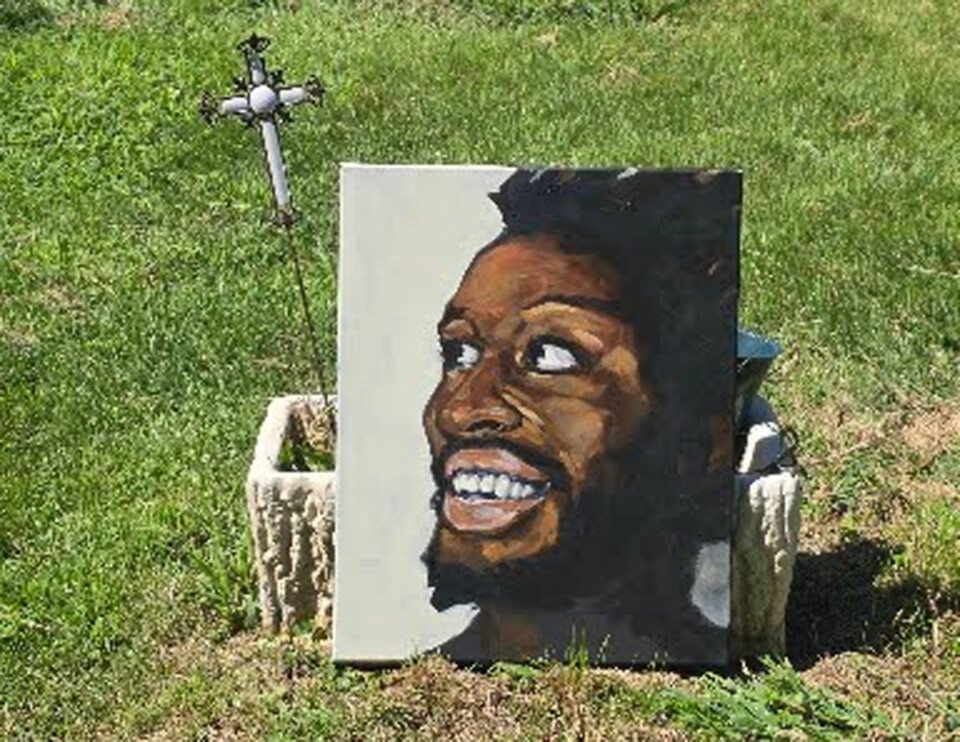
Hannibal the Radiant, a portrait of Benjamen-Hannibal Collins by artist Allan Lane, rests at Collins’ gravesite on September 7, 2026, the first anniversary of his death from complications of sickle cell disease.
The movie’s title — You Look Fine — hurtled me back to the countless times I’d joke with Hannibal that he looked too good to be as sick as he was. We could laugh because we understood the contradiction. He could look great while his body was struggling, and we knew how quickly “fine” could disappear. His eventual sudden death from a stroke made that point devastatingly clear.
So did Snow’s final point about the need for sickle-cell patients to embrace life fully while they’re still here.
“You spend that much time in the hospital, you start to question your mortality,” Snow told the audience after the screening. But, he said, “You can’t just let that be your whole life. Find a way to find the enjoyment of it.”
I came away from the summit understanding that the information exists. The advocates are there. The challenge is getting that information beyond the people already living with sickle cell and their families.
Snow hopes his film can be a tool that warriors can use when someone asks what it’s like to live with sickle cell: “Watch this.”
Decades ago, a school nurse pricked my finger and made sure I knew I carried the sickle cell trait and might pass it on to a child. Hannibal taught me what that looked like. I watched him live with sickle cell for 37 years. I watched him endure excruciating pain that other people couldn’t see. And then I lost him.
I loved my son. I aways will. So now I tell his story, to honor his fight — and to enlighten those who could help the warriors still in the battle.
To learn more about sickle cell disease, visit the Crescent Foundation, a Philadelphia nonprofit providing education, advocacy and support to people (and their families) living with sickle cell disease. To learn more about You Look Fine, comedian and filmmaker J. Snow’s documentary about his life with sickle cell, visit jsnowpro.com.