
Inside One South Philly Couple’s Cat Nightmare
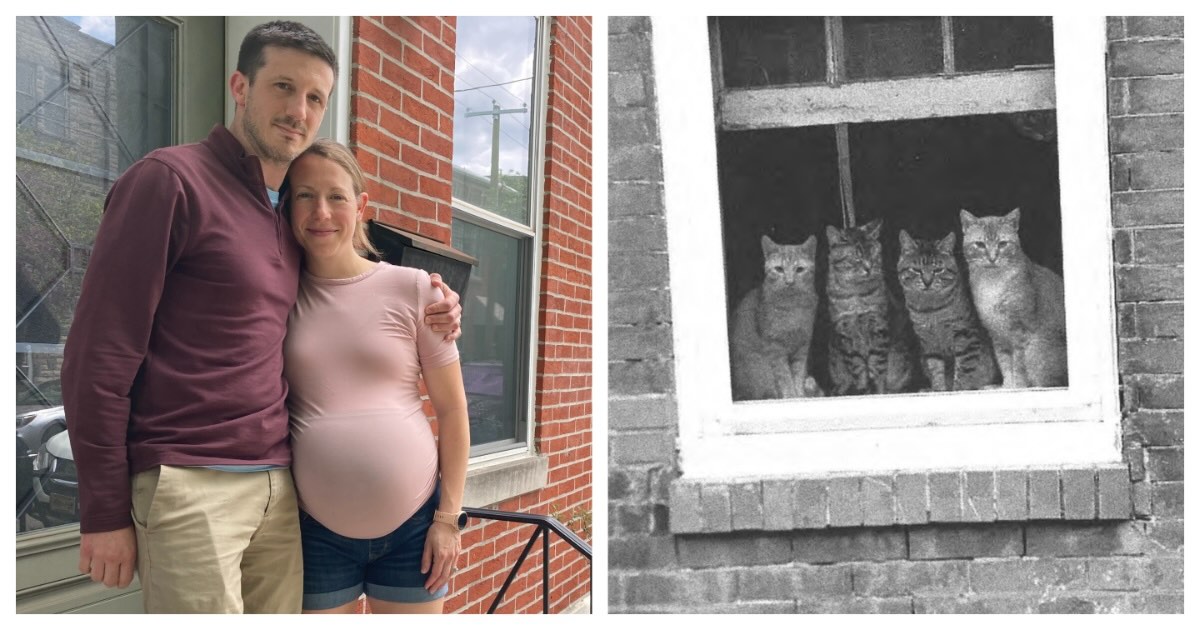
Left: William and Valerie Cowan outside their South Philadelphia home (photo by Victor Fiorillo) | Right: Just some of the cats next door (photo via court exhibit)
William and Valerie Cowan have a lovely home in the East Passyunk neighborhood of South Philadelphia. It’s tastefully decorated. It’s lovingly appointed. The three-bedroom house, which they share with their toddler and will soon share with a newborn, is immaculately clean. There’s just one problem: it smells like cats — a lot like cats, a lot like a lot of cats — as I discovered when I did a walk-through last Friday.
“It’s been quite horrible,” says Valerie, who works as a nurse practitioner in the medical ICU at Jefferson. “I’m trying to sleep at night, which is already hard enough at nine months pregnant, and the smell upstairs in our master bedroom has been unmanageable.”
It’s not much better elsewhere in the home, where that unmistakable ammonia scent (as well as some other animal-like odor that clings to your tongue) hits you as soon as you walk through the door. I could only last about five minutes before walking outside to get fresh air.
The source of the foulness is inarguably the cat situation next door to the Cowans. Their immediate neighbor to the south, with whom they share a wall, has a history of keeping numerous unspayed and unneutered cats inside in unsanitary conditions, a history that began in full force during COVID. They roam the streets, they pile into the windows, they make noises at all hours that the neighbors can hear and, yes, they pee and poop pretty much everywhere they can, leading to that aforementioned and most unwelcome aroma.
According to the Cowans, they didn’t notice anything odd in the air when they toured their house before moving from Queen Village in 2020. But that soon changed, and the scent became inescapable by the summer of 2024. The smell permeated their entire house, and flowed out freely onto the street. The Cowans soon noticed hundreds of flies in the neighbor’s windows. This fly problem quickly became their fly problem, and they estimate that they killed close to 850 inside their home during the summer of 2025. They actually used a white board to keep track:
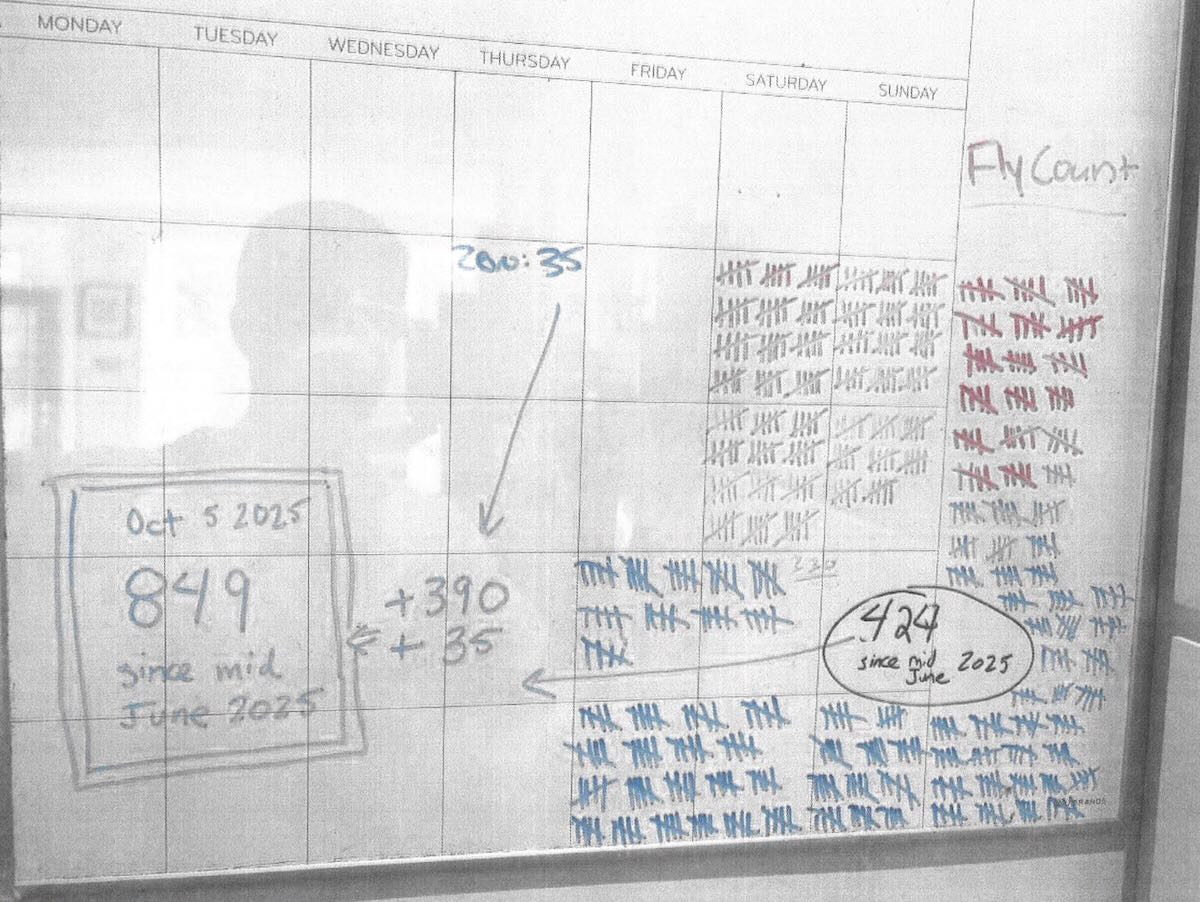
(photo via court exhibit)
The Cowans reached out to the neighbor to try to find a resolution. She was apologetic and told them that she was trying to come up with a solution. But the cats remained and seemed to grow in number. The stench persisted. In March 2025, the Cowans’ daughter, Clare, was hospitalized for days due to a bacterial infection; during her recovery at home she had a compromised immune system, which alarmed the couple given the unsanitary conditions next door, as they expressed to their neighbor.
As the neighbor (who we’re not naming) tells it, she began taking in cats during COVID and, at one point, agreed to take a pregnant cat from a friend. A series of deaths in her family and the sense of isolation during COVID led to the deterioration of her mental health, she says, and her home and housekeeping deteriorated right along with it. Things just unraveled.
The Cowans say they have lots of sympathy for her – it’s kind of impossible not to – but at the end of the day, their house stinks and they want something done about it. So the couple called the Pennsylvania Society for the Prevention of Cruelty to Animals (PSPCA). According to PSPCA spokesperson Gillian Kocher, the organization’s Animal Law Enforcement division has been out to the home 20 times and removed more than 40 cats.
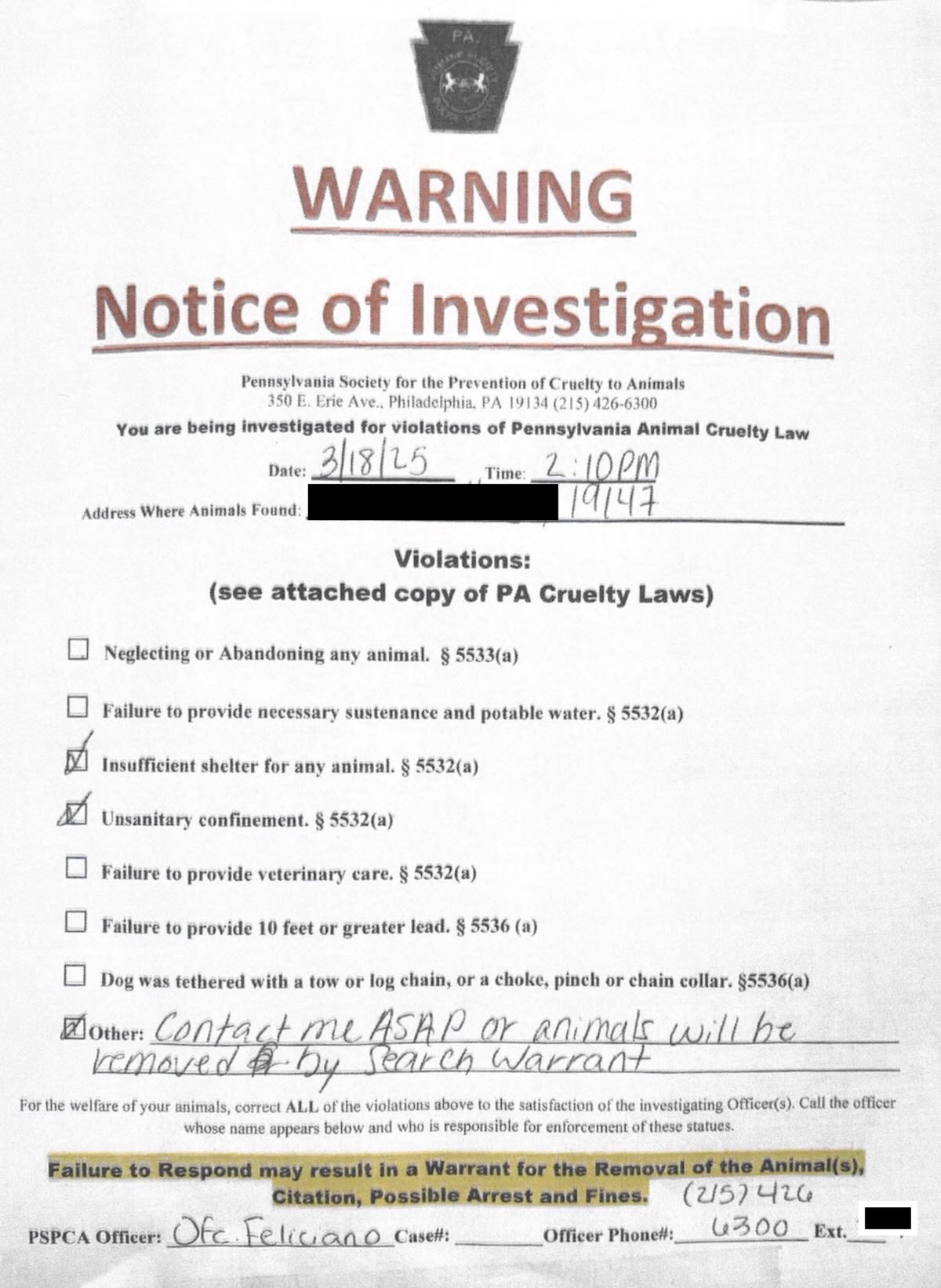
Screenshot
“However, due to the physical condition of the home and the cats’ ability to hide within the structure itself, we are unable to safely capture them without the owner’s commitment to using humane traps or making structural changes to prevent cats from moving between floors and wall spaces,” Kocher explains.
The cat owner concurs that there are holes and other problems with the home that make it possible for the animals to evade capture, but she insists that she’s been fully cooperative with the PSPCA officers.
The Department of Licenses & Inspections has also paid the home multiple visits, starting in the sticky summer of 2025. Since then, inspectors have issued more than 20 violations. In March, inspectors noted several issues, from the “storage of combustible rubbish” to the presence of “cat feces and urine” to “an unpleasant smell throughout the property… that is also affecting the neighboring properties” to structural problems.
Then there is the lawsuit. Last summer, the Cowans hired an attorney to take their neighbor to court; the neighbor is representing herself, telling me that she cannot afford to hire an lawyer. The suit, filed in Philadelphia Common Pleas Court in August, argues that the neighbor’s actions or lack thereof have made their home virtually uninhabitable, citing “noxious” odors.
“The odor and resulting conditions constitute a real, substantial, and unreasonable interference with [the Cowans’] use and enjoyment of their property,” reads the suit. “The harm suffered is more than a slight inconvenience or petty annoyance, and would be found offensive, seriously annoying, and intolerable to a normal person living in the community.”
The attorney also collected affidavits from three other neighbors attesting to the problems at the home.
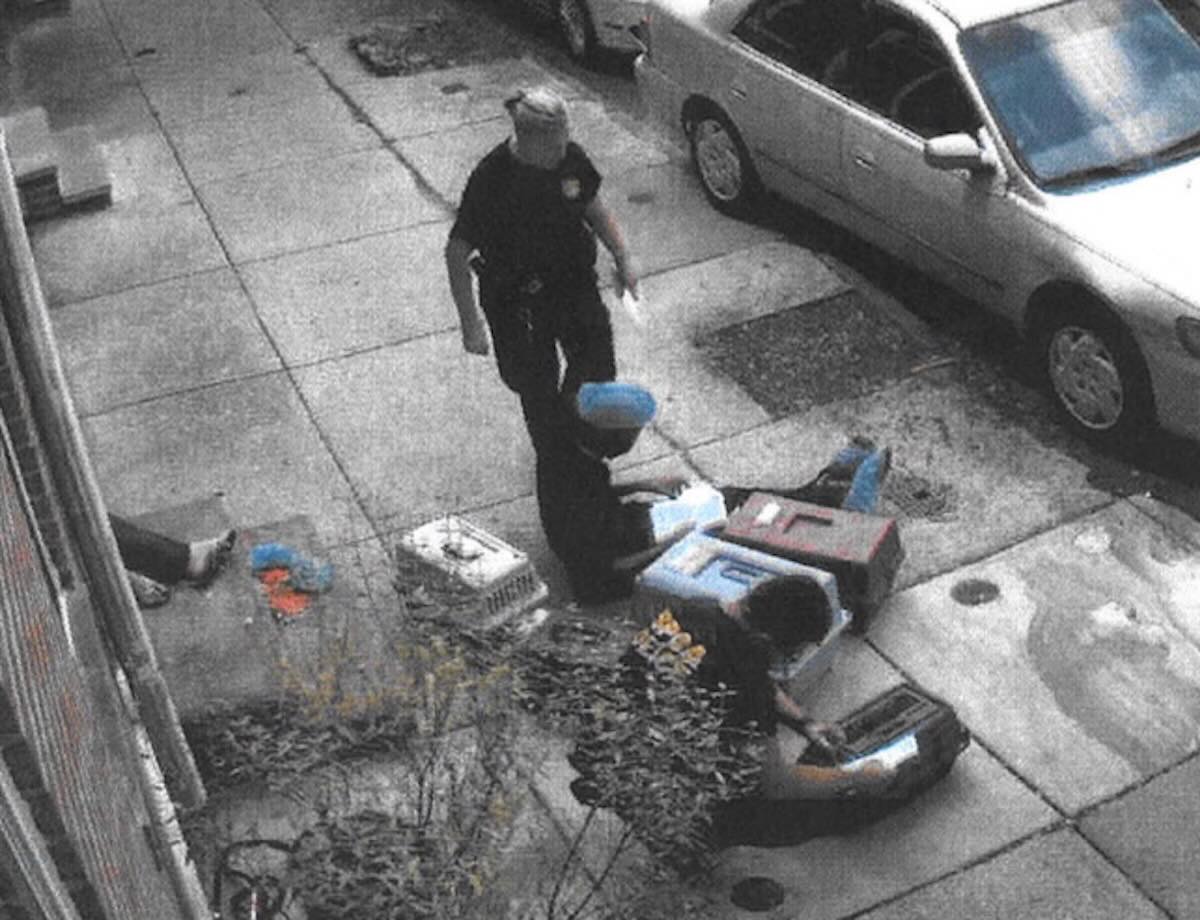
A PSPCA rescue operation at the cat owner’s South Philadelphia home (image via court exhibit)
One said that she could see multiple cats in the home’s windows “crawling on top of each other,” as the affidavit reads. “It seems to me like they were trying to access the fresh air … Kittens were continuously in the windows, which makes me believe that the cats inside were breeding.”
“I am concerned about my ability to sell my home given the persistent odor,” wrote another. “I am also concerned about the welfare of [the] cats. I do not believe that living in a row home in the city is a place where someone can keep 20 or more cats … or take care of them in a way that they deserve.”
The suit sought not monetary damages against the cat owner but rather an injunction against her, preventing the offending activity. On March 11th, the judge granted the injunction and ordered the neighbor to contact the PSPCA within five days to arrange for the surrender of all of the cats in her home. They also gave her 30 days to hire a professional cleaning company “certified to clean biohazardous waste” to properly clean, sanitize and remediate the property. After said remediation, the judge said that she could possess a maximum of two cats and that they must be spayed and neutered.
It’s been more than a month, and the Cowans’ neighbor still hasn’t surrendered all of the cats in her home. She tells us that she has eight. I saw two in her windows.
She also hasn’t hired a company to clean the house, claiming that she’s received estimates close to $10,000, money she says she just doesn’t have. (The Cowans say they have offered to contribute to the cost of cleaning.)
“I don’t want to live like this,” the neighbor says. “But I don’t know what to do. I have no one who can help me.”
I asked William how he plans to proceed, given that she’s in clear violation of the judge’s order.
“We can hold her in contempt, but like, what are we gonna do?” he said, noting that they’d already spent about $40,000 in legal expenses. “Fine her, and then she’s not going to pay? Our lawyer said, ‘You could pay for the cleaning,’ and I’m like, oh great, another $10,000? How do we even get into her house to clean. How does that even work?”
Valerie is due on May 14th and says she’s concerned about how the ongoings might be affecting her pregnancy. “I’m not having direct contact with the cat urine or feces,” she notes. “I think the biggest health concern is actually more the stress that the whole ordeal will put on my body and the baby, how the stress impacts the developing pregnancy.”
So what’s left to be done? Perhaps the only thing that can reasonably be done: move.
“We are considering leaving,” William says. “We’re meeting with a realtor to try to figure out our options. But we love our house. It’s a block away from the elementary school. Our plan was to raise our kids in the city. We don’t want to move, we’re trying to fight it as much as possible.”
Emma Copley Eisenberg Talks Fat Liberation, South Philly, and Her Brand-New Book
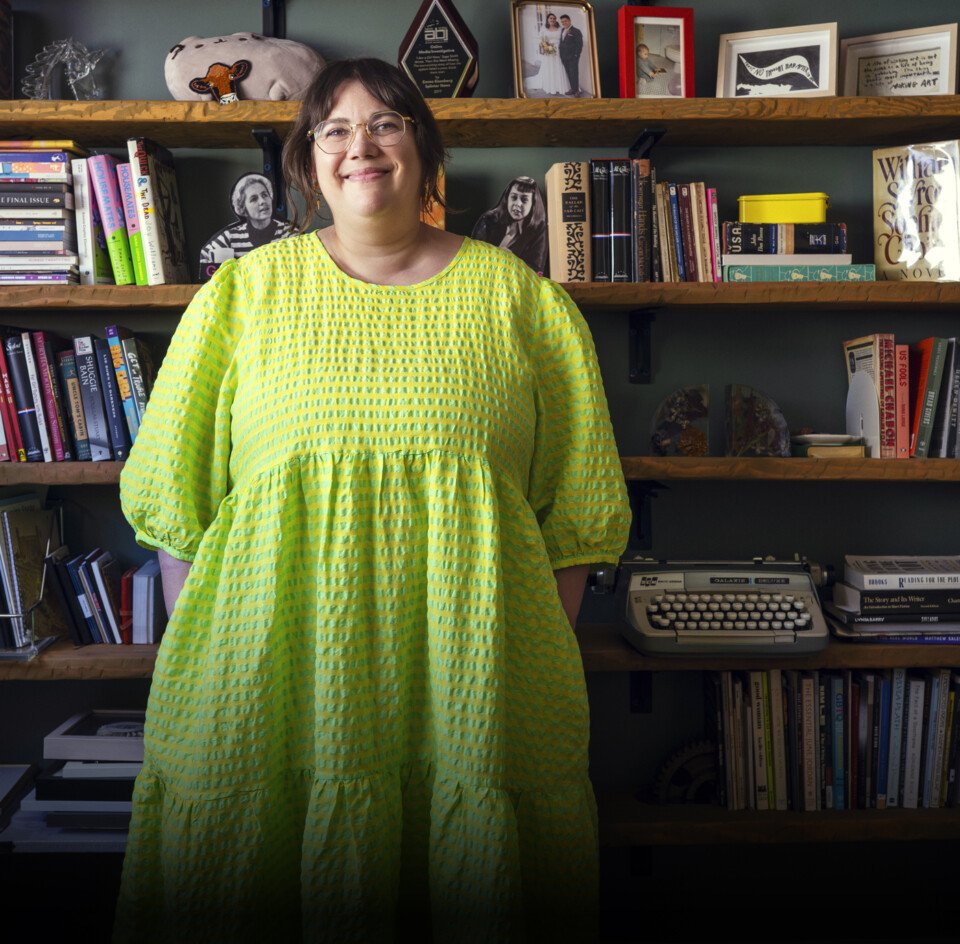
Writer Emma Copley Eisenberg, who has a new book called Fat Swim / Photography by photography by Kyle Kielinski
Writer Emma Copley Eisenberg, whose byline has appeared in The New York Times, Esquire, McSweeney’s, and right here in Philly Mag, made a big splash with her 2024 novel, Housemates, inspired by her experiences living in West Philly. This month, the queer Haverford grad and fat liberationist returns with Fat Swim, a collection of short stories about our city. Here, she explains why she’s moved to South Philadelphia, why she’s pissed at Serena Williams, and why she requests that you never, ever call her “curvy.”
Hi, Emma. How are you?
Well, I have to go to the dentist right after this.
My condolences.
I’m trying to make sure my body doesn’t collapse as I approach 40.
At 51, I more than commiserate. At what point did you realize you wanted to be a writer?
I was very, very young. Do you remember the magazine called Cricket?
I sure do! That and Highlights.
[Laughs] My mom was a children’s librarian and my dad was a labor organizer for Broadway actors. I am, by the way, named after Emma Goldman, the socialist activist who also ran an ice cream store for years. So I come from a very nerdy, bookish family. And my parents got me Cricket. I entered its little literary contest when I was seven and won. It was the best thing that ever happened, and I realized, Wow, I can communicate to people through my writing. That was the coolest feeling.
I just blazed through your 2024 novel, Housemates, which is set in a West Philly queer group house, very close to where I lived for years. It made me really miss that neighborhood and the quirky community of people who make it up.
It really has its own way of life out there. I’m originally from Martha’s Vineyard — before it got fancy — and grew up in Chelsea in New York City. I came to Philly in 2005 to go to Haverford, graduated in 2009. Then I went to West Virginia for a couple of years and moved into that West Philly house in 2011.
Why West Philly?
I didn’t have a clue what I was doing. I didn’t know where to live. What I did know was that a lot of my friends from Haverford were in West Philly and that it was filled with artists and queers. It felt very alive. Truly diverse.
For those people who don’t understand the concept of a West Philly group house, please explain.
You are living with a bunch of other people in a very communal way. It felt very warm — it was like a family that you came home to at the end of the day. I felt much less alone, and that was good because this was a very alone period in my life.
I think it was during your early days of West Philly living that you wrote for Philadelphia Weekly.
[Sighs] I miss Philly’s alt-weekly days. I did a lot of fact-checking and arts writing for the Weekly, back when the paper was doing a lot of really important journalism about race and sexual assault, and I also wrote for The Philadelphia Citizen [now Philly Mag’s sister publication], which was very new at the time and trying to do something really different.
I know a lot of folks are anxiously awaiting Fat Swim, which comes out on April 28th. This is a collection of short stories, all fiction?
Yes. It’s a little strange, in a way, because Fat Swim was supposed to be my very first book. I started writing it more than 10 years ago but just wasn’t happy with some of the stories. So in 2020, I published The Third Rainbow Girl, a nonfiction book about two girls who were killed in West Virginia in 1980. That was my first book. Then Housemates in 2024. And now Fat Swim, which is weirdly both my newest and oldest book.
Are these stories set in Philly?
Most, yes, and a lot of the characters from one story will know characters in another story. One story is set at the Jersey Shore; a couple are in rural central Pennsylvania.
Housemates was clearly inspired by your experience living in the group house. Is that level of inspiration from your personal life also turning up in Fat Swim?
I like to say that I write about my real-life experiences whether I’ve lived them or not. Some of the things I have not lived directly, but I feel are emotionally true or connected to something that I grappled with or thought about. Like all fiction writers, we take little pieces from everywhere, bits of other people, things we imagine, things we watch on TV, and we make this nest.
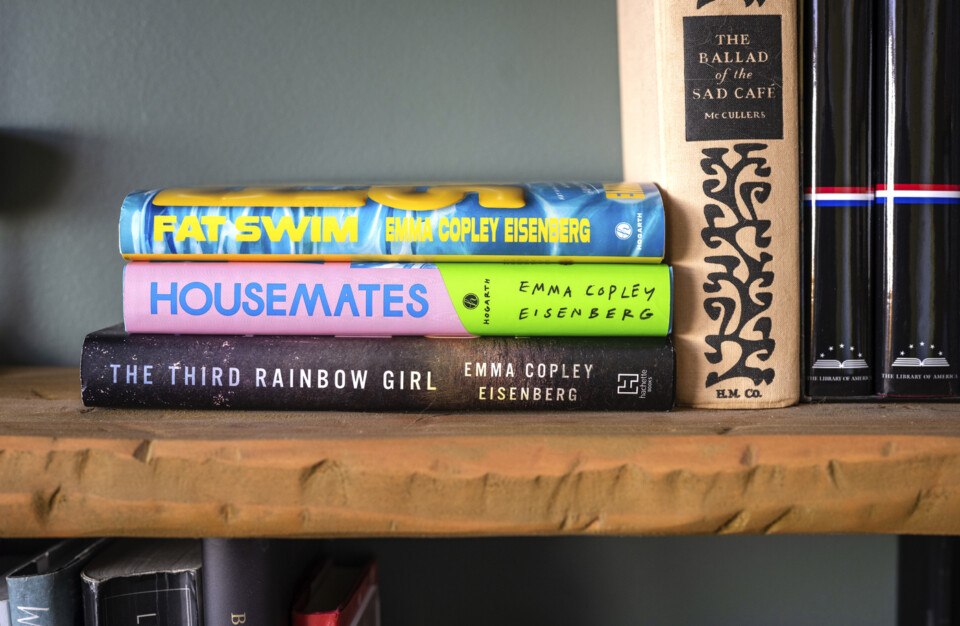
Books written by Emma Copley Eisenberg
What’s the oldest story in Fat Swim, and which is the newest?
The oldest is called “Ray’s Happy Birthday Bar,” after the real bar in South Philly. I’ve only been a patron a handful of times, but I have heard many stories. It’s about a particular character who is a person I’ve seen around in South Philly many times, even if she’s not a real person. She’s a character struggling with sexuality, her friendships, what it means to be a white working-class person in Philly, and with a choice she made a long time ago to become a parent or not — a choice that is now haunting her.
And the newest?
“Camp Sensation.” What if there was a camp in the woods of central Pennsylvania where you could go fix your relationship with your body, where they could help you understand what a body is and how to love it? That story is particularly vulnerable for me, because it is not completely realist. It has some strange and magical elements, which was new for me.
I’ve gathered that your body is something you’ve spent a lot of time thinking about. What is your relationship with your body these days?
It changes all the time. My thinking and my sensations and my feelings about my body and my understanding of it have changed so much and continue to change every day, so there is no one quote-unquote journey. I think the idea that there could be one journey is something that troubles me a lot.
Is there a better way to describe or discuss it?
Maybe we should think about how the shapes of stories we use to talk about our bodies are really limited. Like, there’s the weight loss journey: Here’s a before picture where I’m fat and the camera is making me look pale and washed-out and ugly. Oftentimes, in those photos, the fat body is very dehumanized. But then, in the after photo, the person is thin and happy and colorful, and their life seems more full. That’s one shape of a story we get a lot. And now that I’ve been fully exposed to the fat liberation movement — a social justice movement founded during the 1960s along with the civil rights movement and the disability justice movement — it’s really just about body autonomy and saying that every person has rights and values just as they are. Even fat people. Fat people shouldn’t have to change their bodies to have basic protections in the workplace and comfort as they move and travel in the world.
Do you consider yourself a fat liberationist?
There’s a difference between me as a person and my art — the books I write. My books don’t have any message or political views. But in my public-facing life and me writing opinion pieces and advocating, yes, I definitely believe in the ideology of fat liberation. Which, again, to me just means body autonomy and basic rights and respect.
It seems like not that long ago, we were all cheering on these commercials that suddenly had fat people in them. You didn’t have to be a waif to get a job in an advertisement. But more recently, I feel like everybody is talking only about Ozempic; the pursuit of not being fat almost seems bigger than it ever was before.
There are so many people smarter than me out there looking at this moment in a sociological and historical way. I’m just a fiction writer. But my armchair comment from my little couch is that this has been really sad to see. Any kind of public joy over the existence of fat people is met with slapping us on the wrist and saying, Just go away. You’re gross. You’re disgusting.
People are just … mean. Like it’s junior high all over again.
I fully anticipate that when you publish this interview online, there will be comments that say, “She’s advancing this idea that is unhealthy and disgusting.” It’s very much in every ecosystem. Seeing fat people living normally and not hating themselves can provoke a very intense and immense reaction that is very interesting to me.
And getting back to those ubiquitous Ozempic ads, they don’t seem to be helping one bit.
It’s not just the GLP-1 ads. I did not need Mike Tyson coming on during the Super Bowl to tell me how much he hates fat people in his “real foods” commercial. And then you have Serena Williams, someone I really used to admire, coming out and promoting GLP-1 programs. Of course, then we find out that her husband is an investor in that company and profiting on it.
You left West Philly for South Philly in 2025. Why the big change?
I’m still in West Philly a couple of times per week, seeing people that I love, eating at all the restaurants, and hanging out at Clark Park watching queer acrobatics and cats on leashes. But I fell in love with Art and got married and we decided to choose a new neighborhood together, to start the next chapter of our lives in a new place. And Art is Chinese-Viet American and wanted to be near all the soup.
Favorite stop for soup?
Café Nhan for pho tai, and I also really like those delicious spongy meatballs and the brisket in the soups there. And the other thing about South Philly we love is that there is this culture of protecting each other’s packages. [Laughs]
Many of my friends in South Philly eat out all the time, just because there are so many options within walking distance. Do you cook at home at all?
Oh, yes. I usually make something that is very gluten- and pasta-forward. But, really, Art should do the cooking. They are a hot pot aficionado master.
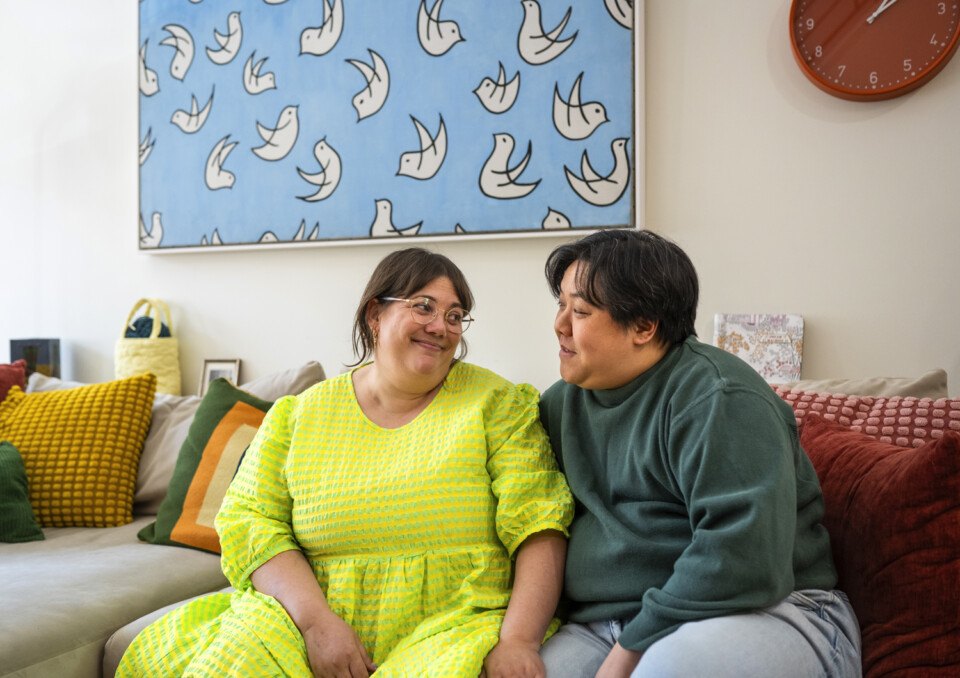
Emma Copley Eisenberg with spouse Art Phùng
How did you two meet?
On Tinder. [Laughs] We found love in a hopeless place. I was looking for someone in New York, just because West Philly is very small, and I felt like all the people it made sense for me to date, I had already dated — or they had dated a friend of mine. So I thought I would fish a New York City fish, but instead fished a Trenton fish, who is Art. We did long-distance for a while and then when the COVID lockdown hit, it was sort of like, commit or never see each other again. So we spent the pandemic making doughnuts together and watching Tiger King like everybody else.
Are you working on the next book?
I am! I’m writing another novel, and I write a Substack newsletter every month called Frump Feelings. I just got a Pew fellowship, and that will allow me to really spend a lot of time on my book over the next year. It’s in the very early days.
Okay, for a change of pace, how about if I just throw out some words and phrases and ideas to you, and you give me quick responses?
Sure!
TikTok.
Something I just deleted due to all the fascism on there. It used to be a really fun place to get inspiration about nails and nail art.
“Plus-sized.”
I hate all the euphemisms. Plus-sized. Curvy. No thanks. I like fat.
Relaxation.
Swimming. I swim in any pool I can find. Sometimes I rent pools using that app Swimply, which is like Airbnb for pools.
Friday nights.
They are made for getting high, watching a comedy special, and eating guacamole. That’s our Friday-night tradition.
Winning $10 million in Powerball.
I would open a socialist ice cream shop/bookstore and fix all the air conditioners in all of the Philly libraries.
How to piss me off.
Talk about the Mets. I hate the Mets.
Fuck, Marry, Kill: tequila, bourbon, gin.
I would most definitely fuck gin, because of that Patricia Highsmith old-world martini glamour, kill tequila due to a really bad throwing-up experience in high school, and marry bourbon. It’s smoky yet reliable.
Playlist.
Bad Bunny. No, I don’t speak Spanish. It doesn’t matter. And sad music feels really satisfying, because I am a depressive. So I listen to a lot of Lana Del Rey and Robyn, whose new song “Dopamine” has been getting me through. I’m excited to see her on tour this fall, even though I’m almost 40 and it’s hard to stand up for two hours.
This interview has been edited for length and clarity.
Published as “Lit and Liberation” in the April 2026 issue of Philadelphia magazine.
The 2026 Top Doctors List Is Here

Our all-new Top Doctors list is here!
This month, we unveil our all-new Top Doctors list — a compilation of the best physicians in the region, whether you’re looking for a dermatologist, a cardiologist, a pediatrician or a family doctor. Sort by name, town, or specialty to find the doctor you need.
The 2026 Top Doctors List
About the List
Castle Connolly is a trusted and credible health care research and information company with over 30 years of experience researching, reviewing, and selecting best-in-class health care providers and institutions. Our mission is to help people find the best health care by connecting patients with top-tier providers.
The Castle Connolly Doctor Directory is the nation’s largest network of peer-nominated doctors. Castle Connolly employs a rigorous team of researchers to select top health care professionals on both the national and regional levels. The Top Doctor selection process is based on peer-to-peer nominations, open to all licensed physicians in the United States, allowing them to nominate peers in any specialty and region. The research team then thoroughly vets each nominee’s professional qualifications, including education, professional reputation, research leadership, hospital and faculty appointments, disciplinary history, and outcomes data. Interpersonal skills such as listening, communicating effectively, demonstrating empathy, and instilling trust and confidence are also considered.
Castle Connolly is part of Everyday Health Group, a recognized leader in patient and provider education, attracting an engaged audience of over 60 million health consumers and over 890,000 U.S. practicing physicians and clinicians. Our mission is to drive better clinical and health outcomes through decision-making informed by highly relevant information, data, and analytics. We empower health care providers and consumers with trusted content and services. Professionals and/or institutions selected for inclusion in this magazine’s feature may also appear online at www.castleconnolly.com, or in conjunction with other Castle Connolly databases online and/or in print. For more information, please visit Castle Connolly.
This Philly Barber Is Pairing Haircuts With Health Care
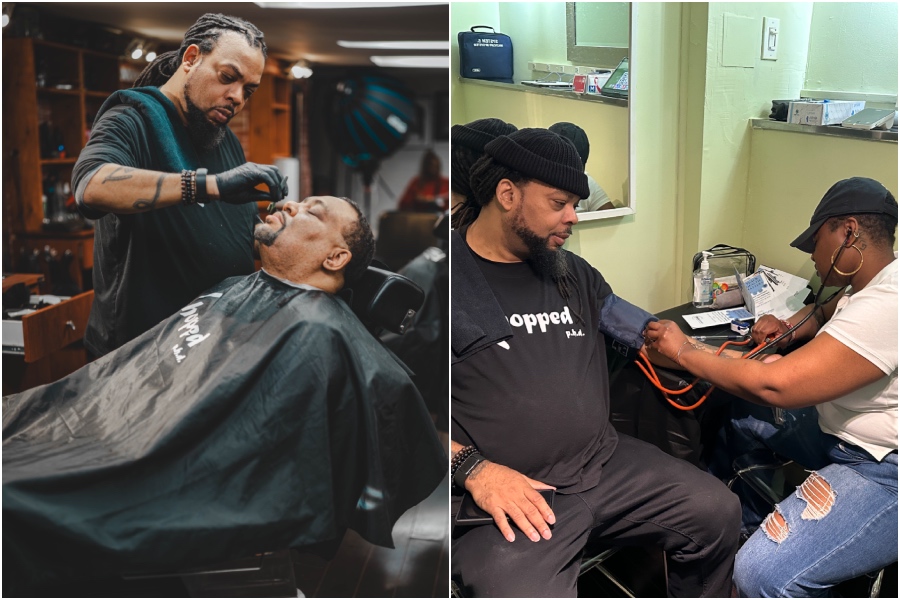
Al Dashiell’s Center City barber shop, Chopped P.H.D., is hosting on-site health screenings with registered nurses twice per month. / Photography courtesy of The Gentle Giant Co (left) and Laura Brzyski
Listen to the audio edition here:
If you walk past Chopped P.H.D. on Sansom Street, you might assume it’s just another sleek Center City barber shop, or wonder if owner Al Dashiell has a stack of academic degrees to his name. (Though he’s an expert barber, the P.H.D. here stands for ‘professional hair designers.’)
But spend a little time with Dashiell inside his lively, 800-square-foot basement shop, which opened on March 13th, and it’s clear he wants to give his clients something longer-lasting than cuts and fades.
Twice per month, registered nurses are on site for blood-pressure checks, heart screenings, blood sugar checks, and casual Q&As available to anyone — no sign-up needed. The next session is this Thursday, April 23rd.
The goal? To improve health outcomes for clients. And the inspiration? Dashiell’s own remarkable, six-year comeback from a life-altering medical crisis.
Dashiell has been barbering for over 30 years. He cut his teeth in the early ‘90s in a shop at 20th and Chestnut before eventually opening his own storefront in West Philly, where he grew up.
But Dashiell’s life radically changed in early 2020, when the pandemic closed his business. Soon afterward, COVID felled him, too.
“I thought I had the flu, but then my taste went away,” he says. “I quarantined in my home, but I wasn’t getting any better.”
At that time, doctors were unsure how the virus would interact with preexisting health conditions; Dashiell had been diagnosed as prediabetic a few years prior. So, to be safe, his primary care physician sent him to the ER on April 2, 2020.
“That’s the last thing I remember,” says Dashiell, who that day lapsed into a coma that lasted more than 40 days.
When he woke up a few days after Mother’s Day, he had no idea how much time had passed. (“I thought I was just asleep,” he says.) He learned that, at one point, his heart had stopped and, because his kidneys had failed, he was not only on dialysis but had been placed on an emergency transplant list for a new kidney.
Through rehab, Dashiell relearned how to walk and talk — he had had a tracheostomy while hospitalized. And then, as if by miracle, his kidneys began functioning on their own again.
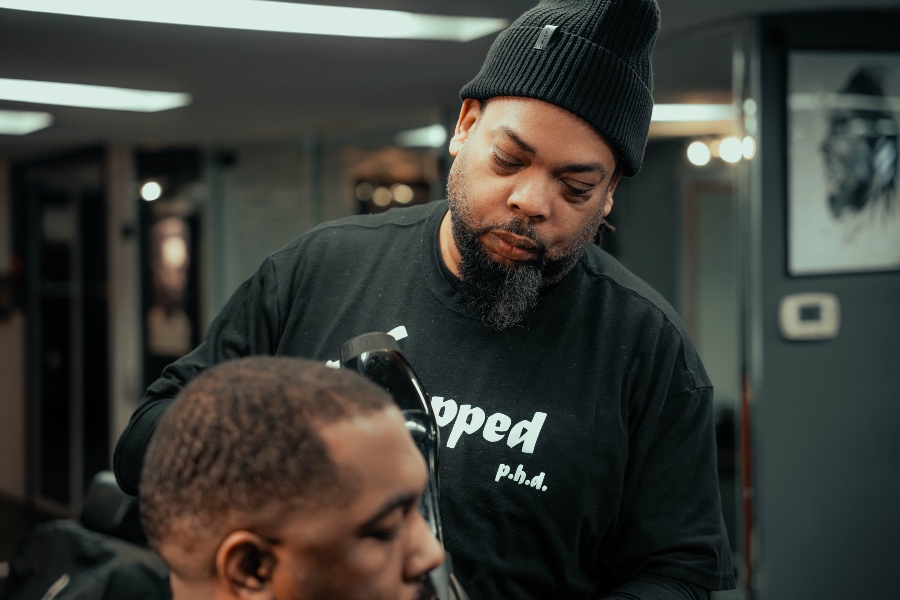
Dashiell in his Center City barber shop, Chopped P.H.D. / Photograph courtesy of The Gentle Giant Co
“One doctor told me he had never seen that in his life,” Dashiell says. “And all I could say was, ‘I know the God I serve, and I know He can do anything.’” Because his kidneys were working — not optimally, but enough — he no longer needed dialysis or a transplant. Nonetheless, he now has chronic kidney disease. He and his doctors regularly monitor his glomerular filtration rate (GFR), which measures how well kidneys filter blood.
For context, a GFR of 90 or above indicates normal kidney function; a reading in the 15 to 60 range suggests chronic kidney disease; and anything below 15 signals kidney failure, and the need for dialysis or a transplant. Dashiell’s GFR was zero while in a coma then increased to around 35 during rehab. Today, it fluctuates between 17 and 50, depending on how hydrated he is or what medications he’s taking.
These past six years, life as Dashiell had known it has been altered. He’s made lifestyle changes to keep himself healthy, like eating more nutrient-dense food, drinking water instead of coffee upon waking, and doing Tai Chi every morning to loosen up his joints. (Post-COVID, he developed an autoimmune inflammatory disease, which causes him chronic joint pain.) He also closed his West Philly barbering spot for good.
“After cutting hair for 30 years, I didn’t think I was ever going to open [another shop] again,” he says. “But then an old client of mine reminded me that your barber is almost like a therapist or your best friend. Men don’t [often] talk to people about what they’re going through, but they talk to their barbers. And I thought, ‘Wow, you’re right — my clients talk to me about everything. Some stuff I have to take to my grave!’”
So last year, when space became available at 15th and Sansom streets — bonus: it was formerly a hair salon — Dashiell pursued it, eager to leverage something bigger from the trusting connections that barbering can foster.
“I realized when I got sick, that if more people were more informed about their health conditions, they might not get sick,” he says. “So, I asked myself a simple question, ‘What can I do to help?’”
So he’s back behind the chair again, in his own shop for the first time in six years, encouraging clients to jump-start their health in a place where they already feel comfortable – and with help from credentialed medical professionals like Arnetta Shaw, a registered nurse who specializes in mental and public health and is partnering with Dashiell for on-site services.
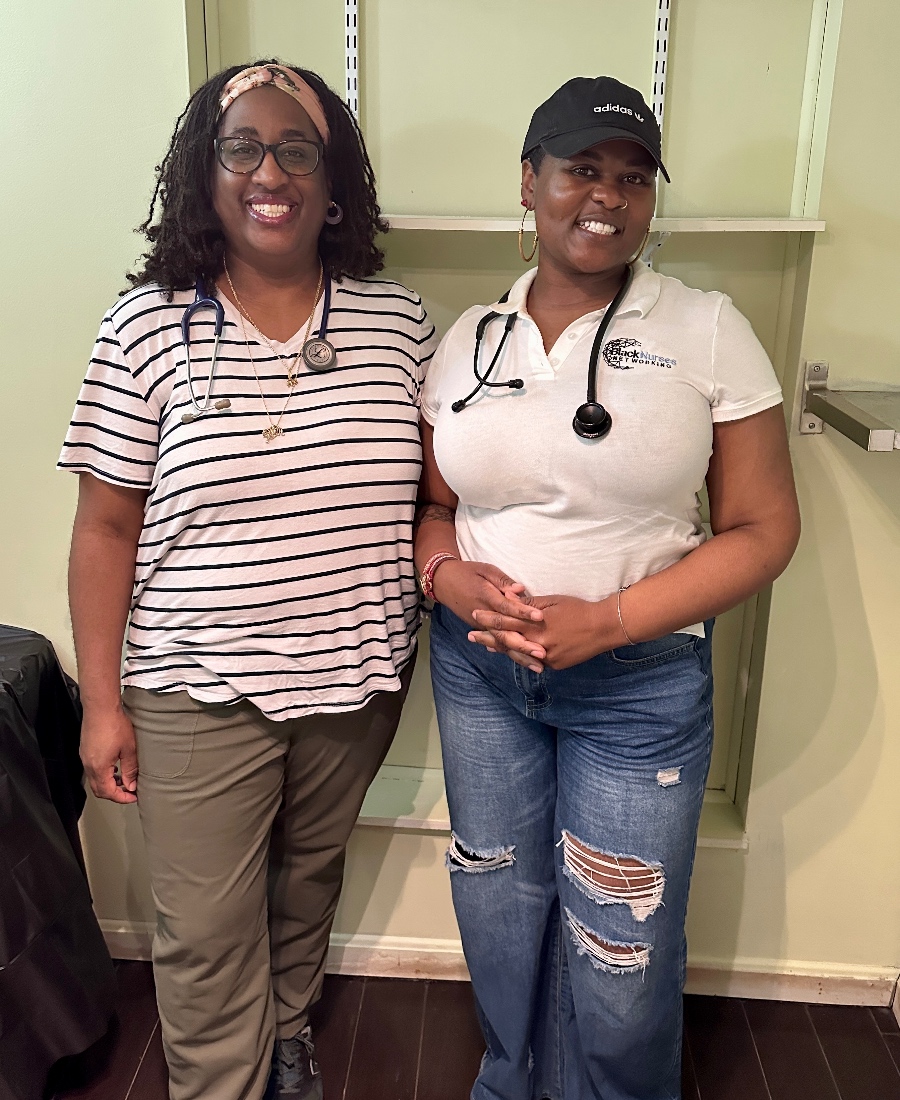
Melissa Smith (left), a psychiatric mental health nurse practitioner, and registered nurse Arnetta Shaw on site at Chopped P.H.D. / Photograph by Laura Brzyski
“Nurses get into the field because we want to help people understand what’s going on with their health,” says Shaw, who is currently developing Black Nurses Networking, a way for nurses to deliver care and provide education in local settings and to support each other professionally. “This, to me, is the perfect type of space to meet community members where they are — it’s true collaborative care. Our drop-ins allow Al to say to a client, ‘Hey, the nurses will be here on such and such a day — stop by then and talk to them.’ This barber shop is their familiar place, so they might be more inclined to follow through.”
That follow-through is critical: When it comes to high blood pressure, Black adults in the U.S. see the highest prevalence of hypertension — about 58 percent — compared to other racial or ethnic groups, as well as earlier onset and more severe complications, according to the American Heart Association.
And though Chopped P.H.D. services both men and women, the health screenings are especially helpful for men, who historically visit doctors less often than women.
“Say a person comes in to see us for the first time and their blood pressure is a little elevated, they can come again in two weeks and if it’s still high, it’s helping that person [and us] understand this is a trend,” says Melissa Smith, a psychiatric mental health nurse practitioner with a private telemedicine practice, The Mindful Wellness Place, who has joined Shaw twice. “We can have a conversation about signs and symptoms of high blood pressure — like vision changes, headaches, and irritability — and their lifestyle habits, such as how much water they consume versus soda or energy drinks. The person gets a screening, but also education.”
For Dashiell, who has six kids and four grandchildren, this new venture has reignited his drive for wielding clippers from behind the chair. “My wife wonders why I still keep barbering, and I tell her, ‘I’m showing the kids that no matter what life brings you, you can’t let it bring you down — you gotta keep moving.’ I’m showing them that their dad isn’t a quitter.”
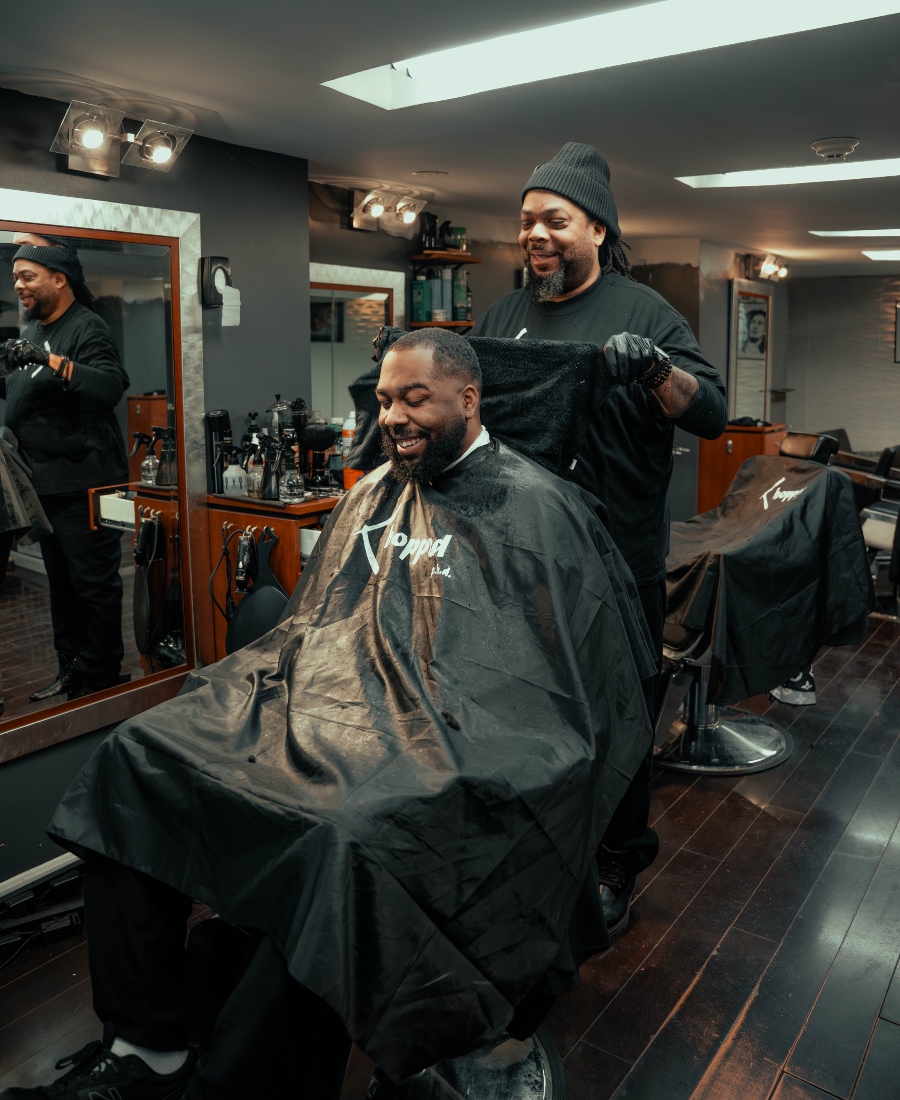
Dashiell jokes with a client. / Photograph courtesy of The Gentle Giant Co
“I also missed my clients,” he adds. “The atmosphere of a barber shop is almost like a ministry to me. I like seeing clients smile when they get out of the chair, I like when they come in wanting certain cuts or a change in color — it creates a challenge for me. Despite what I’m going through physically, I try to encourage my clients to make small [lifestyle] changes because they could save your life. And if I helped one person, then I did my job.”
Chopped P.H.D. will hold its next screening this week, on Thursday, April 23rd, from noon until about 2 p.m.
Chopped P.H.D is located at 1506 Sansom Street in Center City. Stay updated on future health screenings via Chopped P.H.D.’s Facebook and Instagram.
Sign Our Petition for an Ona Judge Day
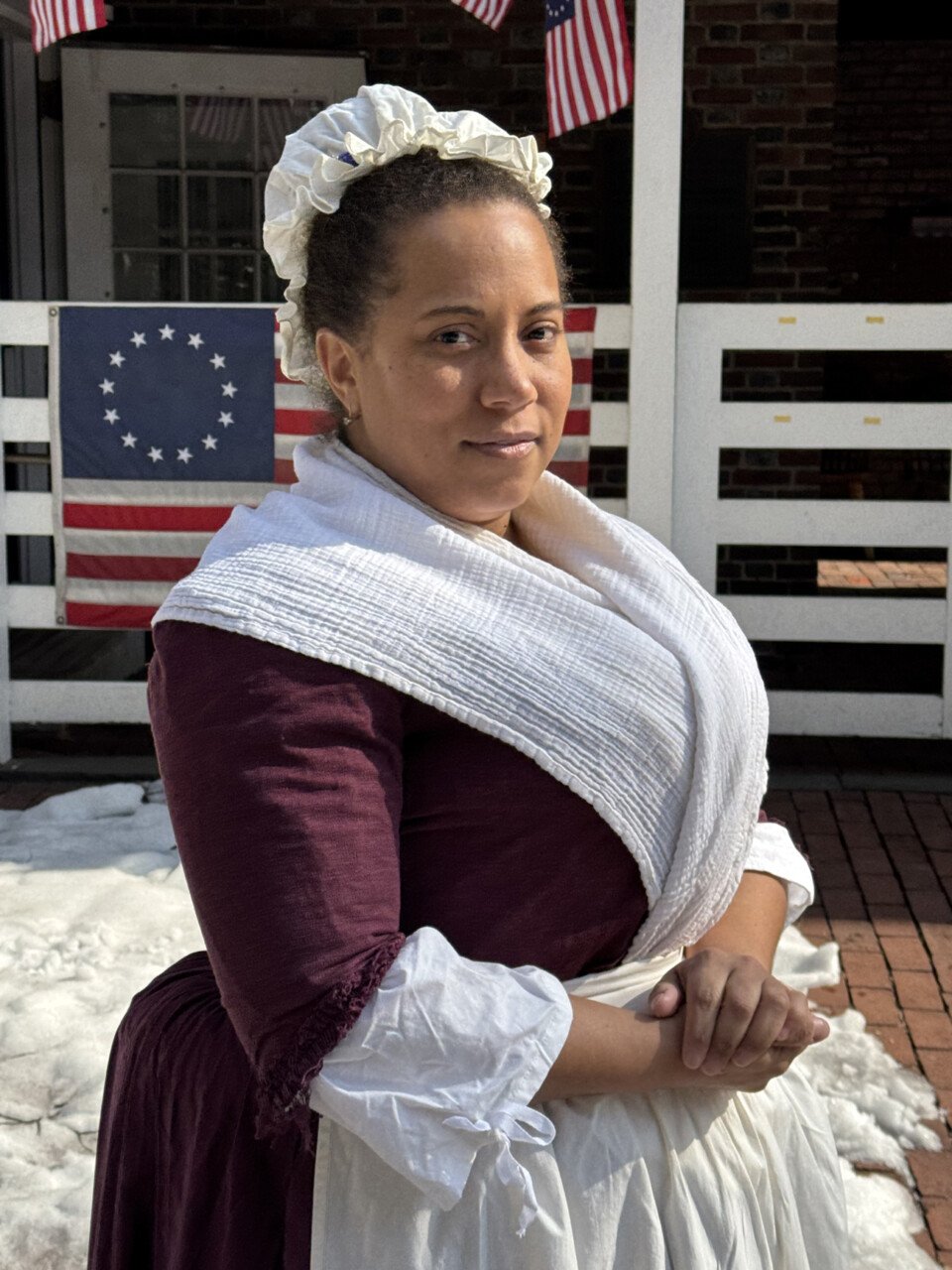
Alex Ford, a Philly-based actor who portrays Ona Judge, at the Betsy Ross House / Photograph by Ronnie Polaneczky
Listen to the interview edition here:
Today, Philadelphia magazine and The Philadelphia Citizen, in collaboration with Avenging the Ancestors Coalition and the Ona Judge Coalition, are launching a petition to ask the City to officially recognize May 21st as “Ona Judge Day” in Philadelphia — in 2026 and every year hereafter.
Why May 21st?
Because on that date in 1796, the 22-year-old Judge, enslaved by George Washington right here in Philadelphia, escaped his clutches. With help from the city’s Free Black community, she fled to New Hampshire. For years, an outraged and humiliated Washington tried to kidnap her back into bondage. At every turn, Judge outwitted the country’s most powerful man and was never, ever caught.
Talk about courage. Talk about endurance.
Talk about real Philly grit.
Since 2010, Judge’s story had been told at “The President’s House: Freedom and Slavery in the Making of a New Nation,” the dignified open-air exhibit at 6th and Market streets, the site where Judge and eight others were held captive by Washington.
But in January, the National Park Service, on orders from the Trump administration, dismantled the memorial because it presented “a distorted narrative driven by ideology rather than truth.”
Philly leaders and activists called bullshit and filed a lawsuit to restore the exhibit. It is now working its way through the court.
But you know what will never need a court order to be shouted publicly from the city’s rooftops? Ona Judge’s story itself.
That’s why Mayor Parker and City Council should officially recognize every May 21st as Ona Judge Day, and share the lessons of Judge’s life throughout the year. Not just at the site where she slept in a dank basement but at our kitchen tables, in our school classrooms and worship pulpits, in the corridors of City Hall and the hallways of the state Capitol — whether the slavery memorial is ever restored at the President’s House or not.
Or, as Carl Singley, co-founder of the Ona Judge Coalition, puts it: “What the city chooses to do matters nationally. If Philadelphia insists on telling the full story — liberty and slavery together — it sets the tone for how the country understands its own origins.”
In the call to honor Judge, we honor truth and continually recommit to the privilege of telling it. Together, let’s show the world that you can tear a Philadelphia memorial down, but you will never, ever shut a Philadelphian up.
To join the movement, click here. And then share the link with others. Even better, reach out to your Councilmember. (Don’t know who your Councilmember is? Click here.)
To learn more:
- Read “Why Philly Needs an Ona Judge Day” in Philadelphia magazine, by Ronnie Polaneczky
- Watch Ona Judge: A Woman Who Escaped Slavery & the Washingtons
- Hear from actor Alexandra Ford, who portrays Ona Judge in and around Philadelphia’s historic sites, here.
Dear Kimberly: How Can We Cope With Despair?

Listen to the audio edition here:
Kimberly McGlonn is back with gentle wisdom to help you navigate life’s tough situations. Have a Q for Kimberly? Fill out the form here and we’ll do our best to feature it in an upcoming column.
Dear Kimberly: We are living at a time when there’s so much visible loss and destruction. There are climate catastrophes, plus political chaos everywhere. It feels like it’s all gloom and doom. How do I get up, go to work, and rally in a world I don’t even like right now? — Seeking Hope
Dear Seeking Hope,
The question you’re processing is perhaps one of the most important ones we can be asking ourselves and each other right now. This is perhaps best understood, I’m learning, as a sense of collective despair.
As someone who has spent the last 20 years paying close attention to the world — to what’s happening globally, in terms of political suffering — I’ve been walking around and carrying that for quite some time. At times, particularly as a Black woman, it’s been harder for me to manage at times. Whether it was the first time I went to see the slave castles in Cape Coast, Ghana, or the first time I set foot on the Whitney Plantation in Louisiana, I’ve been seesawing with managing what can be moments of profound sadness.
I continue to find myself, on many days, grieving the world. That might express itself in coffee shops, or in my car when I’m alone. Sometimes I open my phone and don’t get to control what I’m going to see and, so, I can’t easily control or predict my reactions to it.
What I’ve allowed myself to do is to feel it. If I’m sitting in a coffee shop and am moved to tears? I’ve granted myself permission to grieve. Sometimes that grief is really at odds with the moment: If it’s a sunny day and it should feel like everything is fine, but in my spirit everything is wrong, I don’t swallow it. I think that to feel grief welling up in my throat and to deny myself the freedom to acknowledge it is a form of harm against myself.
As we’re collectively moving through this moment in time, here’s what I’m learning that can be really helpful: When we feel sad, we should give ourselves permission to lean into that sadness. When we see other people suffering and it triggers our own sense of helplessness, then we are entitled to show our solidarity with them through the acceptance of that grief — even when there’s nothing else we can do.
Another thing that has helped me during these overwhelming times we’re living in is to curate my calendar differently. I’ve been pruning nonessentials. In years past, I might have said, “I can talk to everybody!” Now, I’m a bit more discerning about who I can talk to and what I want to let into my days. This is one way I show kindness to myself.
Another thing that has been helpful is to remind myself that in the scope of human history, what we’re experiencing all the time through social media has always been happening in various degrees. So in that way, violent change is not new — it’s just that we’re bearing witness to it in a way that can feel like a 24/7 barrage. We have to, for this reason, try to monitor our inputs, or the things that we’re consuming, and with what frequency.
I also try to remind myself that, no matter how big I try to make my one precious life, my life is actually very short and very small. That perspective helps to relieve some of the pressure I’ve imposed on myself in earlier seasons, for feeling accountable and responsible for fixing it all and helping it all and doing it all. And in that smallness, I don’t feel defeated; I feel empowered to be tactical.
Here’s the greatest tactical move I want to encourage you and all of us to do: Remember that there is so much power in protecting our optimism. As we get signals that all is lost — that the climate is in despair, that our notions of basic freedoms may be under collapse — one of the things that we can do to counter that is to protect ourselves from what can be a very cancerous apathy. That comes in remembering that we have agency and that we have both individual and collective power. And sometimes the simplest thing we can do with our power is hold space for optimism; instead of feeling guilty for uncovering positivity at a time when so many are suffering, try to be a source of light for other people, and try to live a more positive, disciplined life. Find that seed of optimism and nurture it. You’re allowed to seek joy and find meaningful connection and whatever helps you get through these times.
And, yes, we have to figure out how to take meaningful action — and how to toggle between high activity and low activity. Your low activity might look like setting aside 20 minutes to read outside, or drink a hot cup of tea in the morning, or do absolutely nothing. Your high activity can be about volunteerism, about collective action, like showing up to board meetings or council meetings, or planning a block cleanup. There has to be some sense of contributing to a solution. We can’t spend all of our energy on complaining.
As we’re discovering new reasons to be outraged, may our outrage and our encounters with mounting despair not end in inaction. May we choose to find comfort in all the beauty that remains.
With courage and care,
Kimberly
Nighttime Economy Unit Aims to Make a Scene With “Weeknights Live” Series
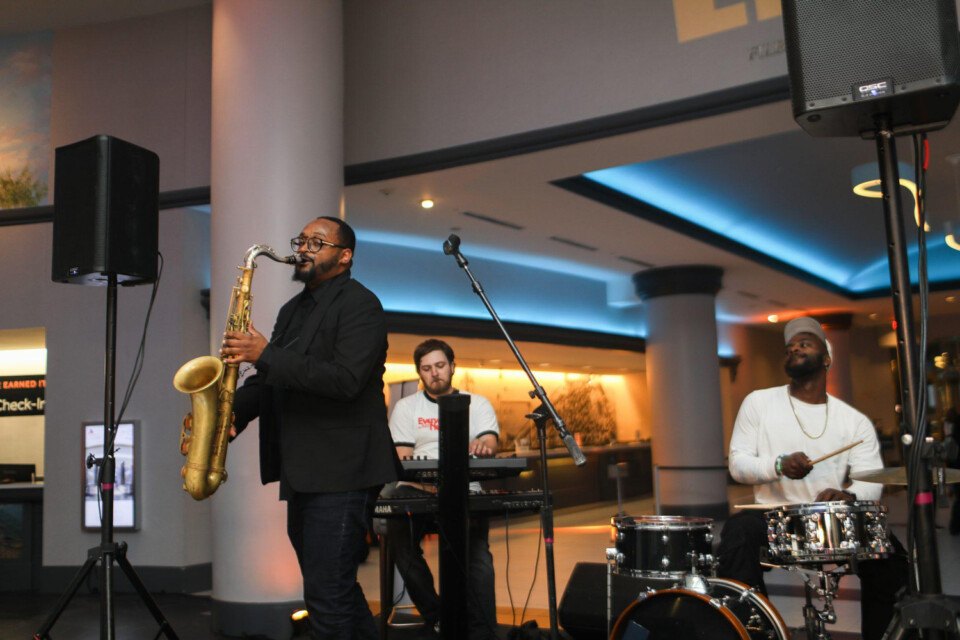
Weeknights Live / Photograph courtesy of Creative Philadelphia
In Philly, it’s not hard to draw a crowd at the restaurants, bars and clubs on the weekends, but some of the other nights could use a boost.
That’s the idea behind the Weeknights Live program recently launched by the Department of Commerce’s Nighttime Economy Unit, which foots the bill for live music performances on Mondays, Tuesdays, and Wednesdays. According to the 2025 Philadelphia After Dark report, those are the city’s weakest nights economically. I asked department director Emeka Anusionwu if we could blame this on Gen Z somehow. He said no.
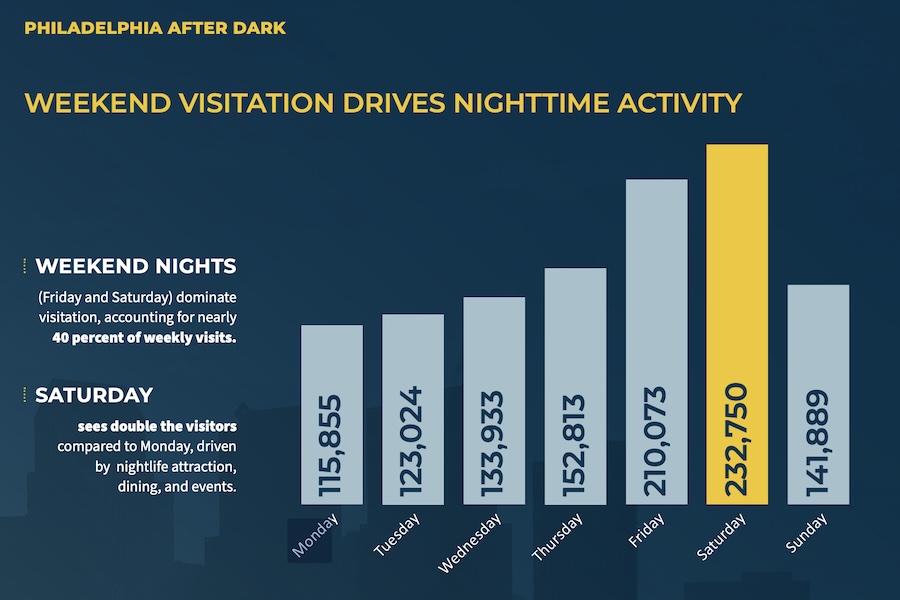
According to the 2025 Philly After Dark report, Mondays, Tuesdays and Wednesdays are the city’s weakest economically.
“We just want to give the earlier part of the week some light to shine, and also invigorate our corridors,” says Anusionwu. He’s referring to the East Passyunk Avenue and Baltimore Avenue commercial corridors, which will host live music on Mondays and Wednesdays respectively all year long. This is in addition to the city’s Tuesday night series at Center City hotels, which began in December.
“[After] the success of Tuesday Nights Live, we were like, oh, we need to bring this to more sections of the city. And we want to give more artists opportunities to get those wages and build their network,” he says. “So these are performance grants. They are strictly to drive traffic to these venues, and support the artists with paid performances.”
All told, the series calls for a reported $1 million investment in local music — one that aims to lead to increased business in certain neighborhoods and increase revenue for musicians.
“When you’re participating, you do have to submit a W-9 you do have to submit an ACH form,” says Anusionwu. He sees the program getting artists used to handling legal documents while growing their audience and earnings. “Later on, we’re also thinking about doing a financial literacy workshop for these artists.”
While the artists will need to apply for the program through the Nighttime Economy department, the individual bars, restaurants and hotels will pick the performers — not the city. (So far the participating venues have been somewhat lax in updating their social media and web sites with specific show info, but this is only week three.) All shows start at 6 p.m. and are free to attend.
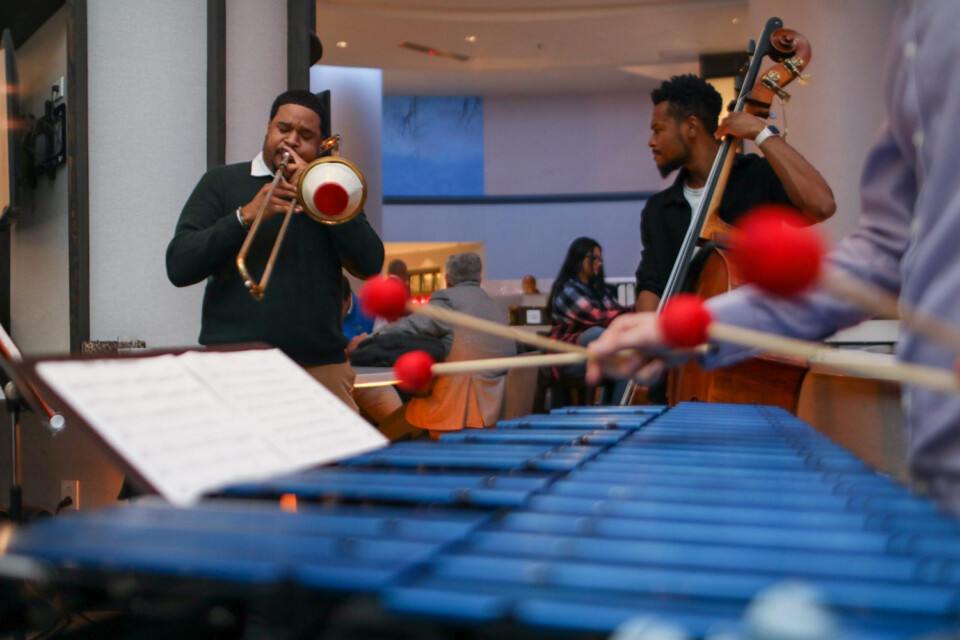
Weeknights Live / Photograph courtesy of Creative Philadelphia
Here’s where and when to go:
Mondays: East Passyunk Avenue
- Pistolas del Sur, 1934 East Passyunk Avenue.
- Ray’s Happy Birthday Bar, 1200 East Passyunk Avenue.
- Stogie Joe’s Tavern, 1803 East Passyunk Avenue.
- Lucky 13 Pub, 1820 South 13th Street.
Tuesdays: Center City
- The Philadelphia Marriott Downtown, 1201 Market Street.
- The Notary Hotel Philadelphia: Autograph Collection, 21 North Juniper Street.
- Canopy by Hilton Philadelphia Center City Hotel, 1180 Ludlow Street.
- Aloft Philadelphia Downtown, 101 North Broad Street.
- Loews Philadelphia Hotel, 1200 Market Street.
Wednesdays: Baltimore Avenue
- Carbon Copy, 701 South 50th Street.
- Renata’s Kitchen, 3940 Baltimore Avenue.
- Dahlak, 4708 Baltimore Avenue.
- Booker’s Restaurant & Bar, 5021 Baltimore Avenue.
New “These Truths“ Exhibit Dives Deep Into the Declaration of Independence
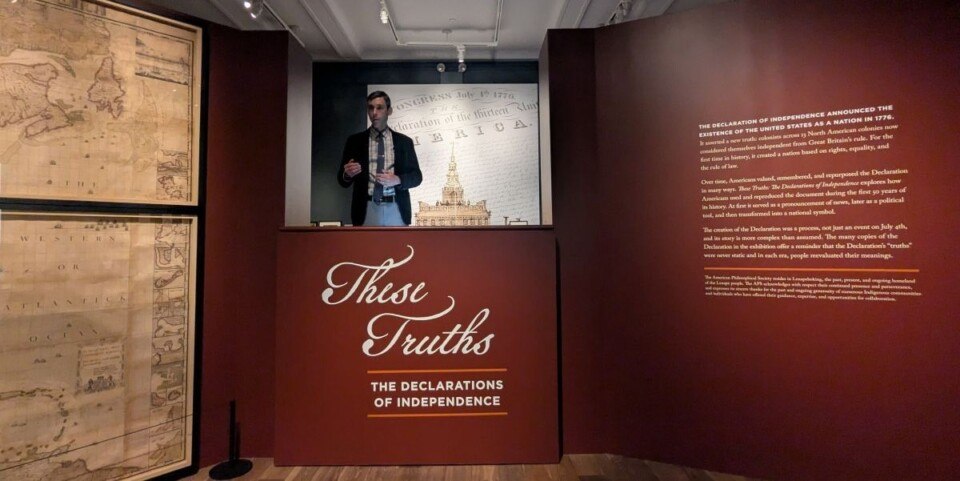
A new exhibit at the American Philosophical Society Museum examines the first 50 years of the most revered document in our nation’s history and how we feel about it today.
Event Recap: The Man Who Paid for America
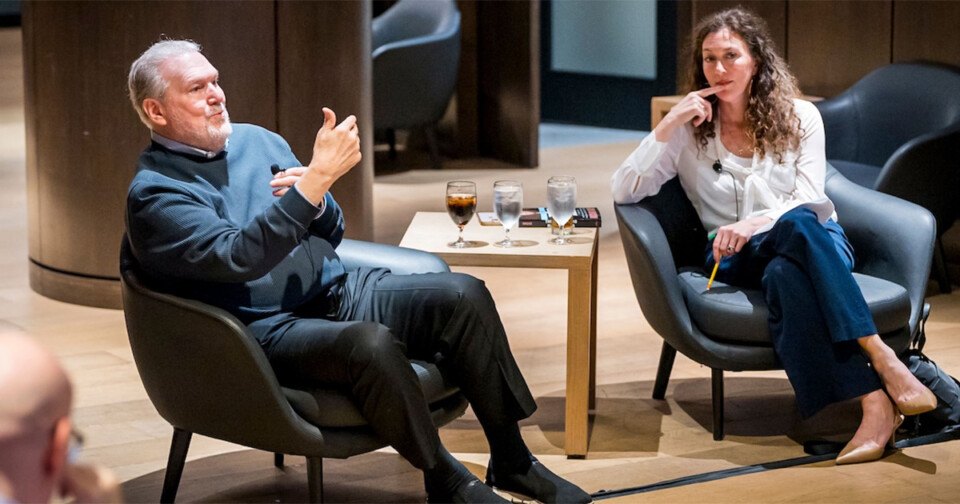
What we learned from author, businessman and Citizen supporter Richard Vague about Thomas Willing, America’s first banker
Where Philly’s 2026 James Beard Nominees Like to Eat (and Drink)
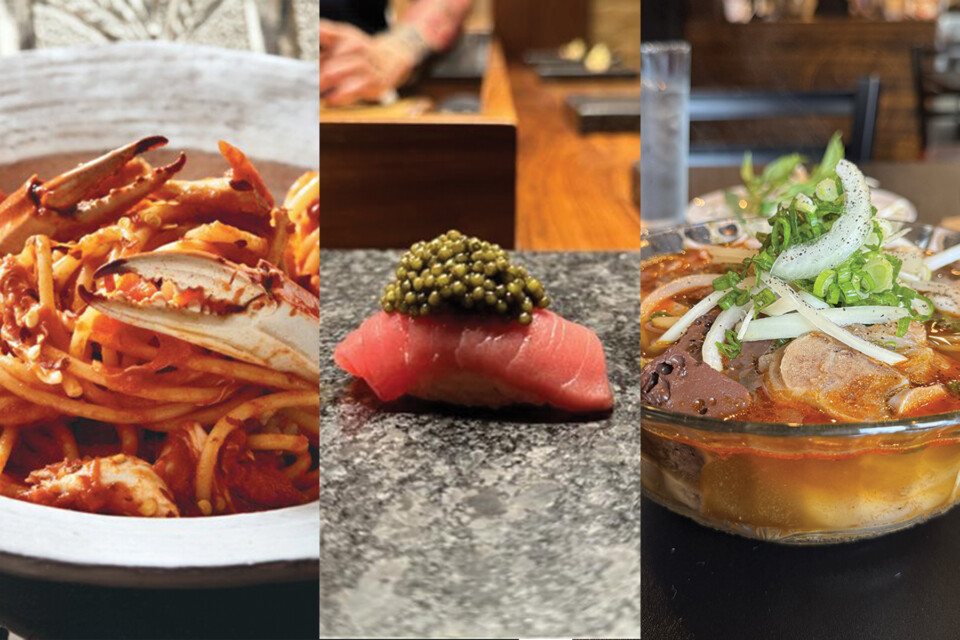
From left: Crab pasta from Palizzi Social Club; sushi from Royal Sushi & Izakaya; bún bò huế from Cafe Nhan. / Photography copyright © 2019 by Trevor Dixon. Dinner at the Club by Joey Baldino and Adam Erace, Running Press, and Kae Lani Palmisano
When the James Beard Award nominees for 2026 were announced, Philly had a strong showing with eight finalists making the cut. It’s no surprise, in a city where the food and drink scene is booming and the list of new places to try is ever-growing.
Because I’m always looking for yet another restaurant or bar recommendation — and because chefs and bartenders at the top of their game are, in my opinion, the best people to ask for one — I turned to this year’s James Beard nominees to find out where they’re going to eat and drink, and what they’re ordering.
From a Bella Vista bar pouring a house-made Portuguese liqueur to a Fishtown diner slinging the best blueberry pancakes around, here’s where Philly’s 2026 nominees are dining and sipping on repeat.
Jesse Ito, Royal Sushi & Izakaya: Finalist for Best Chef, Mid-Atlantic
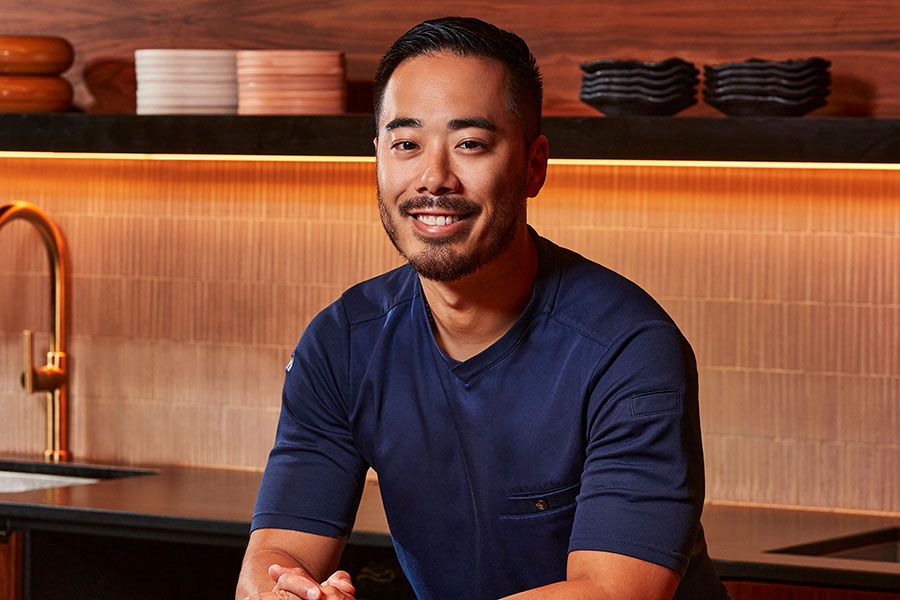
Royal Sushi & Izakaya owner Jesse Ito / Photograph by Casey Robinson
Kalaya, Fishtown
Whenever Ito eats at Kalaya — a James Beard nominee for Outstanding Restaurant — there has to be gui chai on the table. “I love everything there, but the gui chai is my favorite thing,” the chef says. The garlic-chive rice cakes come served with a spicy-sweet soy sauce and make a lovely crispy, chewy appetizer at the start of a meal at Nok Suntaranon’s Fishtown restaurant. Off the drinks menu, Ito likes to order the tom kha colada, a zero-proof spin on a piña colada that combines turmeric-spiced coconut cream with lime leaf, galangal, and pineapple. 4 West Palmer Street.
Pho 75, East Passyunk
Pho 75 has been one of Ito’s favorite places to start the day in Philly for years. And his go-to order has stayed the same: pho with fatty brisket and tendon, and a side of flank steak and vinegar onions. “I go to Pho 75 almost every week,” he says. 1122 Washington Avenue.
Palizzi Social Club, East Passyunk
Ito has been a regular at Palizzi Social Club for years, and finds himself there a couple of times a month. “I go to Palizzi pretty often,” he says of the exclusive bar. While memberships aren’t easy to get, if you have one — or know a member who’ll take you — and want to order like Ito, get the Caesar salad, crab spaghetti, and chicken cutlet. 1408 South 12th Street.
Friday Saturday Sunday, Rittenhouse
For Ito, Chad and Hanna Williams’s acclaimed restaurant — which won the James Beard Award for Outstanding Restaurant in 2023 — is a neighborhood spot. So when the chef goes there for dinner, he’ll usually pull up a seat at the counter and order from the à la carte menu. He’s a fan of the restaurant’s New York strip steak in particular and calls it “one of the best steaks in the city.” 261 South 21st Street.
My Loup, Rittenhouse
Alex Kemp and fellow James Beard nominee Amanda Shulman’s French-inspired restaurant is another neighborhood favorite of Ito’s. While the menu changes weekly, the chef loves to order the pickled shrimp with aioli and saltines from the raw section. While you can’t go wrong with your order at My Loup, if you’re ever indecisive, you can always let the kitchen choose your adventure with the “Let Us Cook” option. For $125, diners get a nice mix of dishes, and it’s an easy way for first-timers to familiarize themselves with the restaurant’s fare. 2005 Walnut Street.
Paul MacDonald, head bartender at Friday Saturday Sunday’s The Lovers Bar: Finalist for Outstanding Bar
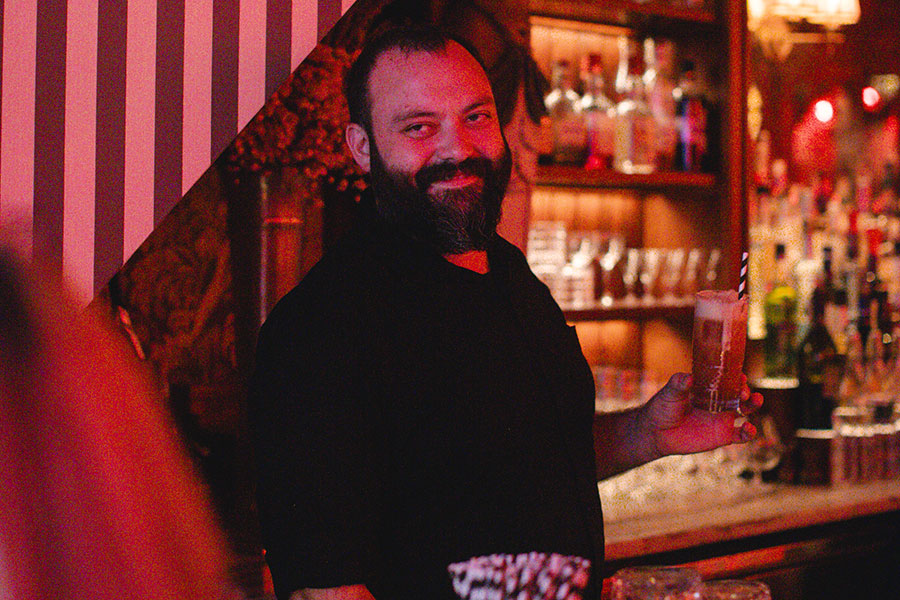
Paul MacDonald, head bartender of The Lover’s Bar / Photograph by Neal Santos
Grace & Proper, Bella Vista
MacDonald says “every neighborhood should have a bar” like Grace & Proper, a popular corner spot known for its cocktails and European cuisine. (Its bifana, braised pork loin in a garlicky white wine sauce tucked into a Portuguese roll, is a highlight.) The bar pro likes to get the house-made ginjinha — a Portuguese sour cherry liqueur made with morello cherries, sugar, brandy, and red wine — and says it’s “an absolute must” if you’re there. 941 South 8th Street.
Vernick Fish, Center City
Vernick Fish’s cocktail program is one of MacDonald’s favorites in the city. “I’ve always loved their cocktails there,” the head bartender at The Lovers Bar says. If you have to order one drink, MacDonald says to make it the Southampton Iced Tea — a clarified Long Island iced tea. “It’s a hilarious concept and incredibly well executed,” he says. “It’s the only version of a Long Island iced tea you’ll ever hear me recommend.” 1 North 19th Street.
Andra Hem, Rittenhouse
When MacDonald and his wife want to get cocktails on a date, they’ll go to Andra Hem. The dimly lit cocktail lounge has a laid-back yet luxe Scandinavian vibe, and it’s somewhat unassuming. That’s what makes it the perfect place if you’re looking for “a low-key, comfortable atmosphere that’s not rowdy” and quiet enough that you don’t have to shout at the person you’re there with to be heard. 218 South 16th Street.
Almanac, Old City
Almanac — a semifinalist for this year’s Best New Bar accolade — might be the ultimate bartender’s bar. The Japanese American cocktail lounge above Ogawa Sushi & Kappo offers “a detail-oriented experience” that’s all about the art of making an excellent drink, MacDonald says. Helmed by lead bartender Rob Scott and James Beard Award winner Danny Childs of Slow Drinks, the bar specializes in elevated cocktails made with locally sourced ingredients. “It’s an approach that Philadelphia hasn’t really seen yet,” MacDonald says. “They also do a really good job at shining a spotlight on specific ingredients and specific flavor profiles.” While the seasonal menu is always changing, you can expect classic cocktails that have been thoughtfully revisited and infused with Japanese spirits, such as an Old Fashioned and variations on a martini — including one made with matcha. 310 Market Street.
a.kitchen and a.bar, Rittenhouse
Whenever MacDonald finds himself at a.kitchen for lunch — which he estimates is “a solid 90 percent of the time” — the head bartender likes to order a glass of wine from the restaurant’s “spectacular selection.” He also frequents a.bar next door for its inventive cocktail list. 135 South 18th Street; 1737 Walnut Street.
Palizzi Social Club, East Passyunk
As a dad with a busy schedule, MacDonald doesn’t make it to Palizzi Social Club as often as he’d like these days — but when the bartender used to live in South Philly, he was a regular. He’d go there whenever he got off a shift early to order the lamb chops, a Caesar salad (also a favorite of Ito’s), drink some Lambrusco, and hang out. “It was always a nice communal neighborhood experience,” MacDonald says, adding that it’s rare to go to Palizzi and not run into someone you know. “You’re always going to know a bunch of people at the bar,” he says. “It’s a very kind of vibrant community hub for that neighborhood and for the restaurant industry as well, especially late at night.” 1408 South 12th Street.
Justine MacNeil, Fiore: Finalist for Outstanding Pastry Chef
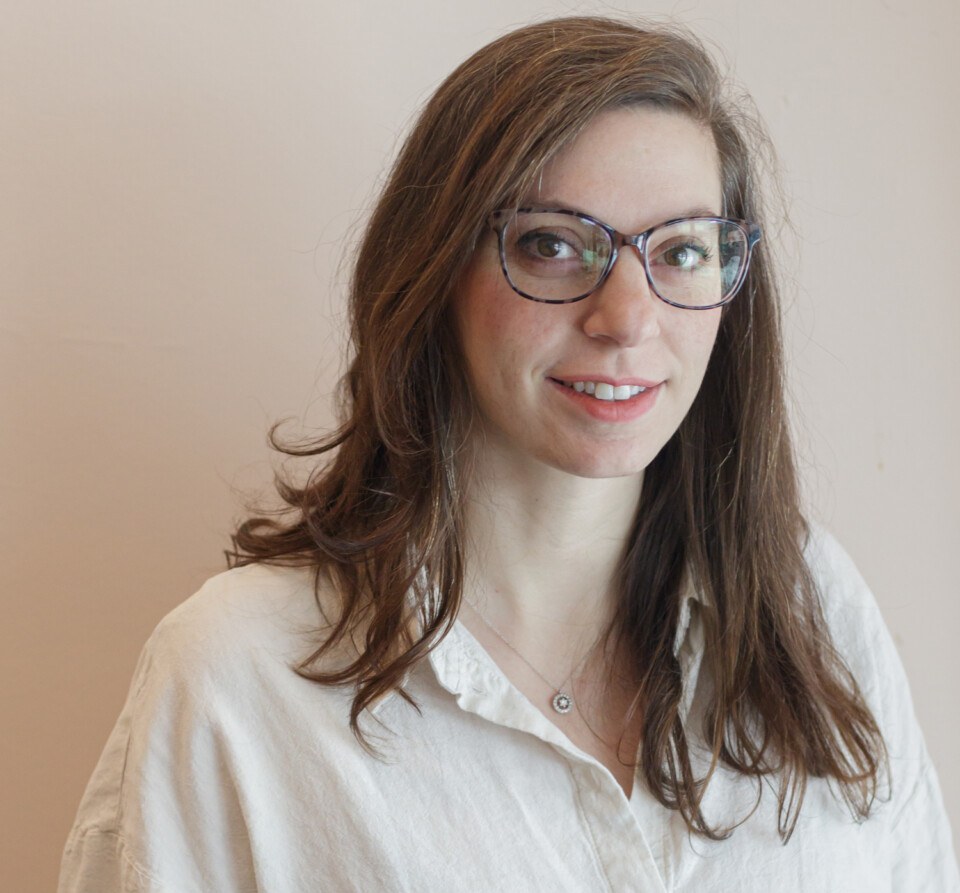
Justine MacNeil, Fiore / Photograph by Karélia Forlenza
Kalaya, Fishtown
For MacNeil, the gui chai (also Ito’s top menu item) are a must-order when she’s at Kalaya. “I love sharing these with my toddler, Roman,” she says. “They’re sticky, crunchy, and savory — the perfect bite.” The gai yaang naa por — charcoal-grilled half chicken, glazed with coconut cream, turmeric, and dark soy and fish sauces, served with sticky rice and crudités — is another dish that’s special to MacNeil. “I had this dish on our first visit and it solidified why live fire and meat are a perfect match,” she says. “It’s complex with a touch of smokiness and crowd-pleasing without sacrificing its heart.” 4 West Palmer Street.
Sulimay’s, Fishtown
The pastry chef — who is originally from Jackson, New Jersey — says Sulimay’s is the restaurant she’s visited the most since she moved to Philly nine years ago from New York City. “Nothing makes my Jersey heart happier than breakfast at a diner and Sulimay’s is the most proper iteration of a diner breakfast,” she says. “Get the blueberry pancakes and you’ll be ruined for pancakes forever more.” Occasionally, she goes back for dinner, too. “Legit, don’t skip on burger night,” she says. “That Big Mick: incredible.” 632 East Girard Avenue.
The Kettle Black, Northern Liberties
It’s a special treat when MacNeil gets to go to The Kettle Black, since the microbakery is open during the same hours as Fiore. “Everything they make is with craftsmanship, care, and a ton of flavor,” she says. “Their bagels are exceptional. Not to be missed.” 631 North Second Street.
Mighty Bread, East Passyunk
When she’s at Mighty Bread, MacNeil orders the simplest, but perhaps best, option on the menu: bread and butter. “They give you a few slices of three to four types of bread and salted butter and seasonal jam,” she says. “What more do you need from a fabulous bread bakery than to sit there and eat the freshest slice of the freshest bread slathered in cool butter and tangy jam? Nothing more at all.” 1211 Gerritt Street.
Kim’s Restaurant, North Philly
MacNeil says the food at this Korean barbecue destination, which has been in North Philly for 40-plus years, is “magic.” While the meat dishes — which get cooked tableside on charcoal grills — are particularly popular, the pastry chef’s favorite menu is the watercress salad. “There’s something particularly special about their watercress salad, which is part of their banchan,” she says. The food at Kim’s is also a hit with her kids. “Last time we went with two four-year-olds, and I’ve never seen those kids eat more food in my life.” 5955 North 5th Street.
EMei, Chinatown
“EMei has been our staple pick-me-up food whenever things are tough or we are exhausted and just need a break from cooking,” MacNeil says of the popular Chinatown spot. “You can’t go wrong here, but I especially love the homemade dumplings in hot oil, and the stir-fry pork slices with hot peppers. Smoky, tender, savory, and delicious.” 915 Arch Street.
Amanda Shulman, Her Place Supper Club: Finalist for Best Chef, Mid-Atlantic
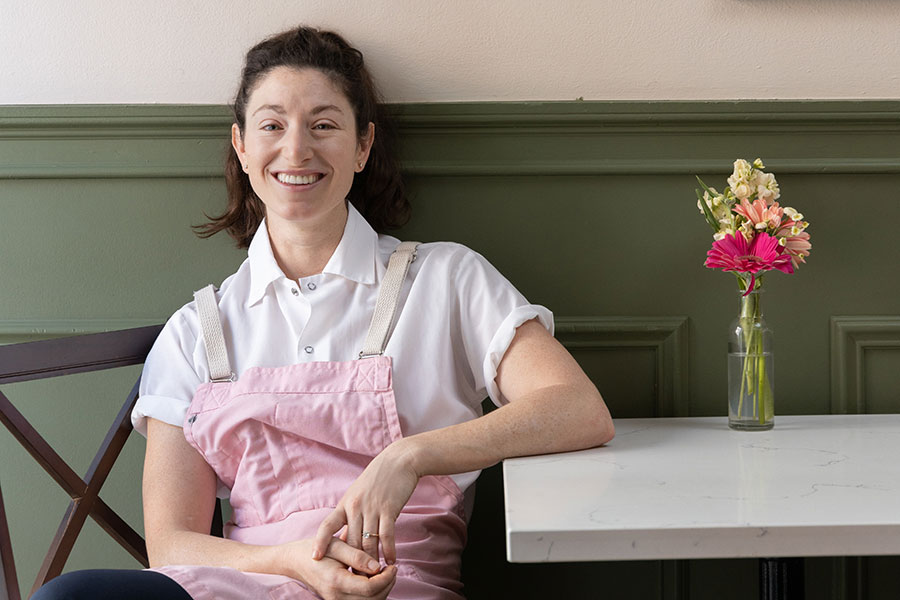
Her Place Supper Club owner Amanda Shulman / Photograph by Michael Branscom
Gilda, Fishtown
“I wish this was in my neighborhood,” says Shulman whenever she walks into Gilda. And while the Portuguese-inspired cafe may be known for its pastéis de nata, that’s not the only reason the chef visits. For Shulman, Gilda’s breakfast sandwich, The Antonio, is the main event. “It’s so perfect,” she says of the sandwich, which is made with a Portuguese roll and filled with a fried egg, cheese, linguiça sausage, and breakfast sauce. “It’s squishy, it’s salty,” she adds. “Oh, it’s fabulous.” 300 East Girard Avenue.
Kim’s Restaurant, North Philly
“Kim’s is probably our favorite restaurant to eat at,” Shulman says, adding that she and her husband and fellow chef-owner of My Loup, Alex Kemp, make the trip to North Philly when they want “food that is perfect and balanced and seasoned and amazing.” Shulman likes to order the skirt steak (off the not-so-secret secret menu) as well as the hanger steak, kimchi pancakes, and watercress salad (also a favorite of MacNeil’s). 5955 North 5th Street.
Cafe Nhan, South Philly
“Cafe Nhan is one of the places I frequent most,” Shulman says. “Their spicy soups are super soul-reviving, and every time I go there, they just totally make me feel at home.” The chef says she went often during her pregnancy and has since returned with her daughter. Her usual order is the bún bò hûe dac biet, Cafe Nhan’s specialty made with beef brisket, pig feet, steamed pork roll, and house-made pig’s blood cubes with a spicy lemongrass broth. “It’s such a warm and welcoming place,” she says of the restaurant. “It’s also just insanely delicious.” 1606 West Passyunk Avenue.
High Street, Center City
Ellen Yin’s High Street is one of Shulman’s go-tos when she has friends and family in town. The modern American restaurant is a crowd-pleaser, with menus built around seasonal ingredients and local grains. It also offers plenty of choices, from sandwiches and salads to sourdough pizzas and house-made pastas, plus a few larger plates at dinnertime. “They do such an amazing job,” Shulman says of the restaurant. “Chef Christina [McKeough] is really talented.” Shulman visits the restaurant most often for brunch and lunch, and it’s the bread that keeps her coming back. “The breads there just make me feel like I don’t even know anything about bread every time I eat them,” she says. 101 South 9th Street.
Mayflower Bakery & Cafe, Chinatown
Mayflower Cafe & Bakery is known for making some of the best Hong Kong-style buns and pastries in the city. The bakery’s coconut bun is especially popular, and it’s one of Shulman’s must-order items as well. “Their coconut butter bun and their roast pork bun are the biggest treats,” the chef says. Mayflower’s pineapple buns and egg tarts are also a hit with customers, and on the drinks menu, you can’t go wrong with an iced milk tea. Just remember to bring cash or have Venmo ready to pay. 1008 Race Street.
Osteria, Spring Garden
If Shulman had to order just one thing from Osteria, it would be the rigatoni with chicken liver, cipollini onion, and sage. “It’s probably their most famous dish, and for perfect reason,” she says. But Shulman would happily eat any of the pasta at Osteria. “Jeff Michaud makes simple, delicious, and classic pasta,” she says of the James Beard Award-winning chef at the helm of the restaurant, which opened in 2007. “Even though it’s been there for so long, it’s still that good,” Shulman says. “It feels like a restaurant that is classic and timeless, and it’s really inspiring for those reasons.” To end a meal there, Shulman recommends ordering some gelati or sorbetti. 640 North Broad Street.
Zeppoli, Collingswood
Shulman doesn’t make it out to Joey Baldino’s Zeppoli too often, but the pasta there is so good that she says a visit to the New Jersey restaurant is “definitely worth the trip.” The Italian BYOB, which has an emphasis on Sicilian cuisine, has the “most delicious pasta,” the chef adds. While there’s more to the menu at Zeppoli — including larger plates like a Sicilian fisherman stew — a particular standout in the pasta section is the tagliatelle al limone, made with handmade pasta and topped with bottarga or prosciutto (but trust me, you want to get the bottarga). 618 Collings Avenue.
Bomb Bomb Bar, South Philly
Shulman has long been a fan of Baldino’s Palizzi Social Club and the aforementioned Zeppoli. So, naturally, she’s blown away (pun intended) by his latest venture, Bomb Bomb Bar, the South Philly corner bar and Italian seafood grill that Baldino took over from third-generation owners Frank and Deb Barbato. “I dream of the frozen split drink and the most flavorful crab I’ve had in recent memory,” she says. “Nothing tries too hard but everything is thoughtful and fantastic. They are absolutely killing it and making beautiful and unpretentious food that everyone wants to eat.” 1026 Wolf Street.
Dizengoff, Rittenhouse
For a reliably delicious lunch, Shulman heads to Michael Solomonov’s all-day spot Dizengoff. “As we all know, the hummus is otherworldly,” she says. “Getting a hummus platter with whatever topping they have and a sabich platter [fried eggplant, haminado egg, chopped salad, sumac onions, and tehina] is a dream lunch.” 1625 Sansom Street.
Royal Sushi & Izakaya, Queen Village
Shulman also likes to eat at fellow James Beard nominee Jesse Ito’s Royal Sushi & Izakaya. Whenever she’s there, the chef will order a smattering of dishes and always makes sure the spinach gomaae, a cold salad made with baby spinach and black sesame sauce, is among them. 780 South 2nd Street.
Evan Snyder, Emmett: Finalist for Best New Restaurant
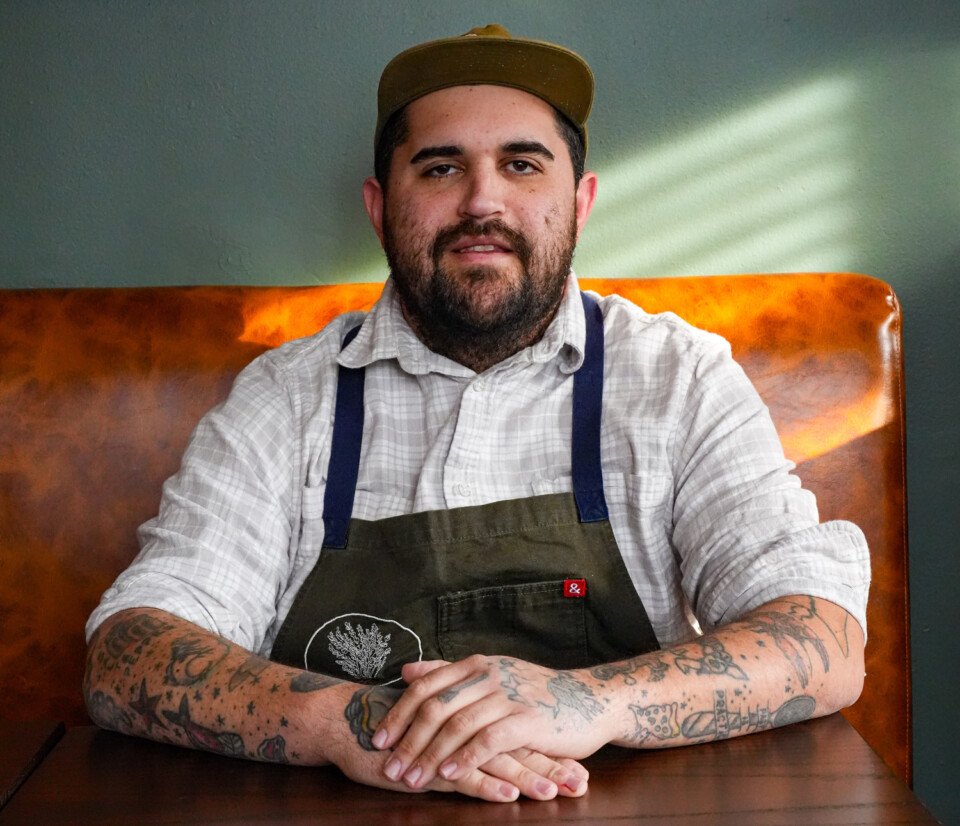
Chef Evan Snyder, Emmett / Photograph by Mike Prince
Del Rossi’s Cheesesteak & Pizza Co., Northern Liberties
When Snyder is in the mood for a cheesesteak, he’ll go to the Michelin Bib Gourmand spot Del Rossi’s. He orders his sandwich piled high with extra fried onions and some melty Cooper sharp, and gets a Brooklyn-style square pizza, made with a thin crust, homemade plum tomato sauce, Parmesan and mozzarella cheese, fresh basil, and olive oil. 538 North 4th Street.
Ember & Ash, East Passyunk
If he’s in East Passyunk, Snyder will pop into Ember & Ash for Scott Calhoun’s wood-fired cuisine. But one of Snyder’s current favorites on the menu — the tuna crudo dressed with blood orange and pickled onion — barely touches the flames (the citrus in the dish gets grilled, then juiced, but everything else stays out of the heat). He’ll also go for the lamb ribs, rubbed in sumac, slow-smoked over the fire, coated in a cherry vinegar glaze, and sprinkled with chives. 1520 East Passyunk Avenue.
Pietramala, Northern Liberties
For a stellar, plant-based dinner, Snyder will go to Michelin Green Star-awarded Pietramala. While the restaurant’s menu changes often, according to which ingredients are available, the Emmett chef likes to order the cremini carpaccio, a beautiful plate of thin-sliced mushrooms doused in olive oil, a house-made black trumpet tamari, and Meyer lemon, and adorned with raw pine nuts. He’s also partial to the maratelli rice risotto, currently served with white asparagus and tomato tamari. 614 North 2nd Street.
Nok Suntaranon, Kalaya: Finalist for Outstanding Restaurant

Nok Suntaranon, Kalaya / Photograph by Michael Persico
Machine Shop, South Philly
In the mornings, Suntaranon often heads to the Bok Building’s Machine Shop for Emily Riddell’s pastries made with local grains and seasonal produce sourced from farms just outside of the city. “I love her stuff,” the chef says. She recommends ordering “everything” at the viennoisserie, with highlights including the canelé, sandwiches, and cookies. 1901 South 9th Street.
Fiore, Kensington
For lunch, Suntaranon will tuck into a bowl of pasta and some salad at Ed Crochet and James Beard-nominee Justine MacNeil’s Italian-inspired cafe. Sometimes, Crochet will make her something special. “Last time I went there, he made me ragù with homemade pasta,” Suntaranon says, referring to an off-menu dish made with Sardinian gnocchi (semolina dough with saffron) and a pork-sausage sauce. As for dessert, the Kalaya chef says MacNeil’s “pastry is one of a kind.” Right now, her favorite treat is the torta alla pistacchio, made with pistachio flour, apricot jam, ganache, and crystallized pistachios. 2413 Frankford Avenue.
Pizzeria Beddia, Fishtown
Suntaranon admits she’s not typically much of a pizza person, but on her way home from work, she’ll occasionally pick up a pie from Joe Beddia’s popular Fishtown pizzeria. “My husband loves cold pizza,” she says, making it the perfect place to grab dinner and let it cool off on the drive home. Their favorite is an arrabbiata pizza with anchovies and red onion. 1313 North Lee Street.
Pizzeria Stella, Queen Village
Closer to home, Suntaranon likes to go to Pizzeria Stella in Headhouse Square for their wood-fired polpette, calamari fritti (with lemon, shishito peppers, and marinara), and grilled octopus (dressed with fennel, salsa verde, and chiles, and served with potato). The chef says her order there “has never changed, and it’s always good.” 420 South 2nd Street.
Royal Sushi & Izakaya, Queen Village
Suntaranon’s go-to neighborhood restaurant just so happens to be fellow James Beard finalist Jesse Ito’s Royal Sushi. “It’s just around the corner, and Jesse’s food is the best,” she says. While the omakase menu is always changing (and a seat can be hard to come by), Suntaranon is a fan of the chirashi: a lavish platter of lean and fatty tuna, king salmon, Japanese fish, tamago, and ikura-topped sushi rice that’s available in the izakaya. And the Kalaya chef’s meal there doesn’t always have to be fancy — sometimes, she’ll just eat rice heaped with uni. 780 South 2nd Street.
Pho 75, East Passyunk
Go out to eat at Pho 75 and there’s a strong chance you’ll spot another chef. The Vietnamese institution is popular with many in the local food industry, so it’s no surprise that it’s also one of Suntaranon’s (and Ito’s) favorite places for a steaming bowl of pho. Suntaranon likes to order her soup with meatballs, tendon, tripe, and steak slices. 1122 Washington Avenue.
Cafe Nhan, South Philly
At another chef-beloved Vietnamese spot, Cafe Nhan — also one of nominee Amanda Shulman’s picks — Suntaranon will get the bún riêu, a tomato-based soup with shrimp, pork, and crab meatballs, plus tofu, pig feet, and blood cubes, plus the chả giò (spring rolls stuffed with minced shrimp and pork), and the popular chicken wings, dusted in a house spice mix and deep-fried to crispy perfection. 1606 West Passyunk Avenue.
Omar Tate and Cybille St. Aude-Tate, Honeysuckle: Finalists for Best Chef, Mid-Atlantic
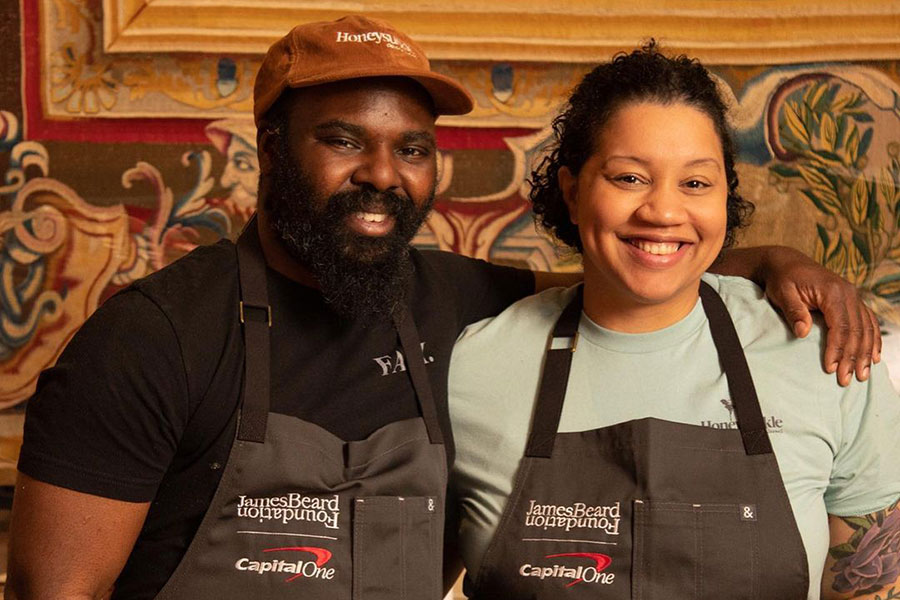
Omar Tate and Cybille St.Aude-Tate of Honeysuckle / Photograph courtesy of Honeysuckle
The Daily, West Poplar
Before they get to work, the Honeysuckle duo likes to start the morning at the Daily, a cafe inside the historic Divine Lorraine Hotel. They go for the consistently good coffee, what they call the “legendary” bacon, egg, and cheese — made with Nueske’s bacon, fluffy eggs, and American cheese, served on a Martin’s sesame bun — and the friendly service. 699 North Broad Street.
Bomb Bomb Bar, South Philly
“When we need a date night we know we can count on Bomb Bomb Bar for a good time,” St. Aude-Tate says of the classic Italian-American spot (also a favorite of Shulman’s). The food from chef de cuisine Max Hachey is “delicious and comforting.” While the whole menu is “remarkable,” her favorites include the shrimp oreganata and calamari with cherry peppers. But it’s not just the food that impresses: The service is “warm and inviting,” the Honeysuckle chef says, adding that she and Tate often run into people they know. “It feels like home away from home.” 1026 Wolf Street.
Local 44, University City
Another of their favorite haunts is Local 44. Tate’s go-to order at the neighborhood bar is the cheeseburger, made with pickles, American cheese, lettuce, and barbecue-thousand island sauce; St. Aude-Tate opts for the buffalo wings. She also enjoys frequenting the bar’s bottle shop, where you can find beer from local breweries like Attic Brewing Company and Love City Brewing, wine from places like Pray Tell and Mural City, as well as vermouth and amaro from Fell to Earth. “They have many of my favorite producers and such a fun and expressive inventory,” she says.” 4333 Spruce Street.
Manong, Fairmount
Manong isn’t just a hit with the Honeysuckle chefs — the Filipino American grillhouse Manong from chef Chance Anies has also won over their kids. “They absolutely love the Ninja Turtle game and energy at Manong,” Tate says. “It’s also really close to Honeysuckle and their school, so it’s perfect for fun meals right before we head home to West Philly.” Whenever they go for dinner, they’ll order the dynamite lumpia (spring rolls with a pork, jalapeño, and mozzarella filling, served with sweet chili sauce), the chicken inasal (half chicken, soy, calamansi, lemongrass, annatto, butter, Chinese broccoli), and lechon liempo (crispy pork belly with a chicken liver-based sauce). 1833 Fairmount Avenue.