Thinking About Starting Hormone Therapy for Menopause? Here’s What You Need to Know
Main Line OB-GYN Kim Einhorn explains everything MHT — who can take it, when to start it, and how to navigate the nationwide shortage of estrogen patches.
After years of being misunderstood and deemed a sudden change women simply have to “deal with,” perimenopause and menopause are finally getting the attention — and — validation they deserve. Over the past several years, celebrities including Michelle Obama, Halle Berry, and Drew Barrymore have had candid conversations about the once-taboo topic. Legislators are pushing for workplace accommodations for those navigating peri/menopause. And last November, the FDA removed black-box warnings from what we’d always referred to as hormone replacement therapy — a treatment that replenishes the body with estrogen and progesterone, hormones women stop producing as menopause approaches — after more than two decades.
That last development is a major victory for women’s health, as hormone therapy can effectively combat hot flashes, improve sleep and mood, and even help prevent osteoporosis. The treatment has been around for decades, but has had a rocky history: It was widely prescribed from the 1960s through 1990s before usage came to an abrupt halt in 2002, when the Women’s Health Initiative published findings suggesting that hormone therapy increased the risk of breast cancer, heart disease, stroke, and blood clots.
The findings caused widespread panic: Prescription rates plummeted. Doctors were advised to prescribe the lowest possible dose for the shortest possible time. And the FDA required black-box warnings — its strongest safety label, reserved for drugs that can cause severe harm, hospitalization, or death — on all estrogen and progesterone products.
But the study had significant flaws. Its participants averaged 63 years old, well beyond the typical age of menopause, which usually occurs between 45 to 55 — and whose age made them more vulnerable to the diseases that were red-flagged. It also evaluated only one form of hormone therapy — a daily pill — using “preparations and methods of hormone administration that have largely been replaced with more effective options,” according to Yale School of Medicine.
Today, with the science better understood and the FDA’s warning label removed, more women might feel empowered not only to talk about their symptoms, but to seek relief from them. To learn all about hormone treatment — from who should consider it to when to start it to how to navigate the nationwide shortage of estrogen patches — we spoke with Kim Einhorn, a board-certified OB-GYN who has been practicing for 20 years and who, last year, opened the MP Collective, a concierge medicine service in Bryn Mawr dedicated to women in perimenopause and menopause.
Hi, Dr. Einhorn! With the recent shift in perceptions about peri/menopause, have you found that more women are asking about hormone replacement therapy?
So, it used to be called hormone replacement therapy — many people still say “HRT” — but the preferred nomenclature is now menopause hormone therapy, or MHT. That’s because we’re not looking to get hormones back to pre-menopause levels, like those of someone in their 20s — that would be too high, unsafe, and not the point. We’re looking to relieve menopause symptoms, which usually takes much lower doses of hormones.
Okay, MHT — got it!
But yes, more patients are coming in [to my practice] asking for it. They hear about hormone therapy all over social media, and they have friends who feel so much better after taking it. It’s just not a taboo subject anymore, and I think women are finally getting the help they need. It’s a great step forward.
What does MHT do exactly?
As a woman ages, her ovaries start losing the ability to produce estrogen. In menopause, hormones are steadily low, but in perimenopause, they’re are all over the place — they can fluctuate dramatically, with estrogen often spiking higher than it has ever been. Hormone therapy — or providing the body with some estrogen and progesterone — can provide a bit of a buffer, so that the highs and the lows aren’t felt as dramatically, and mood and sleep can become more even-keeled.
Is it safe?
Most women can take it safely and, truthfully, shouldn’t be denied it by their doctors. The results of that WHI study were misinterpreted, and women suffered because of it. Everyone became scared of hormone therapy — doctors stopped prescribing it, and we spent more than 20 years with a lack of physician education about MHT. A few years ago, when I would suggest hormone therapy to a patient, the typical reaction I got was, “This is going to give me breast cancer.” Nothing I could do, come hell or high water, would convince them it was safe enough.
Fortunately, that’s changing. The only conditions that would preclude someone from being on MHT are a history of a blood clot that was caused by hormones — due to birth control or during pregnancy. I’m talking deep-vein thrombosis or a pulmonary embolism. We also avoid hormone therapy for anyone who has had a heart attack or stroke. And current guidelines say that if you’ve had a history of breast cancer, you should not be on hormone therapy, though that’s an evolving area of interest and those guidelines may change.
It’s not risk-free, though, right?
MHT isn’t a nothing drug, and touting it as the fountain of youth and longevity is irresponsible, even though reducing the risk of osteoporosis is a huge long-term health benefit.
A recent meta-analysis of over 83,000 women found a higher frequency of heart attacks, stroke, blood clots, and all cancers for women over 65 who are on hormone therapy. Part of this is because women in that age bracket already have increased risk of those incidents, so older women should proceed with caution.
There are still risks for women who start MHT in their late 40s or early 50s. Anytime you take estrogen, you’re increasing your risk of blood clots, mainly if you take an oral estrogen. The transdermal method doesn’t seem to carry the same risk because it bypasses the liver metabolism, where clotting factors are made. There’s also a slightly increased risk of breast cancer the longer you use hormone therapy and the older you get. It’s very small — less than one percent — but it’s still worth noting.
Other than relief from peri/menopause symptoms, how else can MHT benefit a person’s health or lifestyle?
Estrogen can make you metabolically healthier and improve insulin sensitivity, so women on hormone therapy tend to have lower rates of diabetes. It also helps prevent osteoporosis by supporting bone growth and stopping bone breakdown. There are estrogen receptors pretty much everywhere in the body — from the brain and eyes to ligaments and tendons — so when those tissues are supported with hormone therapy, women can experience less brain fog and hot flashes, and fewer aches and pains (less frozen shoulder!). Women tend to gain less weight through the menopause transition if they’re on hormones, so that’s another perk.

Kim Einhorn (right) meeting with a patient. / Photograph courtesy of Kim Einhorn
Are there different types of MHT?
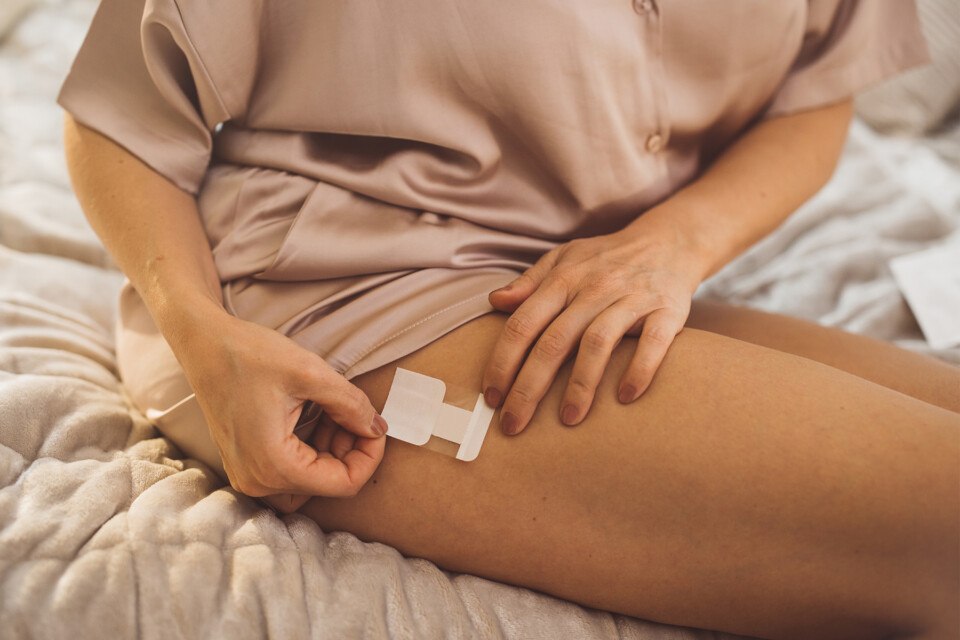
There are many different delivery methods of MHT — from pills and patches to gels, vaginal rings, and sprays — but traditionally, hormone therapy combines estrogen and progesterone. Back in the ‘60s, women often took estrogen alone; the most common medication at the time was Premarin. Over the years, we noticed several things: Menopause symptoms improved and women had a decreased risk of cardiovascular disease, but there was also an uptick in uterine cancer. That’s because estrogen makes the lining of the uterus proliferate — it’s like fertilizer for a lawn — while progesterone is the lawnmower. So, doctors moved patients from estrogen-only therapy to a combination of estrogen and progesterone, which negated the risk of uterine cancer.
We learned that a person with a uterus can’t take estrogen alone — you need something to keep the lining of the uterus thin and cancer-free. You can, however, take progesterone alone, and for some women, that might be all they need. Progesterone can improve mood and sleep, and at high enough doses, help reduce hot flashes.
What about testosterone? Is that considered part of MHT?
It’s certainly hormone therapy because testosterone is a hormone, but it’s not an obligatory part of MHT. Testosterone doesn’t take a nosedive in menopause like estrogen and progesterone do — it starts declining much earlier, when a woman is in her early to mid-20s. That’s why we start with estrogen and progesterone and give that combo a few months to work. If a patient feels good, I don’t go any further. But if she’s still suffering from low libido, I talk to her about testosterone. Transdermal testosterone gel has been shown to reliably help over 50 percent of women with libido, arousal, and orgasm.
Since the FDA’s removal of the black-box warnings, there has been a nationwide shortage in some delivery methods. Is this still a concern?
Patch shortage is worldwide and is only getting worse. There are also shortages in progesterone and vaginal estradiol cream. The other delivery methods seem to be okay. I don’t think they’re prescribed as commonly.
I’ve read that if the twice-weekly patch is not readily available, you can ask for the once-weekly patch. Is that true? What other workarounds are there?
Weekly patches are somewhat more available than twice-weekly patches, but not by much. Patients can switch to other methods, such as daily gel, daily oral pill, or the vaginal ring (Femring). They can also sign up for annual-fee memberships like The HRT Club — you pay out of pocket for prescriptions from those.
Can you be on MHT if you’re still getting your period?
Absolutely! That’s when you’re considered to be in perimenopause, when your period starts to change, and symptoms begin. Patients often ask me, “Is it time for me to be on it?” They don’t know because so many women were denied access to MHT for too long. They’re told they can’t take MHT if they’re still bleeding, and that’s simply not true. You could suffer with symptoms for seven or eight years before your periods even stop! Having a period means your ovaries are making enough estrogen to bleed. It doesn’t mean they’re making enough estrogen to let you sleep through the night or prevent hot flashes.
It’s so important to remember that you don’t have to wait until your symptoms are unbearable to start MHT. I advise my patients to start it when whatever is happening is no longer working for them. A lot of women have been conditioned not to complain, to push through the pain. We shouldn’t be doing that. It’s important that women understand that their discomfort and quality of life mean something.
What symptoms are we talking about here?
They can be the obvious ones like hot flashes, night sweats, and lack of sleep — all of which affect mood, cognition, weight, and relationships with family and friends. But you might also experience the sudden onset of panic attacks, anxiety, depression, or feeling overwhelmed by once-simple tasks. Those can be signs of perimenopause and menopause; fortunately, they’re often responsive to hormone therapy. One patient I’ve been seeing for almost a year was experiencing severe depression and suicidal thoughts. Those were linked to perimenopause, so I put her on hormone therapy. She told me it saved her life.
How long does it typically take for MHT to kick in?
I generally start the hormones one at a time so I know what’s causing the benefits — or any side effects. I usually start with progesterone first — again, you can’t safely be on estrogen alone — and progesterone seems to kick in quickly, within the first few days.
I generally keep patients on progesterone for about 10 days before adding estrogen. It takes about 12 weeks for estrogen to reach maximal efficacy, but if a patient isn’t getting enough symptom-relief by eight weeks, we reassess the dosage. I don’t like to start women on the dose that I think they’ll ultimately need because, sometimes, too much estrogen can result in breast tenderness or irritability. Often, we start with a low dose and work our way up so they’re relieved of their symptoms without feeling side effects.
With testosterone, you should notice an effect within three months. If it’s not helping your libido or whatever you’re taking it for by six months, go off it. It’s not going to work.
A lot of people are taking GLP-1 medications right now. Can you take a GLP-1 and MHT at the same time?
I prescribe a lot of GLPs, so I’ve made myself very knowledgeable about them. There are some studies coming out about women taking both GLPs and hormone therapy, and both the research and what I’ve seen first-hand indicate a synergy between the two, mainly around weight loss. Weight gained in menopause is more difficult to lose because as estrogen drops, you can become insulin resistant. Currently, there’s no contraindications for use of a GLP unless you have a family history of medullary thyroid cancer, pancreatic cancer, or some complication from being on a GLP. But generally, like hormone therapy, most people can take a GLP.
How long can a person be on hormone therapy?
For people who wish to stay on it long-term, I recommend yearly evaluations of their medical situation and overall health. Have they developed cardiac disease, liver disease, or cancer? If so, they wouldn’t continue. If they’re in good health, we’d probably lower their dose over the years because the body doesn’t need the same level of hormones over time — and we’d transition to a transdermal form to lower the risk of blood clots.
The questions doctors should be asking patients is, “Why are you on hormone therapy — and why do you want to stay on it?” If you’re using it to manage perimenopause or menopause symptoms, then you don’t need to be on it forever — those symptoms eventually go away. But if you’re taking it for a long-term health benefit, like preventing osteoporosis, then that’s something to consider. There’s no longer any guidelines that say we have to take women off MHT, so they can be on it forever if they have a reason to.