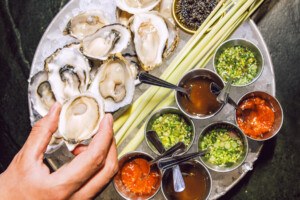
Roxanne Chef Breaks Silence After Getting Shut Down
After years of running an unlicensed restaurant, chef Alexandra Holt opens up about the crushing stress, the online hate, and her path to reopening legitimately.
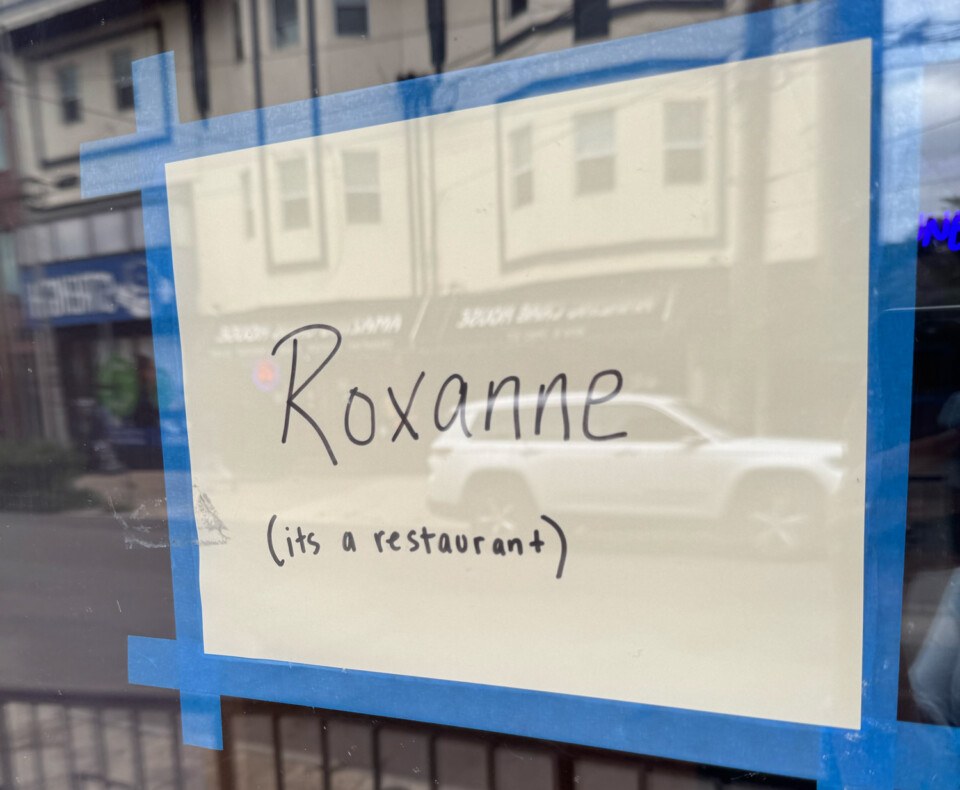
What happened with Roxanne? / Photography by Kae Lani Palmisano
Listen to the audio edition here:
For about 10 weeks this spring, one of the most talked about restaurants in the city didn’t really exist. Roxanne — the award-winning, Michelin-recommended, art-project-slash-fine-dining-restaurant from chef Alexandra Holt — was shut down by the city this past April when it was discovered that it was operating without the proper licenses and inspections. More accurately, Holt had never applied for or received a food preparation and serving license and, because of this, had never had a health inspection. For years, at both Roxanne’s first location on Christian Street and in its newer, fancier digs on Second Street in Queen Village, Holt operated off-the-books. And for years, she got away with it. Until she didn’t.
Holt doesn’t really want to talk about what happened. She’s guarded, cagey, defensive. When Roxanne was shut down, she absolutely took it in the teeth from people who were outraged by what she’d done. Most of this happened online. Most of it came from the comfortable anonymity of Reddit or social media comment threads. But she tells me that it was bad. On the one hand, there were the entirely valid concerns about restaurants operating without health and safety inspections and the run-of-the-mill worries about unlicensed food operations. But there were also threats against her, promises to burn down her house or her restaurant. The hate was visceral, personal, and she lived in the whirlwind of it for weeks while journalists (myself included) tried to figure out what had happened and how it’d all gone so far.
And for the most part, Holt talked to no one. She avoided calls, didn’t return texts. But I was annoying about it. And persistent. Because there was a part of this story which fascinated me that no one was really talking about. It was something small and personal and Holt was the only one who could explain it to me. So, when I did finally get her on the phone, I started off by telling her a story.
I told her that I’ve spent most of my life broke, or at least broke-adjacent. When I was young, I was a cook. When I grew up, I became a writer. Neither of those things are a path to comfort or financial security, so pretty much every car I’ve ever driven has been a piece of shit with one or more vital systems perpetually on the brink of mechanical collapse. This means that everywhere I go, I live with the entirely reasonable fear that when I come back to my car and put my key in the ignition, it won’t start. I worry that I’ll be stranded, stuck waiting for a tow or a lift from an understanding friend, and that sucks. It’s a grinding kind of concern that never, ever goes away.
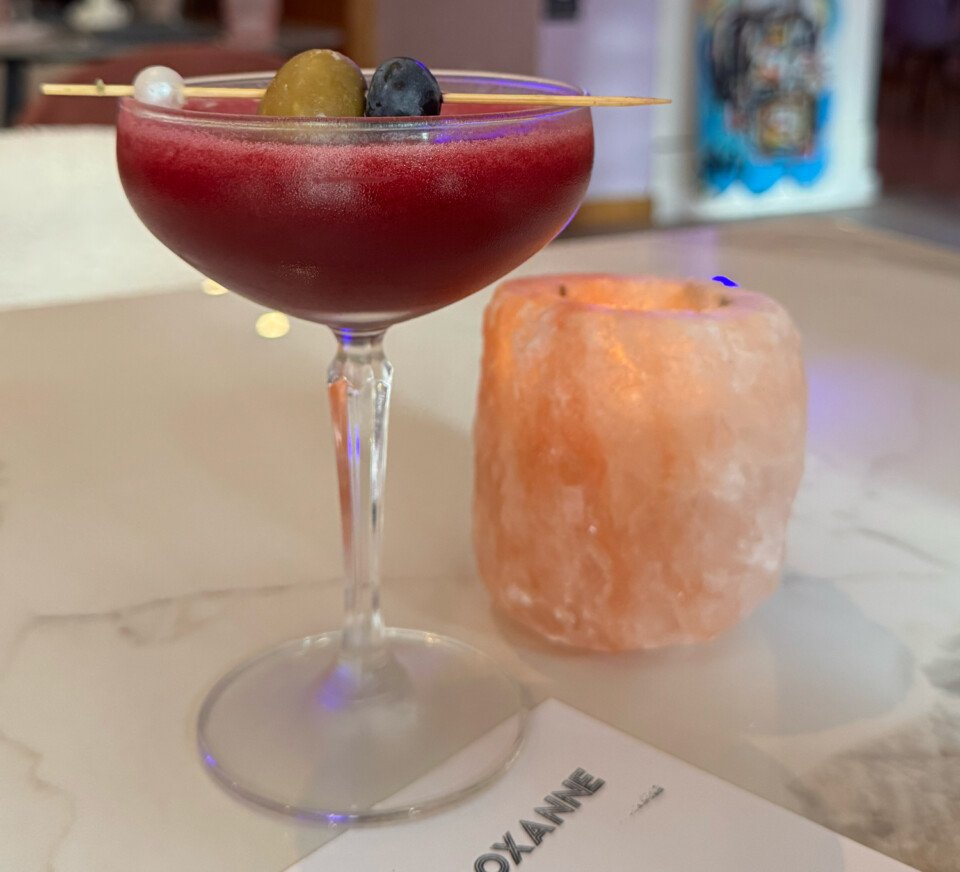
Blueberry Wine Lady cocktail at Roxanne
To me, the idea of operating a highly visible, highly regarded restaurant every day while knowing that what you’re doing is illegal and could collapse in on itself at any moment must be like that, only so much worse. That despite the awards and all the acclaim, the fear of knowing it could all come crashing down at any minute has to gnaw at your bones every day.
“I don’t disagree with anything you’ve said,” Holt told me, and when I asked her what it was like on the inside, knowing what she knew, she said, “I lived every day of my life with this overwhelming stress. It has always been about big risks. I live every day in this uncomfortable space.”
And, in context, she’s talking about a lot of things here. She’s talking about her past and how she grew up (something we discussed at length for a profile I wrote about her a couple years ago), about existing as a woman in male-dominated spaces like kitchens, about the choices she’s made to run kitchens alone with no help and no back-up. But yes, she told me. She felt it every day. Muted, sometimes, by more pressing concerns, but always there. An alarm bell that never stopped ringing.
And then for a while we talked about those early days at the original Roxanne — how it all happened on a whim, in a fog of depression and sudden sobriety, in those strange, post-lockdown months when no one seemed sure what was going to happen next. Holt was unemployed, alone. While out walking one day, she found a fitted-out space (the former Sabrina’s at 912 Christian Street) where $500 cash got her the keys.
“I just do things sometimes,” she said. “I just take actions. Because … it helps, I guess?” Helps to distract. Helps to keep the voices quiet. Helps to focus on one thing when everything else seems to be spiraling out of control. So, she started working. She fixed up the space herself, started writing menus, and then she needed money, so she just started serving. Just opened the doors, crossed her fingers, and hoped it all worked out.
And honestly, once you break the rules a little, it becomes a whole lot easier to just keep breaking them. Because you got away with it, right? Who’s to say you won’t keep getting away with it?
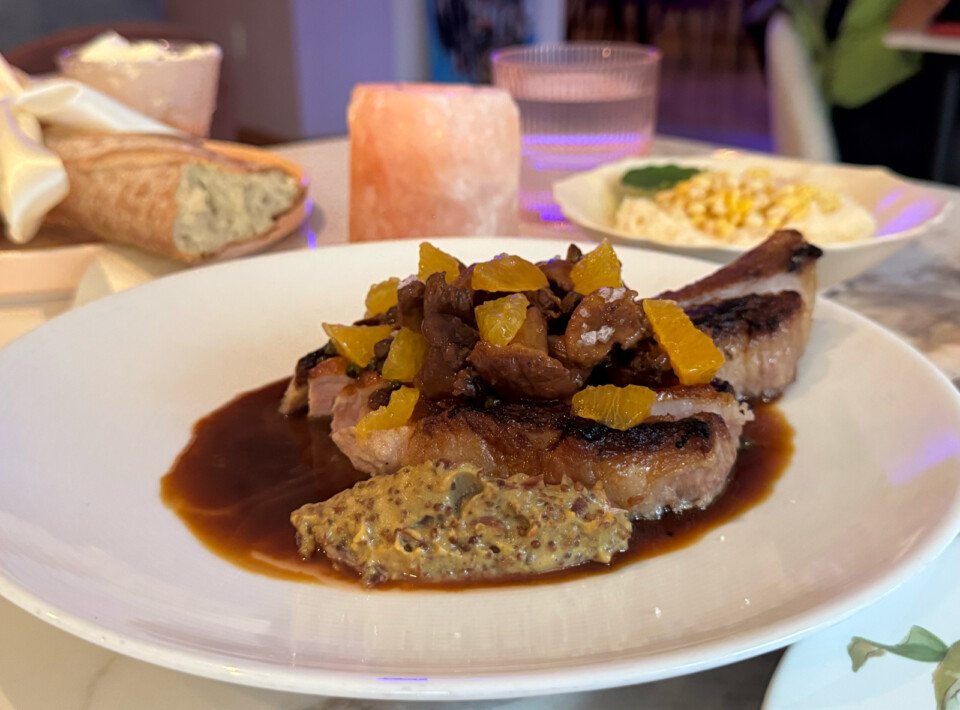
Pork à l’orange with chanterelle mushroom at Roxanne
Holt kept it up for years. Until one day, the thing she’d been fearing from the start finally happened. And I wanted to know what that felt like, too. “I went catatonic for a while,” she explained. She didn’t answer the phone, didn’t talk to people. Nothing. And that’s when all the hate started. The threats. And she had trouble reconciling it, because she’d done all this work, gotten all these accolades, and suddenly she’s being digitally pilloried.
“Look,” she said. “I’m not dismissing people’s concerns, but I’m not going to let myself be made into a fucking villain. I don’t owe anyone answers. I don’t owe anyone anything.”
But that’s not entirely true, I told her. Her restaurant was a public place. People went there with certain expectation. And one of those expectations, conscious or not, was that the restaurant they were going to went through the same process of licensing and inspection that every other restaurant is supposed to go through, and that it was subject to the same scrutiny that protects everyone. Inspections cover everything from food storage to fire suppression, from hand-washing to cooler temps. And skipping that was essentially asking her customers to simply trust her—without ever letting them know that was the choice they were making.
And Holt agreed. It was a shitty thing to do. And it was her fault completely. “I took all the stress of this on myself,” she told me. But once the hammer finally came down, she had to make a different kind of choice. She tells me that she was hesitant about the idea of reopening. “But what was I going to do? Walk away from my lease? Kill myself?” Because for her, those seemed like two equal options: both of them a form of vanishing. “I’m a person who works in extremes,” she said, but instead she chose a different path. A harder one for someone like her — almost pathologically insistent on doing everything herself. She asked for help.
She talked to the city. She hired someone to handle the business side of things, to tell her what paperwork needed to be signed and when, then to put it in the proper hands. She accepted the shutdown and applied for the proper licenses, scheduled an inspection. And everyone from the city and from L&I were kind, respectful. “They were very pro-helping-me-get-back-on-my-feet,” she told me, which was surprising because she worried that it was going to be something else completely. That, somehow, they’d be angry at her. Spiteful. Disrespectful because she’d broken the rules. But that didn’t happen.
“Weirdly, it was kind of the best part of this whole thing,” she told me. Because to the city, this wasn’t personal or vindictive or competitive. No one was scoring any points or collecting likes. It was just bureaucratic. Just paperwork.
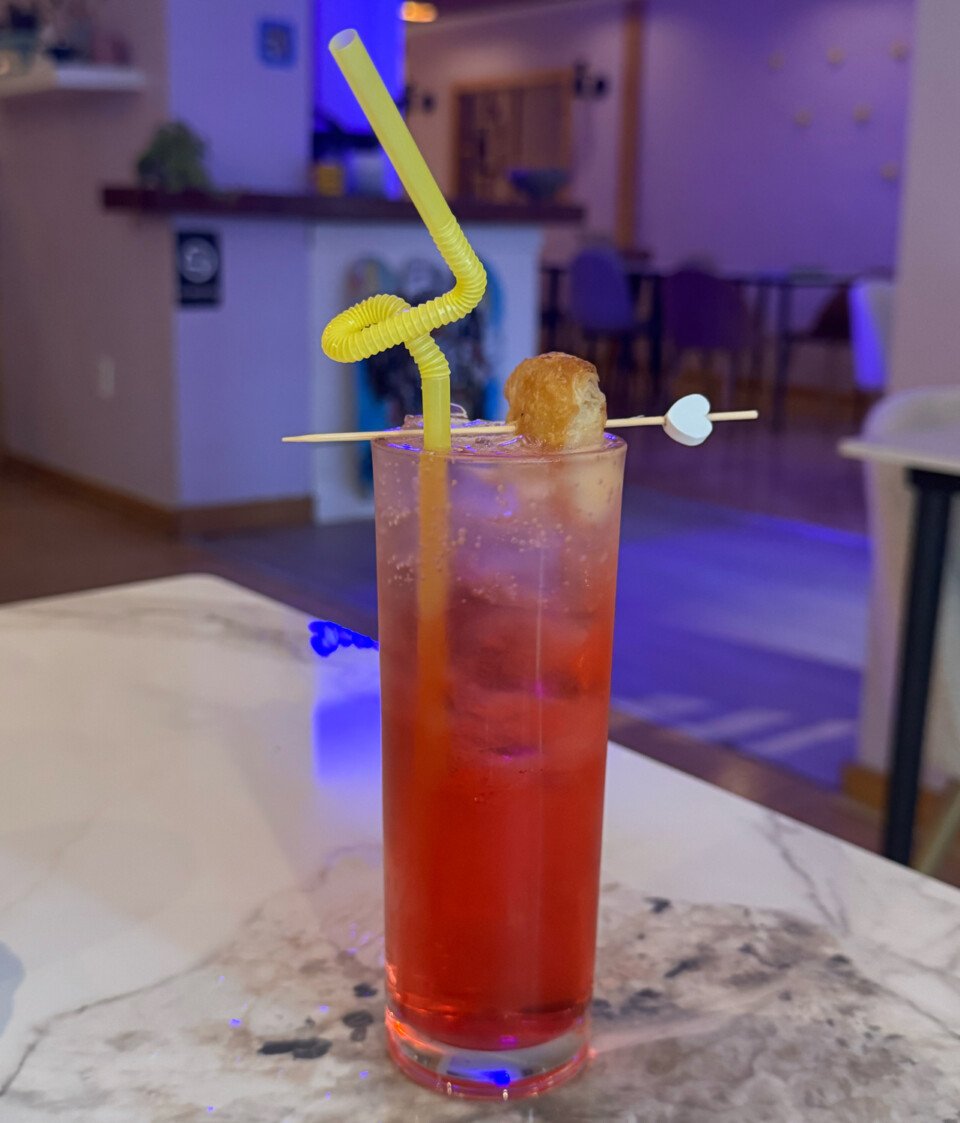
Cherry milk punch at Roxanne
And when she reopened on June 17th, she felt better. Lighter. Roxanne came back as a BYO, but Holt told me that she’s working with a Pennsylvania winery and working on getting a limited license to sell local booze. The restaurant is also doing a lunch service now, three days a week, which Holt told me they started last year as a summer thing and are now continuing.
“I like having a service at a lower price point,” she told me. “Lunch is cheap. Or cheap-ish, anyway. People bring their kids. And I can showcase a different side of my work.” Like a turkey club on house-made milk bread, with house-cured bacon and roasted turkey, or a sticky toffee waffle topped with sweet cream soft-serve. “Plus, I’m not gonna say I don’t need the money.”
She was worried how the public would react to her reopening, and whether or not people would give her another chance, but so far, things have been going alright. “My customers came back. The people who hated me before still hate me now, but we’re doing really well.”
Holt is still alone in the kitchen most of the time. It’ll always be the way she feels most comfortable. But she’s hired people to handle pretty much every aspect of the restaurant that isn’t cooking, so even with the new services she doesn’t feel overwhelmed.
“I love what I do,” she insisted. “I don’t want to be a brand. I don’t want to get rich doing this. I just want to be here, in my kitchen. And I’m not giving up.”