Suffs Is the Perfect Musical for This Moment
The show about the complex fight for equity — and for democracy — is now on stage. Here’s why you should see it before it leaves Philly this week.
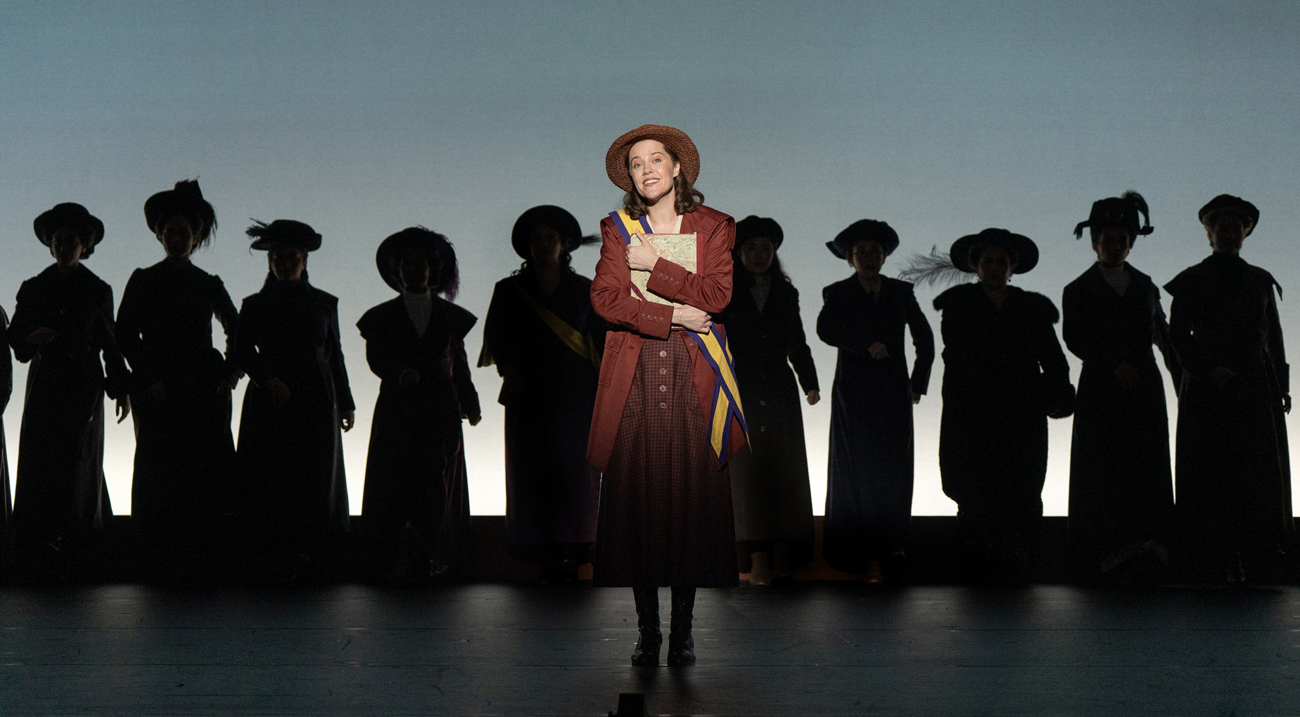
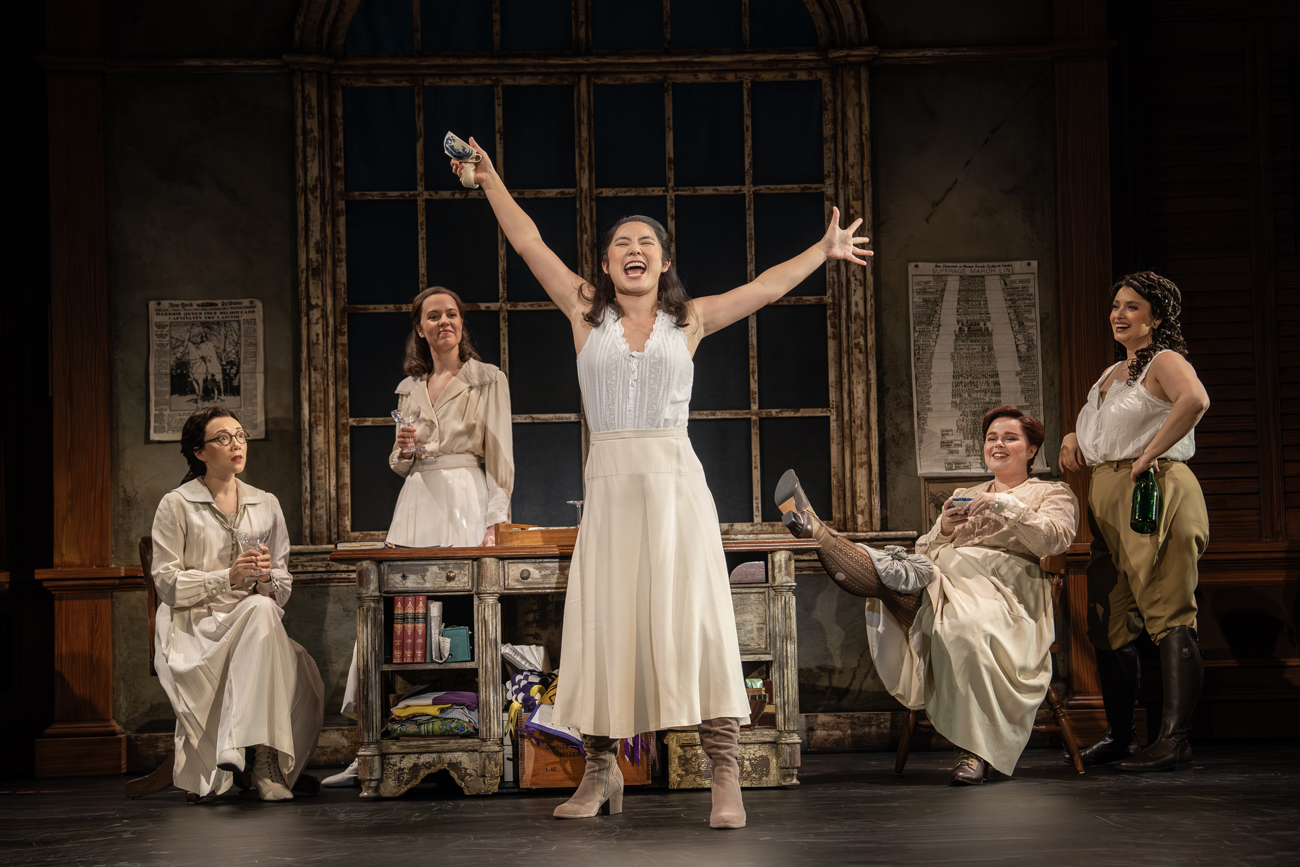
Maya Keleher as Alice Paul in Suffs / Photography by Joan Marcus
“In a world that’s gone crazy, am I crazy to hope?”
Suffragist Alice Paul (played by Maya Keleher) sang of her struggle on stage, weak from hunger strike and the abuse she suffered while imprisoned at Occoquan Workhouse in 1917, as leader of the Silent Sentinels. Meanwhile, I sat in the audience with my daughter in 2026, just hours after ICE had killed Renee Good in Minneapolis. The emotional scene hit extra hard.
Suffs, the Tony Award-winning musical created by Shaina Taub, on stage at the Academy of Music through January 18th, tells the true story of the women’s suffrage movement leading up to the ratification of the 19th Amendment. Protesting in front of the White House for women’s votes in 1917, Alice Paul and her suffragist compatriots were arrested and imprisoned for “obstructing traffic.” (Today, I thought from my seat, Good lost her life for it.)
“Progress is possible, not guaranteed,” Paul sings later in the play.
But in dark times, it can be hard to even see the “possible.”

The Silent Sentinels portrayed in Suffs
At one point in the musical, when they show the actual photograph of Inez Milholland leading the 1913 Woman Suffrage Procession on horseback, my daughter whispered to me, “Wait, they were real?” I thought my 11-year-old — a seasoned musical-theater kid — had known this was a historical retelling, à la Hamilton, but she had not been aware of that one-to-one accuracy. Who can blame her? From a young age, we’re all taught about George Washington and Thomas Jefferson and James Madison. We are not so rigorously taught about Alice Paul and Carrie Chapman Catt and Ida B. Wells — a disparity that underscores the animating force behind the musical, actually.
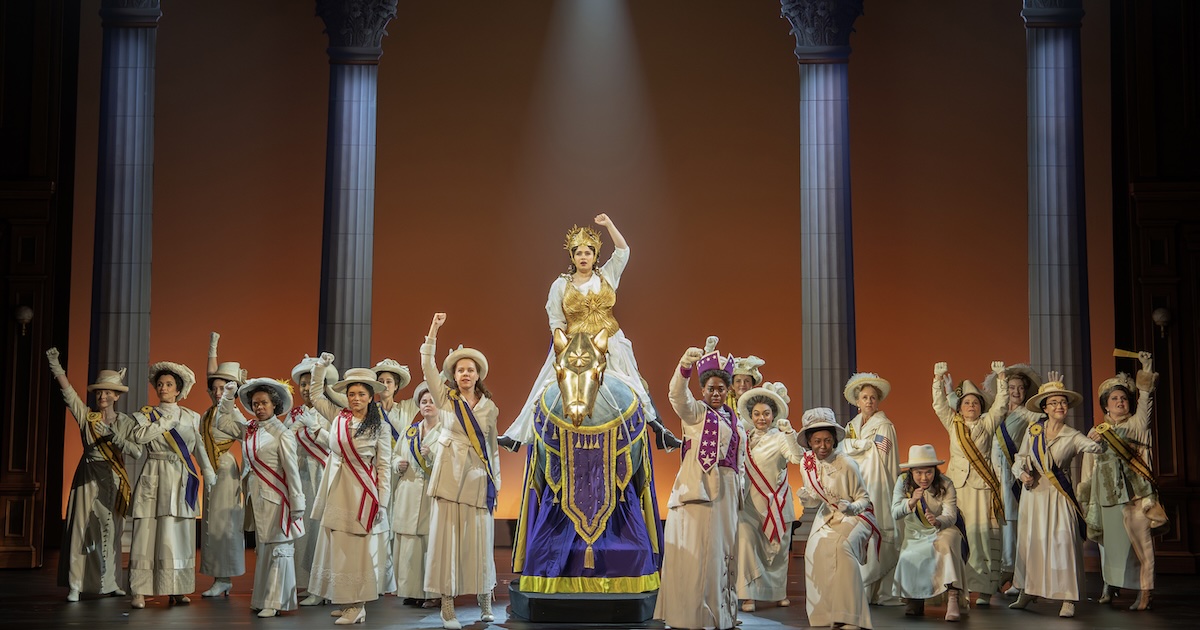
The Woman Suffrage Procession portrayed in Suffs
Anyway. Yes, I told my daughter. They were all real. They were Americans who sacrificed and fought to make America a better country for more of the people who lived here.
Of course, Suffs isn’t just a civics lesson — it’s a sharp, character-driven story about big personalities colliding under real pressure. This messy, human conflict is what makes the show feel alive: the rivalries, alliances, and racial and generational tensions among those women fighting for the right to vote. The conflicts feel familiar to anyone familiar with various eras of civil rights movements: pragmatic politicians versus radical agitators, seasoned leaders clinging to control and preaching compromise versus younger generations demanding urgency and change. Mostly, though, it is women deciding to act in the face of injustice, at grave personal risk. It is American women being brave to force America to stand for what America says it stands for.
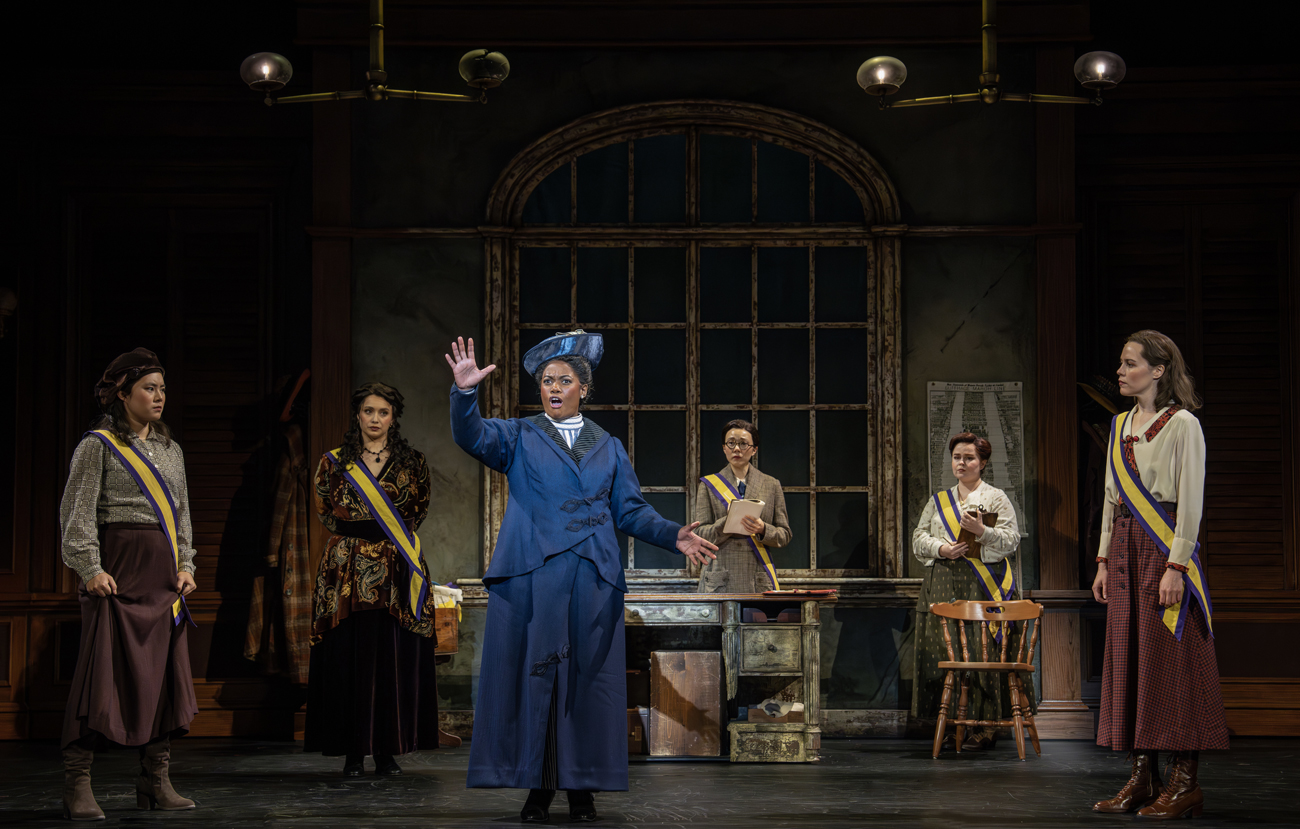
Danyel Fulton as Ida B. Wells in Suffs
What a thing.
To see it at the Academy of Music gives it even more resonance: Generations before the National Woman’s Party formed under Paul (who graduated from Swarthmore and Penn, by the way!), Susan B. Anthony spoke on the stage of this very Philadelphia theater to advocate for women’s rights.
And as we enter our nation’s 250th anniversary year, in its very birthplace, Suffs’ themes of equality and civic engagement feel especially relevant. Yes, the 19th Amendment passed, but we don’t exactly have equality over a century later. So, it’s the finale song that sticks in my head, a song that reminds us, “The world can be changed; we’ve done it before,” as long as we “keep marching.”
Through January 18th at the Academy of Music.