


Live Aid, Four Decades Later
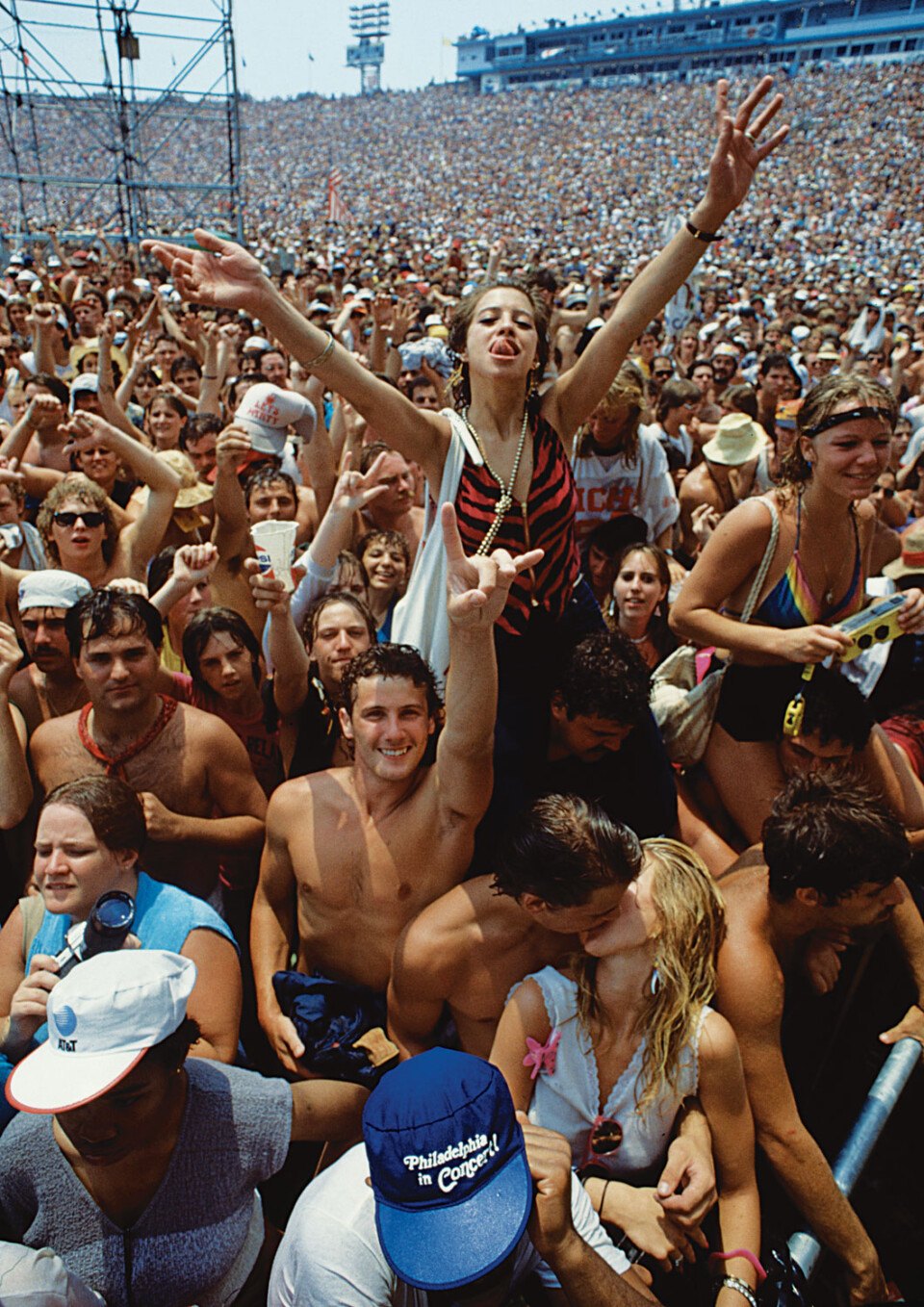
The crowd at Live Aid in Philadelphia / Photograph by Jean-Louis Atlan/Sygma/Getty Images
Forty years ago this month, the most ambitious concert in the history of the music world (sorry, Woodstock) was staged. In an effort to raise money for starving people in Ethiopia amid the devastating famine of the 1980s, Irish singer Bob Geldof pulled together the biggest stars in music for a two-continent concert, to be broadcast live all over the globe via satellite. Acts including Queen, U2, David Bowie, George Michael, Paul McCartney, and the Who appeared live at London’s Wembley Stadium, alternating songs and sets with musicians at South Philly’s storied JFK Stadium in a carefully choreographed sequence of performances, from continent to continent and back again, with the whole spectacle captured on video.
Imagine persuading all those egomaniacal stars to perform together in this crazy arrangement — for free! — and then making it all happen from a technical perspective, and then actually getting one of those musical stars to perform at both stadiums on the same day (thanks to supersonic travel). It seemed impossible, a pipe dream, something that could never actually happen — but it did. And for one day — July 13, 1985 — the eyes of all the world were on Philadelphia. Here, we present the greatest moments, the not-so-great-moments, and remembrances from people who were there on that blazingly hot, amazingly glorious day.
Why Philly?
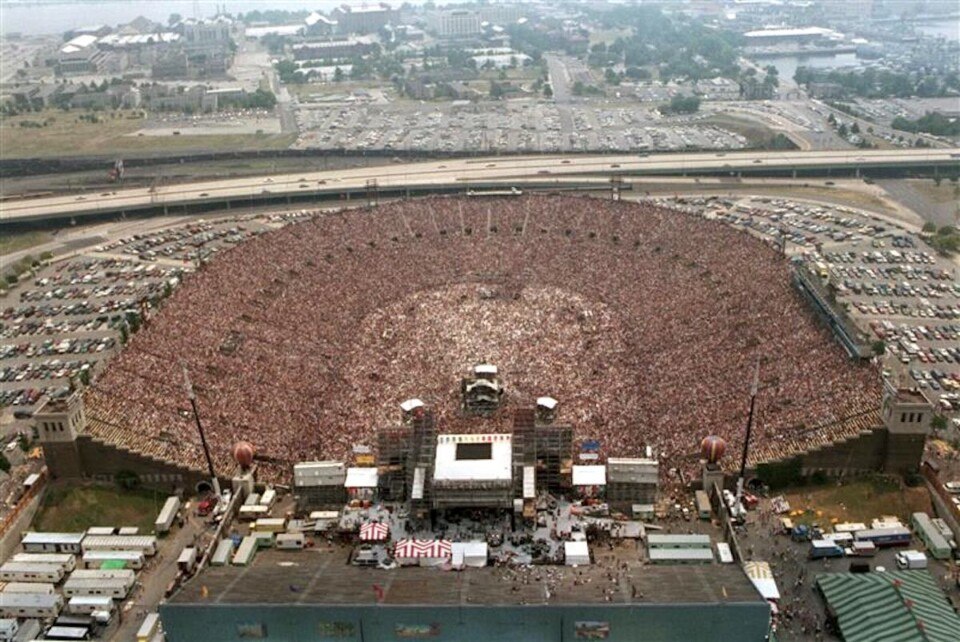
An overhead shot of JFK Stadium in Philadelphia during Live Aid / Photograph via Getty Images
Back in 1985, Philadelphia wasn’t exactly the hot spot it is today, so when promoters announced that the U.S. portion of Live Aid would take place here, observers scratched their heads. A reporter for Scranton’s Times-Tribune newspaper put it this way in June of 1985: “There are 100 U.S. cities that would have died to be the American standing grounds for Live Aid.” So how did Philly wind up with the prize? Keep reading …
Live Aid Was Not Without Controversy – And For Good Reason
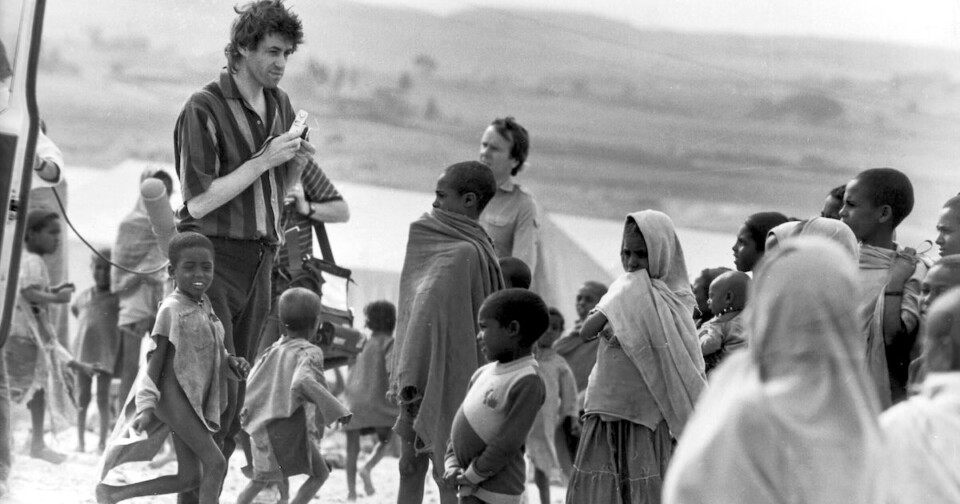
Live Aid founder Bob Geldof in Ethiopia in January 1985 before all the controversy about Live Aid emerged / Photograph via Getty Images
There’s no doubt that Bob Geldof set out to do Live Aid for all the right reasons. TV screens and newspapers worldwide were full of photos of emaciated children in Ethiopia, and Geldof wanted to help, both by calling attention to the famine and by soliciting donations, which viewers could make by calling toll-free numbers or sending a check to a P.O. box that kept popping up during the broadcast. It’s been posited that as much as $150 million was raised — a believable number for sure, given the viewership and scope of the event. But where did all that money go? Keep reading …
So Just How Hot Was It at Live Aid?
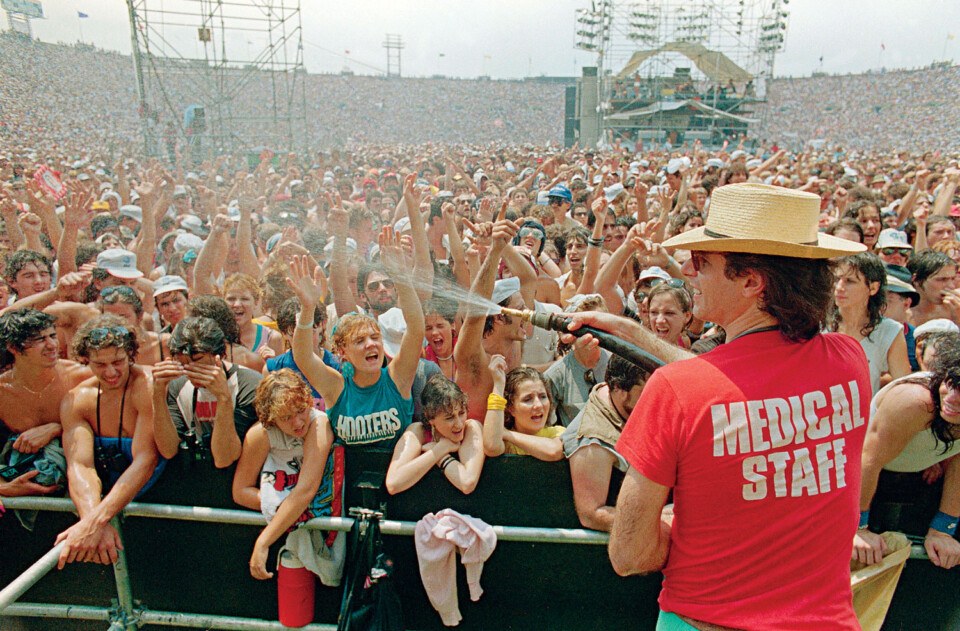
A medical staffer sprays fans with cool water. / Photograph by Amy Sancetta/Associated Press
The short answer is easy: The high reported at PHL for July 13, 1985, was 95 degrees. But you don’t have to be a scientist to understand that the “real feel” inside a giant concrete bowl with no shade packed with 100,000 or so people was higher — not to mention the temperature on the black, sun-absorbing stage. Rob Halford, lead singer of Judas Priest, described it to Philly Mag as “boiling hot,” noting, “We were all wearing leather.” Keep reading …
“The Veal Is Excellent”: When Jerry Blavat Met Madonna
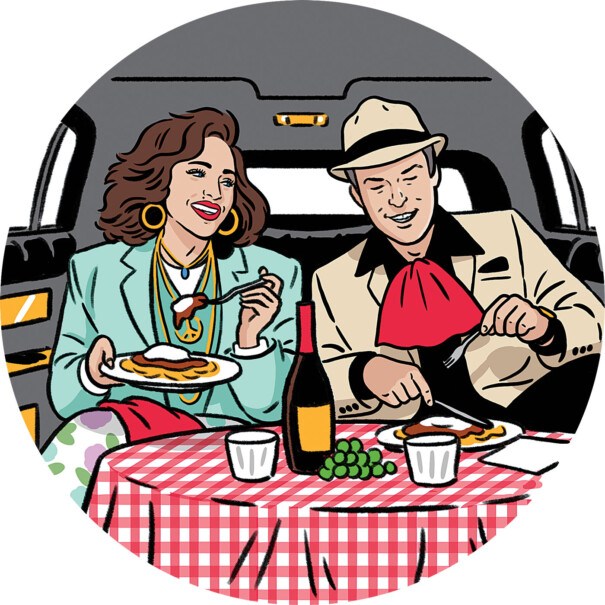
Illustration by Kyle Hilton
I’ve written about Live Aid many, many times. I’ve read scores of accounts from that day. At some point, you think you know everything about a subject. But then Jerry Blavat (RIP) emerges. In 2015, Blavat and I spoke about a wide range of subjects over red mussels and Crabfries at Chickie’s & Pete’s. One of those topics was Live Aid. According to Blavat — sorry, Madonna’s people are surely too busy to get back to me for fact-checking, so we’ll just have to take him at his word — it was he who met Madonna at the airport, in a super-stretch limo. “And she had to have dinner,” Blavat told me. “So we went down to Frankie’s Seafood Italiano at 11th and Tasker.” Frankie’s wasn’t actually open yet, but when you’re the Boss With the Hot Sauce and you’ve got freaking Madonna in tow, exceptions are made, and the chef agreed to whip something up for her to eat in the limo on the way to JFK. “She wanted chicken parmigiana,” remembered Blavat. “And I said, ‘The veal is excellent.’ But she said nah, nah.” So chicken parm it was.
Live Aid Had a Hooters Problem
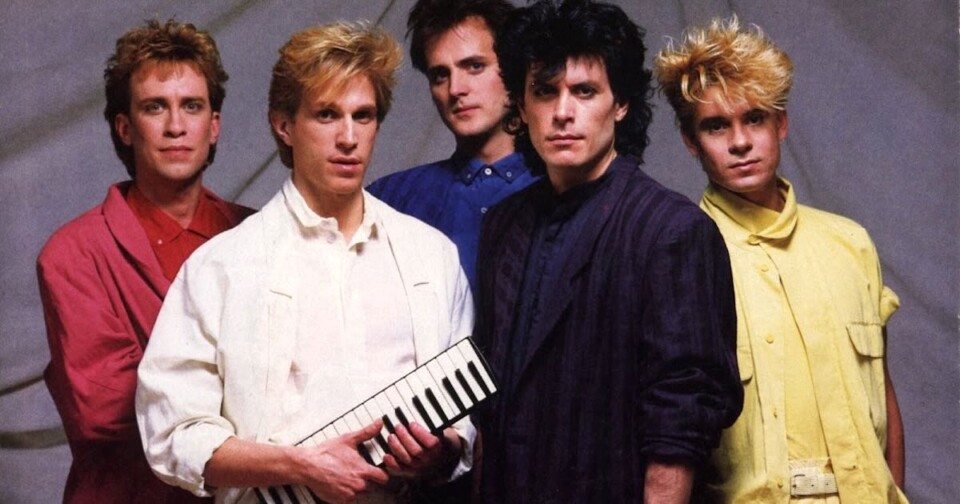
The Hooters in a 1985 promotional image, the same year they played at JFK Stadium in Philadelphia for Live Aid
In July 1985, Philly band the Hooters was red-hot. But one important Live Aid figure was far from thrilled with the inclusion of the Hooters in the Live Aid lineup. Actually, you could say the most important figure: Bob Geldof, who dreamed up Live Aid in the first place. “Who the fuck are the Hooters?” Geldof demanded when he saw the proposed Live Aid schedule. Geldof didn’t want the Hooters to have anything to do with his festival. And make no mistake — this was very much Bob Geldof’s festival. Keep reading …
The Singers Speak
Photographs via Getty Images
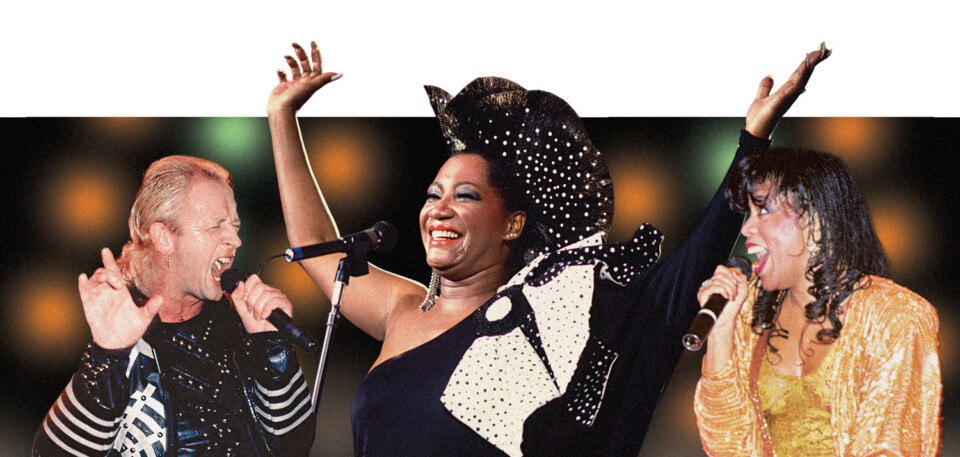
What it was like at JFK that day, in the words of some of the people who took the stage:
Rob Halford, Judas Priest: “You barely had 15 minutes, and every band was pushing the pedal to the metal. … My big moment was meeting up with Jack Nicholson, who is a metalhead. And I also met Joan Baez. We had done a cover of her song ‘Diamonds and Rust,’ and she walks up to me and says, ‘I just want to give you a message.’ And I think, oh, Lord. But then she says, ‘My son has told me that he prefers your version to his mum’s.’ … But the real party was after the event, in a private penthouse suite in downtown Philly. There was a sauna in the penthouse. I wandered in, and there was a bit of Caligula going on. But I can’t tell you quite who was involved. It was too dark and steamy.” Songs performed: “Living After Midnight,” “The Green Manalishi,” and “You’ve Got Another Thing Comin’.”
Patti LaBelle: “I don’t even remember who asked me to do it. But I do know that I said a quick yes. I was very excited. But then, what I wasn’t excited about was the helicopter we flew in on. I had a speaking engagement in New York and had to fly in on that thing. It was terrifying. It was my son’s first time seeing his mother perform. I had that crazy hair, and he was standing there very proud. I remember I ended up walking into the audience with no shoes on, and there was water, and everyone was worried that I was going to get electrocuted.” Songs performed: “New Attitude,” “Imagine,” “Forever Young,” “Stir It Up,” “Over the Rainbow,” and “Why Can’t I Get It Over.” She also returned for the “We Are the World” finale.
Valerie Simpson, Ashford & Simpson: “I don’t really remember much directly from that day. You’re on an emotional high. You have this adrenaline. You want to get it right and lift up the crowd. When I look back and see the footage, it looks right. All the way right. The performance we put on was very heartfelt. I very much still love the moment, love how we looked surrounding Teddy.” (She and her husband/singing partner, Nickolas Ashford, performed with Teddy Pendergrass three years after a car crash in Northwest Philly left him paralyzed.) Songs performed: “Solid” (as in “Solid as a rock … ”) and, with Pendergrass, “Reach Out and Touch (Somebody’s Hand).” “That’s what that day was all about,” Simpson told us of that song.
We Need to Talk About How Bad the Live Aid Led Zeppelin Reunion Was
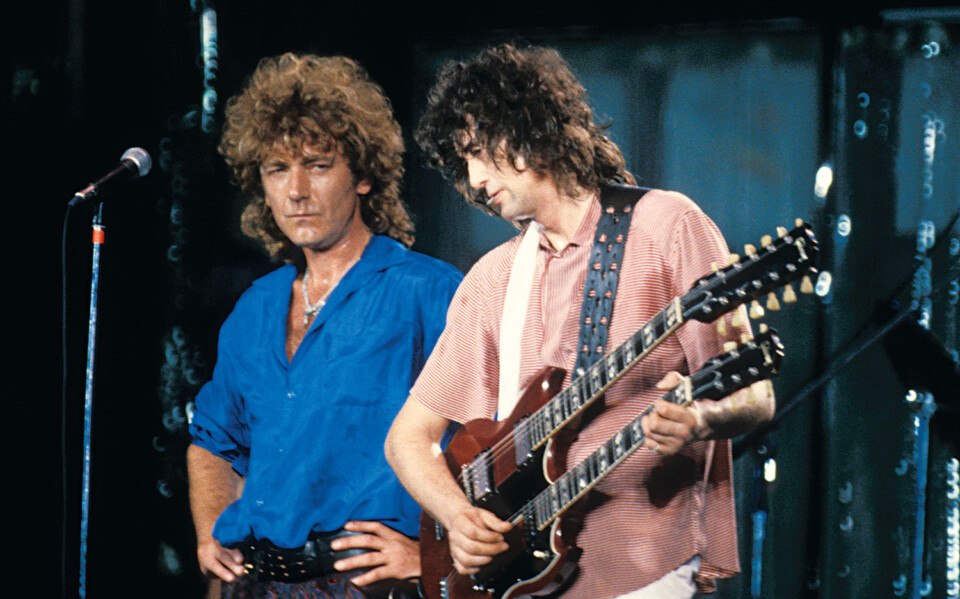
Led Zeppelin at Live Aid / Photograph by Ron Galella Collection/Getty Images
“It was horrendous,” Robert Plant would later admit to Rolling Stone. Zeppelin guitarist Jimmy Page said all he could remember was being in a “total panic.” Phil Collins called it a “disaster,” later summing it up as “the gig from hell.” Keep reading …
The Stephen Starr Connection
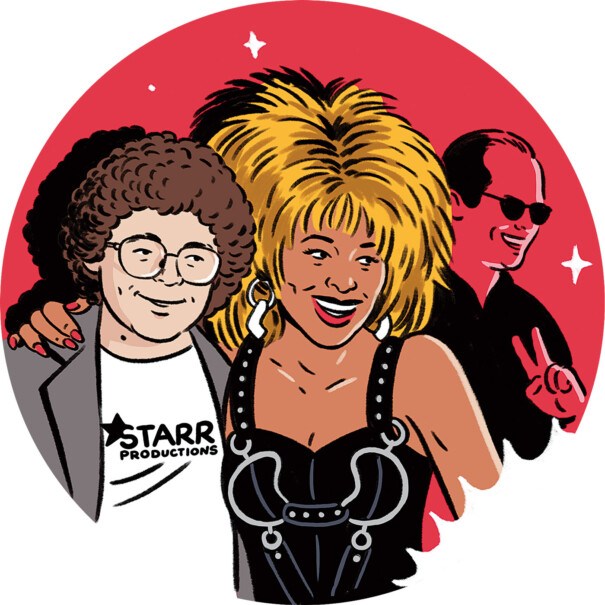
Illustration by Kyle Hilton
These days, we know Stephen Starr as a restaurant mogul, the guy credited with birthing a dining renaissance in Philadelphia. But in July of 1985, he was a 20-something Temple dropout turned concert promoter who just two months earlier had brought Madonna to Philly on her first tour, selling out the Spectrum. And he was in the midst of planning Wham!’s only East Coast show for later that summer, with Chaka Khan and Katrina and the Waves joining the bill at Veterans Stadium (reserved seats just $17.50!). So it was by virtue of his connections in the music industry that he wound up backstage at Live Aid. “Everybody who was anybody was back there,” Starr told us. “Mick Jagger and Tina Turner were there. Jack Nicholson kept popping up everywhere. And, for some reason, George Segal. I have no idea why.”
The Musicians Who Were Conspicuously Absent from Live Aid
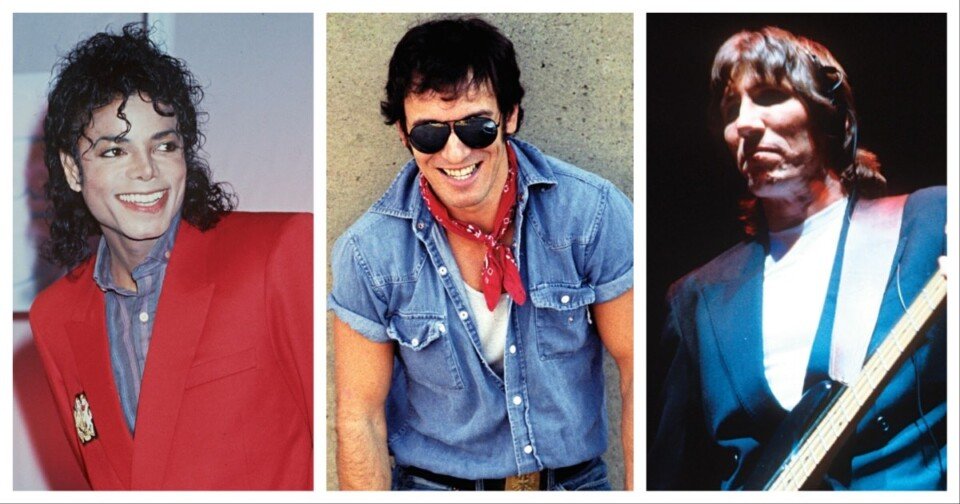
Michael Jackson, Bruce Springsteen, and Roger Waters of Pink Floyd, all of whom were conspicuously absent from Live Aid / Photographs via Getty Images
We’ve been talking a lot about the performers who were at Live Aid, from lousy Led Zeppelin to hometown heroes the Hooters. But what about the artists who didn’t play the event? Keep reading …
I Was There: Some Favorite Notables Look Back

Robert Drake, DJ and WXPN personality, then a 22-year-old Washington High grad: “The spotlight was on us, and this time, it was for something positive. This was so important, coming right after MOVE. There was a lot of conversation about how we needed to shake up all that negative press. I had a lot of Philly pride once it was all said and done.”
Pierre Robert was working as a WMMR DJ at the stadium that day. “This was as magical as you can get. And the eyes of the world were on Philadelphia. The vibe in Philly that day was just incredible.”
Dallyn Pavey Uosikkinen, wife of Hooters drummer David Uosikkinen: “I actually missed the Hooters, because they went on so early. My boyfriend, who actually introduced me to David in 1982, had just been replaced in the Hooters. So it was not the happiest of times. I had field tickets, but someone gave us passes to sit behind the stage. We couldn’t see that well but had a bevy of performers walking by us. But it was ridiculously hot, so we left and watched the rest on TV.”
Tigre Hill, Philly filmmaker, then a 17-year-old student at Archbishop Carroll: “My mom dropped me and my friend John-John off at two o’clock, which was late. I remember walking into the stadium and immediately smelling the marijuana. We got a major contact high, and I had never been high before. … I really don’t remember much about the performances. I would have to go back and watch the DVD.”
Mark Goodman, co-host of the all-day broadcast on MTV: “We had amazing seats, right on the stage. We were looking out at all of those people, just like the bands were. For me, the big one to see was the quote-unquote Led Zeppelin reunion. In the moment, it seemed fine, but afterward, we heard what a mess it was.”
Live Aid, By the Numbers
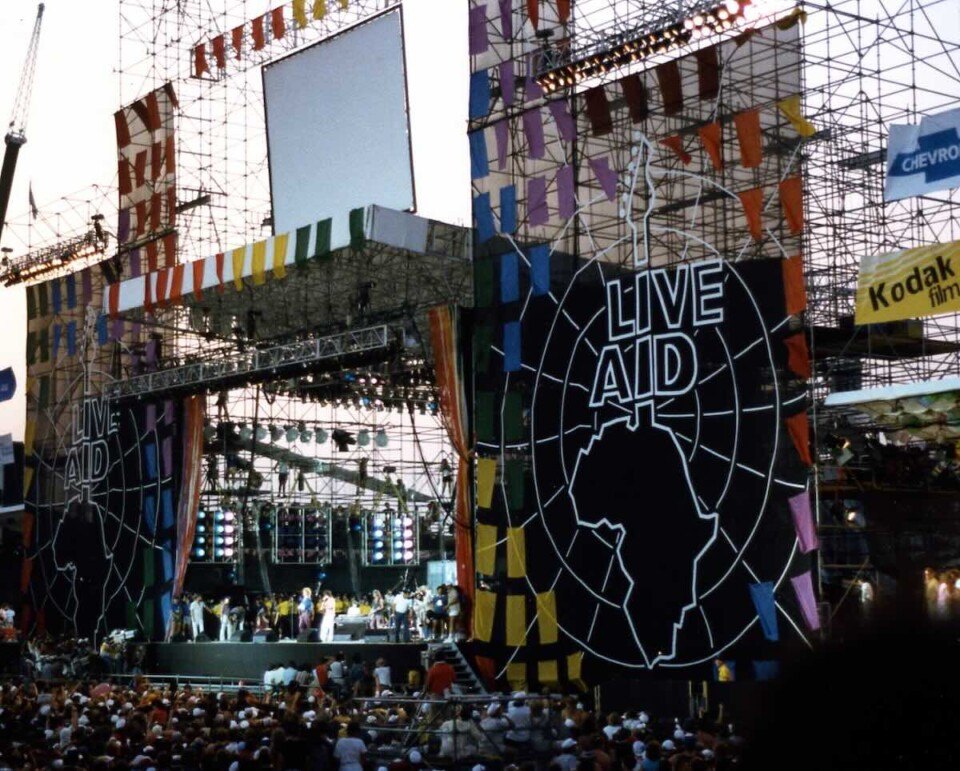
The stage at JFK Stadium in Philadelphia for Live Aid / Photograph via Squelle/CC/Wikimedia Commons
Just how big was that giant stage at Live Aid? How many hours and minutes passed between Phil Collins leaving Wembley Stadium and arriving at JFK Stadium? How many people were ejected from JFK from bad behavior? We answer those questions and more. Keep reading …

The Aftermath
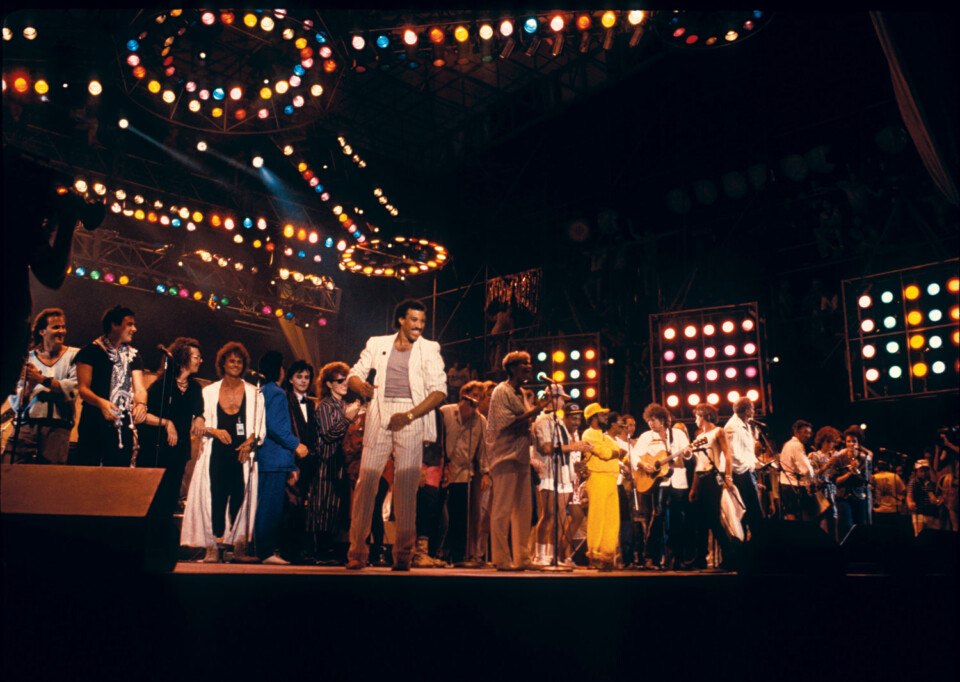
Live Aid’s “We Are the World” finale / Photograph via Getty Images
Here’s what the press had to say in the concert’s wake:
“Live Aid deeply changed the rules of what a rock concert is.” — New York Times
“Wandering around backstage, the performers didn’t have it quite as tough as the … people parboiling in the Philadelphia sun. There were uncrowded shaded areas with chilled fruit juice, Gatorade and Perrier, where tanned blondes with no apparent connection to the music lounged in recliners watching two different feeds of the show on color TV sets.” — New York Daily News
“Entirely predictable and boring” — BBC co-host Andy Kershaw in his 2011 autobiography, No Off Switch
“A logistical miracle” — Knight News Wire
“The show had remarkably few goofs for such a long, far-flung, and technically challenging show.” — Miami Herald
“It refused to place its famine-relief effort in any sort of useful political context, or to confront the ugly irony that this benefit for black nations was held before an almost entirely white audience.” — Philadelphia Inquirer
“The crowd was a curious mix of hard-core concert veterans, pre-teens and middle-aged novices. It was a rare model of concert decorum.” — Wilmington Morning News
“The commercial telecast was a disappointing hit-and-miss affair. It was filled with so many commercials and taped messages from dignitaries and celebrities that several of the major sets of music were completely omitted from the telecast.” — Fort Worth Star-Telegram
It was practically pornography, rock n’ roll style. There on stage, Mick Jagger and Tina Turner were enjoying their own volatile mixture of sexual chemistry. One was steel, the other flint. Tina in her Mad Max leather outfit, Jagger in his typically tear-away clothes. Their voices and bodies rubbed together with just the right amount of friction to invite pyromania.” — St. Petersburg Times
Published as “Fire Hoses, Leather Pants, and the Mystery of the Money: Live Aid, Four Decades Later” in the July 2025 issue of Philadelphia magazine.