How Stephen Starr’s Borromini Came to Look So Damn Cool
“I saw a restaurant in Rome that had a similar marquee to Borromini, and it just drew me in. I said to myself, ‘Shit, this sign could be on Walnut Street.’”
Borromini in Rittenhouse Square / Photography by Jason Varney
If Stephen Starr had been looking for a sign to move forward with a plan to turn Rittenhouse’s then-shuttered Barnes & Noble into a restaurant, that’s quite literally what he found during a trip to Italy in 2024. “I hesitated when I was approached to do that building — I didn’t want to do it,” says the prolific Philadelphia restaurateur behind more than 35 concepts in five cities. “Then I saw a restaurant in Rome that had a similar marquee to Borromini, and it just drew me in. I said to myself, ‘Shit, this sign could be on Walnut Street.’”
The $20 million bi-level Italian restaurant that opened in August would make its namesake, 17th-century Italian architect Francesco Borromini, proud. Starr credits Keith McNally, the New York City restaurateur of Pastis fame with whom he’s collaborated since 2017, for the design vision. McNally tapped designer Ian McPheely for the project, while Starr turned to Gregory Charnock of Center City’s Stokes Architecture + Design.
The aesthetic was deeply considered by McNally and Stokes, with the latter having an eye for local makers and artists. The staircase mural by Zack Bird of Germantown’s Bird Studio took six months to complete because McNally wanted the Pompeii-inspired fresco to be just right. “There were many things we built, took down, built again,” says Starr. “I don’t think there’s many people that do what we do. Our creative side is the most important thing.”
Second-Floor Dining Room

A farmhouse feel was achieved via reclaimed pine flooring sourced from Kensington-based architectural salvage firm Provenance and rough-sawn wood beams for the ceiling fabricated by the Challenge Program, a youth construction nonprofit in Wilmington. Kensington’s Outcast Studios created the custom-forged bronze sconces.
Main Bar

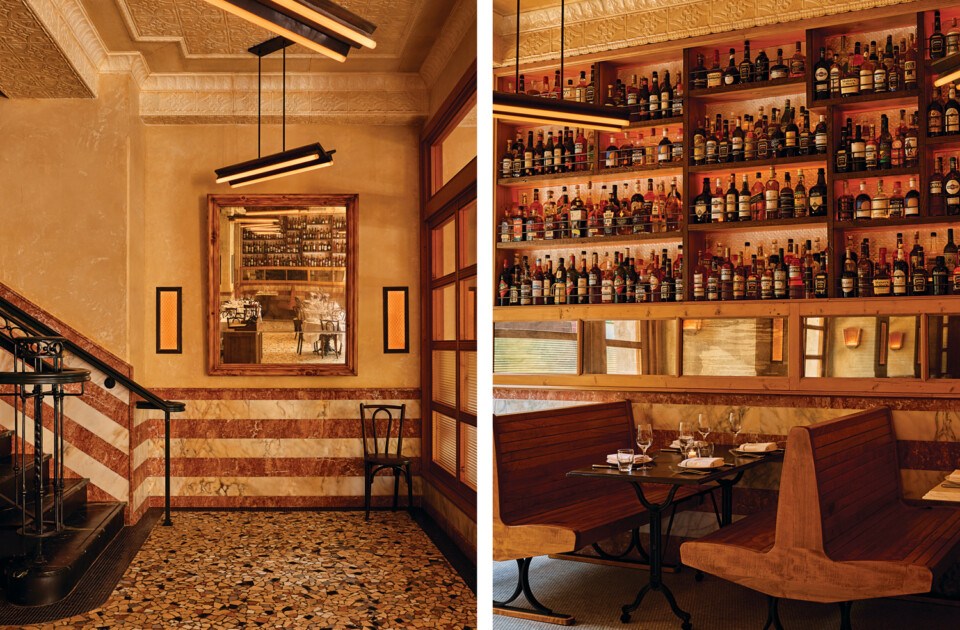
Charnock says the bar, with its hammered copper top, was co-designed by Stokes and McPheely as an anchor point for the first floor. Starr notes that the ceiling-high bar shelving delivers “a finishing touch of magic.”
When people walk in Borromini they feel the spirit of Parc, but it’s very different when you consider the interior design.” — Stephen Starr
Entrance

The mosaic floor is made of stone imported from Europe (where the red and white marble wainscoting was also sourced) that was broken and designed by Millennium Builders, out of Huntingdon Valley.
Cafe Area
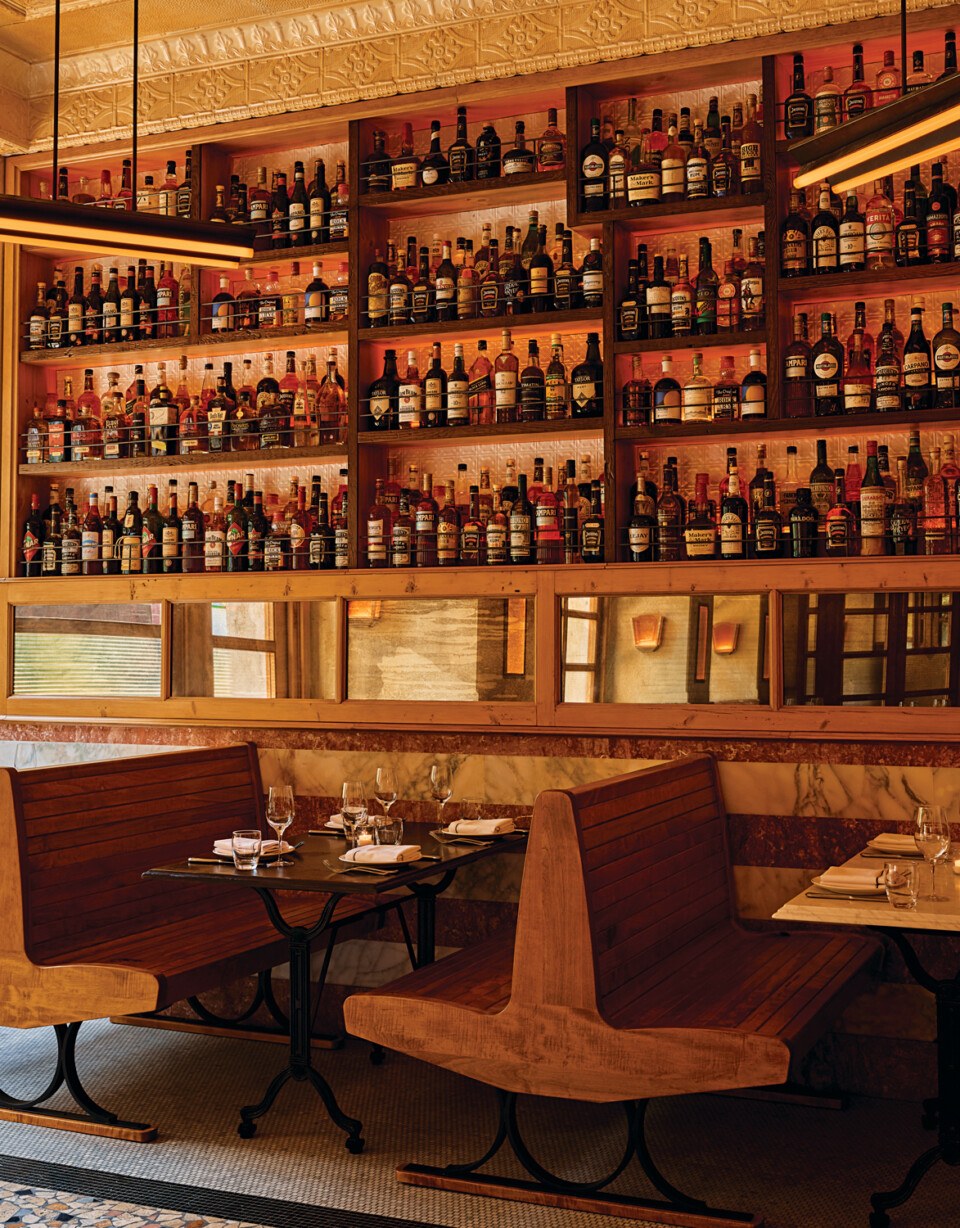
Stokes designed the slatted maple booths in the style of vintage Brunswick bowling alley benches.
Published as “Roman Holiday” in the December 2025/January 2026 issue of Philadelphia magazine.