Fight at the Museum: Inside the Collapse of the Academy of Natural Sciences
“This is 50-plus years in the making.” Can anything still save the beloved Philadelphia institution?
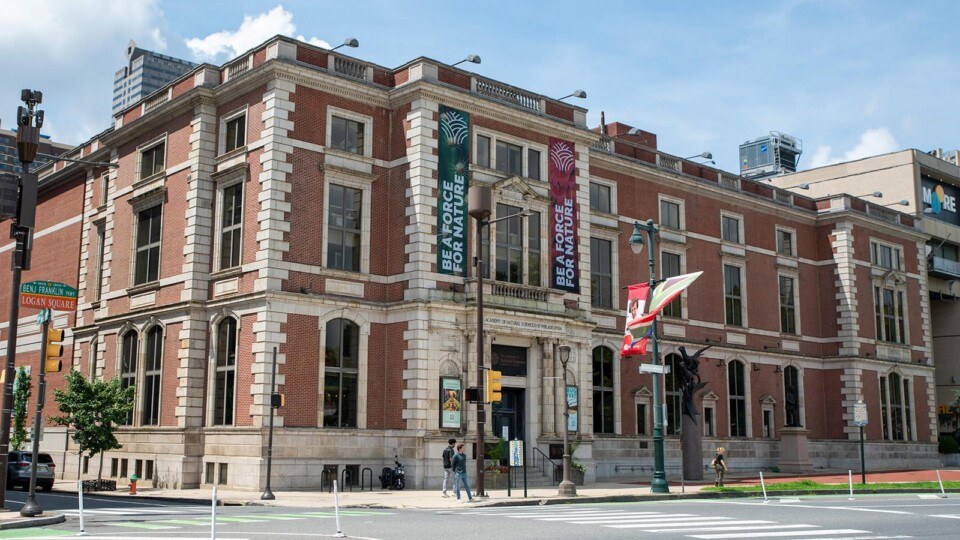
The Academy of Natural Sciences / Photograph courtesy of the Academy of Natural Sciences
Listen to the audio edition here:
Usually, tax forms are boring affairs — inked in drab black and white, lines stacked on top of lines on top of boxes, and filled with numbers, all the way down.
But they can also be revealing. And in the case of the most recent public filings for the Academy of Natural Sciences of Drexel University, perhaps even a little touching.
Asked on the first line to briefly describe the organization’s mission, the Academy did so in just eleven words: “Understand the natural world and inspire everyone to care for it.”
The rest of the 2025 filing begins to reveal where things went wrong.
It shows that in 2024, the most recent tax year available, the Academy incurred $24 million in expenses against just $18 million in revenues, a gap papered over with $8.3 million in financial support from Drexel, which first entered an affiliation with the Academy in 2011. But on September 1, 2026, it became clear that the university no longer would write such checks to the aging institution, when it announced closure of the Academy’s 198-year-old museum on less than 30 days’ notice.
Since then, Drexel has met Philadelphia’s fury. Petitions to keep the museum open have garnered more than 100,000 signatures; politicians have piled in, and a public hearing in City Hall is scheduled for October 26th. The most cynical of advocates have expressed concerns that Drexel is letting this place wither and die, so that its museum and world-renowned specimen collections can be sold off for parts.
But a review of the Academy’s tax filings and interviews with nine current and former ANS employees, as well as advocates and industry professionals, suggest there is a more complicated story here. It begins with the Academy as an institution struggling to move on from its origins as a club for wealthy white gentlemen — one too rooted in history to adapt to the changing expectations of a modern natural history museum, and perhaps too proud to ask for help.
It ends with a series of missteps by Academy leadership, and punctuated by a cold shoulder from current Drexel president Antonio Merlo, who took over in 2025 with a mandate to clean up Drexel’s own struggling finances and inherited a liability on the Benjamin Franklin Parkway.
For a city whose core competency is supposed to be history, the prospect of permanently losing the oldest natural science museum this side of the Atlantic is mind-boggling.”
And along with leadership of the Academy and Drexel, there’s a third party in the room: Philadelphians. Wound through 25 years of ANS tax filings is the unmistakable fact that the Academy has long been taking on water, even before the 2011 affiliation, and that stagnating visitation and a precipitous drop in donations over the past decade only made the problem worse.
There are chicken-and-egg arguments to be made about why many Philadelphians stopped supporting this place, as well as to what degree any museum’s survival should depend on turning a profit. But the public giving millions less to the Academy than it once did is going to have ramifications.
This multifaceted decline of the Academy complicates the prospects that it could rise again. If it is going to survive looking anything remotely like what it did before its museum doors closed on September 27th, it’s going to need a lot of money — perhaps $100 million, maybe more than double that, if estimates on the building’s deferred maintenance are to be believed.
Where that kind of money comes from is an open question, and an about-face appears increasingly unlikely to happen anytime soon. Much of the museum’s caretaking staff was let go in early October; another round of layoffs for essential Academy staff is slated for November 1st. Staff say the museum’s live animals are on their way to other institutions like the Philadelphia Zoo. There are reports of mementos like museum signage also growing legs and walking away.
But there’s a second question, perhaps just as important: Who is going to lead the Academy on the other side of all this, and what will their vision be? Former staff members say it’s not realistic to return to the status quo, where the Academy was operating year after year in the red as its museum’s attractions atrophied. It will need to pair any major additional investment with a new vision for how to spend it and modernize the museum’s operations and offerings to achieve longterm sustainability.
What that could look like is a mystery, further shrouded by ongoing black-box negotiations being held between the Academy and Drexel, where everything from a complete disaffiliation and a complete absorption by the university appears to be on the table. In an October 14th email to Philadelphia, Britt Faulstick, Drexel’s executive director for media relations, said the two entities are still engaged in “ongoing discussions that will define the future relationship between the two institutions” and that the university could provide no further details.

Children look at the bighorn sheep at the Academy of Natural Sciences museum. / Photograph by J. Fusco for Visit Philadelphia
And yet, hope lives: Philadelphia City Councilmember Nina Ahmad, who is championing the October 26th public hearing, says her office’s communications with Drexel officials have indicated a disaffiliation may be in the works, and that there appears to be financial help waiting on the other side.
“The goal for me is that Drexel and the Academy begin this disaffiliation process, with a shared objective of an orderly, evidence-based transition,” Ahmad said. “The stakeholders are waiting. I just got word from a big pharmaceutical company who said they’re willing to help. But no one is asking them to the table.”
Still, nothing is promised. For a city whose core competency is supposed to be history, the prospect of permanently losing the oldest natural science museum this side of the Atlantic is mind-boggling. This is the story of how it got here, and what could happen next.
Brian Curtice is trying to fairly call balls and strikes. A paleontologist based at the Arizona Museum of Natural History, Curtice also runs a private business through which he travels to dinosaur museums around the world to sell and loan them special exhibits. When he got word that the Academy of Natural Sciences was shuttering its doors in September, he felt compelled to find out why.
“Here’s a 200-plus-year-old entity that is situated in one of the ten largest, most populous cities in the United States,” Curtice said. “How could this happen and everyone be so surprised?”
To find out, Curtice analyzed 25 years’ worth of the Academy’s finances, via annual, publicly available tax documents, as well as associated Drexel financial statements. The portrait that emerges, he says, is one of an Academy struggling with financial precarity all along, kept afloat primarily by the largesse of Drexel. That conclusion hasn’t won him many fans among activists critical of the university’s stewardship of the museum, but from an outside perspective, that’s how he sees it.
His only question: Why didn’t anyone say anything?
“This should have been called 10 years ago,” Curtice says. “Someone should have raised their hand and said, ‘We have a problem, Philly.’”
Several current and former ANS and Drexel employees say a motivating factor for the 2011 affiliation was indeed driven by the Academy’s financial position, which took a hit during the Great Recession and from a Ponzi scheme that ensnared it a decade earlier. Curtice notes that by the mid-aughts, the Academy was controversially selling off parts of its minerals collection, with specimens still turning up in online auction houses today.
In the three years prior to the affiliation, tax records show, the Academy had failed to turn a profit, accumulating more than $12 million in operating losses. Then Drexel appeared not only as a white knight, but as a symbiotic partner. The university was in an expansionary posture under former president John Fry, and Drexel’s affiliation with the Academy prompted a reorganization of the university’s environmental science program into a new department called BEES (Biodiversity, Earth & Environmental Science).
Scientist Ted Daeschler, a self-described Academy “lifer,” arrived there in 1987 as a Ph.D. student, then rose to senior roles before semi-retiring in 2023. (He still holds an emeritus title.) That included a brief stint as interim Academy director until George Gephart, Jr. was hired as president and CEO in August 2010. Gephart, Daeschler says, wanted to get the institution on firmer financial footing.
“We did science really well, and we provided wonderful educational opportunities through our museum,” Daeschler says. “But I have to say, I don’t think we were ever thriving in terms of finances. … Gephart came in and the hope was, ‘Let’s stop this kind of hand-to-mouth, year-to-year deficits.’”
Gephart, who is now retired and living in South Carolina, declined interview requests from Philadelphia.
According to a 2014 Philadelphia Business Journal article, leaders on both sides seemed to think things were going well. Drexel was enrolling dozens of new environmental science students lured in part by educational opportunities at the Academy, and Academy leaders said Drexel’s capacity allowed them to get out of survival mode and into an expansion mindset of their own.
After receiving a study from Portland, Oregon-based consultant David Heil & Associates, Academy leadership said they brought in more live animals, built mobile “education carts,” and began renovating underutilized areas of the museum. Gephart told the Journal the changes had helped reinvigorate its donor base.

Live animal education at the Academy of Natural Sciences / Photograph courtesy of Visit Philadelphia
“Simply going and asking funders to fill a deficit hole is not something that moves [them],” Gephart says. “They want bona fide forward-thinking projects they can invest in. That is what we have been allowed to conceive, think about, and produce.”
Tax records show the Academy’s bottom line was also improving in the early 2010s: Expenses were rising, but revenues were rising faster, and by 2015, the Academy turned a nearly $5 million profit. Drexel had been contributing about $5 million a year for operating expenses, financial statements show, but was able to scale back to $3.3 million that year.
Then, things began to change. Gephart announced his retirement after seven years in September 2016, and Scott Cooper took over as CEO and president of the Academy late the following year. By then, ANS was embarking on a financial rollercoaster ride. The Academy’s positive cashflow dropped to less than a million a year between 2016 and 2018, then it sank into the red and incurred operating losses of about $5 million each in 2019 and 2020. The COVID-19 pandemic actually appeared to help matters temporarily, as expenses dropped and revenues rose in 2021 and 2022, getting the Academy back into the black, before finances again reversed course.
It seems like everything was just slowly spiraling the wrong direction.” — Brian Curtice, paleontologist at Arizona Museum of Natural History
All the while, Drexel’s underwriting of the Academy’s operations was growing again: $5 million in 2020, nearly $6 million each in 2021 and 2022, then $7 million in 2023, nearly $9 million in 2024, and finally $8.3 million in 2025. In total, the university’s financial statements indicate, it had given $72 million to the Academy for operating expenses over 13 years, and another $29 million in services. In return, the Academy had paid Drexel for $34.8 million in total services: That still left a gap of $63 million.
Asked to confirm Drexel’s level of financial support for the Academy, Faulstick, the university spokesperson, said that its financial statements are accurate.
Curtice notes that during the same time period, trouble was brewing with public support. Donor pledges peaked at $10.8 million in 2015, then fell precipitously to $2 million in 2019, rebounding slightly in the years since. More ominously, there appeared to be a drop in major, multi-year pledges. In 2015, the Academy had $4.61 million in yet-to-be realized commitments it could count on in future years, a number that fell to just $333,000 in 2025, a 93-percent drop in a decade.
“It’s a real warning sign, because almost nothing is lined up for the years ahead,” Curtice says.
Revenue from admissions has also stagnated. The museum took in $1.26 million in 2025, compared to $1.1 million in 2015. But that represents a 16-percent drop in value after adjusting for inflation.
If there was one financial positive, the Academy’s endowment grew over the same time period, from $48.6 million in 2013 to $78.3 million in 2025. The vast majority of the funds, however, have donor restrictions, and the Academy adheres to common nonprofit accounting practices that limit withdrawals to seven percent in a given year; it utilized $4.2 million from its endowment in 2025.
In other words, remove Drexel’s growing contribution, along with withdrawals from the Academy’s endowment, and the sum total of the rest of the Academy’s revenues — donations, memberships, admissions, grant funding — covered barely half of its expenses in 2025.
“It seems like everything was just slowly spiraling the wrong direction,” Curtice said.
Museum staff and scientists say trouble was brewing inside the museum, too.
Jennifer Sontchi arrived at the Academy in 2007 as a manager of exhibit projects; her job was to oversee the building of new exhibits and the installation of temporary ones. A Philadelphia transplant, she was wowed by the Academy and surprised by how museum staff from the area seemed not to realize what they had.
“It’s a superstar among natural history museums … an absolute legend, and I got there and nobody seemed to know that,” she says.
In 2013, Sontchi rose to senior director of exhibits and public spaces, a role she held until she left the Academy in 2023. She says she put her heart into the job, which she saw as trying to connect with visitors and offer them the best possible experience.
The problems she encountered started with the leadership change. Gephart, she said, viewed himself as “fundraiser in chief” and had a solid reputation for bringing in donors. He also oversaw the transition to Drexel — numerous current and former ANS employees say he had a personal relationship with Fry, which proved the difference-maker over other potential suitors such as Temple and Penn.
After the affiliation went into effect, Sontchi and other former employees say Drexel’s financial support was appreciated by staff, but that it mainly covered basic overhead. Drexel did take the pressure off the Academy’s finances by helping make payroll and allowing for much-needed raises at a notoriously low-paying institution where salaries — including for scientists with advanced degrees — could range as low as the forty-thousands. But contrary to the 2014 Business Journal piece, Sontchi said new money to overhaul and update the museum’s core offerings, along with routine replacement of basic infrastructure like carpets, was limited.
“It’s not like [Drexel] piled heaps of cash into the pockets of the exhibits department,” Sontchi says. “Our budgets were very small, our teams were very small, and we were living in a building that was built in 1876, that had nothing but deferred maintenance.”
The problem was exacerbated by what Sontchi says were some “really bad decisions” by Cooper, compounded by what she viewed as “non-natural history people” that started to populate other leadership roles and the Academy’s Board of Trustees. She says she left conversations with Cooper feeling that he lacked appreciation for the museum’s core offerings — like its dinosaurs and dioramas — and instead seemed more interested in, of all things, art.
Other employees saw things the same way, including Bridget Clancy, a librarian who spent 12 years as a catalog and serials specialist in the Academy’s library before the stress of the changes pushed her to retire early in 2022. During the first eight years of her tenure, the library’s doors would open to the public every afternoon, and Academy staff and scientists would show off rare books from its collections — especially original editions of John J. Audubon’s Birds of America— to visitors and school children.
“It was extremely popular,” Clancy says. “We’d get people of all ages, and some people who we’d call, tongue-in-cheek, ‘repeat offenders,’ who would come in the afternoon just for that.”
Even in those early days, she could tell the museum was in financial trouble. But she also felt that everyone was there for the right reasons, and there was a sense of camaraderie around the institution’s mission.
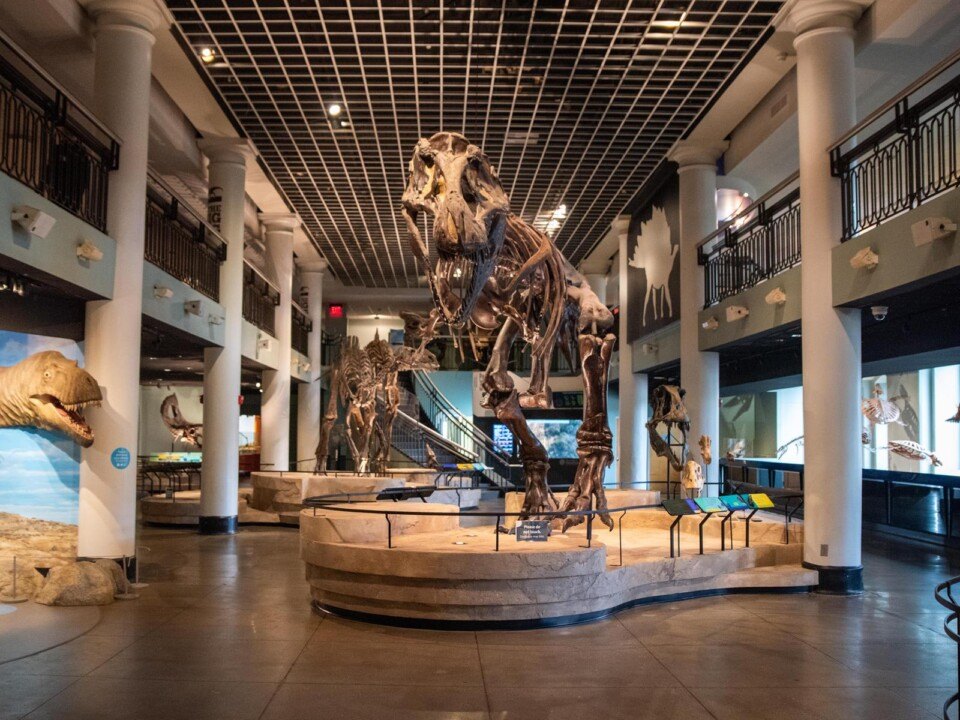
Dinosaur Hall / Photograph courtesy of the Academy of Natural Sciences
But sometime between the 2011 affiliation with Drexel and the 2016 leadership change, things began to take a turn. A head librarian was laid off, and the position sat unfilled for years until it was axed altogether. Academy curators were asked to spend half their time teaching at Drexel, which meant that their understudies, called collection managers, had more on their plates. Clancy took issue with the incursion of Drexel librarians and their digital cataloging systems into the Academy’s archives, due to a perceived lack of compatibility for the rare books it contained.
Then came the art gallery: a $3 million project in which multiple former ANS staffers say Cooper converted the library’s main reading room, where the readings used to be held, into a space for the avant-garde. “The problem with an art gallery is that there are plenty of places in Philadelphia where you can see wonderful art,” Clancy says.
She says Cooper would explain to staff that the pieces were meant to spur conversation about topics like climate change or the natural world. But the abstraction of the art felt out of place in a museum whose bread-and-butter was clearly explaining natural history to visitors, especially younger ones.
“[The art] was all extremely esoteric things that people visiting the museum were like, ‘Why are these pictures here? Or why is this log on the floor next to the sound of a babbling brook?” Clancy says.
Sontchi recalls other boondoggles. At one point, an art curator was hired and was placed in charge of exhibits, thus becoming Sontchi’s new boss. Sontchi says she found it increasingly difficult to get even small amounts of money for basic maintenance tasks: restoring crumbling signage in the museum’s Dinosaur Hall, repairing blank screens, dusting off the panda bears.
Another bombshell landed in 2022 when leadership shared a new study from an outside consultant — cost unknown — that included a strategic plan for the visitor’s side of the museum. Sontchi found its recommendations “appalling.” They included, she said, removing all of the museum’s dinosaur exhibits from display to make room for a “stark-chitecture” gathering space. She says the report also contained visuals that appeared to show the removal of the adjacent gift shop and a marble staircase, replaced by poured concrete steps where people could gather.
“A lot of people who got to see these preliminary plans were like, ‘Hey guys, what’s up with like, no dinosaurs? And where are the dioramas?’” Sontchi recalls. “They were like, ‘Yeah, we just really feel that’s not a forward-looking experience.’”
Sontchi, like other former staff members, expressed appreciation that Cooper and the leadership team were at least trying something — again, staff understood the museum was in trouble. But they harbored deep concerns that the ideas did not consider the museum’s core audience, and also lamented a withering away of some of the museum’s existing attractions. Popular existing exhibits such as the museum’s butterfly conservatory and a live animal center were expensive to operate and shuttered, never replaced by anything new, Sontchi says. Special exhibits that once wowed visitors with attractions like animatronic dinosaurs began to go extinct. Educational staff that helped bring the museum’s otherwise staid hallways to life were let go.
“Of course [the exhibits] can be renovated and made better,” Sontchi said. “But to rip it all out … are you out of your mind?”
What anyone at Drexel or the Academy with oversight of the changes made of them remains a mystery. Drexel University did not respond to questions about Cooper’s tenure and declined to make him — or anyone else — available for an interview. (Cooper’s LinkedIn profile now lists him as an “Advisor to the President at Drexel University.”) A representative of the Academy’s board of trustees also did not respond to questions about Cooper’s tenure; his resignation from the Academy was announced on September 1st.
Per the affiliation’s bylaws, the hire was Drexel’s to make, and to end.. An Academy employee familiar with his hiring, speaking on condition of anonymity, said Cooper was specifically brought on to “try to enhance” the public-facing museum side of the Academy, while primarily leaving its science side alone.
In a chapter he authored for Museums and the Challenge of Change, a book published in 2021, Cooper wrote that he engaged in an unconventional, eight-month strategic planning process that engaged staff, trustees, and consultants to develop a “shared purpose and clear vision” for change. While the chapter did not detail the resulting plans, it made clear the challenges Cooper saw at the institution.
“While the Academy’s affiliation with Drexel in 2011 deflected imminent existential threats, it was clear that very significant change was still required,” Cooper wrote. “As I assumed the reins of leadership, I sensed acutely that the Academy, Drexel, and Philadelphia each had their own expectations of the institution’s future and that culture stood a fair chance of eating strategy for breakfast.”
Staff say Cooper ultimately landed on the idea of attracting more adult audiences to expand the museum’s demographic profile; thus the focus on black-tie gathering spaces and art installations. There was also talk of relocating more of the research side to Drexel’s campus to better integrate scientists on both sides of the affiliation, while freeing up more space for exhibits at the museum. But, as noted, many of these ideas simply failed to gain traction, then were further waylaid by the pandemic. After that, Fry’s move to Temple in 2024 and the prioritization of Drexel’s financial troubles under Merlo seemed to spell the end.
“It didn’t work out as well as we hoped,” an employee of the Academy said.
A second current employee of the Academy, also speaking under the condition of anonymity to avoid professional repercussions, says Drexel was “pretty hands-off.”
But that appeared to change with Merlo’s installation as Drexel’s president in July 2025. By then, Drexel was digging itself out of its own $63 million operating loss. In September 2025, the museum announced a rollback of its public hours to just three days a week. This past April, Moody’s downgraded Drexel’s financial rating, citing a continuing “weakness in financial policy and financial management,” the Inquirer reported. Official invitations extended to Drexel’s new president to visit the museum went unfulfilled; one employee doesn’t recall him ever visiting the Academy except to introduce Governor Josh Shapiro at a Philadelphia Chamber of Commerce event held in May. (Drexel officials simply confirmed he has indeed been inside the building.)
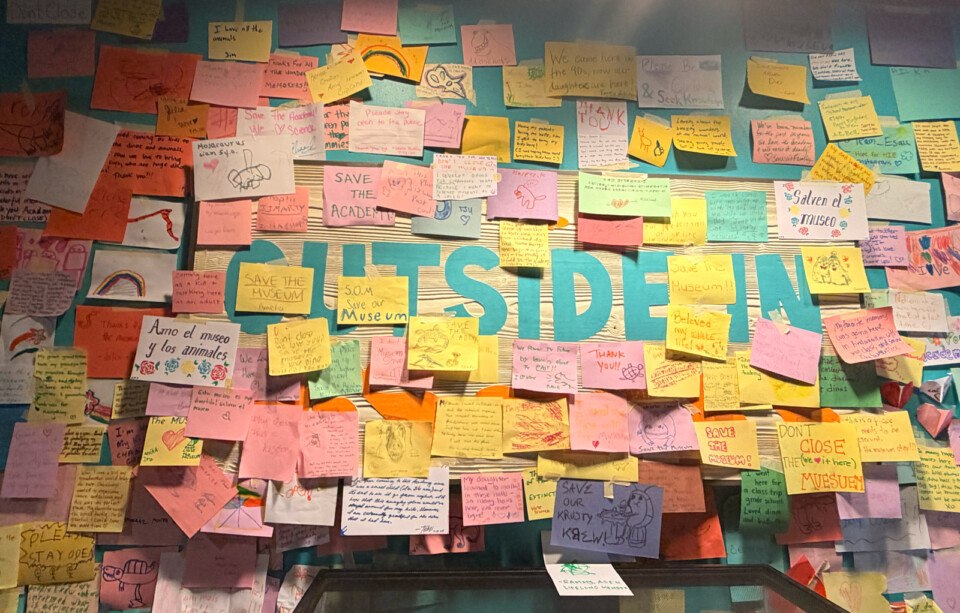
Some of the notes of support, grief, and memory covering the 3rd floor’s Outside In exhibit on the Academy of Natural Sciences’ final day. / Photograph by Laura Swartz
Then came September 1st, when Merlo and Suzanne Biemiller, chair of the Academy’s Board of Trustees, co-signed a letter announcing the closure of the Academy’s museum, while also stating Cooper had resigned. Media reports emerged, citing sources, that there is an intent to sell the building and relocate the Academy’s vast collection of millions of specimens off-site; to where, exactly, is anyone’s guess. The affiliated organizations’ official statement seemed to telegraph that intention:
“After examining a range of alternatives, Academy and Drexel leadership concluded that continuing to operate the museum in its current building and form would place increasing pressure on the resources required to safeguard the collections and sustain the research enterprise.”
For Daeshler, the former long-time Academy scientist who co-led the team that discovered the famous, 375-million-year-old specimen Tiktaalik, it remains hard to lay all of what has happened to the Academy at the feet of Drexel. But like many others, he just can’t square why there was no warning.
“I really don’t know why, while that deficit ballooned, Drexel didn’t work with the Academy to say, ‘Why is this happening? Look folks, we’re going to have to cut ties,’” Daeschler said. “So that’s to me the mystery, and I’m afraid I don’t have answers.”
Faulstick, the Drexel spokesperson, said that at the university’s “encouragement,” the Academy’s board and leadership underwent an extensive planning process in 2024 and 2025, partially supported by a Pew Center for Art & Heritage grant, “to identify a path toward long-term financial stability.”
“The effort included a comprehensive assessment of the Academy’s business model and explored options for establishing a more sustainable financial and operational model for the Academy, including the level of ongoing support required from Drexel,” Faulstick said. Though he did not identify what the assessment concluded.
He added that Academy leadership also had “conversations with a number of peer institutions about potential opportunities for collaboration,” but that they were exploratory and did not lead anywhere.
So now, the question: Given all that has transpired, is there any hope of saving the museum?
Negotiations are still ongoing, mediated by David L. Cohen, the former Comcast executive and ambassador to Canada now tasked by Shapiro to find a pathway forward. (Cohen is also the chairman of the board of Citizen Media Group, Philadelphia’s parent company.) The outcome is still very much in flux, but it’s hard to feel optimistic, say Academy scientists like Stefanie Kroll, who worked there from 2013 to 2022 before taking the helm of a nonprofit focused on recreation in Philadelphia’s waterways. That’s because even if Drexel can be removed from the equation, she believes that the Academy of Natural Science has been an institution in need of an overhaul for much longer.
“I think this is 50-plus years in the making,” Kroll says.
First, there’s the building. The exact level of deferred maintenance is unknown; sources leaked to the Inquirer a claim it is as much as $150 million (Neither Drexel nor the Academy responded to Philadelphia’s questions about the figure.) That’s an astronomical number, but perhaps grounded in reality. Former staff say there are leaky roofs over the collections, floors struggling with the weight of two centuries’ worth of specimens, and even an area of the complex closed off for what they suspect are severe structural issues. If a renovation would require the temporary relocation of significant amounts of the 19 million items in the museum’s collections, that would certainly add to the costs.
Kroll notes that when Academy scientists receive federal grant money, as much as 75 percent of the value of the award has gone toward paying the Academy’s overhead. Accounting for institutional costs in this way is a common practice in academia, in which a third-party entity evaluates the hosting institution’s needs and gives it an appropriate percentage. But a typical number for federal grants is between 50 to 60 percent for an institution, Kroll says, and the Academy’s higher rate demonstrates just how expensive upkeep had become.
Whatever the deferred maintenance number for the building is, Curtice, the Arizona-based paleontologist who has deep-dived the Academy’s finances, estimates that it would also need to increase its endowment, in short order, by at least $100 million — well more than double its current total — to generate enough annual revenue to replace the financial support Drexel is currently providing. In theory, that could raise the total price tag to bring the Academy and its building back to health to upwards of $250 million, although if the deferred maintenance issues can be triaged and philanthropic dollars used strategically, it might not be needed all at once.
But a raft of advocates point out that raising this monumental amount of money is tied to another need: new, effective leadership. And many former employees, especially women, say they were left feeling demoralized by what they viewed as largely an old boys’ club amongst past management, consisting of male supervisors they perceived as unwilling to listen to the rank-and-file.
A representative of the Academy’s Board of Trustees, which elected a woman, Biemiller, as chair last year, did not offer a response to the criticism.
Kroll says the backward mindset also contributed to the museum’s stagnation and the Academy’s financial precarity even before the affiliation with Drexel. She contrasts the Academy’s culture with other natural history museums across the country, such as Pittsburgh’s Carnegie Museum.
“It’s wonderful — it’s bright, it’s cheery,” Kroll says. “There are volunteers telling you things, there are actual specimens for you to look at and touch. It evolved from a place where, you know, wealthy explorers came together and talked about their discoveries and put out their collections. I just think the Academy didn’t want to grow out of that.”
The outpouring of public support right now is sweet. But if [leadership] couldn’t get any of these people on board before, then they’re just going to run into the same problem.” — Stefanie Kroll, who worked at ANSP from 2013 through 2022
Again, employees like Sontchi said they understood that Cooper was indeed trying to shake things up, but believed he took the wrong approach. For example, Sontchi says around 2016 she was able to get funding to renovate the gorilla and takin dioramas and install interactive screens helping to tell the specimen’s backstories. Sontchi says the improvements were a hit with donors and that money was raised to do more, but that she was “never allowed” to spend it as the Academy began to lean into adult-centered offerings.
And yet, many people interviewed for this story hold on to hope that there is still a path forward. Some believe that could actually still include a continued affiliation with Drexel, perhaps by relocating the Academy’s millions of specimens to Drexel’s campus and returning value to the university’s academic programs. In turn, moving the specimens could clear the way to fundraise for a major renovation of the museum and open up spaces for new, exciting exhibits.
But many others, including one long-time donor, say trust with the university is irreversibly broken, that Drexel is mired in its own financial woes, and that, however difficult, the Academy’s Board of Trustees should disaffiliate. That would create the immediate and essential need to locate new leadership capable of crafting an exciting new vision for the museum’s future, and also selling donors on what would undoubtedly be a massive fundraising campaign.
“The outpouring of public support right now is sweet,” Kroll says. “But if [leadership] couldn’t get any of these people on board before, then they’re just going to run into the same problem.”
Perhaps there is a middle path as well, advocates say. The boards of the Academy and Drexel could accept the standing offer from the William Penn Foundation, made in September, to pay for Drexel’s share of expenses for one year, delivering breathing room to make the big decisions and garner support. That could also help with a potentially tricky disentanglement of the affiliation: most individuals believe the Academy’s valuable assets, such as the building on the Parkway and the specimens, are its possessions and not Drexel’s. But Councilmember Ahmad says her office is still seeking the original terms of the 2011 affiliation to confirm who gets what in the event of a breakup.
That option appears unlikely. Faulstick said that while Drexel “sincerely appreciate[s] the many ideas and expressions of support,” the university’s focus remains on “securing a permanent, financially sustainable future for the Academy, one that protects its collections and research enterprise and provides meaningful opportunities for public engagement over the long term.”
In statements to the media, Cohen also appeared to throw cold water on both the idea that the Academy will remain in its current location or that the William Penn Foundation offer would be leveraged. (Cohen declined an interview, citing the sensitivity of the ongoing negotiations.)
To the frustration of outside advocates, there is little they can do to directly influence the process. Still, they’re trying. Groups like Save the Academy continue to furiously rally public support for a successful path forward, including a re-opening of the museum, while calling for more transparency. A virtual rally the group organized on October 15th drew 600 attendees from destinations as far as Anchorage, Alaska and Germany, and ended with a mass social media campaign directed at the accounts of the Academy and Drexel.
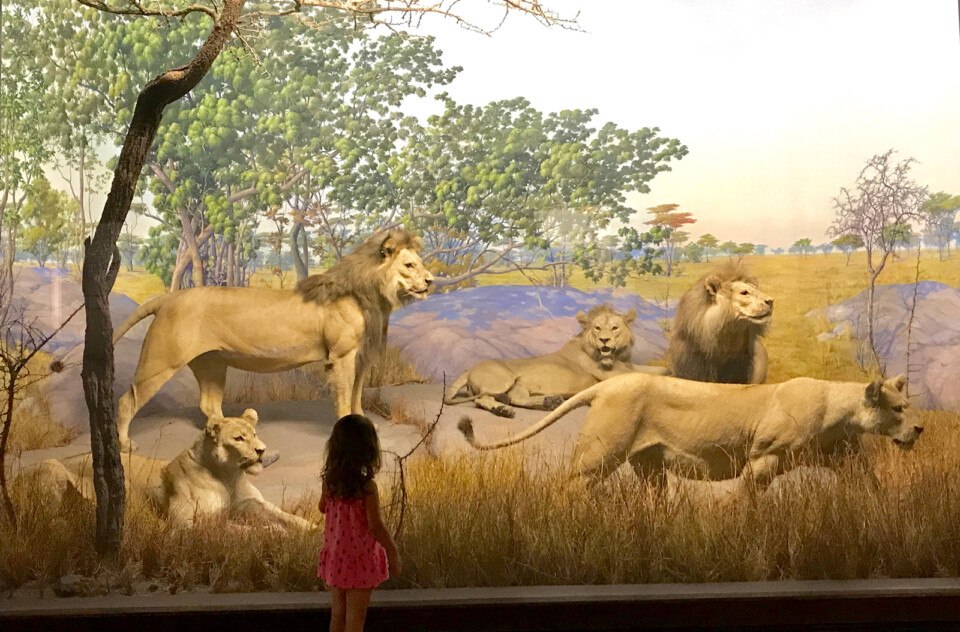
Diorama at the Academy of Natural Sciences / Photograph by Laura Swartz
The Preservation Alliance for Greater Philadelphia, meanwhile, says it is working to submit a historic nomination of the Academy’s museum within the next few weeks, which could lead to restrictions on a demolition of the building. And City Councilmember Jeffery Young, Jr. is at work on a bill to restrict the zoning of the Academy’s building to a museum or other public use, while Ahmad plans the October 26th public hearing, for which she has subpoena power.
Zoning restrictions on the use of the museum could prove an influential wildcard in the event that its potential sale is indeed a major focus of negotiation. But they could also prove counterproductive. Several sources, including Ahmad, say that a potential “overbuild” at the Academy — say, building a condo tower on top of its existing complex in order to help offset the cost of renovations or offer passive income — has been discussed as a potential part of the solution. A former senior scientist at ANS says Drexel even brought in a developer to kick the tires on such an idea early in the affiliation, but that the financials didn’t pencil out at that time.
Another factor, several advocates say, is the fact that Drexel seems to have poorly planned for the logistics of the museum’s closure, as well as the subsequent public relations blowback. There are no established plans with what to do with the museum’s taxidermy, which is laden with arsenic and will likely be expensive to relocate or even dispose of, a current staffer says. Meanwhile, the comment sections of Drexel social media ads targeting prospective students are filled with criticisms of the university, and there are concerns among faculty about how the controversy will impact student interest.
With so much up in the air, even disaffected former employees like Clancy hold out hope for the institution, while they mourn what has become of it.
“I hope I don’t sound whiny and bitter, because no place is perfect, but most of my time there, I loved it,” she said, her voice cracking. “There are people that have devoted their lives to it, and there are so many good things there, and they’ve just ruined it.”
This is a developing story.
Ed. note, October 22: This story has been updated to clarify one instance of sourcing, and the spelling of “stark-chitecture.”