10 Can’t-Miss Works at “A Nation of Artists”
The sprawling exhibition spans nearly 1,000 works across two museums. We asked its curators where you should start.

“A Nation of Artists” spans two museums with nearly 1,000 works of art.
There’s a time each August — somewhere between the 10th consecutive day of stultifying heat and the moment you realize you’re now sick of water ice — when a climate-controlled museum exhibit sounds less like a cultural outing and more like a rescue operation. “A Nation of Artists” is here for you.
In keeping with the spirit of the semiquincentennial, this groundbreaking show — held at the Philadelphia Museum of Art and the Pennsylvania Academy of the Fine Arts — highlights three centuries of American art by both celebrated artists and less well-known contributors to the nation’s visual culture. Among the exhibition’s 1,000 works are 120 personal treasures from the Middleton Family Collection, marking the first time that Phillies owners Leigh and John Middleton (winners of The Philadelphia Citizen’s 2026 Corporate Citizen of the Year Award) have made their private holdings — a remarkable collection more than 20 years in the making — public.
In an exhibit with too many treasures to count — Peale to Pippin, Eakins to Pollock, Cassatt to Oakley — we asked PMA curators Kathleen Foster and Alexandra Kirtley and PAFA curators Leah Triplett and Lea C. Stephenson to offer their can’t-miss picks for an inside look at the show everyone should see (or revisit) this summer.
Regimental Flag of the Third Virginia Detachment of the Continental Army, 1778
(Made in Philadelphia)
@PMA
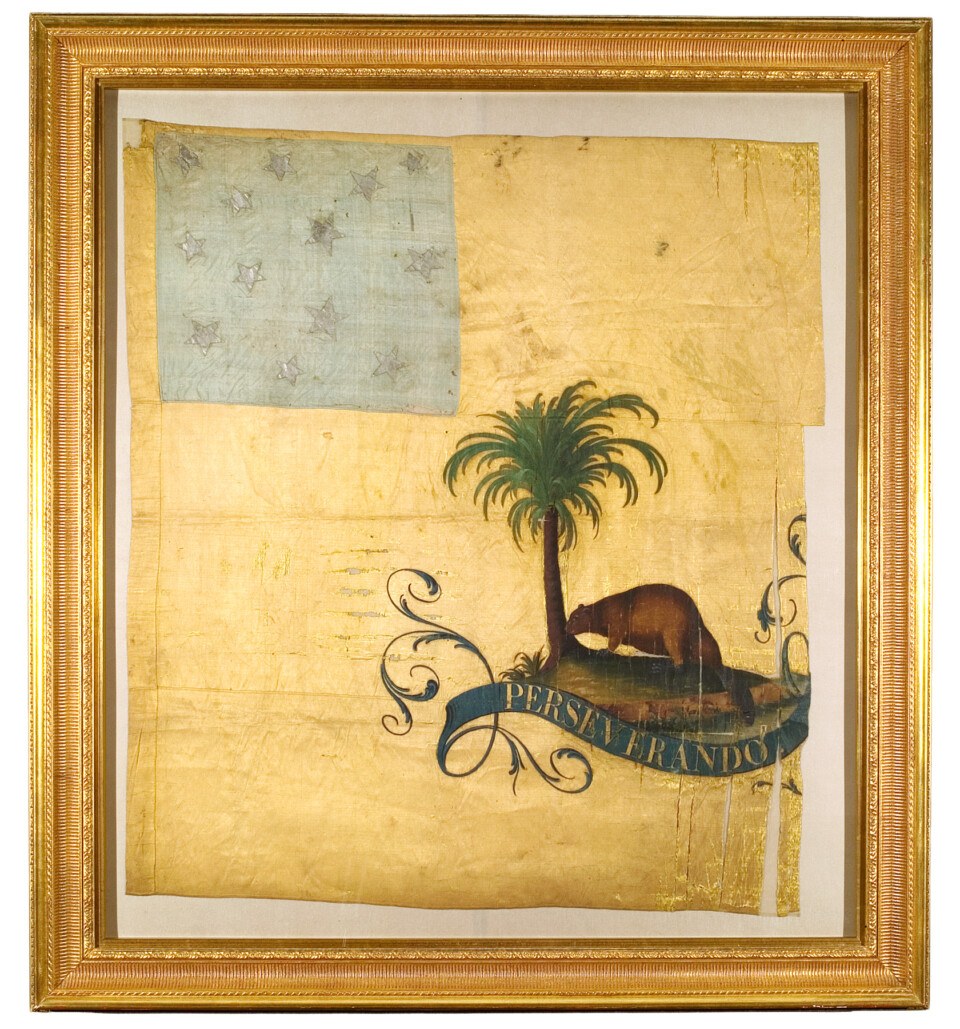
During the Revolutionary War, Philadelphia cabinetmaker Jonathan Gostelowe managed the design and making of flags. These “Gostelowe standards” unified the troops and conveyed battle messages, and their painted motifs (many designed by Benjamin Franklin) were adapted from currency. Here, an oversized beaver (symbolizing hard work and community) is shown felling a palmetto tree (used to protect armies). Like the flag, the Revolutionary-era furniture, paintings, and ceramics on loan from the Middleton Family Collection represent the high caliber of art made by American artists and artisans. The ability to produce luxuries — silver, porcelain, fine furniture, and paintings — was central to the Patriots’ revolutionary cause, for if Americans could use the country’s resources wisely and produce arts as fine as those of their foreign counterparts, America could surely thrive as an independent nation. — A. Kirtley
Beauford Delaney
Untitled, 1945
@PAFA
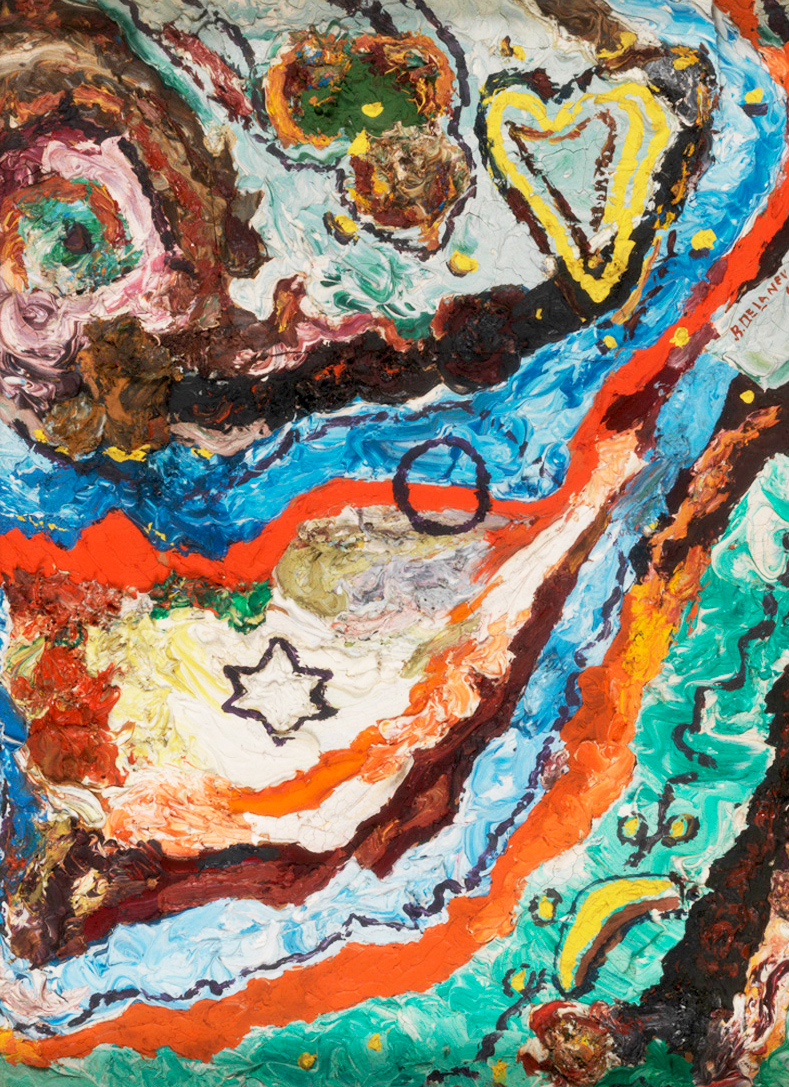
© Estate of Beauford Delaney, by permission of Derek L. Spratley, Esquire, Court Appointed Administrator, Courtesy of Michael Rosenfeld Gallery LLC, New York, NY
Untitled was recently conserved for “A Nation of Artists,” and its colors and texture are just sumptuous and sparkling. Intimate in scale, this painting nevertheless evokes the vivacious ambience of New York City, where Beauford Delaney lived when he painted it in 1945. It was a moment of transition for Delaney, as he was immersed in the effervescent cultural energy of Greenwich Village, experimenting with abstraction even while remaining rooted in the rhythms of urban life. Born in 1901 in Knoxville, Tennessee, Delaney was active in the Harlem Renaissance and was good friends with novelists including Henry Miller and James Baldwin. His portraits of well-known African Americans gained him wider recognition by mid-century, even as his style moved increasingly toward abstraction. Recognized now as one of the most important African American artists of the 20th century, Delaney moved to Paris in 1953 and eventually died in a French asylum in 1979. — L. Triplett and L. Stephenson
Face Vessel, c. 1880–1900 (Artist Unknown)
@PMA
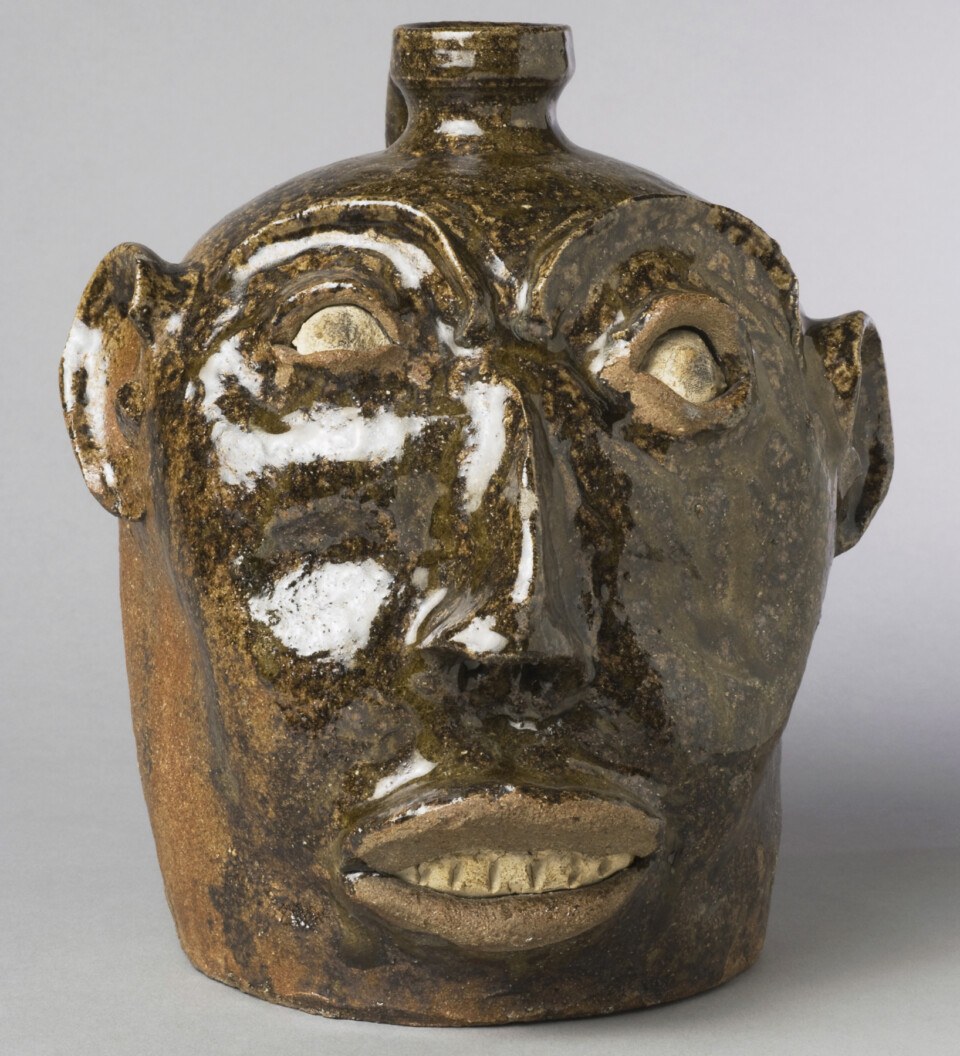
In 1904, PMA director Edwin Atlee Barber traveled to Bath, South Carolina, and selected this face vessel and two others for the museum’s collection. To him, the extraordinary ceramic tradition of Black artisans of the American South was a type of handwork that placed them within the bounds of art pottery, a movement that encouraged experimentation. Shaped like a water jug, this vessel’s expressive, caricature-like face signals that it is the personal work of a formerly enslaved potter, who made it beyond his mainstay work of storage containers. The teeth and eyes are made of the refined white clay called kaolin, which was — and remains — revered in Africa and the U.S. for being the main ingredient of porcelain. — A. Kirtley
Louis B. Sloan
Self-Portrait in Landscape, 1970
@PAFA
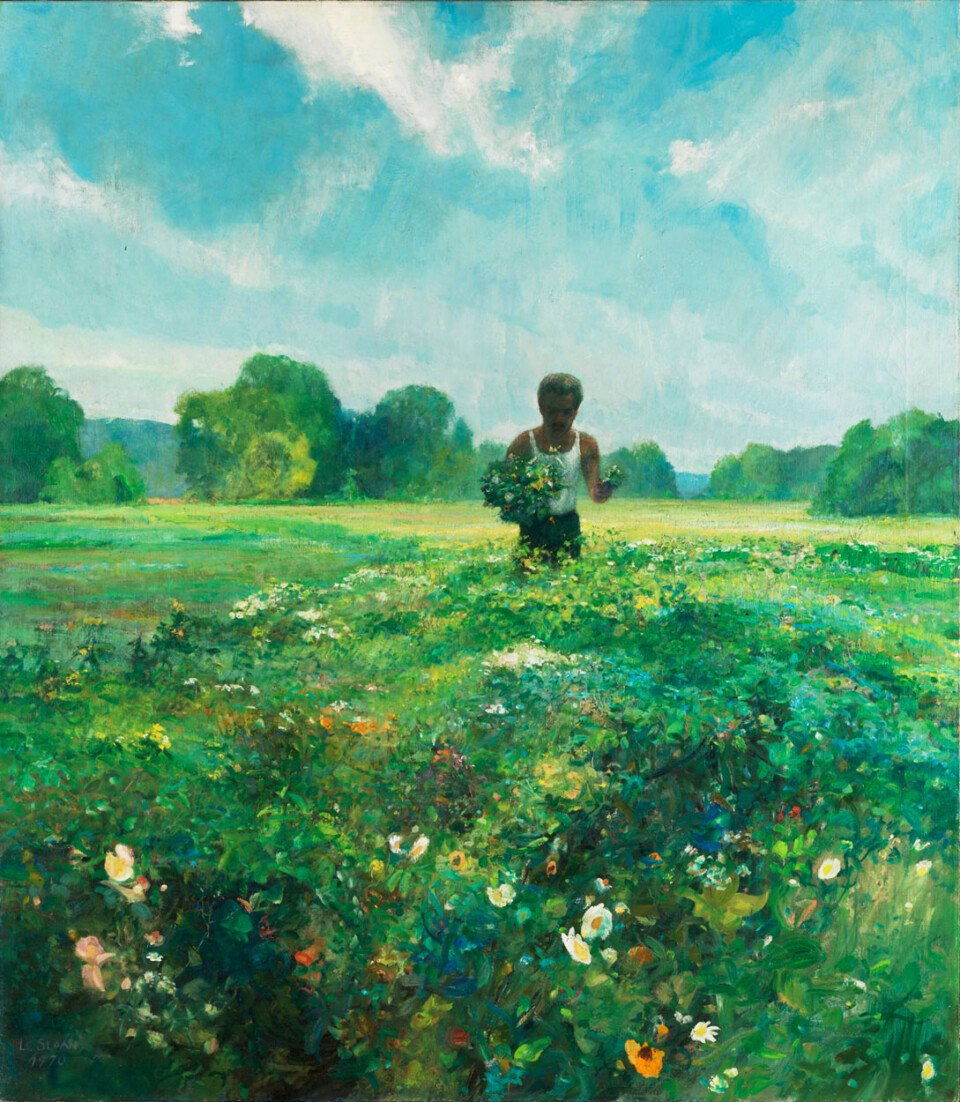
“My art has to stand on its own and speak for itself,” Louis B. Sloan once said. Trained at PAFA, Sloan also taught there and worked as a conservator at the PMA. Throughout his career, he focused on plein air painting, creating works that reflected his strong connection to nature, light, and atmosphere. His painting Self-Portrait in Landscape combines two important parts of his work: portraiture and the natural environment. Instead of presenting himself solely as an individual, Sloan situates himself within a landscape, highlighting the importance of nature in both his artwork and his personal life. The painting reflects his thoughtful observation, technical skill, and belief that art should communicate through feeling and experience. — L. Triplett and L. Stephenson
Albert Bierstadt
The Shore of the Turquoise Sea, 1878
@PMA
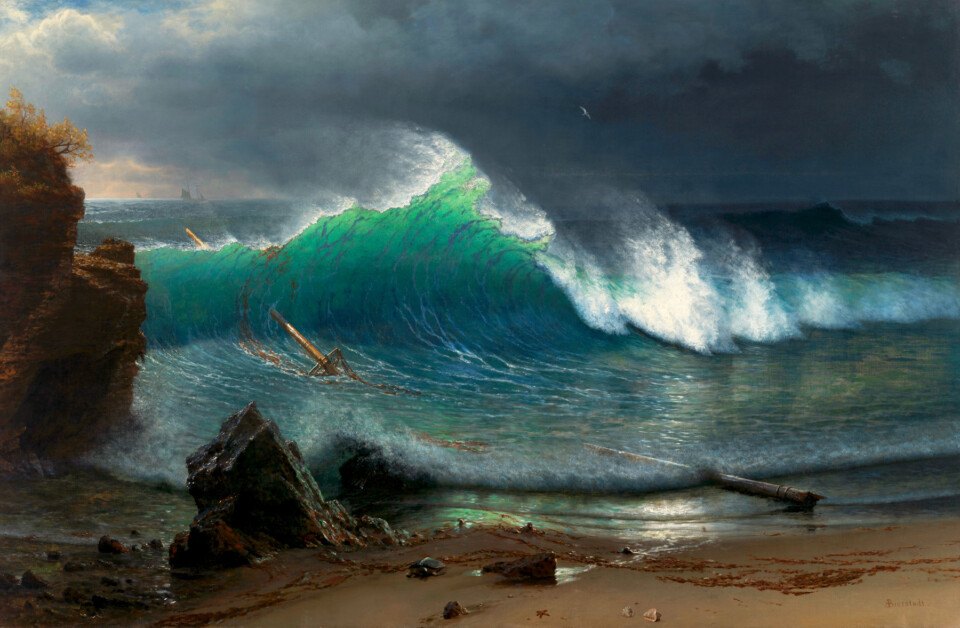
Standing in front of Albert Bierstadt’s painting, you can almost feel the sea spray from the blue-green wave about to crash at your feet. Shipwreck debris demonstrates the fragility of humans who try to master the sea. Better known for his expansive views of the American West, Bierstadt rarely painted the sea. He first challenged himself to paint the emerald color of thundering surf on a visit to California in 1872. Six years later in the Bahamas, he focused on a single, powerful breaker as a storm passed over, capturing the translucent color and windswept foam with amazing skill. The message of this painting concerns the beauty of nature that contains and overreaches human existence. Like the tiny turtle sparkling on the beach in the foreground (don’t miss him!), we are made to feel like a small part of an awe-inspiring universe. — K. Foster
Marie Watt
Skywalker/Skyscraper (Allegory), 2012
@PAFA
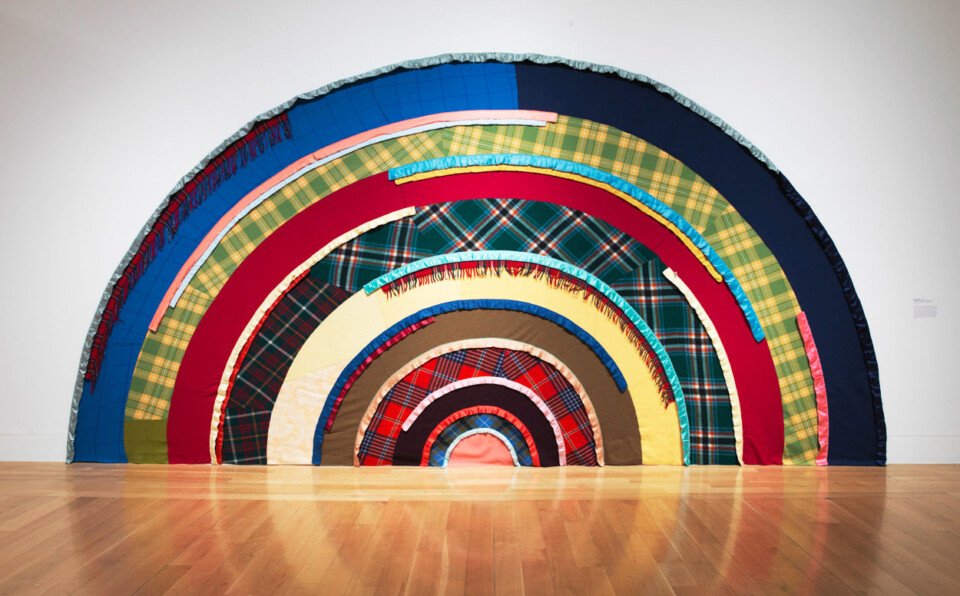
Measuring a monumental 19 feet wide, this work is composed of reclaimed wool blankets, a material important to Indigenous populations in the Americas. Marie Watt, a member of the Seneca Nation of Indians, notes that blankets “are everyday objects that can carry extraordinary histories of use.” Skywalker/Skyscraper, by extension, was inspired by Watt’s move to Brooklyn and her discovery that Cobble Hill and Gowanus (the respective locations of her home and studio) had been home to Iroquois ironworkers employed in building Manhattan’s skyscrapers during the 1950s. Watt remarks that “these Iroquois were called ‘skywalkers’ due to their ability to work on the high steel without safety harnesses.” With this textile work, she invites us to consider what histories might be invisible to us in our built environments, as well as the impetus to reach toward a natural space that towers above us. — L. Triplett and L. Stephenson
Georgia O’Keeffe
Red Hills and Bones, 1941
@PMA
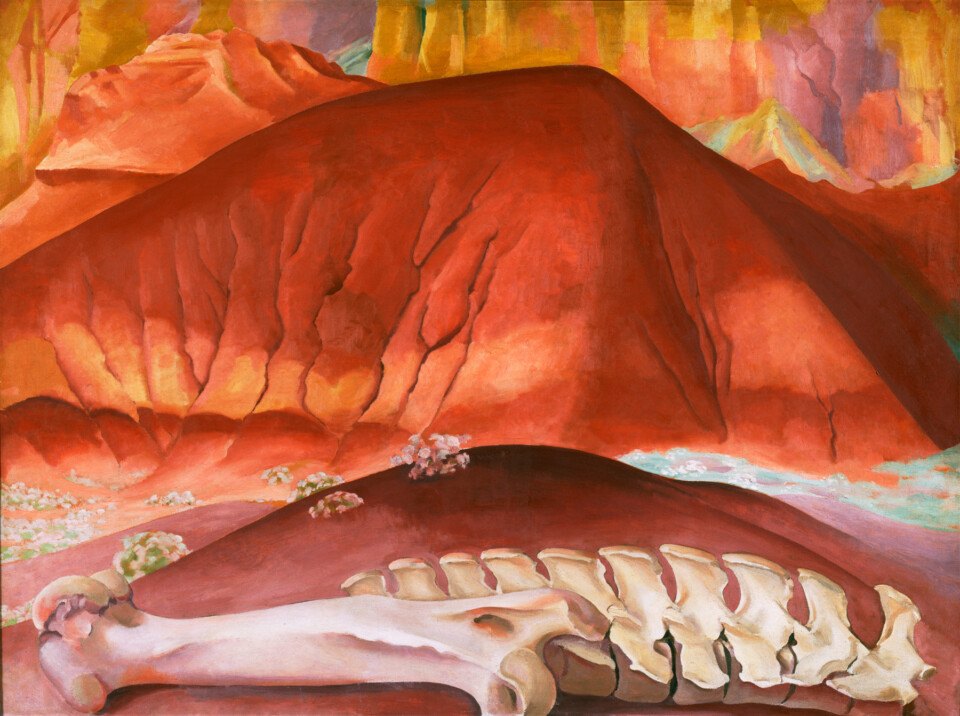
Georgia O’Keeffe fell in love with New Mexico on her first visit in 1929. Comparing the eroded bones of the landscape to the bleached bones of a cow, she created a visual meditation on life and death cycles in the hot, dry climate of the American Southwest. It’s a masterful combination of realist observation and abstraction. O’Keeffe moved to New Mexico permanently in 1949, a few years after the death of her husband, photographer and gallerist Alfred Stieglitz. Charged with dispersing her husband’s collection after his death, she gave this major painting to the PMA, along with many photographs by Stieglitz and iconic paintings by Arthur Dove, Marsden Hartley, and John Marin. At the end of her life, she added three more of her own paintings to the Alfred Stieglitz Collection, building the core of the museum’s famed modern American holdings. — K. Foster
Rose B. Simpson
Delegate, 2022
@PAFA
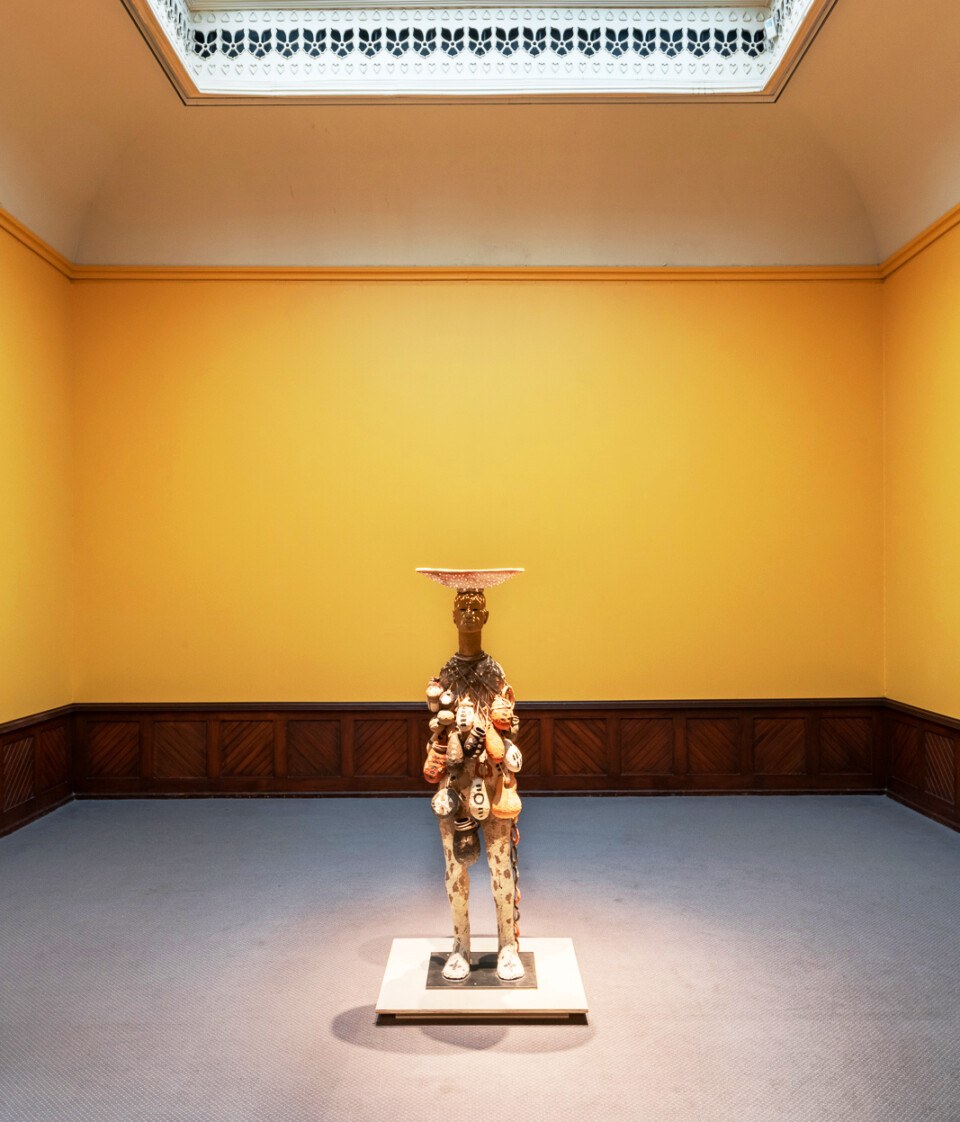
Contemporary artist Rose B. Simpson, of New Mexico’s Santa Clara Pueblo, uses clay to reclaim the traditions and lands of Indigenous peoples. This work’s title suggests someone appointed as a representative of ancestral knowledge, and here it’s a figure created in the material memory of clay, twine, steel, and rope. These hybrid materials signal a bridging: ceramic (earth, heritage), steel and hardware (industrial, modern), twine/rope (connectedness, binding), and grout (the space between). As her fingerprints demonstrate, Simpson uses her hands to assert human agency in an era often dominated by mass production and disembodied forms. — L. Triplett and L. Stephenson
John Singer Sargent
Group With Parasols (A Siesta), 1904–05
@PMA
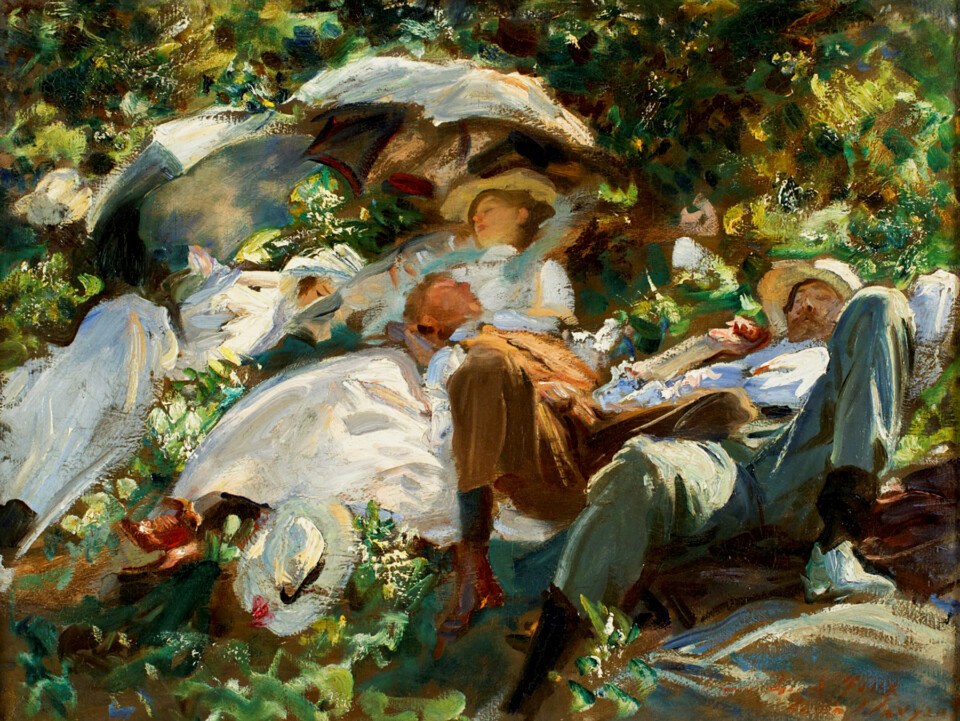
This painting makes me want to live John Singer Sargent’s life, or at least be part of his entourage! Sargent, who was born in Italy to parents from Philadelphia, was one of the most sought-after portrait painters of his day. In summer, he escaped the weary round of portrait commissions by fleeing to the Italian Alps, where he could sketch en plein air. For this work, after a picnic lunch and a few glasses of wine, Sargent found a place below his companions dozing on an Alpine hillside. His odd, voyeuristic vantage establishes a private, informal mood and gives him a challenge in depicting awkwardly foreshortened bodies — which he captures with perfect confidence. His impressionist approach visually complicates the sensuous tangle of bodies, fabric, and foliage with a pattern of dappled sunlight and an overlay of luscious brushstrokes. — K. Foster
Joan Mitchell
Untitled, c. 1960
@PAFA
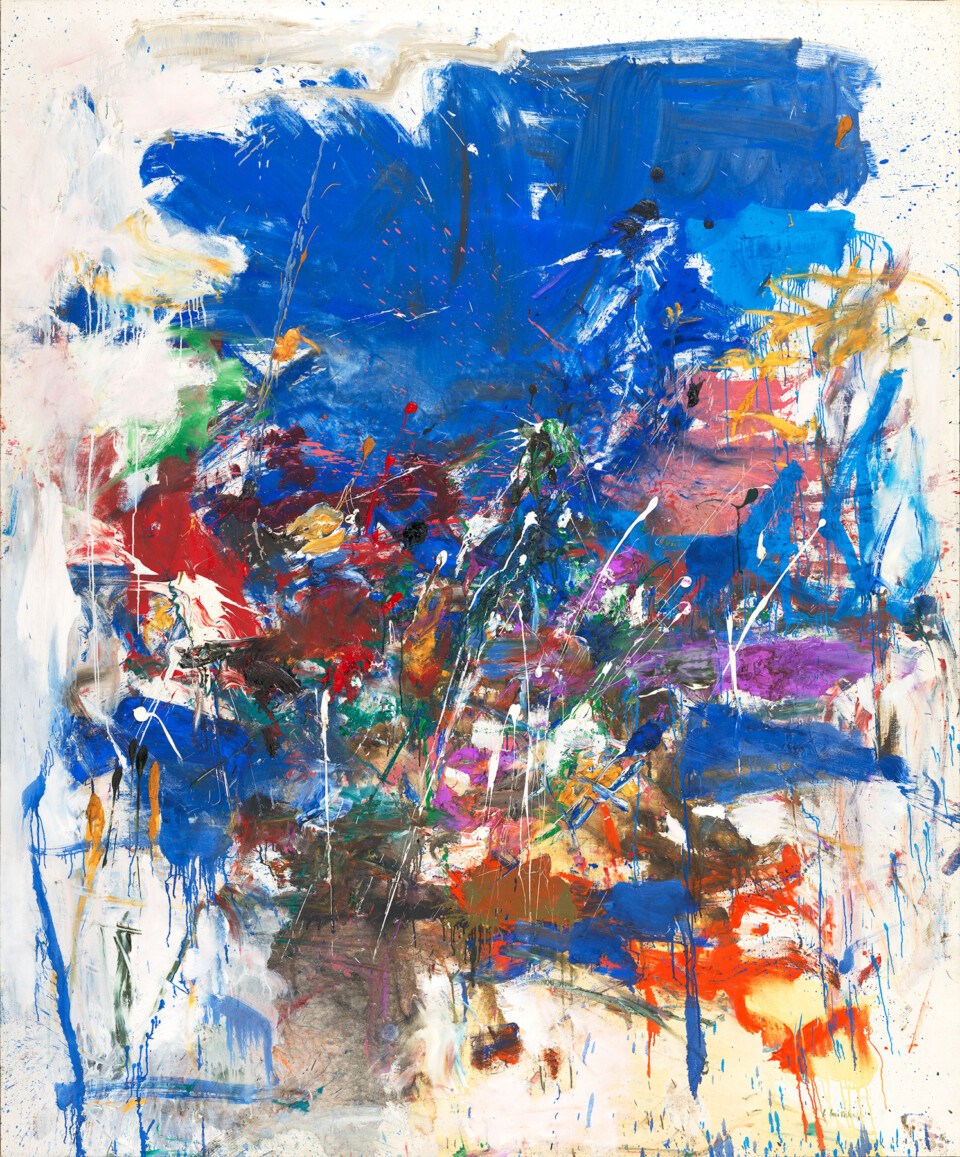
Joan Mitchell painted this majestic work during a period of profound personal transformation. After time in New York, the Chicago native moved to Paris in 1959; she remained in France for the rest of her life, finding solace in her relationships there and the artistic freedom to intermingle action painting with European hard-edge, non-objective painting. Like other abstract artists of her generation and beyond, Mitchell relished experimenting with new styles and techniques, such as her gashes of brushwork, which create line and shape through the power of her expressive gesture. Such an approach is evident in Untitled, as is Mitchell’s lifelong interest in landscape painting. Mitchell once told an interviewer, “I get more pleasure looking out my window than at a dot.” — L. Triplett and L. Stephenson
“A Nation of Artists” is on view through July 5, 2027 at the Philadelphia Museum of Art and PAFA.
Published as “Tour Guide” in the August 2026 issue of Philadelphia magazine.