

Pat Croce: Doing Chemo on Everest
What does a Zen guru, Philly cheerleader, rabid pirate enthusiast, and former Sixers owner do when diagnosed with terminal cancer? Climb the world’s most famous mountain, of course.
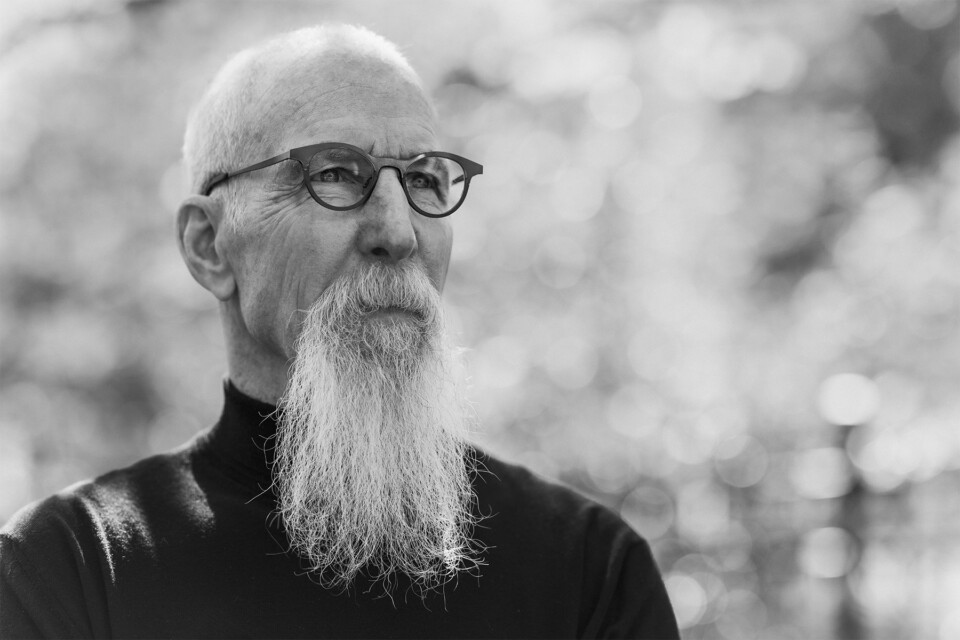
Pat Croce / Photograph by Colin Lenton
You cannot stay on the summit forever. You have to come down again. So why bother in the first place? Just this: There is an art of conducting oneself in the lower regions by the memory of what one sees higher up. When one can no longer see, one can at least still know.” — Renee Daumal
The mountain doesn’t care that he’s 71. It doesn’t care that he’s a grandfather, or that he once ran a professional sports franchise, or that he built a life on velocity — on outrunning stillness, on conquering whatever came next. It doesn’t care that he essentially built the physical therapy industry, making millions, or that he is North Philly born and Delco bred. It doesn’t care that he once made headlines in Panamanian waters, discovering, he is certain, the 400-year-old shipwreck of his favorite plunderer, Sir Francis Drake. It doesn’t care that, since turning 60, he’s retreated from the public stage, zeroing in on his own reflection, taming his own peripatetic ego. It doesn’t care that twice a day he takes a pill to keep his own body from turning against him.
No, the mountain cares about none of it. The mountain just … is. Up here, there is only breath. And for Pat Croce, even that is no longer guaranteed.
The trail has narrowed to a jagged suggestion carved into ice and rock, the kind of path that doesn’t forgive distraction. His crampons scrape, hesitate, catch. He leans forward and tries to draw in a full breath, but it doesn’t come — not fully, not cleanly. He tries again, deeper this time, and still it feels insufficient, as if the air itself has thinned beyond usefulness. He bends at the waist, hands braced on his thighs, and the wind seems to move through him instead of around him. His chest tightens, expands halfway, then stops. The gasps come, and he can’t resist them. It feels like a yak is sitting on him.
His heart begins to jitter — fast, irregular, a rhythm that registers immediately. It feels like that time he pushed his resting heart rate of 50 to 170 on a stress test, triggering a brief episode of atrial fibrillation. (“What do I do?” he asked his doc. “Don’t work out so hard” came the deadpan reply.) His lower back spasms, a sudden lightning strike that locks him mid-step. He tries to straighten but can’t.
Just as quickly, something else arrives: the Voice in the Head, the cascade of inner thoughts he’s trained himself to observe, frame in a thought bubble, and then watch float away. Only here it is now, that soundtrack of doubt. You pushed too far. Zen is easy at sea level; zen is harder when you’re approaching 17,000 feet on Everest and your sacrum and lungs are in full rebellion.
He closes his eyes — not in surrender, but in recognition. This is the moment. The one he’s been training for, not just physically, but spiritually. Years of meditation, of sitting still and watching the mind spin its stories, of learning — slowly, imperfectly — that the voice in his head is not him. That his thoughts — like his body — are not his true Self.
“This self-talk must be observed,” he once emailed me, early in his spiritual journey. “Not permitted to be the controller of your life.”
So, he watches. The panic flickers, the pain spikes, the thoughts surge and overlap, each one trying to claim urgency. He doesn’t fight them or try to transcend them; he lets them move through him. His breath begins to return in fragments — shallow at first, then slightly deeper. He straightens incrementally, tests his footing, and takes a step. Then another.
And then, almost comically, the alarm on his watch sounds and another realization cuts through the moment. He fumbles in his pack, muttering under his breath.
“Ah, shit,” he says softly.
Time to pop a chemo pill.
The last time you saw Pat Croce was likely about a quarter century ago. He burst onto the Philly scene in the late ’80s, first as an athletic trainer to our pro sports teams, then, starting in the ’90s, as a part owner of one of those teams. He was a dominant pop culture figure, taking over the moribund Sixers and injecting new life into the team and the city, shouting his trademark “I feel great!” slogan from the arena’s rooftop in TV ads, drafting Allen Iverson, taking the team to the NBA Finals in five short, dramatic, joyous years.
And then, just after the Sixers rose to the elite of the NBA in 2001, he was gone; an ego-fueled blowup with his senior partner, Ed Snider, led to Croce’s walking. He turned to new adventures, occasionally making headlines, and then turned radically inward. He became a seeker, spending more than a decade on a spiritual quest that has included lengthy retreats to Tibet, to Bhutan, to Thailand, to Jerusalem and other locales.
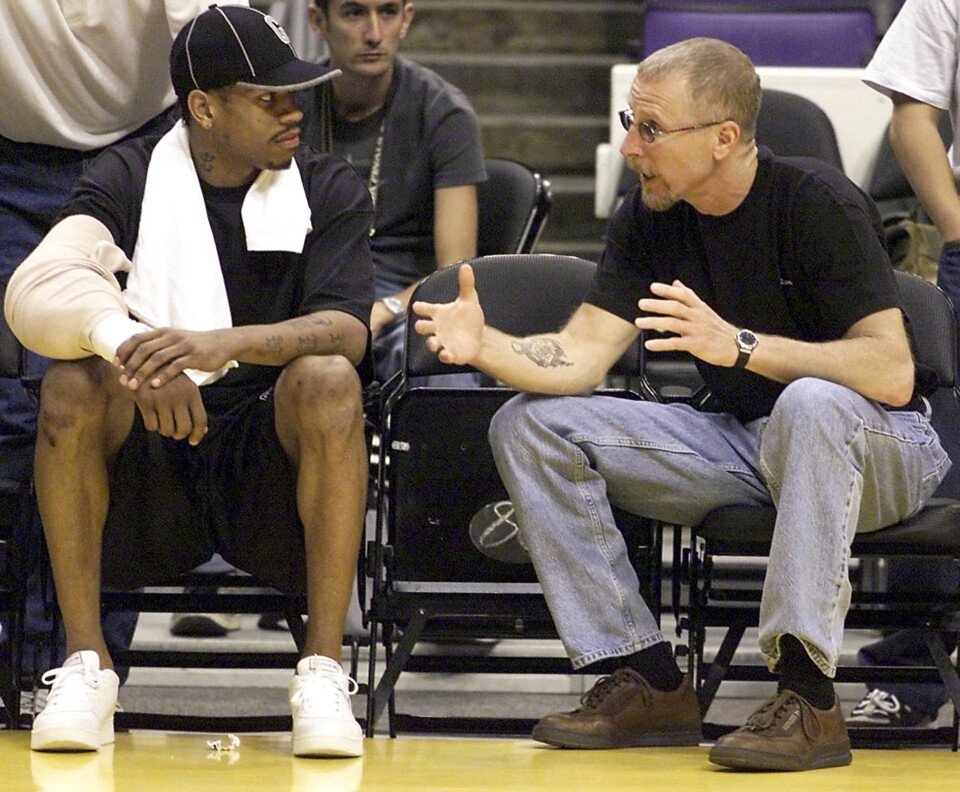
Pat Croce on the bench with the Sixers’ Allen Iverson in 2001 / Photograph by Jeff Haynes/AFP via Getty Images
Now he’s back (his book Enjoy Your Self Now! will be published in the fall), the Guru of Delco, a full-time version of a Buddhist bodhisattva, an “enlightenment seeker” who vows to help all beings reach psychic liberation. He goes on weeks-long monastic retreats and regularly leads virtual sanghas, convening others to share stories of their spiritual quests. Croce’s pursuit? That mystical state of No Mind, a place where one can quiet what he calls the “movie of me that’s always playing at a theater near you.” A place where one can just … be. Back in the day, his saintly wife, Diane, would ask, “What are you chasing?” He was, he says today, driven by insatiable ego: the next win, the next deal, the next standing ovation. A half hour after a star turn on The Tonight Show With Jay Leno he’d be feeling empty again. Enjoy Your Self Now! includes this epigram from his favorite philosopher, the Sufi mystic Rumi: “Yesterday, I was clever, so I wanted to change the world. Today I am wise, so I am changing myself.”
He may be our least likely philosopher prince, a driven type A-turned apostle for divorcing oneself from outcome. Such evangelism comes while popping two chemo pills a day to keep at bay Waldenström macroglobulinemia, a rare cancer, manageable with the meds for years … until it’s not. “I don’t have cancer,” Croce says. “My body has cancer.” It’s not denial so much as recognition of a deeper reality. This gets a little woo-woo: The body is merely the shell of an aware being that masquerades as Pat Croce in the realm of form, he says. One day over lunch at Bryn Mawr’s White Dog Cafe — Croce holds down the bar seat at the far end, facing the door — I asked: “Is it terminal?”
He smiled serenely. “I’m dying,” he said, looking around the room. “But so are you. So is he. And her. And him.”
Years ago, Croce was labeled “stark raving mad” by buttoned-down NBA Commissioner David Stern, when, upon their first meeting, the league’s newest owner swiped a clock in the shape of a basketball off the titan’s desk, promising to give it back only when his team won a title. (He still has it.) That Croce was addicted to outcome. Today, he is an ongoing prescription, in word and deed, for how to live. “Pain is inevitable,” he says, quoting the Buddha, “but suffering is optional.”
Trainer, sports-team huckster, civic cheerleader, guru, soul searcher. Pat Croce has lived many lives. But the one constant? Resisting leaving any life on the table. The Everest climb? The ultimate middle finger to cancer. “I’m sick of just surviving,” he explained to Diane before embarking on a trip she didn’t want him to take. Maybe Stern was right. You have to be a little crazy to fight your demons — a dysfunctional, hardscrabble youth; an ego in constant overdrive; an almost pathological urge to fight — to wind up so fervently pursuing inner peace. Diane’s long-ago question remains — “What are you chasing?” But perhaps more to the point, now, is this one: “What have you learned on this path?” And this one: “Will it ever be enough?”
Philadelphia in the mid-’90s to early aughts was vastly different than it is today. The city was still recovering from the trauma of having bombed itself roughly a decade earlier; its sports teams sucked; its populace had grown weary and cynical. By five o’clock on weeknights, Center City was a ghost town, the locals retreating. A few uniquely charismatic characters set out to turn things around, to shake the town out of its doldrums.
There was Mayor Ed Rendell, a native New Yorker, loving the city that had elected him so much that he’d get on hands and knees to scrub City Hall toilets. There was Stephen Starr, the dreamer, who imported fantasy dining experiences from other cities, creating nightlife buzz. And there was Pat Croce, the Delco hell-raiser. “You know he was scary crazy, right?” former St. Joseph’s men’s basketball coach Phil Martelli, who’d grown up with Croce in Lansdowne, once told me. “When I was a kid, if you saw Pat Croce on the street corner, you crossed to the other side.”
No wonder Croce was invited to leave West Chester University after beating the hell out of his dorm’s RA. After getting his act together and graduating from the University of Pittsburgh, he returned home and eventually burst onto Philly’s radar as the carnival-barking athletic trainer for the Flyers and the Sixers; long before anyone had ever heard the phrase “physical therapist,” he’d anticipated the oncoming weekend-warrior fitness craze and parlayed his position as trainer to the athletic stars into some 40 physical fitness rehab centers. In the bushes outside his Main Line rehab facility, star athletes like Mike Schmidt, Julius Erving, and Charles Barkley dry heaved after their workouts. Soon, T-shirts started appearing: I Survived Pat Croce. He moved fast, talked faster on his WIP radio show, and radiated a belief so aggressive it bordered on confrontation. He infected the region with a very un-Philly-like can-do optimism. Even his glasses at the time were rose-colored.
Croce’s Horatio Alger-by-way-of-Delco story accelerated when he sold his rehab centers to NovaCare for a reported $40 million in 1993. Within three years, he had orchestrated the buying of the Sixers, becoming the team’s minority owner and club president. He took a last-place team to the Finals in five short years. But Croce did more than that: Through relentless positivity, he made a cynical city believe again. “It was never about basketball,” he once told me. “The real value proposition was changing the city from ‘can’t do’ to ‘can do.’”
I was with him through much of that ride, and ever since. We’ve been workout partners for a couple of decades. In the gym, Croce played a stern taskmaster. But then as now he was capable of a type of in-your-face yet endearing boyishness. Case in point: One morning, he barked that I was late. Couldn’t be. He pointed to the clock: 6:05. How was that possible? He killed me, punishing me for my tardiness, at one point holding 35-pound barbells over my torso as I did crunches, threatening to drop them on me if I quit. Afterwards, as I slumped over with the dry heaves, he started laughing to himself.
“What’s so funny?” I gasped.
“Oh, I got here early and pushed the clock ahead 10 minutes,” he said.
When, in the early aughts, I was writing a book about his team’s iconic superstar, Allen Iverson, I found not one but two protagonists: the player from the ’hood and the owner from the wrong side of the suburban tracks. Together, their team didn’t win the championship, but it had more of an effect on this city than those that did, as evidenced by the love shown this past January, when the Sixers honored that squad at halftime. The loudest roars were, naturally, for Iverson, but Croce wasn’t far behind. The crowd saw what I saw years ago in these two contrasting, yet similar, packages: both undersized, both ferocious, both driven by passion, both etching into their skin their respective life philosophies, Croce’s pirate tattoo — “It means no rules, bro!” — the flip side to Iverson’s Edvard Munch–inspired “No fear” ink. The team was built in their shared image: a relentlessly resilient hungry dog that you counted out at your peril.
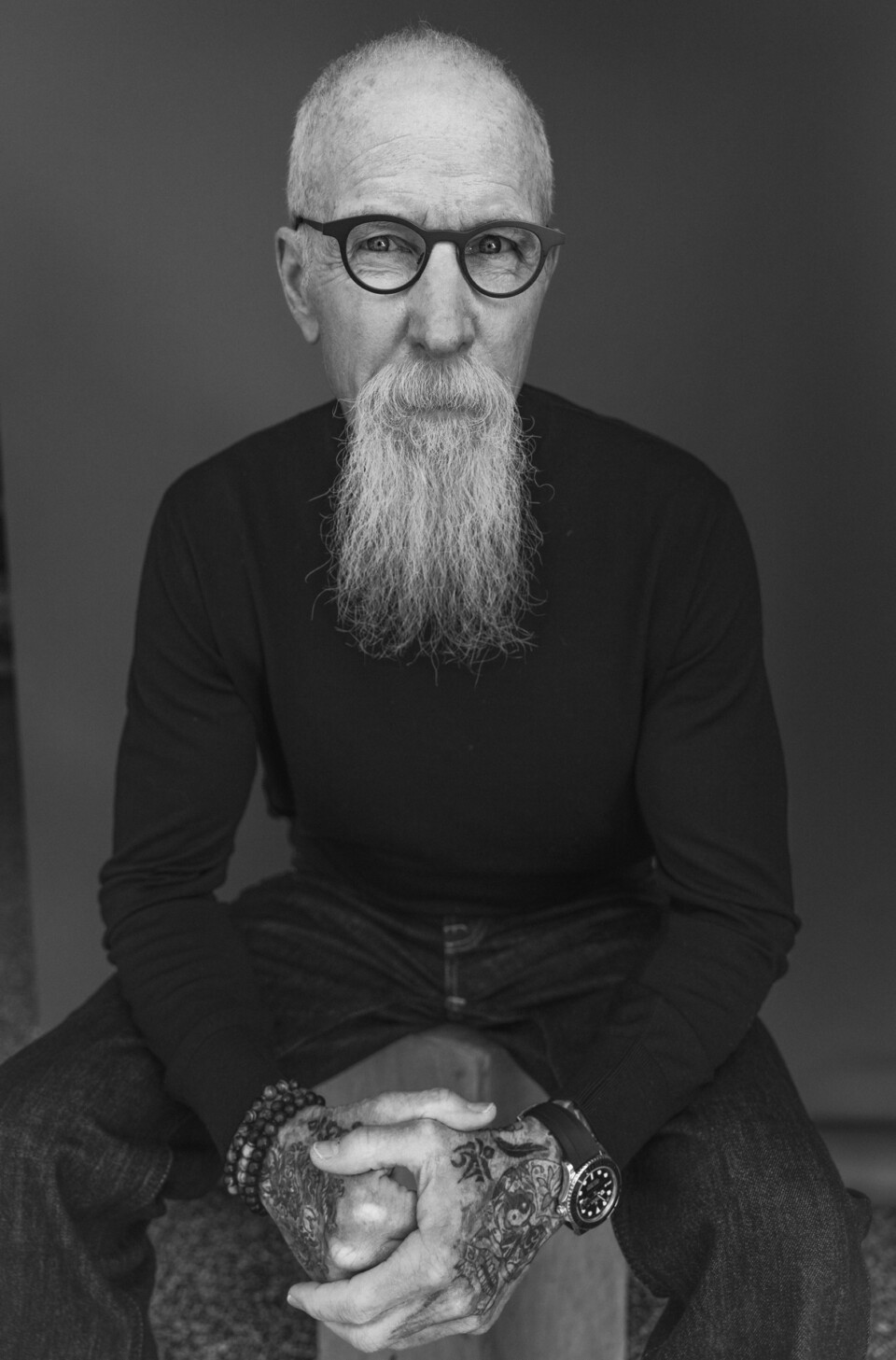
Indomitable Spirit Pat Croce in his Zen era / Photograph by Colin Lenton
Croce was everywhere back then, rappelling off the Walt Whitman Bridge, hugging Iverson at center court, greeting customers at the door on game nights, welcoming them to what he saw as their house. Each game, he’d select a different staffer — maintenance man, usher, concessionaire — and escort them to their front-row seats for the night, on him. When former President Bill Clinton wanted a seat in Croce’s box for the 2001 NBA Finals, Croce said no. “Fuck that,” he said; he’d promised the space to the guys who were with him on his rags-to-riches sojourn, guys from the streets with names like Meat, T-Bone, Mutzi, and the ex-con buddy whose wedding gift to Croce’s son Michael was actually a ghost gun. Suddenly, a high-profile professional sports team had heart, its players required to show up at community events. (Croce jettisoned Derrick Coleman after the star player refused to visit Children’s Hospital of Philadelphia. “You’ll never win a championship with a guy who won’t take time to visit sick kids,” he said.)
When it ended after the fallout with Snider, there was a foray into self-help motivation — a bestselling business memoir and a nationally syndicated life-coaching TV show, Pat Croce Moving In. Meanwhile, Croce bought a lineup of bars and restaurants in Key West, Florida, including the legendary Green Parrot, a live music dive bar whose slogan is “A sunny place for shady people.” This surprised nobody; of course Pat Croce would own an iconic honky-tonk. There was also his pirate fascination, which led to his opening in St. Augustine, Florida, the nation’s preeminent museum dedicated to his favorite marauders, not to mention the 2011 Drake expedition, which solved a 400-year-old mystery.
But as he was turning 60, Croce welcomed his employees to Key West for their annual managers’ meeting, and a thought intruded: “How’d I get here?” he wondered. “What am I doing here?”
Like the pirates he idolizes, he’d always been a man of action, too busy achieving and building and growing to ask the big-picture questions of himself. Who had time for introspection? As his managers made their reports to him, he realized: I have 500 employees in the hospitality industry. But what am I doing? I’m not Danny Meyer. This isn’t me.
“Sitting there, I realized that, when I was in the PT business, if I could help you get rid of that back pain, that meant something to me,” I remember him telling me. “The last Sixers win? Making the city believe in something again? That meant something to me. But I’m not interested in the last great hamburger you had. I love leading a team, but there I was, about to turn 60, feeling like I wasn’t taking action on my passion.”
Something else was at play. When a friend suggested that one’s 60s are the last truly healthy decade available to most men, that the wear and tear of Croce’s rabid physical fitness regimen might inevitably lead to physical decay in his 70s, his response was telling.
“If I make it to my 70s,” he blurted out. “I don’t think any Croce man has ever made it past 65.”
He’d never thought of that before. Was that the answer to Diane’s question: “What are you chasing?” Did his challenge deficit disorder stem from a sense that, on some level, he was living on borrowed time? Around the same time as his self-interrogation during his team-wide meeting in Key West, Croce read an article on the concept of stillness by Pico Iyer, author of The Art of Stillness: Adventures in Going Nowhere.
This, too, hit him. He’d always been a ball of coiled energy. He’d never known stillness. For the first time, he considered what to him seemed like a very odd idea: just doing nothing. Iyer, in his book, posits that, through memory, imagination, speculation, and interpretation, life is really just a collection of thoughts, which means that you can change your life by changing your thinking. Croce had spent decades transforming bodies. Now he wondered: Could he do the same for his mind and, ultimately, his spirit?
Soon, he’d sell his mansion on the Main Line. He’d get rid of the Bentley: “Who the fuck am I trying to impress?” he asked. Pat Croce was on his way to dismantling Pat Croce.
At night on Everest, the mountain settles into a different kind of difficulty. Camp is less a place than a pause — nylon tents staked into rock and ice, the ground uneven, the air thin enough that even sitting feels like effort. The temperature drops fast once the sun disappears, the cold creeping in through layers, through gloves, through heated sleeping bags, through whatever confidence you brought with you. Croce’s accommodations aren’t what others of his tax bracket would have their travel agents choose for them: a claustrophobic, unheated room, a hard cot, the bathroom down a walkway — really just a hole in the ground — that requires the sidestepping of piss or rain on the frigid ground, not sure which.
Sleep doesn’t come easily at altitude. The body interrupts, jerking awake as if to remind you that breathing is no longer automatic. By now, after all the pilgrimages, Croce has become adept at shutting down his mind, exorcising thought and becoming pure “witnessing presence.” Only up here, not so much. Now, he wonders if the mix of the chemo and altitude pills is hijacking what he’d become so accustomed to accessing: his own pure awareness. Instead, there is that Voice in the Head — Are the pills fucking with me? If my back continues to strain, should I take Celebrex? How many?
He returns to his breath. He listens to it — the shallow inhale, the incomplete exhale, the quiet insistence of a system under strain. Years ago, this would have driven him crazy. Now, he watches. He’s the observer, not the doer.
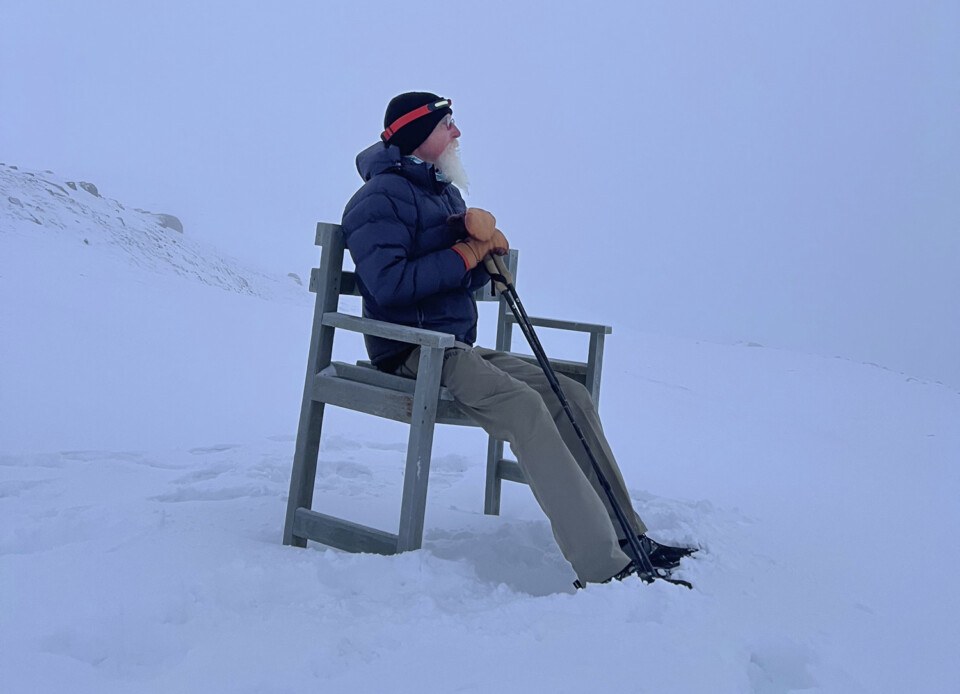
Croce, taking in the stillness of the mountain / Photograph courtesy of Pat Croce
There’s a quiet, unspoken understanding among those who climb Everest, a kind of altitude-born honesty. No one says what everyone knows — that each step tomorrow will ask more than the last — but it’s there in the way conversations taper into silence without awkwardness. On day two of the trek, the only other 70-year-old Croce has met on his journey bails — it’s just too much. Croce knows it’s not due to physical exhaustion so much as mental.
“The mind is a beautiful servant,” he says, quoting the Indian sage Osho, “but a dangerous master.” Come daybreak, he trudges far ahead of the others, even Bikram, his guide.
The ground is ragged and rough, the incline so stark, each baby step narrated internally and meticulously acted out. It’s a meditator’s dream: You’re forced into being mindful of every movement. Oncoming yaks crowd cramped trails; one misstep sidestepping them and the expanse of sky beyond the cliff beckons. Dust and shit rise off the yaks, causing “kumba cough” and running the risk of infection if the ashy haze gets through your face covering. Still you climb, taking it heel to toe, heel to toe. There is no time. Only steps. Just every little step.
In November of 2015, Croce threw himself a wild 60th birthday bash at Key West’s Green Parrot; a parade of Philadelphians attended and saw Croce leap up onto the bar, moved by the thumping backbeat of the band, a couple of dark-sunglasses-and-black-suit-wearing dudes playing “Soul Man,” doing Aykroyd and Belushi.
To see Croce dancing was to take in the loosest, most comfortable-in-his-own-skin white guy you’ve ever seen, limbs flying every which way, mouth open and roaring skyward, his followers and friends below him reaching upward like it was Springsteen up there. And, in a way, it was: He was their working-class hero, a rebel by nature who had taken them all — some from Delco, some from boardrooms, some from motorcycle gangs — with him on many an adventure.
Now here he was, stomping on the bar, getting the crowd, his crowd, worked into a hot, sweaty frenzy, until his cousin — a high-ranking FBI official who by day stares down mobsters and international cyberterrorists — noticed that a ceiling fan was whizzing dangerously near Croce’s bobbing and weaving close-cropped head. “That’s not good,” the G-man muttered before reaching up to grab the gyrating pirate — who seemed to think at first that this was part of a new dance move instead of an attempt to save him from a birthday beheading. He kept dancing. Without a pause, Diane welcomed a troupe of Key West drag queens — Diana Ross, Tina Turner, and, of course, Marilyn — to serenade and gyrate against her husband.
Now, in retrospect, it’s easy to see what all that partying was really about. Pat Croce was saying goodbye to his old life. In short order, the ultimate achiever turned his hospitality empire over to his son and son-in-law and walked away without a plan, other than to explore. At 60 years old, Pat Croce would start a search for his soul.
Soon I was getting emails from around the globe. In an ancient monastery high in the mountains of Bhutan, Pat and Diane spent three weeks in retreat with Rinpoche Matthieu Ricard, the Buddhist monk and French translator for the Dalai Lama who, after neuroscientists spent 12 years studying the effects of meditation on his brain, is commonly referred to as “the happiest man alive.” Croce emailed me this journal entry from there:
The voice in the head has you thinking about living life, not really living life, and certainly not being life. I like the spiritual teacher Ram Dass’ description: “You’re always one thought away from where the action is.”
It’s vital to realize that Life is only now. Unfortunately, the voice in the head rarely exists in the vertical dimension of now. It thrives in the horizontal time dimension of past and future, a delusional existence. Think about it — there is no past and future. Show it to me. You can’t. No one has ever experienced a past or a future. Try it. The past was never not now, and the future will never not be now. And until you become consciously present and merge with “what is” in the present moment, rather than with the thoughts in your head, you’ll never experience the ultimate peace and joy you are unconsciously seeking.
The great singer-songwriter Leonard Cohen wrote, There is a crack in everything/That’s how the light gets in, and this journal entry is just one real-time example of what Croce refers to as his own head cracking. When he first started on the path, you could count me as a skeptic. Croce had spent much of his adult life mastering challenges: practicing martial arts, flying helicopters, riding motorcycles (a passion that once nearly resulted in a leg amputation). More recently, he’d become an expert woodworker and furniture maker and even taught himself kanji — the complex system of Japanese writing. This was just another pursuit, right? He was going to take up and master spirituality the same way he’d pursued other passions for decades.
But something was different this time. You could see it in the way our workouts changed. For years, we’d talk about the Sixers between reps, or whatever lunacy happened to be in the news. In other words: We wouldn’t talk about anything, not really.
Now, I’ll share with him my flirtations with the writings of Pierre Teilhard de Chardin, a 20th-century French priest who was effectively excommunicated for advancing the radical notion that we’re here on Earth to finish the work of Creation, a lovely prescription for those of us who believe in the transformative power of a shared civic life. And Croce will quote lines already committed to memory from the latest Sufi mystic he’s studied at 4 a.m., usually something about how what we think of as existence is all illusion, an egoic construct. Like any good brainteaser, it’s enough to give me a headache, and it puts me in mind of the old Woody Allen line: “I got kicked out of college for cheating on my metaphysics final exam. I looked into the soul of the boy sitting next to me.”
Give him this much: He has done the work. Not cleanly, not without relapse — there are still those small regressions, the old reflexes flaring. A few years back, we clashed at the gym. When I arrived, he was already deep into his routine, breath steady, iron rising and falling in his grip.
“You’re late,” he snapped.
I told him I was right on time. That only sharpened him. “Real athletes get here 15 minutes early!”
But I’m not a real athlete, I quipped, which, in that place, was heresy. The gym is his sanctuary, discipline its liturgy. My irreverence stung him.
Another time, after a project unraveled between us, we went silent for weeks. I thought him overbearing; he thought I was insufficiently committed. We were both likely a little bit right. Words were exchanged. When I called one of his closest friends for perspective, he offered a quiet caution: He’s changing, but he hasn’t changed.
That was my satori — a moment of insight. Changing. Yes, unmistakably so. I have seen the arc. Where once he drove me with a drill sergeant’s demand — needling me past endurance — now he gathers me in, unguarded, and says he loves me. The man who once demanded more now listens more. When he speaks to others, he invokes a line like a koan: How’s that working for you? And in the asking, something opens. He is present in a way that feels almost luminous — attentive, patient, disarmingly kind. By any measure, the path he has chosen appears to be working.
And still, there are questions that refuse to quiet. To set off for Everest with chemotherapy coursing through your veins suggests that some hunger remains unappeased — a deficit not of discipline, but of … stillness? Contentment? It echoes that older question, first posed by Diane: What, exactly, are you chasing? He resists such inquiries, preferring the language of spirit to that of psyche. But even the most transcendent striving casts a shadow. No one moves with such relentless velocity without being propelled by something unseen.
He admits as much: There has long been a void within him, one no summit quite fills, only postpones. Where did it begin? In the knowledge that no man in his family had lived past his 60s? In the violence of a father whose blows are erased from memory, though their residue endures? The particulars may be lost to childhood, but their pressure remains, shaping the man. Lives like his are not built in still water. They are driven — urgently, sometimes desperately — by currents pressing from behind.
And yet, if somewhere within him lives a frightened boy, this, too, is true: More than anyone most of us will ever know, he lives in a constant state of becoming. He is unfinished in the most deliberate way, forever reinventing himself. That, in its own way, is a type of bravery, because no one has the guts to live a life quite like this.
Back on Everest, the climb stretches into hours, then days, each one collapsing into the same cycle of effort and recovery.
The goal for Croce was never to reach the summit, 29,000 feet atop the world — which, stepping over dead bodies and running the risk of losing toes to frostbite, could take another six weeks. No, it had been to reach Base Camp on day eight, 17,500 feet, and then to climb Kala Patthar, the crown jewel of Everest sunrise vantage points. From a bench at its peak, a seeker takes in a shifting palette of golden hues and shadows rising from the imposing Everest, like an early-morning crescendo of light and stillness, of scale and surrender, that asks nothing of you but to witness it, and, for a fleeting moment, to feel very small and very alive.
Kala Patthar is only a 45-minute climb, but it’s all incline. That’s when the quads start to go (despite the eight-minute wall squats he’d done daily for months in training), when the A-fib starts to act up, when the breath just won’t come. That’s when the Voice in the Head makes its cameo, and Croce wills himself to ignore his body’s complaints and instead just feel them. The answer is always pure awareness. Six inches of snow covers the ground and whips through the air. Vaguely, he makes out Kala Patthar’s bench and settles in.
Only, owing to the weather, he can see no sunrise on this day. He thinks of the old Jewish expression the late local entrepreneur and civic leader Ron Rubin once taught him: Man plans and God laughs. So there he sits, blinded by the snowy swirl, unable to even see his own hand in front of his face. And it’s … kinda cool. Like, disembodied pure presence. Like he’s inside a snow globe. Whoa. He’s floating. It settles over him: This, this is what I’m here for. He’s been reading Joseph Campbell, and the words come to him now:
What I think is that a good life is one hero journey after another. Over and over again you are called to the realm of adventure. Each time there is the same problem. Do I dare? And then if you dare, the dangers are there and the help also and the fulfillment or the fiasco. There’s always the possibility of fiasco, but there’s also the possibility of bliss.
That’s it. Pure bliss.
Later, back home in April, 10 pounds down, the urge will rise again, that yen for something beyond himself in adventure and challenge. He’ll muse about a pilgrimage along Japan’s mountainous healing trail between Osaka and Kyoto, the Kumano Kodo. Maybe in a few years to mark his 75th birthday?
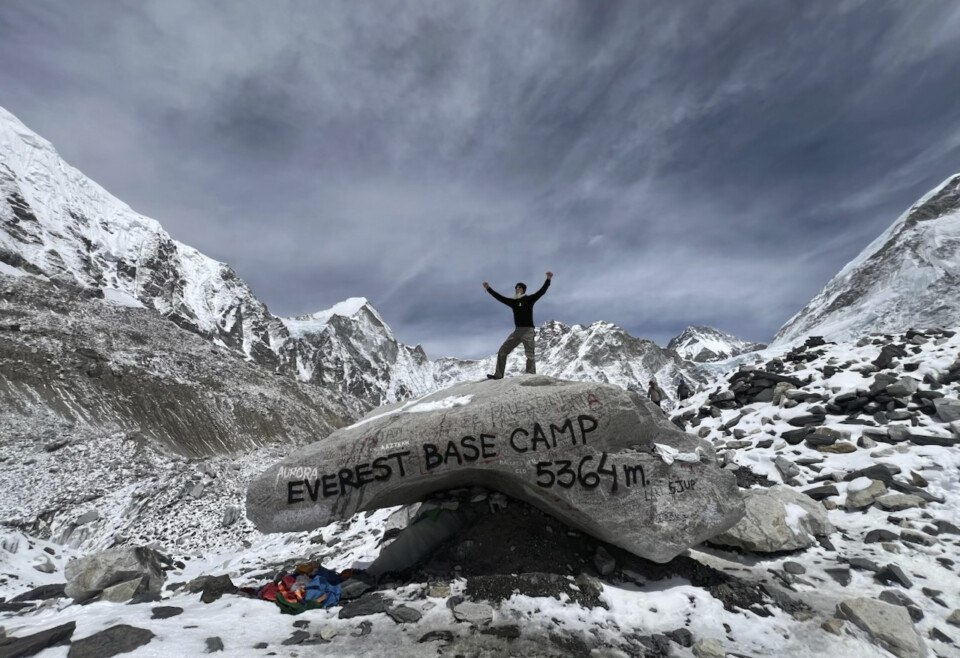
Croce at Mount Everest Base Camp / Photograph courtesy of Pat Croce
But when asked what he’ll remember of this latest expedition, which he calls the hardest thing he’s ever done, he’ll be transported to that moment atop Kala Patthar, blinded and floating on a mountain, solitary near the top of the world. And he’ll talk of the people he met on the way up Everest. The group of Welsh dudes, all of whom shed their shirts, dropped down, and did push-ups upon reaching Base Camp. Kokta — the 61-year-old local who hauls goods on his back from one village to the next on the Everest trail, selling, always selling. “You’re an entrepreneur!” Croce roared before overspending on products he’ll never need, moving Kokta to hug him. He’ll think of the Sherpa who earns $25 a day, lugging 50-pound backpacks, and he’ll gaze at the photo he took of the man’s wide-eyed expression when Croce tipped him $1,000. Most of all, he’ll think of Erin, a young blond woman he happened to overhear singing to herself.
“You’ve got a great voice,” he said. “Sing me a song.”
She asked for a request. “Sing ‘You Are My Sunshine,’ ” he said. “That’s what my dad sang to my kids.”
And then she does, and it’s haunting, and then others gather around, and there they are, a group of strangers from across the globe on top of the world, singing together, Croce in tears, a moment of connection mixed with forgiveness and beauty and love and, yes, peace — everything that beats so intensely inside him all the time. Before leaving Philly, Croce — ever the savvy pitchman — had bought the URL sunriseovereverest.com. Turns out, he didn’t even need the sunrise. He became one with a mountain and didn’t have a care in the world.
Published as “Pat Croce’s Mountain” in the June 2026 issue of Philadelphia magazine.