Pennsylvania Hospital’s New Museum Is the Coolest Place to Visit in Philly Right Now
The nation’s oldest hospital is now a public museum. Here’s what you can’t miss when you go.
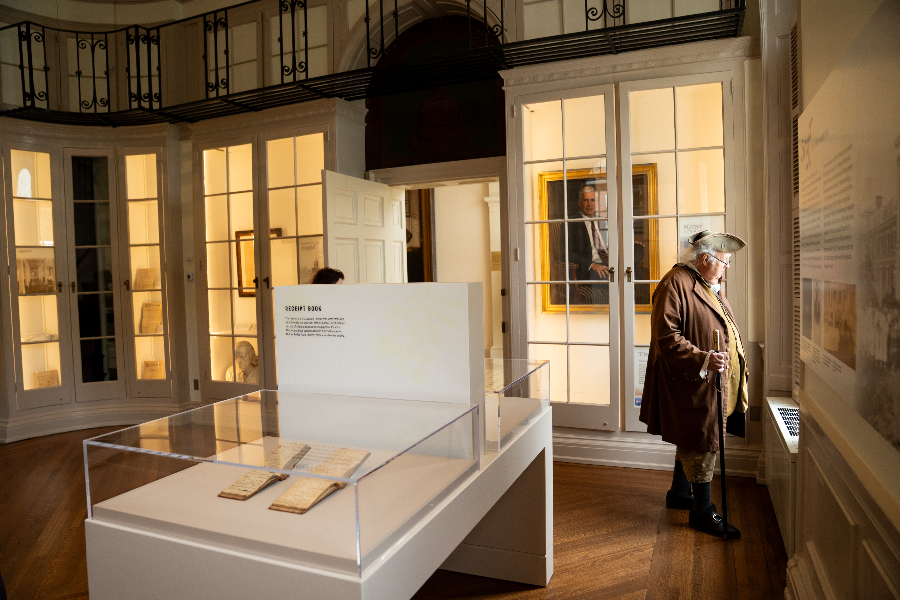
The Pennsylvania Hospital Museum officially opened to the public on May 8th. / Photography by Margo Reed Studio
Ask any Philadelphian about Pennsylvania Hospital, and chances are, they have some connection. Likely, the response will be related to being born or giving birth there, as the Washington Square West hospital — the first in the U.S. to deliver a baby, in 1765 — now sees more than 5,000 babies born annually.
But Pennsy, as it’s belovedly known, is more than its longstanding history in maternal care. The hospital has shaped the city itself — and the framework for medicine and health care in the United States — for 275 years. It is recognized as the nation’s first hospital; is home to our country’s first nursing school and surgical clinic; and pioneered care of the mentally ill, taking a more humane, compassionate approach when it first opened compared to the harsh practices of 18th-century asylums — and providing psychiatric care to Philadelphia’s poorest residents, which, at the time, was considered groundbreaking.
To celebrate the hospital’s 275th anniversary — and just in time for the nation’s semiquincentennial — the historic health-care facility has just opened a museum. It officially debuted to the public on May 8th.
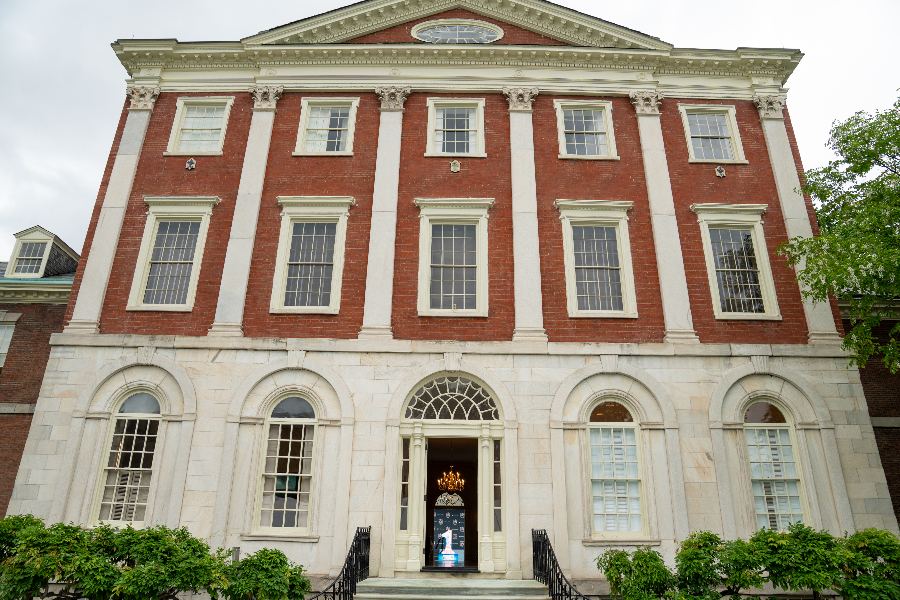
The historic Pine Building is the site of the new museum.
Inside the Pine Building — the site of the original hospital that Benjamin Franklin and physician Thomas Bond co-founded in 1751 — you can check out eight galleries showcasing the extraordinary evolution of maternity care, behavioral health, outbreaks and epidemics, and medicine as we know it today. Even cooler? You can step inside — and feel like you’ve stepped back in time — both the medical library, which is home to more than 13,000 original books, and the surgical amphitheater, where surgeries were performed before an audience, without anesthesia. (Yikes!)
Stacey Peeples, Pennsylvania Hospital’s lead archivist and curator of 25 years, spearheaded the newly unveiled project. Doing so is a massive undertaking — again, we’re talking nearly 300 years of history! — but Peeples says curating the exhibits wasn’t as challenging as she had anticipated, as the artifacts themselves dictated the story that the museum would tell. “There are so many things the hospital is well-known for, like women’s health and behavioral health,” she says. “They are so part of Pennsylvania Hospital that the exhibits almost fell into place naturally, on their own.”
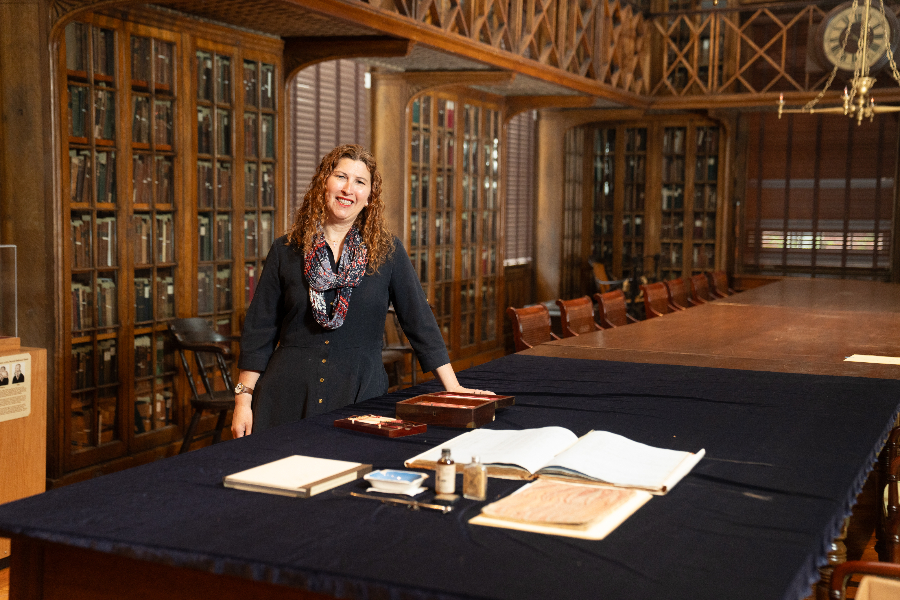
Stacey Peeples, Pennsylvania Hospital’s lead archivist and curator, inside the medical library
The real challenge? Narrowing down all the tools, record books, and historical objects. “When we’re talking about, say, epidemics and outbreaks, there’s so much information we could’ve brought forward,” she says. “The hospital was taking care of patients during the Seven Years’ War, the American Revolution, up through World War II — the question became, ‘What do we cut?’ And we realized we didn’t have to display everything. We could change things out, adjust, and add new captions, to keep telling the story.”
For just $10, you can peruse the galleries on your own or sign up for a guided tour. Ahead of your visit, we’ve put together a list of items-on-display that you simply can’t miss. These seven wonders are just the beginning — trust us, you’ll want to see it all.
1. The surgical amphitheater
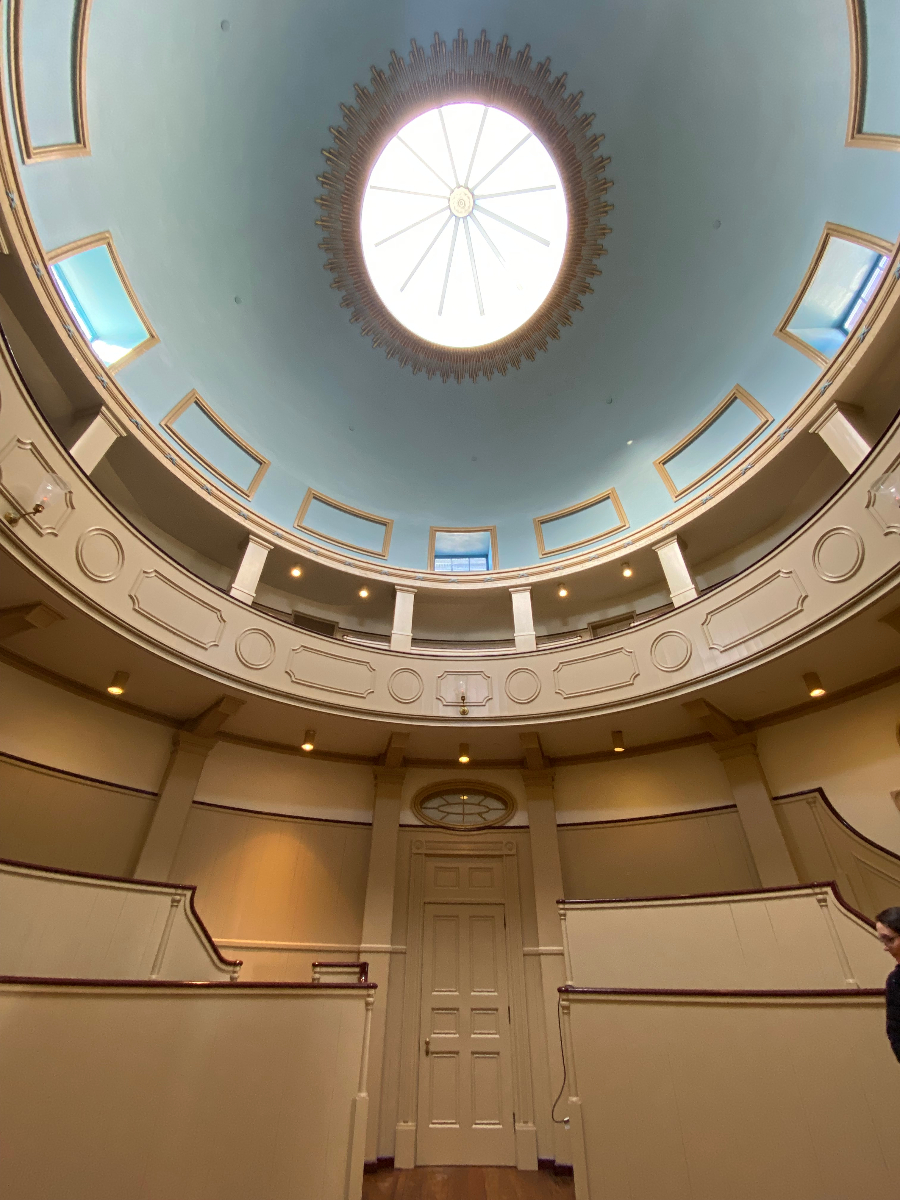
If you’re going to visit for anything, let it be this. Housed on the third floor, the nation’s first surgical amphitheater — a grand, circular space with a domed, skylit ceiling — was once the site of live operations (from tumor removals to limb amputations) that were performed without sedation. Yes, patients were awake and could feel everything.
The amphitheater was used from 1804 until 1868, and is considered North America’s oldest. I recommend sitting on one of the observation benches, where, long ago, aspiring medical students watched surgeries to receive boots-on-the-ground medical training. The experience is a form of time travel — and, albeit a bit surreal, it’s incredible we have this monument in our backyard.
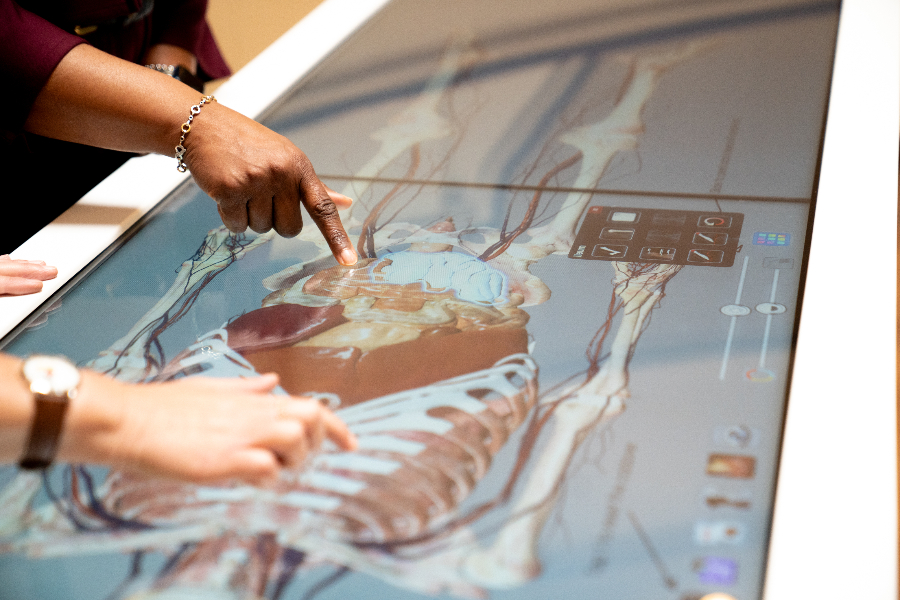
The interactive anatomage table
Before you venture to the next exhibit, make sure to play around with the anatomage table, a high-tech screen the size of an operating bed that lets you visualize, rotate, amputate, and dissect a 3-D visual of the human body. You can remove skin to explore muscles, nerves, and bones, and see how organs work, including a beating heart. You can even cut open the human head to look at a brain — without the mess!
2. The 13,000-book medical library
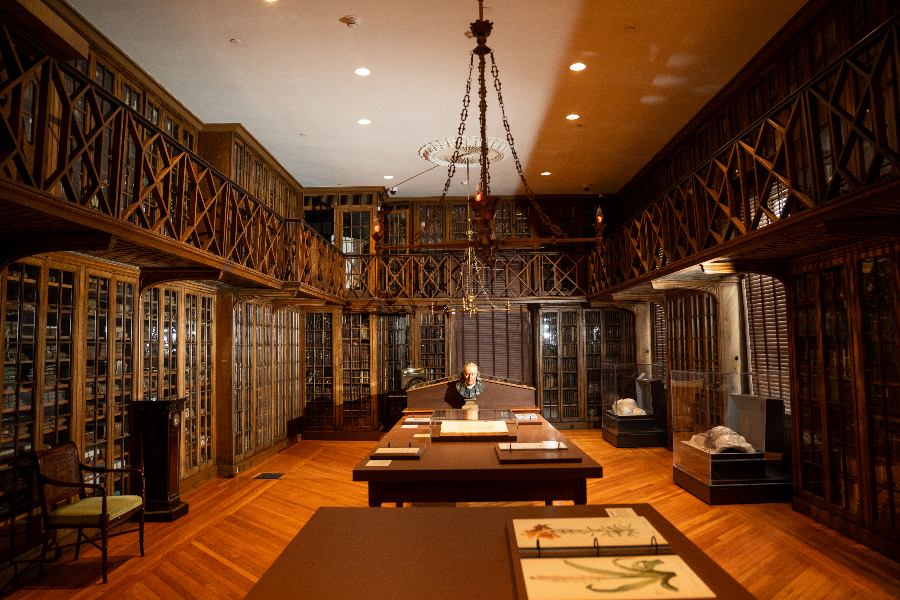
Just one floor below lives the medical library, considered the nation’s first. It’s a regal space, with dark wood paneling and books upon books from floor to ceiling. For a time, the library served as the maternity ward, which is why plaster casts of pregnant patients there are on display in the room. (There’s also a bust of Ben Franklin, whose eyes seem to follow wherever you roam.)
“Everything here is going to be medical, as it was defined at the time [of publication],” Peeples says, noting that some texts date back to the 16th century. “There are over 13,000 volumes that physicians actually used. They began amassing the collection in 1762, and it hasn’t been moved since 1835.”
While you can’t take a book off the shelf, you can flip through reproductions of several rare books, so you can see what the original botanicals, natural histories, and anatomical volumes contain.
3. 75 pull-out drawers in the Apothecary
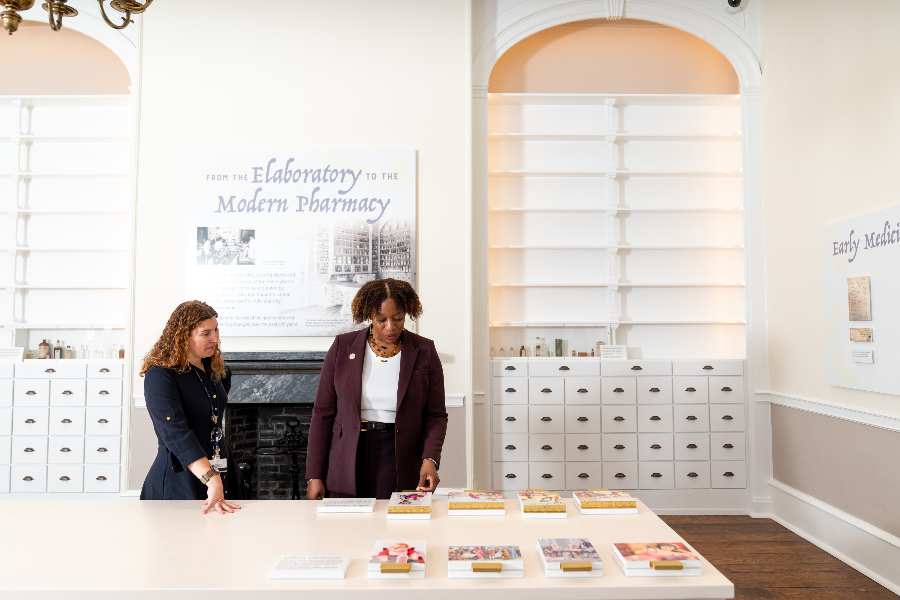
Peeples and Alicia Gresham, CEO of Pennsylvania Hospital, inside the restored Apothecary
Upon opening, Pennsylvania Hospital had an associated Apothecary, where patients shopped for remedies often made from plants and herbs grown on hospital grounds. Inside the restored room on the ground floor, find antique medicine bottles, a 19th-century homeopathic medical kit, and “trading cards” that were used in the 19th and 20th centuries to advertise various pharmaceuticals.
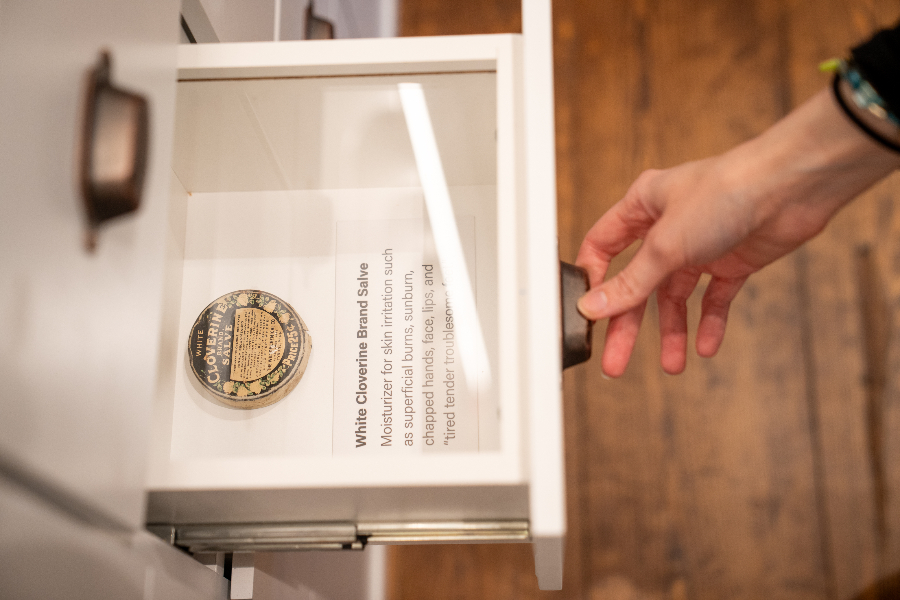
The real fun in the refurbished Apothecary are the 75 drawers that were once used to store herbs, tinctures, and tools and are now interactive learning experiences. (Yes, you can open every one!) Inside, find artifacts like pill boxes, medicinal tins, and salves.
Bonus: The museum has partnered with the Pennsylvania Horticultural Society (PHS) for a series of create-your-own events that focus on natural remedies, including a make-your-own herb garden session, a tea-making class, and a natural bug-repellent demo.
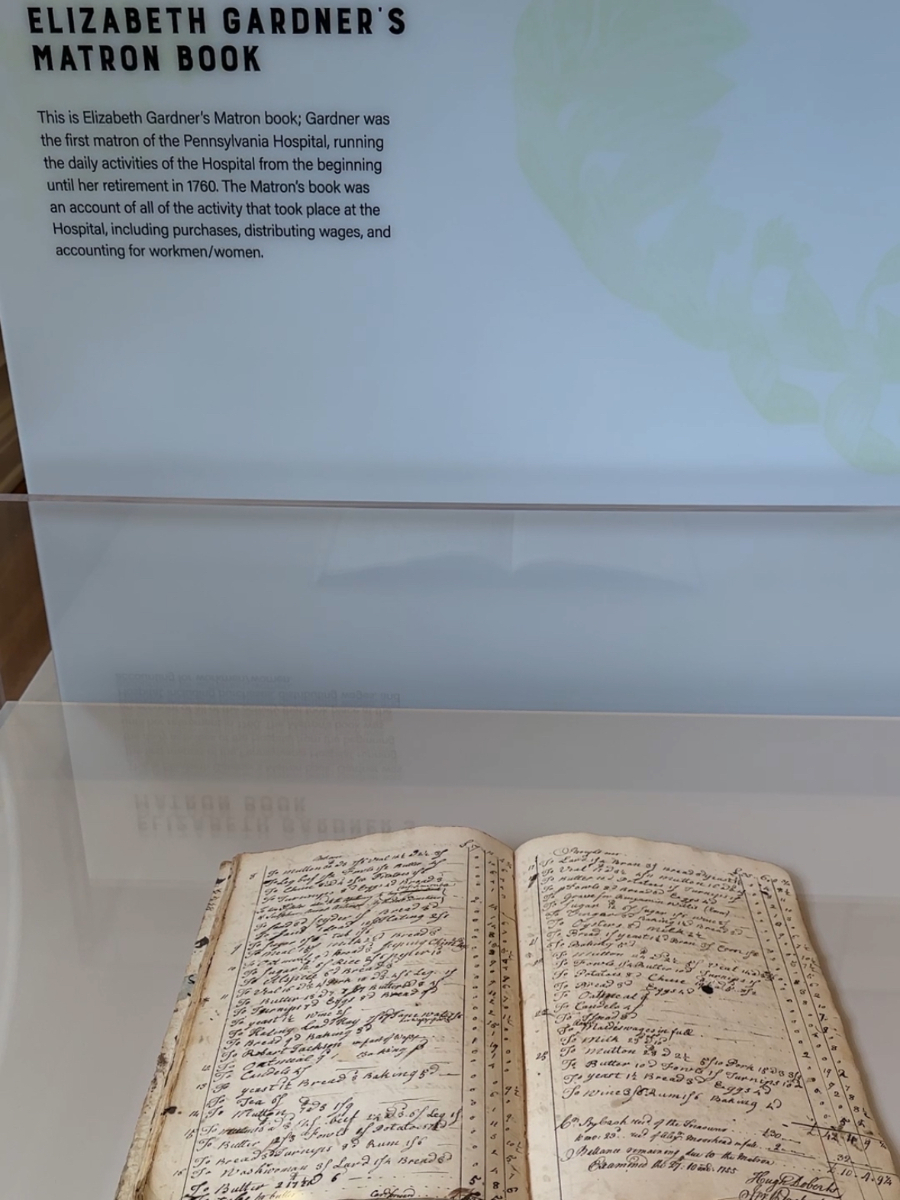
4. The hospital’s first matron’s record book
Photograph by Laura Brzyski
Official records can provide information on doctors and notable happenings, but they don’t often give the full picture of how to — and who helps — run a hospital. That’s where matron’s books come in. Usually kept by a woman who lived on site, the logs detail daily purchases and operations — everything from food, supplies, linens, and distributed wages — and the people who ensured they happened, including women, people of color, and indentured servants.
In the “History of the Hospital” gallery on the ground floor, find Elizabeth Gardner’s original matron book. She was the first matron of Pennsylvania Hospital, responsible for recording daily activities from the hospital’s opening until her retirement in 1760.
5. Anatomical drawings of pregnancy
Photograph by Laura Brzyski
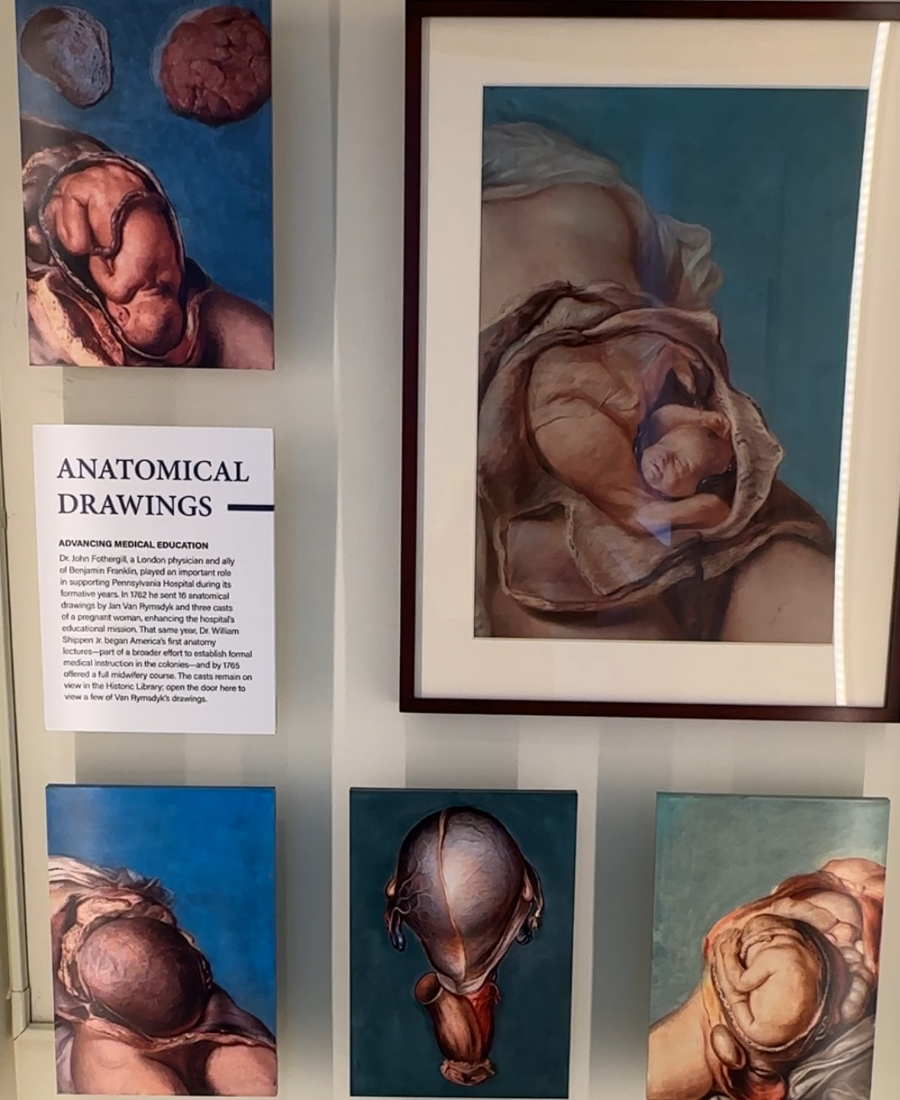
The “Women’s Health” exhibit on the second level showcases the hospital’s evolution of maternity care — from the first baby delivered in a hospital in 1765 to Pennsy’s first IVF pregnancy in 1983.
What I found most moving in the gallery, though, was the artistic renderings of a baby in utero. (You can find them on display behind a door — yes, an actual door — that you are invited to open.) The anatomical drawings by Dutch painter Jan van Rymsdyk were sent to the hospital by John Fothergill, a London doctor and friend of Ben Franklin, in 1762. They are provocative and detailed, and might not be for everyone, but I found them to capture the remarkable realness of carrying a child — how that baby curls, moves, and grows inside the belly for nearly 10 months.
6. A meteorological record book
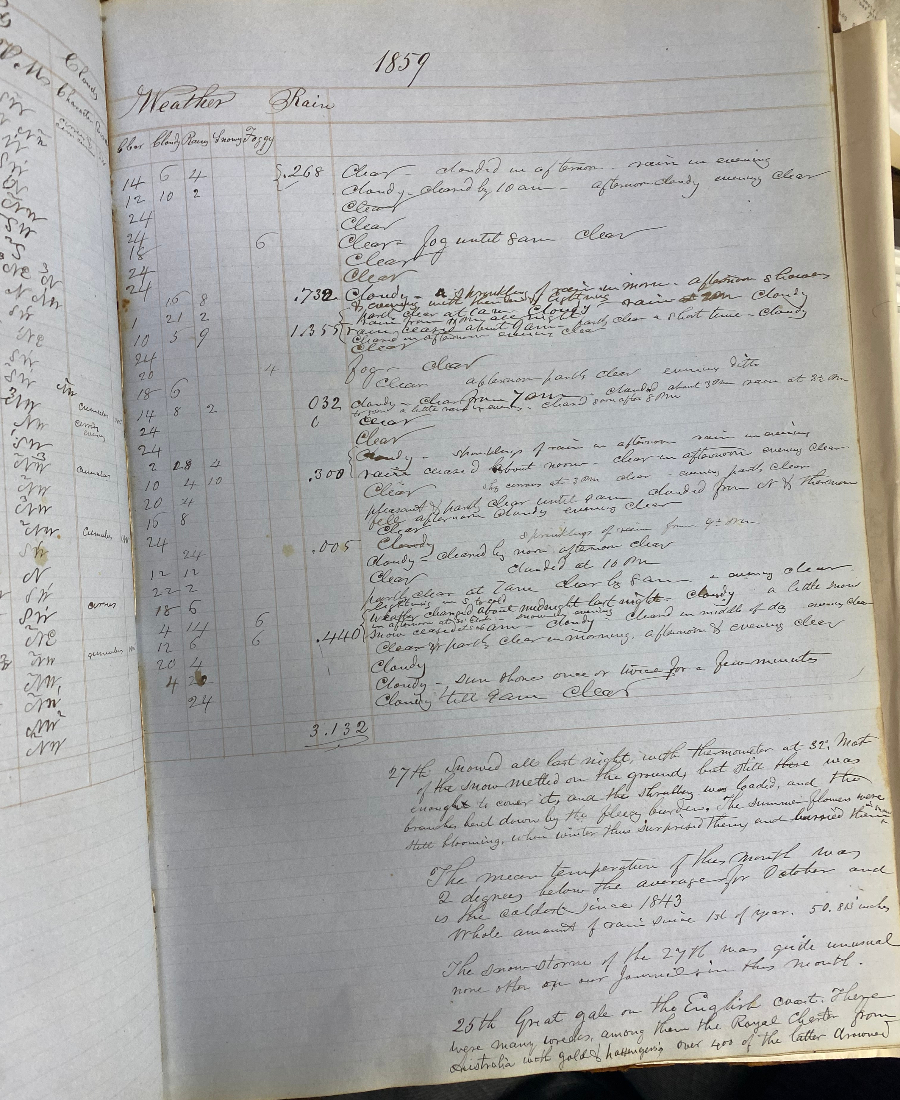
From 1824 until 1922, the hospital’s apothecary recorded the weather three times per day, daily. (It’s unknown why a pharmacist oversaw these records.) Over time, recordkeepers began noting other aspects of the natural world, including which crops people were growing, and historical and cultural events, such as Abraham Lincoln’s funeral procession through Philadelphia and city residents ice skating on the frozen Schuylkill River. The artifact provides a snapshot in time — an observational journal, if you will.
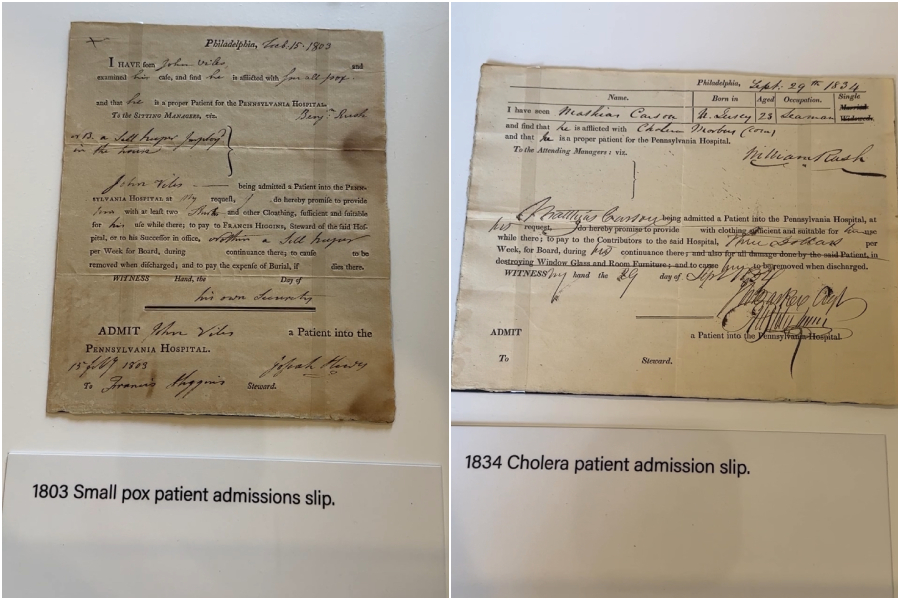
7. Patient slips from the 1800s
Photographs by Laura Brzyski
The “Perseverance” exhibit on the second floor highlights how Pennsy has supported people living in Philadelphia and beyond during challenging times — from the Yellow Fever epidemic to the COVID-19 pandemic. Here, take a look at patient slips from the early 1800s, including an 1803 admission slip for a person with smallpox and an 1834 slip for a cholera patient — a reminder that, while illness and disease are natural parts of our world, so too are the people who support us through them.
Pennsylvania Hospital Museum is located at 800 Spruce Street in Washington Square West. It’s open from 9 a.m. to 5 p.m. on Wednesdays, Thursdays, Saturdays, and Sundays, and from 10 a.m. to 6 p.m. on Fridays. Tickets cost $10 per person and can be purchased here.