Requiem for Fleur’s: A Great Restaurant You’ll Never Eat at Again
Fleur’s shows us the heartbreaking reality that a remarkable menu isn’t always enough to keep the lights on.

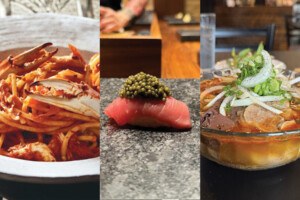
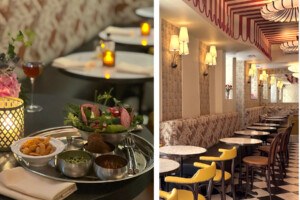
Dishes from Fleur’s / Photography by Mike Prince
Listen to the audio edition here:
By the time you read this, Fleur’s will be closed.
And that sucks. It sucks for all the usual reasons that any restaurant closure sucks. It means hopes dashed, people out of work, families left in the lurch, and dozens of lives and careers upended or thrown into a spin.
But the news about Fleur’s sucks a little extra because this was a huge project (130-seat restaurant, rooftop bar, event space, boutique hotel) that took years to put together. It had three serious industry heavyweights behind it (veteran chef George Sabatino, Josh Mann who did 16 years with Starr as an FOH pro, then a few more with Defined Hospitality, and Graham Gernsheimer, ex of Amis, Osteria, Frankford Hall, Loco Pez and elsewhere), and all of them had spent decades working for other people, running other peoples’ kitchens, bars and dining rooms. Over the years, these three guys kept bumping into each other, crossing paths in kitchens and back offices, until finally they decided they wanted to make something of their own, together. It was their big swing. Their retirement plan. The last restaurant any of them were going to work in.
“It felt like we’d found a home here,” Sabatino told me when I got him on the phone last week, just heading into the last couple days of service. And he meant that in every way.
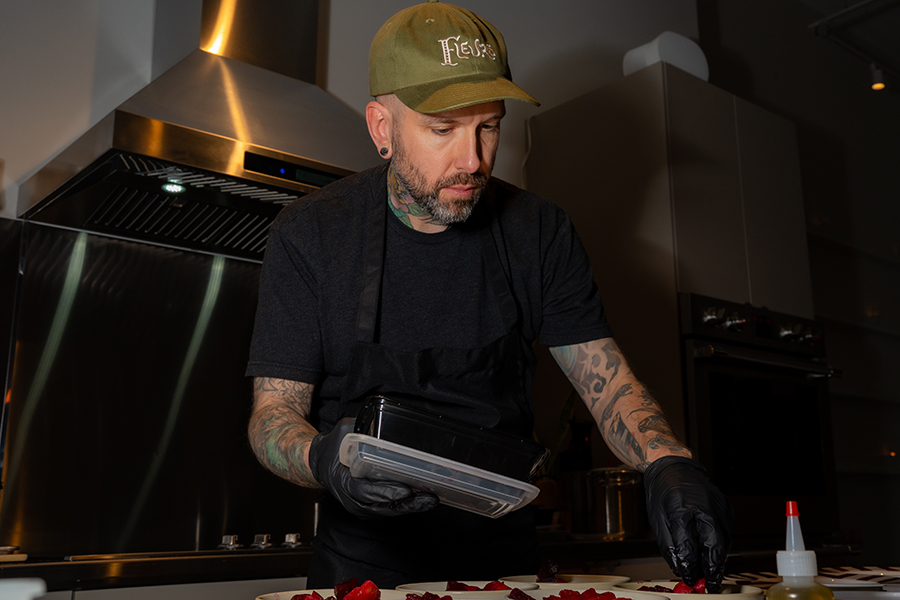
George Sabatino
Fleur’s lasted seven months, opening day to closing night. The news about their closing broke late last week and, last night, it was all over. I ate my last meal there about a week before the announcement, prepping for a review that will never run, unwittingly taking part in a story where the end had already been written, just not yet made public.
Were there red flags? Absolutely. The slow tide of 6:30 p.m. reservations, the nearly empty bed of ice in the display case at the end of the raw bar, the fact that I was able to park almost right in front of the restaurant. I’ve been doing this a long time. I should’ve seen these signs from a mile off. But I didn’t.
And do you know why? Because the restaurant was really fucking good.
There were uni custard tarts with a shock of lemon and spoonfuls of golden Osetra caviar for the high rollers, plates of oysters with watermelon mignonette, white bowls of beef tallow frites at happy hour that paired perfectly with the rich and fatty pork terrine cut with a sting of pear mustard. The Parisian gnocchi (with local mushroom ragout, hazelnut oil, a bass note of thyme leaves) tasted like summer forest air at dusk, the heat of the day still rising from the ground, and Sabatino (who has always had a way with vegetables) also served thick slices of sweet potato here, creamy-soft and sharply grill-marked, topped with sunflower seeds for texture, then a line of mustardy sauce gribiche, threaded with dill, that cut through the heavy starch and sweetness like a razor.
At the bar, there were gin martinis spiked with white Armagnac, rum-and-rye Green Stripe cocktails, and a playlist of French pop and jazz filling the space when it was light on actual customers. Yes, service could be a little spotty. And the space itself always felt slightly unfinished to me (lots of white latex paint over brick, mezzanine seating guard-railed with white cutouts of the restaurant’s floral logo), but that was fine. Fleur’s was always going to be a work-in-progress at this point in their multi-phase roll-out, so even if it sometimes felt as if a very nice long bar and lounge were dropped into the middle of a not entirely built-out room, that was all easy to forget when the food started coming.
“We have made mistakes,” Sabatino told me on the phone. “We need to figure that out. But there’s lessons in here, for sure. I’m just beginning to process it.”
He tells me that none of this — the announcement, the closure — was the neighborhood’s fault. None of it was the staff’s fault. He says that they (he, Mann, and Gernsheimer) didn’t consider the neighborhood enough. That they didn’t provide the kind of experience that people were looking for.
“We wanted it to be the kind of place where you could show up in your gym clothes, sit at the bar, and get a roast chicken,” he explained, but that also they wanted it to be a destination. And trying to force a project to be both of those things at once? That rarely (if ever) works.
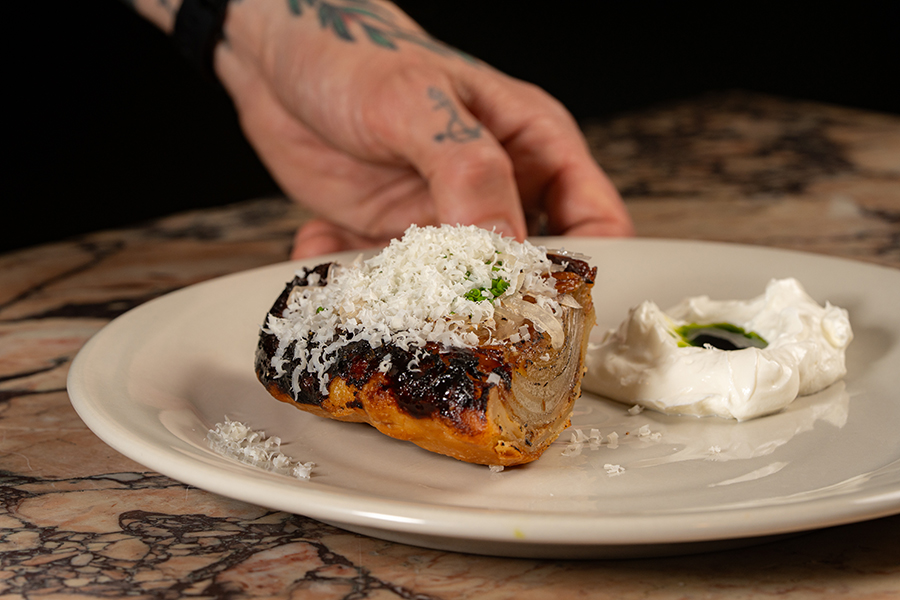
Tropea onion tarte tatin
On the other hand, the kitchen did make a very good roast chicken. Or half-chicken, actually — split along the breast, juicy, warm and with this ideal, crispy, black-and-golden skin. The kitchen separated the bird into a breast and wing, drumstick and rib, piling them on the plate with whatever sides strike them. In the gray months, a spray of green herbs and rich pommes duchesse or a cheesy gratin. More recently, as the seasons turned, quartered and roasted baby potatoes, a red and green pepper Basque piperade that leant a spark to the tender meat, and all of it swimming in a rich and buttery sauce that felt, in the early days of spring, like a luxury earned after a long, cold winter. At my last dinner, at one of the last tables Fleur’s would take, I paired mine with a Tropea onion tarte tatin, served like half a pie on a dark plate, under a bright white snowfall of grated Gruyère and with a curl of cultured cream to the side, dotted with a well of chive oil.
Tropea onions are Calabrian, extremely sweet (for an onion), and shaped like old-fashioned Christmas lights — bulbous in the middle and pointy at the end — and Fleur’s kitchen had used them whole, cut with tangles of sweated, miso-marinated shallots, baking the onions soft and caramelizing them the same way you would apples in the more recognizable version of this recipe. It was amazing. Overwhelming. And it killed me that I couldn’t finish the whole thing (half an onion pie is a lot of onions for one man), but the first bite of it, before I had any idea what I was getting myself into, was remarkable. Unlike anything I’d tasted in forever. A rich and deep and woody sweetness, the bright garlic flavor of shallot, the bluntness of the pie shell and sour cream bite — all of it perfectly balanced. All of it incredibly delicious.
And that matters but, ultimately, it didn’t really matter, you know? Because Fleur’s closed anyway. Because Fleur’s was already closing while I was eating my onion tart, even if I didn’t realize it then.
“We knew a few weeks ago,” Sabatino told me. Knew that it was all going wrong. That they were probably going to have to close. “There’s something past saying, Okay, we have five cooks scheduled tonight and we’re going to cut a couple of them and just cover stations.” And that’s where Fleur’s was. The doom of it was already written, even then.
And the owners wanted to be as kind and as transparent about this awful thing as possible. They wanted to let their staff know as far in advance as they could so they could help get them placed elsewhere. They didn’t want payroll checks to start bouncing. They didn’t want suppliers to go unpaid. So they made this hard decision. They would close. Stop the bleeding. Seven months and they were going dark.
In my reviews, I used to live and die by the idea that nothing mattered more than the food. That I could be seated on an old milk crate in an alley in the rain, and if the food was good, I was going to call the place a success. But that black-and-white thinking — that misguided absolutism — was a younger man’s arrogance. It was a willful disregard for the thousand small choices that go into the opening of any restaurant, and the countless daily struggles of owners and operators just trying to keep the lights on. If it were just about the food, Fleur’s would still be here. My review would still be running. I’d be celebrating a place that was young and maybe a little bit clumsy, but growing well into the restaurant it someday wanted to be.
But that’s not the world we live in now.
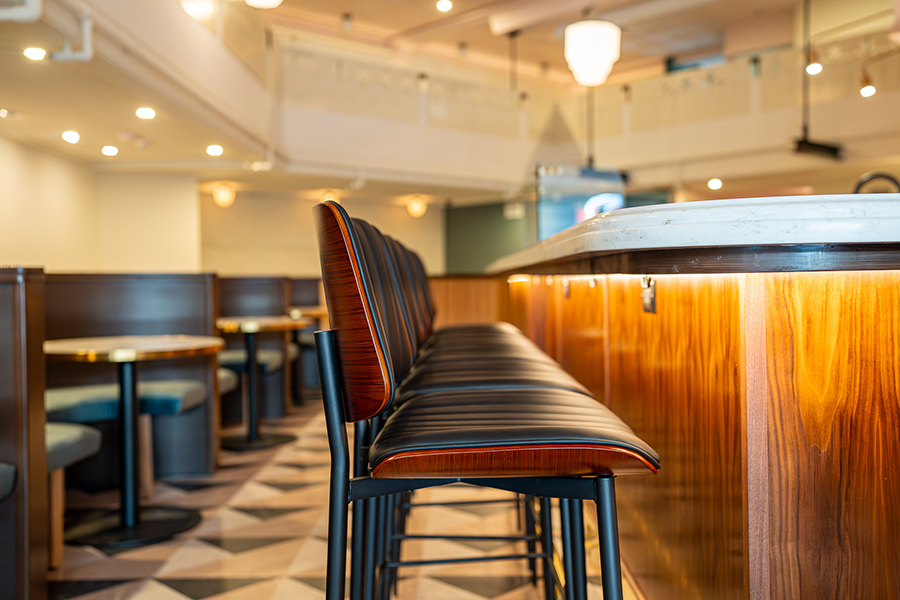
The bar at Fleur’s before it opened in September 2025
Sabatino told me that there aren’t really any plans yet for what will happen with the Fleur’s space. He and Mann and Gernsheimer own the building — the massive 14,000-square-foot former furniture showroom and warehouse at 2205 North Front Street in Kensington — so they’re going to have to do something with it, but right now the ideas are all vapor.
“A 2.0 version would look like more of a neighborhood place,” Sabatino told me. Smaller. Fewer service days maybe. “Brunch right off the bat, for sure.” But he doesn’t really know. None of them do.
But someday, there’ll be a plan. New ideas. A new menu. Fleur’s 2.0 will come together simply because it has to. Because these guys have invested everything — time, money, their professional reputations — into this space. Because, at least right now, Sabatino (who planned his future around this project, and moved into a new place two blocks away about a year ago just so he could be closer to the restaurant), doesn’t see any other way forward.
And when it does, I’ll be there to check it out. Because while I may no longer believe that what’s on the plate is the only thing that matters when it comes to the success or failure of a restaurant, I still think it matters a lot. More than anything, just not more than everything. And one thing that was absolutely true about the team at Fleur’s?
They could really fucking cook.