From Prep to Procedure: This Philly Doc Makes Colonoscopies Worry-Free

For those approaching or over age 45, the very word—colonoscopy—can elicit waves of dread. However, these screenings truly save lives.
Colonoscopies are referred to as the “gold standard” for screening. They help prevent colorectal cancer by finding precancerous lesions, called polyps, and removing them.
“That’s the whole purpose,” says Steven Fassler, MD, with Colon and Rectal Associates, LTD, and Jefferson Health. “If you can remove (the polyp) before it has a chance to evolve into colon cancer, or if you find colon cancer and you haven’t had any major symptoms, chances are it’s probably going to be an early stage.”
Regardless, many people are fearful before a medical procedure. The bottom line: it’s worth it. If you’re at average risk, you only need a colonoscopy once every five to 10 years.
What about the prep?
To get ready for a colonoscopy, full bowel prep is required. People often say the prep is the most difficult part. The good news is once you’re done with the prep, the rest is easy.
Generally, all solids must be emptied from the stomach and bowel by following a clear liquid diet for one to three days before the colonoscopy. You may also be required to drink a laxative solution the night before a colonoscopy to loosen stool and get your bowels moving. Your doctor will provide instructions on how to prepare it.
“A lot of people worry about the volume of fluid they have to drink,” Dr. Fassler says. “We often split the prep solution now, where you drink some of it the night before and then the morning of, assuming it’s not a morning colonoscopy. And there are also different formularies that contain electrolytes, making them smaller in volume and easier to take.”
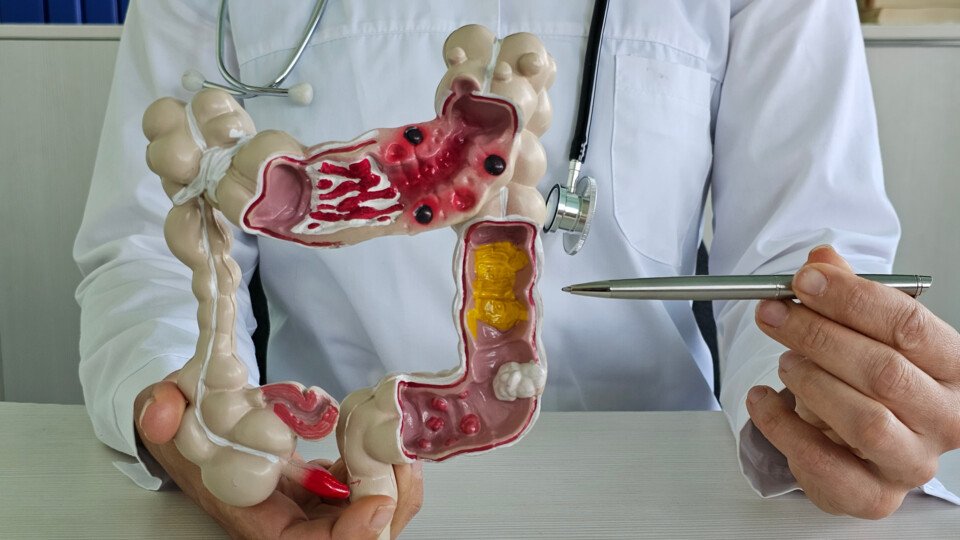
The procedure
During a colonoscopy, you will lie on your side on an examination table. You will be given “twilight” sedation (or general anesthesia) as well as a pain reliever and a sedative. You will feel relaxed and drowsy, ensuring the colonoscopy will not hurt.
The doctor will then insert a long, flexible, lighted tube with a tiny camera called a colonoscope, or scope, into the rectum and slowly guide it into the colon. The camera transmits a video image from inside the large intestine to a computer screen, allowing the doctor to carefully examine the intestinal lining.
After the procedure is done, you’ll wait for about an hour to allow the sedative to wear off. If your doctor removes tissue or a polyp during a biopsy, they’ll send it to a laboratory for testing. Your doctor will tell you the results when they’re ready, normally within a few days.
For most patients, a colonoscopy isn’t uncomfortable or memorable. “A lot of times, patients will wake up from the sedation and ask, ‘when are we going to do this?’ and they’re told that they already had the procedure,” Dr. Fassler says.
Learn more here: www.Jeffersonhealth.org/colonoscopy
This is a paid partnership between Jefferson Health and Philadelphia Magazine