
Thriving & Surviving
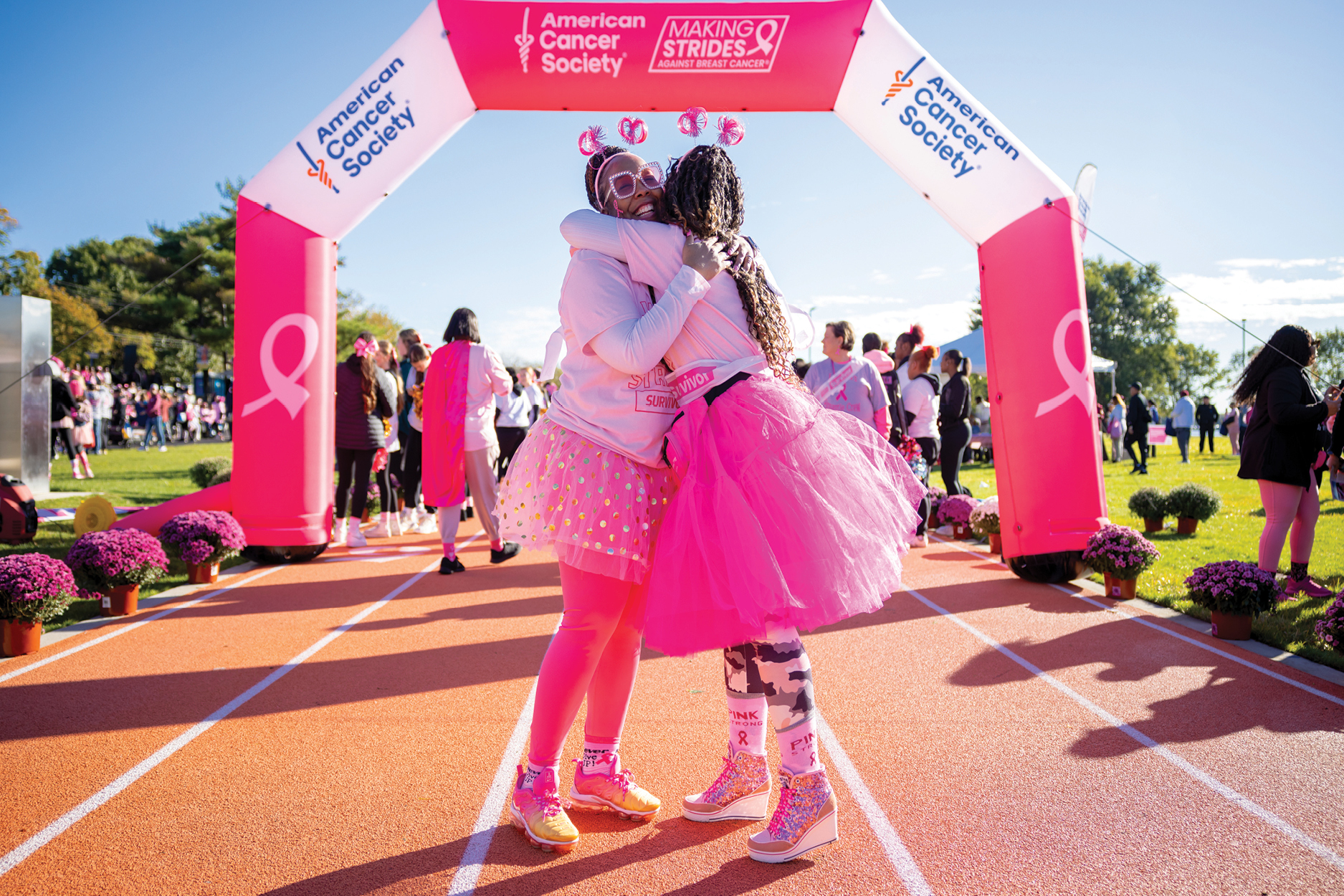
No two cancer journeys are the same—sisters Kiki and Charmella Roark understand this better than most. Their stories began when their Aunt Rachel was diagnosed with advanced breast cancer and passed away in 2013. Her loss underscored for them the importance of screening and early detection—vigilance that likely saved both sisters’ lives when each faced her own diagnosis.
Advocating for Yourself
Kiki was the first to be diagnosed in 2018. At 37, she noticed a pain radiating from her armpit to her breast and later found a lump. Three doctors dismissed her concerns. “They said it was caffeine; it was chocolate,” she recalls. But Kiki pushed back: “I told my doctor, ‘You’re going to order me a mammogram. Something is not right.’”
That insistence saved her. The mammogram found something suspicious in her breast and, shortly after, a biopsy confirmed HER+ stage 1 breast cancer. “The blessing is I advocated for myself—they said no, you are too young. But because I listened to my body, we caught it early.”
Kiki underwent a double mastectomy. Her recovery was hard: six weeks sleeping in a recliner, unable to wash herself, raise her arms or drive. She had three surgeries, countless appointments, and then came tamoxifen, a drug to prevent recurrence that can have harsh side effects for some. “I had iron infusions because my cycle was so heavy. I lost hair. My joints were sore. I gained 35 pounds. If there was a side effect, I got it,” she says. Her doctors eventually stopped the medication after five years.
Through it all, her husband was her anchor. “He worked nights but still took me to every appointment,” Kiki says. “He was the superstar. The MVP.”
Charmella, a single mom, remembers how hard it was to watch her sister in pain. “I remember walking with a friend, then I broke down crying,” she says. “And then I thought: If this happens to me, there’s no one there for me. I felt like I would have to do it alone.”
A Different Path
In 2022, Charmella—already considered high-risk due to dense, cystic breasts—was diagnosed at age 43 with breast cancer after a routine mammogram. “The first person I called was Kiki,” she says. “What I realized is that even in the same family, the journeys are totally different.”
Her cancer was early, too—stage 1B—but unlike Kiki, she needed chemotherapy and radiation. “Normally when you think about people who have breast cancer and get radiation, the tumor is big or it has spread. The chemo and radiation took a toll on my body.”
Still, despite her worries, help arrived in unexpected ways: friends, family, a nurse navigator, financial assistance from a breast cancer organization, and support groups. Independent by nature, she had to learn to ask for help. “Most women don’t—we put everyone else first. But once I did, I thought, This is going to help me heal.”
She also realized that no matter your type of cancer or treatment plan, cancer is a trauma. “And it’s okay to feel down sometimes,” she says. “I struggled silently for a long time, but I’ve come to terms with it. Cancer is like the stages of grief, and I didn’t realize that.”

The Lasting Imprint of Cancer
Both sisters have backgrounds in health and wellness. Kiki worked at Cooper Hospital for 18 years and now works at Temple University Hospital. Charmella has a degree in nutrition and sports health sciences, and just finished her grad degree in kinesiology, integrated health and wellness. She’s also getting health coach certification to help people with chronic diseases and cancer navigate the process. For her graduate capstone, Charmella created a resource guide for health coaches working with women with breast cancer. “Your body goes through trauma, and then mentally it’s a trauma, too,” she says. “I thought, how can I use what I’ve lived through to help others?”
During her treatment, exercise was a lifeline. “I meditated, prayed, hiked. I wanted to love me. I want to help people figure out what that means for them.”
But the shadow of cancer never fully lifts. “Even now, when I hear someone has passed, it’s always cancer,” Charmella says. “Last year I spiraled mentally, terrified it would come back.”
Kiki agrees. “It’s on my mind constantly. I live with that thought every day; it’s traumatizing.”
Talking openly helps. “Not all women have the support we did,” Charmella says. “That’s why Kiki and I share our stories—because maybe it will help someone else.”
Moving Forward
These days, the sisters use their stories to encourage screening and self-advocacy. “If you’re scared [to get a mammogram], take someone with you,” Charmella says. “It’s better to know than not to know.”
Kiki adds: “Advocate for yourself and get checked early,” she says. “If the doctor says no and you feel something isn’t right in your heart, go get it checked out. Listen to yourself.”
And even though they had different cancer journeys, they have each other. “It is nice having had someone who has had it and went through it—even though it was different,” Charmella says. “Having someone who went through something like that makes you feel like you’re not alone.”
This is a paid partnership between Think Pink and Philadelphia Magazine
