What Philly Bartenders Will Do for a Bottle of Chartreuse
From secret stashes to experimental dupes, Philly bartenders rethink how to source the elusive green spirit.
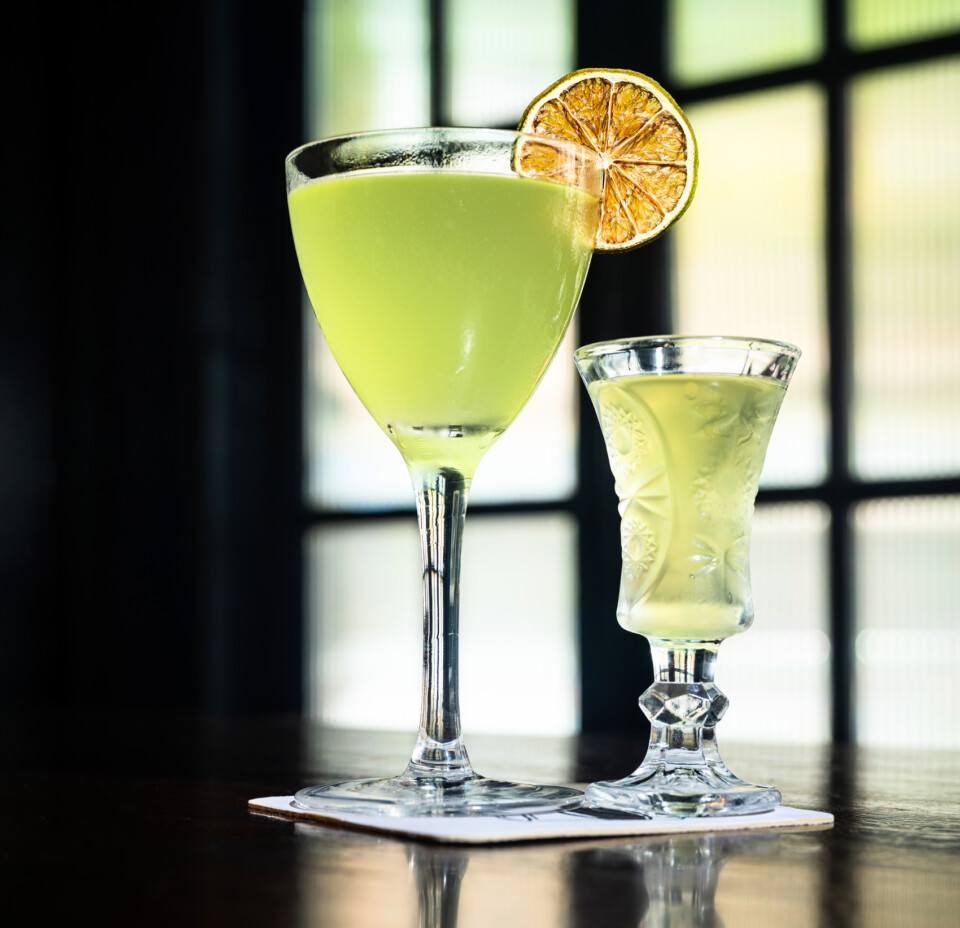
Sonny’s Famous Last Words made with Green Monk / Photography by Kyle Kielinski
Listen to the audio edition here:
Chartreuse is mysterious. Chartreuse is rare. Made from roughly 130 botanical ingredients and with a mean alcohol kick, its recipe (dating from the early 1600s) was originally thought to be a potion for extending life. For centuries, it has been made by Carthusian monks, high in the French Prealps, from a formula that’s been kept so secret that rumor is only three of the monks currently know it. And two of them only know half.
There are two versions: green and yellow. The green is 110 proof and tastes like if you opened your mouth and swallowed an entire alpine meadow whole, then ate fire. The yellow is mellower, sweeter, gentler, but still very much an acquired taste. For a long time, Chartreuse was an industry favorite. “You can sit down and have one of them neat and that’s enough,” says Gilbert Bowen, beverage manager at Wilder. “You’re toasty. You’re good for a couple hours.”
Even if you’re not a dedicated boozehound, you’ve probably had Chartreuse without even knowing it. It’s one of the tricks good bartenders use when they’re after radical balance or punch in a cocktail, a secret weapon like fernet used to be, or artisan bitters back in the vests-and-mustache-wax days of the first hipster cocktail revival. Ever had a Last Word? Then you’ve tasted Chartreuse. Naked and Famous? Same deal.
Problem is, there’s been a Chartreuse shortage for the past few years. According to pretty much every bartender and beverage manager I talked to, the boredom and isolation of the COVID lockdown drove lots of people to become at-home mixologists. And every single one of them wanted a bottle of Chartreuse for their home bar. This increased demand. But the monks capped production in 2021, stating in a public letter that they wanted to “protect their monastic life and devote their time to solitude and prayer.”
So not really a shortage. More of an unexpected spike in demand, coupled with a religious refusal to increase supply, causing the enigmatic green liqueur that inhabits many cocktail lists to become both scarce and prohibitively expensive in Philly and beyond. So what to do?
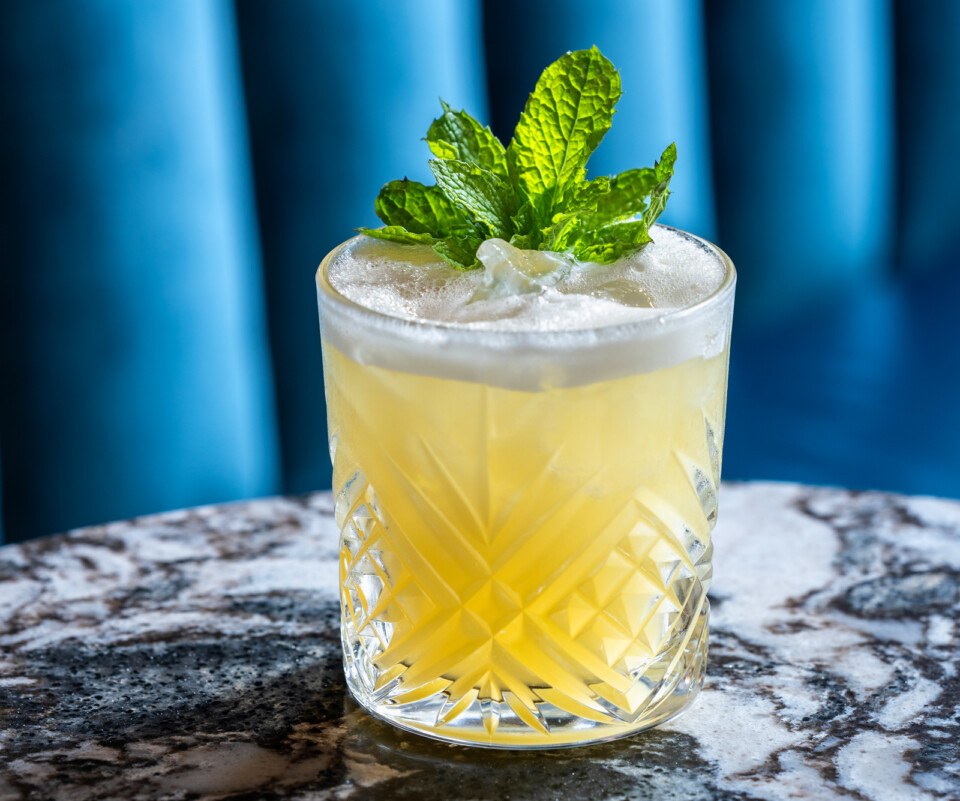
Wilder’s Chartreuse Swizzle
During Tom Brander’s tenure as beverage director at Wilder — he is currently the service manager at Emilia — he stockpiled cases of Chartreuse against future need (and to use in certain batched cocktails). He says that getting Chartreuse “kinda became a game for a while. The biggest thing is just knowing who to talk to.” Which meant knowing who the distributors were, who had a private stash, and when to buy. When Bowen, who took over Brander’s role at Wilder, started inventorying the bar, he found those hoarded bottles and now uses them to make Chartreuse Swizzles, which he loves.
That made me think of my friend James Cleland, who used to run the bar at Izzy’s in Ardmore and loved Chartreuse. He also squirreled away bottles upon bottles to make his version of the Last Word (called Money Talks, possibly the best cocktail I had in all of 2025) as well as other drinks. He’s on the other side of the bar now, working in liquor sales, but he tells me that he had roughly 17 bottles behind the bar at one point, green and yellow, but then he hit a stretch where he just couldn’t get any — not for love or money.
So these days, he’s pushing an alternative: a 110-proof Chartreuse substitute called L’Ermitage from French distiller G.E. Massenez. The green, he says, is less complex but holds its body nicely. And the 86-proof yellow is, in his opinion, “strikingly close to yellow Chartreuse.” And as a bonus? The bottles are dependably available and can be had for $43 — maybe half the cost of real Chartreuse.
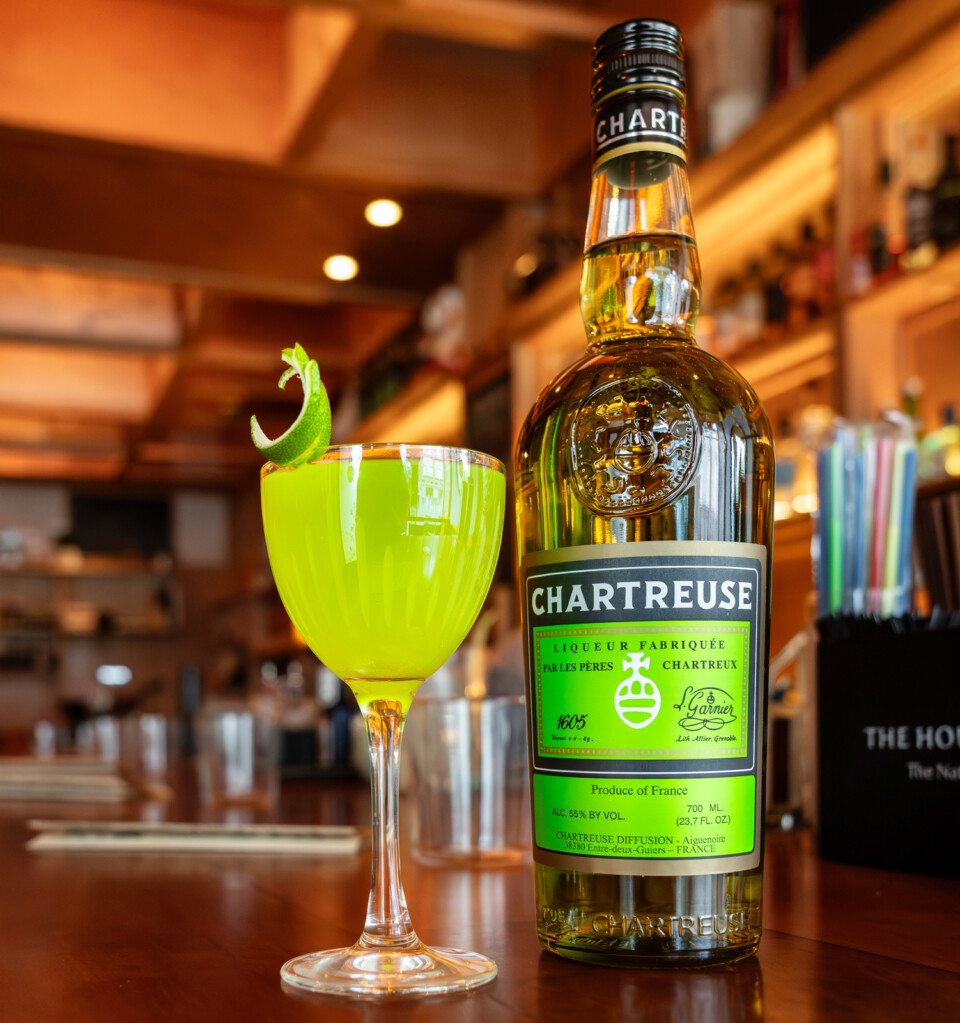
Izzy’s Money Talks
And then there’s Scott Rodrigue, beverage director at Sonny’s Cocktail Joint, who saw the effects of the shortage years ago, dove deep into research and some mad-scientist experimentation (see below), and began producing his own version of a high-proof, botanical-intensive alpine liqueur called Green Monk, which he’s slowly been incorporating into his cocktail menus at Sonny’s.
So, until the supply/demand equation stabilizes itself, Philly’s cocktail artists will be forced to get creative — to scrounge, to substitute, to go into the lab and make their own. Because the monks aren’t budging, and demand is only increasing.
Thankfully, creativity (and a dash of that punk rock, DIY spirit) is one thing Philly’s beverage industry has never had a shortage of.
Chasing Flavor
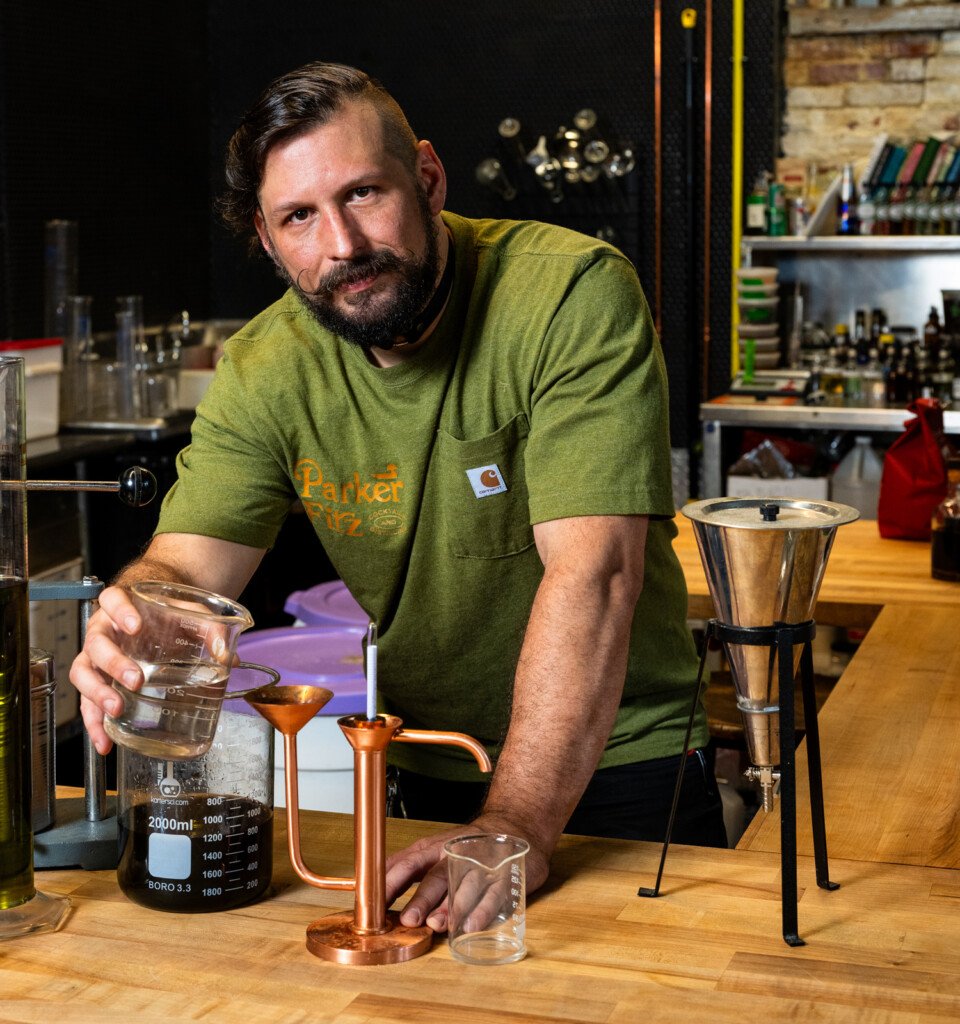
Scott Rodrigue, beverage director at Sonny’s Cocktail Joint
Scott Rodrigue on the quest to create his own version of Chartreuse
So how, exactly, does one go about copycatting a 400-year-old spirit whose recipe is so secret that only three monks living in the mountains of France know it?
“Well, first, I’m just a dork,” Scott Rodrigue explains. “I scour the internet, the message boards.” He collects old pharmacy texts, like the 1895 first edition of Monograph on Fluid Extracts, Solid Extracts, and Oleoresins by Joseph Harrop that he’s flipping through while we talk.
And second, he experiments. A lot. He’s been working on his own version of Chartreuse, Green Monk, for three years, slowly refining the recipe. He collects root botanicals like angelica and genepa and Moldavian dragon balm, turns each one into a 160-proof “quintessence” (basically a pure, single-ingredient cordial), and shelves them. He has 378 at the moment, but his collection is always growing. Finding a way to stabilize the chlorophyll and keep it green was a breakthrough moment for him — a trick he found in a footnote on a Swiss absinthe recipe. At one point, Green Monk had 97 ingredients. He whittled that down to 40, but he’s still tinkering, still chasing an analog for the complexity and utility of that secret monk juice. He used to have a secret lab in the basement under Sonny’s. Now he has a commissary kitchen space in South Philly with his books and beakers, his ultrasonic extractors and hundreds of bottles of plant extracts.
“I love Chartreuse,” he tells me. “But I’m not trying to be a duplicate.” What he’s trying to capture is the essence. The heat and purity of the original Chartreuse (which, legally, he can’t call his concoction because the Chartreuse name is protected by international law). So Green Monk is its own thing. Purely Philadelphian and purely his. A hedge against any future shortages at Sonny’s, for sure. But also, soon to be available to anyone who wants something green, potent, and very local to round out their own bar.
Published as “Botanical Bottleneck” in the September 2026 issue of Philadelphia magazine.