How 1906 at Longwood Gardens Grows Its Menu
When your pantry is Longwood Gardens, the secret to the menu is knowing exactly what’s ripe for the picking.
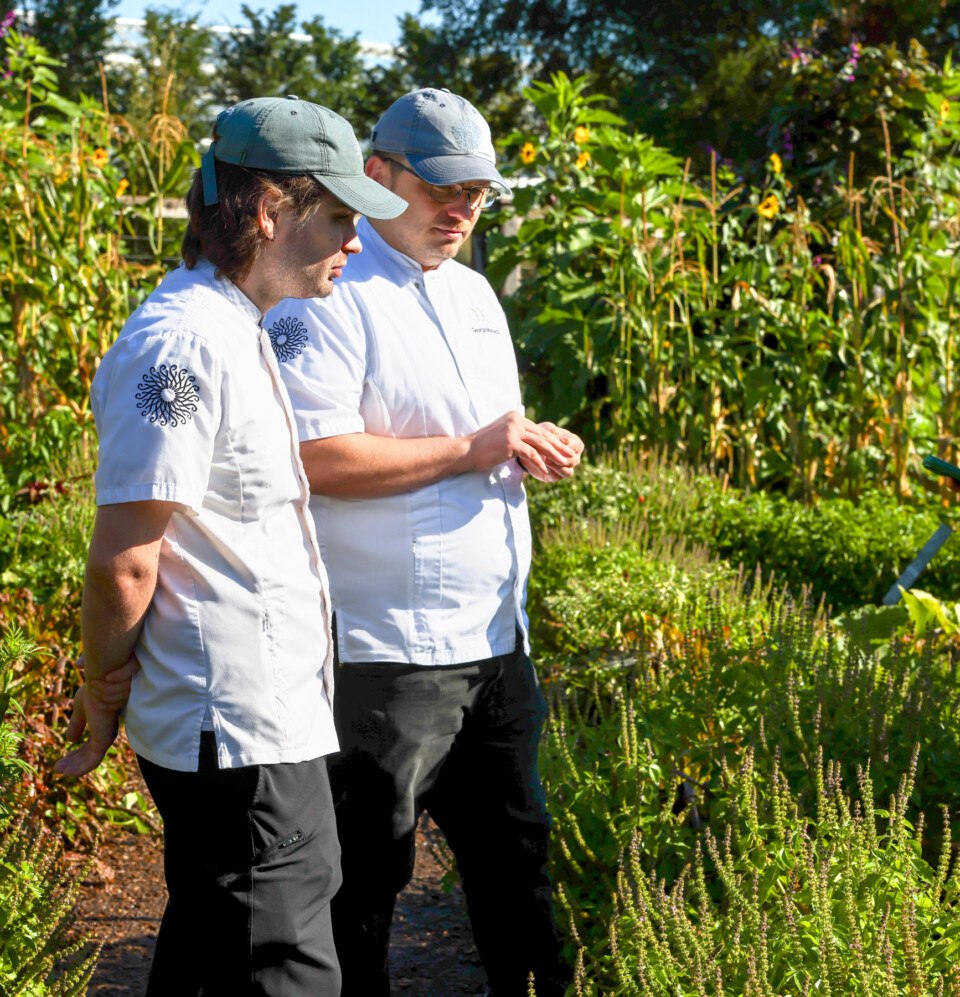
Executive chef George Murkowicz (right) leading a walk-through of Longwood’s Idea Garden. / Photograph by Marleigh Flanagan
It all starts with a seed. Not far from the floor-to-ceiling windows of Longwood Gardens’ restaurant, 1906, is the Idea Garden. The six-acre space, lush with tall grasses, blooming perennials, and multicolored flowers, is home to the Ornamental Kitchen Garden, where close to 200 edible plants — including aromatic herbs, fruit trees, and vegetables — make their way onto the menu. Dishes like the creamy duck liver pâté served with rhubarb as well as pork chops topped with roe and rich miso beurre blanc give diners a new way to intimately experience one of the most famous public gardens in the country.
“We work backwards in our minds,” explains executive chef George Murkowicz, detailing his team’s creative process. As crops begin to sprout, the kitchen and horticultural teams survey the grounds to gain inspiration for how they can best use the garden’s bounty. They calculate the exact moment radishes are perfect for grating over a flower salad versus poaching them with butter to serve as a side, and intuit just how much stinging nettle is required for the chilled nettle soup.
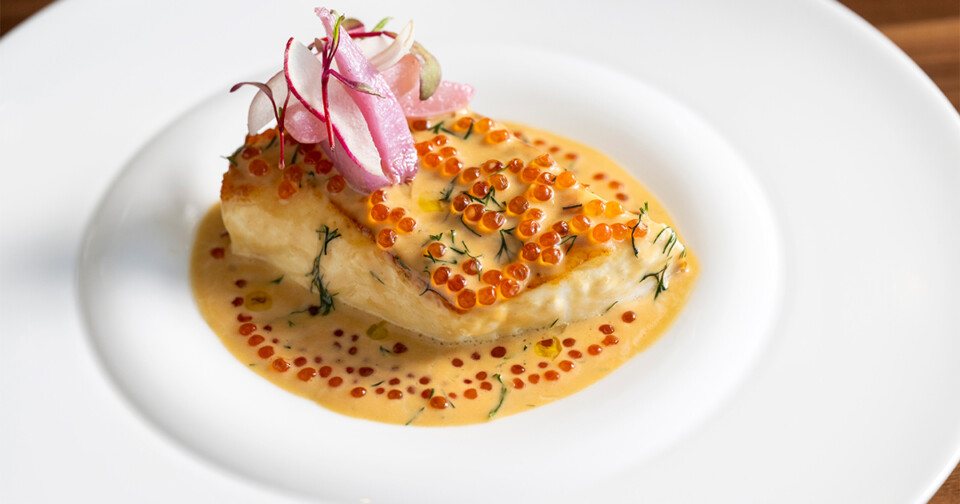
Atlantic Halibut at Longwood Gardens’ 1906 / Photograph by Evan Sung
In the case of 30 pounds of rhubarb, Murkowicz says, “that’s too small for a whole menu cycle, but playing with it out of the ground, in its best form, inspires creativity and flavor profiles.” Now you’ll find dehydrated rhubarb in the Strawberry Bree’s cocktail and the sunflower seed risotto.
Late spring is prime time in the garden, but 1906 is open year-round. So senior horticulturist Alex Correia uses every bit of land available; this includes a culinary teaching garden where she’s already growing winter-hearty produce. “Winter squash, sweet potatoes, things that last a long time on the shelf,” she says. Pulling the last of those potatoes in October means you might see them on the menu as late as January.
During the summer months, color takes over. Purple cabbage kimchi tops Wagyu hot dogs, and curly mint caps the bright-red tomato tartine. The restaurant’s version of a happy hour, called Flower Hour, features peppery blossoms of nasturtium on a smoked salmon tarte flambée.
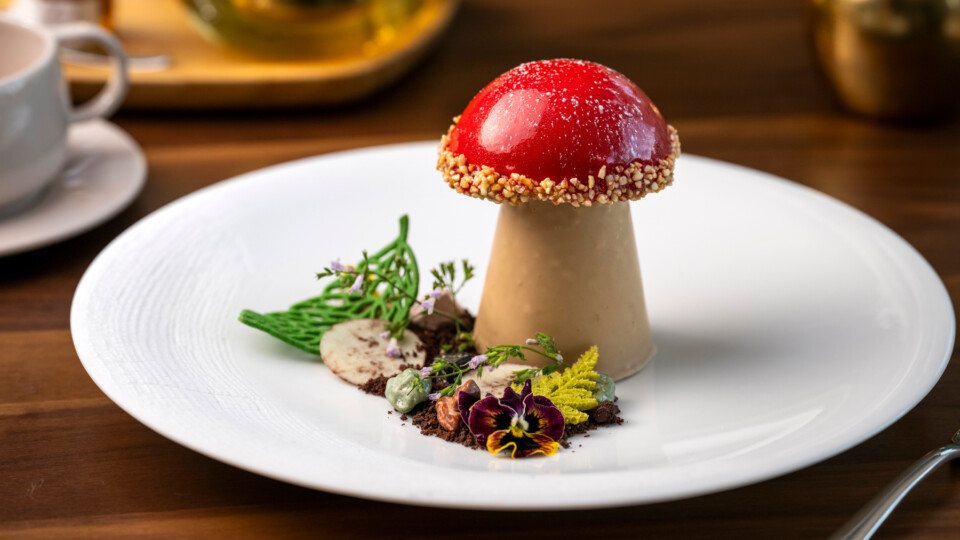
Caramelia dessert at Longwood Gardens’ 1906 / Photograph by Evan Sung
This practice holds the kitchen accountable for utilizing every edible plant. “We didn’t have a plan for 40 pounds of kohlrabi, but we better show up or shut up,” Murkowicz says. That crop turned into a shaved kohlrabi and Manchego salad with pistachio vinaigrette and marigold. It also encourages on-the-spot ideation. “We can just cut a bunch of eight-inch-long stem flowers” to garnish a meat dish that could use a little dazzle, Correia realized during one tasting. By going with what nature provides, the menu at 1906 stays as alive and ever-changing as the gardens themselves.
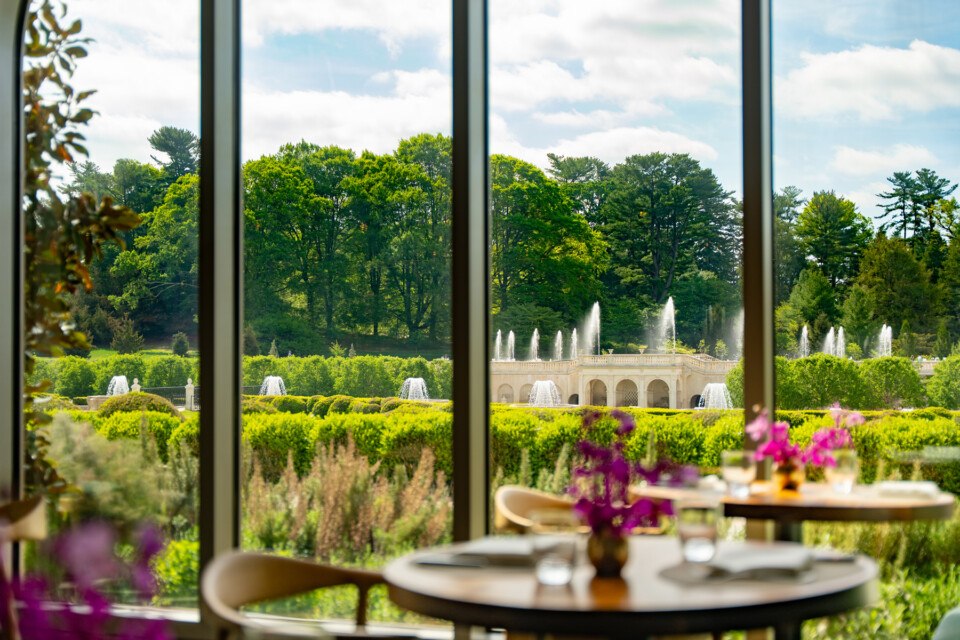
Dining room view of Longwood Gardens’ fountain / Photograph by Holden Barnes for Longwood-Gardens
Want to see 1906’s garden-to-table menu? Join us August 15th for our next Editor’s Table dinner. Learn more at phillymag.com/events. Tickets go on sale July 10th.
Published as “Season’s Eatings” in the July 2026 issue of Philadelphia magazine.