
How to Save Market East (For Real This Time)
The most beleaguered corridor in Center City is due for yet another major makeover. Eight of the city’s smartest urban thinkers have some ideas on what that should look like.
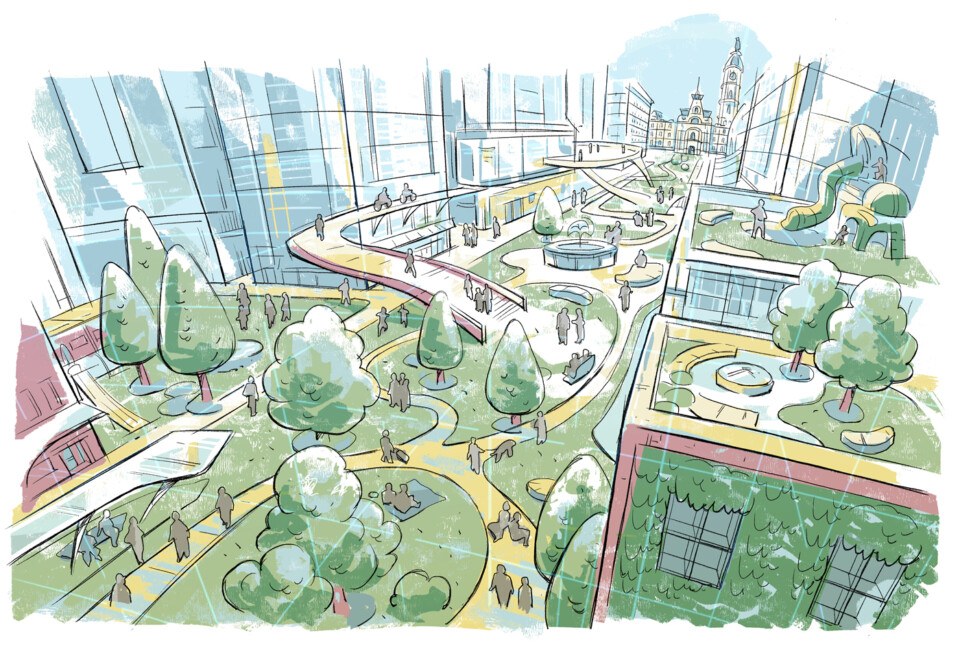
What should Market East look like? / Illustrations by James Boyle
The stretch of Market Street that runs from City Hall down through our nation’s historic founding blocks and ends at the Delaware River has been a phantom itch for decades.
Street photography from the 1950s depicts bustling crowds of shoppers, but since that heyday, splashy retail anchors have sputtered (RIP the Gallery) and redevelopment plans have faltered (we never knew ye, DisneyQuest). Meanwhile, the latest efforts to rethink the corridor played out like a sad trombone over the past two years as the Sixers proposed, and then bailed on, building a downtown arena. Now the team’s ownership and Comcast own several buildings on Market, and promise a renaissance. But details as to what a new life might look like remain … fuzzy.
But this much we know for sure: A Market East success story for the ages will require real clarity. Vision. Big ideas. All of which seem to be in rather short supply here these days. But that’s not for lack of big thinkers.
We gathered a group of highly invested Philadelphians — dreamers, doers, and proven place-makers (meet the panel). If they could do anything, we asked, what would they do with Market Street?
What follows is their brainstorm (edited for length and clarity). Here’s hoping it sparks inspiration in the 60-plus (!) members of the mayor’s Market East Advisory Group — and in all Philadelphians who want to see something lasting (a pedestrian paradise! an entertainment district! a living history retreat!) in this problematic, promising, potential-filled sliver of our city. — Edited by Janine White
Diana Lind, writer and urban policy specialist: A reimagined Market Street could go so many different ways. It could be Philly’s version of Colonial Williamsburg. Or Barcelona’s Las Ramblas. It could be an entertainment district with sporting and live event venues. It could also be a live-work-play corridor. I recently participated in an ideas competition for San Francisco’s Market Street, and one of the winners in that contest was a swerving, adaptable four-mile bench, made from off-the-shelf parts that could be easily replaced and maintained. The plan reenvisioned the sidewalk as a place for connection and joy, rather than just hustle and bustle. I think something like that could be playful placemaking that really transforms the walk from City Hall to 2nd and Market. Anyone else want to chime in with a bold idea or an example?
John Fry, president of Temple University: It seems so possible to connect the historic district to all the other wonderful assets up Market Street: Chinatown, the Convention Center, Reading Terminal, Jefferson Station. Leverage its convening, entertaining, transportation, and tourism infrastructure to create a dense, mixed-use, dynamic set of inviting ground-floor uses and expansive streetscapes, which over time I think would catalyze development. I don’t think you swing for a grand slam and try to get a giant anchor in there. I think you take all the assets, you connect them, you brand them. (Ed. note: Sounds a bit like downtown Oklahoma City’s Bricktown reinvention — which turned an old warehouse district into a live-work-play district and made a $1.4 billion economic difference.)
James Timberlake, architect, co-founder of KieranTimberlake: John, I think that’s a very good start. The East Market Street improvements that have already begun in Old City, which Ellen’s been a part of and which will be part of the connector to the new park at Penn’s Landing, are very much about traffic calming, traffic reduction. But if you really want to get radical, you can take the car completely off of Market Street. Something that is mostly pedestrian from City Hall all the way to the [Delaware] river would be incredibly novel relative to almost any urban street in the United States. Market Street could be the place, when the Eagles and the Phillies finally win a championship, where we all gather, which brings the city back together in a meaningful way.
Greg Reaves, developer, co-founder of Mosaic: They should close all of Market Street. It should be a large public space. You already have transit there. The High Line was a huge success. You can also say that with Las Ramblas, with La Grande Roue in Montreal. All of those public spaces have really set the tone. In Houston, landscape architects Hargreaves Jones did the 12-acre Discovery Green park downtown, and you saw hotels and other uses coming around that space.
Ellen Yin, restaurateur, founder of High Street Hospitality Group: It would be great to have less traffic in Market East — it’s four lanes, which may or may not be necessary. Things change. For example, in Old City, Market Street between 6th and Front is now only two traffic lanes instead of four. People originally anticipated the four lanes so people could exit onto 95 South, but now that isn’t even necessary. Instead, they substituted bike lanes and wider pedestrian walkways. It isn’t finished yet, but I’m looking forward to how it draws people to green space at the end of Market Street and farther to the waterfront. Apparently, this was [envisioned as] a much larger project originally, which included Market East, and became an incremental project, with Councilman Squilla testing it in Old City.
Fry: Diana, you asked for exemplars. The before-and-after of King’s Cross in London is extraordinary, but it all started with transportation access. On Market Street, with all the convening, all the entertaining, all the history, and Jefferson Station right in the middle, it feels like a really great place to start.
Yin: I’ve spent 25 years of my career with a Market Street address. So I’ve thought about this for many years — how Old City and City Hall could be connected. Green space, walkable space, all those things are really important, and there are so many gems. From serving on the board of the Delaware River Waterfront Corporation, seeing what’s been happening on the waterfront, I can see that small accomplishments can lead to something really big. Market Street definitely has the opportunity to be the pedestrian walkway to the waterfront. Also, the numbered streets do not have the proper connection. So beyond just the Market Street stretch, it’s also about connecting Washington Square and Chinatown.
Timberlake: We have to knit these neighborhoods north to south across Market Street.
I’ve always thought there should be a national museum on slavery. Why can’t that happen on East Market? A Market Street public realm has to have the unique cultural activity that comes with historically Black culture there.” — Greg Reaves
Yin: We just opened another business on Chestnut, which has been going extremely well. If there are quality offerings, people will come. One small dream I have is to somehow connect Jefferson’s Honickman building with the Franklin Residences [both on Chestnut] with the beautiful Paul Cret garden that’s in the middle of the block between 9th and 10th on Chestnut and somehow make that a hub for the community, as well as a place for people to have respite from patient care, from their jobs at Jefferson, which is one of the largest employers in the city. These small, little green spaces might be a great way to start.
Adjoa Jones de Almeida, former executive director of Forman Arts Initiative: There’s a lot that’s already been shared that really resonates with me. I just moved to Philly — two years ago in February. I’ve been in dialogue with other folks who have been much more involved in the Rail Park than I have, but what would it mean to really lean into the full vision of that park? (Ed. note: The Rail Park plan has a section running to 11th and Vine, by the Convention Center and Reading Terminal Market.) And what about something that Philly has already started to put a stamp on, which is this idea of being an outdoor museum? What if there was a way to use the Rail Park to lean into both this neighborhood and this corridor as a hub that then is inviting and inspiring people to continue their cultural exploration of the city through all of the spots that the Rail Park could take you to?
Reaves: Reading Terminal is the most visited location in the city, and what do we win off of that? What is the outcome of that space except people just going there and then leaving? I think it’s a great space to be working off as an anchor.
Jones de Almeida: I’ve been in awe of the city’s vibrancy — both in terms of its local neighborhoods, each with its own cultural landscapes, and also how these unique landscapes connect to this larger legacy of being the nation’s first capital, the entry point of so many immigrant communities that have shaped not only this city but also this country, as well as a long legacy of Black radical traditions.
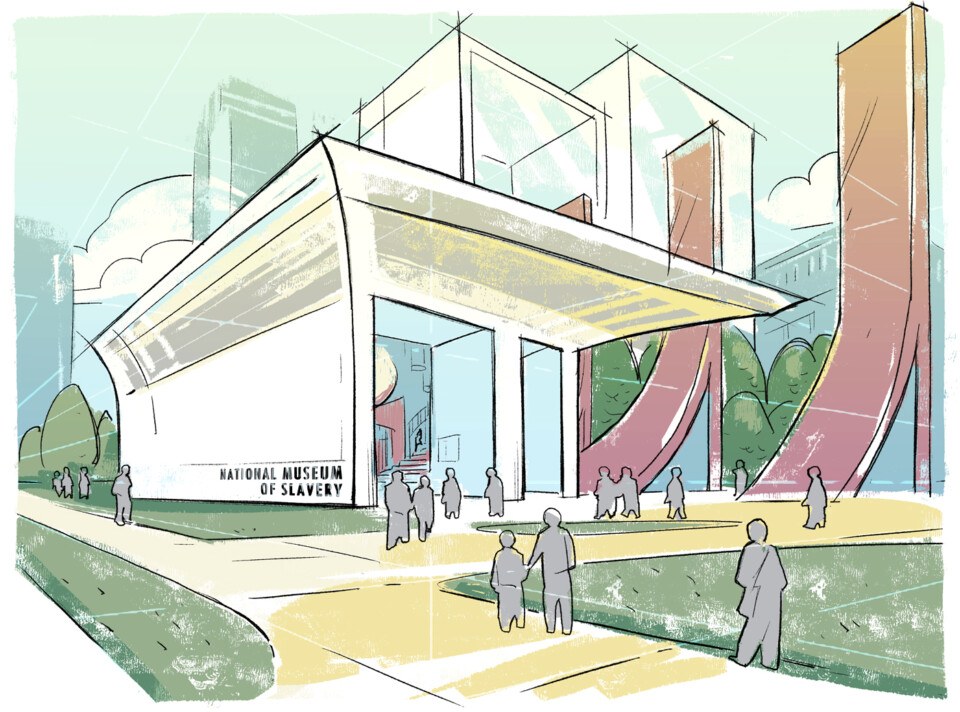
Reaves: Philadelphia is the most historic city in the country, and I don’t think we’ve leaned heavily enough into telling that story. I’ve always thought there should be a national museum on slavery and how the Quakers dealt with abolition. Why can’t that happen on East Market? A Market Street public realm has to have the unique cultural activity that comes with historically Black culture there. That story isn’t fully told, but it could be extended through a space like this.
Steven Kieran, architect, co-founder of KieranTimberlake: A couple of thoughts to accumulate some of these together. We think about history as being east of 6th from Independence Mall down. There is another expansive history, too, that traverses 150 years that isn’t recognized and utilized enough in my view. The Wanamaker building is a pretty incredible structure. The PSFS building, first International Style skyscraper in America. The post office building at 9th is a beautiful 1930s building. All different eras, different purposes, all have to a significant degree been repurposed already for other uses. Reading Terminal is unbelievable. The Strawbridge building. They’re remarkable pieces of architecture. The whole of it is an architectural museum, and we’re not recognizing those linchpin assets and appropriately building in between them.
Isaiah Thomas, City Councilmember: I agree with a lot of what was said. I think the history is very important. I think that whatever you decide to do should be a multicultural space that’s reflective of the city. I think traffic calming is important. I think there’s going to have to be more housing there. Hopefully you find a way to make a mixed-use space that, again, is reflective of the city. And with housing, there’ll be some retail.
Timberlake: Perhaps a part of the old Gallery needs to be taken down. There are parts that can be built up over. So adding either affordable housing or additional market-rate housing in that area all the way along that street would bring populace to the street. (Ed. note: Putting new housing atop existing retail is trending. In New York City, condos were built atop a post office; there are plans to put apartments above a Costco in Los Angeles this year.)
Reaves: Philadelphia was a city of two million people [peaking in 1950]. It’s now 1.5 million. We need more people, and we need higher-income jobs.
Let’s assemble some of the property in and around East Market that the city owns and put out a call for proposals to companies around the country. We say, look, put your HQ here and we will make it very worth your while.” — John Fry
Thomas: My number one objective would be to create an incentive to add to the list of what Philly is known for: eds and meds. Look at what New Jersey just did. They said, we’re going to increase our tax credit for film. We’re going to provide more incentives to companies like Netflix to come. It’s an example of government investing in an industry and taking a shot at saying, “I want my city, my state to be home for ‘blank’ industry.” Somebody used the other side of Market Street [west of City Hall] as an example of spaces we’ve done well. I would add the Navy Yard. And what they both have in common is that they’re both KOZs. (Ed. note: That’s state-designated Keystone Opportunity Zones, where taxes are temporarily waived for businesses and property owners.)
Lind: How do you think about choosing what to go after and who is involved?
Thomas: It’s one of those important corridors that really impacts the entire city. I think it really honestly starts with the mayor. I’m not trying to throw the mayor under the bus. I think it’s paying homage and respect to the executive of the city. It’s important for the mayor as well as the governor to be on the same page as it relates to what industries we essentially want to attract.
Fry: So Greg inspired this, which is definitely a wacky idea. But I was chair of the Chamber of Commerce when we did the Amazon HQ2. (Ed. note: In 2017, Amazon invited cities to make their case for becoming the location of a second headquarters. Philadelphia was one of 200-plus suitors.) They ran that process; they got 225 playbooks; they learned a ton about the country. What if we did a reverse Amazon HQ2? Let’s assemble some of the property in and around East Market that the city owns and put out a call for proposals to companies around the country. We say, look, put your HQ here and we will make it very worth your while. I bet you we get a lot of information coming our way about things that would draw people into Philly. It would be a really good way of market testing. How desirable is Philly as an HQ location that would bring 2,000 new jobs and more vibrancy to that part of the city?
Reaves: What I really like about that is even if it’s a no, it might be a “no, because,” and then you know why. And so then the issue becomes, can we solve that problem?
Lind: John, that’s a really interesting way of reframing how to deal with all of this space on Market Street, and what to do with it from the perspective of what Councilman Thomas brought up.
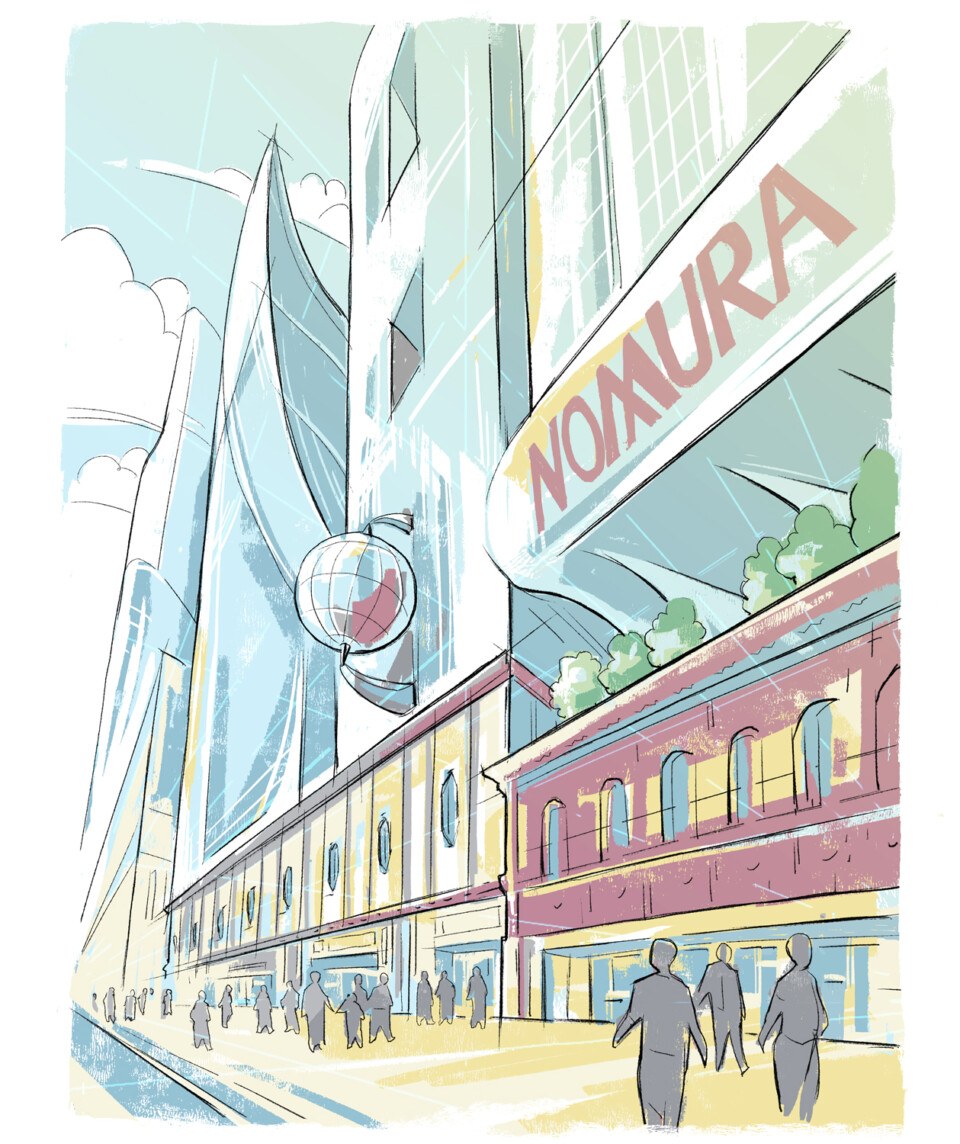
Fry: Diana, to build on what Isaiah said, I’m thinking about Nomura. (Ed. note: In 2025, global financial services firm Nomura announced a move into 610 Market.) That’s 500 jobs. They made a choice to be there for a lot of, I think, really strategic reasons. But right outside the city boundaries, we have three of the largest and most successful financial services asset managers in the U.S.: Vanguard, SEI, and Susquehanna. I suspect many people who work for those companies reverse commute to Center City or Fishtown or Northern Liberties. Why not package some things up and say, look, we want to make this a financial services hub? We already have a great company at 6th and Market that can prove the case. But you have to make it worth their while in terms of incentives.
Yin: There used to be so much conversation about the brain drain. So many of the people who graduate from Wharton end up going to New York. Increasingly, more people want to stay here, but there aren’t that many entry-level jobs, so that would support that as well.
Reaves: I think that’s really smart. John, I look at private equity firms and whether they’d come to Philadelphia, because for their employees in New York — is New York just too expensive for them? We’re looking at a project in New York where the starting rent for a studio is $4,600 a month. That’s a 430-square-foot studio. Philly has an opportunity there. People are making choices about where they want to be, and they’re not just looking in the U.S. That’s what we’re competing against. We have to think about what makes Philadelphia special and a place that people want to be in that can grow their families, grow jobs, grow talent. Both of my kids are here. They both have master’s degrees. They want to stay in Philly, but Philly has to do something big. It has to be more experimental.
Lind: It’s interesting — one of the words that got mentioned a few times was “anchor.” And there’s not necessarily an anchor in Market East right now. But if you look at who owns a lot of Market East, it’s actually public property: the city, the Philadelphia Parking Authority, the federal government. In certain ways, the government is the anchor institution. Should the city think of itself as the anchor of Market East? Or is that the wrong direction?
Yin: If we want a vibrant Market East, you have to have daytime and nighttime traffic. If there’s no nighttime business — the building right across the street from us has no retail or anything, it’s completely shut down at nighttime. There’s no people walking in that area. It doesn’t feel safe. It can’t just be government.
There’s a role for the public sector to support the building of a narrative … to help shape a story about what’s unique to us, the history and the legacy that has fed and is continuing to nurture local communities now. And that storytelling can be integrated into wayfinding and into the communication strategies for how visitors then navigate these spaces.” — Adjoa Jones de Almeida
Thomas: When I think about the fact that the top 10 employers are predominantly government, quasi-government, or nonprofit, this is an opportunity to add someone to the list. I do think that [government] should incentivize the space. I think it’s very difficult to ask folks to develop something that creates a phenomenal experience or prioritize all the other things that we’ve discussed and not offer some type of incentives. This is a good opportunity for us to partner with the private sector and get it right, like what we’ve done in other parts of the city.
Timberlake: I agree with Councilman Thomas. While government or public organizations have many of the properties along Market Street, I think [we need] housing and business that’s appropriate for being alongside big public spaces, that has populace, that has energy within them, rather than relying upon things like the government. It really needs another engine.
Jones de Almeida: To reiterate, I think one of Philly’s deepest strengths is the arts and culture lens. The economic piece needs to be prioritized, as folks have voiced. But there’s a role for the public sector to support the building of a narrative. That doesn’t just come from government, but needs to be supported by government in terms of bringing diverse voices across Philly to help shape a story about what’s unique to us, the history and the legacy that has fed and is continuing to nurture local communities now. And that storytelling can be integrated into wayfinding and into the communication strategies for how visitors then navigate these spaces.
Fry: Look at the work in University City. The leveraging of 30th Street Station and using placemaking like Drexel Square and tying assets together before any of that development really sort of occurred, I think, is the key to the things that you’re seeing happen now. Steven and James did a brilliant job of reimagining the facade of the Bulletin Building for Spark [a gene therapy company], but there’s no way Spark would’ve been in that building in the first place had all these other public assets like Drexel Square not been put in place.
Lind: We talked about the Gallery and some of the failures that have happened time and time again in this area. Ellen, you mentioned having a Market Street address for 25 years. I’m sure you’ve been a witness to it. What do you all think are some lessons from past improvement attempts in the city?
Yin: The Fashion District, although it’s not the greatest success, has certainly been an improvement to what was happening there previous to that. There’s been a lot of improvement over the past three years, moving past the pandemic and moving forward. The south side of Market is a much bigger concern to me. Buildings in which the second floors are all covered and clearly not occupied. It just seems that the opportunity would be in that area between St. Stephen’s alley and Market Street, as well as in the parking lot at 8th and Market.
Kieran: Can’t we just do something with those two parking lots at 13th and 8th? I’m a naive architect — there are people who own them — but couldn’t we just make parks out of both of them? Is that infrastructure that gets people to say, I want to be here? They don’t have to be parks forever, but it could be better than nothing to just get this started because they just literally drain life from everything there. How could this city allow this to go on for so long?
Reaves: As a developer, I think about what government should do that the private sector won’t pay for. That’s really what we’re asking. And some of the things that we might want the private sector to pay for, they just won’t. Eighth and Market. I was the COO at [the real estate development company] Goldenberg. Ken Goldenberg has owned that property since the ’90s. And you remember he had DisneyQuest plans there. Since then, it’s been a parking lot. He’d love to develop it, but the economics aren’t there for him to do that. And so that’s been a 20-year ongoing episode — kind of a disaster if you think about it. But I do think that if the public sector was serious about investing in the public realm and infrastructure, that would incentivize developers to come and invest money.
Timberlake: The failure along the waterfront for years was big Hail Mary projects — entertainment projects, Ferris wheels, gimmicks that sound good and look interesting in a diagram in Philadelphia magazine, but then never get realized. The Disney project, Greg, was really interesting, but again, it was sort of like, wow, this is so great. Could it possibly even happen? But it sort of collapses under its own scale and weight.
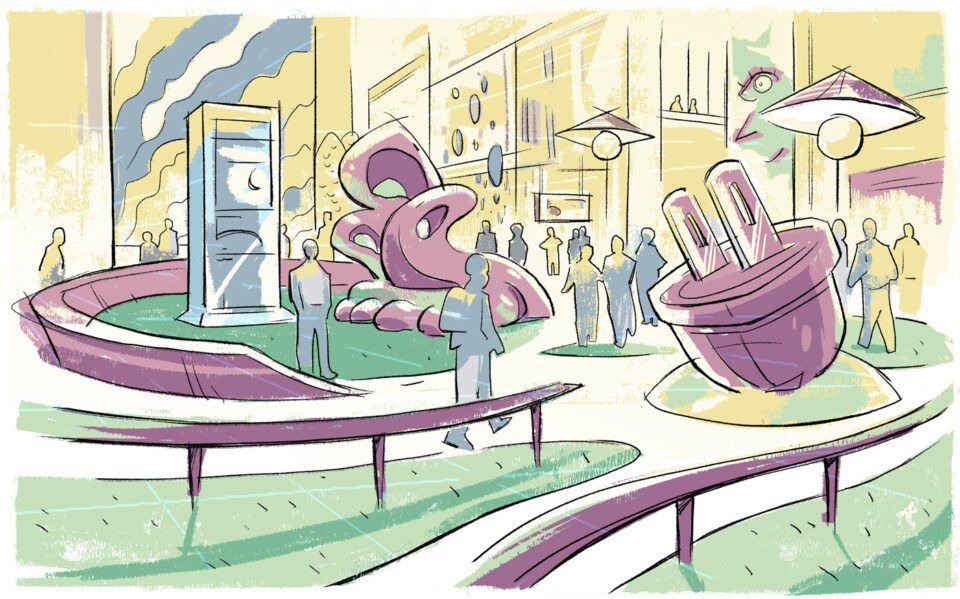
Reaves: Well, and DisneyQuest collapsed as an idea. That was during the Ed Rendell period. I really did appreciate the fact that he was a big thinker in the governor’s seat, and brought some great ideas forward. His cultural approach I think was smart. We really haven’t had that kind of leadership at the state level since. Not visionary in the way that Rendell brought that and what he did for Philadelphia.
Kieran: I sometimes wonder: Is the thing that’s causing the paralysis the scale of some of these big developments? The 8th and Market site is huge. If the land ownership pattern was different and there were 10 owners or 15 owners or 20 owners, could something happen at more incremental scales that gets it going and starts to fill it up? To some degree, I have the same wonder about the future of the Fashion District. Could that be cleverly and incrementally renovated to add a different quality to the streetscape without starting to consider taking things like that down? Can we incrementally find ways to reuse them?
Timberlake: It’s taken the Parkway almost a century to become what it is with institutional investment and renovations and adjustments to traffic and everything else. If you think back to the 1950s and 1960s in Society Hill and Queen Village, part of what city planning and Ed Bacon suggested was exactly what Steve and others have suggested here, which is a series of sort of small-ball moves. They created those interstitial block links that make such a vibrant, rich walking experience that is not just on the streets, but in between the blocks. Selective removal helped revitalize the historic properties in there and inserted new architecture, new housing in amongst it, even at a small level.
Lind: In terms of what success might look like in Market East, what clues should we look for in the coming year or so? What would you say would be a sign of a transformative win for the corridor, for the neighborhood, for the city?
Yin: We’ve seen that even though the renovation of the National development [mixed-use space on the south side of the 1100 block of Market] is gorgeous, we have three vacant hospitality locations there. That part might have been too premature, and I’m sure they’ll get filled. But the right master plan is what we probably need to have.
Reaves: If you have a plan that the majority of people actually agree and commit to, that’s a big win because it’s one of the hardest things to get: agreement on what to do. That would be at least a milestone that I think can move you forward. And then you try and solve it incrementally. You use tax credits, incentives, infrastructure support, money from the federal government, if that ever comes forward again as an option. All of those things are kind of results of a plan, but people really need to have a plan in place that we can buy into.
Fry: And put someone in charge of this, someone who’s a really, really good doer. John McNichol is a great doer, head of the Convention Center. And a person who’s been under the radar, who’s the head of Nomura now, is a guy named Shawn Lytle — a spectacular person. You have some super-high-quality people in the mix there. If this is going to be successful, someone’s got to have authority to make it happen.
Timberlake: Diana, I think there are a couple of things that you could say if they don’t happen in the next year, we’re not making progress. Just as a soft critique of the mayor’s committee, I think it’s too big. I think it’s a good start as a listening process, but that group can’t be the implementation entity. John’s right. It either needs a czar or needs something like the Delaware River Waterfront Corporation, which enabled the master plans to occur, and then has been implementing that master plan along the way. They’re biting off pieces at a time, and you can see that starting to emerge. The infrastructure was put into place, and these parklets — I think three or four of them — are now engaging each of the neighborhoods down to the waterfront, and that was the vision. We need that.
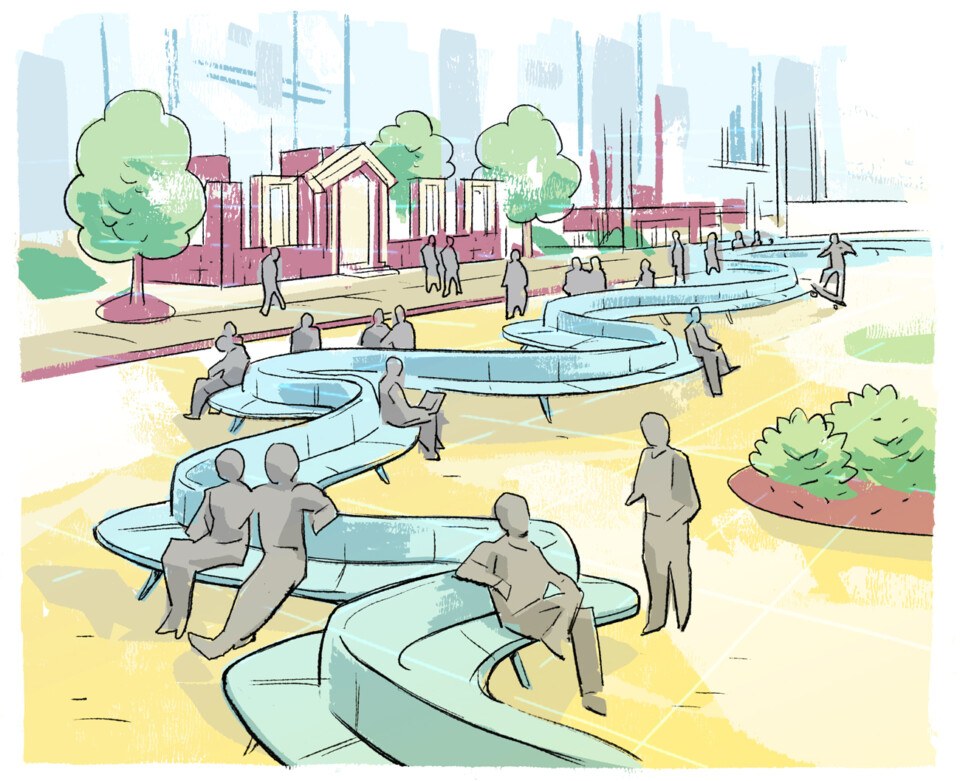
Kieran: The Delaware River Waterfront continues to work and attract new development and investment a decade and a half later. If we can mobilize to actually just do a plan in the next year or two and get something done, that’s something you’d have to show for it and could maybe be an initial catalyst. But I think the cautionary note on plans is how to make sure that they’re incrementalizable and nimble. You don’t have to dictate where they start.
Reaves: I think you can do it because we just master planned downtown Dover, in Delaware. We wrote a large plan for the downtown district, but said, You can actually implement it incrementally and economically. So there’s the opportunity to do big ideas, but not take it all on at once.
Timberlake: I do think that this problem needs to be looked at with some simultaneity. So the thoughts about public-private partnerships — trying to even put out an RFP of the sort that John Fry was talking about, to elicit interest from other market sectors as Councilman Thomas also suggested — I think it’s really important to be doing that simultaneously while you’re developing a plan, because I think there’s information from both sectors that then needs to be merged that then is managed by an entity that can implement it.
Reaves: This is why I’m a big advocate for developers being involved in those plans, because they’re the ones that ultimately are going to put the private investment with it.
Timberlake: Hopefully any public-private partnerships that emerge will buy into the plan, but if they don’t like the plan, they might be involved in part of it or suggest ways to improve the plan if it’s nimble enough to move it forward.
Jones de Almeida: Within the arts and culture lens of tourism, it’s also important to do the work of creating and curating the narrative of what this neighborhood has historically represented, the key anchor communities that have shaped this neighborhood, in terms of various immigrant communities. Obviously Chinatown as the longest continuing cultural neighborhood there, and more recent Asian communities that have come into the area, making that history present — but also from there, inspiring people to continue to explore the city beyond that hub across Philly.
Timberlake: We need to see real action on a variety of fronts, even a couple of small incremental projects. I don’t think we can waste more time.
The Panel
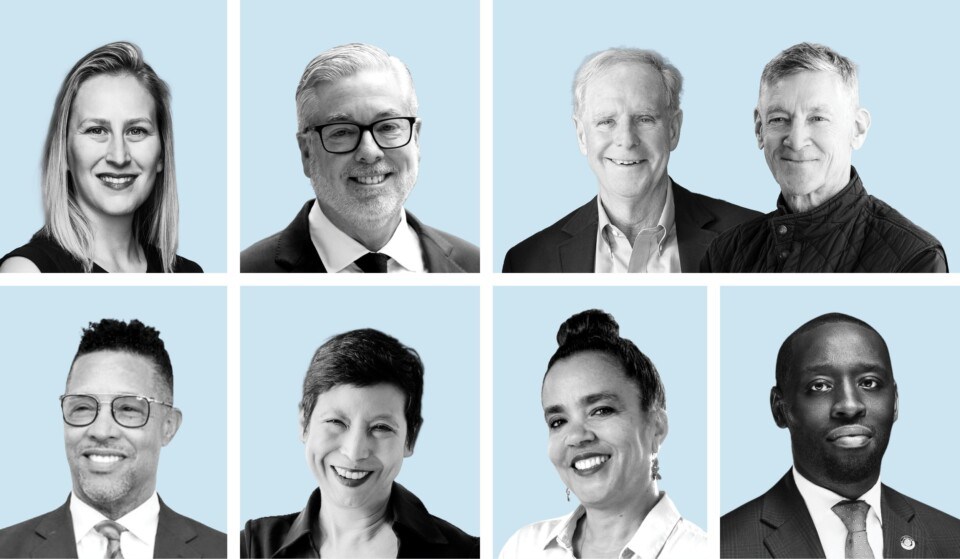
First row, from left: Lind, Fry, Kieran and Timberlake. Second row, from left: Reaves, Yin, Jones de Almeida, Thomas.
Diana Lind: The Urbanist
Diana Lind, the writer behind The New Urban Order on Substack and the book Brave New Home: Our Future in Smarter, Simpler, Happier Housing, was a recent visiting fellow at the Johns Hopkins Center for Economy & Society. (Disclosure: Her husband, Greg Heller, is consulting for the city’s Market East Advisory Group.)
John Fry: The University Prez
Currently president of Temple University, John Fry is a former Penn executive vice president and previously headed up Drexel, where he forged public–private partnerships and fueled neighborhood revitalization and economic development projects such as the $3.5 billion Schuylkill Yards.
Steven Kieran and James Timberlake: The Architects
Steven Kieran and James Timberlake, founders of the renowned architecture firm KieranTimberlake, have won numerous design awards for everything from adaptive reuse to historic preservation. Their local work includes Dilworth Park and a pavilion for Penn’s Landing Park (coming 2030).
Greg Reaves: The Neighborhood Developer
Greg Reaves co-founded Mosaic Development Partners. With $7 billion in real estate in its pipeline, the firm’s projects include co-developing Philly’s Navy Yard and a public-private collab to bring mixed-income housing, a health center, and retail to Frankford Ave’s commercial corridor.
Ellen Yin: The Tastemaker
A Wharton alum and James Beard Award winner, Ellen Yin is the founder and co-owner of High Street Hospitality Group, which includes Market East’s Fork, High Street, the Wonton Project, and the Bread Room. She’s also on the board of the Delaware River Waterfront Corporation.
Adjoa Jones de Almeida: The Artist
A social justice-focused arts educator and community builder, Adjoa Jones de Almeida worked at the Brooklyn Museum for roughly a decade before relocating to Philly for a stint heading up the Forman Arts Initiative, which plans to repurpose a block of West Kensington industrial buildings into arts space.
Isaiah Thomas: The City Hall Insider
When it comes to the city’s dollars and cents, Philadelphia Councilmember Isaiah Thomas has advocated for reducing the city’s growth-stifling business income and receipts tax and increasing transparency around the potential development of abandoned school district buildings.
Published as “Re-re-reinventing Market East” in the March 2026 issue of Philadelphia magazine.