Allan Domb: “Make Philly Fun Again”
The city’s best economic strategy is to make it a place where people actually want to spend time.

Outdoor dining in Rittenhouse / Photograph by R. Rabena for Visit Philadelphia
Listen to the audio version here:
A few years ago I had a conversation with Mayor John Street that I’ll never forget.
If you had $100 million to invest in Philadelphia, I asked him, where would you invest it? We agreed that dramatically reducing the onerous business taxes would be the best fix, but since that’s been a political nonstarter, Mayor Street had a different idea. “I’d make the city more fun,” he said. “If you do that, people will come to Philadelphia. And that will benefit everyone.”
That conversation has been on my mind lately, as the city tries to figure out a path forward. The good news is that we’ve rebounded from the worst of the pandemic. Crime is way down. (In 2025, homicides were at their lowest level in nearly 60 years.) A decent number of office workers have returned to Center City. Empty nesters are once again interested in moving into town (including people who’d fled to Florida during COVID).
But issues remain. East of Broad Street, the vacancy rate for ground-floor commercial and office space is 28 percent; west of Broad, it’s 36 percent.
It’s why I think it’s time for us to turn up the fun quotient.
Lessons From the Square
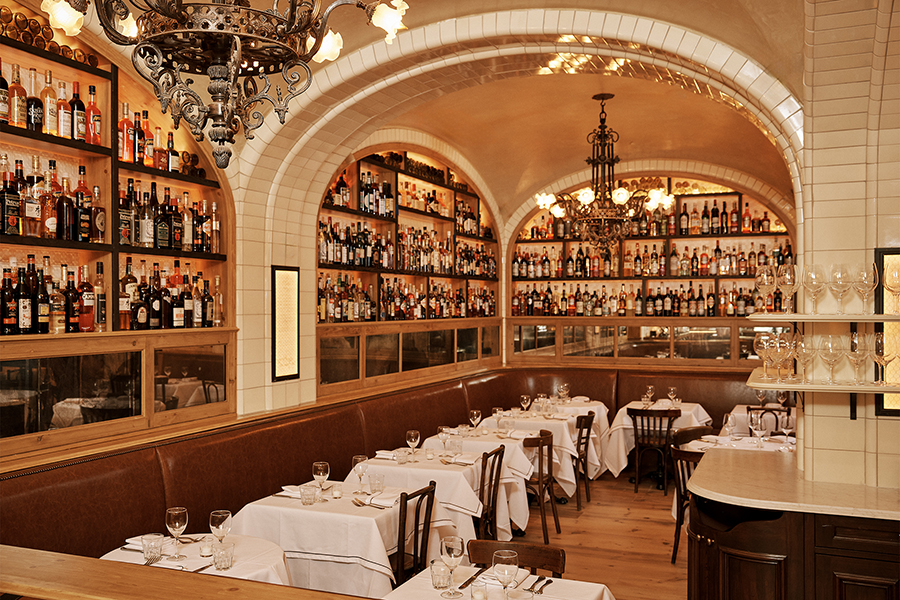
Inside Borromini / Photography courtesy of Borromini
One reason that conversation with Mayor Street has always stuck with me is that it’s consistent with my own experience in real estate around Rittenhouse Square.
Back in the early 2000s, I had the opportunity to put a restaurant on the ground floor of The Barclay, on the southeast corner of the square. A number of big chain restaurants were interested, but I wanted something that felt more special. I reached out to Stephen Starr — then pretty early in his restaurant career — to see if he was interested in opening something, but he passed. I didn’t give up, though. I kept asking him (and improving the deal I was offering) until he finally said yes. In 2004, Barclay Prime opened up, followed a few years later by Starr’s Parc; then Dandelion, the Love, and, most recently, Borromini. (And soon there will be another new Starr restaurant.)
Diners loved them, and they helped cement Rittenhouse Square’s reputation as a place that people wanted to be.
All of that turned out to be helpful to the local economy. Not only did city dwellers, suburbanites, and tourists want to eat on Rittenhouse Square, but people also wanted to live, work, shop and play there. Similar things happened in neighborhoods all over the city when new restaurants or other amenities opened up. People came. Jobs got created. Tax revenues grew.
The lessons: You do much better when you’re patient and think long-term, not short-term. And fun sells.
Fun Zones
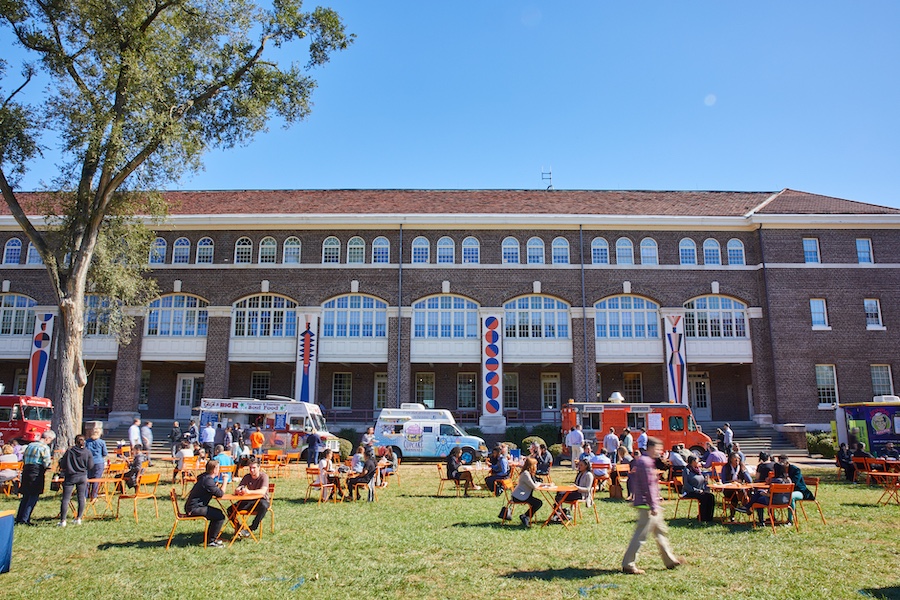
Navy Yard workers enjoy lunch on the Parade Grounds / Photograph courtesy of PIDC
So how can we make Philly more fun now? Creative people like Starr — and all the great Philadelphia restaurateurs and entrepreneurs that have followed in his wake — are crucial. But we also have to make attracting people a policy priority.
One thing we should consider is making sections of Center City — say, Market Street, from river to river, and Broad Street, from South Street up to Spring Garden — into Keystone Opportunity Zones. KOZs were created by the state a couple of decades ago in order to encourage economic development; businesses that open up in these areas get a break on state and local taxes.
We should create more KOZs in the neighborhoods that need development. That will bring people back to these desolate areas to populate offices, retail and restaurants — during working hours and beyond. If more businesses open in the core of the city, more people will want to spend their time there.
Philadelphia already has a number of KOZs, including parts of University City and the Navy Yard. The development we’ve seen in both of those areas in recent years is proof that KOZs work. And not just for the businesses that open there. Jobs get created. Energy spikes. Commerce increases. And the tax base broadens.
Imagine that happening at scale in Center City.
Over the course of several decades, from the ’90s up to the pandemic, I watched Philadelphia become more and more fun, and everyone benefited from it. Our best bet to keep Philadelphia moving forward is to make it a place that people can’t resist.
Let’s make fun a priority again.