How to Thrive — Not Just Survive — Through Menopause
Perimenopause and menopause used to be dismissed simply as symptoms of getting older, but that’s shifting thanks to heightened public attention, new scientific research, and women fed up with being told to grin and bear it.

Illustrations by Tara Jacoby
When Rittenhouse resident Julie Parana had a hysterectomy at 42, she was told that, because her ovaries were left intact, her hormones would be fine and she would go through menopause at a “normal” time. (The average age is 52.)
“But that isn’t exactly what happened,” she says.
Soon after the surgery, strange symptoms started popping up — skin allergies, joint pain, brain fog, an unexplained jump in cholesterol, and lapses in memory that had her worried about early-onset Alzheimer’s disease. Parana, an occupational therapist, didn’t connect the symptoms to menopause right away because, she says, “I didn’t know anything about menopause beyond the typical hot flashes and night sweats.”
When she asked for hormone bloodwork, her doctor told her she was too young for menopause, even though studies have shown that women who’ve had a hysterectomy are twice as likely to have ovarian failure, which can trigger early menopause.
Finally, the hot flashes kicked in, and testing confirmed that Parana’s estrogen was nearly nonexistent. Her doctor sent her a short message through the patient portal: You’re postmenopausal — that explains your symptoms.
“No education, no discussion of next steps, no offer for hormone therapy,” Parana says. Now 45, she knows that menopause, especially when it’s early, can put women at risk for dementia, osteoporosis, insulin resistance and diabetes, and cardiovascular disease. She did her own research, found a different doctor to start her on hormone replacement therapy to help address her symptoms, and then did a deep dive into lifestyle changes she could make to help herself.
A major takeaway she learned? “Your body needs to be a healthy host for the hormones to be as effective as possible.”
In 2025, an estimated 1.1 billion women globally are postmenopausal, with several hundred million going through perimenopause — the multiyear transition period leading up to menopause when levels of reproductive hormones, especially estrogen and progesterone, can fluctuate wildly.
During perimenopause, women endure a barrage of symptoms that range from inconvenient and undignified to miserable, from those Parana went through to night sweats, irritability, anxiety, vaginal dryness, and weight gain. And since women can experience these symptoms for up to a decade (typically for four to eight years) before they hit menopause — defined by the World Health Organization as 12 consecutive months without a period — perimenopause can not only affect physical health, it can take a serious toll on our mental health, relationships, and careers.
Historically, perimenopause and menopause weren’t discussed in polite society. Ninety-one-year-old reproductive endocrinologist Lila Nachtigall recently told the New York Times that when she first went into practice nearly 60 years ago, “Women wouldn’t even come to a doctor because they thought this is something that has to happen and they’re not allowed to complain.”
We’ve come a long way since then. A 2018 study examining perimenopause management reported that upwards of 90 percent of women now seek advice from their doctors on coping with the deluge of symptoms. The subject is no longer taboo at the dinner table (or book club, or gym).
Celebrities, social media, influencers, and pop culture have all helped to usher these conversations into the mainstream. Gwyneth Paltrow has discussed her symptoms frankly in outlets like People and covered the topic on her own website, Goop; Oprah Winfrey had candid conversations with women during her TV special The Menopause Revolution; and Halle Berry and Kate Winslet have both talked publicly about being on testosterone replacement therapy. The Canadian television show Small Achievable Goals, starring two middle-aged female comedians, is a witty yet real take on menopause — progress for an industry that rarely tackles the subject with nuance and depth. Obstetrician-gynecologist and menopause expert Mary Claire Haver educates her Instagram audience of 3.2 million followers about hormonal health, championing the ethos “Menopause is inevitable; suffering through it is not.” And 45-year-old influencer Melani Sanders struck a nerve with her May 2025 video announcing her We Do Not Care Club, a hilarious diatribe that overnight gained her hundreds of thousands of followers who reveled in the diverse concerns that women in perimenopause do not care about: chin hairs, painted toenails, and wearing a bra that fits, to name a few.
But even as this generation of women is finding a more open community to talk about this jarring life change and access to helpful treatment, navigating the stage can still come with significant hurdles. Everyone with ovaries experiences menopause, but finding effective relief and comprehensive care can still feel tedious and overwhelming. Why are so many of us left adrift at this stage of life? And what can we do to reclaim our sense of well-being?
One main problem is that many women don’t know they’ve entered perimenopause — or, in Parana’s case, menopause.
“Women will, on average, see five to seven specialists and wait over five years before their symptoms are diagnosed as being part of the menopause transition,” she says.
In many cases, women don’t know what’s happening to their bodies because their doctors aren’t categorizing their concerns as perimenopause symptoms. Only about one-third of U.S. ob-gyn residency programs report a formal menopause curriculum, according to a 2023 study conducted by the Menopause Society. Training is often limited to a few lectures — or none at all: A national resident survey found one in five received no menopause lectures during residency. There’s also lingering confusion stemming from a 2002 Women’s Health Initiative study that pushed menopause care down the priority list. (More on that last one to come.)
“There’s so much time and literature devoted towards women when they’re pregnant and even postpartum … but then it’s almost like after a woman’s done having kids, you become completely unimportant,” says Kim Einhorn, a Main Line ob-gyn.
Einhorn has practiced medicine for more than 20 years, and, after feeling like she wasn’t being given enough time to treat patients who often required more nuanced and involved care, she recently opened the MP Collective, a concierge medicine service in Bryn Mawr dedicated to women in perimenopause and menopause.
“Because of the lack of education that doctors have had on menopause, they’re just not aware that it’s perimenopause,” she says. “So women come in saying, ‘I want to kill my husband’ or ‘I feel so anxious all of a sudden,’ and no one attributes it to perimenopause unless you’re having hot flashes.”
Einhorn considers this stage, when women are starting to experience more life-impacting or serious symptoms, as the perfect time for interventions that will help them thrive — and that could have a long-lasting impact on health and longevity.
“It’s not hard to help women,” she says. “It’s actually quite easy if you know what you’re doing with hormone therapy, and how to advise them on exercise and nutrition.”
One way Einhorn treats women is with hormone replacement therapy, or HRT — the medically supervised use of estrogen, plus, for women with a uterus, progesterone, and sometimes testosterone to relieve peri/menopause symptoms, prevent bone loss, and treat genitourinary syndrome — all tailored to the individual by dose, hormone type, route (transdermal or oral), timing, and risk profile.
For decades, HRT was widely prescribed for women, starting with estrogen-only therapy in the 1940s. After a link between unopposed estrogen (estrogen therapy without any progesterone or progestin given alongside it) and endometrial cancer was discovered in the mid-1970s, doctors started adding progestin with a separate pill. The combo of estrogen and progestin arrived in the mid-1990s as one convenient pill: Prempro.
In 2002, a study by the Women’s Health Initiative indicated that the medication and others like it carried several hazards, including a 26 percent higher relative risk of invasive breast cancer as well as higher risks of heart disease, stroke, and blood clots. The risk to women who took these therapies, the study asserted, outweighed the benefits, and the trial was stopped early.
What got lost was the denominator. Think of relative risk like saying a car is going 25 percent faster without knowing whether it sped up from two to 2.5 miles per hour or 60 to 75 — technically true, but not the whole story.
In absolute terms, the WHI study translated to eight additional cases of breast cancer, about seven additional cases of coronary heart disease, and about eight additional cases of stroke per 10,000 women per year on Prempro versus placebo. What’s more, the trial’s subjects were women aged 50 to 79, with an average age of 63 — i.e., postmenopausal, and at greater risk for these afflictions than younger perimenopausal women. The study also found benefits to taking Prempro, including fewer hip fractures, less colorectal cancer, and a decreased risk of overall mortality and cancer- specific mortality.
The WHI released its findings — not just in the usual published report, but via press conference and press release and amplified in splashy headlines and melodramatic morning-show segments — and the effect was immediate. By July 2003, U.S. hormone-therapy prescriptions had cratered, with millions of women stopping HRT or never starting.
Peter Attia, a physician and host of The Drive podcast, called this “the greatest injustice imposed by the modern medical system in our lifetime” in a discussion with Rachel Rubin, a doctor of urology and sexual medicine. (If you are a woman or know a woman, please listen to the entire episode, #348, on women’s sexual health, menopause, and hormone replacement therapy.)
Rubin agreed with Attia’s assertion and went on to add, “They misinterpreted the data so drastically, and scared everybody with so much fear, that you actually have an entire generation that has forgotten how to prescribe hormone therapy. And this is the nightmare we’re living in today.”
It’s true — in the 23 years since the study came out, not only did a generation of women fear HRT and suffer through the symptoms of perimenopause and postmenopause, but physicians stopped learning the nuances of how and when to prescribe hormone therapy, creating a void in medical knowledge that we’re only now beginning to address.
Einhorn saw the results of this misinterpreted data firsthand, with her patients suffering through symptoms like hot flashes and insomnia that often snowball into depression, anxiety, and marital problems. But when she suggested HRT, she says, the typical reaction was “‘This is going to give me breast cancer.’ Nothing I could do, come hell or high water, would convince them it was safe enough.”
Now she sees the pendulum swinging back. More of her patients are asking for HRT, a change the doctor credits, in part, to a generational shift.
“We’re not really as okay with just surviving and being patted on the head and told you’ll be fine, it’s just menopause, come back and see me next year,” she says.
Women today are refusing to be dismissed and are demanding more, but many are still experiencing the unintended consequence of the WHI study — that lack of understanding from medical providers of the signs of perimenopause and what can be done to alleviate symptoms.
When Grace*, 43, from Wilmington, complained to her ob-gyn that she was experiencing unexplained weight gain, she was told to be happy she doesn’t have any real problems. (Weight gain, especially in perimenopause as hormones fluctuate wildly, can cause insulin resistance and increase the risk of type 2 diabetes, not to mention putting added strain on joints and the pelvic floor.)
At 48, Stella*, who lives in Grad Hospital, told her ob-gyn she’d been bleeding for almost four straight weeks. He offered an IUD as a fix and moved on — no workup, no conversation about perimenopause, no plan.
Lee*, 42, from Port Richmond, was instructed that to combat her symptoms, she should lose weight and go to the gym, and that she wasn’t a candidate to take estrogen because she gets migraines. The truth? HRT can help stabilize hormone fluctuations that trigger migraines for some perimenopausal women.
“It’s been completely devastating to hear that this should be normal, and to be prescribed antidepressants when I am asking for help with biological issues like painful intercourse, night sweats, and insomnia,” Lee told me. “The answer has to be somewhere beyond ‘Lose weight and try working out.’”
Surrounded by women my age in this stage of life, I hear these stories with depressing regularity, and, fueled by my intense perimenopausal mood swings, I feel just as much indignation and frustration with each one.
Though I am now waking up in a cold sweat, dealing with chronic joint pain, and experiencing extreme irritability (sorry, family!), I’m relieved to be part of the generation that’s not satisfied to simply endure these indignities. Along with more awareness and less stigma surrounding menopause conversations, there are more options than ever available to help women thrive through these changes.
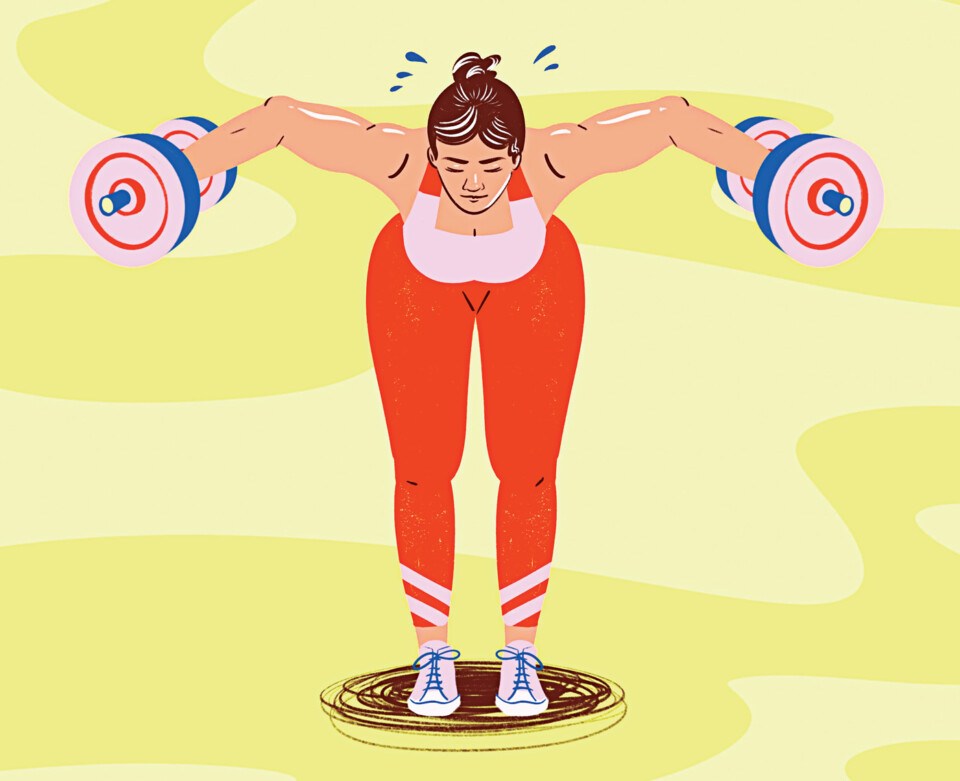
I found a health care provider with experience prescribing hormones — and more important, one who understands that each woman needs different doses, combinations, and delivery methods, and that it can take time to home in on the ideal combination. I’ve also made a few key lifestyle changes, including eating more protein (muscle loss accelerates in perimenopause), cutting back on cocktails (I have enough trouble sleeping as it is), and lifting weights (to help prevent osteoporosis).
As I navigated my own symptoms and frustrating medical experiences, I started noticing another encouraging sign. In the past few years, a host of wellness retreats and specialized programs have emerged, aimed specifically at educating women about perimenopause and menopause. It’s a stark contrast to decades when women’s health beyond the reproductive years was largely ignored — when the wellness industry focused primarily on helping women maintain their youthful appearance rather than supporting them through major life transitions, including this one. Now, finally, there are spaces designed around the reality that women need comprehensive support, education, and, yes, some pampering during what can be a physically and emotionally challenging time.
So when I read about the Power Through Perimenopause retreat at Mii amo, a wellness resort in Sedona, Arizona, I signed up, hoping to gain a better understanding of exactly what is happening to my own body, and how to help myself feel better. (Okay, and to spend several days eating wholesome gourmet meals I did not have to cook, submerging myself in spa treatments and stints in the sauna, and hiking the winding trails among the towering spires of Boynton Canyon.)
The retreat was led by Angela DeRosa, a doctor of osteopathic medicine who has been treating women with estrogen, progesterone, and testosterone for more than 30 years and who co-founded the Hormonal Health Institute in 2018.
In a room with views of the pristine red-rocked landscape outside, she explained to our group of robe-clad women why the current medical system fails so many of us during this transition, and how, as life expectancy has risen — in the U.S., women’s increased by nine years from 1960 to 2015 — we live with, and endure the symptoms of, menopause longer.
“We now live one third to half of our lives in menopause,” she told us. “We shouldn’t be stoically accepting it.”
DeRosa ticked through the symptoms of estrogen deficiency (hot flashes, night sweats, frequent urinary tract infections, heart palpitations, and more) and testosterone deficiency (low libido, fatigue, memory loss, migraines, and weight gain, to name a few), and armed us with strategies to advocate for better care. (For the record, DeRosa echoed Peter Attia’s assessment of the WHI study, noting, “This was malpractice against women — it’s been over 20 years, and we still haven’t recovered.”)
Beyond educating me, including providing laser-focused insights about my own hormones and how to get symptom relief through HRT, nutrition, and exercise, my stay at Mii amo was a desperately needed reset and reminder that I — a mother, wife, business owner, and journalist — need to take care of myself, too.
I got a myofascial release massage to help soothe the joint stiffness and decreased connective tissue elasticity that can result when estrogen plummets. I sipped nighttime sleep tonic made with lavender, cherry juice, and chamomile to combat my frequent insomnia. And I basked in the omnipresent relaxed vibe that’s the hallmark of a stay at the resort.
In the spirit of the fearless visionary Melani Sanders, at Mii amo, we do not care that we have not applied mascara in days. We do not care that we wear our robes and slippers to dinner. We do not care that after the two-hour Desert Mist Renewal treatment — a transportive scrub, a wrap, and a full body massage — our hair, caked with jojoba and beeswax, is giving Medusa.
The retreat reminded me that we don’t have to white-knuckle our way through these years. We can actually feel good and flourish.
The movement toward better menopause care is gaining ground closer to home, too, with new ways to care for yourself. One is Julie Parana’s practice, the Menopause OT.
Once Parana got herself to a good place with hormones, nutrition, and weight training for muscle mass and osteoporosis prevention — women can lose up to 20 percent of their bone density in the five to seven years following menopause — she had an epiphany. As an occupational therapist, she’s spent her career helping patients manage their health conditions, and she realized she could provide similar aid with menopause. So she got certified in women’s health and became a certified menopause coach.
“What I want women to know is that you don’t have to suffer, but it does require action, and it does require putting yourself first,” she says, noting that this concept can be hard for women who are often taking care of their kids, working full time, and/or caring for elderly parents.
Parana helps women do just that with her “six pillars of midlife wellness,” including mindset and identity, nervous system regulation, stress management, movement, nutrition, and sleep hygiene.
What she hears most from clients? “I wish I’d started doing this sooner.”
More good news: More than a dozen states, including Pennsylvania, are considering bills to mandate provider training, expand insurance coverage, and generally boost awareness about menopause care.
And last year, the Menopause Society, a national nonprofit medical organization that’s been dedicated to education about and research into midlife women’s health since 1989, sold out the in-person registration for its annual conference for the first time, indicating that doctors are seeking more training as patients are being more vocal about wanting care.
“I know doctors that have been going to that meeting for 20 years and never bothered to register right away, because it never sold out before,” Einhorn, a certified menopause provider through the Menopause Society, told me. (A Menopause Society Certified Practitioner, or MSCP, designation means the provider is specifically trained and credentialed to give safe, effective, and comprehensive menopause-related care — training most general clinicians never receive in medical school.) “And last year they were shut out of the meeting.” This year’s conference sold out too, but providers were able to attend virtually.
Einhorn’s practice, the MP Collective, is another positive indicator, as are other centers in the Philly area, like gynecologist-founded SiBelle Women’s Health and Aesthetics in Horsham and the Balanced Woman in Ardmore.
“What’s so empowering about this phase of our lives in perimenopause is that we’ve been conditioned to not be the important ones,” Einhorn says. “We’re subjugated when we’re pregnant, because it’s all about the baby, and after that purpose is done, we’re told we have no value to the world, but it’s completely untrue. The reason why human females live beyond menopause — we’re one of the only mammals that do — is because we have a purpose and meaning. Women in our generation going through it right now are learning how to feel empowered and live the best part of their lives.”
* Names have been changed to protect privacy.
Published as “The Power of Change” in the 2026 issue of Be Well Philly.