
The 2026 Top Doctors List Is Here

Our all-new Top Doctors list is here!
This month, we unveil our all-new Top Doctors list — a compilation of the best physicians in the region, whether you’re looking for a dermatologist, a cardiologist, a pediatrician or a family doctor. Sort by name, town, or specialty to find the doctor you need.
The 2026 Top Doctors List
About the List
Castle Connolly is a trusted and credible health care research and information company with over 30 years of experience researching, reviewing, and selecting best-in-class health care providers and institutions. Our mission is to help people find the best health care by connecting patients with top-tier providers.
The Castle Connolly Doctor Directory is the nation’s largest network of peer-nominated doctors. Castle Connolly employs a rigorous team of researchers to select top health care professionals on both the national and regional levels. The Top Doctor selection process is based on peer-to-peer nominations, open to all licensed physicians in the United States, allowing them to nominate peers in any specialty and region. The research team then thoroughly vets each nominee’s professional qualifications, including education, professional reputation, research leadership, hospital and faculty appointments, disciplinary history, and outcomes data. Interpersonal skills such as listening, communicating effectively, demonstrating empathy, and instilling trust and confidence are also considered.
Castle Connolly is part of Everyday Health Group, a recognized leader in patient and provider education, attracting an engaged audience of over 60 million health consumers and over 890,000 U.S. practicing physicians and clinicians. Our mission is to drive better clinical and health outcomes through decision-making informed by highly relevant information, data, and analytics. We empower health care providers and consumers with trusted content and services. Professionals and/or institutions selected for inclusion in this magazine’s feature may also appear online at www.castleconnolly.com, or in conjunction with other Castle Connolly databases online and/or in print. For more information, please visit Castle Connolly.
This Philly Barber Is Pairing Haircuts With Health Care
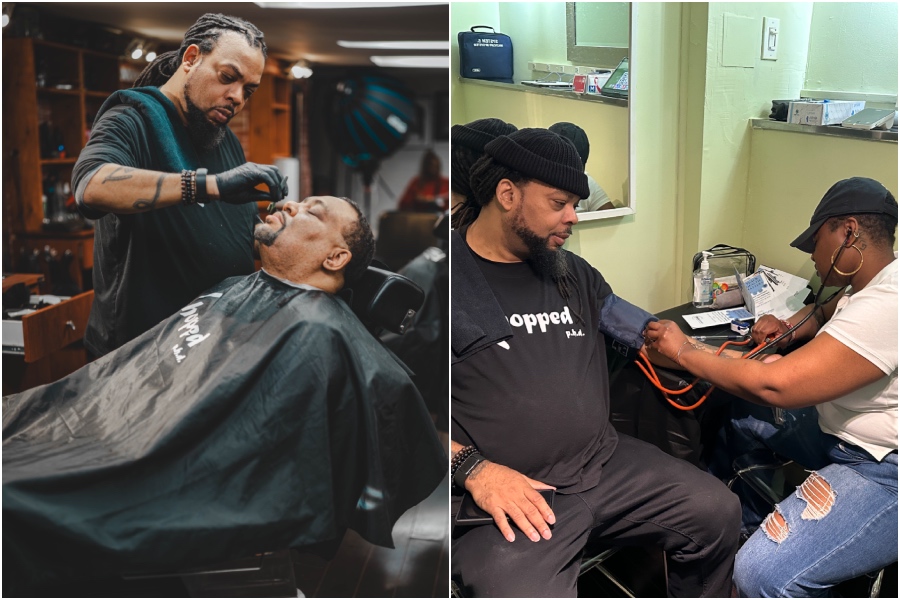
Al Dashiell’s Center City barber shop, Chopped P.H.D., is hosting on-site health screenings with registered nurses twice per month. / Photography courtesy of The Gentle Giant Co (left) and Laura Brzyski
Listen to the audio edition here:
If you walk past Chopped P.H.D. on Sansom Street, you might assume it’s just another sleek Center City barber shop, or wonder if owner Al Dashiell has a stack of academic degrees to his name. (Though he’s an expert barber, the P.H.D. here stands for ‘professional hair designers.’)
But spend a little time with Dashiell inside his lively, 800-square-foot basement shop, which opened on March 13th, and it’s clear he wants to give his clients something longer-lasting than cuts and fades.
Twice per month, registered nurses are on site for blood-pressure checks, heart screenings, blood sugar checks, and casual Q&As available to anyone — no sign-up needed. The next session is this Thursday, April 23rd.
The goal? To improve health outcomes for clients. And the inspiration? Dashiell’s own remarkable, six-year comeback from a life-altering medical crisis.
Dashiell has been barbering for over 30 years. He cut his teeth in the early ‘90s in a shop at 20th and Chestnut before eventually opening his own storefront in West Philly, where he grew up.
But Dashiell’s life radically changed in early 2020, when the pandemic closed his business. Soon afterward, COVID felled him, too.
“I thought I had the flu, but then my taste went away,” he says. “I quarantined in my home, but I wasn’t getting any better.”
At that time, doctors were unsure how the virus would interact with preexisting health conditions; Dashiell had been diagnosed as prediabetic a few years prior. So, to be safe, his primary care physician sent him to the ER on April 2, 2020.
“That’s the last thing I remember,” says Dashiell, who that day lapsed into a coma that lasted more than 40 days.
When he woke up a few days after Mother’s Day, he had no idea how much time had passed. (“I thought I was just asleep,” he says.) He learned that, at one point, his heart had stopped and, because his kidneys had failed, he was not only on dialysis but had been placed on an emergency transplant list for a new kidney.
Through rehab, Dashiell relearned how to walk and talk — he had had a tracheostomy while hospitalized. And then, as if by miracle, his kidneys began functioning on their own again.
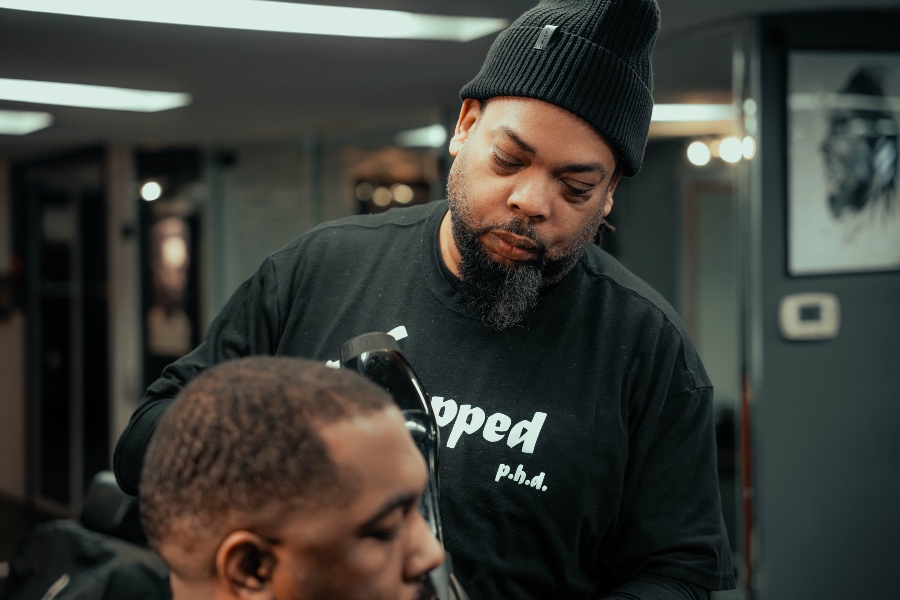
Dashiell in his Center City barber shop, Chopped P.H.D. / Photograph courtesy of The Gentle Giant Co
“One doctor told me he had never seen that in his life,” Dashiell says. “And all I could say was, ‘I know the God I serve, and I know He can do anything.’” Because his kidneys were working — not optimally, but enough — he no longer needed dialysis or a transplant. Nonetheless, he now has chronic kidney disease. He and his doctors regularly monitor his glomerular filtration rate (GFR), which measures how well kidneys filter blood.
For context, a GFR of 90 or above indicates normal kidney function; a reading in the 15 to 60 range suggests chronic kidney disease; and anything below 15 signals kidney failure, and the need for dialysis or a transplant. Dashiell’s GFR was zero while in a coma then increased to around 35 during rehab. Today, it fluctuates between 17 and 50, depending on how hydrated he is or what medications he’s taking.
These past six years, life as Dashiell had known it has been altered. He’s made lifestyle changes to keep himself healthy, like eating more nutrient-dense food, drinking water instead of coffee upon waking, and doing Tai Chi every morning to loosen up his joints. (Post-COVID, he developed an autoimmune inflammatory disease, which causes him chronic joint pain.) He also closed his West Philly barbering spot for good.
“After cutting hair for 30 years, I didn’t think I was ever going to open [another shop] again,” he says. “But then an old client of mine reminded me that your barber is almost like a therapist or your best friend. Men don’t [often] talk to people about what they’re going through, but they talk to their barbers. And I thought, ‘Wow, you’re right — my clients talk to me about everything. Some stuff I have to take to my grave!’”
So last year, when space became available at 15th and Sansom streets — bonus: it was formerly a hair salon — Dashiell pursued it, eager to leverage something bigger from the trusting connections that barbering can foster.
“I realized when I got sick, that if more people were more informed about their health conditions, they might not get sick,” he says. “So, I asked myself a simple question, ‘What can I do to help?’”
So he’s back behind the chair again, in his own shop for the first time in six years, encouraging clients to jump-start their health in a place where they already feel comfortable – and with help from credentialed medical professionals like Arnetta Shaw, a registered nurse who specializes in mental and public health and is partnering with Dashiell for on-site services.
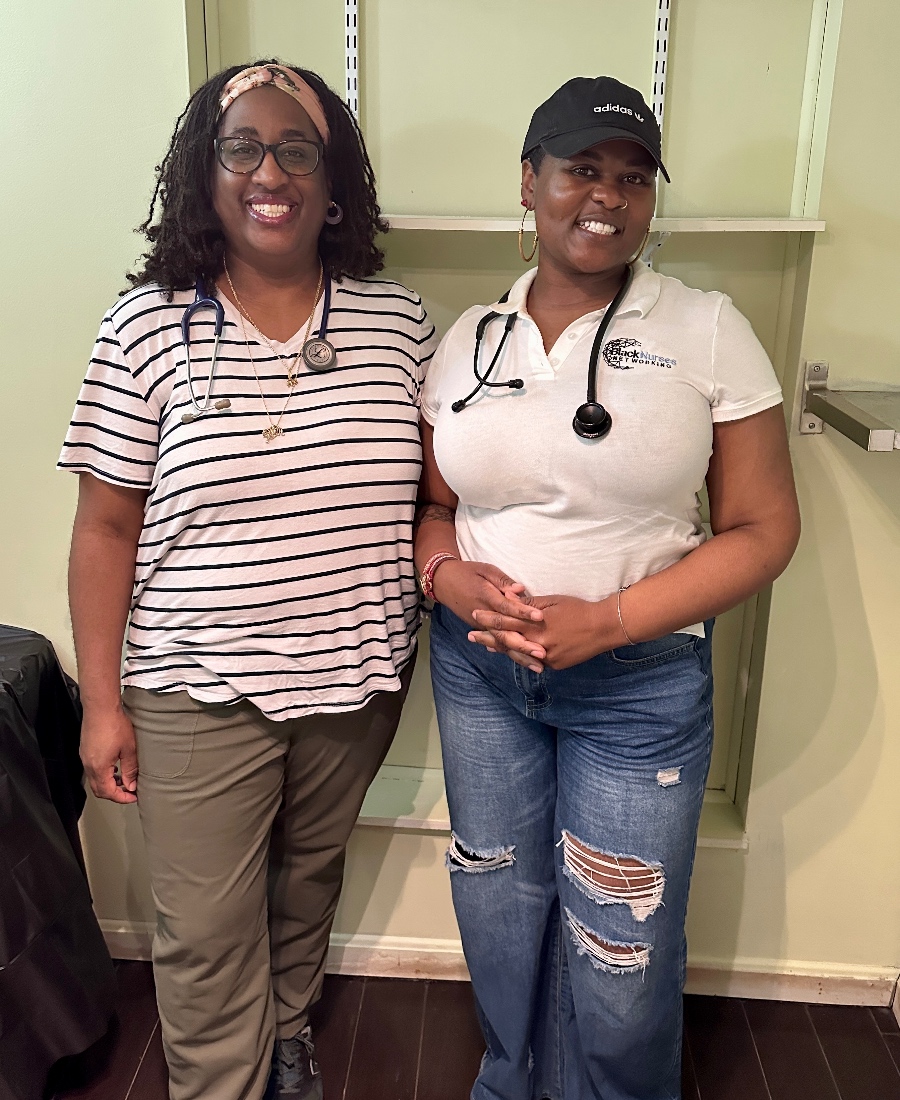
Melissa Smith (left), a psychiatric mental health nurse practitioner, and registered nurse Arnetta Shaw on site at Chopped P.H.D. / Photograph by Laura Brzyski
“Nurses get into the field because we want to help people understand what’s going on with their health,” says Shaw, who is currently developing Black Nurses Networking, a way for nurses to deliver care and provide education in local settings and to support each other professionally. “This, to me, is the perfect type of space to meet community members where they are — it’s true collaborative care. Our drop-ins allow Al to say to a client, ‘Hey, the nurses will be here on such and such a day — stop by then and talk to them.’ This barber shop is their familiar place, so they might be more inclined to follow through.”
That follow-through is critical: When it comes to high blood pressure, Black adults in the U.S. see the highest prevalence of hypertension — about 58 percent — compared to other racial or ethnic groups, as well as earlier onset and more severe complications, according to the American Heart Association.
And though Chopped P.H.D. services both men and women, the health screenings are especially helpful for men, who historically visit doctors less often than women.
“Say a person comes in to see us for the first time and their blood pressure is a little elevated, they can come again in two weeks and if it’s still high, it’s helping that person [and us] understand this is a trend,” says Melissa Smith, a psychiatric mental health nurse practitioner with a private telemedicine practice, The Mindful Wellness Place, who has joined Shaw twice. “We can have a conversation about signs and symptoms of high blood pressure — like vision changes, headaches, and irritability — and their lifestyle habits, such as how much water they consume versus soda or energy drinks. The person gets a screening, but also education.”
For Dashiell, who has six kids and four grandchildren, this new venture has reignited his drive for wielding clippers from behind the chair. “My wife wonders why I still keep barbering, and I tell her, ‘I’m showing the kids that no matter what life brings you, you can’t let it bring you down — you gotta keep moving.’ I’m showing them that their dad isn’t a quitter.”
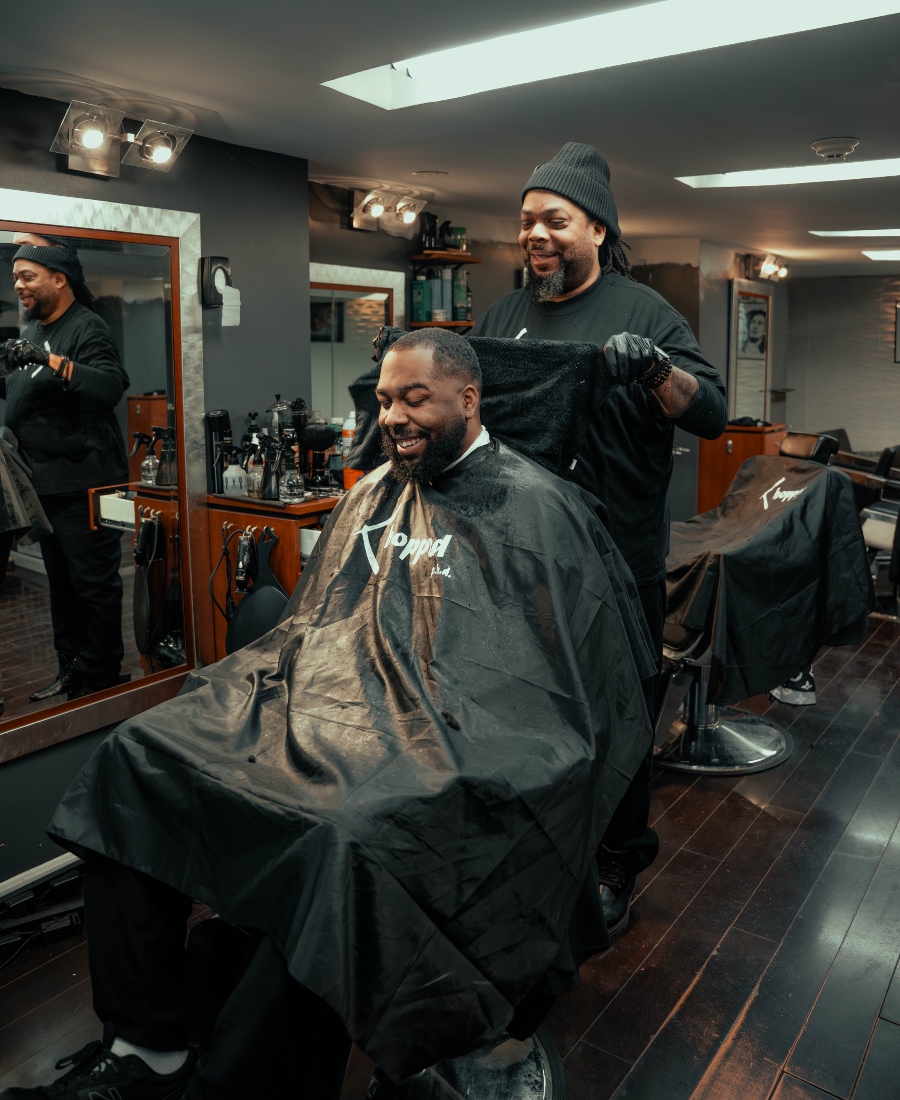
Dashiell jokes with a client. / Photograph courtesy of The Gentle Giant Co
“I also missed my clients,” he adds. “The atmosphere of a barber shop is almost like a ministry to me. I like seeing clients smile when they get out of the chair, I like when they come in wanting certain cuts or a change in color — it creates a challenge for me. Despite what I’m going through physically, I try to encourage my clients to make small [lifestyle] changes because they could save your life. And if I helped one person, then I did my job.”
Chopped P.H.D. will hold its next screening this week, on Thursday, April 23rd, from noon until about 2 p.m.
Chopped P.H.D is located at 1506 Sansom Street in Center City. Stay updated on future health screenings via Chopped P.H.D.’s Facebook and Instagram.
Sign Our Petition for an Ona Judge Day
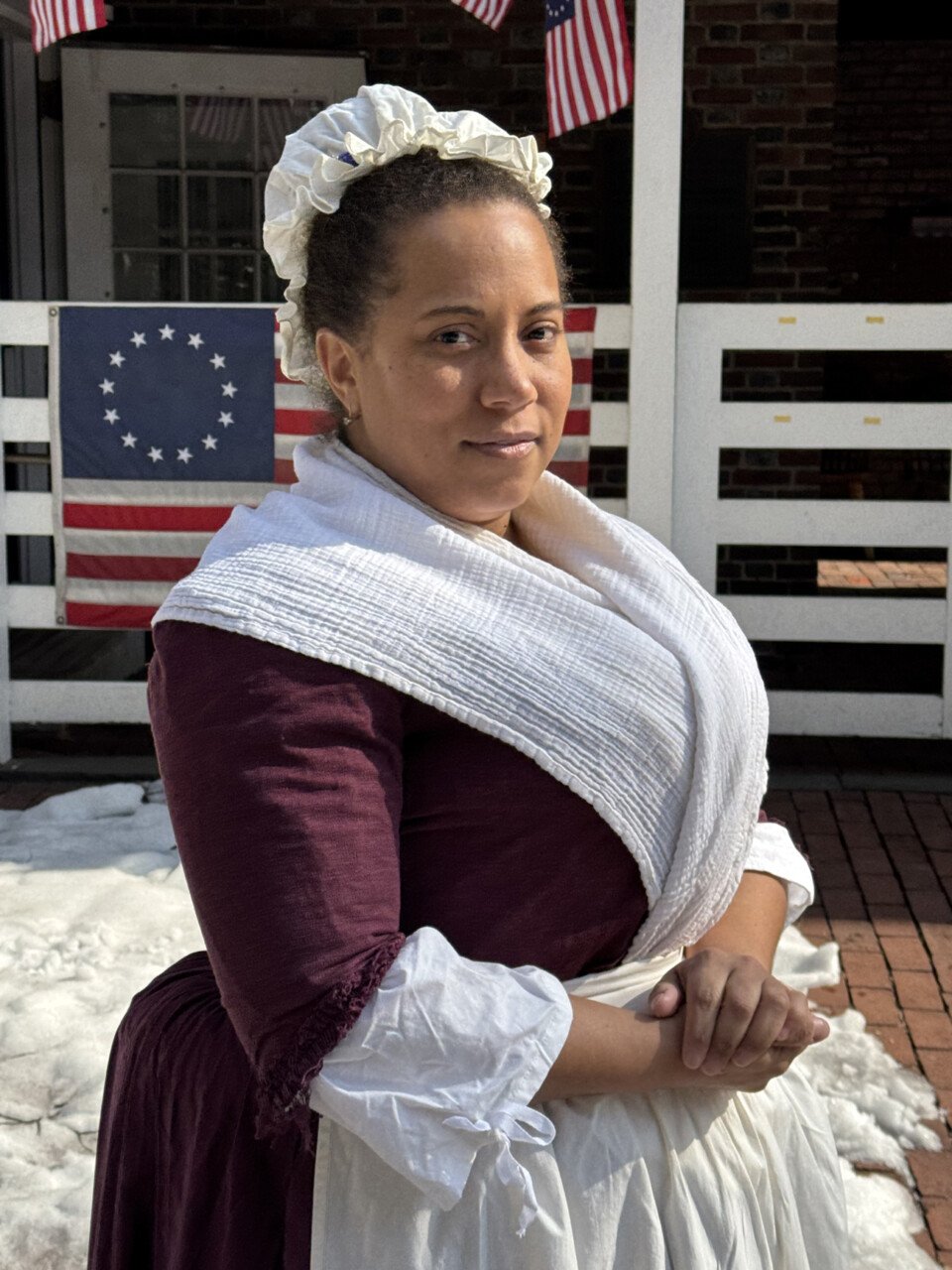
Alex Ford, a Philly-based actor who portrays Ona Judge, at the Betsy Ross House / Photograph by Ronnie Polaneczky
Listen to the interview edition here:
Today, Philadelphia magazine and The Philadelphia Citizen, in collaboration with Avenging the Ancestors Coalition and the Ona Judge Coalition, are launching a petition to ask the City to officially recognize May 21st as “Ona Judge Day” in Philadelphia — in 2026 and every year hereafter.
Why May 21st?
Because on that date in 1796, the 22-year-old Judge, enslaved by George Washington right here in Philadelphia, escaped his clutches. With help from the city’s Free Black community, she fled to New Hampshire. For years, an outraged and humiliated Washington tried to kidnap her back into bondage. At every turn, Judge outwitted the country’s most powerful man and was never, ever caught.
Talk about courage. Talk about endurance.
Talk about real Philly grit.
Since 2010, Judge’s story had been told at “The President’s House: Freedom and Slavery in the Making of a New Nation,” the dignified open-air exhibit at 6th and Market streets, the site where Judge and eight others were held captive by Washington.
But in January, the National Park Service, on orders from the Trump administration, dismantled the memorial because it presented “a distorted narrative driven by ideology rather than truth.”
Philly leaders and activists called bullshit and filed a lawsuit to restore the exhibit. It is now working its way through the court.
But you know what will never need a court order to be shouted publicly from the city’s rooftops? Ona Judge’s story itself.
That’s why Mayor Parker and City Council should officially recognize every May 21st as Ona Judge Day, and share the lessons of Judge’s life throughout the year. Not just at the site where she slept in a dank basement but at our kitchen tables, in our school classrooms and worship pulpits, in the corridors of City Hall and the hallways of the state Capitol — whether the slavery memorial is ever restored at the President’s House or not.
Or, as Carl Singley, co-founder of the Ona Judge Coalition, puts it: “What the city chooses to do matters nationally. If Philadelphia insists on telling the full story — liberty and slavery together — it sets the tone for how the country understands its own origins.”
In the call to honor Judge, we honor truth and continually recommit to the privilege of telling it. Together, let’s show the world that you can tear a Philadelphia memorial down, but you will never, ever shut a Philadelphian up.
To join the movement, click here. And then share the link with others. Even better, reach out to your Councilmember. (Don’t know who your Councilmember is? Click here.)
To learn more:
- Read “Why Philly Needs an Ona Judge Day” in Philadelphia magazine, by Ronnie Polaneczky
- Watch Ona Judge: A Woman Who Escaped Slavery & the Washingtons
- Hear from actor Alexandra Ford, who portrays Ona Judge in and around Philadelphia’s historic sites, here.
Dear Kimberly: How Can We Cope With Despair?

Listen to the audio edition here:
Kimberly McGlonn is back with gentle wisdom to help you navigate life’s tough situations. Have a Q for Kimberly? Fill out the form here and we’ll do our best to feature it in an upcoming column.
Dear Kimberly: We are living at a time when there’s so much visible loss and destruction. There are climate catastrophes, plus political chaos everywhere. It feels like it’s all gloom and doom. How do I get up, go to work, and rally in a world I don’t even like right now? — Seeking Hope
Dear Seeking Hope,
The question you’re processing is perhaps one of the most important ones we can be asking ourselves and each other right now. This is perhaps best understood, I’m learning, as a sense of collective despair.
As someone who has spent the last 20 years paying close attention to the world — to what’s happening globally, in terms of political suffering — I’ve been walking around and carrying that for quite some time. At times, particularly as a Black woman, it’s been harder for me to manage at times. Whether it was the first time I went to see the slave castles in Cape Coast, Ghana, or the first time I set foot on the Whitney Plantation in Louisiana, I’ve been seesawing with managing what can be moments of profound sadness.
I continue to find myself, on many days, grieving the world. That might express itself in coffee shops, or in my car when I’m alone. Sometimes I open my phone and don’t get to control what I’m going to see and, so, I can’t easily control or predict my reactions to it.
What I’ve allowed myself to do is to feel it. If I’m sitting in a coffee shop and am moved to tears? I’ve granted myself permission to grieve. Sometimes that grief is really at odds with the moment: If it’s a sunny day and it should feel like everything is fine, but in my spirit everything is wrong, I don’t swallow it. I think that to feel grief welling up in my throat and to deny myself the freedom to acknowledge it is a form of harm against myself.
As we’re collectively moving through this moment in time, here’s what I’m learning that can be really helpful: When we feel sad, we should give ourselves permission to lean into that sadness. When we see other people suffering and it triggers our own sense of helplessness, then we are entitled to show our solidarity with them through the acceptance of that grief — even when there’s nothing else we can do.
Another thing that has helped me during these overwhelming times we’re living in is to curate my calendar differently. I’ve been pruning nonessentials. In years past, I might have said, “I can talk to everybody!” Now, I’m a bit more discerning about who I can talk to and what I want to let into my days. This is one way I show kindness to myself.
Another thing that has been helpful is to remind myself that in the scope of human history, what we’re experiencing all the time through social media has always been happening in various degrees. So in that way, violent change is not new — it’s just that we’re bearing witness to it in a way that can feel like a 24/7 barrage. We have to, for this reason, try to monitor our inputs, or the things that we’re consuming, and with what frequency.
I also try to remind myself that, no matter how big I try to make my one precious life, my life is actually very short and very small. That perspective helps to relieve some of the pressure I’ve imposed on myself in earlier seasons, for feeling accountable and responsible for fixing it all and helping it all and doing it all. And in that smallness, I don’t feel defeated; I feel empowered to be tactical.
Here’s the greatest tactical move I want to encourage you and all of us to do: Remember that there is so much power in protecting our optimism. As we get signals that all is lost — that the climate is in despair, that our notions of basic freedoms may be under collapse — one of the things that we can do to counter that is to protect ourselves from what can be a very cancerous apathy. That comes in remembering that we have agency and that we have both individual and collective power. And sometimes the simplest thing we can do with our power is hold space for optimism; instead of feeling guilty for uncovering positivity at a time when so many are suffering, try to be a source of light for other people, and try to live a more positive, disciplined life. Find that seed of optimism and nurture it. You’re allowed to seek joy and find meaningful connection and whatever helps you get through these times.
And, yes, we have to figure out how to take meaningful action — and how to toggle between high activity and low activity. Your low activity might look like setting aside 20 minutes to read outside, or drink a hot cup of tea in the morning, or do absolutely nothing. Your high activity can be about volunteerism, about collective action, like showing up to board meetings or council meetings, or planning a block cleanup. There has to be some sense of contributing to a solution. We can’t spend all of our energy on complaining.
As we’re discovering new reasons to be outraged, may our outrage and our encounters with mounting despair not end in inaction. May we choose to find comfort in all the beauty that remains.
With courage and care,
Kimberly
Nighttime Economy Unit Aims to Make a Scene With “Weeknights Live” Series
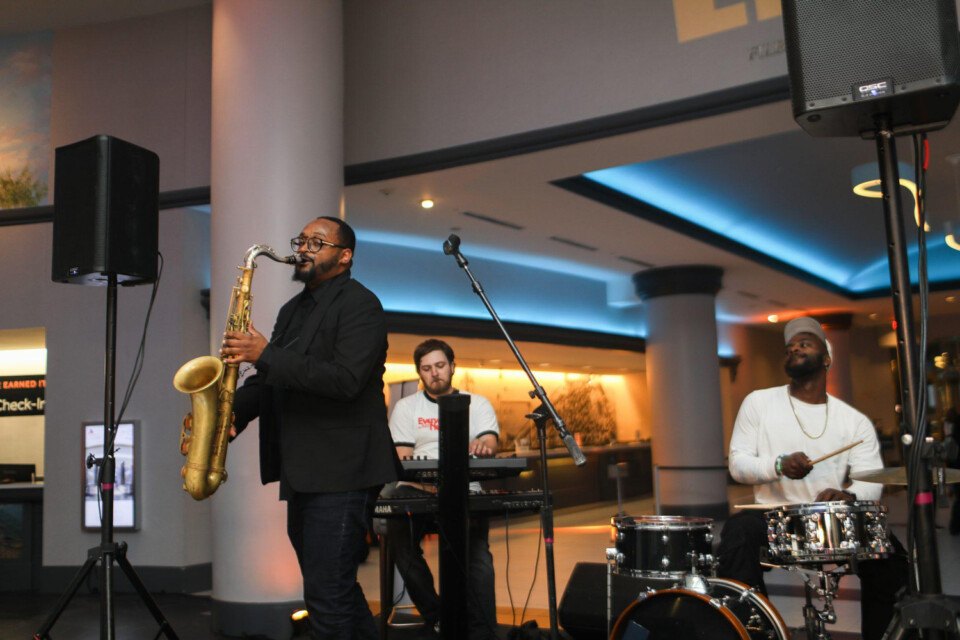
Weeknights Live / Photograph courtesy of Creative Philadelphia
In Philly, it’s not hard to draw a crowd at the restaurants, bars and clubs on the weekends, but some of the other nights could use a boost.
That’s the idea behind the Weeknights Live program recently launched by the Department of Commerce’s Nighttime Economy Unit, which foots the bill for live music performances on Mondays, Tuesdays, and Wednesdays. According to the 2025 Philadelphia After Dark report, those are the city’s weakest nights economically. I asked department director Emeka Anusionwu if we could blame this on Gen Z somehow. He said no.
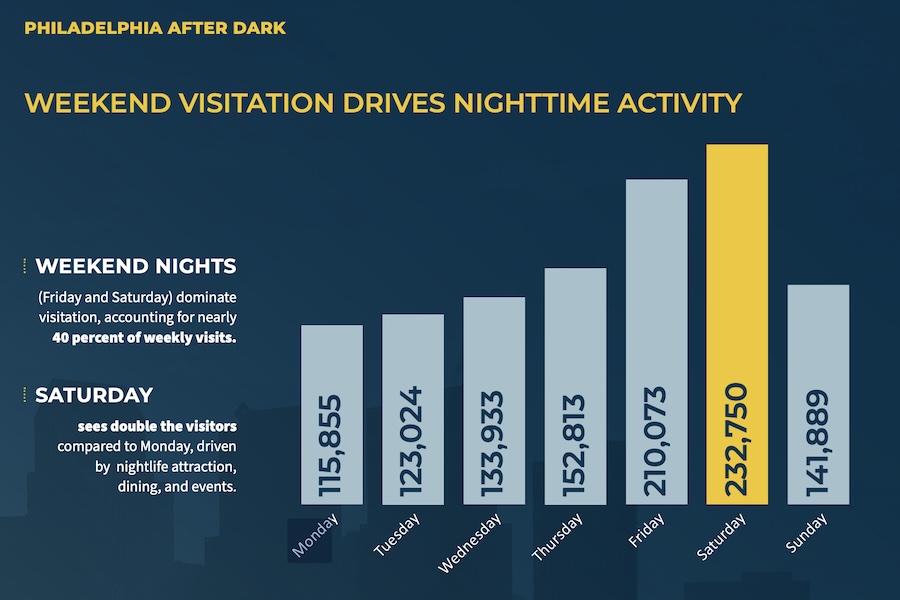
According to the 2025 Philly After Dark report, Mondays, Tuesdays and Wednesdays are the city’s weakest economically.
“We just want to give the earlier part of the week some light to shine, and also invigorate our corridors,” says Anusionwu. He’s referring to the East Passyunk Avenue and Baltimore Avenue commercial corridors, which will host live music on Mondays and Wednesdays respectively all year long. This is in addition to the city’s Tuesday night series at Center City hotels, which began in December.
“[After] the success of Tuesday Nights Live, we were like, oh, we need to bring this to more sections of the city. And we want to give more artists opportunities to get those wages and build their network,” he says. “So these are performance grants. They are strictly to drive traffic to these venues, and support the artists with paid performances.”
All told, the series calls for a reported $1 million investment in local music — one that aims to lead to increased business in certain neighborhoods and increase revenue for musicians.
“When you’re participating, you do have to submit a W-9 you do have to submit an ACH form,” says Anusionwu. He sees the program getting artists used to handling legal documents while growing their audience and earnings. “Later on, we’re also thinking about doing a financial literacy workshop for these artists.”
While the artists will need to apply for the program through the Nighttime Economy department, the individual bars, restaurants and hotels will pick the performers — not the city. (So far the participating venues have been somewhat lax in updating their social media and web sites with specific show info, but this is only week three.) All shows start at 6 p.m. and are free to attend.
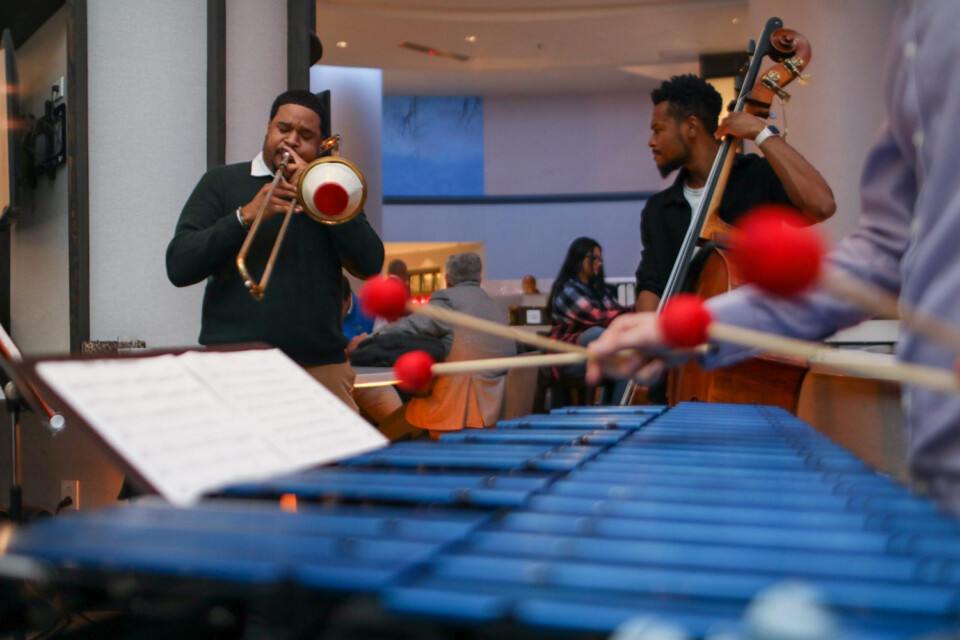
Weeknights Live / Photograph courtesy of Creative Philadelphia
Here’s where and when to go:
Mondays: East Passyunk Avenue
- Pistolas del Sur, 1934 East Passyunk Avenue.
- Ray’s Happy Birthday Bar, 1200 East Passyunk Avenue.
- Stogie Joe’s Tavern, 1803 East Passyunk Avenue.
- Lucky 13 Pub, 1820 South 13th Street.
Tuesdays: Center City
- The Philadelphia Marriott Downtown, 1201 Market Street.
- The Notary Hotel Philadelphia: Autograph Collection, 21 North Juniper Street.
- Canopy by Hilton Philadelphia Center City Hotel, 1180 Ludlow Street.
- Aloft Philadelphia Downtown, 101 North Broad Street.
- Loews Philadelphia Hotel, 1200 Market Street.
Wednesdays: Baltimore Avenue
- Carbon Copy, 701 South 50th Street.
- Renata’s Kitchen, 3940 Baltimore Avenue.
- Dahlak, 4708 Baltimore Avenue.
- Booker’s Restaurant & Bar, 5021 Baltimore Avenue.
New “These Truths“ Exhibit Dives Deep Into the Declaration of Independence
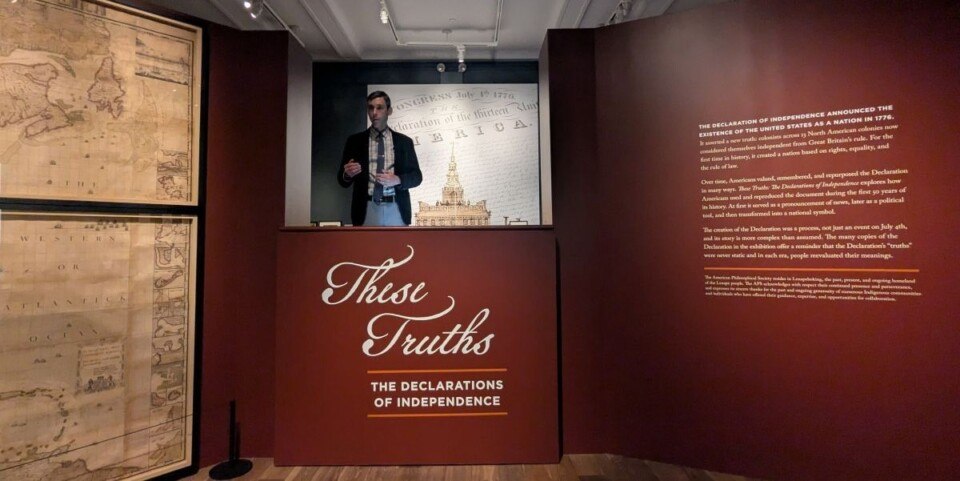
A new exhibit at the American Philosophical Society Museum examines the first 50 years of the most revered document in our nation’s history and how we feel about it today.
Event Recap: The Man Who Paid for America
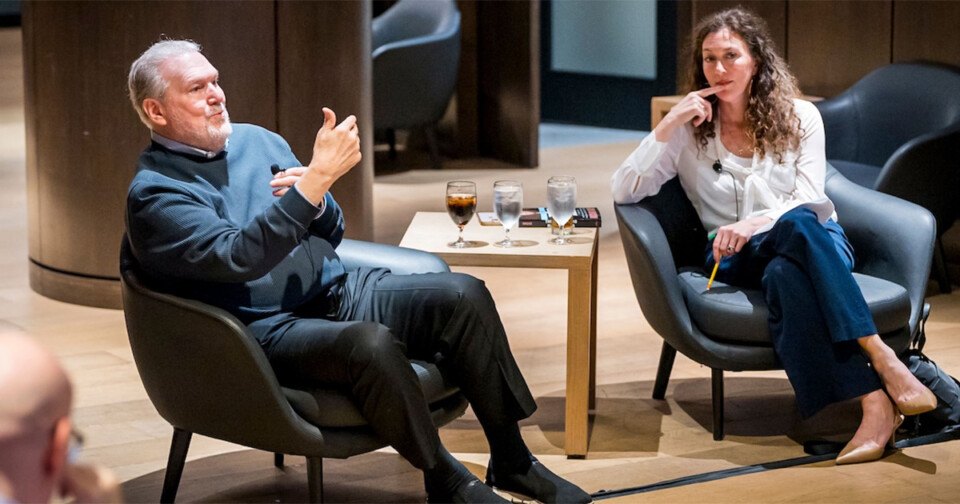
What we learned from author, businessman and Citizen supporter Richard Vague about Thomas Willing, America’s first banker
Where Philly’s 2026 James Beard Nominees Like to Eat (and Drink)
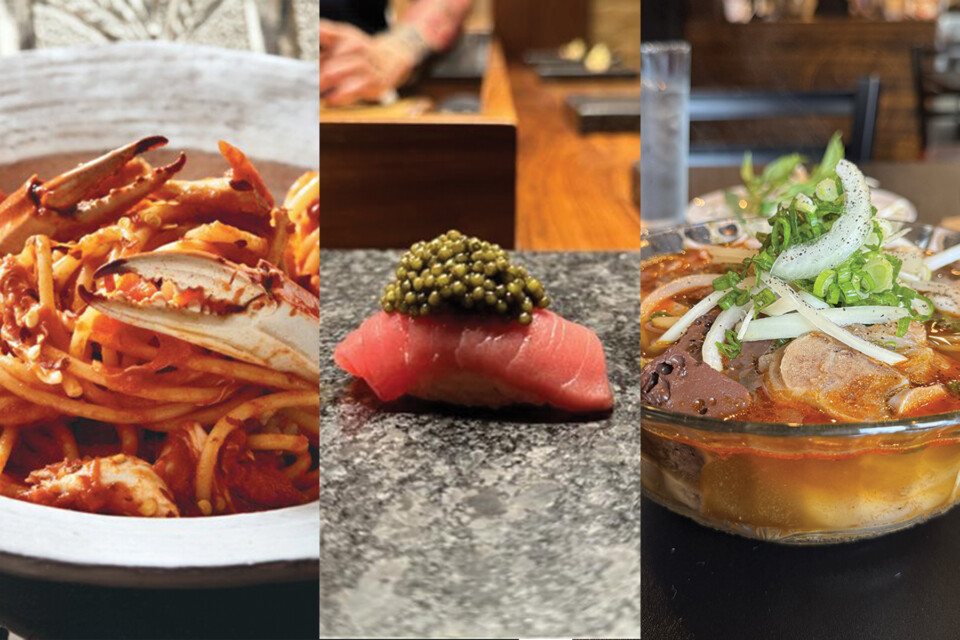
From left: Crab pasta from Palizzi Social Club; sushi from Royal Sushi & Izakaya; bún bò huế from Cafe Nhan. / Photography copyright © 2019 by Trevor Dixon. Dinner at the Club by Joey Baldino and Adam Erace, Running Press, and Kae Lani Palmisano
When the James Beard Award nominees for 2026 were announced, Philly had a strong showing with eight finalists making the cut. It’s no surprise, in a city where the food and drink scene is booming and the list of new places to try is ever-growing.
Because I’m always looking for yet another restaurant or bar recommendation — and because chefs and bartenders at the top of their game are, in my opinion, the best people to ask for one — I turned to this year’s James Beard nominees to find out where they’re going to eat and drink, and what they’re ordering.
From a Bella Vista bar pouring a house-made Portuguese liqueur to a Fishtown diner slinging the best blueberry pancakes around, here’s where Philly’s 2026 nominees are dining and sipping on repeat.
Jesse Ito, Royal Sushi & Izakaya: Finalist for Best Chef, Mid-Atlantic
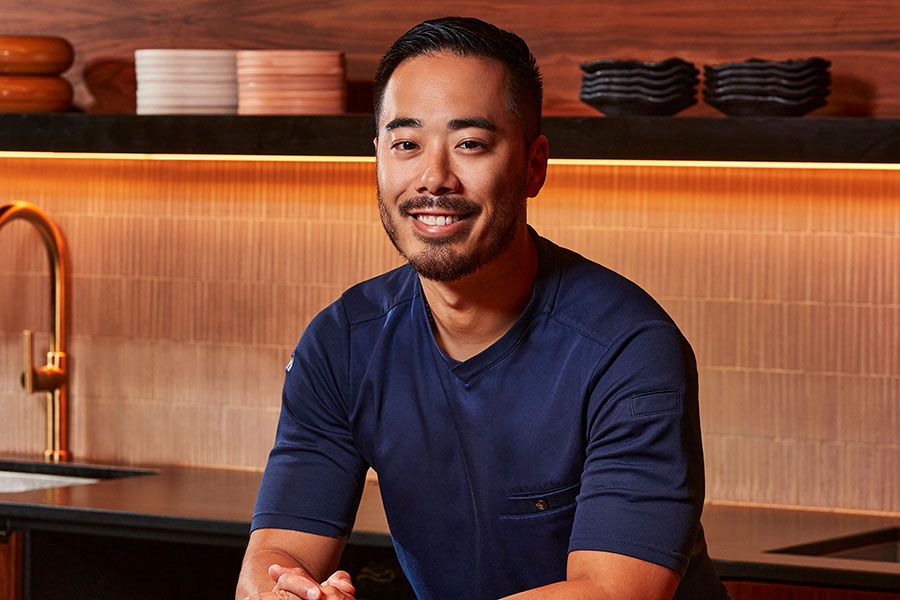
Royal Sushi & Izakaya owner Jesse Ito / Photograph by Casey Robinson
Kalaya, Fishtown
Whenever Ito eats at Kalaya — a James Beard nominee for Outstanding Restaurant — there has to be gui chai on the table. “I love everything there, but the gui chai is my favorite thing,” the chef says. The garlic-chive rice cakes come served with a spicy-sweet soy sauce and make a lovely crispy, chewy appetizer at the start of a meal at Nok Suntaranon’s Fishtown restaurant. Off the drinks menu, Ito likes to order the tom kha colada, a zero-proof spin on a piña colada that combines turmeric-spiced coconut cream with lime leaf, galangal, and pineapple. 4 West Palmer Street.
Pho 75, East Passyunk
Pho 75 has been one of Ito’s favorite places to start the day in Philly for years. And his go-to order has stayed the same: pho with fatty brisket and tendon, and a side of flank steak and vinegar onions. “I go to Pho 75 almost every week,” he says. 1122 Washington Avenue.
Palizzi Social Club, East Passyunk
Ito has been a regular at Palizzi Social Club for years, and finds himself there a couple of times a month. “I go to Palizzi pretty often,” he says of the exclusive bar. While memberships aren’t easy to get, if you have one — or know a member who’ll take you — and want to order like Ito, get the Caesar salad, crab spaghetti, and chicken cutlet. 1408 South 12th Street.
Friday Saturday Sunday, Rittenhouse
For Ito, Chad and Hanna Williams’s acclaimed restaurant — which won the James Beard Award for Outstanding Restaurant in 2023 — is a neighborhood spot. So when the chef goes there for dinner, he’ll usually pull up a seat at the counter and order from the à la carte menu. He’s a fan of the restaurant’s New York strip steak in particular and calls it “one of the best steaks in the city.” 261 South 21st Street.
My Loup, Rittenhouse
Alex Kemp and fellow James Beard nominee Amanda Shulman’s French-inspired restaurant is another neighborhood favorite of Ito’s. While the menu changes weekly, the chef loves to order the pickled shrimp with aioli and saltines from the raw section. While you can’t go wrong with your order at My Loup, if you’re ever indecisive, you can always let the kitchen choose your adventure with the “Let Us Cook” option. For $125, diners get a nice mix of dishes, and it’s an easy way for first-timers to familiarize themselves with the restaurant’s fare. 2005 Walnut Street.
Paul MacDonald, head bartender at Friday Saturday Sunday’s The Lovers Bar: Finalist for Outstanding Bar
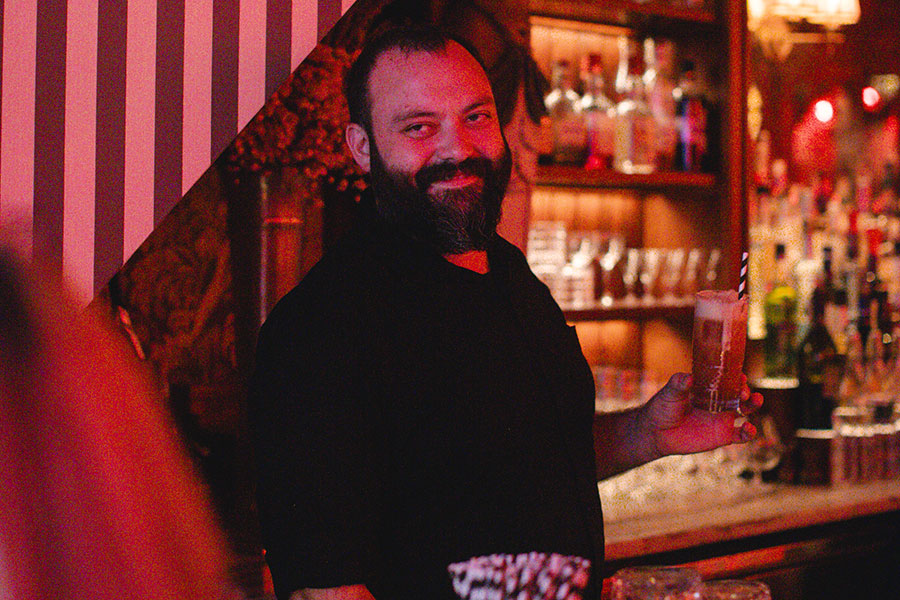
Paul MacDonald, head bartender of The Lover’s Bar / Photograph by Neal Santos
Grace & Proper, Bella Vista
MacDonald says “every neighborhood should have a bar” like Grace & Proper, a popular corner spot known for its cocktails and European cuisine. (Its bifana, braised pork loin in a garlicky white wine sauce tucked into a Portuguese roll, is a highlight.) The bar pro likes to get the house-made ginjinha — a Portuguese sour cherry liqueur made with morello cherries, sugar, brandy, and red wine — and says it’s “an absolute must” if you’re there. 941 South 8th Street.
Vernick Fish, Center City
Vernick Fish’s cocktail program is one of MacDonald’s favorites in the city. “I’ve always loved their cocktails there,” the head bartender at The Lovers Bar says. If you have to order one drink, MacDonald says to make it the Southampton Iced Tea — a clarified Long Island iced tea. “It’s a hilarious concept and incredibly well executed,” he says. “It’s the only version of a Long Island iced tea you’ll ever hear me recommend.” 1 North 19th Street.
Andra Hem, Rittenhouse
When MacDonald and his wife want to get cocktails on a date, they’ll go to Andra Hem. The dimly lit cocktail lounge has a laid-back yet luxe Scandinavian vibe, and it’s somewhat unassuming. That’s what makes it the perfect place if you’re looking for “a low-key, comfortable atmosphere that’s not rowdy” and quiet enough that you don’t have to shout at the person you’re there with to be heard. 218 South 16th Street.
Almanac, Old City
Almanac — a semifinalist for this year’s Best New Bar accolade — might be the ultimate bartender’s bar. The Japanese American cocktail lounge above Ogawa Sushi & Kappo offers “a detail-oriented experience” that’s all about the art of making an excellent drink, MacDonald says. Helmed by lead bartender Rob Scott and James Beard Award winner Danny Childs of Slow Drinks, the bar specializes in elevated cocktails made with locally sourced ingredients. “It’s an approach that Philadelphia hasn’t really seen yet,” MacDonald says. “They also do a really good job at shining a spotlight on specific ingredients and specific flavor profiles.” While the seasonal menu is always changing, you can expect classic cocktails that have been thoughtfully revisited and infused with Japanese spirits, such as an Old Fashioned and variations on a martini — including one made with matcha. 310 Market Street.
a.kitchen and a.bar, Rittenhouse
Whenever MacDonald finds himself at a.kitchen for lunch — which he estimates is “a solid 90 percent of the time” — the head bartender likes to order a glass of wine from the restaurant’s “spectacular selection.” He also frequents a.bar next door for its inventive cocktail list. 135 South 18th Street; 1737 Walnut Street.
Palizzi Social Club, East Passyunk
As a dad with a busy schedule, MacDonald doesn’t make it to Palizzi Social Club as often as he’d like these days — but when the bartender used to live in South Philly, he was a regular. He’d go there whenever he got off a shift early to order the lamb chops, a Caesar salad (also a favorite of Ito’s), drink some Lambrusco, and hang out. “It was always a nice communal neighborhood experience,” MacDonald says, adding that it’s rare to go to Palizzi and not run into someone you know. “You’re always going to know a bunch of people at the bar,” he says. “It’s a very kind of vibrant community hub for that neighborhood and for the restaurant industry as well, especially late at night.” 1408 South 12th Street.
Justine MacNeil, Fiore: Finalist for Outstanding Pastry Chef

Justine MacNeil, Fiore / Photograph by Karélia Forlenza
Kalaya, Fishtown
For MacNeil, the gui chai (also Ito’s top menu item) are a must-order when she’s at Kalaya. “I love sharing these with my toddler, Roman,” she says. “They’re sticky, crunchy, and savory — the perfect bite.” The gai yaang naa por — charcoal-grilled half chicken, glazed with coconut cream, turmeric, and dark soy and fish sauces, served with sticky rice and crudités — is another dish that’s special to MacNeil. “I had this dish on our first visit and it solidified why live fire and meat are a perfect match,” she says. “It’s complex with a touch of smokiness and crowd-pleasing without sacrificing its heart.” 4 West Palmer Street.
Sulimay’s, Fishtown
The pastry chef — who is originally from Jackson, New Jersey — says Sulimay’s is the restaurant she’s visited the most since she moved to Philly nine years ago from New York City. “Nothing makes my Jersey heart happier than breakfast at a diner and Sulimay’s is the most proper iteration of a diner breakfast,” she says. “Get the blueberry pancakes and you’ll be ruined for pancakes forever more.” Occasionally, she goes back for dinner, too. “Legit, don’t skip on burger night,” she says. “That Big Mick: incredible.” 632 East Girard Avenue.
The Kettle Black, Northern Liberties
It’s a special treat when MacNeil gets to go to The Kettle Black, since the microbakery is open during the same hours as Fiore. “Everything they make is with craftsmanship, care, and a ton of flavor,” she says. “Their bagels are exceptional. Not to be missed.” 631 North Second Street.
Mighty Bread, East Passyunk
When she’s at Mighty Bread, MacNeil orders the simplest, but perhaps best, option on the menu: bread and butter. “They give you a few slices of three to four types of bread and salted butter and seasonal jam,” she says. “What more do you need from a fabulous bread bakery than to sit there and eat the freshest slice of the freshest bread slathered in cool butter and tangy jam? Nothing more at all.” 1211 Gerritt Street.
Kim’s Restaurant, North Philly
MacNeil says the food at this Korean barbecue destination, which has been in North Philly for 40-plus years, is “magic.” While the meat dishes — which get cooked tableside on charcoal grills — are particularly popular, the pastry chef’s favorite menu is the watercress salad. “There’s something particularly special about their watercress salad, which is part of their banchan,” she says. The food at Kim’s is also a hit with her kids. “Last time we went with two four-year-olds, and I’ve never seen those kids eat more food in my life.” 5955 North 5th Street.
EMei, Chinatown
“EMei has been our staple pick-me-up food whenever things are tough or we are exhausted and just need a break from cooking,” MacNeil says of the popular Chinatown spot. “You can’t go wrong here, but I especially love the homemade dumplings in hot oil, and the stir-fry pork slices with hot peppers. Smoky, tender, savory, and delicious.” 915 Arch Street.
Amanda Shulman, Her Place Supper Club: Finalist for Best Chef, Mid-Atlantic
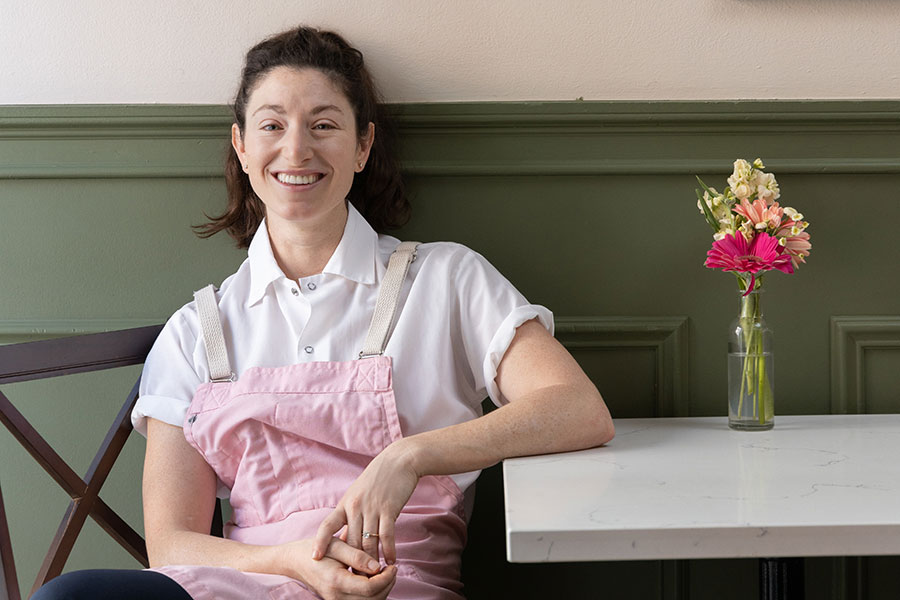
Her Place Supper Club owner Amanda Shulman / Photograph by Michael Branscom
Gilda, Fishtown
“I wish this was in my neighborhood,” says Shulman whenever she walks into Gilda. And while the Portuguese-inspired cafe may be known for its pastéis de nata, that’s not the only reason the chef visits. For Shulman, Gilda’s breakfast sandwich, The Antonio, is the main event. “It’s so perfect,” she says of the sandwich, which is made with a Portuguese roll and filled with a fried egg, cheese, linguiça sausage, and breakfast sauce. “It’s squishy, it’s salty,” she adds. “Oh, it’s fabulous.” 300 East Girard Avenue.
Kim’s Restaurant, North Philly
“Kim’s is probably our favorite restaurant to eat at,” Shulman says, adding that she and her husband and fellow chef-owner of My Loup, Alex Kemp, make the trip to North Philly when they want “food that is perfect and balanced and seasoned and amazing.” Shulman likes to order the skirt steak (off the not-so-secret secret menu) as well as the hanger steak, kimchi pancakes, and watercress salad (also a favorite of MacNeil’s). 5955 North 5th Street.
Cafe Nhan, South Philly
“Cafe Nhan is one of the places I frequent most,” Shulman says. “Their spicy soups are super soul-reviving, and every time I go there, they just totally make me feel at home.” The chef says she went often during her pregnancy and has since returned with her daughter. Her usual order is the bún bò hûe dac biet, Cafe Nhan’s specialty made with beef brisket, pig feet, steamed pork roll, and house-made pig’s blood cubes with a spicy lemongrass broth. “It’s such a warm and welcoming place,” she says of the restaurant. “It’s also just insanely delicious.” 1606 West Passyunk Avenue.
High Street, Center City
Ellen Yin’s High Street is one of Shulman’s go-tos when she has friends and family in town. The modern American restaurant is a crowd-pleaser, with menus built around seasonal ingredients and local grains. It also offers plenty of choices, from sandwiches and salads to sourdough pizzas and house-made pastas, plus a few larger plates at dinnertime. “They do such an amazing job,” Shulman says of the restaurant. “Chef Christina [McKeough] is really talented.” Shulman visits the restaurant most often for brunch and lunch, and it’s the bread that keeps her coming back. “The breads there just make me feel like I don’t even know anything about bread every time I eat them,” she says. 101 South 9th Street.
Mayflower Bakery & Cafe, Chinatown
Mayflower Cafe & Bakery is known for making some of the best Hong Kong-style buns and pastries in the city. The bakery’s coconut bun is especially popular, and it’s one of Shulman’s must-order items as well. “Their coconut butter bun and their roast pork bun are the biggest treats,” the chef says. Mayflower’s pineapple buns and egg tarts are also a hit with customers, and on the drinks menu, you can’t go wrong with an iced milk tea. Just remember to bring cash or have Venmo ready to pay. 1008 Race Street.
Osteria, Spring Garden
If Shulman had to order just one thing from Osteria, it would be the rigatoni with chicken liver, cipollini onion, and sage. “It’s probably their most famous dish, and for perfect reason,” she says. But Shulman would happily eat any of the pasta at Osteria. “Jeff Michaud makes simple, delicious, and classic pasta,” she says of the James Beard Award-winning chef at the helm of the restaurant, which opened in 2007. “Even though it’s been there for so long, it’s still that good,” Shulman says. “It feels like a restaurant that is classic and timeless, and it’s really inspiring for those reasons.” To end a meal there, Shulman recommends ordering some gelati or sorbetti. 640 North Broad Street.
Zeppoli, Collingswood
Shulman doesn’t make it out to Joey Baldino’s Zeppoli too often, but the pasta there is so good that she says a visit to the New Jersey restaurant is “definitely worth the trip.” The Italian BYOB, which has an emphasis on Sicilian cuisine, has the “most delicious pasta,” the chef adds. While there’s more to the menu at Zeppoli — including larger plates like a Sicilian fisherman stew — a particular standout in the pasta section is the tagliatelle al limone, made with handmade pasta and topped with bottarga or prosciutto (but trust me, you want to get the bottarga). 618 Collings Avenue.
Bomb Bomb Bar, South Philly
Shulman has long been a fan of Baldino’s Palizzi Social Club and the aforementioned Zeppoli. So, naturally, she’s blown away (pun intended) by his latest venture, Bomb Bomb Bar, the South Philly corner bar and Italian seafood grill that Baldino took over from third-generation owners Frank and Deb Barbato. “I dream of the frozen split drink and the most flavorful crab I’ve had in recent memory,” she says. “Nothing tries too hard but everything is thoughtful and fantastic. They are absolutely killing it and making beautiful and unpretentious food that everyone wants to eat.” 1026 Wolf Street.
Dizengoff, Rittenhouse
For a reliably delicious lunch, Shulman heads to Michael Solomonov’s all-day spot Dizengoff. “As we all know, the hummus is otherworldly,” she says. “Getting a hummus platter with whatever topping they have and a sabich platter [fried eggplant, haminado egg, chopped salad, sumac onions, and tehina] is a dream lunch.” 1625 Sansom Street.
Royal Sushi & Izakaya, Queen Village
Shulman also likes to eat at fellow James Beard nominee Jesse Ito’s Royal Sushi & Izakaya. Whenever she’s there, the chef will order a smattering of dishes and always makes sure the spinach gomaae, a cold salad made with baby spinach and black sesame sauce, is among them. 780 South 2nd Street.
Evan Snyder, Emmett: Finalist for Best New Restaurant
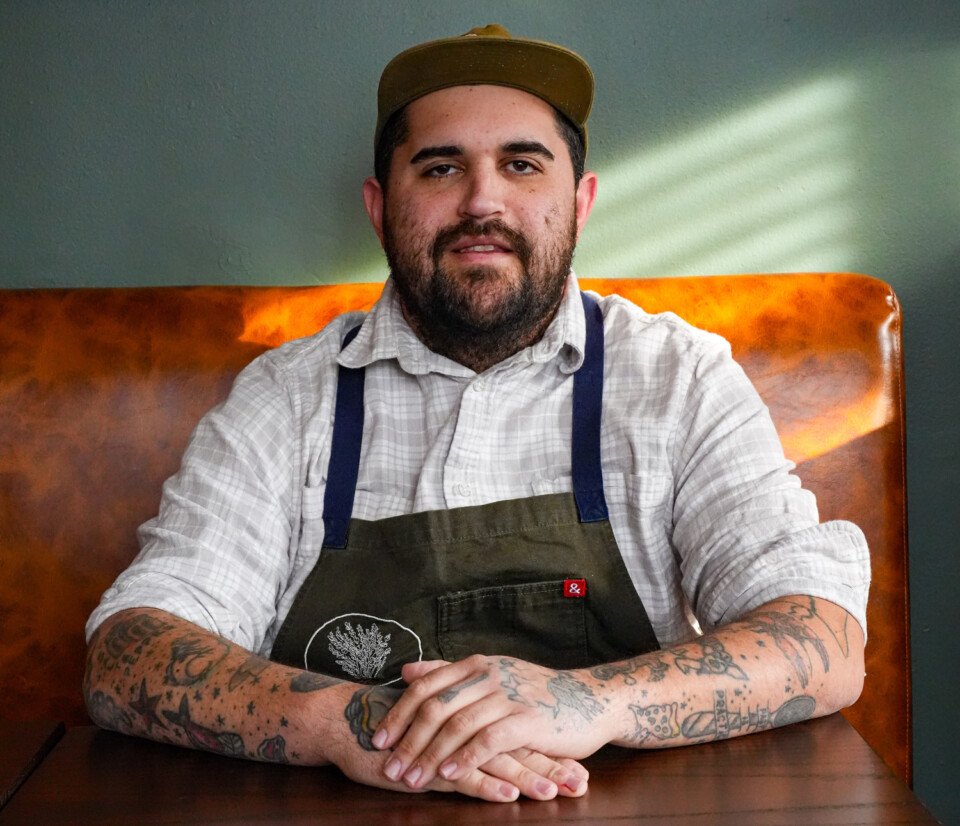
Chef Evan Snyder, Emmett / Photograph by Mike Prince
Del Rossi’s Cheesesteak & Pizza Co., Northern Liberties
When Snyder is in the mood for a cheesesteak, he’ll go to the Michelin Bib Gourmand spot Del Rossi’s. He orders his sandwich piled high with extra fried onions and some melty Cooper sharp, and gets a Brooklyn-style square pizza, made with a thin crust, homemade plum tomato sauce, Parmesan and mozzarella cheese, fresh basil, and olive oil. 538 North 4th Street.
Ember & Ash, East Passyunk
If he’s in East Passyunk, Snyder will pop into Ember & Ash for Scott Calhoun’s wood-fired cuisine. But one of Snyder’s current favorites on the menu — the tuna crudo dressed with blood orange and pickled onion — barely touches the flames (the citrus in the dish gets grilled, then juiced, but everything else stays out of the heat). He’ll also go for the lamb ribs, rubbed in sumac, slow-smoked over the fire, coated in a cherry vinegar glaze, and sprinkled with chives. 1520 East Passyunk Avenue.
Pietramala, Northern Liberties
For a stellar, plant-based dinner, Snyder will go to Michelin Green Star-awarded Pietramala. While the restaurant’s menu changes often, according to which ingredients are available, the Emmett chef likes to order the cremini carpaccio, a beautiful plate of thin-sliced mushrooms doused in olive oil, a house-made black trumpet tamari, and Meyer lemon, and adorned with raw pine nuts. He’s also partial to the maratelli rice risotto, currently served with white asparagus and tomato tamari. 614 North 2nd Street.
Nok Suntaranon, Kalaya: Finalist for Outstanding Restaurant

Nok Suntaranon, Kalaya / Photograph by Michael Persico
Machine Shop, South Philly
In the mornings, Suntaranon often heads to the Bok Building’s Machine Shop for Emily Riddell’s pastries made with local grains and seasonal produce sourced from farms just outside of the city. “I love her stuff,” the chef says. She recommends ordering “everything” at the viennoisserie, with highlights including the canelé, sandwiches, and cookies. 1901 South 9th Street.
Fiore, Kensington
For lunch, Suntaranon will tuck into a bowl of pasta and some salad at Ed Crochet and James Beard-nominee Justine MacNeil’s Italian-inspired cafe. Sometimes, Crochet will make her something special. “Last time I went there, he made me ragù with homemade pasta,” Suntaranon says, referring to an off-menu dish made with Sardinian gnocchi (semolina dough with saffron) and a pork-sausage sauce. As for dessert, the Kalaya chef says MacNeil’s “pastry is one of a kind.” Right now, her favorite treat is the torta alla pistacchio, made with pistachio flour, apricot jam, ganache, and crystallized pistachios. 2413 Frankford Avenue.
Pizzeria Beddia, Fishtown
Suntaranon admits she’s not typically much of a pizza person, but on her way home from work, she’ll occasionally pick up a pie from Joe Beddia’s popular Fishtown pizzeria. “My husband loves cold pizza,” she says, making it the perfect place to grab dinner and let it cool off on the drive home. Their favorite is an arrabbiata pizza with anchovies and red onion. 1313 North Lee Street.
Pizzeria Stella, Queen Village
Closer to home, Suntaranon likes to go to Pizzeria Stella in Headhouse Square for their wood-fired polpette, calamari fritti (with lemon, shishito peppers, and marinara), and grilled octopus (dressed with fennel, salsa verde, and chiles, and served with potato). The chef says her order there “has never changed, and it’s always good.” 420 South 2nd Street.
Royal Sushi & Izakaya, Queen Village
Suntaranon’s go-to neighborhood restaurant just so happens to be fellow James Beard finalist Jesse Ito’s Royal Sushi. “It’s just around the corner, and Jesse’s food is the best,” she says. While the omakase menu is always changing (and a seat can be hard to come by), Suntaranon is a fan of the chirashi: a lavish platter of lean and fatty tuna, king salmon, Japanese fish, tamago, and ikura-topped sushi rice that’s available in the izakaya. And the Kalaya chef’s meal there doesn’t always have to be fancy — sometimes, she’ll just eat rice heaped with uni. 780 South 2nd Street.
Pho 75, East Passyunk
Go out to eat at Pho 75 and there’s a strong chance you’ll spot another chef. The Vietnamese institution is popular with many in the local food industry, so it’s no surprise that it’s also one of Suntaranon’s (and Ito’s) favorite places for a steaming bowl of pho. Suntaranon likes to order her soup with meatballs, tendon, tripe, and steak slices. 1122 Washington Avenue.
Cafe Nhan, South Philly
At another chef-beloved Vietnamese spot, Cafe Nhan — also one of nominee Amanda Shulman’s picks — Suntaranon will get the bún riêu, a tomato-based soup with shrimp, pork, and crab meatballs, plus tofu, pig feet, and blood cubes, plus the chả giò (spring rolls stuffed with minced shrimp and pork), and the popular chicken wings, dusted in a house spice mix and deep-fried to crispy perfection. 1606 West Passyunk Avenue.
Omar Tate and Cybille St. Aude-Tate, Honeysuckle: Finalists for Best Chef, Mid-Atlantic
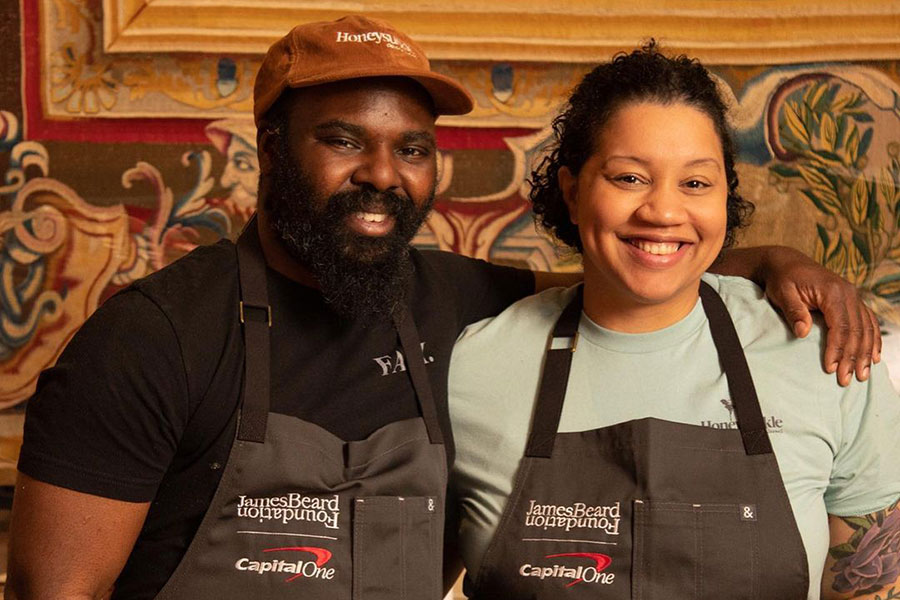
Omar Tate and Cybille St.Aude-Tate of Honeysuckle / Photograph courtesy of Honeysuckle
The Daily, West Poplar
Before they get to work, the Honeysuckle duo likes to start the morning at the Daily, a cafe inside the historic Divine Lorraine Hotel. They go for the consistently good coffee, what they call the “legendary” bacon, egg, and cheese — made with Nueske’s bacon, fluffy eggs, and American cheese, served on a Martin’s sesame bun — and the friendly service. 699 North Broad Street.
Bomb Bomb Bar, South Philly
“When we need a date night we know we can count on Bomb Bomb Bar for a good time,” St. Aude-Tate says of the classic Italian-American spot (also a favorite of Shulman’s). The food from chef de cuisine Max Hachey is “delicious and comforting.” While the whole menu is “remarkable,” her favorites include the shrimp oreganata and calamari with cherry peppers. But it’s not just the food that impresses: The service is “warm and inviting,” the Honeysuckle chef says, adding that she and Tate often run into people they know. “It feels like home away from home.” 1026 Wolf Street.
Local 44, University City
Another of their favorite haunts is Local 44. Tate’s go-to order at the neighborhood bar is the cheeseburger, made with pickles, American cheese, lettuce, and barbecue-thousand island sauce; St. Aude-Tate opts for the buffalo wings. She also enjoys frequenting the bar’s bottle shop, where you can find beer from local breweries like Attic Brewing Company and Love City Brewing, wine from places like Pray Tell and Mural City, as well as vermouth and amaro from Fell to Earth. “They have many of my favorite producers and such a fun and expressive inventory,” she says.” 4333 Spruce Street.
Manong, Fairmount
Manong isn’t just a hit with the Honeysuckle chefs — the Filipino American grillhouse Manong from chef Chance Anies has also won over their kids. “They absolutely love the Ninja Turtle game and energy at Manong,” Tate says. “It’s also really close to Honeysuckle and their school, so it’s perfect for fun meals right before we head home to West Philly.” Whenever they go for dinner, they’ll order the dynamite lumpia (spring rolls with a pork, jalapeño, and mozzarella filling, served with sweet chili sauce), the chicken inasal (half chicken, soy, calamansi, lemongrass, annatto, butter, Chinese broccoli), and lechon liempo (crispy pork belly with a chicken liver-based sauce). 1833 Fairmount Avenue.
Don’t Look Now … But Philly Is Safe
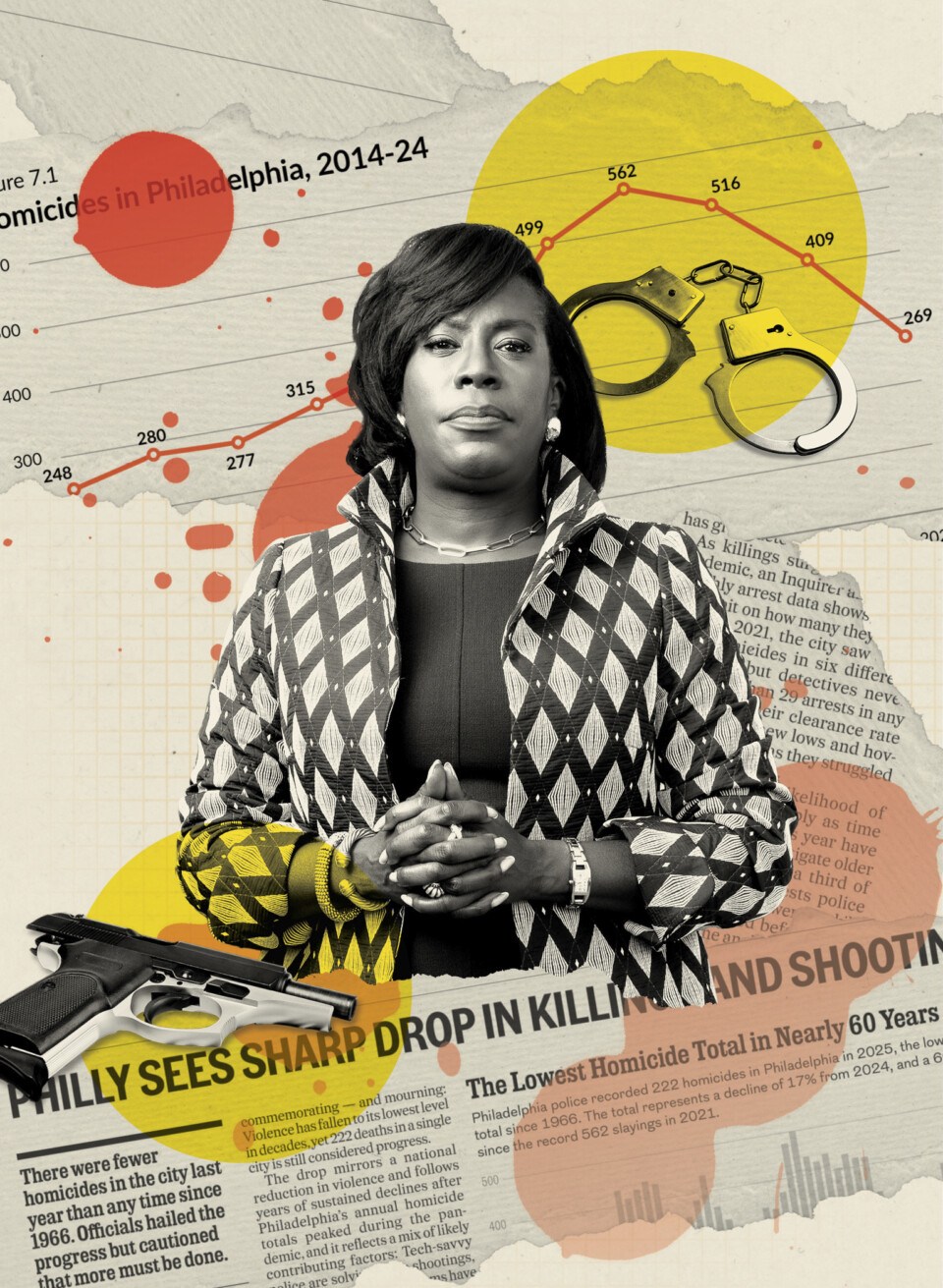
/ Photo-illustration by Leticia R. Albano
How the hell did that happen? And why is the mayor not taking more credit for it? The anatomy of a stunning turnaround.
It Is Now Safe to Care About the Flyers
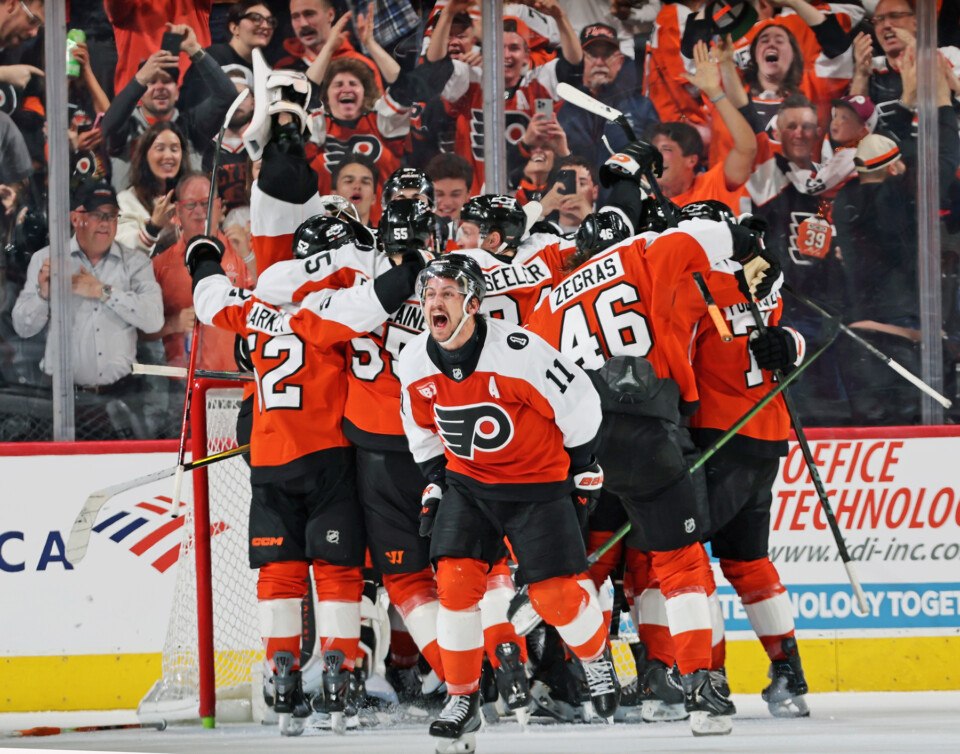
Travis Konecny of the Philadelphia Flyers leads the celebration with his teammates after defeating the Carolina Hurricanes 3-2 in a shootout at Xfinity Mobile Arena on April 13, 2026 to clinch a spot in the 2026 NHL Playoffs. / Photograph by Len Redkoles/NHLI via Getty Images
Here’s a sentence that has not been written in six years: The Philadelphia Flyers are in the Stanley Cup Playoffs.
Are they gonna win the Cup? Probably not. But having missed the playoffs every year since 2020, and 10 times since 2012 — when current captain Sean Couturier was a rookie living in the home of current general manager Daniel Briere — merely making them is huge.
The Flyers clinched the spot on Monday in a shootout win over the Carolina Hurricanes that ended, fittingly, with a save by Dan Vladar, the lanky Czech goaltender who had been a career back-up in Calgary, but whose play and confidence were so vital this season that he won the Bobby Clarke Award as the team’s MVP. Flames shot from beneath the scoreboard as a building full of people clad in Flyers jerseys from every decade since the ‘70s cheered, screamed, cried, hugged, and — let’s face it — exhaled in relief. Vladar pumped both his catching glove and stick hand in the air before his teammates spilled over the boards to mob him at the crease, with 19 year-old rookie winger Porter Martone the first to arrive.
Which was also fitting. Martone, the Flyers’ first-round pick in 2025 — he was playing for Michigan State as recently as March 28th — got the team back into playoff position on April 5th with his first professional goal, banging home his own rebound for a 2-1 overtime win against the Boston Bruins. The next night, Bryce Harper got on the bandwagon, concluding his post-game interview on NBC Sports Philadelphia with “Go Flyers!” By the time the Flyers start their first-round series against in-state nemesis the Pittsburgh Penguins on Saturday he will probably be wearing orange Gritty cleats. Oh, and by the way: Because the 2020 NHL playoffs were in the COVID-19 “bubble,” Games 3 and 4, to be played in South Philly next week, are also the Flyers’ first home playoff games since 2018. Yes, that’s right: Gritty has never seen a playoff game.
A team of destiny? Maybe. The season was not so much a rollercoaster as a hockey version of “the blind man and the elephant.” Depending on the game or week or month, the Flyers under first-year head coach and franchise legend Rick Tocchet were a pleasant surprise, a work-in-progress, a hard-luck injury story, overachievers, a team that fell to earth, a complete disaster, or a genuine contender. And depending on which corners of the hockey internet you favor, Briere has either been a patient, savvy roster-builder who enabled Tocchet to establish a winning culture with both veteran Flyers and a group of exciting younger players, or the GM blew the trade deadline while allowing Tocchet to mishandle the team’s most exciting younger player. (We’ll get back to that.)
What the team had billed “A New Era of Orange” began in June of 2023, with new Flyers Governor and Comcast Spectacor chairman and CEO Dan Hilferty hiring former Flyers player and broadcaster Keith Jones as President of Hockey Operations and Briere as general manager. This year, the slogan changed to “Brick By Brick,” which could have just as well been, “Yes, We’re Still Rebuilding.” Instead, Flyers fans got something even rarer than a championship — a South Philly renovation that’s ahead of schedule.
I covered the Flyers at various points this season from the press box and the locker room, but I’m also pretty much a lifelong fan; I like to say that I’m the same age as the team, which played its first game at the Spectrum in the fall of 1967. My clearest childhood memory of the Broad Street Bullies is neither a game nor a parade, but a gas station souvenir glass with a Flyers logo on the front and the names of every coach and player from the 1974 Stanley Cup champions on the back. From the ‘80s until now, I remember it all, which means I’ve also suffered every kind of playoff heartbreak, as well as a few triumphs prior to the heartbreak: Eric Lindros and the Legion of Doom sweeping the Rangers in 1995, Jeremy Roenick’s overtime goal against Toronto in 2004, and the 2010 team that came back from a 3-0 deficit against the Boston Bruins — I was at Game 4 — and then made the Stanley Cup Final. There’s no cheering in the press box, but as a jubilant Travis Konecny (one of just three current players who was on the last Flyers playoff team in 2020) joined Martone around Vladar to celebrate the team’s return to relevance, my grin was as huge as it was quiet.
Goodbye Cutter, Hello “Ziggy”
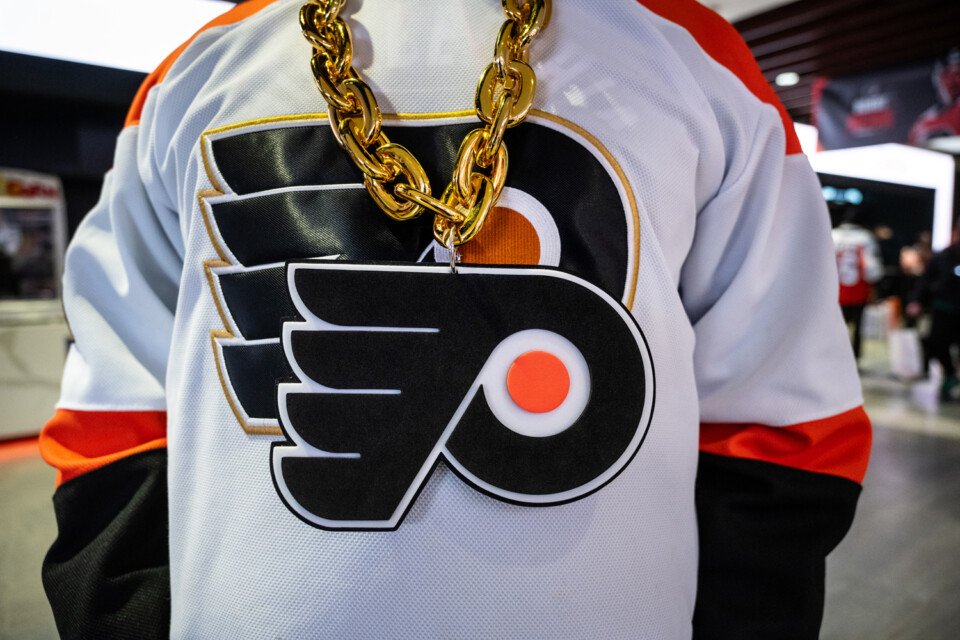
A fan shows off his style. / Photograph by Kyle Kielinski
It all seemed meant to be on January 6th, when the Flyers beat the Anaheim Ducks, 5-2. On what would have been team founder Ed Snider’s 92nd birthday, the Orange and Black gave fans at a sold-out Xfinity a night of Broad Street Bullies-worthy hockey — goals, a fight, big hits, an almost hat trick, another fight, more big hits — with the ecstatic crowd of 19,415 bringing all the noise, as well as the occasional profanity.
“Great atmosphere,” said defenseman Cam York afterwards. “It felt like a playoff game. It was really cool. Should maybe happen more than once a year, obviously.”
York was not exactly dissing the fans with that last comment, but rather, referencing why this particular game was not like any other. Because Philadelphia-Anaheim is not supposed to be a — sorry — heated rivalry. The Ducks are not the Rangers, Penguins, or New Jersey Devils. But they are the team with Cutter Gauthier. And he’s a player who will never feel love in the City of Brotherly Love.
Portions of the Flyers faithful already do their best to justify the Philly fan cliche, with de rigueur pre-game boos for both the opposition and the referees, plus a ritual “SUCKS!” coming out of the cheap seats in response to the announcement of each player in the road team’s starting line-up. But for Gauthier, the booing is both targeted and infinite. When he first steps on the ice. When he lines up for a face-off. When the puck is on his stick. When the puck is nowhere near him. The booing only stops to give way to chants of “FUCK YOU CUTTER.” clap clap clap-clap-clap. “FUCK YOU CUTTER.” Or just, “CUT-TER. CUT-TER.”
That’s because Gauthier is to the Flyers as J.D. Drew was to the Phillies: a much-ballyhooed high draft pick who refused to play in Philadelphia, for reasons that remain unclear. (Gauthier called it “a private matter.”) He was taken fifth overall in the 2022 NHL draft; in January of 2024, the Flyers traded him to Anaheim for defenseman Jamie Drysdale (the sixth overall pick in 2020) and a future second-rounder.
On this night Gauthier got the first laugh, giving the Ducks a 1-0 lead early in the game. Boos descended. But the Flyers owned the game from there, fueled by forward Trevor Zegras, who was playing for his own pride against a former team. A flashy goal scorer with 400,000 Instagram followers who’d begun to struggle with the Ducks, he was acquired by the Flyers prior to this season. “Ziggy” scored two goals four minutes apart to make it 2-1, with York getting the next one. They all came on the sort of plays there hadn’t been enough of in South Philly, the ones that both get you out of your seat and win you a big game.
“The boos were great, but the cheers were even better,” Zegras said during his live, on-the-bench post-game interview with former Flyer and NBC Sports Philly commentator Scott Hartnell. An irrepressible personality whose wild, sometimes curly, sometimes straight mane almost rivals Brandon Marsh’s, the 24-year-old celebrated his first goal by pretending to hang up the phone on Anaheim after they informed him of the trade. (“That’s about how quick the phone call was.”) Zegras also had his very own Chase Utley moment when Hartnell asked him how it felt to score two goals against a team that gave up on him.
“Fucking amazing,” he said, “Fucking amazing.”
“Yeah,” Hartnell muttered in reply, no doubt thinking of his Comcast higher-ups.
“Oh yeah!” Zegras replied.
Last year, the 33-39-10 Flyers were the worst team in the Eastern Conference. But at that point under Tocchet, beating Anaheim was just another win, as the team improved its record to 22-12-7 at the season’s exact midpoint, while also holding down that third place Metropolitan Division spot. As York reiterated when asked about how physical the Ducks game was: “That’s playoff hockey. And we feel like we’re a playoff team.”
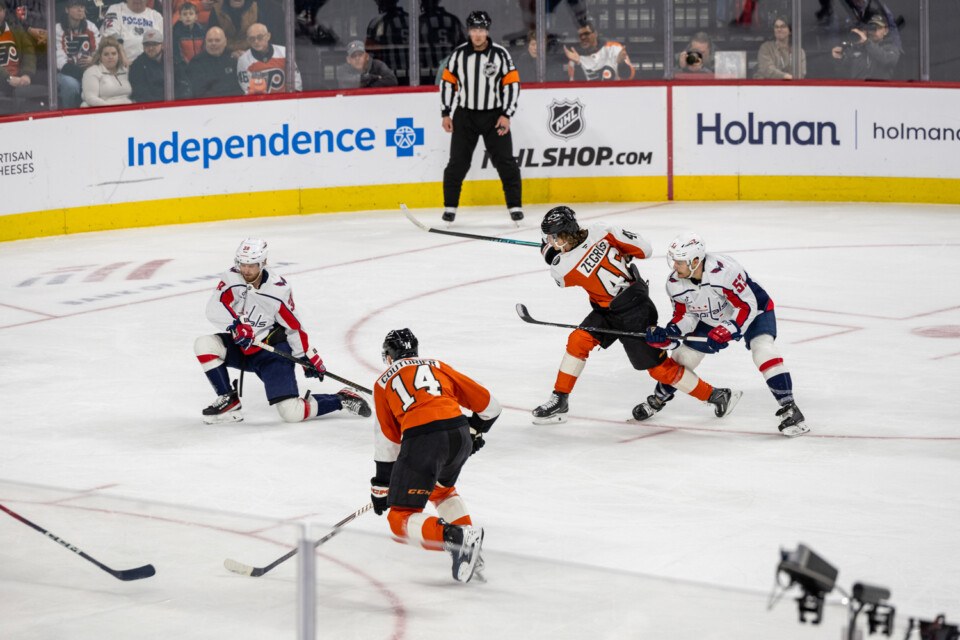
The Flyers in their 4-2 win versus the Capitals on February 3rd / Photograph by Kyle Kielinski
For the first time in a long time, even the most casual fans could get loud about something besides Gritty. “I’ve heard that,” Tocchet said after an earlier win against New Jersey. “I’ve lived it here. This crowd, when they get something to cheer about, it’s loud. You know they want to believe in our team, and that starts on the ice with us.”
The expectation Briere set before the current season was improvement, and, after last year’s spate of future-looking (and draft-lottery minded) white-flag trades, at least the possibility of battling for a playoff spot. “We expected to be competitive,” the GM said during a press availability before the Ducks game. “[This year’s team is] maybe a little better than I expected, to be honest with you. The funny part is, we can win two games and be in first place, or we could lose three and be in last place. It can change really quick.”
And so it did. Over the next month, as the NHL went into its Olympic break, the Flyers went 3-8-4, sinking all the way to 13th place in the Eastern Conference, with seven teams ahead of them for playoff spots. On January 7th, the hockey analytics website Money Puck gave the Flyers a 63.3 percent chance at the playoffs; by February 6th, that had dropped to 10.6 percent. “We knew that this team has not arrived yet — is not a Stanley Cup contender,” Briere told me on January 31st.
Injuries, too many games in too many nights (thanks a lot, Olympics) and three tough road trips played a part. And it probably should have been expected that one of the youngest teams in the league, adjusting to a brand-new coach, would have its growing pains. But the players didn’t want to make excuses.
“We sucked today,” were captain Sean Couturier’s first words after an especially dispiriting January home loss to the Rangers, one of the NHL’s worst teams. A few weeks later, Konecny, the team’s alternate captain and second-longest tenured player after “Coots,” also didn’t hold back his frustration. “I have been through this so many times,” Konecny said after a loss to Boston. “I am tired of missing the playoffs.”
Enter Rick Tocchet
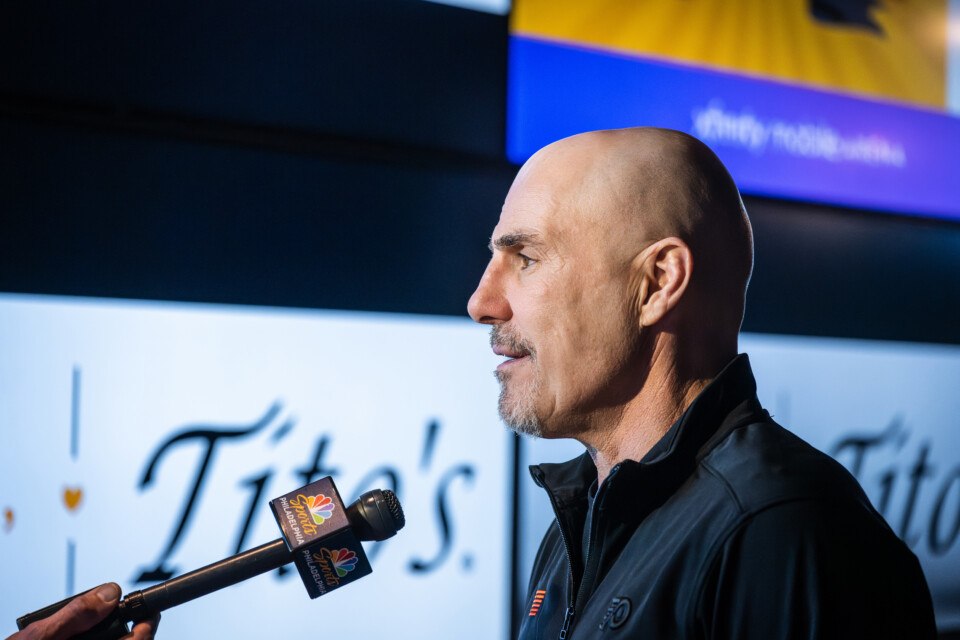
Rick Tocchet / Photograph by Kyle Kielinski
Rick Tocchet, inducted into the Flyers Hall of Fame in 2021, didn’t have to become head coach of the team to be present at most every game; there was always going to be someone in the stands wearing a #22 from his playing days. Presumably a few people also bought a crisp new version of the jersey after he was hired as head coach, too.
Neither thing was true of Katie Carr, a 29-year-old hairdresser who moonlights at Citizens Bank Park during Phillies season. I ran into her back in February at the Flyers Charities Carnival, one of the team’s signature events, where fans wait in 100-person lines all over the arena to get player and alumni autographs. The good vibes of the February 1 carnival came at a time when all the other vibes were bad. Carr was sporting a Tocchet jersey that had been turned into a jacket, complete with a full zipper. Obviously she didn’t grow up watching the 1980s Flyers; the jersey was a hand-me-down from a friend because it didn’t fit her. And when I asked Carr how she felt about him as the Flyers coach, her response was muted.
“Um … okay!” she said, with just a hint of a question, before adding that while she may have nitpicks about his coaching strategies, she also knows it’s just Year One. And while one common gripe about the franchise with more jaundiced fans is that it can’t stop hiring former Flyers, Carr doesn’t necessarily think this is a bad thing. “Flyers hockey is a different brand from the rest of the NHL,” she said. “You gotta [have] someone familiar with what the team and the city means.”
Indeed, Tocchet is a poster boy for, in his own words, “what it is to be a Flyer.” He wore the uniform 11 seasons — the first eight years of his career, and then again from 2000 to 2002. “Some of the closest teams I’ve ever played on, that won, were in this city,” he told me. “It’s a family. That’s what a Flyer is, being a family. I don’t think it’s cheesy at all. I really believe that.” A good employee, he was also quick to say that the environment which existed in the Snider era isn’t all that different under Comcast, including how well the players are taken care of both on and off the ice.
That starts with Hilferty, who got the job as head of Comcast Spectacor because of his experience (and connections) in the business world, but is also a huge fan. As a young child, the now 69-year old actually used to watch the Jersey Devils — as in the Cherry Hill minor-league hockey team that existed from 1964 to 1973, not Josh Harris’s Newark NHL club. As a St. Joe’s freshman, he and a bunch of other students made their way to Broad Street for the second Stanley Cup championship parade. Now he’s the face of ownership, i.e. Comcast. He can’t be Ed Snider, but part of the job is to bond with both the players and the fans, just as Snider did and John Middleton does for the Phillies. Count Hilferty as someone who firmly believes it matters that Tocchet played here twice. “He has such a passion for — he calls it the crest,” Hilferty told me (and Tocchet did indeed say “it’s all about the crest” during our interview, as he has in others).
“He not only has a passion for the Flyers’ logo-slash-crest, but he has a passion for Philadelphia,” Hilferty continued. “I’m a homer, I admit to it. I’m always going to lean towards someone who gets us. And he not only gets us, he’s one of us.”
Once a green-but-ornery kid from Scarborough, Ontario, Tocchet holds an unofficial NHL record with 18 career “Gordie Howe hat tricks” — a goal, an assist and a fight — a mark that is unlikely to be broken given there are not as many fights these days, let alone fighters who can also put up points. Tocchet eventually had five seasons with 30 goals or more, including 45 for the Flyers in 1989. He also used to have an epic mullet, now supplanted by a shaved head and goatee.
Where some players, including several on the current Flyers team, come into the league with abundant natural talent that they have to harness and round out with improved defensive play and good decisions, Tocchet came into the NHL with nothing but, yes, here it comes — grit.
“I didn’t have the skill,” he said. “So I had to do certain things to survive in the NHL.” That was not just fighting, but tenacity and work ethic, both of which he got from his father. “My dad was a mechanic who worked 12 hours a day. I watched him go to work every day, six in the morning, come home at six, not even have dinner, and take me to the hockey rink.” At Flyers practices, you can still see Tocchet’s hockey lifer/rink rat side, as he wields the shovel to clean up snow build-up along the boards, or digs out all the pucks that have been shot into the net.
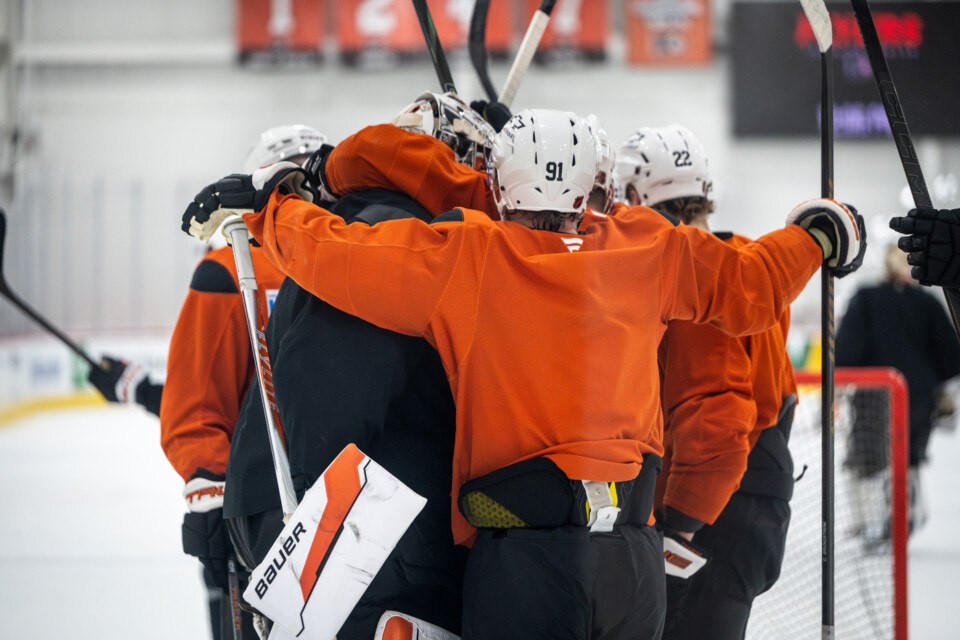
Flyers at their practice facility / Photograph by Kyle Kielinski
“He was the ultimate team guy,” said former Flyer and Toronto Maple Leafs head coach Craig Berube, who was not only Tocchet’s teammate in Philadelphia but spent 11 years coaching in the organization, including in the head job. “He was really helpful to me as a young guy coming in the league. He’d already been in the league a couple of years, took me in, and kind of just showed me the ropes. That’s the kind of guy he is, and guys like that end up becoming coaches.”
Tocchet was the NHL Coach of the Year with the Vancouver Canucks in 2024, when the team lost in the second round of the playoffs. Before that, he coached the Arizona Coyotes, where his .490 winning percentage and one playoff appearance over four seasons was considered overachievement for that star-crossed franchise (which is now the Utah Mammoth). His greatest claim to coaching fame was as an assistant with the Pittsburgh Penguins, where he worked closely with superstars and Flyers enemies Evgeni Malkin and Sidney Crosby, and won two Stanley Cups.
This year’s Flyers players have been self-critical and accountable to each other in a way that reflects Tocchet, who is no softie, but has a lighter touch than his predecessor John Tortorella (not hard to do). Early in the season players like Konecny and Zegras would sheepishly acknowledge their defensive mistakes, while vowing to erase them (or at least make fewer). Tocchet saw his biggest job this year as building culture; “I’m a culture guy,” he’s said more than once since being hired. And not just any culture.
“The values of being a Flyer,” he says. “What a Flyer does. How does he prepare himself every day? When I first became a rookie, that’s what I was taught right from the beginning.” It was also surely no coincidence that Briere signed two free agents who had previously played for Tocchet, one of whom, center Christian Dvorak, had a career-best season and has since been signed to a five-year extension.
Tocchet’s culture-building bona fides were tested at the Flyers Charity Carnival, when, during an interview with the All PHLY podcast, he mentioned that 21 year-old Russian forward Matvei Michkov, who starred for the team as a rookie last year, had reported for this season out of shape, which is why he wasn’t getting as much ice time. This was not new information. Michkov (who only speaks to journalists occasionally through an interpreter) had said himself he didn’t skate all summer, in part due to an injury, and his play had clearly suffered, but it had a throw-him-under-the-bus quality coming directly from the coach’s mouth. It was bombshell news for Flyers fans on social media (many of whom had been complaining about Michkov’s reduced ice time), as well as national news in Canada.
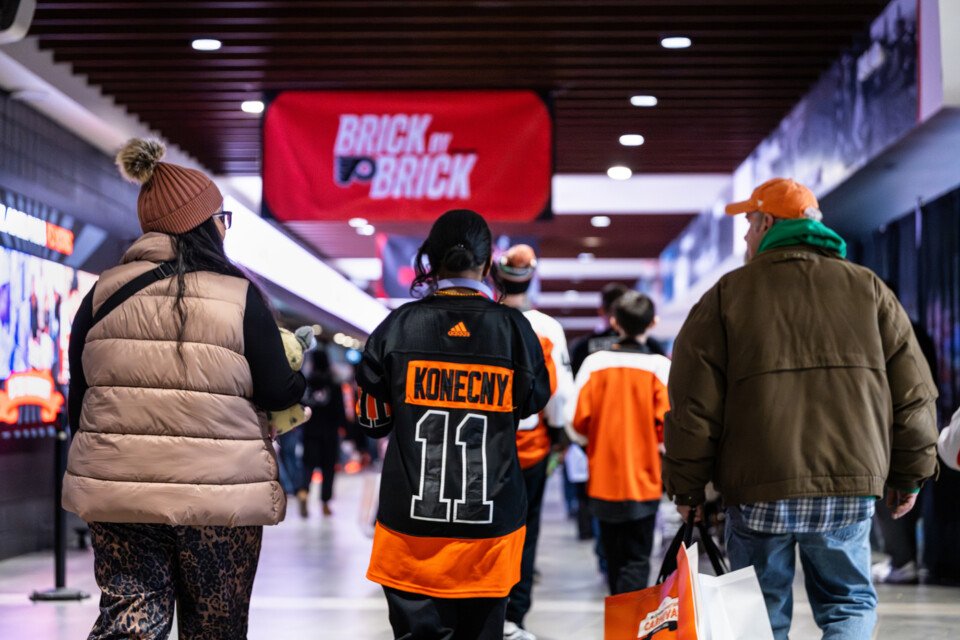
Flyers fans at Xfinity Mobile Arena / Photograph by Kyle Kielinski
“Is Tocchet going to get fired?” a friend of mine in Vancouver jokingly texted me before the next game, which was preceded by a hastily called Briere press conference to reiterate his commitment to both the player and his coach, as well as their ability to work together. The GM said that he himself had gone through similar rocky times that ultimately made him better, as have many All-Star players. In that moment, it seemed like things would either blow up worse or just blow over, but not until the off-season.
Instead, Michkov actually did get better. He used the Olympic break to ramp back up his training, was moved back to his preferred position (right wing instead of left) and has led the team in points (seven goals and 15 assists) since then, with key goals in both the Carolina clincher and a crucial 7-1 win over Winnipeg two nights before. “He’s done a nice job,” Tocchet said as the season wound down. “I think he’s really taken the information and applied it.”
It was one of many things that went right in March and April, including minor system changes, revamped line combinations, often-otherworldly play from Owen Tippett (the team’s leading goal scorer with 28) and, perhaps most satisfyingly, the return of reasons to chant “COOOOOOOOOTS” at the arena, as Sean Couturier also turned around his season.
Couturier, who had inherited the title of Philly’s longest-tenured athlete from Brandon Graham, has been everything a hockey captain should be, from doing the so-called “little things” you can’t see in a box score to facing the media after a bad loss. But he also didn’t score a single goal between December 7th and February 28th, and after spending 14 years as one of the best players on some mostly not-great Flyers teams, it was starting to look as though he wouldn’t be a big part of the future. Essentially demoted to the fourth line while still taking faceoffs, killing penalties, and switching between wing and center (in tandem with underrated waiver pick-up Luke Glendening), Couturier has been as big a part of this as anyone, including on the scoresheet: three goals in five games at the end of March, and two huge ones in that win over Winnipeg.
“All year, but especially after the break, he’s just [been] like, ‘Whatever you need me to do, I’ll do,” Tocchet said before the Hurricanes game. “He’s just doing whatever it takes to win. That’s the culture we’ve tried to inspire here, and that’s what he’s doing. He’s been a Flyer.”
The March 6th trade deadline was also a big turning point, in the sense that it was undramatic. Briere neither gave up on the roster nor went all-in. His decision to hold on to veteran defenseman Rasmus Ristolainen proved to be correct, and trading away Bobby Brink from a crowded group of wingers created opportunities for others. The lack of any major moves also seemed to prompt the players to say to themselves, collectively: Okay, this is who we are. And who we are is plenty.
The Flyers’ playoff hopes were still on life support as recently as March 11th, when Moneypuck gave them just a 4.2 percent chance of making it, even after a 5-2 post-Olympics start. They went 7-2-1 in March from there, and still only got that number up as high as 26.1 percent—not great odds. No one outside of the Flyers locker room believed that it would happen. Or even that it had to happen. The fans and the front office might have been content with the fact that every game still mattered. That merely chasing a playoff berth was enough. A cool experience — and a learning experience — in and of itself.
And then the cavalry arrived.
The Final Brick?
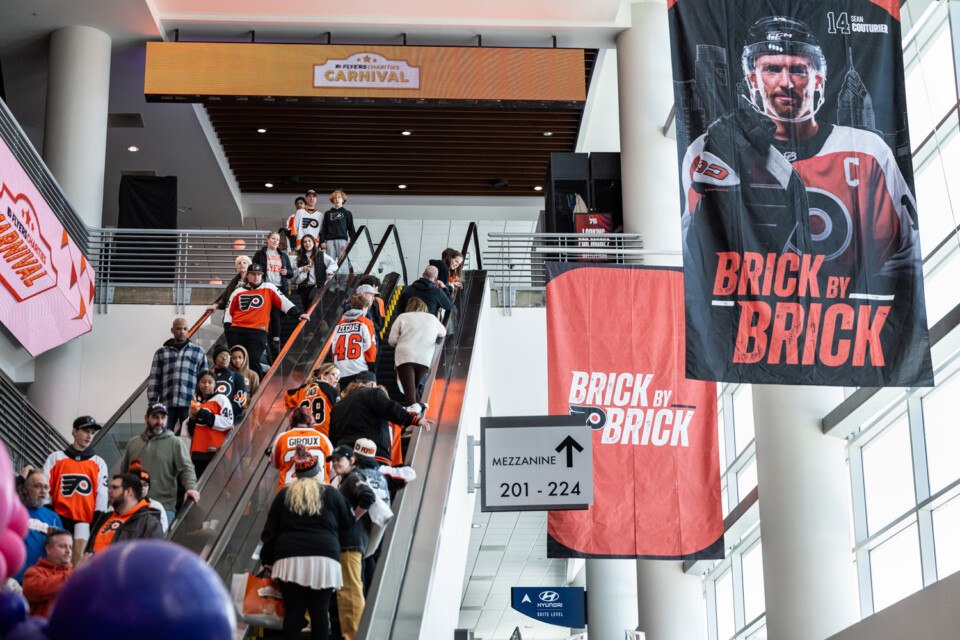
Fans at the Flyers Charities Carnival / Photograph by Kyle Kielinski
Another fan I met at the Flyers Charities Carnival back in February was Shane Donahue, who I approached because he was wearing the jersey of Nolan Patrick, a player the Flyers took when a bit of lottery luck got them the second pick in the 2017 draft. Like too many Flyers (Eric Lindros, Keith Primeau, Chris Pronger) he struggled with head injuries, except much earlier in his career. He was traded to Las Vegas in 2021, and retired one year later.
“Does it break your heart a little?” I asked Donahue of the jersey.
“It breaks my heart almost every time I wear it,” Donahue replied.
Patrick’s was gonna be the jersey Donahue could wear for years to come, as well as one of the players who was gonna help the Flyers win for years to come. Now Donahue is still trying to decide which player he might “invest” in next.
“It’s probably going to be a Zegras jersey,” he said. “Or maybe Martone”
Yes, Porter Martone. Porter Martone. His teammates call him “Marty,” but Philadelphians are better off with the full name. “I feel like this could be an all-time Philly name,” Bluesky user and Flyers fan “Steph G” wrote last summer. “Hoagiemouth implications aside, it’s plausible that an actual Martone has lived on Porter St.”
Martone would not even have joined the Flyers, at least not for a while longer, had Michigan State not been bounced out of the NCAA hockey tournament early. A junior hockey and college star, the Ontario native nevertheless grew up as a Flyers fan, and had already played with Konecny and Travis Sanheim on Team Canada at the IIHF World Championships last season. Prior to his home debut against the Red Wings on April 2nd, I spotted a tall young fan outside the Flyers merch store wearing what was surely one of the first Martone #94 Flyers jerseys to be sold; he peeled it off so an NBC Sports Philadelphia staffer could get a shot of him putting it on, for possible pregame footage. Conventional wisdom would have said that anything Martone provided would be a bonus; instead, his size (6’3”) and net-front presence boosted the Flyers’ offense, and, especially, its generally league-worse power-play. The kid wound up with 10 points (four goals and six assists) in just nine games.
He wasn’t the only surprise addition to the roster. Tyson Foerster, the team’s leading goal scorer this season before suffering what was thought to be a season-ending injury December 1st, returned to the line-up and scored a goal in his first game back. It was also Foerster who scored the winning shootout goal against the Hurricanes, before Vladar made it official with that final save.
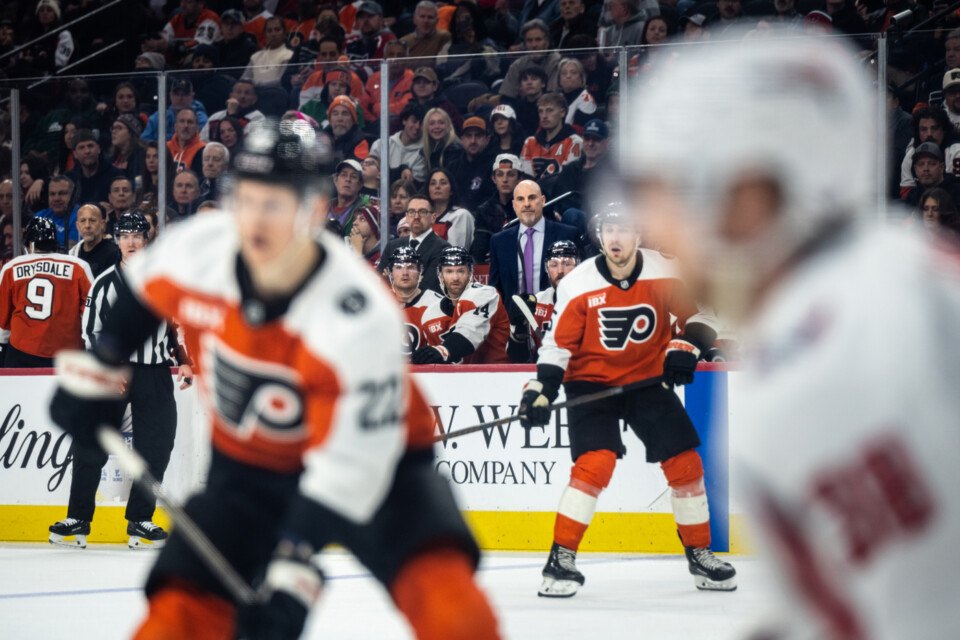
Photograph by Kyle Kielinski
In the coming seasons, the Flyers still need better players. Maybe a center, maybe a defenseman, maybe both. During these recent lean years — dating back to the team trading away former captain Claude Giroux — the team has lacked for stars, something illustrated by what I like to call the Cure Auto Insurance Corollary. We’ve all seen the New Jersey company’s charmingly cheesy commercials (and completely unrealistic portrayals of sports journalism) with Saquon Barkley, Kyle Schwarber, and Tyrese Maxey. Cure even sponsors the Flyers’ pre- and post-game shows on NBC Sports Philly. But as far as I can tell, no Flyer has been in one since Wayne Simmonds, who has not been on the team since 2019.
Before this season, I would have said the next great Flyers player to be Cure-worthy was probably playing for another team (i.e., a future trade or free agent). But stars are also made by playing well. And by being in the playoffs. Suddenly this team has at least four or five guys with the charisma, skill and — let’s use it again — grit to capture Philadelphia. Zegras, Vladar, Martone, Konecny, Tippett — they could all sell you insurance. A clever copywriter might even work in Michkov and some Russian speaking “journalists.”
Not every team gets to walk together forever, as Fred Shero said about the Broad Street Bullies. And this Flyers team could also lose in the first round, and/or need a few more years to be a repeat Stanley Cup contender. But the playoffs are their own season, of two weeks or a month or two months. If the Flyers team of the past six weeks keeps playing like it has, who knows? The 2010 team almost didn’t make the playoffs (beating out the Rangers head-to-head, in a shootout, for a berth on the season’s very last day) and had no business being in the Stanley Cup Final, either. “Going through the playoffs and having the whole city rally behind you, there’s not too many better places than this,” said Briere, who was on that team.
It’s been a successful season either way. The team stayed patient and deliberate while exceeding expectations. Or maybe expectations were much higher all along. After the Hurricanes game, Dan Vladar revealed that Briere’s private comments were much different from his public statements.
“Maybe he doesn’t say it to media, but he told us at the beginning of the year — I hope he’s not gonna get mad at me — but he said the goal was to make playoffs,” the goalie said. “So there was always a belief in this room. Since day one.”
So much for “Brick by Brick.” Time to put in the Tofani door and roof deck.