
Ask Dr. Mike: Do I Need to Get Vaccinated Every Year?

Meet internal medicine physician Michael Cirigliano, affectionately known as “Dr. Mike” to not only his 2,000 patients, who love his unfussy brilliance, tenacity, humor, and warmth (he’s a hugger!), but also to viewers of FOX 29’s Good Day Philadelphia, where he’s been a long-time contributor. For 32 years, he’s been on the faculty at Penn, where he trained, and he’s been named a Philadelphia magazine Top Doc every year since 2008. Starting today, he’s our in-house doc for the questions you’ve been itching (perhaps literally) to ask a medical expert who’ll answer in words you actually understand. Got a doozy for him? Ask Dr. Mike at lbrzyski@phillymag.com.
Hey, Dr. Mike! Everyone’s sick — and now there’s a “super flu” in the mix. But some people still swear they “never get sick.” So let’s put it together: Does everybody need a flu shot every year, even if they think they’re the exception?
The flu shot saves lives! That’s why it’s universally recommended, unless you have an allergy to it. All humans get viruses, and viruses like to spread and mutate — and fast. People might say, “Well, Dr. Mike, I got my flu shot and I still got the flu!” They don’t realize that the shot doesn’t prevent you from getting the flu but it reduces your risk — by 30 to 4o percent — of ending up in a hospital on a ventilator because of it. (The new variant this season — subclade K — is pretty potent. I’ve seen patients who are really sick from it.) Besides, data shows that if you get a flu shot year after year, you’re simply more protected, and that’s especially true of the elderly, young people, and those who are immunocompromised.
What about the people who claim they don’t ever get the flu?
To that I say, “I guess you’re an alien!” Seriously though, I operate according to this quote: “In God we trust. Everyone else, show me the data.” If the data shows vaccinations save lives and are safe and effective, then get vaccinated. We have to hang our hat on something. Or else, it’s entropy.
If the benefits of the shot are so clear, what’s with the vaccine hesitancy that’s gotten everyone yelling at each other?
There’s a tremendous amount of misinformation out there and a lot of conspiracy theories when it comes to pharmaceuticals, all of which has been amplified by rhetoric linking immunizations to autism and health issues. So, that’s part of what’s been fueling the contention. I want to remind people that, thanks to vaccines, we don’t really see cases of smallpox or polio anymore. Case in point: Decades ago, when I first started working at Penn, we had two iron-lung machines stored in the basement that were once used to help polio patients breathe. Luckily, vaccines were created and those machines were no longer needed. I’ve never seen a case of polio in my 35-year career.
Still, vaccines aren’t always risk-free, right?
Look, if you give an intervention to 100,000 people, are some of them going to have a negative event? Yes. Getting vaccinated comes down to risk-benefit ratio — every choice in life does. I tell my patients, “You drove to my office in a car. There was a chance you’d get in an accident, but you chose to visit me because the benefit outweighed the risk.” To me, the choice is a no-brainer: Get the flu shot.
What about the COVID booster?
I believe it should be given initially in life, when a baby is six months old. After that, it depends on what risk factors the person has. If you’re healthy and 40 years old, I don’t think getting the booster is necessary.
In my adult practice, I generally reserve the annual COVID booster to the elderly, cancer patients, pregnant individuals, those who are immunosuppressed, and people living with someone who is high-risk. For most patients now, COVID has morphed into a bad cold — the virus has changed over time, and basically everyone on the planet has had COVID and/or gotten the vaccine. It’s not like the beginning of the pandemic where nobody had immunity — that was a whole different ballgame. Also, we now have medication for COVID, like Paxlovid, which can help prevent symptoms from getting worse. One thing’s for sure: If there’s anything we’ve learned from the pandemic, it’s “If you’re sick, stay the hell home!”
Preach! Everyone’s immune system operates at a different strength level. Just because the symptoms of your cold or illness aren’t terrible doesn’t mean someone else’s cold symptoms won’t put them in bed for a week.
Exactly. So when you’re sick, you’ve got to be mindful of your risk of others. Just the other day, I advised three patients who are sick with RSV or COVID not to attend family gatherings because of who they told me would be there. If you’re sick and want to attend the gathering, you’re responsible to ask: Will Grandma Jones, who is getting cancer treatment, be there? What about newborns? I’m not trying to be patients’ personal Oppenheimer and destroy plans, but we all have to consider the impact our sickness might have on people who are vulnerable.
Just last month, the CDC’s vaccine advisory panel changed the guidance for newborn hepatitis B vaccination to a decision-based model. It has sparked a lot of controversy and anxiety …
I vehemently disagree with the guideline changes! The test that is used to determine if a pregnant person has hepatitis B is not 100-percent accurate. So if mom tests negative, but actually does have hepB, the newborn can be born with it. Contracting hepB early in life can be extremely dangerous; there’s almost a 90-percent chance of developing cirrhosis and liver cancer, and dying from it, down the road.
A big misconception in this context is that people think hepB is transmitted only through IV drugs or sexual activity. But it can actually be cross-transmitted in other ways, like sharing toothbrushes or nail clippers. Half to two-thirds of people who have hepB don’t even know they have it, so the potential for household contact puts others at risk, especially children.
What’s the biggest takeaway from all this vaccine talk?
A good thing that has come from the debates is that patients are now talking with their healthcare providers about what they’re hearing. This is great, because we’re the best people to help patients make informed choices. I’ve never said to a patient, “It’s my way or the highway.” My job is to give you advice. With immunizations, I love to remind people that America is the land of the free and home of the brave: You’re free to make decisions based on your beliefs — and you also may be brave based on some of those decisions. If you’re an adult and you don’t want a vaccine, that’s your choice. But remember: When little Johnny or little Susie don’t get a say in the matter of their own health, it’s a fait accompli.
Philly Sneaker Shops That Will Kick Your Look Up a Notch

Sneakers at World of Flight / Photograph courtesy of Jordan Brand
Lacing up for this spring’s Sneaker Con? (April 4th at the Convention Center.) Or just in the market for a fresh pair of kicks? We’ve got your hookups here.
For Everything Jordan
In a city known for firsts — zoo, hospital — it’s fitting that Jordan Brand’s debut World of Flight retail concept in the U.S. opened in Philadelphia. The sportswear titan’s partnership with Eagles quarterback Jalen Hurts didn’t hurt either. (The MVP of Super Bowl LIX made an appearance in October at the opening party, where shoppers lined up to score World of Flight Philly merch.) Stop by the second-floor customization lounge for a hoodie and a pic in front of the Philly-themed memorabilia. 1617 Walnut Street, Rittenhouse.
For Philly Brand Collabs
More than a decade has passed since streetwear concept Lapstone & Hammer opened, and today owner Brian Nadav is an industry authority on sneakers. Limited-edition lines and brand collabs — a launch with Joel Embiid for Skechers is in the works for 2026 — are big draws at the store, with comfort kicks like Hoka driving sales. As for those metallic ASICS Gel-1130s everyone’s wearing? Nadav knew three years ago you’d buy a pair. 1106 Chestnut Street, Midtown Village.
For a Jolt
Louis Quiles introduced Encanto Coffee and Kicks in 2023, and (as the name suggests) it’s home to java and Jordans. Order the house favorite Triple Pink Latte made with beans sourced from Quiles’s native Puerto Rico, then shop kid and adult styles in limited sizes from Adidas Yeezy, ASICS, and Nike. Trying on a pair of Bravest’s Bear Claw mules is worth the visit alone. 2110 East Norris Street, Fishtown.
For Pre-Loved Kicks
Flight 96 is a buy-sell-trade stop for pre-owned and new sneakers. Nike Dunks in assorted colorways are in regular rotation, along with New Balance and Air Jordans. Shoes move quickly here, and when they’re gone they’re gone. Follow the store’s Instagram or drop by in person to see all the latest styles. 1613 East Passyunk Avenue, East Passyunk.
For Skater Vibes
South Street has been a sneaker destination for decades, and P’s & Q’s has been a staple along the strip since 2012. Founded by brothers Rick and Ky Cao, the vibe is streetwear with skater sensibility. Think of the shoes you wore in high school — Vans, Saucony — but with better construction and a range of color combinations and materials. If you really want to relive the ’90s (and who doesn’t?), shop clothing and accessories from Stüssy to go with your Vans checkerboard slip-ons. 820 South Street, Bella Vista.
For Suburban Sneakerheads
What began with a classic trench coat has evolved into a preppy-inspired menswear brand rooted in wardrobe essentials. Lifestyle sneakers are a big part of that sartorial equation, and, like all things with American Trench, the selection has been well considered by co-founder Jacob Hurwitz. Italian sportswear company Diadora, which has its U.S. headquarters at the Bok Building, fit the bill. Their tennis shoes with slimmer silhouettes and minimal accent colors pair well with American Trench looks. 15 East Lancaster Avenue, Ardmore.
A Word With Local Sneakerhead Jason Bloom

Illustration by James Boyle
The plastic surgeon — and serious sneaker fan — behind Bloom Facial Plastic Surgery in Bryn Mawr shares a look at his collection.
I started collecting … in 2003, with a pair of Nike Dunk Lows in maize and blue. They reminded me of my love of the University of Michigan, and I had to have them.
My favorite brands are … Air Jordan and Nike sneakers, but I do have a few pairs of Adidas and New Balance.
I store my shoes … in a sneaker closet in my home office. I would estimate that I have a few hundred pairs.
A go-to Philly store is … Lapstone & Hammer.
The most classic silhouette is … the Air Jordan 1 High. They go with everything from a pair of scrubs to a suit.
The sneakers I wore to the Super Bowl … were a pair of kelly green Air Jordan 1 Highs from Jim Buck, a Philly-based sneaker maker.
The rarest pairs I own … include three pairs from Dark Phil Knight and two pairs from the Shoe Surgeon, in L.A.
Almost every pair … I take out of the box and wear. That’s the fun of it.
Published as “The Getaround: Sole Mates” in the February 2026 issue of Philadelphia magazine.
The Robot Wawa Was Always a Bad Idea. And Now It’s Closing

Wawa’s new all-digital store in University City / Photograph courtesy of Wawa
Not surprising news on the automation front: It looks like the experimental Wawa at 3300 Market Street — the one with no shelves, no racks, and no products, just a rank of slick ordering kiosks and serious HAL 9000 vibes — is closing for good today.
In a statement, Wawa said that despite “recently making investments in our store design to test a fully digital format … this test did not adequately improve performance or deliver an enhanced customer experience, which ultimately led to the decision to close the store.”
And honestly, I couldn’t be happier.
We initially wrote about the world’s first robot Wawa back in 2023 when the company first reopened the 34th and Market location as a brand new “all-digital” location. This meant that the store itself was more or less empty, and that all ordering would be done through the Wawa app or via kiosks inside. Employees would then package the orders and hand them over. And the whole thing (with the exception of the coffee bar, which would remain self-serve because even the suits, accountants, loss-prevention specialists, and consumer psychology nerds who came up with this idea understood that the daily coffee orders of your average Wawa consumer are far too chaotic and unhinged to be handled any other way) was meant to be a smooth, slick, seamless, and efficient transaction, accomplished with minimal human contact.
The problem was, words like smooth, seamless and efficient are words that precisely no one who has ever been to a Wawa would use to describe the experience of going to a Wawa. And while I’m guessing that’s precisely the problem that those involved with the design of the robot Wawa were trying to fix, those of us who are actually fans of Wawa saw that as a feature, not a bug.
Wawa is Philly to its bones. Its brand is built on the inefficiency of walking in the door looking for a meatball Shorti and walking out with two jugs of wiper fluid, some Peanut Chews, a fistful of scratchers, a tin of dip, and an Entenmann’s coffee cake. A smooth trip means not running into that neighbor you hate while sorting through the racks of snacks for the last bag of Herr’s hot honey cheese puffs. It’s the kind of place where a sweet little old lady will hold the door for a Cowboys fan, then hit them with her car in the parking lot. Where everyone will cheer, but no one saw it happen.
But this automated, high-gloss/low-drag futuristic vision of a Wawa built for the coming robot dystopia? It was a soulless, placeless branding experiment that wanted nothing to do with Philly. It was an attempt at scrubbing all the grit and weirdness out of Wawa; of sanitizing it in a way that would leave it with all the heart and charm of an airport convenience store. I wrote about the place in the winter of 2023, shortly after its debut, and was not kind in my assessment:
“Being there feels like being nowhere. Or like being anywhere, which is almost worse. And that kind of shiny, address-scrubbed blandness will always have an uncanny valley type effect on people here because Wawas are supposed to have personality. There’s supposed to be a grubby kind of humanness to them. They’re NOT supposed to be dead-eyed simulacra of the ‘Wawa experience’ smoothed and sanded and epoxy-sealed for maximum efficiency.”
I then went on to quote sociologist Ray Oldenberg’s theory of “Third Places” — the idea that, if your home is your “first place” and work is your “second place,” a society requires a variety of “third places” in order to remain sane, engaged, and functional. These can be almost anything: bars and cafes, clubs, churches, the gym. But among the many qualifiers for third-place status were requirements that these spaces be open and inviting, informal, convenient, unpretentious, and full of regulars. Your average Wawa is all of those things. Even though it exists primarily as a delivery vector for hoagies and 32-ounce almond milk double-pump cinnamon bun and cold foam iced coffees, they are entirely viable (and vital) third places for a lot of Philadelphians. But the all-digital Wawa? It was none of those things. Well, except for open, I guess.
And now, it’s not even that anymore.
So goodbye, digital Wawa. You were a bad idea, conceived at a bad time, implemented in a place that still values honesty and the messy company of their fellow man over corporate branding strategies, and now you’re gone.
Good riddance.
South Philly’s Pulitzer-Winning Playwright James Ijames Loves Trash TV Just As Much As We Do

James Ijames / Photograph by Justin DeWalt
South Philly’s Pulitzer-winning playwright James Ijames returns with not one, not two, but three local shows this season – one starting at the Arden this Thursday. We caught up with him to learn about life, love and his strange relationship with The Secret Lives of Mormon Wives.
My last name is pronounced … like times without the t.
I grew up in … Bessemer City, North Carolina. Everybody knows each other.
I came to Philly in … 2003 to get my MFA at Temple. I just moved to Manhattan in July, in part because I’m now tenured at Columbia, where I’m the new head of playwriting. But I still have my house at 4th and Wolf, which is where I stay when I’m back in town.
My first theater role was … as Hamlet, when I was a 19-year-old student at Morehouse.
My desire to return to the stage is … zero, zilch. It’s too anxiety-inducing for me to be an actor. And I just don’t enjoy it enough to suffer through that anxiety. Writing and directing is where I belong.
When I’m in Philly, I always go to … as many restaurants as I can. You have to work real hard to find a bad meal in Philadelphia. For quick bites, I regularly do Federal Donuts and P’unk Burger. And I do a lot of shopping at Head House Books. I love that store, and it’s on my walk from my house to the Arden.
My relationship status is … married. My husband is an educator who works for the Philadelphia School District.
When I won the Pulitzer for Drama in 2022 for my play Fat Ham, I celebrated by … having cake and lots of champagne at my house in Philly with my husband and two friends. It was actually quiet. Nice.
The most famous friends in my cell phone are … Cynthia Erivo and Colman Domingo, both of whom were producers of Fat Ham.

James Ijames (center) with theater director Saheem Ali (right) at a pre-Tonys party hosted by actor Colman Domingo (left)
The most beautiful space in Philadelphia is … my living room. It’s so maximalist. There’s way too much art on the walls. As soon as people walk in, their shoulders drop. And I love 30th Street Station, a relic of another time. I admire the grandeur.
My current bingeing obsession is … The Secret Lives of Mormon Wives. It’s fascinating for me to look at such a, um … homogenous environment. It’s just insane. I can’t justify anything they do or so. I violently disagree with so much of what they do and say. But it all helps me understand something about the world. I only watch garbage TV. When I watch prestige TV, that feels like work, because it’s something I very much want to be writing myself in the near future.
This season, I am … having three plays produced by three different Philly theaters, something I had to leave Philly to have happen. The Arden is doing the regional premiere of Good Bones, the Wilma is doing a revival of The Most Spectacularly Lamentable Trial of Miz Martha Washington from 2014, and Philadelphia Theatre Company is presenting the world premiere of Wilderness Generation.
My parents taught me to be … honest, on time, hardworking, and just.
If you really want to annoy me … approach me with small talk.
If you’re pouring me a cocktail, I’ll take a … Boulevardier, please.
One bad habit I cannot break is … ordering in. They make it way too easy. I need to get back to cooking.
When I want to relax … I walk for hours.
The thing I love most about South Philly is … that if anything is going on in front of my house, my neighbor will let me know about it. Immediately.
Since winning the Pulitzer, my life has become … busier! But the nice thing is that being a writer, you get to hang on to a kind of anonymity. Most people have no idea what you look like.
My current playlist includes … Ariana Grande, Minnie Riperton, Teedra Moses, vintage Toni Braxton, Kehlani, Stevie Wonder, and Aretha. I’m a 45-year-old Black gay man, and everybody you expect to be here is here. I am a cliché.
Published as “One of Us: James Ijames” in the February 2026 issue of Philadelphia magazine.
Podcast: How We Decide Who Makes Philly Mag’s 50 Best Restaurants

A variety of dishes at Sang Kee / Photograph by Gab Bonghi
Listen here:
Philadelphia magazine’s 50 Best Restaurants list is here, and whether you love it or hate it, Philly is kind of obsessed with it. Just as it does every year, it sparks a slew of comments, controversies, and a whole lot of questions. The most common? How the hell do you come up with this list?
On the latest episode of Philly Mag Today, food editor Kae Lani Palmisano shares what goes into the 50 Best Restaurants — the thought process, philosophy, and methodology — and how our highly anticipated (and debated) annual list speaks to what it means to dine in Philadelphia right now.
And if you have any quips and quibbles about how we run things over here at Philly Mag, feel free to reach out to our tip line or email Palmisano directly at kpalmisano@phillymag.com. We’ll be reading your letters to the editor about the 50 Best Restaurants list on a future episode of Philly Mag Today.
Listen to Philly Mag Today to hear more about our opinions on the impact the world’s most prestigious restaurant awards will have on Philadelphia. And be sure to subscribe to Philly Mag Today on Apple Podcasts or Spotify. We’ll be sharing stories that reveal some sliver of life in our city today, whether that’s insightful commentary on the latest news, fresh takes on what’s happening in the food scene, profiles of the people shaping the way we live, or just the best reads Philadelphia magazine has to offer.
FringeArts Finally Lives Up to Its Destiny

We Come to Collect: A Flirtation, With Capitalism / Photograph by Courtney Charles
There was much fanfare in 2013 when FringeArts opened in an early 20th-century pumping station — a massive $7 million renovation that included a sizable bar and restaurant and a 300-seat state-of-the-art theater. The vision for the space was clear: It would be the permanent headquarters of the beloved Philadelphia Fringe Festival, which had run (without a theater of its own) every September since 1997, as well as a destination for the live arts throughout the year. Alas, the venue had fallen woefully short of that latter goal. But that’s all changing now, thanks to Nell Bang-Jensen, who in September 2024 became the organization’s CEO and producing director.
In December, FringeArts announced its first-ever winter-spring season, which launches this week with a darkly funny exploration of American consumerism, We Come to Collect: A Flirtation, With Capitalism, from the mind of Obie-winning West Philly theater creator Jenn Kidwell (lauded as a “comic genius” by the New Yorker).
Later this month, local performer Lee Minora revives her saucy, satirical 2025 Fringe Festival hit Baby Everything, followed in March by an avant-garde work from Japanese choreographer Hiroaki Umeda.
And what would a Fringe season be without the gender-bending Bearded Ladies delving into the cult of American Girl dolls? They’ll present an irreverent world-premiere musical on the subject in May, closing the season.
Our responsibility at FringeArts is to create more opportunities for the next generation of Philly artists — shows that start at a grassroots level. In short, we’re all about new stuff.” — Nell Bang-Jensen, FringeArts CEO
“There are lots of amazing arts organizations in Philadelphia producing lots of great works,” says Bang-Jensen, a Swarthmore alum whose résumé includes stints at Pig Iron Theatre Company, the Wilma, and the late University of the Arts. “But our responsibility at FringeArts is to create more opportunities for the next generation of Philly artists — shows that start at a grassroots level and that we can hopefully get to travel the world. In short, we’re all about new stuff.”

Nell Bang-Jensen, head of the Philadelphia theater venue FringeArts (photo courtesy FringeArts)
Part of generating that “new stuff” includes a just-announced residency program: Fringe will offer funding and other resources to a number of artists each year, selected from a bevy of applicants by a panel of Philly artists. And then there are the monthly pay-what-you-can Scratch Nights, in which local performers are invited to present works in progress for theatergoers.
“It’s now more important than ever for people to see arts and culture,” observes Kidwell, who has been working on her show for several years. “People need to engage their imaginations. That’s the beginning of ending the politics of the moment – to spectate and to lean into imagination and to reflect.”
Bang-Jensen says she knows the audience is out there for year-round programming, based on festival turnout of late. “The last two years saw record-breaking ticket sales,” she says, “plus a record number of artists performing and a 17 percent increase in unique ticket buyers. And, for the first time ever, more than 50 percent of our audience was Gen Z and millennial — the new generation of patrons. Audiences are here for this. So we’re going to give it to them.”
Published as “Full-Blown Fringe” in the February 2026 issue of Philadelphia magazine.
Under Pressure: Philly Actor Pax Ressler Quickly Steps in to Fill Some Very Big Shoes in Pig Iron’s Latest Show
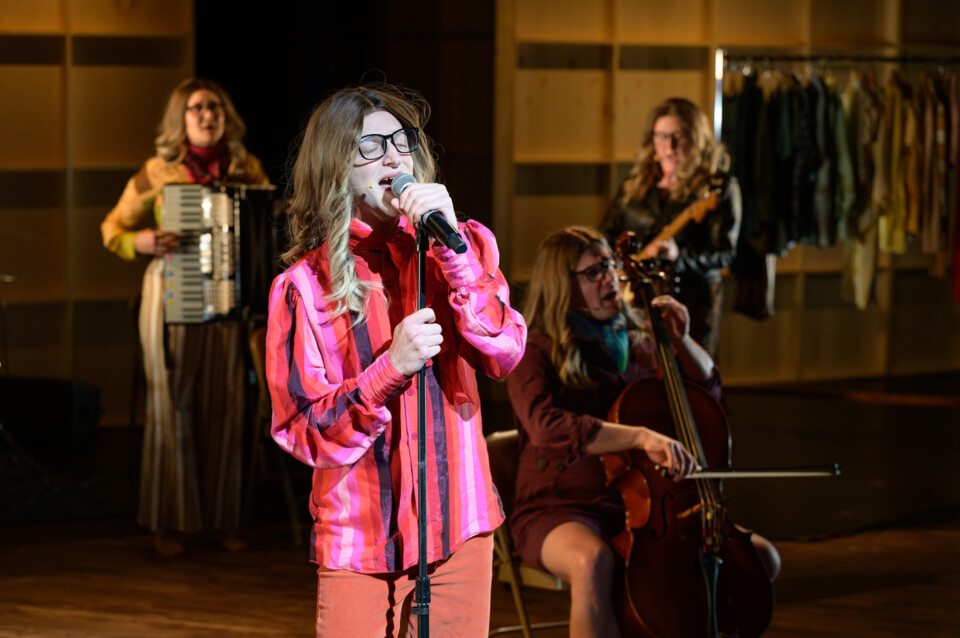
Pax Ressler in Poor Judge / Photography by Johanna Austin
In the theater world, “crunch time” usually means late rehearsals and a creeping sense of panic as opening night hurtles toward you. But for Philly actor Pax Ressler, it meant stepping into the lead of a critically acclaimed, award-winning show just days before opening night. For ten performances through January 25th, Poor Judge — the experimental jukebox musical conceived by Pig Iron Theatre Company co-founder and local drag legend Dito van Reigersberg (aka Martha Graham Cracker) and set to the songs of alt-rock icon Aimee Mann — returns to the Wilma Theater with one extraordinary twist: instead of starring van Reigersberg, who is suddenly unavailable due to a health condition, the central role is now being performed by Ressler, an award-winning composer and actor who had barely a week to prepare for one of the most demanding substitutions Philly theater has seen in years.
And it’s a triumph.
You may have caught Poor Judge when it debuted at the 2024 Philadelphia Fringe Festival to wild critical and audience applause. The idea for the “dance-theater cabaret” had been conceived by van Reigersberg two years before but was put on hold when he was diagnosed with leukemia. It was then developed throughout 2023 with the help of director Eva Steinmetz while van Reigersberg underwent treatment, eventually premiering at the Wilma Theater in September 2024. It went on to receive rave reviews, nine Barrymore Award nominations (winning three), and a cosign from Mann herself, who attended and called it “delightful.” “From the moment the show closed, maybe a month after,” Steinmetz says of Poor Judge’s original run, she and van Reigersberg were considering ways to bring it back to the stage.

Alex Bechtel (left) and Pax Ressler in Poor Judge
“Pig Iron has been looking for opportunities to take this show on the road. Ultimately, the dream is to take it to New York and L.A. We’ve talked to folks in D.C.,” she says. “The producing landscape and the funding landscape is really shifting right now, and opportunities for regional theaters to go on tour for experimental work are dwindling. But this [the Wilma show] is one of many different avenues that Pig Iron was looking for to remount the show, to keep it alive.”
And so the Wilma partnered with the company to bring the Poor Judge back for its current mid-January run. Much of the original cast and crew signed on to return, including music director Alex Bechtel (whose arrangements of Mann’s songs earned a Barrymore Award), choreographer Chelsea Murphy, set designer Maria Feuereisen, and all of the actors portraying the six-person ensemble of Aimee Mann replicas, dressed in her unmistakable blonde hair and black glasses.
“We call them ‘the Aimee Men’,” says Steinmetz.
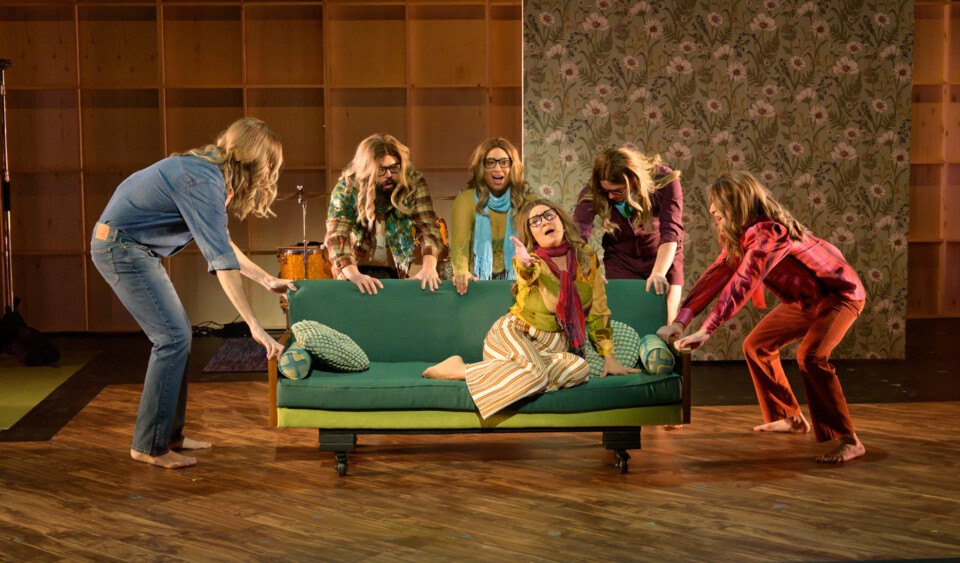
Alex Bechtel, Josh Machiz, Jackie Soro, Izzy Sazak, Justin Yoder, and Pax Ressler in Poor Judge
But on January 8th, a statement by the theater’s co-artistic-director Dan Rothenberg announced startling news: van Reigersberg would be stepping away from the production, due to medical complications that had recently emerged. Rather than canceling the show so close to opening night (tickets had been selling fast), Ressler would step in to replace van Reigersberg.
Though Steinmetz and Bechtel described adapting the show to a new lead as a “breezy process,” it was unquestionably the aforementioned crunch time. Because of scheduling and budgeting constraints, Bechtel explains, their first rehearsal in over a year wouldn’t be able to happen until January 1st – and their first preview would be on the 13th – giving the team less than two weeks to prepare. Things were even tighter, though, for Ressler, who had further schedule constraints and was unable to join rehearsals until the 6th. Luckily, late last year Ressler had been asked to memorize some of the script and songs in case a cast member got sick or dropped out. When van Reigersberg himself fell ill, he himself, along with Steinmetz and Bechtel, asked Ressler to come on as the lead for the entire run.
The request was an honor, says Ressler.
“To step into a track of Dito’s — who is just a legendary performer in Philly and, I would say, the most beloved performer in Philly — and try to allow the show to be possible in this new form, but also try to fill his gigantic shoes; that was the task that I was taking on,” Ressler says.
But neither Ressler, nor the rest of the cast and crew, cracked under the pressure. Other than this significant change to the cast, much of the writing and design of the show is the same as its original run, and reception from both new viewers and fans of van Reigersberg has been “enthusiastic,” Steinmetz says.

One of those rapt attendees was Stephanie Haynes, who’d seen the 2024 Fringe debut of Poor Judge and attended the Tuesday evening preview of its Wilma production.
“It was a pretty emotional experience to see the show again, without Dito, but his fingerprints were still all over it,” says Haynes, a longtime fan of van Reigersberg’s. “Every cast member was fantastic, and Pax was really exceptional filling in for Dito with such a short on-ramp. It’s a true testament to the strength of the show’s concept, music, cast, and writing.”
This, I can confirm: At the end of Tuesday’s preview, Ressler and the cast bowed to a several-minute-long standing ovation. In a situation defined by uncertainty and impossibly tight timelines, Poor Judge had pulled off a rare theatrical feat: surviving crunch time — and sticking the landing on the other side, victorious.
Through January 25th at the Wilma Theater.
Congressman Brian Fitzpatrick Is Stuck in a System He Hates
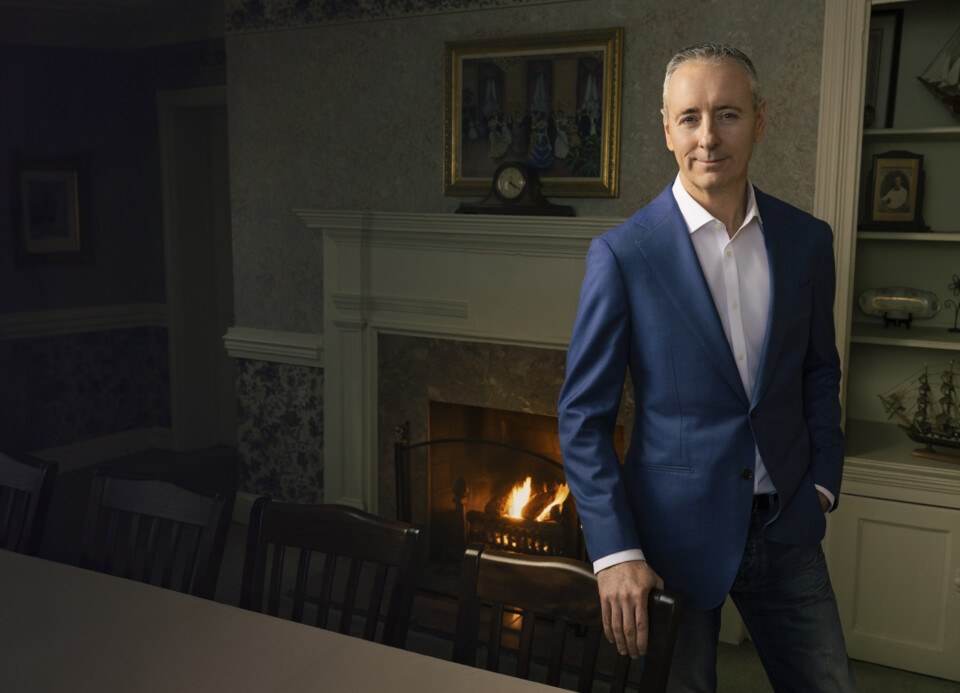
Congressman Brian Fitzpatrick / Photograph by Colin Lenton
Brian Fitzpatrick, the moderate Republican from Bucks County, has been ranked as the most bipartisan member of the House of Representatives — the member of Congress, in other words, who’s most likely to reach across the aisle and look for common ground with the other side.
But bipartisanship, Fitzpatrick is telling me one day as we sit across a table from each other, isn’t his ultimate goal. No, what he actually dreams of for America is nonpartisanship — the complete elimination of political parties. And his inspiration in this endeavor is none other than the Father of Our Country.
“George Washington, in his farewell address in 1796, very prophetically predicted that the two-party system was going to be the biggest threat, or put the biggest strain, on democracy,” Fitzpatrick says. “What our founding fathers envisioned is — you need the public to participate actively; you need them to be engaged and informed and vote. And our country needs to be unified against a common external threat. If the threat becomes internal and the divide becomes internal, the system of government was not really designed for that.”
It’s a bright afternoon in early December, and Fitzpatrick, looking lean and fit a couple of weeks before his 52nd birthday, is in his Capitol Hill office. The space is a little cluttered, but it’s adorned with dozens of nicely framed photos: Fitzpatrick with actress Diane Lane (a fellow animal rights supporter). Fitzpatrick with Ukrainian president Volodymyr Zelensky. Fitzpatrick with his late brother, Mike, who represented Bucks County in Congress before Brian and passed away from cancer in 2020.
I’m here during a particularly busy period. The issue of Ukraine, of which Fitzpatrick is a huge supporter, is heating up as the Trump administration attempts to negotiate a peace treaty — a treaty Fitzpatrick fears will give away the store to Russia. Meanwhile, he’s been actively engaged in trying to extend the Affordable Care Act’s enhanced premium tax credits, which have made health insurance more affordable for millions of middle-class Americans. But even with his packed schedule, Fitzpatrick has found time to talk with me about his favorite subject: how much the American political system totally sucks.
“I could talk for hours about this, but the two-party system needs to go away,” he continues. “We need to move to a coalition government and not the way it is now, which is a zero-sum, all-or-nothing game. In the House, if you get 218 votes on a bill, you get everything. And if you get 217 votes, you get nothing. Well, a 218–217 breakdown is representative of a very divided electorate that wants compromise, but they don’t get it. And that’s why we have this great, cavernous divide.”
To his credit, Fitzpatrick — now in his fifth term representing one of the most purple districts in America — has done more than just talk about what ails American democracy. He’s acted, repeatedly introducing reforms that would increase cooperation and compromise while modeling bipartisanship himself. (See: “most bipartisan member of the House,” above.)
The problem? There are two, actually. The first is that Fitzpatrick hasn’t really gotten much traction in this effort to upend the American political system — a fact he acknowledges and attributes to, well, the American political system. “We’re fighting the parties, right?” he says. “The parties don’t want it because it takes power from them.”
Problem number two: Until such time as Fitzpatrick can pull off his political revolution, he’s stuck operating in the world as it currently exists — which, as we shall see, creates no shortage of complicated situations for him.
One of these situations came last summer, with President Trump’s One Big Beautiful Bill, the massive piece of legislation that encompassed literally hundreds of proposed items, from making permanent Trump’s 2017 tax cuts to slashing safety-net programs. When the final version of the bill came up for a vote in July, Fitzpatrick defiantly voted no, one of only two Republicans to oppose it. His “nay” not only caught House leadership by surprise — mid-vote, House Speaker Mike Johnson went on Fox News and told Sean Hannity he was looking for Fitzpatrick — but also ultimately earned the ire of Trump.
He’s had opportunities to show real bipartisanship and failed. He’s bipartisan when his party allows him to be bipartisan.” — Bucks County Commissioner Bob Harvie, Fitzpatrick’s Democratic opponent
Not that any of this helped Fitzpatrick score any points with Democrats in his district, who noted that his no vote was essentially inconsequential — Republicans had enough yes votes that the One Big Beautiful Bill passed anyway. In contrast, those Democrats will tell you, when a version of the bill came before the House a month earlier, Fitzpatrick had not only voted for it, but had effectively put it over the top. The final tally was … wait for it … 218 to 217.
It was a perfect example, Dems say, of “the two faces of Fitz” — on one hand preaching consensus and cooperation, on the other reliably siding with his fellow Republicans when their agenda is on the line. “He’s had opportunities to show real bipartisanship and failed,” says Bucks County Commissioner Bob Harvie, a Democrat. “He’s bipartisan when his party allows him to be bipartisan.”
Fitzpatrick, not surprisingly, bristles when I mention such criticisms. “Are these people that would ever compliment me on anything?” he asks. (Probably not. Harvie is challenging Fitzpatrick for his seat.)
Indeed, as if to show his critics just how wrong they are about him, two weeks after my chat with Fitzpatrick in his office, he does something very much in defiance of Republican Party leaders: He and three other moderate Republicans join up with Democrats to force a House floor vote on those expiring ACA tax credits. The move doesn’t guarantee that the credits will be extended — the Senate has already shot down an extension, and there’s skepticism they’ll even take it up again — but it’s certainly not toeing the party line.
In many respects, Brian Fitzpatrick seems to come from an earlier era in American life, when virtues like patriotism and community service and civility were more celebrated. The youngest of eight kids in an Irish Catholic family, he became an Eagle Scout, then a certified EMT. Inspired by 9/11, he opted to use his law and MBA degrees (both from Penn State) not in the private sector but in the FBI, ultimately spending time in Iraq and Ukraine, where he rooted out bad guys and promoted democracy. Fitzpatrick’s quest for bipartisanship — or maybe, one day, nonpartisanship — is of a piece with all that, an effort, perhaps, to bring back an America that seemed to be a little nicer and more cooperative and work a little better.
Of course, not for nothing, getting rid of political parties would also make his life a helluva lot easier.
A couple of weeks before I sat with Fitzpatrick in his office, I watched from the cheap seats as he slid into a subcommittee hearing a few minutes late. Fitzpatrick is a busy guy — always hustling from place to place. In addition to sitting on two House committees (Ways and Means and Intelligence), he’s a member of 39 different House caucuses and task forces, co-chairing 19 of them. (They include the Ukraine Caucus, the Disabilities Caucus, and — looking at you, Diane Lane — the Animal Protection Caucus. Among the many bills he introduced last year was the Kangaroo Protection Act of 2025.)
Not that Fitzpatrick missed much in this particular hearing. Though the subject was nominally nonideological — the session was titled “Modernizing Care Coordination to Prevent and Treat Chronic Disease” — it took, oh, about a minute and a half for partisan bickering to break out. Democrats sniped that it was futile to talk about coordinating health care when Republicans were gutting it; Republicans countered that Obamacare was the work of Satan himself. (Okay, it’s possible I exaggerate the GOP position. But that was the tone.) When it came time for Fitzpatrick to speak, though, he didn’t take the bait either way, instead asking the witnesses a couple of intelligent questions that were actually related to the subject of the hearing.
Fitzpatrick isn’t shy about criticizing how messed up the current iteration of Congress is. Not only does our 21st-century information ecosystem encourage division, he tells me, but bloody partisanship is emphasized the minute you arrive on Capitol Hill. He notes that after new representatives are elected but before they’re sworn in, they all go to a program at Harvard’s Kennedy School, with Democrats and Republicans intermingling in an intimate, informal, no-labels kind of way. “But the second you get to Washington, they divide you physically on the floor,” Fitzpatrick says. Separate retreats. Separate conferences. “Because [party leaders] want to control the show. They don’t like it when we reach across the aisle.”
In Fitzpatrick’s dream world, those separate teams wouldn’t exist. Instead, all elected officials would be independents, free to seek out like-minded colleagues issue by issue. Want to raise taxes on the wealthiest Americans? Team up with representatives who want to do the same thing. Want to hike defense spending? Find a different pack of colleagues who believe in doing that. If you take away the party identifiers, he reasons, you’d have real debates about the real problems the country faces — and that would lead to real solutions.
While Fitzpatrick knows that version of democracy might be a distant dream, he has, as I noted, attempted to push back on the us-versus-them ethos that currently defines Congress, starting with a series of legislative and Constitutional reforms he’s repeatedly introduced. He believes, for example, that one of the biggest reasons for our current lack of bipartisanship is the anxiety members feel over being primaried; neither Democrats nor Republicans want to compromise on issues because they fear a more ideologically pure candidate from their home district will call them out as a traitor and run against them in a primary. And since the people who vote in primaries also tend to be ideologically pure, guess who wins those races?
To counter that, Fitzpatrick — who, I should note, has survived fringe primary challenges every time he’s run — has introduced legislation that would effectively force states to have open primaries, letting independents (currently barred from voting in primaries in more than half the states) have a say in whom each party nominates. If independents voted, he argues, members of Congress would actually be incentivized to embrace compromise and centrism. Fitzpatrick has also crafted bills that would end gerrymandering (nonpartisan commissions would draw congressional districts) and impose term limits on members of Congress.

Brian Fitzpatrick with fellow congressman (and Democrat) Tom Suozzi of New York / Photograph by Tom Williams/CQ Roll Call via AP Images
Meanwhile, in his own legislative work, he’s regularly championed bipartisanship and developed a reputation as someone willing to work with his congressional colleagues. Another one of the caucuses Fitzpatrick leads is the Problem Solvers Caucus, a group of nearly 50 Democrats and Republicans who meet not only to look for common ground on issues, but to build trust and cooperation across the aisle. (Fitzpatrick has visited the districts of Democrats Josh Gottheimer of New Jersey and Tom Suozzi of New York, and they’ve visited his.)
Finally, there are the instances when he has bucked his own party’s leadership and voted with Democrats. The first time came in 2017, just a few months after Fitzpatrick arrived in D.C. One of Donald Trump’s biggest first-term priorities was the wholesale repeal of Obamacare; Fitzpatrick was against repeal, and he told party leaders that. At which point the pressure campaign began.
“It was absolutely brutal,” he says of the succession of people who leaned on him. “It started with the deputy whip, and then the whip, and then the majority leader, and then the speaker, and then a separate meeting with the speaker, majority leader, whip, and deputy whip together. Then the vice president, then members of the administration, and then the president. And I had to say, no, no, no, no, no.”
Now, it’s worth mentioning that, even with all of Fitzpatrick’s noes, the bill repealing Obamacare still managed to pass the House; it failed only when it got to the Senate, where John McCain gleefully issued the deciding vote against it. This raises the issue that Democrats most often bring up when they weigh in on Fitzpatrick: that for all his talk of bipartisanship, he rarely casts a vote that makes a difference.
Over the years, for instance, Fitzpatrick has broken with Republicans and joined Democrats in supporting, among other things, gun control legislation, LGBTQ rights, and the CHIPS Act — but in all those cases, the bills were going to pass whether he supported them or not. As one Democratic member of Pennsylvania’s congressional delegation has put it: “He’s always with us — when we don’t need him.”
Growing up in Bucks County, Fitzpatrick idolized his brother Mike, who was 10 years his senior and everything Brian wanted to be. “He was the cool guy, and I just — I emulated him. Like, he got his hair cut a certain way, and I did the same thing. He would buy a pair of sneakers; I’d want the same. I was that annoying younger brother, but I just looked up to him.”
Fitzpatrick talks warmly about his childhood in general. While his family didn’t have much money — his mother stayed home, his father was a traveling salesman, the brood made do with one car — “we always had an appreciation for what we had.” He raves about life in Levittown, the tight-knit Lower Bucks community that was literally the prototype for suburban, postwar American life. “It was just a great, magical place to grow up, and a magical time to do it — the ’70s and ’80s, which I think is the best era ever.”
Fitzpatrick entered politics when Mike — who spent a decade as a Bucks County commissioner, followed by four (nonconsecutive) terms in Congress — announced that he wasn’t running for reelection to the House in 2016. At that point, Brian had spent 15 years in the FBI, a chunk of it overseas, an experience he says opened his eyes to the wider world. But as much as he loved the Bureau, his gut told him it was time to come home. One reason Mike had opted not to run for another term in Congress was that he was battling melanoma.
“My brother has six kids. My other brother, Jim, is special-needs. My parents were getting older,” Fitzpatrick says now. He wasn’t quite sure what he would do back in Bucks, but slowly a plan formed. “I needed a job. I had a long talk with Mike. He never encouraged me to [run], but I could tell he wouldn’t be disappointed. He had a number of legislative initiatives that he was not going to be able to see through because he was sick.”
And so in 2016, Brian Fitzpatrick — Eagle Scout, G-man — became a candidate for Congress, and he won; it’s a feat he repeated in 2018, 2020, 2022, and 2024. While many moderate Republicans in Congress have, one by one, bitten the dust in the Trump era, Fitzpatrick has — so far — survived. One key to this success? Political good fortune. He benefited from Republican tailwinds in three of those election cycles — and he’s never faced a particularly well-known, well-funded Democrat. (That’s in contrast to Mike, who’s remembered for his Ali-Frazier-style battles with Democrat Patrick Murphy; Murphy took the seat from Mike in 2006 before Mike won it back in 2010.)
Being ubiquitous back home has also helped Fitzpatrick. “He’s everywhere,” says a Bucks Democrat who doesn’t want to speak for attribution. “If there’s a gathering of five people in Bucks County, he’ll be there.”
Maybe the most significant factor is the makeup of Bucks County’s voters. It’s not just that the county is pretty evenly split party-wise — at present there are about 200,000 registered Republicans, 190,000 registered Democrats, and 85,000 “others” — it’s that even those R’s and D’s tend to be center-right or center-left. Bipartisanship and centrism might be dead in much of America, but the brand Fitzpatrick has crafted as an independent-minded moderate plays particularly well at home. As that Bucks Democrat puts it, “I think the average Bucks County voter believes he’s trying to get it right.”
Not that everyone is a fan. In addition to questioning whether his independence is more for show than impact, opponents charge that Fitzpatrick can be, well, a little weaselly when it comes to explaining and owning what he’s done. In terms of his ubiquity in his district, critics say he can be quick and slick about it — a handshake here, a photo there, then out the door, with no real substantive exchange about issues. Indeed, over the past year the progressive group Indivisible has ridden Fitzpatrick hard for having held only one in-person town hall during his entire time in Congress — and that was back in 2017.
Fitzpatrick fires back fiercely when I mention town halls. They’re not models of civic discourse, he says; they’re staged gotcha moments exploited by hyper-partisan activists. “Isn’t it interesting that no one ever called for me to have a town hall when Joe Biden was president?” he asks. “They’re looking to waste people’s time; they’re looking to embarrass people. They’re looking to get a video clip they can use AI to distort.”
If he’s not eager to engage publicly with left-wing ideologues, Fitzpatrick hasn’t always been so accessible to the local press, either. In a piece it published last spring about Fitzpatrick’s voting record, the Bucks County Courier Times noted that the congressman hadn’t replied to at least eight requests for comment sent between February and April that year. The Inquirer has reported similar experiences of ignored requests for comment.
I bring this up to Fitzpatrick, who initially says that calls from reporters can sometimes be overwhelming. “We probably got 25 today, between Politico, CQ, Roll Call, CBS News, the Washington Post,” he says. “They want to talk about the ACA. They want to talk about Ukraine.” But a few minutes later, he allows that whether he sees a publication as biased is also a consideration. When I say that I don’t perceive either the Courier Times or the Inquirer to be hack partisan outlets, he replies, “The Inquirer is.” He likes Inky reporter Julia Terruso, he continues, “but we’ve had some experiences with the Inquirer that have not been great. They’ve shown their true colors. And I hope they get better.” (After endorsing Fitzpatrick’s reelection in 2018 and 2020, the paper’s editorial board went against him in 2022 and 2024, citing, in part, his vote against the post–January 6th impeachment of Trump.)

Fitzpatrick and wife Jacqui Heinrich at the 2025 Kennedy Center Honors in Washington, D.C. / Photograph by Taylor Hill/Getty Images
I should be clear here: Fitzpatrick isn’t anti-media, particularly when it comes to opportunities that give him the chance to talk about bipartisanship. Last summer he and Democrat Tom Suozzi were guests on Jon Stewart’s podcast (viewed on YouTube 300,000 times and counting). And in 2024 he appeared on Netflix’s goofy food/travel show Somebody Feed Phil, breaking bipartisan bread in a D.C. restaurant with Democrat Pete Buttigieg.
Ooh, and then there’s People. In July, the publication ran a story about Fitzpatrick getting engaged to Fox News White House reporter Jacqui Heinrich. (They met a few years ago aboard Senator Joe Manchin’s houseboat.) The story detailed how the congressman had popped the question, at sunrise, in a lavender field in the South of France, while the couple was on a quick getaway. Also included: a photo of Fitzpatrick on one knee in said lavender field — taken by a French photographer, hidden in the blooms, whom Fitzpatrick had arranged to be there. (As for how all this ended up in People, well, one presumes the engaged couple leaked it.)
Heinrich looks to be a good match for Fitzpatrick, at least insofar that she, too, has bruises from our hyper-partisan age. Though she works for Fox News, she’s been known to ask tough questions of President Trump. The commander in chief isn’t one to let such things pass.
“I watched Jacqui Heinrich from Fox over the weekend, and I thought she was absolutely terrible,” the president posted on Truth Social in March. “She should be working for CNN.”
So, yes, President Trump. Though they’re both registered Republicans, it would be hard to find two people who’ve lived their lives more differently than Fitzpatrick and the current occupant of the White House. Fitzpatrick has spent his career in public service; Trump has spent his chasing money, celebrity, and power. Fitzpatrick is the poster boy for bipartisanship; Trump has never walked into a room he couldn’t divide. Fitzpatrick talks about country; Trump talks about … Trump.
There are certainly times when Fitzpatrick has made clear his differences with the president. He says he didn’t vote for Trump in 2016 (Fitzpatrick penciled in Mike Pence) and 2024 (he penciled in Nikki Haley). And he’s been outspoken about Ukraine, which the congressman sees as the defining struggle of our age. “Russia is our enemy,” he says. “They identify us as their enemy, and they back it up with everything they do. … So you cannot be, quote unquote, America First and be pro-Russia.” What does he think is behind Trump’s repeated appeasement of Vladimir Putin? “Lack of moral clarity,” Fitzpatrick says. In early January, he also pushed back on the president’s declaration that the U.S. would be running Venezuela after capturing Nicolás Maduro. “The only country that the United States of America should be ‘running’ is the United States of America,” Fitzpatrick said bluntly.
But he’s far less blunt when I bring up some other Trumpian issues. When I ask how he feels about what’s happened to his beloved FBI under Kash Patel, Fitzpatrick calls it “heartbreaking.” But then he adds, “You know, we’ve seen the weaponization of the Justice Department now, I believe, in two administrations.” Of Trump’s recent call for six Democratic members of Congress to be hanged after they posted a video reminding U.S. troops of their duty not to obey an unlawful order, Fitzpatrick calls it “unbecoming” — not exactly the harshest language one might use in condemning, you know, a threatened execution. (A threatened execution of people with whom one works closely on the issue of … getting along.)
Clearly, Fitzpatrick picks his spots when it comes to hammering Trump. That’s at least partly out of pragmatism. He mentions how the Trump administration froze funding for Head Start programs across the country, including the one in Bucks County. “I needed to work with the executive branch to make sure they got their grants,” he says. “If I was one of those people that just did nothing all day every day but criticize the administration, do you think I would be able to get that for my constituents?”
But the kid-gloves act also reflects the reality that, though Fitzpatrick wishes otherwise, politics remains a team sport.
“If you’re a centrist, life is easier if the opposition is in power,” says Philly Democratic Congressman Brendan Boyle, a friend of Fitzpatrick’s. (The duo traveled to Ireland in 2019; Fitzpatrick brought along his dad, Jim, now 91, whose own father was born in Ireland.) “Life is most challenging when your side has the trifecta” — control of the House, Senate, and White House — “because now you’re needed for almost every single vote in order to pass the president’s, or the party’s, priorities.”
Which brings us back, of course, to the One Big Beautiful Bill. I should note here that the legislation was the kind of thing Fitzpatrick loathes, a literal symbol of partisanship. Uninterested in finding consensus on individual issues, party leaders stuff everything into one package, then ram it through the House and Senate on strictly party-line votes. A zero-sum game. We win, you lose. Both parties have done it in recent years.
Fitzpatrick says there were things in the OBBB he liked a lot, including most of the tax cuts and a provision that would have excluded tips and overtime wages from being taxed. What’s more, he says he tried to temper some of the harsher parts of the bill, working to ensure, for instance, a Medicaid provider tax rate of 6.5 percent, which would have protected Philly-area hospitals. When the bill came up for that vote in the House in late May, Fitzpatrick voted yes — hoping, he says, that the Senate might make the bill better.
As it turned out, the Senate made it worse. The Medicaid provider tax rate? The Senate lowered it to 3 percent, which Fitzpatrick felt was unacceptable. Meanwhile, constituents he cared about in his district — labor unions, nonprofits — were dead set opposed to it. When the final version came, Fitzpatrick broke with the party and voted no.
Fitzpatrick’s telling of how all this went down is plausible, though it ignores the fact that the first version of the bill — the one he supported — was pretty damned harsh itself, calling for $750 billion in cuts to Medicaid and nearly $200 billion in cuts to SNAP, all while adding more than $3 trillion to the national debt. Labor unions and nonprofits were just as opposed to that version of the bill as they were to the final one.
And, of course, Fitzpatrick’s narrative also doesn’t include the political math at play: Vote against the final version of the bill, and it wouldn’t really make a difference. But vote against the first version? Well, now you’ve torpedoed Trump and MAGA world’s prized bill. And so the distinguished gentleman from Bucks County, a lifelong Republican, made the decision to vote with his team.
If you’re inclined to crucify Fitzpatrick over that vote, I get it. But by the same token you then probably have to give him credit for what he’s done on the ACA’s enhanced premium tax credits. When we talk on the phone the day after he and three other Republicans forced a vote on the credits, Fitzpatrick sounds more frustrated than triumphant. For weeks, he says, he and others had been trying to find a bipartisan way to keep the tax credits going — and they’d finally succeeded, “threading the needle” on an agreement that was acceptable to enough Republicans and Democrats in the House and Senate. “But the speaker would not give us a vote because he was concerned about the internal politics inside the GOP conference,” Fitzpatrick continues. “Which is not an acceptable reason to not put a bill on the floor.” And so Fitzpatrick joined with Democrats to force the vote.
Can you imagine if we didn’t have the Hatfields-versus-McCoys nonsense? The two-party system makes me angry. It really does, because we can do so much better than that.” — Brian Fitzpatrick
When we talk, Fitzpatrick sounds confident that the tax credits will ultimately be extended. After winning approval in the House, he tells me, he’s hopeful the Senate will take up the extensions again and pass a bipartisan compromise that President Trump will sign. Then again, nothing is guaranteed.
Indeed, on the day of Fitzpatrick’s mini-mutiny, I get an email from the campaign of Bob Harvie, the Democrat trying to unseat him. Skeptical that the tax credits would ever be extended in the Senate, Harvie suggests that this is one more example of strategic politicking marketing itself as independence: “The only thing Brian Fitzpatrick has perfected after nearly a decade in Congress is the art of the completely meaningless gesture, designed to protect his political future, not the people he serves.”
Of course, minutes before that I got a very different kind of email from moderate New York Democrat Tom Suozzi, who co-chairs the bipartisan House Problem Solvers caucus with Fitzpatrick and whom I’d interviewed on the phone the day before. “It’s not done without the Senate, but Brian has helped create a sea change in favor of bipartisanship,” Suozzi wrote of Fitzpatrick joining the Democrats on this one. “He showed tremendous courage and leadership.”
What can we take from all this? Was Fitzpatrick looking out for the good of the country, or just his own political future? Was he being brave? If so, what about his seeming lack of bravery on the One Big Beautiful Bill?
Ironically, all of it just might bolster the broader point Fitzpatrick has been making for a decade: If you have a system in which simply doing the right thing requires people to show uncommon valor, then perhaps you don’t have a very good system.
Put another way: The best case Brian Fitzpatrick, political theorist, might make for serious reform is the plight of Brian Fitzpatrick, congressman.
Despite the fact that Fitzpatrick has won comfortably in his last three races, Democrats are feeling good about their chances of unseating him. November’s election results suggested that the political winds are blowing in their favor. (Democrats swept Bucks County’s row offices.) And the party believes they’ll have a strong opponent for Fitzpatrick in Harvie, who has wide name recognition and has been elected twice to his current job. It doesn’t hurt that the D.C.-based Democratic Congressional Campaign Committee has targeted Fitzpatrick’s seat as one it thinks it can flip.
Fitzpatrick himself is sounding undeterred. “I’m going to keep doing this as long as I can,” he says. “I have absolutely no question that I’m making a big impact.” He references the calls he’s been getting from the media — “We’re truly at the tip of the spear on issues” — as well as his fight for Ukraine.
“I can’t tell you how many calls I get from Ukraine, from members of parliament, from President Zelensky himself, saying, you have no idea how important your voice is.” He’s certain the Trump administration is paying attention to him.
As for his — and George Washington’s — dream of a country with no political parties? He continues to dream. “Can you imagine if we didn’t have the Hatfields-versus-McCoys nonsense?” he asks. “The fights over Thanksgiving dinner about Democrats versus Republicans? The two-party system makes me angry. It really does, because we can do so much better than that.”
I mentioned at the beginning of this story that President Trump criticized Fitzpatrick for his vote against the One Big Beautiful Bill. Here’s exactly what the president said: “I did [Brian Fitzpatrick] a big personal favor. As big as you can get having to do with death and life. Sure as hell, he voted against us. … [S]o much for favors.”
The full story is this: The biggest accomplishment of Mike Fitzpatrick’s tenure in Congress was the establishment of a cemetery for military veterans in Bucks County. Although Mike himself had been in the Navy Reserve, he didn’t have enough service time to warrant being buried in the cemetery after he passed away in 2020. But when then–House Speaker Kevin McCarthy got wind of the situation, he made some calls to the Pentagon, which issued a waiver. Today, Mike Fitzpatrick is buried in the cemetery he helped create.
I ask Brian Fitzpatrick if he thinks Trump invoking his dead brother — in a partisan political fight — crossed a line. “Yeah, I do,” he says. “I was really upset to hear that.”
Of course, the president isn’t the only one who sometimes thinks about Mike.
“Mike gave me advice while he was on his deathbed,” Fitzpatrick says. “He said, ‘Everything you do, put yourself in my position. Looking back — what would you wish you would have done?’ He said there are a lot of decisions you can make that will buy you another two years but are going to make you miserable as you grow old.” He pauses. “These are the kind of things that really got seared into my brain.”
It’s wise advice. Too bad we live in a moment — and a system — in which it’s so hard to follow.
Editor’s note: An earlier version of this story said Fitzpatrick has declined to say if he voted for Donald Trump in 2024. A spokesperson for Fitzpatrick says the Congressman has publicly stated when asked that he voted for Nikki Haley in the November 2024 general election.
Published as “The Distinguished Gentleman from Bucks County” in the February 2026 issue of Philadelphia magazine.
The Central New York Pasta That’s Winning Over Philly

A bowl of Corio’s chicken riggies / Photograph courtesy of Corio
Welcome to Just One Dish, a Foobooz series that looks at an outstanding item on a Philly restaurant’s menu — the story behind the dish, how it’s made, and why you should be going out of your way to try it.
If you’ve spent any time in Central New York’s Utica or Rome — not to be confused with the ancient Phoenician metropolis or the Italian capital — you’ll know about chicken riggies. Virtually every old-school Italian-American joint in the area serves the hearty pasta dish, made with rigatoni (hence the name), chicken, hot or sweet peppers, and often mushrooms and olives, doused in a creamy tomato sauce.
I’ve had riggies plenty of times over the years during visits to my in-laws, who live just outside of Utica, and seen first-hand how beloved they are. There’s the annual Riggie Run, where 5K runners pause halfway through the race for a bowl (talk about carbo loading), and Riggiefest, where judges crown the best in the region. I’ve even seen people at a Utica Comets hockey game holding signs rooting for chicken riggies. As Mary Kiernan, Riggiefest judge and undergraduate director of food studies at nearby Syracuse University, puts it, “It is the kind of dish that sets place for a culture and it surely has done that for Utica.”
If all this makes you want to jump in the car and drive five hours north for a taste, you can drop your keys. Thanks to Rome native and Corio chef David Feola, Philadelphians don’t have to travel far for the Central New York classic. They’ve been on the menu since the University City restaurant opened last May, and while Corio offers a number of pastas, alongside pizzas and modern Italian-American fare, the riggies are by far their top seller.
When Feola was approached about the concept for Corio — which he runs with fellow Vernick alums James Smith and Ryan Mulholland — “chicken riggies” was the first thing he wrote down. At previous restaurant jobs in Philly and New York City, he looked forward to making riggies when it was his turn to cook family meal. “I was always like, if I ever have a restaurant where it fits, I want to put it on the menu,” he says. “I was stoked when I got a chance to put it on.”
It was Feola’s fondness for spice that drew him to chicken riggies from an early age. “One of the reasons I fell in love with it so fast as a kid was because I’ve always liked spicy food,” Feola says, reminiscing about how he would snack on dried peppers his grandma made. “It would be my go-to when we went out to eat,” he says, a dish he considers the ultimate comfort food. “It’s heavy but not too heavy. It’s warm. It just makes me so happy.” And though it’s been a while since Feola has been back, he says, “when I do go home, I will get it.”
At Corio, Feola recreates the riggies he grew up with. “I just took what I remembered about the ones that I liked eating and I kind of elevated it,” he says. His version is made with house-extruded rigatoni (or a gluten-free option), braised chicken, hot and sweet peppers, button mushrooms, and olives — a popular variation omits these two components, but to Feola the dish is incomplete without them — plus plenty of Parmesan, and a rich blush sauce. “With all of that, you’re hitting essentially every tastebud,” he says. “To me, that’s why it’s so great. You have every taste component in one bowl of pasta, and the beauty of it is you’re not getting every single one with every bite.” Feola likes that in one forkful you might get a hit of saltiness and a hint of briny olive with some acidity from the tomatoes, and in another, there could be a cherry pepper.
But it’s the sauce that really does the heavy lifting, acting as an anchor for its mélange of flavors. It also requires the most work in the kitchen. The two-day process begins with cooking down basil, garlic, and white onions in olive oil, until they’re so soft they could fall apart at the touch of a spoon.The next day, he sautés diced onion and minced garlic in that house-made oil — a step that adds complexity to the mix — before incorporating Roma tomatoes and reducing it all down to a thick, concentrated paste. As each bowl of riggies is assembled, a little of that pre-made tomato mixture gets combined with chicken stock, butter, cheese, and cream to lighten things up. The result is a velvety, robust sauce with enough viscosity to cling to the pasta, and a depth of flavor that runs through the whole dish.
While Corio’s chicken riggies have become a favorite with diners, they’ve also attracted Philly’s small community of Central New York transplants. There’s a regular from a Utica suburb who visits for a taste of home. Then there are patrons Feola can tell are from his neck of the woods from the “immediate recognition” on their faces when they see riggies on the menu. Occasionally, folks ask their server if they have another regional specialty: Utica greens — a cheesy, breadcrumb-coated jumble of escarole, cherry peppers, garlic, and prosciutto, or other cured meat. (For those interested, they have a version made with pancetta on the dinner menu as a side to the roast chicken, though they don’t call them “Utica greens.”)
Naturally, the pasta has become a conversation starter. “This one lady straight-up looked at me and she was like, ‘Where are you from?’,” Feola recalls with a laugh. “I go, ‘Central New York,’ and she goes, ‘I know that. Where are you from?’” Surely the riggies say it all.
Getaway: Winter in Philly Sucks. Take a Break From the Chill With a Trip to Miami

Boats floating on the blue-green waters of Miami / Photograph by Robert Hall/Getty Images
You know what sounds good in February? For me, it’s a trip somewhere warm, where my vampiric winter skin can get some sun. This year I chose Miami — the perfect winter escape, in that it takes three hours to fly there and promises something new on every visit.
Day One

A room at Andaz Miami Beach / Photograph courtesy of Andaz Miami Beach
Check in to Andaz Miami Beach (rooms from $540). The beachfront hotel welcomes a mix of visitors, from families to best pals (you can also bring your dog), and has a languorous aesthetic, with furnishings that mimic the steps-away waves, two pools (one is adults-only), and two Spanish restaurants from humanitarian and chef José Andrés (plus Bazaar Meat, coming this year). Grab a cocktail at Bar Centro, off the lobby, and, after a lazy day on the sand under the Andaz’s orange-striped umbrellas, dine at on-site Aguasal. Don’t miss the cobia “pastrami” crudo, served on cantaloupe. Keep your evening low-key with a post-dinner walk along the beach.
Day Two

McAlpin Ocean Plaza in Miami’s Art Deco District / Photograph by John Blottman/Alamy
Start your morning with a refresh on the Andaz’s rooftop wellness deck — daily sessions are offered for mat Pilates and more — then hit the Design District, over the bridge in Miami proper. View outdoor murals and installations (free), and shop for designer goods at high-end boutiques (not free), including Bryn Mawr–based Kirna Zabête. Sit at the bar at Michael’s Genuine, from Philly-born chef Michael Schwartz, and lunch on falafel mezze and crispy pig ears. (By the way: Philly restaurateurs are no strangers to Miami, with Stephen Starr’s Pastis, Michael Solomonov’s Aviv, and Michael Schulson’s Double Knot.) Back on the beach, stroll through the Art Deco District, which is on the National Register of Historic Places for its 800 pastel-hued buildings boasting the 1920s and ’30s style. (The Betsy, named for Betsy Ross, stands out for its colonial aesthetic.) Wrap up your night with dinner and drinks (mojitos, yes, but also a variety of martinis and an old-fashioned made with black whiskey and chocolate bitters) at Cuban-ish restaurant La Cañita’s South Beach location, where the live band plays daily from the afternoon into the wee hours.
Day Three
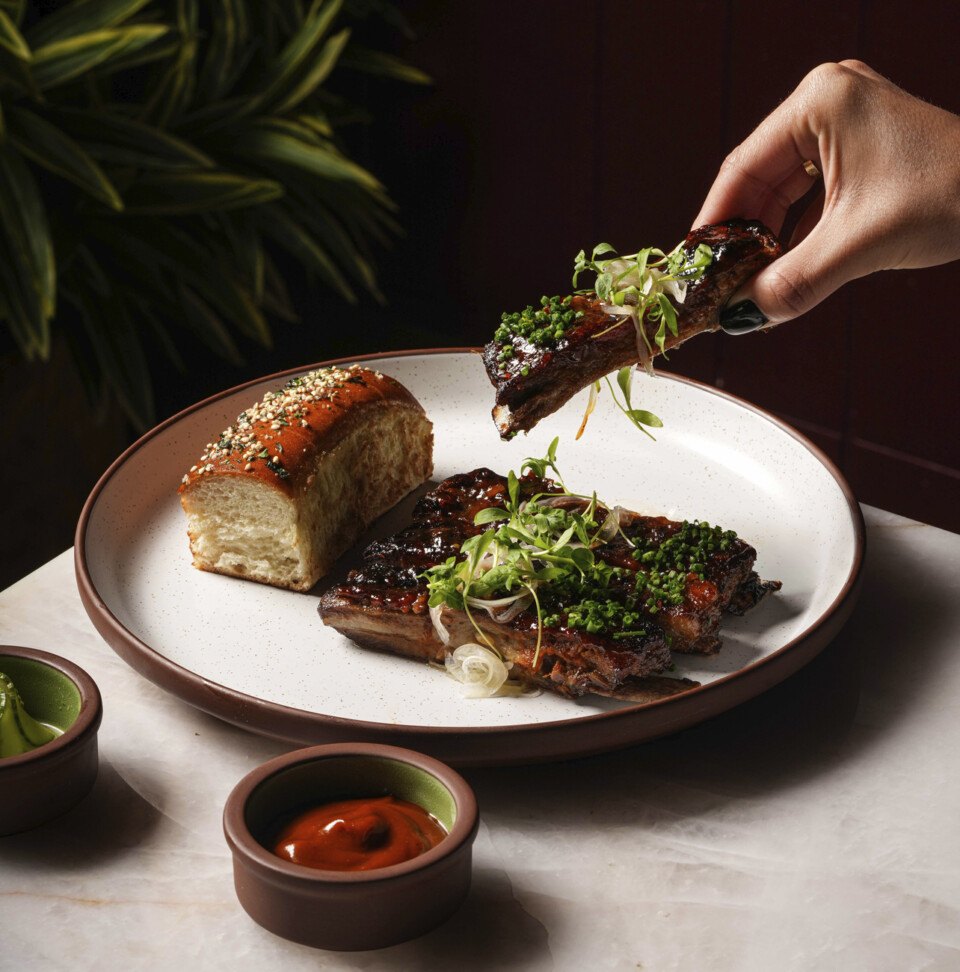
Lamb ribs with jerk barbecue at Las’ Lap / Photograph courtesy of Las’ Lap
Brunch at nearby Bon Bouquet Cafe. The French restaurant with a Turkish twist has crepes that can be prepared gluten-free on request. Here on a Sunday? Shop for tchotchkes from the 1800s and 1900s at the Lincoln Road Antique & Collectible Market. For something more exhilarating, rent a Jet Ski from BouYah, near the Fontainebleau. Book dinner at Las’ Lap, celeb chef Kwame Onwuachi’s buzzy Afro-Caribbean restaurant serving doubles, a killer Caledonia prawn cocktail with Creole sauce and furikake, and spicy “peppa” sauce to pour on everything. And for a nightcap, try Sweet Liberty. Grab the behind-the-bar table (it’s first come, first served and costs nothing but your drinks) for a different view of the lively scene.
On View

An installation by Robert Hunt at the Institute of Contemporary Art / Photograph courtesy of Richard Hunt at Institute of Contemporary Art Miami
Need a break from the beach? Visit one of these museums and gardens.
1. The Wolfsonian, in South Beach, focuses on design and decorative arts. “World’s Fairs,” on view through March 1st, includes retro posters from the former Pennsylvania Railroad Company showcasing its direct routes to the New York events.
2. The Design District’s Institute of Contemporary Art is free and open Wednesday to Sunday; check out its exhibition of work by American painter Joyce Pensato (who blends abstract and pop art) and the sculpture garden.
3. At the Museum of Graffiti, in Wynwood, expect outdoor murals, a fine art gallery, a gift shop, and graffiti-drawing classes for kids led by local artists.
4. Explore the idea of perspective at the contemporary Bass Museum, in Collins Park, with a new solo exhibition by multihyphenate artist Jack Pierson.
5. The Miami Beach Botanical Garden is free to visit and, in addition to its native and exotic plants, offers bonsai workshops, forest bathing, and tea ceremonies.
Published as “Escaping to Miami” in the February 2026 issue of Philadelphia magazine.