Jamel Workman Is Bringing High-Fashion Hat-Making Back to Philly
Each piece is handcrafted with the same tools and techniques used a century ago.
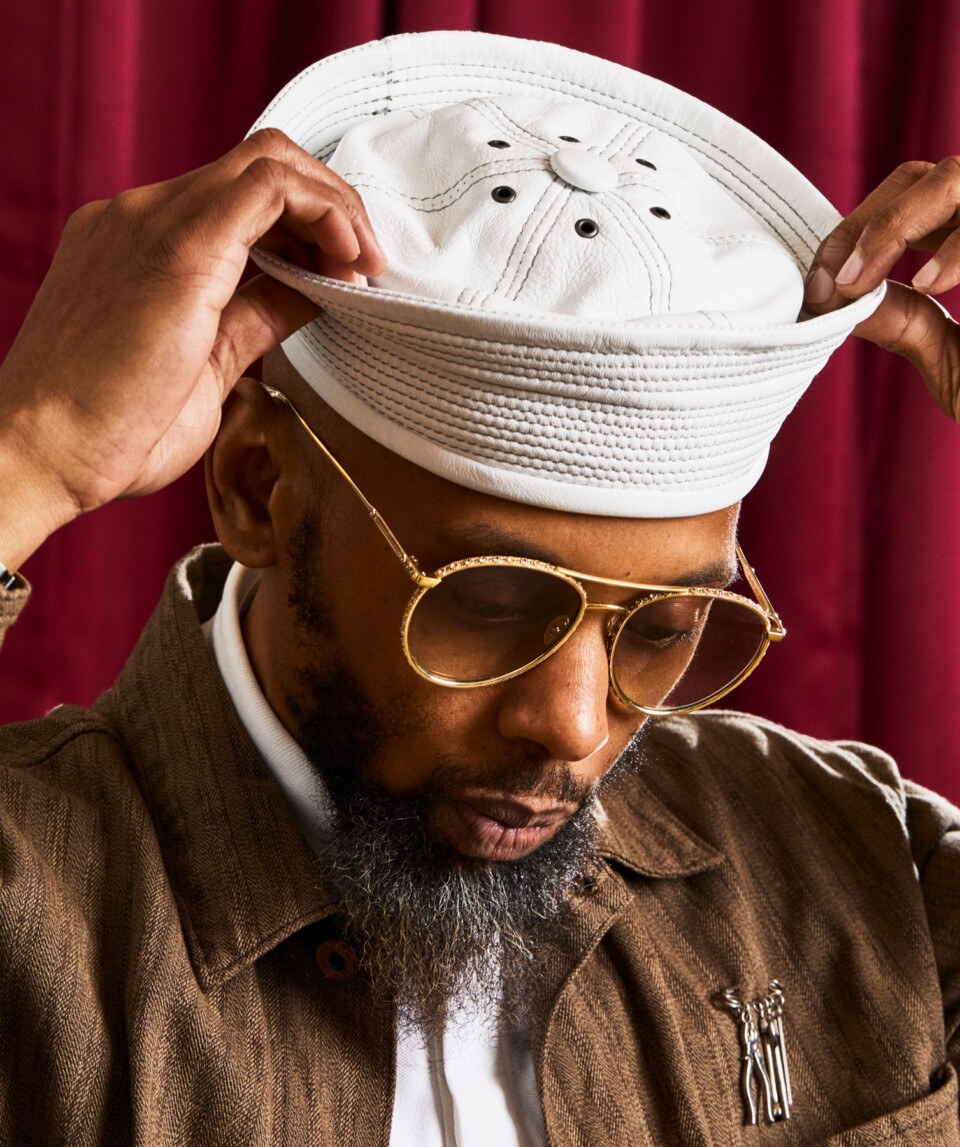
Jamel Workman / Photography by Aaron Richter
When Jamel Workman first set out to make a hat for himself in 2014, he didn’t realize that the process would eventually turn into a business. Now, his eponymous company, based in West Philly, turns out spectacularly cool pieces, each one handcrafted with the same tools and techniques used a century ago, back when our city was a mecca for millinery.
But Workman’s hats also tell his own history. His Regal Runaway liner — woven with a common image from ads offering rewards for runaway enslaved people — was influenced by his own incarceration when he was 16. “Despite my circumstances, I ran from it and never looked back — the regal runaway.”
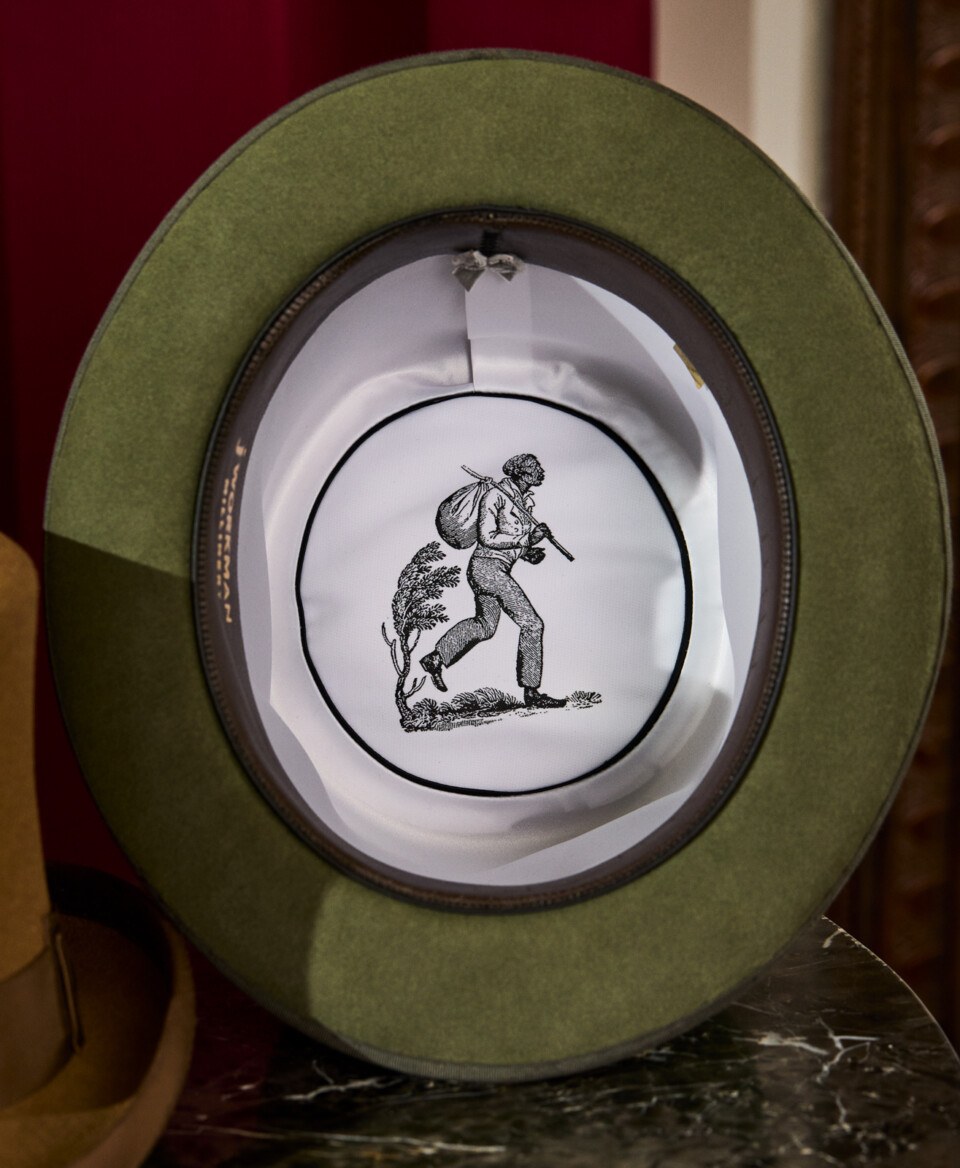
Workman’s Regal Runaway silk liner
What I do: I’ve been making hats for about 12 years. I’ve also had a barbershop, Workman Gentleman’s Shoppe in West Philly, since 2009. My studio and showroom, J Workman Millinery, is in the back, where I custom-make traditional Western and dress hats, plus a lot of military styles.
Why hats? My grandfather wore a lot of hats, and he was the best-dressed man I knew. I realized how important a hat was to an outfit, and how much of a story it told. I always say that you don’t really recognize a witch until their hat is on, or a wizard without a conical hat, or a magician without a top hat. Same thing with a king, a chef, and so many other occupations and characters. The hat is what completes the story.
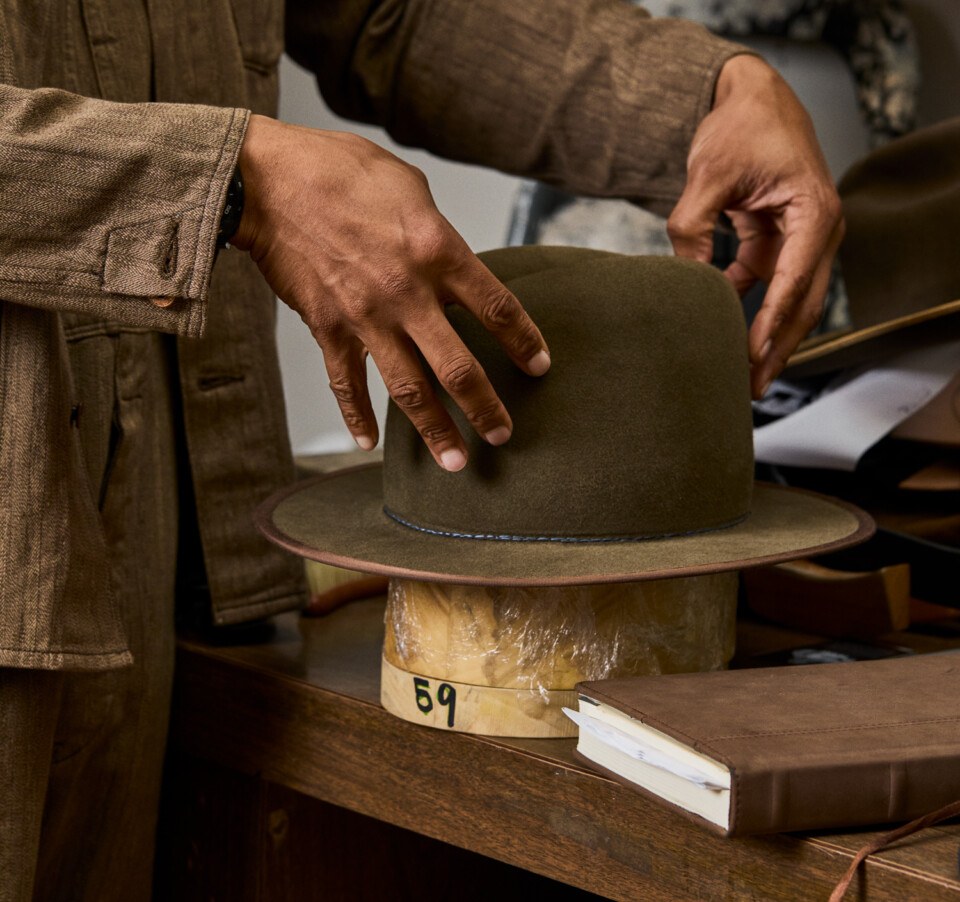
Jamel Workman molding the crown of a beaver felt fedora
My mission: To bring the art of hat-making back to Philadelphia. Millinery was a really big deal here from the late 1800s up until the late ’60s. The Stetson Company was built here; we’re the birthplace of the cowboy hat. But a lot of the older milliners are passing away, and it’s becoming a lost art.
My journey: I started with an internship in 2016 at American Hats in Frankford, one of the last remaining hat factories in the country. (It used to be the S&S Hat factory.) I learned how to block hats and other different techniques there, and after that, I was able to travel and learn from some of the best makers in the world. I just wrapped up a year as one of the designers in residence at the Philadelphia Fashion Incubator, which was so helpful in connecting me to industry experts.
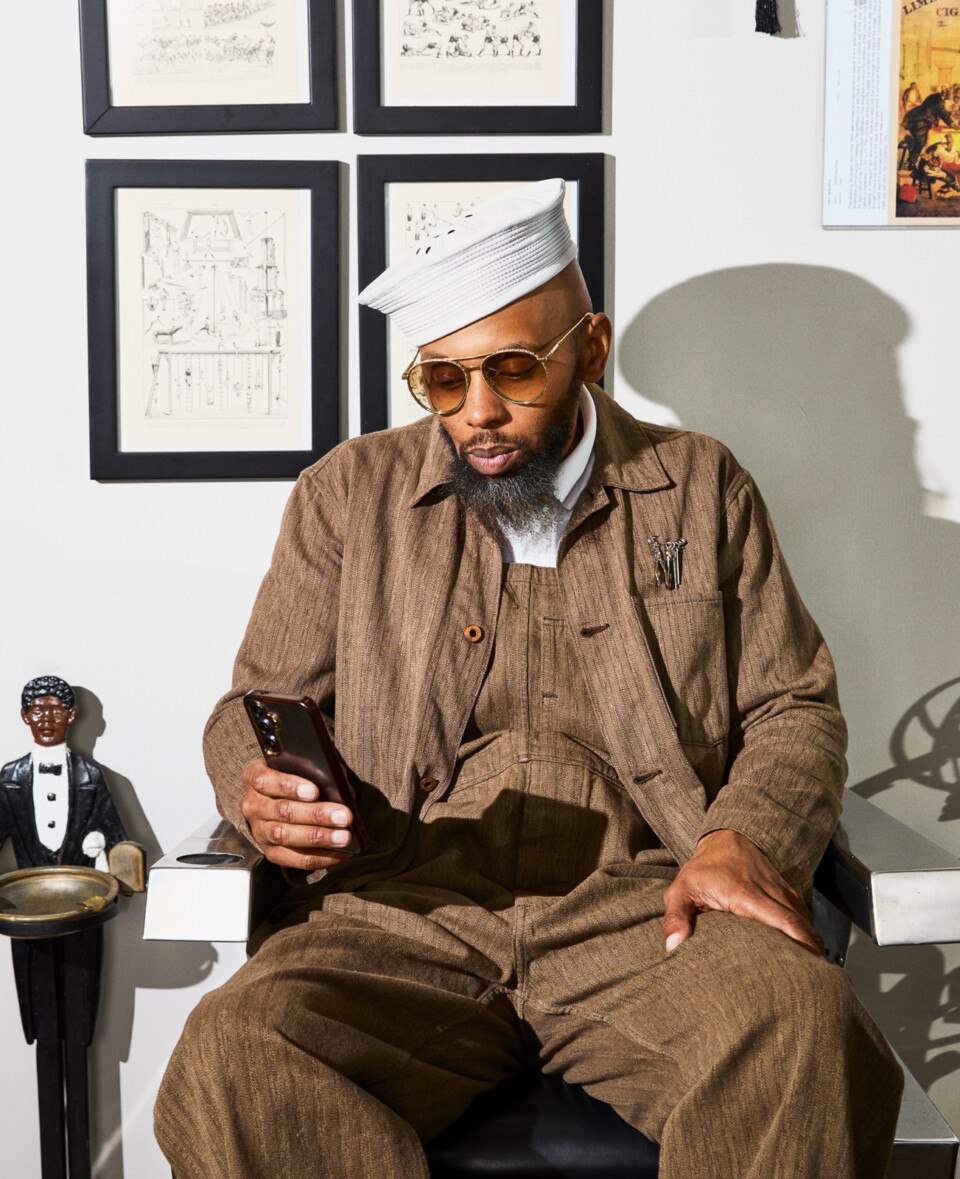
Workman in his studio, wearing a leather sailor-style cap
My process: It’s very technical. You take a blank felt — I use rabbit or beaver, which I get from a distributor in the Poconos — and mold it over a wooden block with steam. Then you add the sweatband and lining, and trim the brim. These are the same traditions from a hundred years ago. The tools and techniques haven’t changed. It’s very therapeutic.
The customization: It all begins with a consultation at my shop, where we talk about how and where you’re planning to wear your hat, take measurements, and choose the material and trim. Then it takes me about three to five weeks to build your creation. They start at $500.
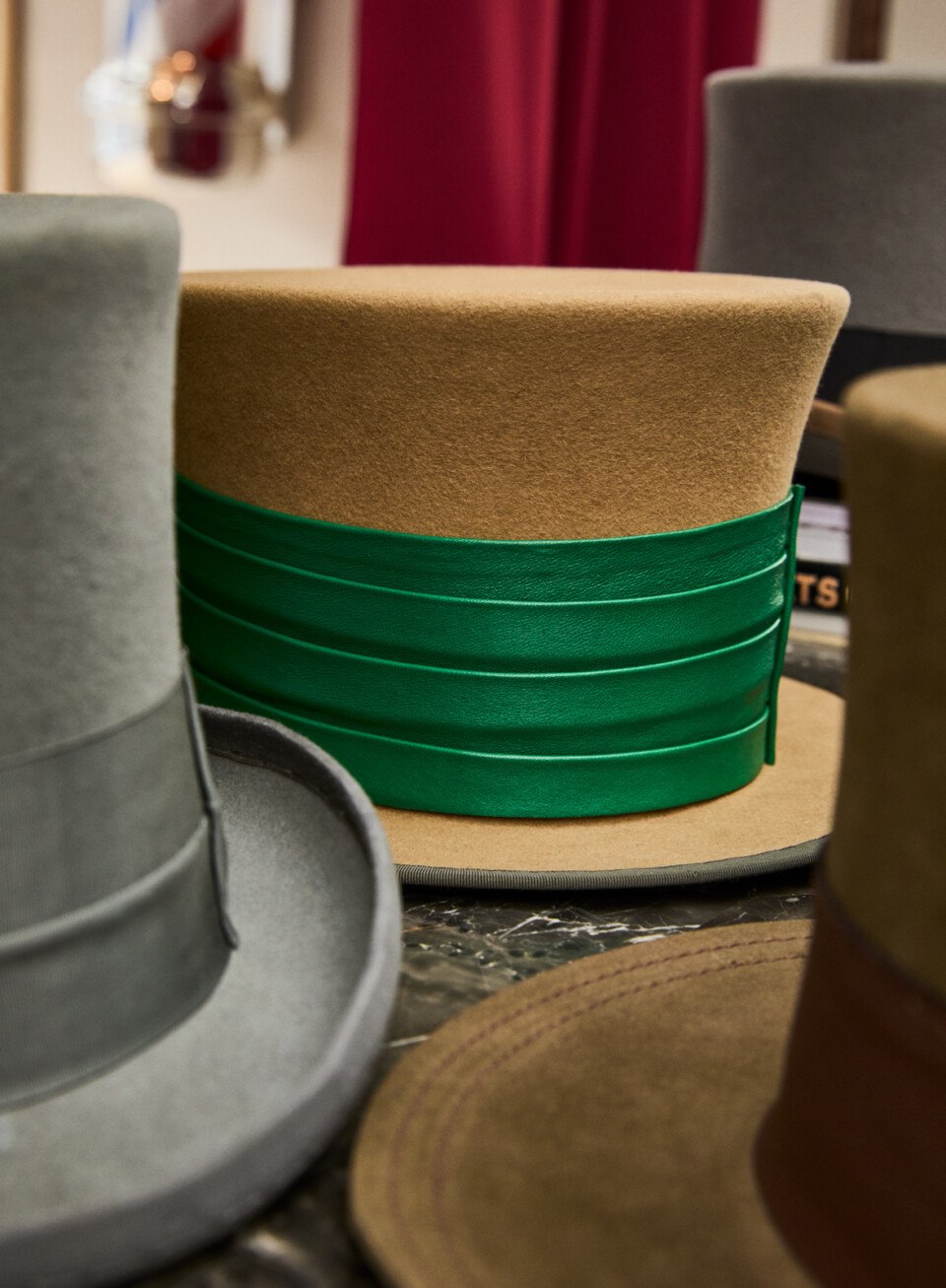
An assortment of Workman’s styles
This month: I was the first male designer featured at the Great American Hat Show, in Harlem, which was founded in 2016. It’s awesome because my main goal is to push the art form forward so it doesn’t die.
5415 Market Street, West Philly
Published as “Crowning Glory” in the June 2026 issue of Philadelphia magazine.