


When a Routine Pregnancy Scan Changed Everything, This Couple Finally Found Hope
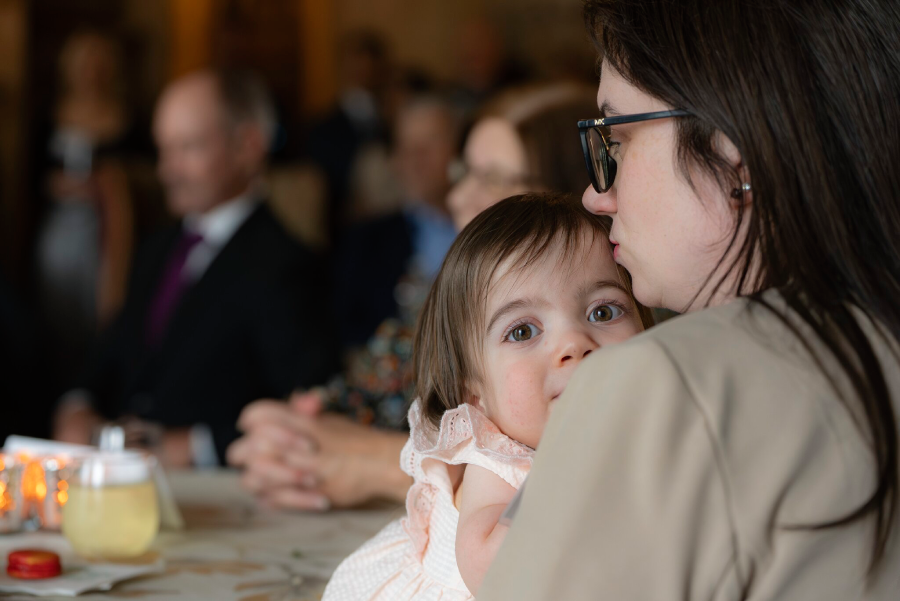
At 20 weeks, Liz Young expected a routine scan.
Instead, it became a moment when everything changed.
As the scan continued, something wasn’t quite right.
“My OB-GYN told us her long bones are measuring behind her gestational age,” Liz shares. “They said, ‘We have cause for concern, she’s not growing.’ And we were referred to high risk.”
What that meant for Liz and her family was that within days of her scan and discussion, they now found themselves navigating unfamiliar territory: new specialists, new terminology, and an overwhelming number of unknowns.
“I was just a wreck,” Liz remembers. “Pregnancy is already anxiety-inducing. I was really looking forward to some sense of normalcy I felt like I missed with my first pregnancy during the pandemic, and then this was quite the opposite.”
After her referral, Liz met with several doctors to try to understand what her baby’s diagnosis was. With each test, weeks passed before the results came back, and each time it only seemed to raise more questions and uncertainty.
“When they finally called me and said my results were in, I was in my 26th week,” Liz says. “They offered to find me a clinic that could terminate my pregnancy. I was like ‘wait, what are we looking at here?’”
Liz’s baby, Grace, had a mutation in the COL2A1 gene. Her hospital shared that the specific genetic change had never been documented. She was sent home with an article to try to better understand what it could mean for her baby’s life, but it left her with even more questions.
In search of answers, Liz began reaching out to hospitals across the East Coast. She called multiple children’s hospitals and connected with dozens of social media groups before reaching Mary Ellen Little, an RN and specialty nurse at Nemours Children’s Hospital, Delaware.
“She gave me so much information that nobody else could,” Liz recalls. “Their level of confidence at Nemours to say ‘we know what this diagnosis is and we know what to expect for your baby’s life,’ no one had said that to me yet.”
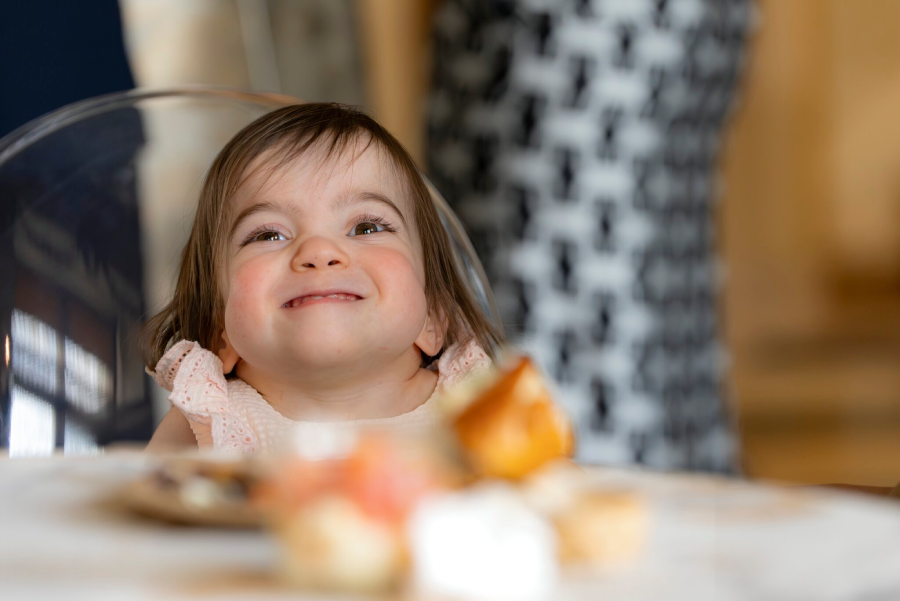
The other key aspect, Liz notes, was Nemours’ ability to treat her daughter prenatally.
“It’s not just about dropping the diagnosis,” says Dr. Julie Moldenhauer, Executive Director of the Institute for Maternal Fetal Health at Nemours Children’s. “There are so many nuances in pregnancy management that are involved when you make a fetal diagnosis–the pregnancy management can change significantly.”
As a triple-board-certified maternal-fetal medicine specialist and reproductive geneticist, Dr. Moldenhauer helps families navigate complex diagnoses and what comes next.
“I think the biggest thing that sets Nemours apart is we have expertise at the ready,” notes Dr. Moldenhauer. “We try to provide answers when things feel ambiguous. Sometimes outcomes present on a wide spectrum, and that can make things a bit more challenging, but we do our best to support families and the decisions they’re making with our experience and data.”
Dr. Moldenhauer notes that many families, like Liz Young’s, travel from states away to come to Nemours for subspecialists and long-term care.
“We want to provide a window into what life looks like for these families,” she says. “We discuss what the newborn stage may look like, and what comes next at two years old, in kindergarten, and beyond.”
For the Young family, having both peace of mind and a plan for the future was invaluable. That kind of clarity is intentional, says Dr. Margaret Chou, Medical Director of the Advanced Delivery Unit and Division Chief of Obstetrics at Nemours Children’s.
“I think that active listening, confirming facts, and sharing expertise all contribute to families feeling supported and informed,” says Dr. Chou. “Having multidisciplinary conversations is important, so that where I reach the edge of my lane, another specialist is able to continue the conversation.”
Dr. Chou’s team delivered Grace. But for Liz, what stood out went beyond the delivery itself. It was how the team supported the entire family.
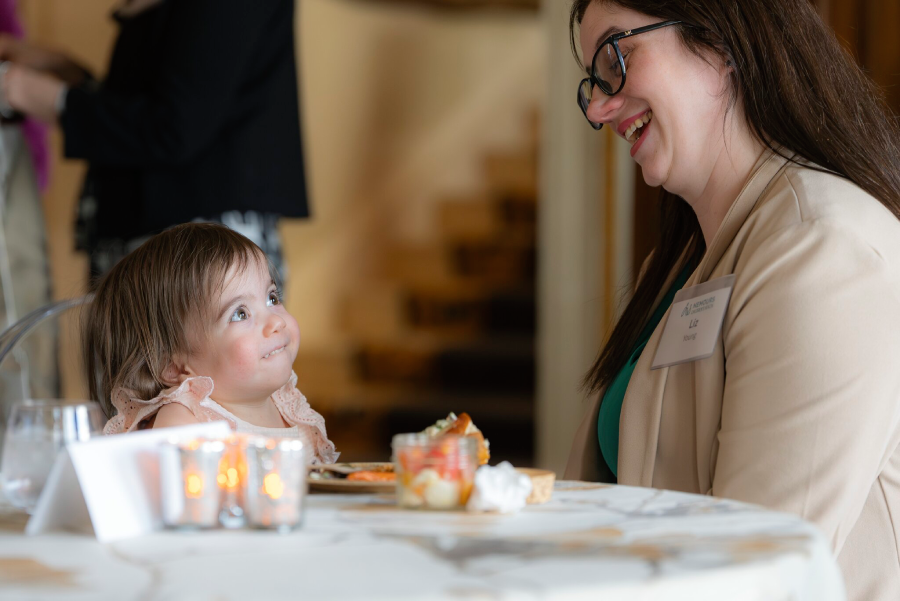
“When you have a medically complex kid, the experience doesn’t just happen to the mom,” says Liz. “Nemours was there for my husband and my daughter so I could focus on Grace.”
That’s a point the Advanced Delivery Unit prides itself on, notes Dr. Chou.
“We try to normalize the birth process wherever possible and listen closely to what is most important to that individual and that family,” she says. “Our unit supports the overall experience with a calm and welcoming atmosphere, and with spaces designed to process information and seek healing and wellness.”
Now, a happy two-year-old, Grace Young continues to visit Nemours to see her specialists every couple of months. Liz notes that the continued support from Nemours inspires her to advocate for her daughter even as they navigate their hospital closer to home in New York.
“I will fight tooth and nail for her,” says Liz. “Knowing the team at Nemours has my back has really helped me in that way. Finding the right physicians, ones who will collaborate with Nemours, so they know how to care for Grace, that’s the best tool in my pocket.”
That kind of support does more than guide decisions. It helps families move forward with clarity and confidence.
When your pregnancy requires more specialized support, Nemours Children’s offers coordinated maternal-fetal care designed around you. Learn more at nemours.org/mfh.