
A Love Letter to the Pine Barrens
Born and raised among the pitch pines and sugar sand, local author Kim Kelly shares what it was like to grow up as a Piney in New Jersey's hidden ecological wonderland.
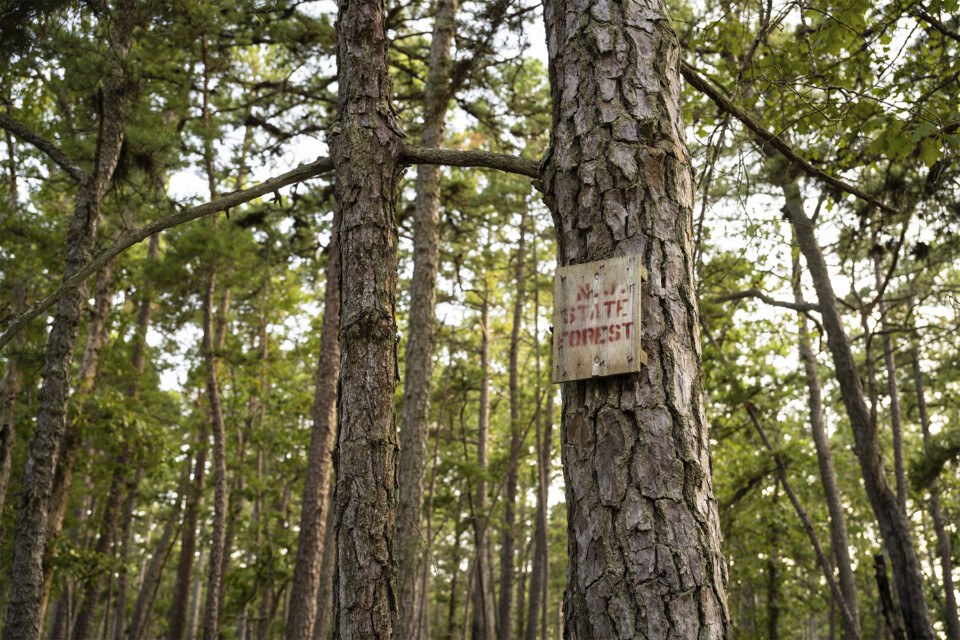
A life of wonder in the Pine Barrens / Photography by Kyle Kielinski
Whenever I tell people from outside of the Philly–South Jersey nexus that I grew up in a nature preserve, I know exactly what their next reaction will be: pure confusion. A squint, a wrinkled brow, then the inevitable question: “But, wait, I thought you said you’re from Jersey?” Visions of The Sopranos, Bruce Springsteen, and MTV’s Jersey Shore (ugh) dance in their heads. At that point, I’ll pull up a map to show them the deep green splotch that sits just below the Garden State’s elegantly cinched waist, zooming in, closer and closer, until all that’s visible is a single line of road snaking through the forest, and then — there.
“That’s my parents’ house,” I’ll explain, giving them a moment to find the tiny dot of civilization bobbing in an ocean of solid woodland. “Wow, I had no idea something like that even existed,” they’ll respond. Then, if they seem genuinely interested, I’ll share the secret of the Pine Barrens: that, barely an hour’s drive from Philadelphia, there lie more than a million acres of majestic pine forests, extraordinary wetlands, and historic berry farms nestled smack-dab in the middle of the nation’s most densely populated state — and, yes, people live there.
Not many of them, to be sure — roughly 870,000, less than one person per acre — but those woods are far from empty. The Pine Barrens of New Jersey are an ecological wonderland, inhabited by extraordinary plants and endangered wildlife, hidden in plain sight and protected under the auspices of the Pinelands National Reserve, the nation’s first. You can read about all that elsewhere in this feature, though; I’m here to tell you what it’s like to actually live there, to understand this place, to absorb its wilderness.
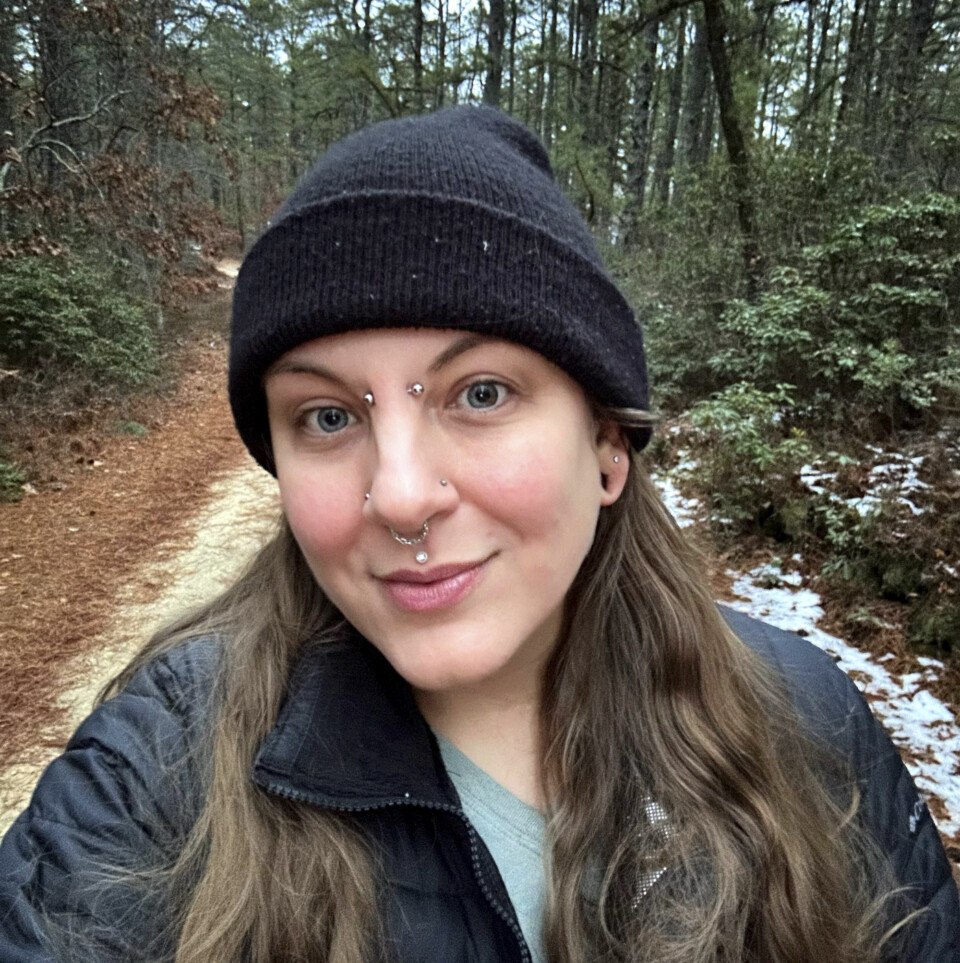
Writer Kim Kelly
Technically, I’m a first-generation Piney, born and raised among the pitch pines and sugar sand. Historically speaking, the word “Piney” was a term — really, a slur — for the poor homesteaders who scraped a subsistence-level living out of the Pine Barrens by hunting, fishing, foraging, and selling produce, florals, and handicrafts to outsiders (think “redneck” with a regional twist). Now, it’s the kind of word that leads locals to proudly slap “Piney Power” bumper stickers on their pickups, and that might earn anyone else who uses it a slap upside the head.
In 1913, New Jersey Governor James Fielder called on the state to “segregate and sterilize” New Jersey’s Pineys, denigrating them as “degenerates” (and no, we haven’t forgotten). The stereotype of the half-wild, barbarous Piney has haunted our woods ever since, along with tales of smugglers, poachers, ghost towns, and, of course, our very own cryptid, the Jersey Devil — a demon-like creature with the head of a kangaroo, cloven hooves, and bat wings, whose hair-raising screeches have cut through the quiet nights since 1735. If, like me, you’re the kind of bookish little nerd who loves reading horror stories and history books, it’s a pretty great place to grow up.
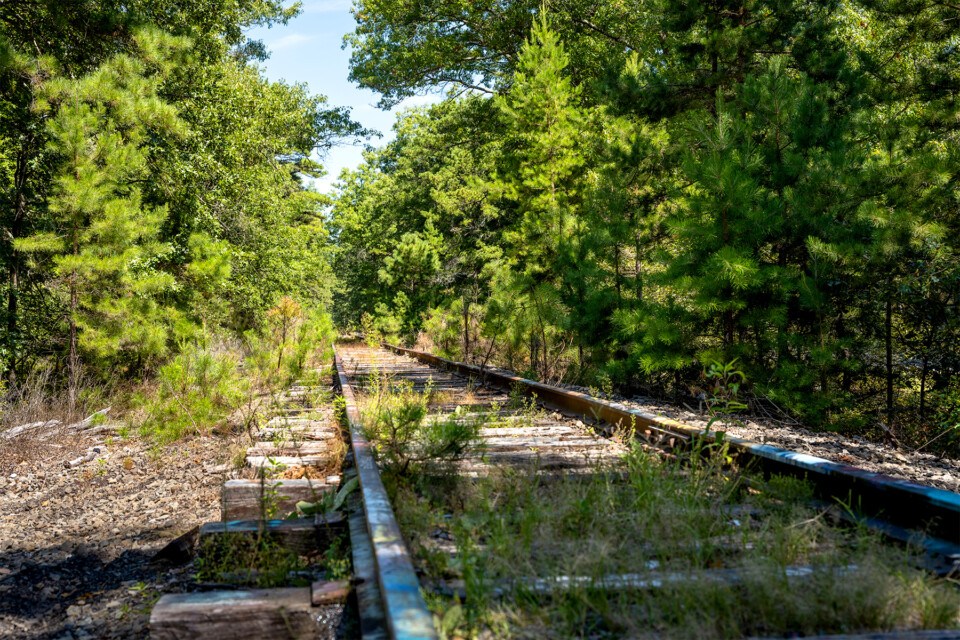
My hometown, Chatsworth, was once a bustling village, complete with a railroad station and a country club that hosted the likes of the Astors and the Vanderbilts. In the 18th and 19th centuries, it was a hub for local manufacturing; our trees were fed into hungry sawmills and burned to charcoal to heat the furnaces, and our bog iron was used to make cannonballs for the Revolution. Now, our antioxidant-packed cranberries and blueberries are used to wage war on free radicals, and the only store in town just closed (again).
My parents moved to Chatsworth as newlyweds in the 1980s, a good few years before I joined the party. They got their house for a song, so my dad, ever the curmudgeon, ponied up for the lot next door too. He didn’t want anybody living too close to him.
When you live out there, though, that’s not really much of a concern; as of the 2020 census, the population of our entire township, Woodland, was 1,544. There were even fewer people living there when I was growing up. My school, Chatsworth Elementary, went from kindergarten through eighth grade. There were about 20 kids in each class. From sixth grade onward, my girlfriends and I had to rotate our crushes — there were simply too few cute boys to go around, and even then, it was hard to get worked up over someone you’d known since he was a snot-nosed five-year-old.
Chatsworth existed within its own self-contained bubble. When you live that far from everything, your definition of “close” stretches out like saltwater taffy, until anybody within a five-mile radius might as well live next door. When I was a kid, I never bothered to learn how to ride a bike. Where would I go? The trails out back behind our house were all sand. If I wanted to go play in the woods, a bike would just slow me down.
We got only a few television channels then, but I didn’t mind; Piney kids in the ’90s had plenty of entertainment options right outside our front doors. The trails out back were my playground, my dad’s floppy old hunting dogs my babysitters. I spent hours doing soccer drills in our front yard, chasing bugs in the garden, and reading books in the shade of the many trees that ringed our house. After I read my dad’s dog-eared old copy of The Jersey Devil, I was always half-expecting the cryptid itself to come join me. My grandma once told me she’d seen him in the woods late at night, and she wouldn’t lie to me … right?
In the summer, I set box-and-carrot “rabbit traps” hoping to snag a pet bunny, and played queen-of-the-mountain among the pokeweed. My best friend’s dad owned a blueberry farm and would take us for rides through the sweet-scented rows on hot days; at home, I picked handfuls of the huckleberries and blackberries that grew in thorny clumps out back. Autumn was cranberry season, when every farm stand and local shop filled up with crimson-hued pastries, and the Cranberry Festival took over the entire town for two days. In winter, when it snowed, my sister and I tumbled after each other like puppies into the powdery drifts; when Chatsworth Lake froze over, my dad took us “ice-sliding” on its slippery surface.
Beyond school, sports, and the usual household chores, my main responsibilities were gathering kindling for our wood-burning stove when it was cold, and shucking ear after ear of pearly white sweet corn when it was in season. Spending time in the great outdoors was as natural to our family as breathing. My dad, both granddads, and all of my uncles spent all their free time hunting and fishing, and encouraged their offspring to spend as much time outside as possible. My grandparents were big hikers, canoers, and kayakers, so my sister and I spent countless hours tramping around in the woods and on the water with them, and as a certified daddy’s girl, I always tagged along when my dad went out to feed the deer or check on his traps. The bug bites, muddy shoes, and tangled hair were always worth it, as far as I was concerned. (My mom, who was more of an indoor type, was generally less enthusiastic about dealing with the aftermath of her half-wild progeny’s exploits.)
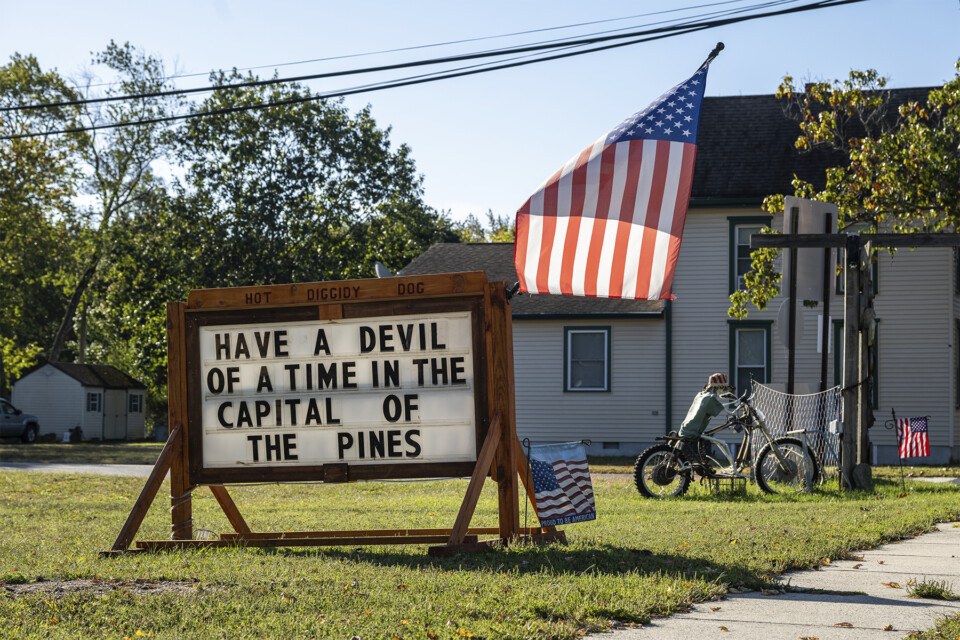
You can’t do those sorts of things in the city, but civilization does have its perks. As I got older, the pine-scented, isolated dream world we inhabited began to feel a little less idyllic. Chatsworth still clings to its designation as the “Capital of the Pines,” and that history truly is something to be proud of, but it can be difficult to keep that in mind when you’ve got to drive 30 miles to the nearest grocery store. Chatsworth, like many rural Pineland communities, lacks basic infrastructure; there’s still no trash pickup, cell phone service is spotty, and unpaved dirt roads abound. We don’t have a public library, but Burlington County still sends out the trusty little bookmobile every Tuesday. You can get the internet now, which is an exciting development, and my parents have finally gotten ahold of one of those infernal satellite TVs we used to hear so much about, but it still feels like a different planet compared to my current residence in South Philly, let alone London or Paris. I still remember how strange it felt when my parents got a mailbox, with a mailing address and everything.
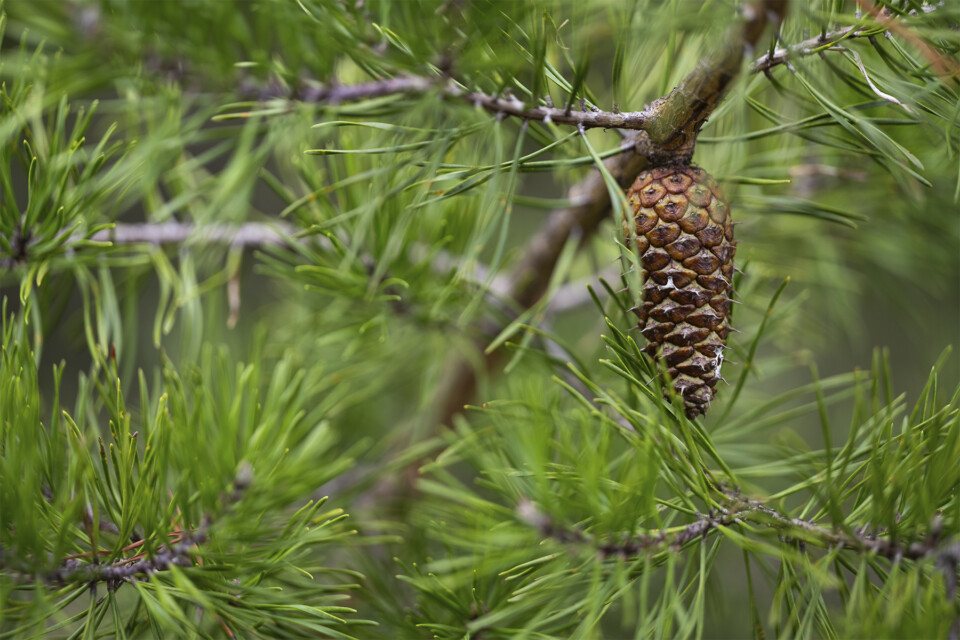
There’s still no police force, which is really more of a perk, but there’s also no permanent fire department, which is very much the opposite. When the trees outside turn to matchsticks, it would be nice to know that there are at least a couple of professional firefighters within driving distance of our house, instead of relying on someone’s dad from Browns Mills to save us. Forest fires are a fact of life in the Pine Barrens and are part of the unique natural ecology of the area. The sturdy, scaly pitch pines that blanket the region literally can’t function without fire: In a quirk of evolution, their seed-bearing pine cones open only when exposed to intense heat. Even the trees are a little freaky out here.
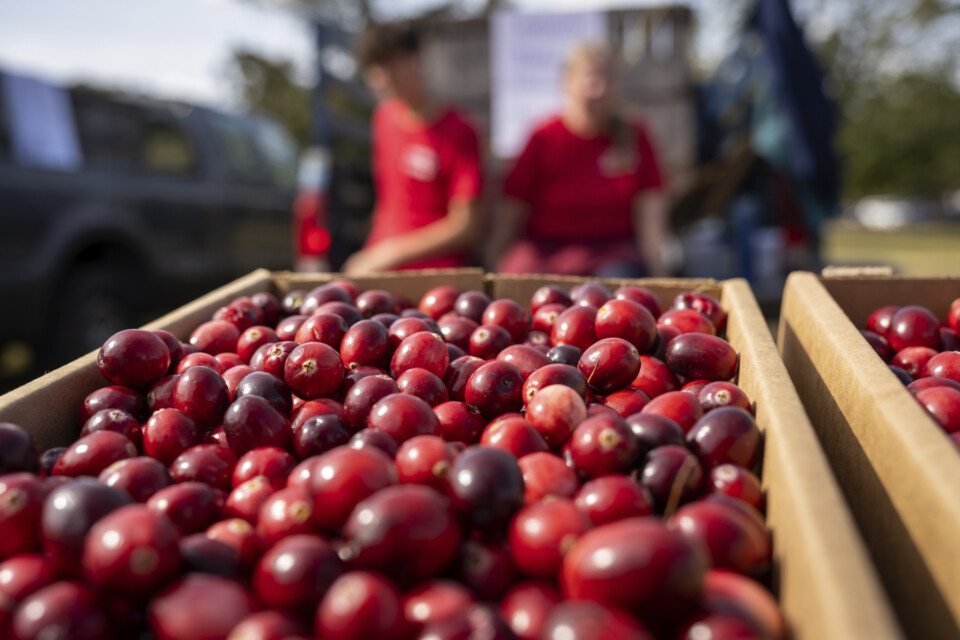
Chatsworth Cranberry Festival
Add in the sandy white soil (“sugar sand” in local parlance), the tannin-rich water that dyes our lakes and creeks the color of strong black tea, and strange creatures like peeping tree frogs, acorn-hucking squirrels, and our many fine varieties of snakes, and the Pines can feel like an alien landscape. Its weirdness is one of my favorite things about it. The other is its resilience.
The original Indigenous inhabitants of this area were careful stewards of the land, and used controlled burns to keep the fragile environment in balance. Summer is when the omnipresent Smokey Bear wildfire signs start turning their nervous oranges and scary reds. The bear’s not bluffing; every year, thousands of acres go up in smoke, from either natural causes or, increasingly, human error. Thankfully, only one major fire came close to our house when I was small. For years afterward, if you looked into those woods, all you’d see was jagged, blackened tree trunks and tiny green saplings poking their heads out from the underbrush. Eventually, it was all green again.
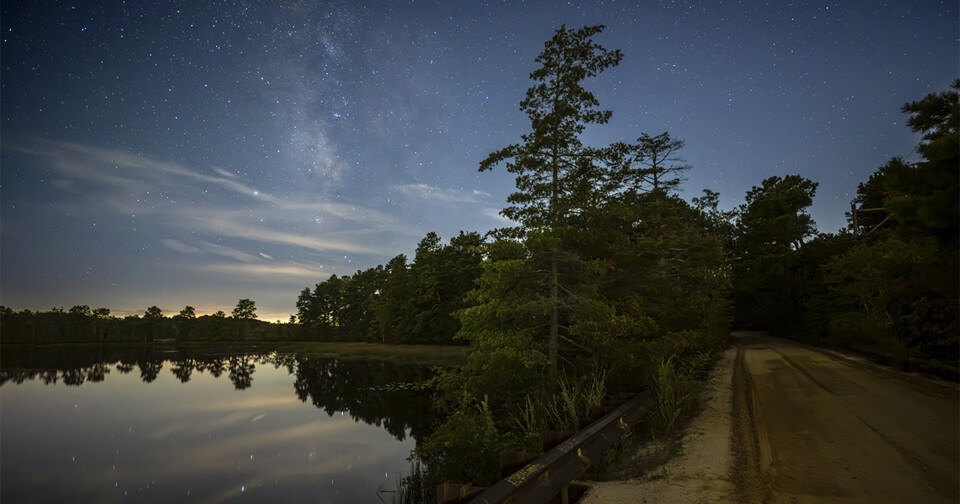
When I go home to visit, my parents’ house is the same, give or take a few chickens (the goddamned coyotes are back again). My dad’s shed out back is still full of butcher paper, venison steaks, and fox pelts. Those same fire-tested trees are still out front, with the next generation coming up quickly behind them. The same copper- tinted cedar swamps nurture the same weird and wonderful plants — carnivorous little monsters like sundews and pitcher plants and other mysterious blooms I still can’t identify. When night falls and all goes quiet, the same stars shine hard in the velvet black. The same whippoorwill calls echo through the lightless dark. The same otherworldly feeling — that out here, you are somewhere special, and precious, and strange — still hangs in the clean, sweet air.
That’s the magical thing about pine trees. Fire after fire, year after year, struggle after struggle, they always come back. The same can be said about the Pines themselves, and the people who call them home. Life here isn’t just about survival. It’s about learning to adapt and thrive, to find the beauty in the unexpected, and to appreciate this magnificent, peculiar place for exactly what it is. We may be living in our own little world, but we sure love visitors. What are you waiting for?
>> Click here to return to Secrets of the Pine Barrens
Published as “State of Wonder” in the May 2026 issue of Philadelphia magazine.