Living Kidney Donation—and The Team Giving Philly Patients a Faster Path to Transplantation
For patients diagnosed with kidney failure, the road to transplant can be long and uncertain. Many spend years on dialysis while waiting for a match, an exhausting routine of treatments that can dominate daily life.
Center Valley resident Christy King knows that reality firsthand. After the birth of her second child, doctors discovered her kidney function had dropped to about 30 percent. For years, she managed the condition while raising her family and teaching elementary school in Allentown.
Then, in 2021, her health began to decline rapidly. New tests revealed complete kidney and heart failure, and dialysis quickly became part of her daily routine.
Across the United States, thousands of patients like Christy remain on the transplant waitlist for a kidney. Traditionally, patients relied on a deceased donor match for a lifesaving transplant, but the wait can stretch for years, leaving dialysis as a necessary but demanding part of everyday life.
Living kidney donation offers a different path, one that can dramatically shorten wait times and improve long-term outcomes.
“If patients can get a living donor kidney transplant, they’re essentially shaving off five to seven years of wait time that they’d be waiting on the transplant list for a deceased donor,” says Ryan Ihlenfeldt, Director of Clinical Transplant Services at Temple Health.
Those years matter. Dialysis can take a significant toll on both health and quality of life.
“Patients are going to dialysis three days a week, four hours a day,” Ihlenfeldt explains. “It significantly decreases their ability to live a normal life. It impacts their ability to work and their ability to take care of their families.”
For Christy, dialysis meant reorganizing her life around treatment. Her father trained to help manage the treatments, preparing the machine each day so she could come home after work and begin dialysis.
It was the partnership between her doctors at St. Luke’s and Temple Health that ultimately changed her life.
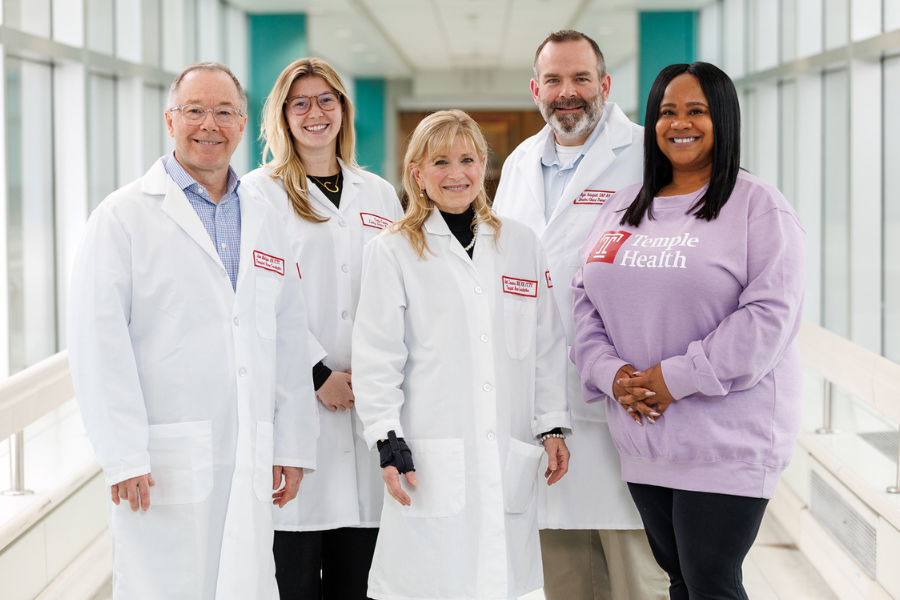
The coordinated transplant program at Temple Health helps patients and donors navigate the process together. The team includes transplant surgeons, nephrologists, advanced practice providers, coordinators, social workers, and donor advocates who work collaboratively to guide patients through every step of the process.
This multidisciplinary approach helps ensure patients receive not only expert surgical care, but also the education, support, and resources they need long after their transplant.
From Waiting to Possibility
For many patients, the transplant journey begins with years on dialysis while waiting for a deceased donor kidney. Christy was one of them, spending years managing dialysis while continuing to work and care for her family.
But dialysis is not a long-term substitute for a functioning kidney.
“The body doesn’t like dialysis,” Ihlenfeldt says. “The longer someone remains on dialysis, the more their overall survival and transplant outcomes may be affected.”
Living donor kidneys offer a meaningful alternative.
Because living donors are thoroughly screened and evaluated before surgery, their organs often function better and last longer than kidneys from deceased donors.
“With a living donor, we know they’re healthy,” Ihlenfeldt explains. “We know they don’t have hypertension or diabetes, and we know what their kidney function is. The likelihood of that being a successful transplant with more longevity is higher.”
Despite these benefits, many patients hesitate to pursue living donation. Some simply aren’t aware the option exists. Others feel uncomfortable asking someone to consider donating.
“It can be a hard thing to ask somebody,” Ihlenfeldt says.
To help overcome this barrier, Temple Health works with patients to share their stories in ways that can reach potential donors.
“We set our patients up with microsites through the National Kidney Registry that allow them to share their story,” Ihlenfeldt says. “What we’ve seen is that living donation happens when people share their story.”
When patients post these stories on social media or share them with their communities, the response can be powerful. Christy experienced that reality herself when she shared her story while searching for a donor.
“The more you share your story, the more likely you are to find a donor,” he adds.
Supporting Donors and Recipients
Temple Health’s transplant program is designed to support both recipients and people who consider becoming donors.
From the beginning, patients are evaluated by a multidisciplinary team to help determine what their journey may look like.
“They’re seen by nephrology and transplant surgery to understand if they’re a candidate,” Ihlenfeldt says.
The evaluation process includes imaging, cardiac testing, and consultations with specialists to ensure patients are prepared for transplant and for life afterward.
For patients like Christy, that coordinated approach can make the process feel more manageable, especially when care involves multiple specialists and long-term planning.
For living donors, safety and informed decision-making are central to the process.
“Living donors get a full medical evaluation just like the recipients do,” Ihlenfeldt says. “We evaluate them with nephrology and surgery to make sure it is safe for them to donate.”
Potential donors also meet with social workers and an independent living donor advocate who ensures they feel fully informed and free from pressure.
To make the process more accessible, Temple Health offers a streamlined evaluation model.
“One of the unique things we do is a one-day living donor evaluation,” Ihlenfeldt says. “Donors come in for a single day of testing, meet with nephrology in the morning, and see the surgical team in the afternoon.”
This approach allows donors to complete most of their evaluation in a single visit.
Temple Health also works to accelerate transplant timelines when multiple potential donors come forward.
“Many centers work through donors one at a time,” Ihlenfeldt explains. “We’ll work up as many donors as you have simultaneously so we’re not wasting time getting you to transplant.”
Life Beyond Dialysis
Sometimes donors can come from unexpected places.
When Christy’s first donation fell through, she was once again dependent on dialysis and facing a long wait for a deceased donor organ.
Through Temple’s living donor program, she ultimately received a kidney through an extraordinary chain of events.
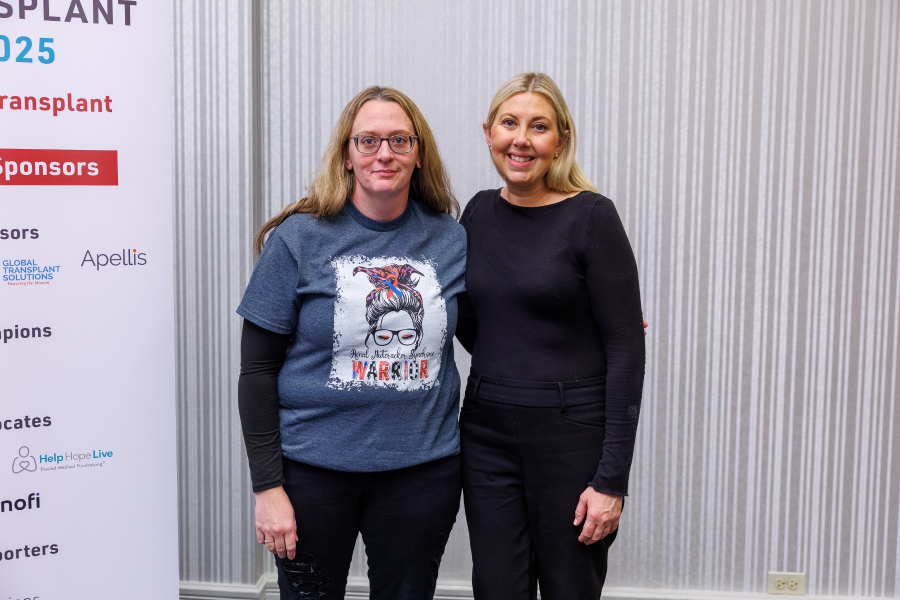
A patient suffering from Nutcracker syndrome, a rare vascular condition, had chosen to donate their kidney. When the transplant team ran compatibility testing, Christy was identified as the best match.
The two finally met during the Temple Kidney Transplant Symposium in 2025.
“It was interesting because normally when donors and recipients meet, one person gave and one person received,” Ihlenfeldt says. “In this case, they both gained something.”
The donor was relieved of the debilitating pain caused by Nutcracker syndrome, while Christy was finally able to move beyond dialysis and return to her life centered on family and teaching, not dialysis treatments.
At Temple Health, the transplant team continues working to create more of these moments by expanding access to living donation and supporting patients throughout the process.
To learn more about living kidney donation or explore whether you or a loved one may be eligible, visit Temple Health.
The Great Social Experiment
Temple is participating in a pilot program called The Great Social Experiment, which tests whether motivated volunteer strangers can help improve the chances of finding a life-saving kidney match—especially for people with limited social networks. The initiative is the first crowdsharing effort designed to support patients in need of a living kidney donor who may not have the resources or personal networks to share their story widely. The pilot is currently underway with 15 patients across three hospitals in Pennsylvania. To learn more, visit thegreatsocialexperiment.net/temple.
This is a paid partnership between Temple Health and Philadelphia Magazine