The GLP-1 Glow-Up: 5 Things People Notice After Major Weight Loss—and What Can Help

For many people, GLP-1 medications have changed what weight loss can look like and how quickly it can happen. What once felt impossible now feels within reach. Weight that once took years to lose can now come off in a matter of months.
While the results can be transformative, weight loss is just one part of the journey. Looking and feeling your best after GLP-1s often requires a more thoughtful, full-picture approach.
“The questions we hear most often are about safety, sustainability, and what happens after the weight comes off,” says Dr. Louis P. Bucky, founder of Bucky Plastic Surgery and Bucky Body Center. “Patients want to know if they will feel well on the medication, whether they can maintain their results long term, and how to avoid concerns like nausea, muscle loss, or weight regain.”
At Bucky Plastic Surgery and Bucky Body Center, those questions are addressed through a comprehensive, medically and aesthetically guided weight-loss program that goes beyond GLP-1 medications, integrating personalized support in nutrition, fitness, hormone therapy, and aesthetic care—an approach that remains relatively uncommon in today’s weight-loss landscape.
That shift in mindset—toward longevity, balance, and long-term results—is reshaping how patients and physicians approach weight loss today.
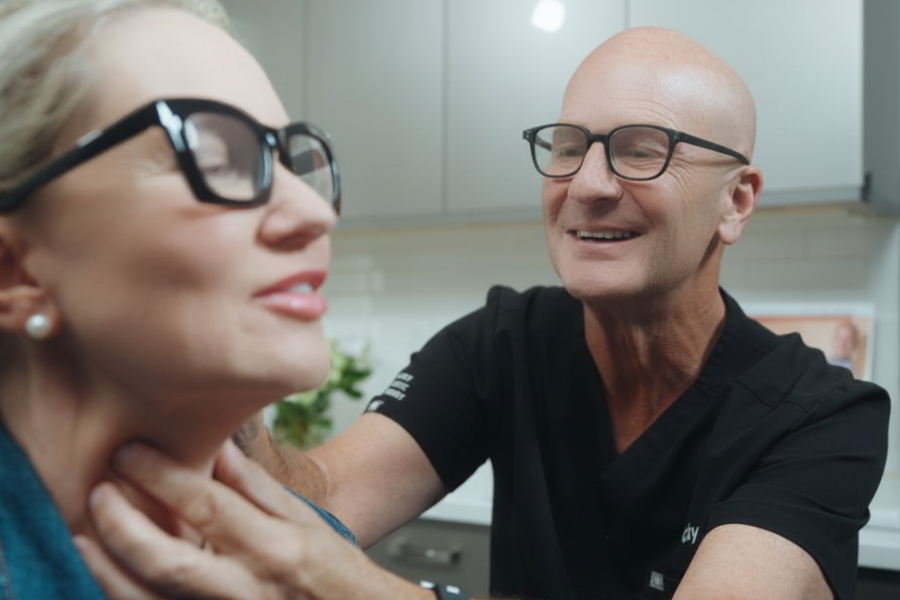
“A true transformation affects far more than body weight alone,” notes Dr. Bucky. “It can influence muscle mass, metabolic health, bone density, skin quality, facial volume, body contour, and overall energy. Patients do best when they are treated as whole people, with a plan that anticipates those shifts rather than reacting to them after the fact.”
For many patients, that realization comes after they’ve already reached—or even exceeded—their weight-loss goals. The number on the scale may be where they want it, but new changes, from skin laxity to shifts in facial volume, can leave them feeling like the journey isn’t quite finished.
Here are five of the most common changes people notice after major weight loss and how to address them here in Philly.
Skin Doesn’t *Quite* Snap Back the Way You Expect
One of the most visible changes after rapid weight loss is skin laxity, particularly in areas like the lower face and neck, abdomen, upper arms, and thighs—often the very areas patients are most excited to show off.
When weight comes off quickly, the skin doesn’t always have time to adjust, Dr. Bucky explains. As a result, patients often look for ways to refine and tighten without committing to surgery.
“Patients are often interested in treatments that refine contour and address skin laxity,” says Dr. Bucky.
Newer non-invasive treatments offer a way to smooth, sculpt, and tighten skin without the downtime of surgery.
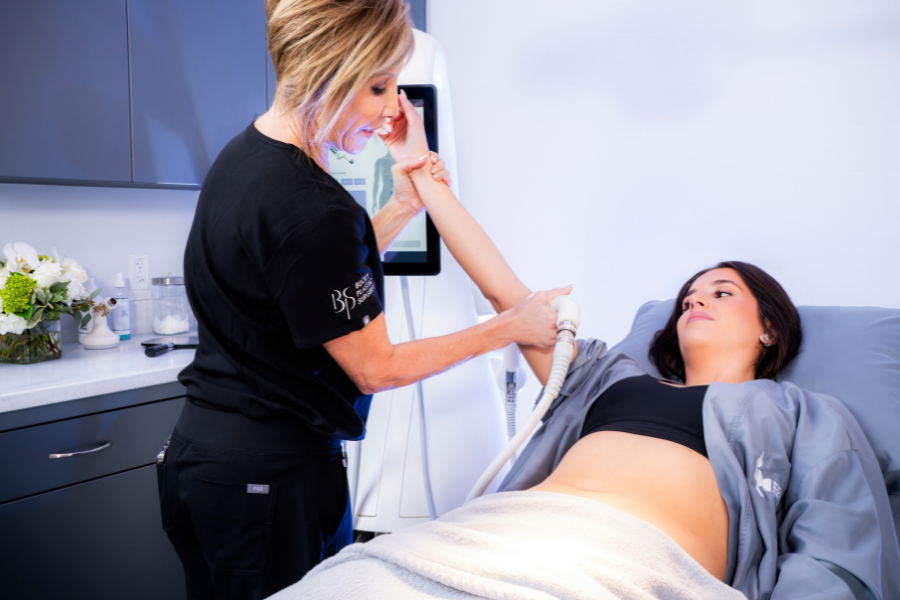
Options like T-Shape 2 offer a non-invasive way to contour and refine the body after weight loss. Developed in Italy, the treatment uses a combination of technologies to address both fat and skin, without downtime. It’s also not widely available in this region, making the Bucky Body Center one of the few places to offer it.
Morpheus8 Body works a bit deeper, using microneedling and radiofrequency to gently heat the skin and stimulate collagen production, helping improve skin firmness and texture. And, for addressing fine lines and more noticeable laxity, Ellacor Mirco-Coring removes tiny, precise amounts of excess skin through microscopic openings, allowing the area to tighten and smooth as it heals.
Your Face Doesn’t Match How You Feel
It’s one of the most talked-about side effects of GLP-1s. Weight loss can change the face in ways that aren’t always expected. As fat volume decreases and skin elasticity shifts, a more tired or hollow appearance can emerge.
When facial volume loss and skin laxity become more pronounced after weight loss, surgical options may offer a more complete solution. In those cases, a well-performed face and neck lift can help restore structure and address the gravitational changes that occur over time. Dr. Bucky often pairs his advanced facelift technique with Nanofat to rejuvenate the neck and improve overall skin quality, helping create a more refreshed, natural-looking result.
And, while dermal fillers, neuromodulators, and biostimulatory injectables can help restore subtle volume and balance after weight loss, volume is only part of the picture. Weight loss can also affect skin quality, leaving it thinner, more delicate, or less resilient than before.
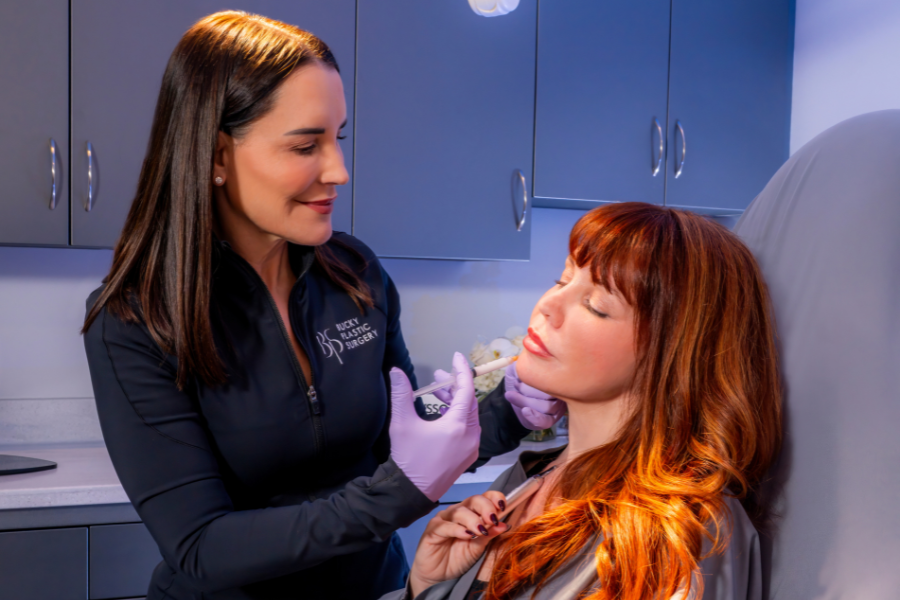
For patients looking to address those changes, regenerative options like Nano Smooth micronized fat grafting, offer a more natural approach. The treatment uses a small, carefully collected amount of the patient’s own fat, refined into a cell-rich solution that helps improve texture, elasticity, and overall skin quality.
“It’s called Nano Smooth because the fat is processed down to a microscopic, nano-sized level, allowing it to glide beneath the skin without visible particles,” explains Dr. Bucky. “This exceptionally fine consistency makes it safe for the thinnest skin areas, including the lower eyelids and the fragile skin of the neck. It creates a remarkably smooth, refined surface once the treated area has healed.”
Muscle Matters More Than the Number on the Scale
Beyond aesthetics, one of the most important considerations during GLP-1 weight loss is preserving lean muscle. Rapid weight loss can lead to a loss of both fat and muscle, which can impact metabolism, strength, posture, and long-term health if not carefully managed.
Without proper medical guidance and a comprehensive approach, it’s not uncommon to reach your weight loss goals and still feel underwhelmed by the results.
At the Bucky Body Center, weight loss plans are supported using DEXA scanning, an advanced technology that looks beyond the scale to measure lean muscle, visceral fat, and bone density. Typically only available in hospitals or elite athletic settings, it’s one of the few private places in the region where patients can access this level of insight.
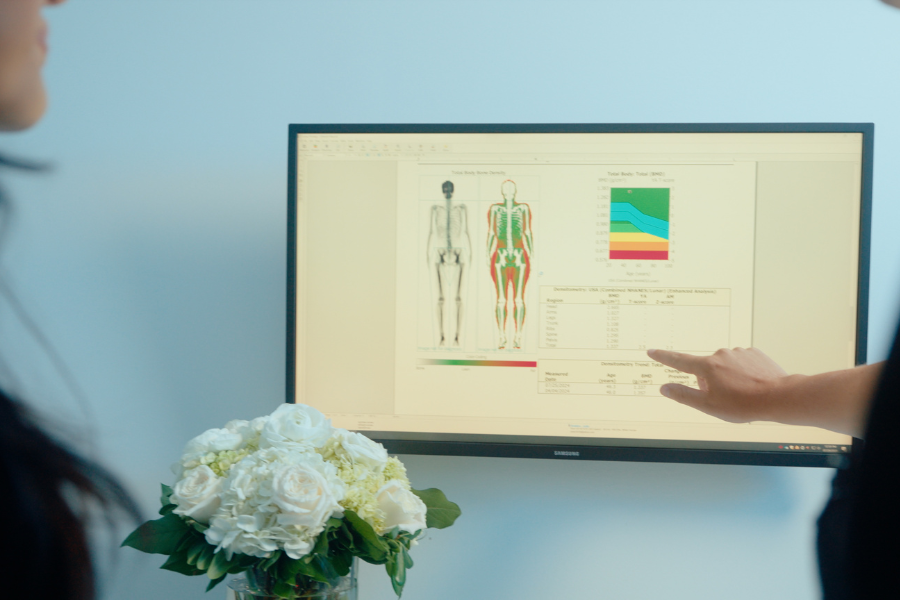
DEXA helps track how the body is changing during weight loss, ensuring fat loss while maintaining the muscle needed for long-term strength and health.
Some Areas Feel a Little Too “Thin”
Rapid weight loss can thin out areas of the body people weren’t necessarily expecting. Some patients notice thinning hair, often in the form of increased shedding or a loss of overall volume, after starting a GLP-1.
These changes can be influenced by a range of factors, including nutrition, metabolism, and hormonal shifts, meaning the solution often goes beyond aesthetics alone.
At the Bucky Body Center, that can include both aesthetic treatments and more foundational, long-term support like hormone therapy, which can help address underlying imbalances that affect hair, skin, and overall energy levels.
The Real Glow Up
For many, the most surprising part of weight loss with a GLP-1 isn’t necessarily how quickly it happens, but the changes that come with it.
Starting the journey with a doctor who considers everything from muscle mass to skin texture and overall energy levels can help ensure the results feel as good as they look.
“The goal is not just to be smaller for a moment,” says Dr. Bucky. “It is to be healthier, stronger, more confident, and better supported through every phase of change.”
In that sense, the real glow-up isn’t just about weight loss. It’s about what comes next.
To start your journey, visit drbucky.com to schedule a consultation.
This is a paid partnership between Bucky Body Center and Philadelphia Magazine