
A Team You Can Depend On
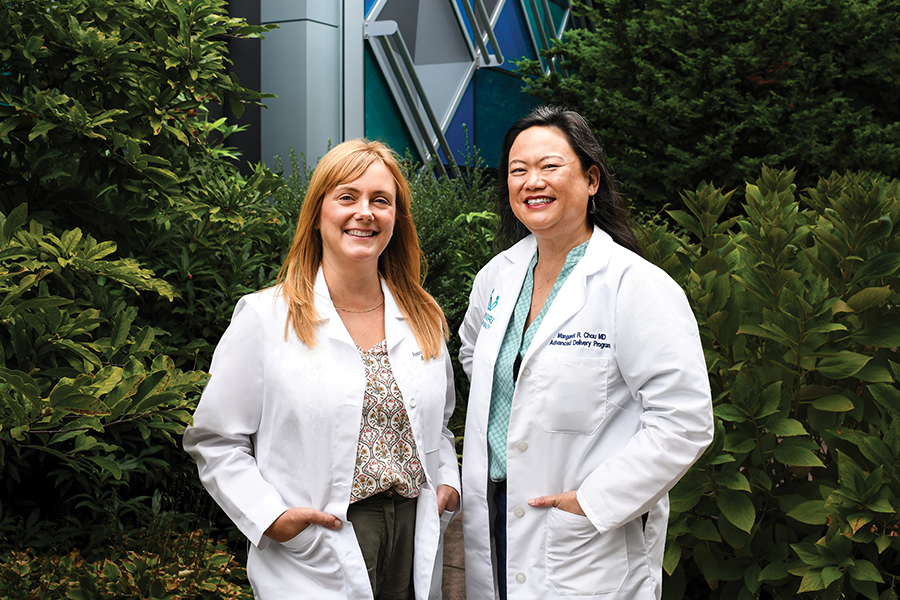
Dr. Margaret Chou is the Division Chief of the Nemours Children’s Advanced Delivery Program, and Dr. Joanna Costa is a neonatologist and Medical Director of Nemours Children’s Perinatal Program. Here, they describe how the Nemours approach to birth care is saving and changing lives of parents and children.
›› What recent advances in the field are exciting to you, in terms of supporting the health of parent and child preceding and during birth? Dr. Joanna Costa: We often care for families that come to us expecting babies with some kind of congenital anomaly or birth defect identified on a prenatal ultrasound. Our understanding of what causes these birth defects has advanced, from parental health and stressors to environmental exposures and genetics. Through better imaging, we can diagnose these anomalies earlier in pregnancy, and genetics helps us understand the implications for the baby and family. Additionally, some of the most exciting advancements include opportunities in fetal surgery, as well as targeted therapies, which we aim to bring to patients in the future. Dr. Margaret Chou: We also see a growing field of genetics helping not just the child, but sometimes even uncovering mild genetic conditions in parents that were previously unknown.
›› How do the perinatal and advanced delivery programs at Nemours successfully work together to ensure a healthy delivery? MC: One of the strengths at Nemours is our multidisciplinary approach. We work hand-in-glove to keep the patient at the forefront and develop individualized plans of care. Collaboration across our perinatal program, fetal cardiac program and delivery program helps us address every patient’s unique needs. JC: We also collaborate closely with community health care providers to ensure a seamless transition from prenatal care near the patient’s home to advanced care at our facilities when necessary.
›› What key aspects of care need to be addressed by health systems to protect the long-term health of mother and child? MC: We need to talk about postpartum care—the “fourth trimester” of pregnancy. Conditions like diabetes or hypertension during pregnancy can affect long-term health, so it’s crucial to manage these conditions and ensure proper handoff to a health care provider after birth. Continued support for substance use disorder is also key for long-term health. JC: Parents who experience stress around delivery, or have sick babies, are at higher risk of postpartum depression, which can affect their attachment to the baby. This can have long-term effects on the child’s behavioral and social development. Supporting parents post-birth is critical for both the parent and baby.
›› How has the approach to pregnancy at Nemours had an impact on, or created positive examples for, the rest of the field? MC: At Nemours, we have the luxury of providing very individualized care due to our smaller, specialized program. We hold ourselves to high standards, such as minimizing unnecessary early deliveries or C-sections, even with patients facing rare or complex conditions. JC: We have unique experience in the care of babies with conditions like osteogenesis imperfecta (brittle bone disease). In the past, these were considered lethal conditions, but thanks to advancements in neonatal care, specific interventions and medication, we can offer these babies a chance to thrive. Nemours’ unique expertise allows us to change the narrative for these patients, from pregnancy through adulthood.
This is a paid partnership between Nemours Children's Health and Philadelphia Magazine


