How A New 3D Genomics Test Is Transforming Cancer Diagnosis and Treatment
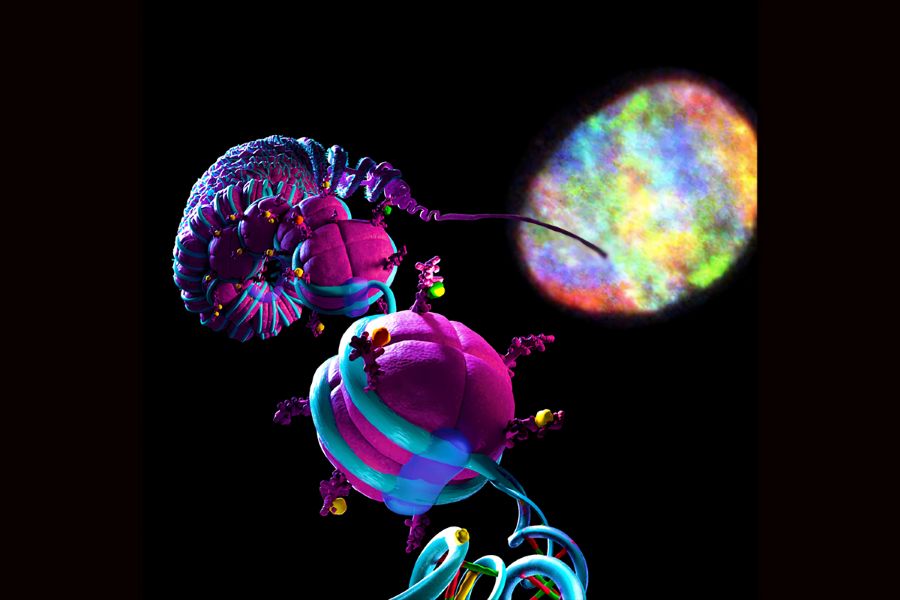
Seeing how cancer cell genes fold, connect and signal in 3-D reveals which genes may drive tumor progression. Image credit (non-exclusive use): Johnathan Whetstine, Fox Chase Cancer Center.
For patients with challenging cancers like lymphoma and sarcoma, subtle genetic differences can dramatically change the way doctors diagnose and treat their disease.
There are more than 70 recognized subtypes of lymphoma and more than 100 distinct types of sarcoma. Many of them appear similar under a microscope but behave in very different ways as cancer progresses. In these cases, precision from the very beginning isn’t just helpful — it’s critical.
“These are complicated diseases,” says Peter Abdelmessieh, DO, MSC, Assistant Professor in the Blood Cancer and Cellular Therapy Institute at Fox Chase Cancer Center and in the Cancer Epigenetics Institute and Nuclear Dynamics and Cancer Program.
“There are many subtypes that can look similar under the microscope but behave very differently. Having more precise information helps guide what we do for patients.”

Peter Abdelmessieh, DO, MSC, Assistant Professor in the Blood Cancer and Cellular Therapy Institute at Fox Chase Cancer Center and in the Cancer Epigenetics Institute and Nuclear Dynamics and Cancer Program.
Over the last few decades, cancer diagnosis has relied on traditional pathology and two-dimensional genomic testing. And while these tools have been especially powerful and transformative for cancer care, they don’t always capture the full complexity of how cancer behaves.
Cancer in three dimensions, not two.
“For years, we’ve known that the way DNA folds inside the cell matters,” says Johnathan Whetstine, PhD, Director of the Fox Chase Cancer Center Cancer Epigenetics Institute and Co-leader of the Nuclear Dynamics and Cancer Program.
“What’s exciting is that we can now translate that knowledge into something clinically actionable for patients,” notes Whetstine.
At Fox Chase and the Cancer Epigenetics Institute, the goal is simple but powerful: understand what’s driving each individual’s cancer and use that insight to guide treatment from day one. With 3D genomic testing, that level of precision is becoming a reality.
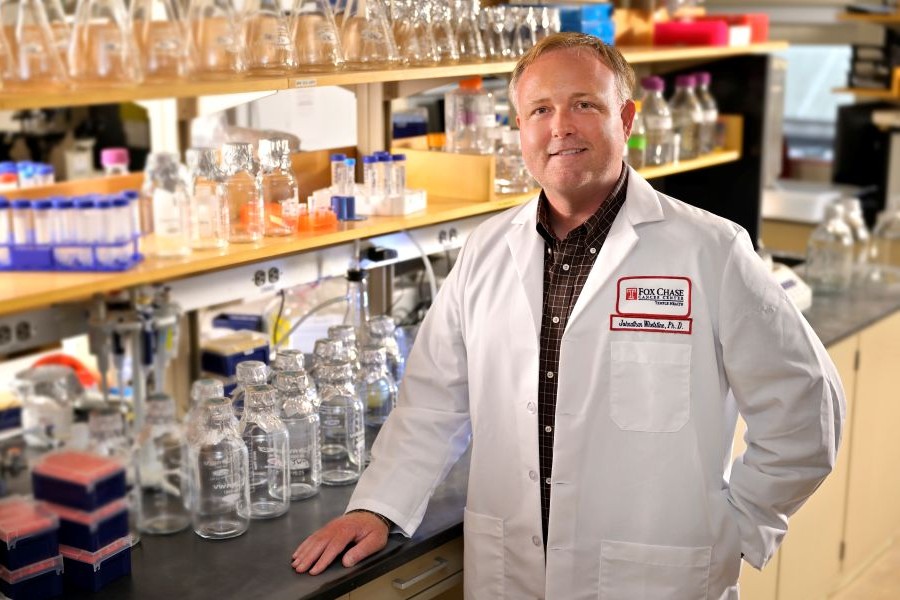
Johnathan Whetstine, PhD, Director of the Fox Chase Cancer Center Cancer Epigenetics Institute and Co-leader of the Nuclear Dynamics and Cancer Program .
Offering a more precise diagnosis.
Many subtypes of lymphoma and sarcoma share similar features under standard testing yet behave in dramatically different ways, creating uncertainty that can delay optimal treatment, or require additional testing before doctors feel confident moving forward.
Three-dimensional genomic testing provides another layer of diagnostic clarity. By examining how DNA is structurally arranged inside the cell, it allows pathologists and oncologists to identify the structural changes that are actively driving cancer behavior, distinguish between closely related subtypes that may otherwise appear nearly identical, and reduce the uncertainty that can delay important treatment decisions.
In some cases, the technology has even helped reclassify cancers previously labeled “not otherwise specified,” giving physicians clearer direction for care.
“This gives us another feather in our cap that probably isn’t offered anywhere else at the current time,” says Dr. Abdelmessieh. “We can perform this testing on existing slides, so we don’t even need new biopsies. That makes it much more accessible.”
This level of diagnostic precision leads to faster, more confident care decisions, reducing the need for trial-and-error approaches. With a more streamlined diagnosis, patients with complex cancers can begin their targeted treatment plans that much sooner.
An in-depth view of how cancer behaves.
Seeing cancer cells in three dimensions offers something like a crystal ball—helping physicians anticipate how a tumor may behave before it advances. Three-dimensional genomic testing reveals which genes are activated or inactivated by structural changes and, importantly, which of those changes are likely to impact tumor growth and progression.
“This kind of science gives us insight into what is really happening inside the cancer cell,” says Dr. Whetstine. “We’re not just identifying mutations. We’re understanding how structural changes in the genome are altering gene regulation and behavior.”
With this deeper view, physicians can determine which genetic changes are actively driving the cancer, anticipate how tumors may evolve over time, and identify the specific biological pathways that should be targeted by treatment. That predictive power allows Fox Chase physicians to get ahead of the disease rather than reacting only after it progresses.
“For our treatment planning, this is vital,” says Dr. Abdelmessieh. “If we understand the pathways that are driving the disease, we can select therapies that are much more aligned with the biology of that specific tumor.”
In patients with lymphoma and sarcoma, that precision can translate to a longer, healthier life.
Learn more about 3D genomic testing and the Institute for Cancer Epigenetics at FoxChase.org.
This is a paid partnership between Fox Chase Cancer Center and Philadelphia Magazine