
Inside the Creative Minds Behind Ballers in Fishtown
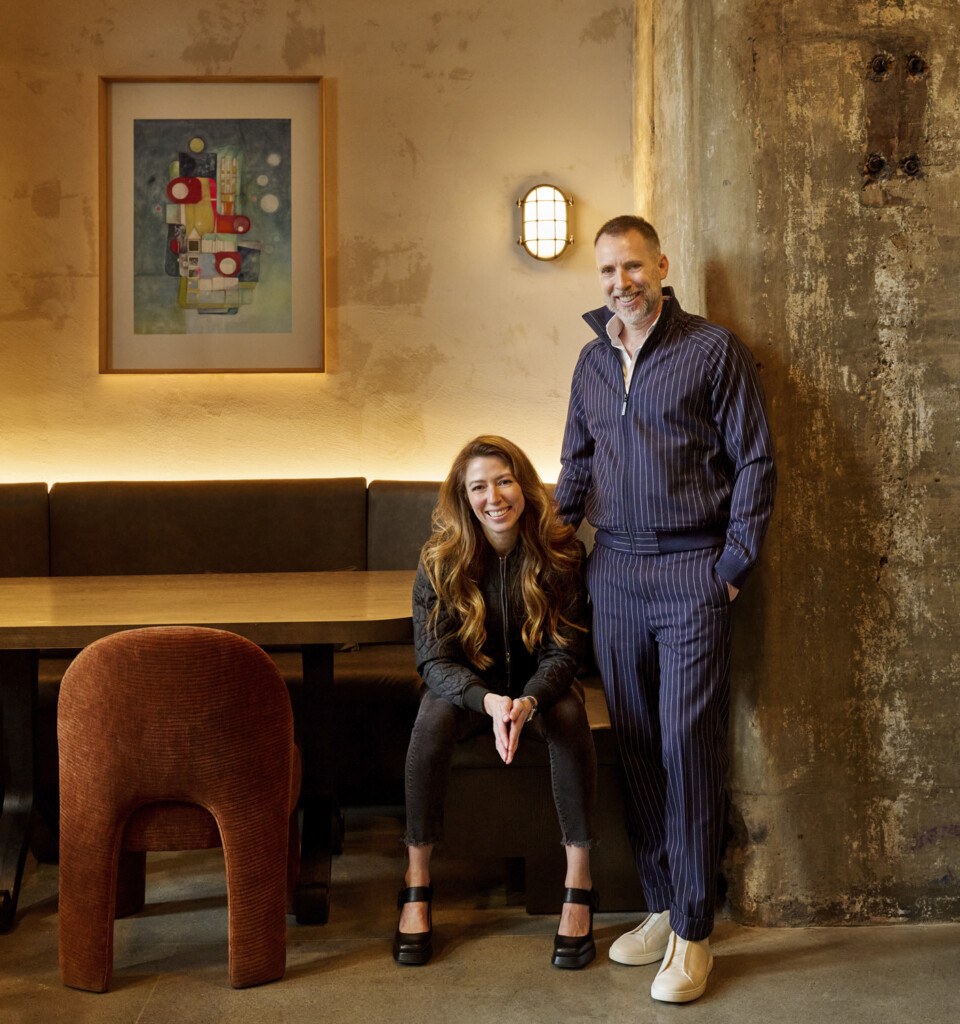
Good City Studio’s Amanda Potter and David Gutstadt at Ballers / Photograph by Rebecca McAlpin
When David Gutstadt first toured the Fishtown property that would become Ballers in 2019, it was clear to him that it was special — a beaux arts gem built by the Philadelphia Electric Company in the 1920s, with 75-foot vaulted ceilings and a massive footprint. He was wowed. But it would take three years before the racket-sports concept came to life. “This is a case of the space inspiring the idea rather than the idea inspiring the space,” says Gutstadt, co-founder and co-CEO — with Amanda Potter, who also serves as chief creative officer — of Good City Studio, their hospitality-centric design and development firm. The club debuted in September, with courts for pickleball, padel, and squash plus a golf simulator, a putting green, and a recovery lounge. (GCS also operates out of Ballers.)
Designing the project wasn’t that daunting, says Potter. “The space is so majestic, but when we overlaid the scale of a court onto the floor plan, it became obvious where padel and pickleball would go,” she says. “The club almost laid itself out.”
The partners in business (both alums of New York’s Equinox Group) and life (they were hitched at Ballers last year) settled on a modern-meets-industrial aesthetic and tapped local graffiti artists to cover the walls in original works. It’s the same slick style you see at Fitler Club — Gutstadt is the founder; Potter was the design lead — and the Sporting Club at the Bellevue Hotel, another GCS undertaking completed in 2023. (GCS has collaborated on 60 projects, though Fitler Club and Ballers are the two they’ve taken from start to finish.) With celeb investors like Sixers guard Tyrese Maxey backing Ballers, Gutstadt and Potter have plans for three new locations in Boston, Los Angeles, and Miami this year. (Nothing else for Philly — yet.) He forms the concept, she creates the mood board, and their vision comes to fruition. “We’re almost always on the same page,” says Potter. “I think we argued over the color of the tile in the Ballers locker rooms, but that was about it.”
Published as “Net Gains” in the March 2026 issue of Philadelphia magazine.
Dear Kimberly: How Do I Let Go?

Listen to the audio edition here:
Kimberly McGlonn is back with gentle wisdom to help you navigate life’s tough situations. Have a Q for Kimberly? Fill out the form here and we’ll do our best to feature it in an upcoming column.
Dear Kimberly: I am recognizing a pattern in my life — I hold on too long. I’ve stayed in relationships past when they were good, been scared to leave a job and city even when I sensed it was time. How can I get stronger at moving on? — Stuck & Out of Place
Dear Stuck & Out of Place,
I hear you. I have struggled with letting go of all kinds of things that were hard. Letting go of a career — a long-loved position as a high school teacher and the wonderful community that came with it. Same goes for romantic relationships. But in both of those instances, I knew on some level, even before I was willing to do anything about it, that I had outgrown the pot I was in. I needed to reposition myself in fresh soil with some bright, new light if I was gonna grow. And when we feel like a circumstance is squeezing us, boxing us in, or forcing us to wilt, we have to choose our expansion over suffocation. It becomes necessary to let go: to let go of your presumptions that there isn’t better waiting; to let go of your idea that because you haven’t done something before, you simply can’t do it. Sometimes feeling like we’re playing it too small can compel us to let go. Other times we’re called to let go when there isn’t alignment, when our needs and the things we want aren’t being met by a circumstance. We have to choose to honor our needs, recognizing that, as the great Nina Simone said, “You’ve got to learn to leave the table when love’s no longer being served.” Love is a broad word, but I believe it captures our sense of safety, our sense of belonging, and our sense of self-preservation.
To do that, we need to know what we need, and sometimes we need to let go of what we have in pursuit and in honor of those needs. I’ve given up the six-figure job and taken the 50 percent pay cut because I wanted to bet on myself. I’ve gone through divorce. And what I’ve learned is that staying in those constructs when I was being dishonest with my true self was, on the deepest level, ultimately a betrayal of myself.
If our alignment is out of whack and we force ourselves to stay where we are, we cripple our own growth — and even if we think, by staying, we’re being kind or avoiding hurting someone else, we can in the process sometimes chain someone else when it’s time to release them.
It’s a challenge to build a life that fits you. Just as we outgrow clothes, we outgrow the design of our lives. Sometimes we’re playing it too small and sometimes the circumstance can no longer hold us. So I think that learning when to leave is about assessing whether something is calling forth joy or calling forth sadness, whether it’s calling forth a sense of being appreciated or a sense of being neglected. When we make those kinds of assessments, we can navigate the timing of when we need to move on.
For a lot of us, and I know I’ve certainly been guilty of this, we’re waiting for a new thing to appear, to grab hold of — whether it’s a new relationship or a new position. It can be hard to be in moments of life where there is seemingly “nothing” or no one to go to. But what I’ve learned is that in those seasons of the in-between, when you’re waiting for the next thing or the next person or the next connection, you have a chance to really connect with yourself. To focus on your own independent study, of yourself, of others, and of the world. I wish schools taught us more about how to study on our own because that’s what we have to do as adults! In a global culture that’s so noisy and so fast, it’s helpful when we are able to find support in other people — therapists, or friends, or a spiritual kind of guide. But I also think that there’s this safe place for us in silence and stillness and solitude where our own internal voice surfaces.
And here’s the truth: We’re not always gonna get the timing right. However, as I’m learning to listen differently and dedicate myself to practices that bring me into proximity with my own inner voice, it helps me align how I time my decisions, what’s kind to myself, what’s truthful for myself. And ultimately that’s living in integrity to myself. Integrity to me is the pursuit of honoring what is true, and then making choices in alignment with truth. And letting go often comes when someone — be it you or your spouse or your boss or your friend — decides that in their truth, it’s time to move in a different direction. And there isn’t always a real reason why that is. There isn’t always a pro-con list to be made, or a “right” answer. Sometimes we’re just moving through a set of cultural norms that have scripted how we’re “supposed” to live our lives, or what we’re supposed to want. But when we’re beholden to someone else’s standards, we lose precious time. Sometimes you just feel it. Let yourself. Doing so isn’t always easy. But it frees us to live in truth and to live with freedom, and then to pursue and to protect, our own very precious, peace.
With courage & care,
Kimberly
Citizen of the Week: Leona Davis, Forget Me Knot

Forget Me Knot / Photograph courtesy of Leona Davis by Heidi Roland Photography
Leona Davis wanted to repurpose the flowers from her daughter’s wedding. Now, with Forget Me Knot, she’s created a circle of giving that brings joy, purpose, and sustainability across the region.
Why Philly’s Best Mezcal Bar Only Stocks Five Bottles

La Jefa’s Agave cocktail / Photograph by Michael Persico, originally published in Shaking Things Up in the November 2025 issue of Philadelphia magazine.
When a kitchen fire shuttered Rittenhouse mainstay Tequilas in early 2023, owner David Suro and his son Dan used the closure as an opportunity to reimagine the space. They would reopen Tequilas but replace a back dining room with a separate all-day cafe and nighttime cocktail bar. During a trip to Mexico in 2024, researching for the new project, Dan pitched his father on one more idea: Instead of a sprawling mezcal list for the bar, he wanted just five bottles, give or take. David, who founded Tequilas in 1986 and has spent decades building one of Philadelphia’s most serious agave spirits programs, wasn’t sold. “Why limit yourself?” he asked.
“I think that makes us more of a mezcalería, by having less of it,” Dan answered. With only five bottles in rotation at a time, “we can get more creative with them,” he says. “We can really hyper-focus on five and do things that we couldn’t really do with a giant collection.” His father eventually came around.
La Jefa opened in May 2025 as a Guadalajara-inspired cafe and cocktail bar. It’s not a speakeasy, exactly, but with entrances off sleepy Latimer Street or through Tequilas, it feels a little like a secret. By day, the menu includes coffees, hibiscus and blackberry conchas, a chilaquiles omelet, and house-made fermented sodas. By night, the vibe shifts. In back of the brighter front room is Milpa, a dimly lit lounge tucked behind blue velvet curtains, with a cluster of low tables, a bar lined with vintage tiki vessels and a selection of spirits that includes that tightly curated collection of mezcal.
Suro chooses them with intention. He’s not trying to assemble the rarest back bar he can manage, though some bottles are vanishingly limited. He aims to create contrast and tell a story. “A lot of it has to do with balancing out what you have,” he says. “I want to show diversity in the spirit.”
That might mean thinking about region, producer, or production style — how one bottle will read next to another. If one mezcal leans funky and savory, he doesn’t want something similar beside it. Sometimes the lineup is driven by what becomes available: a producer he trusts, a small-batch bottling, a family-run operation with a tiny allocation that would get lost on a longer list. Some batches are as small as 60 liters, total.
A shorter list also means the staff can know each bottle intimately, and guests tend to be more curious, gravitating toward the mezcal precisely because the bar is so clearly emphasizing that one category. “The point of having five is not really for something that’s so esoteric,” he says, “but that we can really dig into it.”

Dan Suro at La Jefa / Photograph by Ed Newton, originally published in La Jefa: Where Guadalajara and Philly Meet
That emphasis lands at a significant moment for the spirit. In Mexico, mezcal production rose from about one million liters in 2010 to more than 11 million liters in 2024, fueled largely by export demand from the U.S. But as mezcal has spread across American cocktail menus, it’s often approached through a familiar lens — the same way a drinker might think about their favorite whiskey, locking in on a trusted label and sticking with it. That works for spirits built around consistency, but mezcal is something different. Much of it is still made through labor-intensive, artisanal processes — agave harvested by hand, roasted in earthen pits, naturally fermented, then distilled in ways that vary from producer to producer and batch to batch.
Its variability is one of the things Suro loves most about mezcal. Because the distillation process is far less controlled than for most spirits, each bottle is ephemeral. “There’s a very good chance that this mezcal will be the only time I ever try it,” he says. “You should definitely be open to what else is out there. It’s inconsistent in a very good way.”
Suro brings that same respect for the spirit to his cocktail menu. It appears in just two drinks on Milpa’s cocktail menu, each calling for only one teaspoon of the spirit. The Sierra Tepe is akin to a Vesper martini, made with Mezonte Tepe mezcal, Tequila Ocho, and Cocchi Americano. The Zacate Limon combines tequila, a mezcal distilled with lemongrass, house-made beet shrub, and lemon, plus a fortified quinine aperitif wine “that really blows up agave flavor,” he says. The restraint is partly practical — mezcal is distinctive, and a little goes a long way. But it’s also philosophical. He wants every measure to feel intentional.
He also sees that restraint as an ethical one. Mezcal’s global boom has brought real consequences, including deforestation, water stress, and the spread of monoculture farming of espadín — the most common agave used to make mezcal — which threatens the biodiversity and ecological balance that traditional production depends on. “We should be drinking less and paying more for the spirit,” he says.
In the end, Suro wants guests to leave with a deeper appreciation for mezcal. “You may never taste this exact batch again,” he says, “which gives you more of an intimate connection with the producer.” The scarcity, the specificity, the single batch that may never be replicated — it’s all part of it.
“Those types of experiences will stick with people more so than just trying a bunch of mezcal,” he notes. “I think that happens pretty often here.”
PBS’s Geoff Bennett Revisits the “Golden Age” of ’90s Black Sitcoms in His New Book
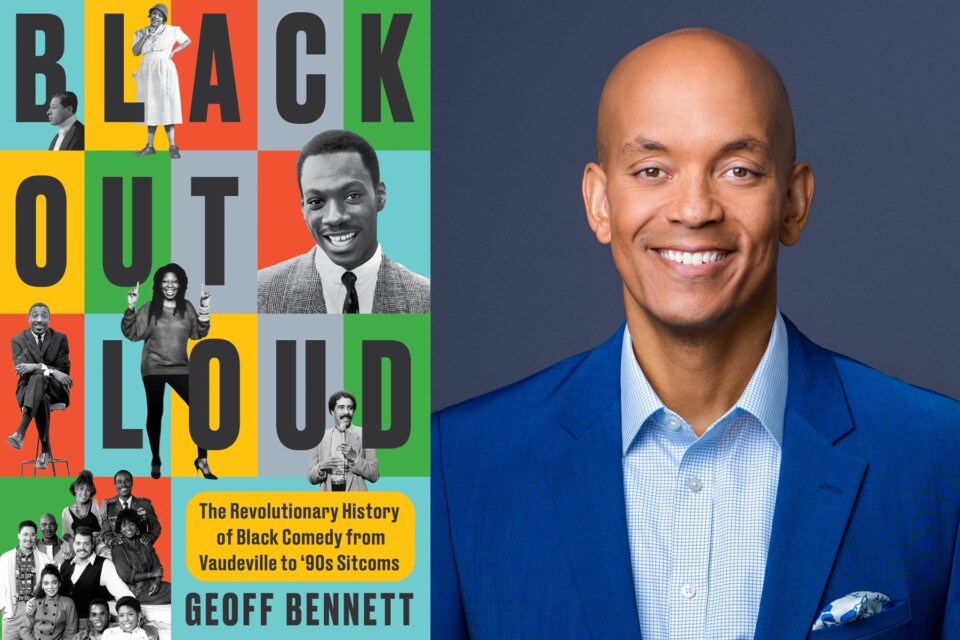
Author Geoff Bennett has been co-anchor of PBS NewsHour since 2023. / Photograph by Johnny Shryock
If your daily grind was reporting on U.S. politics, your mind would wander too. That’s partly how veteran broadcast journalist Geoff Bennett, co-anchor of the PBS NewsHour, came to write his illuminating, fast-paced documentary of a book Black Out Loud: The Revolutionary History of Black Comedy from Vaudeville to ’90s Sitcoms.
“For years I had been thinking about the television landscape I grew up with,’ says Bennett, 45, raised in Voorhees, New Jersey, but now based in Washington D.C. “One of the questions that kept resurfacing was, how did all of these shows — Martin, Living Single, Fresh Prince, In Living Color, Family Matters, A Different World — how are they all on the air, existing at the same time? And it wasn’t as if there was an isolated breakout. They were on television together, overlapping, competing, cross-pollinating.”
In researching his book, Bennett discovered it was more a convergence than a coincidence: “It was this rare moment when talent and timing and cultural urgency all lined up.” But to arrive at that golden age, Bennett had to dig deep into the long, interconnected history of Black comedy in this country, from minstrelsy superstar Bert Williams (a Black comic actor who performed in blackface), to actress Hattie McDaniel winning an Oscar for Gone with the Wind, to the rise of stand-up legends like Dick Gregory, Flip Wilson, Eddie Murphy, and beyond. Black Out Loud concludes with a chapter on Dave Chappelle, whose own struggles with the “Are they laughing with me or at me?” question is, by that point, a recurring theme. I spoke to Bennett by phone just minutes after he landed in L.A. to start a book tour which takes him to Philadelphia for a reading at Barnes & Noble on March 28th.
Did the ’90s sitcoms start something permanent, or has the moment passed?
The moment has passed. I mean, you could argue we’re in a new golden age. I think it’s fair to say we’re in a prolific age. The ’90s, to me, were golden because [pop culture] was both abundant and it was centralized. We had a monoculture. We had shared references. Today’s content creators are brilliant, but they are building silos. … There’s a lot more volume now, but volume and impact aren’t the same. In the ’90s, a single episode of television could become a national conversation because there were 20 million people, in some cases, sitting down in their living rooms watching these shows together. I went to Eastern High School. I remember the night Kris Kross was on In Living Color. They performed as a musical act, and nearly all the kids came in with their clothes on backwards.
In Living Color’s impact on the culture landscape is incredible, and not just for launching the careers of Jamie Foxx, Jim Carrey, Jennifer Lopez, Rosie Perez, and a half-dozen Wayanses. They got tens of millions of people to change the channel to watch their Super Bowl halftime special instead of the “official” one.
It’s brilliant, because before then, the Super Bowl had been kind of like a boring, pedestrian affair with marching bands. CBS was using it to promote that year’s Winter Olympics. Brian Boitano was featured. No disrespect to Brian Boitano, but In Living Color realized they could counter-program it. … More than 20 million viewers that were on CBS moved to Fox, and most of them stayed with Fox for the rest of the evening. And so the very next year, CBS got hip to the game, and booked Michael Jackson, and that’s how they ended up with the superstar Super Bowl Halftime Show.
Besides being funny, what was it about these shows that makes them so important all these years later?
For Black viewers, it was important because for the first time, you were seeing so many different versions of Black life. It wasn’t as if there was one show that bears the burden of representing the entire race. You had an affluent family with Fresh Prince; you had a middle class family with Family Matters. You had the sort of chaotic craziness of Martin. Professional women finding their way in the world with Living Single. There were all these different visions of Black life on the air simultaneously, which was huge. And they were top-rated.
You dig into the backstories of so many comedians in the ’60s and ’70s, and it seems like some of their motivations to perform come from a place of sadness. Did that surprise you?
Not necessarily, because that is such a true characteristic of comedians, to get the laugh to keep from crying. What stood out to me about so many of their stories, there was always a teacher who realized they had this rambunctious kid in the class, and they would find time to empower that student — basically just making a deal and saying, if you [behave] you can go to the front of class and tell jokes. That stood out to me as a really interesting throughline. But when you talk about sadness, I mean, look at Richard Pryor. He changed what comedy can be. Before Pryor, a lot of comedians performed safe material. It was observational jokes, funny stories about everyday life. But Richard Pryor walked straight into the truth. He talked openly about race, addiction, poverty, police violence, his own mistakes.
You mentioned how modern entertainment is very siloed — I was really amazed by how all of these comedians from different eras were connected. Sammy Davis Jr. revived the career of older comedian Pigmeat Markham with a joke on Laugh-In. Whoopi Goldberg played Moms Mabley in a stage show …
That is so true of Black cultural creation. Especially the performers who are good at what they do, they understand the craft, they understand who came before them. There’s a lot of times what you see is a paying of respect or paying homage. Even with Richard Pryor, he was was a sort of a comedic descendant of Bill Cosby. In Pryor’s early work, he tried to work as a clean comic, because he saw that Bill Cosby had success with that. And this is true of the performing arts, some of it can be have a copycat dynamic to it. And young as comics are coming up, they basically replicate what works until they find their own voice.
It surprised me to learn that people once accused young Pryor of being a Cosby clone.
Bill Cosby built his comedy on universality. It was clean, it was polished, it was rooted in storytelling that made Black life legible and really relatable to mainstream audiences. And so he opened the doors by proving he didn’t have to be profane or confrontational to be successful. And then, you know, here comes Richard Pryor, who kicked those doors off their hinges. But yes, his comedy was raw. It was vulnerable, it was explicit, it was deeply personal. So, and I always say, like, where Cosby was translating, Pryor was testifying, and there can really be tension in that contrast. The other thing, I mean, we can’t, obviously, talk about Bill Cosby without …
Yeah …
What I had to do for this book is separate the art from the man, because you can’t talk about the legacy of ’90s sitcoms without The Cosby Show, because The Cosby Show, in that context, is the foundational text. With Cosby, what you have to do is hold two truths at once. The work that he created was so culturally valuable and important, yet what he is accused of doing, what he served time for, is monstrous.
Being from Philly, I’m big fan of The Fresh Prince of Bel-Air, and was fascinated by a very young Will Smith, with his whole career on the line at that point, nailing an audition at Quincy Jones’s star-studded birthday party among the likes of Steven Spielberg, Stevie Wonder, Lionel Richie, and Brandon Tartikoff.
He’s an interesting character because he’s a bridge between the Cosby model and everything that came after. So he comes up in the late ’80s and the ’90s with a style that’s deliberately clean and charismatic and accessible.
I feel like if this book were to push deeper into today, Quinta Brunson would get her own chapter.
Absolutely. What she’s done with Abbott Elementary — she saved the sitcom. I keep coming back to this: There’s this thought — it’s true in content creation, it’s true in Hollywood —there’s this thought that if you’re broad and try to reach as many people as possible with whatever it is that you’re producing, therein lies success. But the opposite is true. If you have a very specific story and you’re committed to it, and you can tell it well, that is what really resonates. That was true with these ’90 sitcoms, and it’s the case of Abbott Elementary. Quinta wrote from what she knew.
Geoff Bennett celebrates Black Out Loud on Saturday, March 28th at 5 p.m., Barnes and Noble, 1708 Chestnut Street.
Philly Mag Receives 19 National City and Regional Magazine Award Nominations
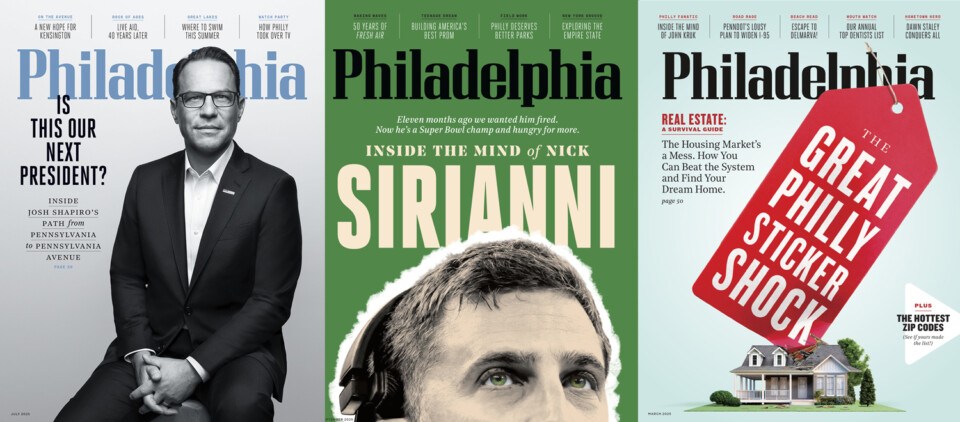
Three of our covers from 2025 that were nominated for a CRMA this year
We’re thrilled to report that Philadelphia magazine has received 19 nominations in the 2026 National City and Regional Magazine Awards. The annual City and Regional Magazine Association (CRMA) competition, held in conjunction with the Missouri School of Journalism, honors journalists, design creatives, and staff members at city/regional magazines across the country.
The breadth of nominations showcases the wide scope of work the Philly Mag team produced in 2025, spanning nearly every category — from photography and spread design to civic journalism and food writing.
Winners will be announced the first weekend in June, at CRMA’s 50th annual conference in New Orleans. But it’s an honor just to be nominated, so let’s bask in the glory of our finalists, shall we?
Among the highlights of this year’s nominations, Jen Kinney and Tom McGrath both earned recognition in Essays/Commentary/Criticism for “Stumbling Blocks” and “Surviving Trump,” respectively — a strong showing for the magazine’s voice-driven work. Our accountability reporting also stood out, with David Murrell’s “Highway to Hell” and Ben Seal’s “The Climate Crisis Is Here” both earning nominations in Civic Journalism.
In the world of Foobooz, Jason Sheehan received a nomination for Food or Dining Writing, with work including “Piece by Piece” (about Jesse Ito) “Hunger Pangs” (Phila and Rachel Lorn) and “Every Meal a Story” (review of Honeysuckle). And food editor Kae Lani Palmisano received two nominations as well, for her work on October’s Delco dining package and November’s “Shaking Things Up” on Philly’s cocktail scene.
Sandy Hingston was recognized with a nomination for the Herb Lipson Award for Column Excellence for her sharp, thoughtful pieces “Weird New World”, “Make America Kind Again”, and “Liberation Day”. Meanwhile, Ben Seal and Sandy Smith’s “The Great Philly Sticker Shock” earned a nomination in Reader Service, while Victor Fiorillo’s “Live Aid, Four Decades Later” was recognized in Leisure/Lifestyle Interests. The magazine’s Summer/Fall 2025 issue of Philadelphia Wedding was recognized in the Ancillary Publication category. And Philadelphia‘s September issue earned a nod for Excellence in Writing.
Philly Mag’s art and design made a major showing as well. Dina Litovsky was nominated in Photography for “A Night to Remember,” her evocative photos of Pennsbury High School’s epic prom. We also received nominations for Spread Design, Illustrations and Graphics, and Cover Excellence.
And finally, Philadelphia magazine was also recognized for “General Excellence” and “Excellence Online.” Philly Mag’s 19 total nominations place it among the most recognized publications this year.
“I just couldn’t be prouder of this team — their hard work, their creativity, their talent, their dedication,” says editor Christine Speer Lejeune. “I see what they are capable of every single month, of course. But it’s truly gratifying to know that other people also see it, appreciate it, celebrate it.”
A heartfelt congratulations to our fellow nominees (see the full list of finalists here). We’re grateful to be in such fantastic company.
Full List of Philly Mag’s CRMA Nominations for 2026
Essays/Commentary/Criticism
Tom McGrath: “Surviving Trump”
Jen Kinney: “Stumbling Blocks”
Food or Dining Writing
Jason Sheehan: “Piece by Piece”; “Hunger Pangs”; “Every Meal a Story”
Herb Lipson Award for Column Excellence
Sandy Hingston: “Weird New World”; “Make America Kind Again”; “Liberation Day”
Excellence in Writing
Philly Mag’s September 2025 issue
Spread Design (Circulation more than 33,000)
Justin James Muir (photography), Jamie Leary (design) and Jason Sheehan (writing): “Piece by Piece”
Photography
Dina Litovsky: “A Night to Remember”
Illustrations and Graphics
“Make America Kind Again”; “Best of Philly”; “Pressure Points”
Cover Excellence (Circulation more than 33,000)
Philly Mag’s March, July, and September issues
Reader Service
Ben Seal and Sandy Smith: “The Great Philly Sticker Shock”
Leisure/Lifestyle Interests (Circulation more than 33,000)
Victor Fiorillo: “Live Aid, Four Decades Later”
Food or Dining Feature Package (Circulation more than 33,000)
Kae Lani Palmisano: “Delco”
Kae Lani Palmisano: “Shaking Things Up”
Civic Journalism
David Murrell: “Highway to Hell”
Ben Seal: “The Climate Crisis Is Here”
Special Issue
“Best of Philly” (August)
Ancillary Publication
Philadelphia Wedding (Summer/Fall)
Online Excellence
phillymag.com
General Excellence 3 (Circulation more than 33,000)
Philadelphia magazine
The Forgotten Cemetery
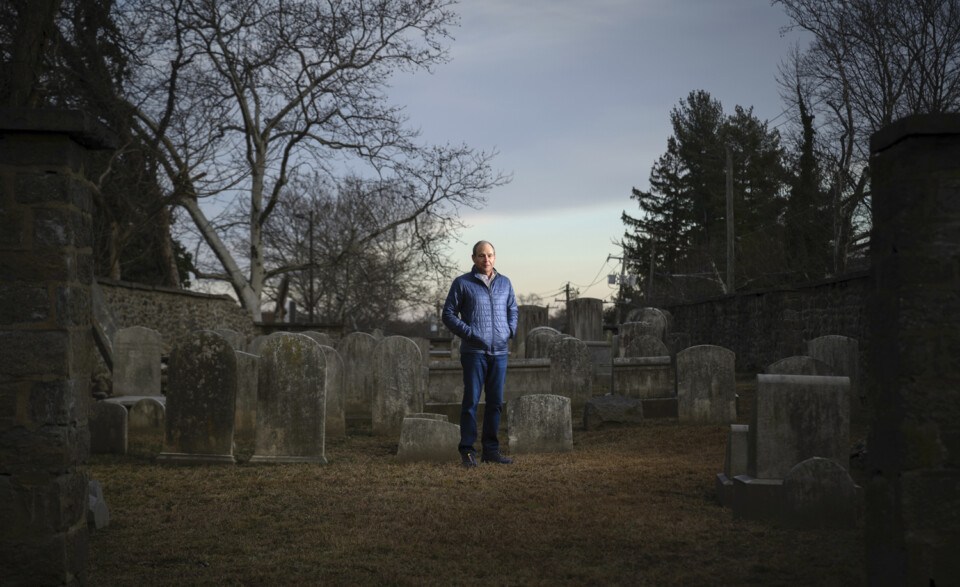
The author at his family’s burial ground in West Oak Lane. / Photography by Kriston Jae Bethel
Listen to the audio edition here:
It was almost dusk when I decided to jump the gate. Looking up and down the street, I saw no one — this was going to be easier if I didn’t have to explain myself. Tall trees, lush in the June air, leaned over the north wall like slowly collapsing fans. Securing a foot on the gate, I hoisted my other leg up, but the chain lock gave way, already broken, and the old wrought iron gate swung open. I had every reason to believe I was the first relative to enter our small family burial ground in over 100 years.
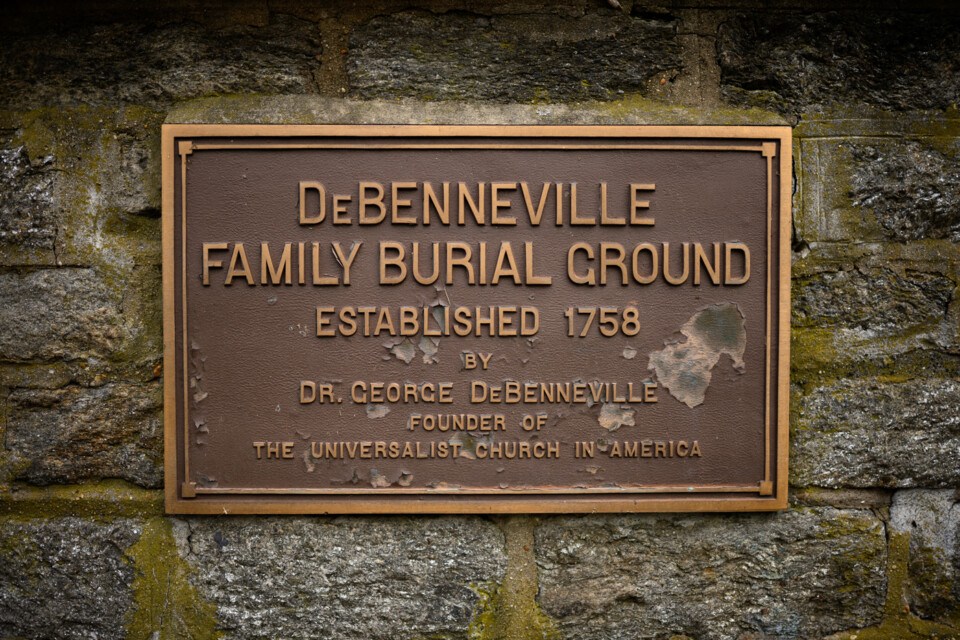
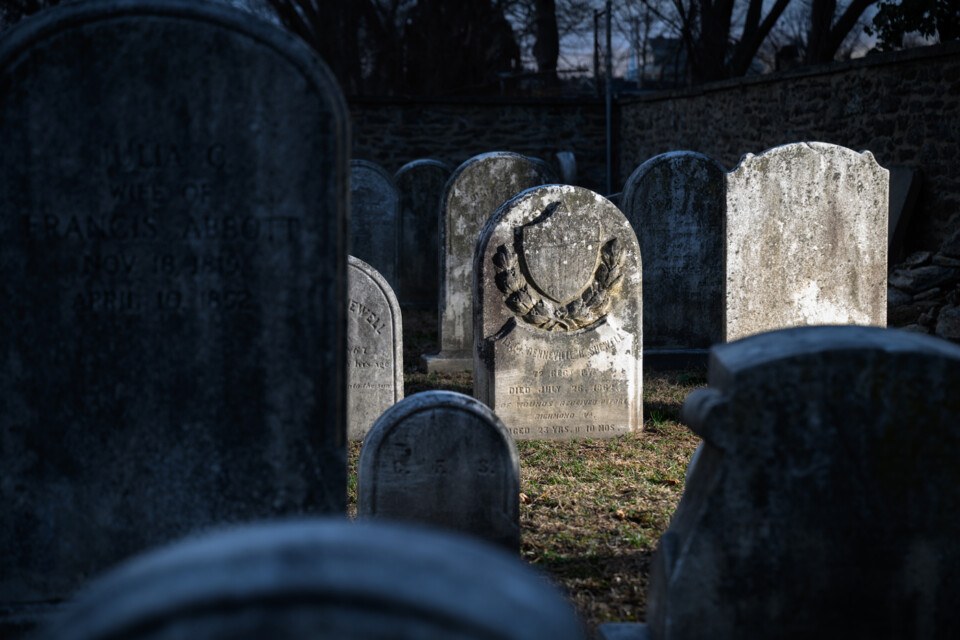
One glance told me the property had been grossly neglected. Syringes, sandwich wrappers, and condoms were strewn throughout the thigh-high grass. Jagged bits of glass glinted as the streetlights came on. Vines as thick as my arm overgrew the cracked walls. I stumbled on a dead cat, hard as a cinder block. Several dozen headstones, drowning in overgrowth, could be seen listing this way and that, losing their battle with nature and time. Some had fallen over. I pulled away weeds to read the inscriptions, some from over 200 years ago — the shallow chiseling of names and dates, faint with age or entirely illegible. High on a stone wall was a plaque, not yet reached by the rioting green beneath it, that read “The deBenneville Family Burial Ground. Established 1758.”
Alone in the cemetery, I wondered: How did this happen? Why such squalor where my ancestors lay in this obscure walled lot on Broad Street, five miles north of Center City? I’d discovered this place — a little gem, I thought — while researching my genealogy back home in Boston. A 50-year-old black-and-white picture I’d found online showed a slightly overgrown cemetery, but what lay before me was desecration by neglect. My sense of hopeful discovery quickly curdled to disappointment. In that moment, I felt charged to act.
My trip to Philadelphia on that June day in 2023 had begun as an adventure, born of a desire to learn how my unusual middle name — deBenneville — had come into my family. Discovering the cemetery had felt like a clue and gave me a reason to return to the area. I’d been raised on the Main Line. My father had been CEO of Janney Montgomery Scott; my mother was a Pew from the Sun Oil dynasty. I spent 13 years at Episcopal Academy, where my worldview was shaped and my self-confidence grew in a way that the well-loved take for granted.
Still, I was itching to get away from the Main Line and my sense that it was rote, a carousel of the same old families going around and around. Harvard provided my first glimpse of a larger world; after graduation, I landed in ABC’s documentary unit, traveling the globe for 10 years. After that, I moved around as the CEO of several startups and public companies (I later became a venture capitalist), eventually settling in Boston with my wife and three sons. Until I learned about the deBenneville family burial ground, I’d never felt compelled to return to the Philadelphia area that shaped me.
Now, though, as I wandered among the remains of ancestors I’d only just learned of, I felt an unexpected desire to honor them. Along Green Lane, the skinny street that borders the cemetery to the south, a half-dozen houses overlooked the grounds; in my dismay, I knocked on doors to see what I could learn. No one answered, though in one or two windows I could see wary faces peering out at this impatient stranger. They’d see me a lot over the next two years. Breaking into the cemetery that day was the beginning of a long, weird, winding and — surprisingly personal — adventure.
The idea for a family burial ground — along with a $500 endowment for its “perpetual” maintenance — came from George deBenneville, my seventh great-grandfather and the first preacher of Universalism in America. In 1741, he was the first of my deBenneville ancestors to migrate from Europe to the Philadelphia area, purchasing 132 acres of farmland in the Oley Valley, some 50 miles northwest of the city. Later, he also bought a farm in Branchtown — now part of the city’s West Oak Lane section — and allocated a half-acre of it for a burial ground. His instructions hinted at the strange immortality that attends cemeteries:
AND WHEREAS I have set off from my said plantation on the Old York Road which I purchased from Joseph Spencer a small piece or strip of ground three perches wide and twenty perches in depth for the purpose of a graveyard or burial place for myself and family and have marked or fixed the boundaries thereof by three stones. Now my will and desire is that this strip or piece of ground shall not be sold by my executors but always exempted and reserved out of the sale of the plantation and be and remain the property of my family to and for a burial place forever and to and for no other use and purpose whatsoever.
George deBenneville was born into an aristocratic French family of Huguenot, or Protestant, landowners. The family fled to London shortly before George was born to escape King Louis XIV’s repression of non-Catholics. George’s mother died giving birth to him, leaving behind eight additional children (four sets of twins) and a grieving husband, who himself died soon thereafter. George’s godmother, who just so happened to be Queen Anne, who was married to Prince George of Denmark, agreed to raise George in the royal court.
By early accounts, he was an unruly handful. From his autobiography:
When arrived at the age of twelve years, I was very wild, believing myself to be of a different mass from mankind in general. As it was designed that I should learn navigation, I was sent to sea in a vessel of war belonging to a little fleet bound to the coast of Barbary with presents, and to renew the peace with Algiers, Tunis, and Tripolis.
In 1719, after four years at sea, he returned to England and promptly fell into a year-long depression. Saved by a mystical call from God, he began to preach at age 17. The Calvinist Church in England roundly rejected him as a heretic. His sermons found no better reception when he tried his luck in France, where he was condemned to death for his unorthodox beliefs. (King Louis XV’s last-minute pardon saved him from hanging.) He decamped to Germany, where he studied herbal remedies and was certified as a doctor, even as he continued to preach radical ideas that routinely got him thrown out of churches.
I suspect all of this would be lost to time but for what happened next.
In Germany, George came down with a fever, was pronounced dead, and was placed in a coffin. Almost two days later, he revived, claiming to be possessed by a new vision, a gospel of “boundless love for the entire human race.” Over time, he pieced together the notion of universal forgiveness largely from other religions and his own beliefs, and emerged as the spiritual founder whose history future Universalists sought to preserve.
Still, none of his new sermons on universalism (“Honor the ocean of love …”) were well-received. With the means to continue pursuing the messages of his trance, he took his steamer trunk of beliefs and rejections to America, bearing his inchoate view of universal forgiveness. He arrived in Philadelphia, where he married Esther Bertolet, from a similarly high-ranking Huguenot family, and befriended many Native Americans, from whom he learned healing methods based on local herbs and plants. He opened an apothecary in Philadelphia and continued to preach and practice medicine. His marriage produced eight children, many of whom are buried with him in the family plot. He died in 1793.
For several generations, the deBenneville name came and went, resurfacing in my line through my great-great-grandmother, Esther deBenneville Keim (1827–1889). My father, George Bell, was given deBenneville as his middle name and passed it down to me.
He never mentioned the existence of a family burial ground. Nor did my grandfather, John C. Bell Jr., who for many years was chief justice of the Supreme Court of Pennsylvania (and the shortest-termed governor in state history, serving just 19 days). Nor did his brother, my great-uncle deBenneville “Bert” Bell, the second commissioner of the NFL and owner of the Philadelphia Eagles. (The Maxwell Memorial Football Club still awards the Bert Bell Trophy annually to the NFL’s most outstanding player.) These prominent men, along with other deBenneville relatives, were in and out of the city throughout their lives. Many went to Penn, worked downtown, and may have passed by the family burial ground from time to time. All are long gone, buried in their favored churchyards with members of their own families, a few miles from one another. I’ve convinced myself that they knew nothing of the cemetery because I don’t want to believe that they turned their back on it — this sweet, hidden place.
And now that I knew about it, I couldn’t turn my back on it either.
As one of the country’s oldest cities, Philadelphia has several hundred unmarked and abandoned cemeteries, according to the Philadelphia Archeological Forum. High infant mortality rates and short life expectancy meant that graveyards filled up fast. Many burial pits sank or were simply plowed under. Today, construction projects are the usual cause of their discovery, when backhoes hit layers of stacked bodies, sometimes with jaw-dropping results. Back in 2018, for example, while excavating a building site in the 200 block of Arch Street, PMC Property Group hit the old burial ground of the First Baptist Church, unearthing 400 bodies; the remains were then transferred elsewhere. Several years ago, PAF created a free, comprehensive database of burial grounds for architects and building contractors to try to prevent construction machinery from tearing into more human remains.
Meanwhile, even well-known cemeteries battle neglect and vandalism. The problems at the sprawling Mount Moriah in Southwest Philly, for example, are legendary (and now include the January arrest of a man who allegedly looted mausoleums there for bones). Other burial grounds fall into disrepair when maintenance funds dry up. Nationwide, there’s a market for cemetery mergers and acquisitions, sporting its own networks of lawyers, surveyors, and tax specialists. For a time, I’m told, Laurel Hill Cemetery, the beautifully tended 265-acre National Historic Landmark, was interested in buying the deBenneville burial ground, but the idea went nowhere.
This is just so darn rare, to have a chance to revive all this. It comes along once in hundreds of years.” — David Rowland, president of the Old York Road Historical Society
The grave markers in the deBenneville cemetery are oddly distributed. At the east end of the property lie most of the deBenneville stones, gathered in small groupings, as a clan might if they stood together informally, leaning this way and that. It reminded me of how families depend on one another. George deBenneville’s is a large, flat slab, like a tablet, flush with the ground. The middle of the cemetery is open grassy space, and to the west lie two graves that differ from the others. They are the resting places of General James Tanner Agnew, one of only four British Revolutionary War generals buried on American soil, and Lieutenant Colonel John Bird, both felled in the Battle of Germantown on October 4, 1777. The two were first interred in Germantown’s Lower Burying Ground, but a year later, British General Sir William Howe, fearing the desecration of their graves after the British withdrew from Philadelphia, secured a secret agreement with deBenneville to move the bodies to the family burial ground. It was known that deBenneville cared for the wounded on both sides, true to his belief about universal love and forgiveness. “Deeds, not creeds,” he had often preached.
My cemetery research benefited greatly from meeting David Rowland, president of the Old York Road Historical Society, whose mission is to preserve the history of communities along the Old York Road from Philadelphia to New Hope, a geography that encompasses the deBenneville cemetery. Rowland, a Dickensian character, was visibly excited as we explored the society’s archives at the 19th-century Alverthorpe Manor in Jenkintown. I wandered around as Rowland, who seemed to know by memory where everything was located, went in search of the deBenneville records. Within minutes, I heard him yell, “Got it!” as he triumphantly emerged with a fat binder containing birth and death records of all 114 occupants of the deBenneville cemetery, each sheathed in protective plastic.
I was puzzled by the number because there are not 114 headstones there. I suspect that some graves simply sank over time; one marker in the northwest corner is already half buried. I pointed it out to Rowland when we visited the cemetery together.
“This is just so darn rare,” he said, visibly moved as we walked among the headstones, “to have a chance to revive all this. It comes along once in hundreds of years.”
I had never pondered the question of who owns or maintains a cemetery. But as I grew more knowledgeable about the pressing needs of the deBenneville graveyard, I realized it would be best to control it legally, which would also allow me to explore state and federal grants to help with restoration. Traveling to Philadelphia every few months and working on Zoom, I investigated its ownership. The bureaucracy was dense, but I was surprised to discover that greed appears to have played a significant part in the cemetery’s decline.
On one spring visit, I met Shirley and Ed Parks, who have lived in a small, stand-alone house overlooking the cemetery for 40 years. “Damn,” said Ed, when I told him what I was up to, “you mean someone’s finally going to care about this?”
He said the grass used to be cut regularly, but in the last few years, no one had shown up to do anything. He himself used to get paid $100 now and again by someone, name long forgotten, to clear fallen limbs and report damage. “But that train came to a stop a long time ago,” he chuckled. “We used to love the view here, very peaceful, and there was a bench inside the gate that we could sit on. But these past three, four years, they just stopped.”
Two trusts govern the property. The first holds George deBenneville’s grant of land and his $500 gift, made in 1758, more than 30 years before his death. The second holds a $2,000 gift for cemetery maintenance made in 1911 by Anna deBenneville Michener (whose family founded the Michener Art Museum in Doylestown); evidence shows that she was dissatisfied with the cemetery’s condition even back then. She is the last person to be buried there, and her grave sits close to George’s: two deBenneville relatives who never knew each other, now separated by just 20 yards, both silently carrying forward a family legacy. In 1924, a recorded deed shows the sale of the western portion of the burial ground for $14,000. That sum, and Michener’s gift, were the only additions to the initial bequest that George deBenneville had set aside in his will.
I discovered that the burial ground falls under the supervision of the Orphans’ Court of Philadelphia; technically, it is still a family-owned burial ground, but, over the past 100 years, no family member has chosen to serve as trustee. In such cases, the court has the obligation to appoint another trustee, often a bank or trust company, which is what happened with the deBenneville graveyard when the court appointed the Pennsylvania Company for Insurance on Lives and Granting Annuities, an early, pioneering bank in life insurance and trust services.
After that, the succession of responsibility for the cemetery trusts was passed along through bank mergers like a discarded heirloom: First Pennsylvania Bank, CoreStates, Wachovia, and First Union all supervised the cemetery at various times. By the time I arrived, 265 years after the burial ground was established, Wells Fargo was the trustee with fiduciary authority.
So it was Wells Fargo I needed to contact — but what would I say, even if I could identify the right trust officer? Please cut the grass? I already had my answer in the condition the cemetery had lapsed into. Clearly, Wells Fargo had lost interest. One reason for the cemetery’s derelict condition was, I assumed, that the money from the trusts had run out, but I soon discovered, after records were shared with me by order of the court, that they still held $300,000.
I was initially pleased, but then I did some math.
If George deBenneville’s original $500 had earned four percent interest, compounding annually since his death in 1793, it would be worth over $12 million today, not including the compounding of Anna deBenneville Michener’s gift. Somewhere along the way, a fortune had evaporated.
My guess is that the culprit was fees: annual bank fees for trust administration, investment oversight, and maintenance supervision. I wish I had a better answer, but I never got one from Wells Fargo officials, who didn’t return my calls. For a bank of their size, $300,000 is no more than a coin behind the couch cushion. But for my ancestors, it was all that was left of their thoughtful legacy.
Finally, I petitioned the court to take over both trusts. Wells Fargo didn’t object. I represented myself, stubbornly unwilling to spend a single dollar of cemetery money on lawyers while the dead lay neglected. It took a year, but I was appointed sole trustee. As for the funds, when they were finally transferred to accounts I had set up, they were smaller still — one last round of legal and accounting fees shaved them down. Time, it seems, when in the hands of influential bankers, can build or destroy a fortune.
After I became the deBenneville trustee, I asked Judge Ramy Djerassi, who’d overseen the case, if he wanted to meet one afternoon and walk around the cemetery. I knew he had a keen interest in the city’s history and had served on the bench for over 30 years. “Oh, my wife and I have already visited it,” he said, surprising me, “but I’d love to walk it with you.”
On the day we were to meet, I came down from Boston early to inspect the cemetery myself. I knocked on Ed and Shirley’s door; by then we’d become cemetery buddies. Ed answered as he always does, with a smile. Shirley was right behind him. I explained that Judge Djerassi, who appointed me trustee, would be here in a few minutes. Would he and Shirley like to meet him?
“You mean the Judge Djerassi?” Shirley asked, stunned.
“That’s the guy,” I said.
“I worked for him for 12 years in the courts!” she said proudly. “And he’s coming here right now?”
“He’ll be here in 10 minutes.”
“Oh boy,” she said, turning away with excitement, “I’ve got to change my clothes!”
Soon afterward, she and Djerassi had a long hug on the front steps. They fell into updating each other and reminiscing, and as we all walked across the street to the cemetery gate, I was tickled to think of the dead reuniting the living.
On my visits, as soon as I see the gravestones, I feel the exhale of relaxation, the relief of knowing the graveyard is still here, as if it might have been snatched away in a tablecloth trick played by time, gone as quietly as it came. I have a strong sense of returning to something that was lost and found again, and also the peace of being among all these relatives I never knew. A strange intimacy allows me to imagine them here, in black garb from another age, honoring one another as they lowered their dead into the ground — their graveside prayers, their hopes for their children, their foibles and failed dreams, their urge to love that seems almost palpable as windblown leaves dance upward in an October sky.
At this point, I’ve spent more time in this graveyard than any other. My parents and my younger brother are buried together at St. Christopher’s Church in Gladwyne; they lie among hundreds of others, all marked by identical white marble stones arranged in rows in an open field outside the church. In comparison, the random, unkempt feeling at the deBenneville cemetery, bordered by teeming Broad Street, seems more alive, with its imperfections, its old symmetries abandoned. Somehow, with age, the burial ground has lost its formality. To weave among these headstones is to feel lightness in the face of death, to attend a church where no one minds soft voices talking throughout the service.
After I became the cemetery’s sole trustee, its enchantments and worries became mine. I lay awake at night imagining that George deBenneville’s hand and my hand ran over the same odd depression in that granite capstone on the east wall, that I walked the grassy margins just as he did over 250 years ago. One who sought salvation here, one who sought it elsewhere — one coming, one going. As I stand on the large granite slab of his grave, I’d like to think our kinship is growing, that sometimes I can hear his intentions in the earth.
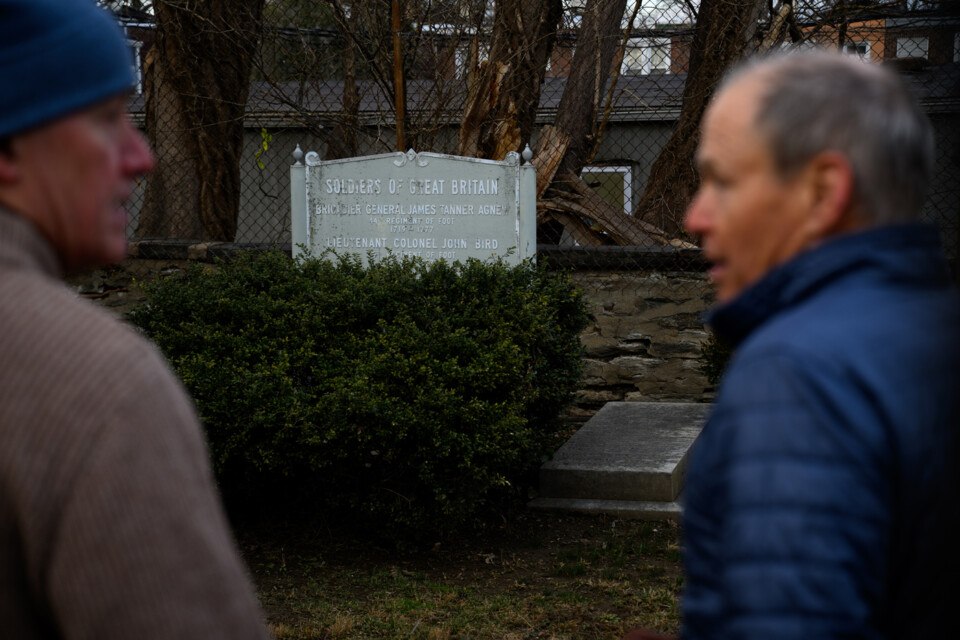
Author (right) with cousin Baker Bell, near the memorial marking the grave of British soldiers killed in the Revolutionary War
I’m drawn to the walls and the headstones of children — one in particular, low to the ground in a half-moon shape, marked only “Little Hettie.” The rocks in the walls and the gravestones age with puzzling variety; it’s like trying to understand time itself. I can sense how the cemetery’s sepulchral quiet was slowly invaded as the city grew louder and more populous around it, the flow of cars and buses increasing, their emissions eating into the marble gravestones. The beautiful border walls of Wissahickon schist, bright with flecks of mica, have, in places, dulled to the color of dust. With my finger, I scrape at the weakest parts and come away with a hunk of powdery stone. Failing to be carried on in family stories, I’ve come to believe, the burial ground simply stopped being discussed. It went mute, rarely visited, the tombstones mere relics from a forgotten age that disappeared under the weight of other things.
Today, an auto repair shop and the Precious Angels preschool and daycare center share the cemetery’s border. Of all the things that might occupy this spot, a historic cemetery must be among the least likely. We have a long way to go to bring it back to what my seventh great-grandfather envisioned.
Yet it has survived hundreds of winters, the blight of the industrial age, and the exhaust from the ceaseless traffic that runs along North Broad Street. It occurs to me that it’s done so by turning its back on everything but its own dignity and existence. It speaks to me of patience even as I wonder how to preserve it structurally, legally, and spiritually for another 268 years. I hadn’t expected to gain much from simply wanting the cemetery to look less lousy. Yet already it’s given me a greater capacity for forgiveness and a reminder of the twin forces of silence and time. There’s still time to make it right, I remind myself whenever I visit. There’s still time.
Published as “The Forgotten Cemetery” in the March 2026 issue of Philadelphia magazine. A version of this story was originally published in October 2025 by Hidden City Philadelphia.
Podcast: Let’s Talk About the 25 Most Philly Athletes
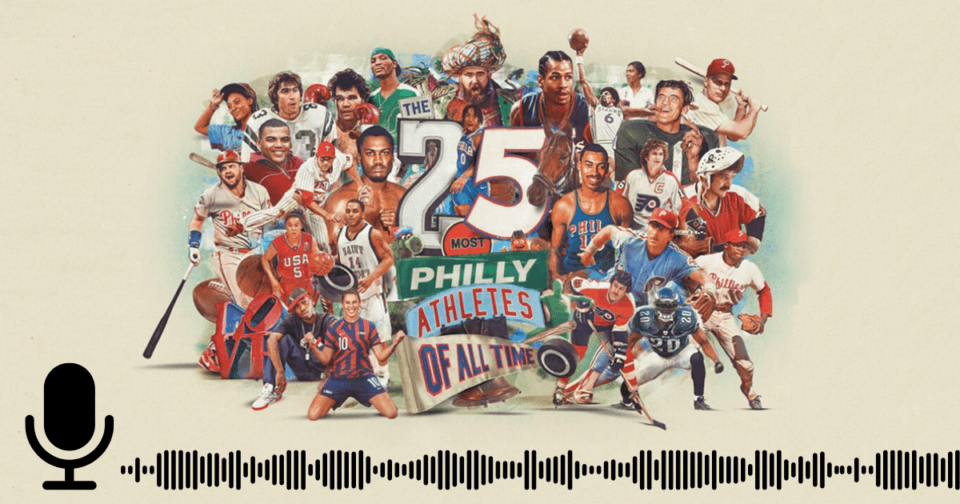
Roundtable: The 25 Most Philly Athletes of All Time / Photo-illustration by Neil Jamieson
Since publishing Philly Mag’s 25 Most Philly Athletes of All Time last month, there has been a ton of chatter about the athletes that did (and did not) make the list. Recently, staff writer Malcolm Burnley invited Philly Mag executive editor Bradford Pearson and Olivia Kram, digital media marketing and community manager for Citizen Media Group (all three of whom contributed to the list), to discuss how they felt about the list now and what feedback they’d received. From universal acceptance of Allen Iverson at the number one spot, to the controversy of including a horse, Malcolm, Brad and Olivia dug into the difficult task of defining what makes a Philadelphia athlete a Philly athlete.
Malcolm Burnley: I’m Malcolm Burnley, a staff writer for the Philadelphia Citizen and joining me for this special roundtable discussion on Philly Mag Today, we have Bradford Pearson, executive editor of Philly Mag. And we also have Olivia Kram, digital media marketing and community manager for the Citizen Media Group. I’m super excited to get into this. We all contributed in various ways.
It’s not easy to define what is quintessentially Philly about an athlete, or the Phillyness of an athlete, you know, if it’s someone born here, played here, embodies the spirit of the city. And so Brad, I thought we should start with you.
Bradford Pearson: I think this is a city that expects a lot of its athletes and because of that we’re going to give you the best home crowds, and if you buy into that, we’re going to support you no matter what. And I think that initial tension when people come to town shows there is a learning curve.
Olivia Kram: Yeah, I don’t know how Philly it is to go on TikTok and talk about drinking raw milk.
Burnley: Oh, man. So Bryce Harper was not on the list. Spoiler. Brad, have you heard any consistent complaints with what you put together?
Pearson: I think the biggest complaint so far is that people don’t think Smarty Jones should be on the list. It’s like, okay, you know, there’s still a jockey on top of that horse. It’s still an athlete that the city fell in love with. Broadly speaking, I have been getting some emails about teams or individuals that should be on the list that didn’t make it, like the Mighty Macs from back in the ’70s, who won a bunch of championships, and then the Villanova championship team from the ’80s. But I’m not going to put Villanova on the list because I went to St Joe’s.
Burnley: All right, Olivia, go defend your man. Defend John Kruk as number four.
Kram: I will get to Kruk in a second, but I want to speak to the Smarty Jones thing because that is where we’ve been seeing the most conversations on social media. And I just want to note that when I was a kid, Smarty Jones was having a Smarty Jones moment and I was seeing people with Smarty Jones hats on. And I don’t think that’s really common for racehorses. I’m not a big race person, but I will say Smarty Jones is cemented in my brain in a way that no other racehorse will ever be.
And I don’t really think I need to defend Kruk. Folks who know me will know I have been a champion of Kruk for quite some time. It has a lot to do with his personality after retiring. He was certainly a huge personality during his playing career. I mean, he was parodied on SNL. You don’t get parodied on SNL if you’re a nobody. I feel like he belongs on this list because he’s still around, and I don’t know how many players are still around in the way that he is. He is as much of a part of the Philadelphia Phillies today as he was when he was playing. And that’s a huge, huge accomplishment, and a huge note to just how Philly he is. He’s just won the hearts of Philadelphians everywhere with his yapping.
Pearson: So Malcolm, I’m gonna flip this and ask you about Dawn Staley. You wrote about her and I feel like there’s some sexism in the response to people saying that she should be lower on the list. So I’m wondering when you were writing about her, what did you want to try to capture with what Dawn means to the city?
Burnley: Yeah, I think she’s very appropriately ranked on our list, or, you know, you could always move her up or down maybe a couple of spots. What I really wanted to capture was how insanely special and how much she was kind of a folk hero, even before going to Virginia and going to the Final Fours.
And now so many people know her as really a face, if not probably the second-most famous face in women’s basketball, behind Caitlin Clark. They know her as this incredible coach, but just as an athlete on her own, she’s deserving in that spot.
And I’m happy Iverson is at number one. Iverson seems to represent a style of athlete that is both quintessentially Philly, but also someone who really isn’t interested in corporate sponsorships necessarily.
Pearson: I feel like that era was the last era that the NBA had rough edges and he was clearly straddling eras in that he came in in the late ’90s, Jordan had already established what it meant to be not just a basketball player, but a brand. And I think that AI was obviously like a brand, but he did it in such a different way. I mean, you know, he changed the NBA, not just from a playing standpoint, but from a fashion standpoint, from a Blackness standpoint that was much different than the players that came before him.
Kram: I will say everyone I’ve talked to about this will give me their opinions, but every single one has been like, You’re right about AI. So to have the number one person we’ve put on this list be the one that everyone seems to be on the same page about speaks volumes to Iverson’s impact on the city.
Burnley: Yeah, so I thought it’d be fun maybe to talk about a favorite memory that you feel tied you to the city.
Kram: I kind of have two, and I’ll try to be quick about it, but the number one for me is the Philly Special. I think mostly because you couldn’t write a better sports movie with the narrative of the Philly Special. And it’s, I think, probably why it’s become the talk of documentaries now. But to have Nick Foles in the weeks leading up to the Super Bowl, he’s a backup. He’s a backup. There’s no way he’s going to be able to go up against Tom Brady, and to do the thing that Tom Brady couldn’t do just a few minutes earlier in the game with the Philly special is just incredible.
It really did feel like the moment of, oh shit, we might actually be able to win this thing.
I think the other one that I wanted to note is the standing ovation that Trea Turner got. Because I do think the general reputation of Philly’s fans, not just baseball, but all of our sports, is that we are nasty and that we are kind of difficult to deal with. And I’m not saying that that’s not true. We wear that kind of as a badge of honor. But I think the standing ovation moment really speaks to the duality amongst our fans and the ability to embrace our players and choose a more positive path.
Pearson: So one of mine didn’t make the list, and nor should it, because it’s a personal memory. So I was on campus at St. Joe’s when Jameer Nelson and Delonte West led the team to the undefeated regular season. And it was just one of the most bizarre couple months to spend on a college campus, because you had this really small school in West Philly that all of a sudden became the epicenter of the college basketball universe. And for me, I remember specifically the last game that St. Joe’s played before the Atlantic 10 tournament. So the last regular season game was a home game, and if they won it, they would have the first undefeated regular season in decades in college basketball.
I remember, I didn’t have tickets and a bunch of us were about to watch the game, and one guy on the team gets a call from somebody at the St. Joe’s pep band, and they say, “Hey, we’re going to prop open the back door of the fieldhouse, and you guys can all come in.” We ran and snuck into the back and were able to watch St. Joe’s have this undefeated regular season for the first time any college team had that in decades.
Burnley: I have chills hearing that! And you know, I wasn’t in Philly at the time, but I remember how special that team was and just how cool that story was. And if I pick one real quick, I was gonna say I did go to a Catholic League championship game at the Palestra, and this was Colin Gillespie, who’s now in the NBA, and then went to, you know, Villanova, and won a championship.
There he was playing, I believe for Archbishop Wood, I believe is the school he went to, and they’re playing Neumann Goretti in the championship. And I can’t remember the guard, but Gillespie won, and just kind of totally outshined him. I felt like I discovered Collin Gillespie, though I had nothing to do with it.
Pearson: These are the kinds of moments that aren’t going to make a list, maybe, but are what connect Philadelphia fans like very few other cities in America.
Kram: We ride so hard for our sports and our players. I can’t tell you how many weddings I’ve been to where it’s on a Sunday and there’s a projection screen with the game on. I’ve been to at least five weddings that have had either a Phillies game or an Eagles game on — including my own!
Burnley: I think we’ll maybe have a few kind of final thoughts, and then wrap up here. I think it’s been a really fun, awesome conversation. Do we have any strong feelings or predictions for current Philly athletes?
Pearson: I mean, for me, I think the answer is in the Sixers back court, right? Like, I think that Edgecombe in just one season has basically gone from being like, “Oh, he might be good” to being just endeared by the city.
Kram: Yeah, that’s a good one. My mom has a habit of finding Philly athletes that she loves so much that she says, I’d like to bake a pie for him. Big Edgecombe energy — my mom would definitely love to make a pie for him.
I think for me, someone that didn’t make the list, that I think 10 years from now will is Brandon Graham. He’s a legend. I mean, with the age he is putting his body through what he’s putting it through — for the love of the game? He retired, saw that the Eagles were having a hard time and came back to be a leader. I look forward every year to the mic’d up clips of his trash talking. I think that his love for the city is so apparent.
And maybe I’m jinxing it by saying it, but my prediction for the next Phillies season is that Kyle Schwarber is going to surpass Ryan Howard for most home runs hit in a year. He came so close last year, 56 versus 58. I think if he does that, he’s confirming that he is an all-time Philly legend.
Pearson: And Schwarber is the kind of guy where in your mind, you’re like, “Oh, that dude is super strong, but he also just kind of looks like a regular guy.” You know he goes to the weight room and stuff, but you see Bryce Harper, and you’re like, “Oh his body’s a temple” — other than the raw milk. Schwarber is a … Wawa spokesman.
Kram: Oh, yeah, I’ve seen dudes that look like Schwarber, in every corner of Philadelphia. In fact, I was at Philly Mag’s Wine and Dine event and Malcolm, I kept saying to you, “Is that Kyle Schwarber?” And it was just some guy.
Burnley: I thought it was! I’m still not sure it wasn’t him. And I’ll cap off the conversation by totally cheating and choosing whoever the star player on the WNBA team is.
Pearson: Forward thinking!
Burnley: All right, I guess we can maybe wrap here. Again, I want to encourage everyone listening to go read The 25 Most Philly Athletes. I mean, it’s such an interesting diversity of athletes. We had Stevie Williams, the skateboarder; Randall “Tex” Cobb, the boxing legend. And even names I might have been skeptical about going in, but the writing really convinced me.
Pearson: Wait, who were you skeptical of?
Kram: If you say John Kruk, we’re going to have some problems.
Burnley: I would say Smarty Jones. But in the end you convinced me!
Pearson: Well, I encourage you, or any listeners out there to continue emailing me with your complaints.
Burnley: Well, great. I’m so glad we got a chance to get together and have this conversation. Super, super fun. And once again, the story is The 25 Most Philly Athletes Of All Time. And I just want to say, Brad, Olivia, thanks so much for coming on.
In Defense of the Philadelphia School District
A deputy superintendent pushes back on a Philadelphia Citizen story that called the District’s Facilities Master Plan a sign of “managed decline.”
I Had Never Gotten a Facial — And Then I Got the All-Star Treatment
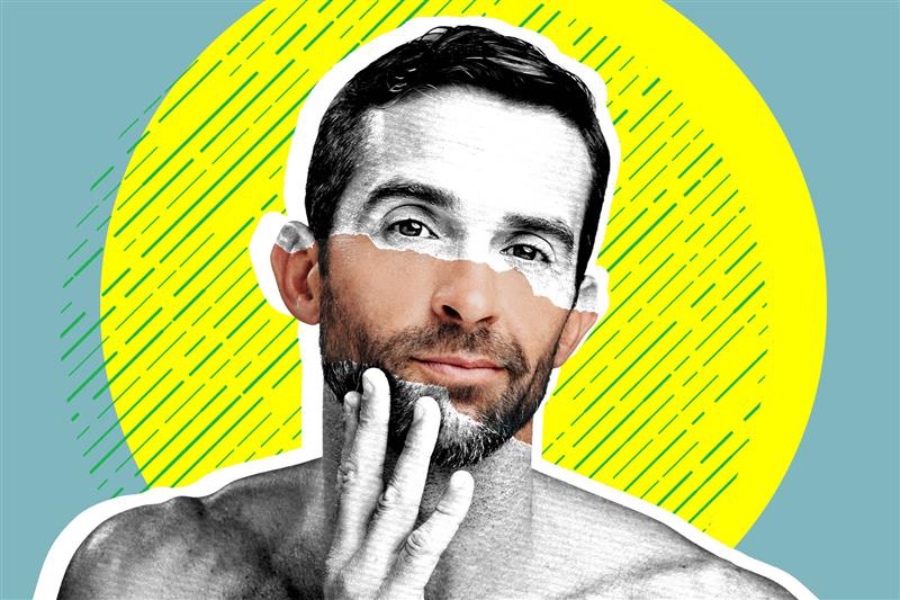
After years of washing his face with just water, writer Bradford Pearson got his first facial — a sculpt-and-lift skincare treatment — at Rescue Spa in Rittenhouse. / Photo-illustration by Leticia R. Albano
Listen to the audio edition here:
For decades I’ve adhered to a very strict skincare routine. Every night, just before bed, I stand in front of my bathroom sink and fiddle with the hot and cold water until it’s reached a temperature that can best be described as “cooling soup.” I then generously cup that water and splash four or five handfuls of it onto my face. If I’ve had a particularly grimy day, I turn the hot water up a bit, under the probably false assumption that the heat will “help cut through the dirt.” (I absorbed this information at some point in my life from an Ajax commercial.)
After my sloshing routine, I lightly dab my face dry with the closest piece of cloth I can find — a t-shirt will do — and climb into bed.
This routine has served me well; I had no reason to alter it. I’m not against the balms and creams and serums (and cleansers and moisturizers and something called a toner?) that line my spouse’s shelf in the bathroom. I’ve just never seen a reason to use them. My skin is clear and blemish-free for the most part, so why spend time and money on products when my patented Four-to-Five Splashes Method (trademark pending) has always done the trick?
I say all this not to pat myself on the back, but rather to say that when my boss inquired as to whether I’d ever had a facial before, I believe that, deep down, she already knew the answer. Her email summed it up: “I thought it might be fun to send you — a man whom I imagine is somewhat versed in self-care/grooming but (I’m guessing here) maybe not overly so.” Interpretation: “You seem a bit vain, but not aggressively so.” Spot on!
Plus, I recently turned 40. Even though my skin looks fine right now, that probably won’t be the case for much longer; the slow march of crow’s feet has already begun.
So, I made an appointment at Rescue Spa, Danuta Mieloch’s 22-year-old sanctuary of aesthetics in Rittenhouse. When I mentioned this detail to my wife, her lower lip dropped a bit before she responded just, “You? You get to go to Rescue Spa?” With my spouse satisfyingly confused and envious — a combustible combination, as any married person can attest — I was off.
The night before my appointment, I realized I had no idea how to prepare for it. Should I shave? What do I do with my eyes? Can I fall asleep? Will I be shirtless? I decided that the less I knew, the better. I put down my razor and headed to bed.
I arrived at Rescue Spa the next afternoon, and was soon nestled under a warm blanket, shirtless. (One question down.) I was booked for the Danucera Sculpt & Lift facial, a new offering that Mieloch unveiled last September, meant to do exactly what the name says. The treatment, in fact, was being gifted to all of this year’s Oscar nominees. (Mieloch, recognized as one of the world’s foremost skincare experts, has included her products in swag bags distributed at past Academy Award and Grammy festivities.) My last acting gig was in my 11th-grade Spanish play — I got a C for forgetting my lines and making up whole new scenes for La Bella y la Bestia — but knowing that Teyana Taylor or Timothée Chalamet may also soon be experiencing the same facial made me believe that maybe, just maybe, I could still be a star. (Ryan Coogler, my email address is not hard to find.)
“The first thing I notice about a person is their skin,” Mieloch said at the start of my session, as she gently poked and prodded my cheeks and jawline. I told her that my main concern was the few sunspots on my nose from years of broiling in a lifeguard chair under a layer of Hawaiian Tropic tanning oil, the ones that have led me to dodge dermatologists for the past two decades. No worries, she said. The damage looked minimal. Safe in that knowledge, I sunk into the padded table.
Soon her hands were pulling, puckering, rubbing, gliding, and slapping across my face. Her fingers hooked into my eye sockets; I felt like a trout being gently nudged onto a hook. (This was much less unpleasant than my verb choices may suggest.) Unsure of proper spa protocol — is this a silent kind of thing? — we talked. She told me how she can tell what kind of athlete someone is on the street — Swimmers: “Those shoulders!” Dancers: “Those necks!” — and how, compared to New York and L.A., Philadelphia could use a little more glamour.
She accurately guessed part of my ethnicity (Russian Jew) just by my skin tone and then launched into an incredibly informative monologue about skin physiology, oil production, and moisture retention. My skin naturally retains moisture well, she said, which is why it doesn’t dry out as much as other people’s might. I spend a lot of time at the computer, though, so I need to be cognizant of “tech neck,” which — you guessed it — also affects our skin, by hampering blood flow and stifling regeneration.
Next came LED therapy, alternating red and blue lights that, even with my eyes closed, penetrated my lids just enough to make me feel like I was in a laser tag arena. The lights, I’m told, help reduce inflammation and kill bacteria — two worthy causes, if you ask me. After that came a device that, using electrical currents, aimed to tighten and firm my skin; it produced a sensation that I can only describe as “shuffling across a carpet and tapping a metal doorknob.” It felt weird, but not bad, and the sensation has lingered; I can still recall it in my cheeks and forehead a week later.
As our session came to a close, Mieloch handed me a white bag with the balms and creams and tonics I’d so thoroughly eschewed for years. Once outside, I FaceTimed my wife, my face dewy and glowing. She seemed mildly impressed.
Since my session — during which I thought more about my skin over the course of an hour than I collectively had over my entire life — I’ve taken to using the facial balm every night, along with the eye cream. I’m easing into the other products. And maybe it’s a placebo effect, or I’m just spending more time looking at my skin, but I really do feel like my skin looks better. There’s more color, and those sunspots aren’t as prominent.
Time will tell whether I stick with this new routine. But on Sunday, while watching Michael B. Jordan accept his Oscar for Best Actor, my mind drifted from Sinners and his role and Hollywood. Instead, my only thought was, Damn, I wonder what that guy does for his skin?